


Community hub
Recent from talks
Contribute something to knowledge base
Content stats: 0 posts, 0 articles, 1 media, 0 notes
Members stats: 0 subscribers, 0 contributors, 0 moderators, 0 supporters
Subscribers
Supporters
Contributors
Moderators
Hub AI
RAF Leuchars AI simulator
(@RAF Leuchars_simulator)
Hub AI
RAF Leuchars AI simulator
(@RAF Leuchars_simulator)
RAF Leuchars
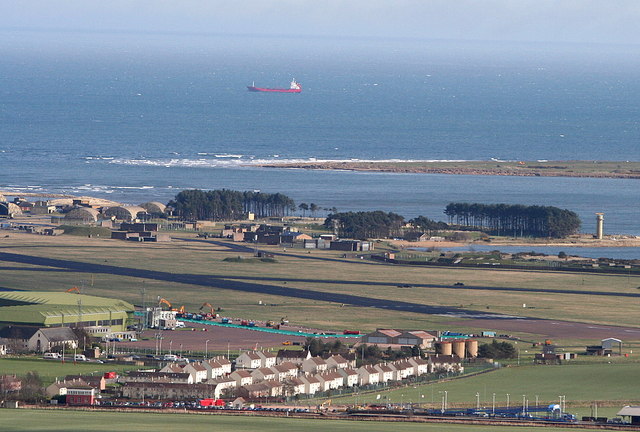
Royal Air Force Leuchars or more simply RAF Leuchars (IATA: ADX, ICAO: EGQL) is a former Royal Air Force station located in Leuchars, Fife, on the east coast of Scotland. Throughout the Cold War and beyond, the station was home to fighter aircraft which policed northern UK airspace. The station ceased to be an RAF station at 12:00 hrs on 31 March 2015 when it became Leuchars Station and control of the site was transferred to the British Army. The RAF temporarily returned to Leuchars between August and October 2020 to carry out QRA (I) responsibilities while runway works were being carried out at RAF Lossiemouth.
Aviation at Leuchars dates back to 1911 with a balloon squadron of the Royal Engineers setting up a training camp in Tentsmuir Forest. They were soon joined in the skies by the 'string and sealing wax' aircraft of the embryonic Royal Flying Corps; such aircraft favoured the sands of St Andrews, where not the least of the attractions was the availability of fuel from local garages. Like so many RAF stations, the airfield itself owes its existence to the stimulus of war, and work began on levelling the existing site on Reres Farm in 1916. From the beginning, Leuchars was intended as a training unit, being termed a 'Temporary Mobilisation Station' taking aircrew from initial flying training through to fleet co-operation work. Building was still under way when the Armistice was signed in 1918. Much was made of Leuchars' maritime location when it was designated a Naval Fleet Training School, eventually to undertake the training of 'naval spotting' crews who acted as eyes for the Royal Navy's capital ships.
The unit was formally named 'Royal Air Force Leuchars' on 16 March 1920, but nevertheless retained its strong naval links. As the Navy embraced the value of aviation, the aircraft carrier was added to its inventory. Many of the flights dedicated to Leuchars were detached to such vessels for months at a time, with light and dark blue uniforms apparently mixing happily together. At St Andrews, the citizens were not unaware of the potential uses of aviation and attempts were made to use aircraft as a means of transport for golfing enthusiasts. More successful were the barn-storming displays of the flying circuses which were extremely popular in the town. In 1935, Leuchars became home to No. 1 Flying Training School (1 FTS) and ranges for practice bombing were established in Tentsmuir Forest. As the war clouds gathered, its maritime position ensured that Leuchars would come to play a more warlike role. 1 FTS moved to RAF Netheravon and the station came under the control of RAF Coastal Command. With the arrival of No. 224 and No. 233 (General Reconnaissance) Squadrons in August 1938, both of which were equipped with Avro Ansons at the time, the station had an operational, rather than training, role for the first time.
On 4 September 1939, a Lockheed Hudson of No. 224 Squadron attacked a Dornier Do 18 over the North Sea with inconclusive results but became the first British aircraft to engage the enemy in the Second World War. Leuchars was not to secure the romantic image of a Battle of Britain station, but rather settled to the routine of hour upon hour of maritime patrol which played a crucial part in Britain's ultimate victory. In February 1940, another No. 224 Squadron Hudson located the German prison ship the Altmark which allowed for its interception by HMS Cossack and the liberation of over 200 British prisoners. On 2 December 1943, a pigeon called Winkie became one of the first birds or animals to be awarded the Dickin Medal for helping rescue the crew of a ditched bomber from the station. During the Second World War, British Overseas Airways Corporation formed in November 1939 from Imperial Airways, and British Airways Ltd operated a wartime route from RAF Leuchars to Stockholm. From 1943 BOAC used civilian-registered de Havilland Mosquito aircraft. Noted for the carrying of ball-bearings from Sweden to the UK, the route also returned RAF aircrew who had diverted to or made crash-landings in Swedish airfields during operations over Europe. Other aircraft types were used. No. 3 Armament Training Camp RAF was here between November 1941 and 1 September 1945.
Leuchars remained an active station to the end of the war, concentrating on anti-submarine and anti-shipping strikes. With the contraction of the RAF in peacetime, life at Leuchars returned to a more gentle pace, hosting a school for general reconnaissance and the St Andrews University Air Squadron complete with de Havilland Tiger Moth. In May 1950 Leuchars entered the jet age as it passed from Coastal to RAF Fighter Command and Gloster Meteors of No. 222 Squadron made the station their new home. 1950 also saw No. 43 Squadron arrive at Leuchars from RAF Tangmere with their Meteors, the start of a long-lasting association between the base and the 'Fighting Cocks'. In July 1954, No. 43 Squadron converted to the new Hawker Hunter F.1 becoming the first squadron in the entire Royal Air Force to operate the type. No. 43 Squadron upgraded to Hunter FGA.9s in 1960 and were shortly relocated away to Cyprus the following year. No. 23 Squadron arrived in March 1963, equipped with all-weather Gloster Javelin FAW.9s. Leuchars' air-sea rescue services upgraded to Westland Whirlwind helicopters in 1964. The University Air Squadron was equipped with the de Havilland Chipmunk.
As the Cold War reached its frostiest depths in the 1960s, the development of long-range aircraft allowed the Soviets regular incursion into British air space. Initially this was countered by the use of the English Electric Lightning, with No. 23 Squadron taking delivery of Lightning F.3s in 1964 to be used in the interceptor role. This was shortly followed by No. 74 Squadron relocating to Leuchars from RAF Coltishall in the same year, also being equipped with Lightning F.3s. No. 11 Squadron became the next Lightning squadron to be based at Leuchars when it reformed in April 1967 and replaced No. 74 Squadron who moved to RAF Tengah in Singapore. Leuchars' position made it ideally suited as a base to ensure the integrity of British air space and thus on 1 September 1969, Leuchars' air defence capability was increased with the delivery of McDonnell Douglas F-4K Phantom FG.1s to the newly reformed No. 43 Squadron – a squadron that would become synonymous with the base over the next 40 years. From 1972 to 1978 Leuchars also served as the home for 892 Naval Air Squadron's Phantom FG.1s when they were disembarked from their carrier HMS Ark Royal. In March 1972, No. 11 Squadron moved south to RAF Binbrook, leaving No. 23 Squadron as the sole Lightning fleet at the base. October 1975 saw the last Lightnings leave Leuchars when No. 23 Squadron converted to Phantom FGR.2s from their Lightning F.6s and moved to RAF Coningsby. A month later No. 111 Squadron relocated north from Coningsby up to Leuchars and were equipped with Phantom FGR.2s. December 1978 saw the withdrawal of HMS Ark Royal which led to her fleet of Phantom FG.1s being distributed to 'Treble One', who in turn saw their Phantom FGR.2 airframes sent elsewhere across the RAF. For over two decades Leuchars' aircraft policed the UK air defence region, demonstrating the ability to intercept unidentified aircraft and provide an effective deterrent.[citation needed] During May 1987, 228 OCU (Operational conversion unit) moved from RAF Coningsby to Leuchars. The OCU operated the Phantom FGR2 and had the Shadow identity of 64(R) Squadron.
For the majority of the Cold War period from 1954 to the early 1990s, RAF Search and Rescue (SARF) had an enduring presence at Leuchars in the form of a detached flight of helicopters from No. 22 Squadron. The flight was initially equipped with the Bristol Sycamore until their replacement by the Whirlwind HAR.10 in 1955 which in turn were superseded in 1976 by the Westland Wessex HAR.2. Besides assisting Leuchars' own Royal Air Force Mountain Rescue Service unit, the flight also proved a valuable adjunct to civilian mountain and maritime rescue services. There were also two rescue launches based in Tayport for a time. [citation needed]
During the 1980s, RAF Leuchars was home to No. 27 Squadron RAF Regiment which was a Short Range Air Defence (SHORAD) based squadron, using Field Standard A Rapier Missile system.
RAF Leuchars
Royal Air Force Leuchars or more simply RAF Leuchars (IATA: ADX, ICAO: EGQL) is a former Royal Air Force station located in Leuchars, Fife, on the east coast of Scotland. Throughout the Cold War and beyond, the station was home to fighter aircraft which policed northern UK airspace. The station ceased to be an RAF station at 12:00 hrs on 31 March 2015 when it became Leuchars Station and control of the site was transferred to the British Army. The RAF temporarily returned to Leuchars between August and October 2020 to carry out QRA (I) responsibilities while runway works were being carried out at RAF Lossiemouth.
Aviation at Leuchars dates back to 1911 with a balloon squadron of the Royal Engineers setting up a training camp in Tentsmuir Forest. They were soon joined in the skies by the 'string and sealing wax' aircraft of the embryonic Royal Flying Corps; such aircraft favoured the sands of St Andrews, where not the least of the attractions was the availability of fuel from local garages. Like so many RAF stations, the airfield itself owes its existence to the stimulus of war, and work began on levelling the existing site on Reres Farm in 1916. From the beginning, Leuchars was intended as a training unit, being termed a 'Temporary Mobilisation Station' taking aircrew from initial flying training through to fleet co-operation work. Building was still under way when the Armistice was signed in 1918. Much was made of Leuchars' maritime location when it was designated a Naval Fleet Training School, eventually to undertake the training of 'naval spotting' crews who acted as eyes for the Royal Navy's capital ships.
The unit was formally named 'Royal Air Force Leuchars' on 16 March 1920, but nevertheless retained its strong naval links. As the Navy embraced the value of aviation, the aircraft carrier was added to its inventory. Many of the flights dedicated to Leuchars were detached to such vessels for months at a time, with light and dark blue uniforms apparently mixing happily together. At St Andrews, the citizens were not unaware of the potential uses of aviation and attempts were made to use aircraft as a means of transport for golfing enthusiasts. More successful were the barn-storming displays of the flying circuses which were extremely popular in the town. In 1935, Leuchars became home to No. 1 Flying Training School (1 FTS) and ranges for practice bombing were established in Tentsmuir Forest. As the war clouds gathered, its maritime position ensured that Leuchars would come to play a more warlike role. 1 FTS moved to RAF Netheravon and the station came under the control of RAF Coastal Command. With the arrival of No. 224 and No. 233 (General Reconnaissance) Squadrons in August 1938, both of which were equipped with Avro Ansons at the time, the station had an operational, rather than training, role for the first time.
On 4 September 1939, a Lockheed Hudson of No. 224 Squadron attacked a Dornier Do 18 over the North Sea with inconclusive results but became the first British aircraft to engage the enemy in the Second World War. Leuchars was not to secure the romantic image of a Battle of Britain station, but rather settled to the routine of hour upon hour of maritime patrol which played a crucial part in Britain's ultimate victory. In February 1940, another No. 224 Squadron Hudson located the German prison ship the Altmark which allowed for its interception by HMS Cossack and the liberation of over 200 British prisoners. On 2 December 1943, a pigeon called Winkie became one of the first birds or animals to be awarded the Dickin Medal for helping rescue the crew of a ditched bomber from the station. During the Second World War, British Overseas Airways Corporation formed in November 1939 from Imperial Airways, and British Airways Ltd operated a wartime route from RAF Leuchars to Stockholm. From 1943 BOAC used civilian-registered de Havilland Mosquito aircraft. Noted for the carrying of ball-bearings from Sweden to the UK, the route also returned RAF aircrew who had diverted to or made crash-landings in Swedish airfields during operations over Europe. Other aircraft types were used. No. 3 Armament Training Camp RAF was here between November 1941 and 1 September 1945.
Leuchars remained an active station to the end of the war, concentrating on anti-submarine and anti-shipping strikes. With the contraction of the RAF in peacetime, life at Leuchars returned to a more gentle pace, hosting a school for general reconnaissance and the St Andrews University Air Squadron complete with de Havilland Tiger Moth. In May 1950 Leuchars entered the jet age as it passed from Coastal to RAF Fighter Command and Gloster Meteors of No. 222 Squadron made the station their new home. 1950 also saw No. 43 Squadron arrive at Leuchars from RAF Tangmere with their Meteors, the start of a long-lasting association between the base and the 'Fighting Cocks'. In July 1954, No. 43 Squadron converted to the new Hawker Hunter F.1 becoming the first squadron in the entire Royal Air Force to operate the type. No. 43 Squadron upgraded to Hunter FGA.9s in 1960 and were shortly relocated away to Cyprus the following year. No. 23 Squadron arrived in March 1963, equipped with all-weather Gloster Javelin FAW.9s. Leuchars' air-sea rescue services upgraded to Westland Whirlwind helicopters in 1964. The University Air Squadron was equipped with the de Havilland Chipmunk.
As the Cold War reached its frostiest depths in the 1960s, the development of long-range aircraft allowed the Soviets regular incursion into British air space. Initially this was countered by the use of the English Electric Lightning, with No. 23 Squadron taking delivery of Lightning F.3s in 1964 to be used in the interceptor role. This was shortly followed by No. 74 Squadron relocating to Leuchars from RAF Coltishall in the same year, also being equipped with Lightning F.3s. No. 11 Squadron became the next Lightning squadron to be based at Leuchars when it reformed in April 1967 and replaced No. 74 Squadron who moved to RAF Tengah in Singapore. Leuchars' position made it ideally suited as a base to ensure the integrity of British air space and thus on 1 September 1969, Leuchars' air defence capability was increased with the delivery of McDonnell Douglas F-4K Phantom FG.1s to the newly reformed No. 43 Squadron – a squadron that would become synonymous with the base over the next 40 years. From 1972 to 1978 Leuchars also served as the home for 892 Naval Air Squadron's Phantom FG.1s when they were disembarked from their carrier HMS Ark Royal. In March 1972, No. 11 Squadron moved south to RAF Binbrook, leaving No. 23 Squadron as the sole Lightning fleet at the base. October 1975 saw the last Lightnings leave Leuchars when No. 23 Squadron converted to Phantom FGR.2s from their Lightning F.6s and moved to RAF Coningsby. A month later No. 111 Squadron relocated north from Coningsby up to Leuchars and were equipped with Phantom FGR.2s. December 1978 saw the withdrawal of HMS Ark Royal which led to her fleet of Phantom FG.1s being distributed to 'Treble One', who in turn saw their Phantom FGR.2 airframes sent elsewhere across the RAF. For over two decades Leuchars' aircraft policed the UK air defence region, demonstrating the ability to intercept unidentified aircraft and provide an effective deterrent.[citation needed] During May 1987, 228 OCU (Operational conversion unit) moved from RAF Coningsby to Leuchars. The OCU operated the Phantom FGR2 and had the Shadow identity of 64(R) Squadron.
For the majority of the Cold War period from 1954 to the early 1990s, RAF Search and Rescue (SARF) had an enduring presence at Leuchars in the form of a detached flight of helicopters from No. 22 Squadron. The flight was initially equipped with the Bristol Sycamore until their replacement by the Whirlwind HAR.10 in 1955 which in turn were superseded in 1976 by the Westland Wessex HAR.2. Besides assisting Leuchars' own Royal Air Force Mountain Rescue Service unit, the flight also proved a valuable adjunct to civilian mountain and maritime rescue services. There were also two rescue launches based in Tayport for a time. [citation needed]
During the 1980s, RAF Leuchars was home to No. 27 Squadron RAF Regiment which was a Short Range Air Defence (SHORAD) based squadron, using Field Standard A Rapier Missile system.
Recent media
Recent media