



Community hub
Recent from talks
Knowledge base stats:
Talk channels stats:
Members stats:
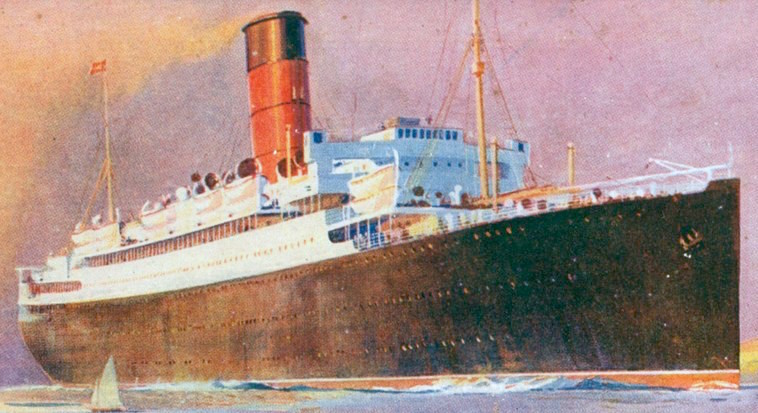
RMS Lancastria
RMS Lancastria was a British ocean liner requisitioned by the Government of the United Kingdom during the Second World War. She was sunk on 17 June 1940 during Operation Aerial. Having received an emergency order to evacuate British nationals and troops from France, the ship was loaded well in excess of its capacity of 1,300 passengers. Modern estimates suggest that between 4,000 and 7,000 people died during the sinking — the largest single-ship loss of life in British maritime history.
The ship was launched in 1920 as Tyrrhenia by William Beardmore and Company of Dalmuir on the River Clyde for the Anchor Line, a subsidiary of Cunard. She was the sister ship of RMS Cameronia, which Beardmore had built for the Anchor Line the previous year. Tyrrhenia was 16,243 gross register tons (GRT), 578 feet (176 m) long and could carry 2,200 passengers in three classes. She made her maiden voyage, Glasgow–Quebec City–Montreal, on 13 June 1922.
In 1924 she was refitted for two classes and renamed Lancastria after passengers complained that they could not pronounce Tyrrhenia (the proper pronunciation of which is /tɪˈriːniə/, hence the crew's nickname of "Old Soup Tureen" for the ship).
She sailed scheduled routes between Liverpool and New York until 1932, and was then used as a cruise ship in the Mediterranean Sea and Northern Europe. On 10 October 1932 Lancastria rescued the crew of the Belgian cargo ship SS Scheldestad, which had been abandoned in a sinking condition in the Bay of Biscay. In 1934 the Catholic Boy Scouts of Ireland chartered Lancastria for a pilgrimage to Rome. In May 1936, she undertook a specially commissioned cruise to visit war memorials at Malta, Salonika, Gallipoli and Istanbul. The passengers on this voyage included Admiral of the Fleet Roger Keyes, Field Marshal William Birdwood and Commodore Edward Unwin.
At the outbreak of the Second World War in September 1939, Lancastria was in the Bahamas. She was ordered to sail from Nassau to New York for refitting as she had been requisitioned as a troopship, becoming HMT Lancastria. Unnecessary fittings were removed, she was repainted in battleship grey, the portholes were blacked out, and a 4-inch gun was installed. She was first used to ferry men and supplies between Canada and the United Kingdom. In April 1940, she was one of twenty troopships in Operation Alphabet, the evacuation of troops from Norway, and was bombed on the return journey although she escaped damage. Shortly afterwards, Lancastria carried troops to consolidate the invasion of Iceland. Returning to Glasgow, the captain requested that surplus oil in her tanks be removed, but there was insufficient time before she was ordered to Liverpool for a refit. Crew members were either discharged or sent on leave.
Lancastria was sunk on 17 June 1940 off the French port of St. Nazaire while taking part in Operation Aerial, the evacuation of British nationals and troops from France, two weeks after the Dunkirk evacuation.
Within hours of berthing at Liverpool, Lancastria was urgently recalled to sea; loud-speaker announcements at the main railway station successfully recalled nearly all the crew members; she arrived in Plymouth on 15 June to await orders. She was originally sent to Quiberon Bay as part of Operation Aerial, which was the evacuation of the remainder of the British Expeditionary Force which had been cut off to the south of the German advance through France, amounting to some 124,000 men, mostly logistic support troops, from various ports in western France. Accompanying Lancastria was the 20,341-ton liner, Franconia. Finding that she was not required for the evacuation from Lorient, the captain of Lancastria, Rudolph Sharp, was sent on towards the port of St. Nazaire, where many more troops were waiting to be lifted, On the way, an air raid damaged Franconia, which returned to England for repairs, leaving Lancastria to continue alone. She arrived in the mouth of the Loire estuary late on 16 June. Because the port has to be accessed along a tidal channel, Lancastria anchored in the Charpentier Roads, some 5 miles (8.0 km) south-west of St. Nazaire, at 04:00 on 17 June, along with some thirty other merchant vessels of all sizes.
Early in the morning, three RNVR officers came aboard to ask how many troops Lancastria could take. Her normal complement in troopship configuration was 2,180 including 330 crew; however, Captain Sharp had brought 2,653 men back from Norway, so he replied that he could take 3,000 "at a pinch". He was told that he should take as many as he possibly could "without regard to the limits of International Law". Troops were ferried out to Lancastria and the other larger ships by destroyers, tugs, fishing boats and other small craft, a round trip of three or four hours, sometimes being machine-gunned by German aircraft, although apparently without casualties. By the mid-afternoon of 17 June she had embarked an unknown number (estimates range from 4,000 up to 9,000) line-of-communication troops (including Pioneer and Royal Army Service Corps soldiers) and Royal Air Force personnel, together with several thousand civilian refugees, including embassy staff and employees of Fairey Aviation of Belgium with their families. People were crowded into whatever spaces were available including the large cargo holds. One Royal Engineers officer reported that he had been told by one of Lancastria's loading officers that over 7,200 people had come aboard. Captain Sharp estimated the number to be 5,500.
Hub AI
RMS Lancastria AI simulator
(@RMS Lancastria_simulator)
RMS Lancastria
RMS Lancastria was a British ocean liner requisitioned by the Government of the United Kingdom during the Second World War. She was sunk on 17 June 1940 during Operation Aerial. Having received an emergency order to evacuate British nationals and troops from France, the ship was loaded well in excess of its capacity of 1,300 passengers. Modern estimates suggest that between 4,000 and 7,000 people died during the sinking — the largest single-ship loss of life in British maritime history.
The ship was launched in 1920 as Tyrrhenia by William Beardmore and Company of Dalmuir on the River Clyde for the Anchor Line, a subsidiary of Cunard. She was the sister ship of RMS Cameronia, which Beardmore had built for the Anchor Line the previous year. Tyrrhenia was 16,243 gross register tons (GRT), 578 feet (176 m) long and could carry 2,200 passengers in three classes. She made her maiden voyage, Glasgow–Quebec City–Montreal, on 13 June 1922.
In 1924 she was refitted for two classes and renamed Lancastria after passengers complained that they could not pronounce Tyrrhenia (the proper pronunciation of which is /tɪˈriːniə/, hence the crew's nickname of "Old Soup Tureen" for the ship).
She sailed scheduled routes between Liverpool and New York until 1932, and was then used as a cruise ship in the Mediterranean Sea and Northern Europe. On 10 October 1932 Lancastria rescued the crew of the Belgian cargo ship SS Scheldestad, which had been abandoned in a sinking condition in the Bay of Biscay. In 1934 the Catholic Boy Scouts of Ireland chartered Lancastria for a pilgrimage to Rome. In May 1936, she undertook a specially commissioned cruise to visit war memorials at Malta, Salonika, Gallipoli and Istanbul. The passengers on this voyage included Admiral of the Fleet Roger Keyes, Field Marshal William Birdwood and Commodore Edward Unwin.
At the outbreak of the Second World War in September 1939, Lancastria was in the Bahamas. She was ordered to sail from Nassau to New York for refitting as she had been requisitioned as a troopship, becoming HMT Lancastria. Unnecessary fittings were removed, she was repainted in battleship grey, the portholes were blacked out, and a 4-inch gun was installed. She was first used to ferry men and supplies between Canada and the United Kingdom. In April 1940, she was one of twenty troopships in Operation Alphabet, the evacuation of troops from Norway, and was bombed on the return journey although she escaped damage. Shortly afterwards, Lancastria carried troops to consolidate the invasion of Iceland. Returning to Glasgow, the captain requested that surplus oil in her tanks be removed, but there was insufficient time before she was ordered to Liverpool for a refit. Crew members were either discharged or sent on leave.
Lancastria was sunk on 17 June 1940 off the French port of St. Nazaire while taking part in Operation Aerial, the evacuation of British nationals and troops from France, two weeks after the Dunkirk evacuation.
Within hours of berthing at Liverpool, Lancastria was urgently recalled to sea; loud-speaker announcements at the main railway station successfully recalled nearly all the crew members; she arrived in Plymouth on 15 June to await orders. She was originally sent to Quiberon Bay as part of Operation Aerial, which was the evacuation of the remainder of the British Expeditionary Force which had been cut off to the south of the German advance through France, amounting to some 124,000 men, mostly logistic support troops, from various ports in western France. Accompanying Lancastria was the 20,341-ton liner, Franconia. Finding that she was not required for the evacuation from Lorient, the captain of Lancastria, Rudolph Sharp, was sent on towards the port of St. Nazaire, where many more troops were waiting to be lifted, On the way, an air raid damaged Franconia, which returned to England for repairs, leaving Lancastria to continue alone. She arrived in the mouth of the Loire estuary late on 16 June. Because the port has to be accessed along a tidal channel, Lancastria anchored in the Charpentier Roads, some 5 miles (8.0 km) south-west of St. Nazaire, at 04:00 on 17 June, along with some thirty other merchant vessels of all sizes.
Early in the morning, three RNVR officers came aboard to ask how many troops Lancastria could take. Her normal complement in troopship configuration was 2,180 including 330 crew; however, Captain Sharp had brought 2,653 men back from Norway, so he replied that he could take 3,000 "at a pinch". He was told that he should take as many as he possibly could "without regard to the limits of International Law". Troops were ferried out to Lancastria and the other larger ships by destroyers, tugs, fishing boats and other small craft, a round trip of three or four hours, sometimes being machine-gunned by German aircraft, although apparently without casualties. By the mid-afternoon of 17 June she had embarked an unknown number (estimates range from 4,000 up to 9,000) line-of-communication troops (including Pioneer and Royal Army Service Corps soldiers) and Royal Air Force personnel, together with several thousand civilian refugees, including embassy staff and employees of Fairey Aviation of Belgium with their families. People were crowded into whatever spaces were available including the large cargo holds. One Royal Engineers officer reported that he had been told by one of Lancastria's loading officers that over 7,200 people had come aboard. Captain Sharp estimated the number to be 5,500.