Hubbry Logo
Raffaele RiarioRaffaele RiarioMain
Open search
Raffaele Riario
Community hub
Raffaele Riario
logo
8 pages, 0 posts
0 subscribers
Be the first to start a discussion here.
Raffaele Riario
Raffaele Riario
from Wikipedia

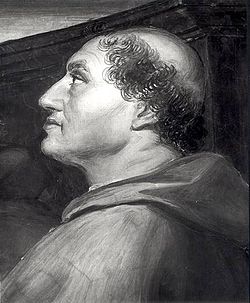
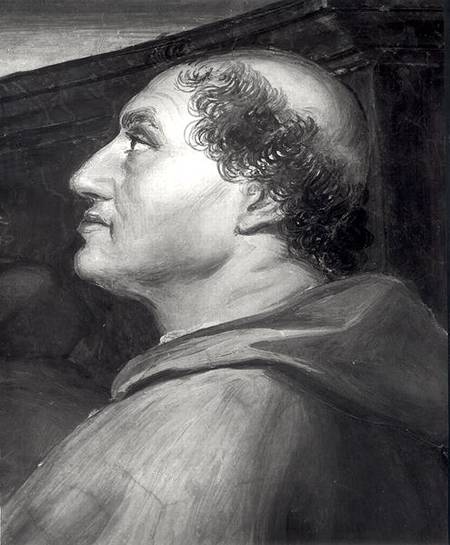
Raffaele Sansoni Galeoti Riario (3 May 1461 – 9 July 1521) was an Italian cardinal of the Renaissance, mainly known as the constructor of the Palazzo della Cancelleria and the person who invited Michelangelo to Rome. He was a patron of the arts. He was also the first adolescent to be elevated in the College of Cardinals in the history of the Holy See.[1]

Key Information

Early career and Pazzi Conspiracy

[edit]

Born in poverty in Savona, Riario was the son of Antonio Sansoni and Violante Riario, a niece of Francesco della Rovere, who became Pope Sixtus IV in 1471.[2]

Being the relative of a Pope Sixtus IV, he was created Cardinal of San Giorgio in Velabro on 10 December 1477[3] and was named Administrator of several dioceses: (diocese of Cuenca, diocese of Pisa, diocese of Salamanca, diocese of Treguier, diocese of Osma). These gave him a handsome income, and no obligations except to appoint a vicar. He was then only sixteen years old and a student of canon law at the University of Pisa. He left Pisa because of the plague.[2] While returning to Rome in the spring of 1478, Riario halted in Florence, where he became a witness to the Pazzi Conspiracy against the Medici. Despite his innocence, Raffaele was arrested by the Florentine authorities because he was a relation of the conspirators Girolamo Riario, his mother's brother and the head of the plot, and the Archbishop Francesco Salviati. His release a few weeks later was arranged by Lorenzo de' Medici. On 22 June 1478 he was received formally as a cardinal by the Pope in Siena and four days later he was sent as legate to Perugia.

It was not until 1480 that Raffaele was ordained priest and received the entitlement of San Lorenzo in Damaso. He was named Camerlengo in 1483.

Riario in the Papal Court

[edit]

In 1484, Riario was engaged in the war which broke out between the Orsini and the Colonna family, trying to secure in vain the life of his friend Lorenzo Oddone Colonna, who was charged of having murdered an Orsini and was executed by Sixtus IV. In 1488, Pope Innocent VIII sent Cardinal Riario as a legate to his maternal uncle Girolamo Riario, at the time governor of Forlì and Imola, who was revolting against the Holy See. Meanwhile, the Cardinal had already commissioned the erection of his palace beside the church of San Lorenzo in Damaso (1486).

It is said that Franceschetto Cybo, the infamous son of Innocent VIII, lost in one single night 15,000 ducats at a card game which took place in Raffaele's residence. When the Pope asked the Cardinal to return his son's money, the latter answered that he was sorry, but he had already used it to finance the construction of his palace.

As Camerlengo, Riario is usually praised for ensuring order in Rome after the death of Innocent VIII.[2] He was a candidate for the papal tiara in the Conclave of 1492, but excluded from the first ballots due to his young age. He finally voted for Rodrigo Borgia (Pope Alexander VI), receiving the lucrative Bishopric of Cartagena as a reward for his support.

During Alexander VI’s reign (1492–1503), Riario gained distinction as diplomat and councillor of the papal throne. In 1493, he was sent as legate to Caterina Sforza, Girolamo Riario's widow, to prevent her from allowing the French troops to pass through Forlì and Imola. Pope Julius II (1503–1513), Riario's relative but not always his ally, raised him to the Bishopric of Ostia and Velletri.

Engagement in the plot against Leo X and death

[edit]

In June 1517, Cardinal Petrucci and others conspired against Pope Leo X (Giovanni dei Medici). Cardinal Riario refused to participate in the plot but was at least aware of Petrucci's intentions to murder the Pope and did nothing to prevent it. Leo was notified about the plot, arrested the conspirators and ordered their execution. Riario, whose entanglement in the Pazzi conspiracy had not been forgotten by the Medici Pope, secured his head only by surrendering his palace beside San Lorenzo in Damaso to the Pope. Leo transferred it to his cousin Giulio de' Medici, Vice-Chancellor of the Holy See, who rendered it the seat of the Apostolic Chancery. Thus the Palazzo Riario was henceforward known as Palazzo della Cancelleria.

Riario died in Naples, at the age of sixty. His tomb is located in the Basilica dei Santi Apostoli in Rome.

Art patronage and reputation

[edit]

A lover of fine arts and especially sculpture, Cardinal Riario's artistic choices foreshadow the arrival of High Renaissance in Rome. His gigantic residence, influenced by Florentine architecture, is the first building of the new monumental style which prevailed in the Holy City under Julius II. Riario is also credited for noticing the talent of the young Michelangelo. In 1496, the Sleeping Cupid was treacherously sold to him as an ancient piece: the aesthetic prelate discovered the cheat, but was so impressed by the quality of the sculpture that he invited the artist to Rome, where Michelangelo worked on the three major commissions of his career. For Riario, Michelangelo carved the Bacchus (1496-97), which is now in the Bargello Museum, Florence.[4]

Raffaele Riario is generally considered a prelate typical of his era: indifferent in religious matters, rather a statesman than a priest, rather a Maecenas than a theologian.

[edit]

Raffaele Riario appears in seasons 2 and 3 of the 2016 Medici tv series. He is played by Francesco di Raimondo in season 2 and Loris De Luna in season 3. He is played by American actor Scott William Winters in all three seasons of the Borgia television series, which aired in 2011 to 2014. In this adaptation he is a close conspirator of his distant cousin Giuliano della Rovere against Rodrigo Borgia and others in the Borgia family, though his political skill and usefulness lets him rise to Vice Chancellor of the church under Alexander's reign.

Raffaele Riario is a major character in the manga Cesare: Creator of Destruction, which focuses on Cesare Borgia's year studying at the University of Pisa in the year before his father was elected as Pope Alexander VI. In the manga, Riario is the Archbishop of Pisa, and Cesare lives with him in his palace. In the 2023 stage musical adaptation, Riario was played by Haruki Kiyama.

References

[edit]

Further reading

[edit]
Revisions and contributorsEdit on WikipediaRead on Wikipedia
from Grokipedia
Raffaele Sansoni Riario (3 May 1461 – 9 July 1521) was an Italian cardinal of the Roman Catholic Church, elevated to the position at the age of sixteen by his great-uncle, , despite his modest origins in . As a prominent ecclesiastical figure during the , Riario served as of multiple sees, including and , and held the influential post of vice-chancellor of the Holy Roman Church from 1505 to 1519. A notable patron of the arts, he commissioned the grand in , one of the earliest examples of palace architecture, and invited the sculptor Buonarroti to the city, where the artist produced the Bacchus statue for him—a work that stirred debate for its classical, seemingly pagan influences. Riario's career intertwined with the volatile politics of the papal court, involving participation in conclaves and associations with factions that led to his temporary exile and restoration under successive popes, though he distanced himself from overt conspiracies like the 1517 plot against Leo X. His elevation exemplified the prevalent in the late 15th-century papacy, enabling his accumulation of wealth and influence that funded cultural endeavors amid the era's blend of spiritual authority and temporal power.

Early Life

Family Origins and Birth

The Riario family originated in , within the , where they held minor noble status. Paolo Riario, a noble of , married della Rovere around 1440; she was the sister of Francesco della Rovere, who was elected in 1471. This union linked the Riario lineage to the influential family, elevating their prospects through papal . Raffaele Sansoni Riario was born on 3 May 1461 in to Antonio Sansoni, from a family of modest circumstances, and Violante Riario, daughter of Paolo Riario and Bianca della Rovere. As the son of Violante—sister to cardinals and —he was the grandnephew of Sixtus IV, though the family resided in poverty prior to the pope's ascension. Antonio Sansoni later adopted the Riario surname, reflecting the maternal lineage's rising prominence.

Education and Initial Ecclesiastical Roles

Raffaele Riario pursued studies in at the , where he was enrolled at the time of his elevation to the cardinalate. His education was guided by tutor Iacopo di , reflecting the scholarly preparation typical for young nobles entering ecclesiastical service during the . Prior to his cardinalate, Riario held the position of , a role that involved administrative duties in the papal curia and marked his entry into ecclesiastical administration around 1476–1477. On December 10, 1477, at age 16, —Riario's uncle—elevated him to cardinal deacon, assigning the deaconry of San Giorgio in Velabro on December 12; this appointment exemplified in papal promotions, granting significant influence and benefices to family members without prior extensive clerical experience. In his initial years as cardinal, Riario received multiple administrative sees, including legate to on June 26, 1478, a position he held until October 15 of that year, amid tensions between the and . He was appointed administrator of the archbishopric of on September 17, 1479, retaining it until June 3, 1499, which aligned with his ongoing studies and provided revenue streams. Further roles included administrator of Cuenca on August 13, 1479 (resigned 1482, reappointed 1493), and Tréguier on August 18, 1480 (until 1483), consolidating his early ecclesiastical portfolio through papal favor. By May 5, 1480, he advanced to cardinal priest of San Lorenzo in Damaso, enhancing his standing in Roman hierarchies.

Rise to Prominence

Nepotistic Elevation to Cardinalate

Raffaele Sansoni Riario, born on 3 May 1461 in Savona to Antonio Sansoni and Violante Riario (sister of Pope Sixtus IV), was positioned for ecclesiastical advancement through familial ties to the newly elected pontiff. Sixtus IV, who ascended the papal throne on 9 August 1471, pursued a policy of nepotism to secure loyalty and extend influence, appointing relatives to key positions despite their limited qualifications. On 10 December 1477, while Riario was studying at the , Sixtus IV elevated him to the in a consistory that created five new members, including other papal relatives such as Cristoforo . At age 16, Riario received the title of cardinal-deacon of San Giorgio in Velabro on 12 December 1477, a deaconry associated with modest prestige but significant for its holder's youth and inexperience. This appointment underscored Sixtus IV's favoritism toward nephews, as Riario lacked substantial prior clerical service beyond nominal roles arranged by his uncle, such as subdeaconate orders. The pope's strategy mirrored earlier elevations, like that of another nephew, Pietro Riario, in 1471, aiming to embed family members in the for political leverage amid Italian rivalries. Contemporary accounts and later historical assessments view such promotions as prioritizing dynastic consolidation over canonical norms on age and merit, contributing to criticisms of Sixtus IV's reign for corrupting ecclesiastical appointments.

Witness to the Pazzi Conspiracy

In the spring of 1478, Raffaele Riario, then a 17-year-old cardinal recently elevated by his great-uncle , traveled from the —where he had been studying —toward , halting in amid an outbreak of plague in . His visit coincided with escalating tensions between the Medici family and the banking family, backed covertly by papal interests including Riario's relative, Count , over disputes involving the sale of . The conspirators exploited Riario's presence as a to draw into vulnerable situations. Early in 1478, they invited Lorenzo to Jacopo de' Pazzi's villa at Montughi under the guise of a meeting with the young cardinal, aiming to assassinate him and his brother Giuliano separately, though the plan faltered. On April 25, Lorenzo hosted Riario and Francesco Salviati—another conspirator—at his villa in to repair relations with the papacy, during which a attempt at a banquet in Riario's honor failed when Giuliano did not attend. The following day, April 26, Riario accompanied the Medici brothers to High Mass at (Duomo), where the plot culminated. As the elevation of the host occurred, assassins and attacked: Giuliano was stabbed 19 times and killed, while Lorenzo sustained a neck wound but escaped to the , where he reportedly shielded Riario from further harm, recognizing the cardinal's unwitting involvement as a papal pawn. Riario, present in or near the , thus directly witnessed the violence that left blood staining the cathedral floor and sparked immediate Medici retaliation, including the hanging of conspirators from the windows. In the aftermath, Riario was briefly arrested due to his kinship with Girolamo Riario, a key instigator, but Lorenzo de' Medici intervened to secure his release after several weeks, sparing him execution despite the plot's papal ties. This act of clemency toward the innocent cardinal underscored Lorenzo's strategic diplomacy amid the ensuing papal interdict and war declarations from Sixtus IV, who excommunicated him and rallied allies against Florence. Riario's detachment from the conspiracy—leveraged unwittingly through hospitality protocols—preserved his position, allowing his return to Rome without formal charges.

Ecclesiastical Career

Positions in the Papal Administration

Raffaele Riario was appointed of the Holy Roman Church on January 24, 1483, by , a role that entailed administering the Apostolic Chamber's finances, properties, and revenues, with particular authority during sede vacante periods following a pope's death. He retained this influential curial office continuously through the reigns of subsequent popes—Innocent VIII, Alexander VI, Pius III, Julius II, and Leo X—until his deposition amid the 1517 Petrucci conspiracy, after which he was partially restored before his death in 1521. The position granted Riario substantial control over papal fiscal operations and enhanced his standing in the , enabling him to accumulate wealth and patronize major architectural projects like the Palazzo della Cancelleria. Within the , Riario advanced through titular churches and suburban sees, reflecting his growing administrative prominence. Elevated as cardinal-deacon of San Giorgio in Velabro on December 12, 1477, he transferred to the cardinal-priest title of San Lorenzo in Damaso on May 5, 1480, a tied to lucrative Roman properties. By November 29, 1503, under , he became cardinal-bishop of Albano, progressing to Sabina on August 3, 1507; Porto e Santa Rufina on September 22, 1508; and finally Ostia e Velletri on January 20, 1511, which conferred the deanship of the Sacred College and oversight of its proceedings, including conclaves. Riario also served in diplomatic capacities within the papal administration, such as legate a latere to and in 1488 under Innocent VIII to suppress unrest following Girolamo Riario's assassination. These missions underscored his role in extending curial authority over the , though his primary administrative leverage stemmed from the Camerlengo's fiscal duties and his seniority in the cardinalate.

Involvement in Roman Politics and Diplomacy

As a prominent member of the , Raffaele Riario wielded considerable influence in the internal politics of the papal , often aligning with powerful factions to advance both ecclesiastical and familial interests. Appointed of the Holy Roman Church in 1505—a position he held intermittently from earlier years—he administered the temporal affairs of the Church during papal vacancies, including the following VI's death on August 18, 1503, when he entered on August 9 to assume control and maintain order amid factional tensions. His role extended to mediating disputes among Roman baronial families; in 1484, during the outbreak of hostilities between the Orsini and Colonna clans, Riario attempted, albeit unsuccessfully, to broker a truce that might have preserved the life of a key figure in the conflict. Riario's diplomatic engagements underscored the intersection of papal authority with Italian statecraft, particularly in securing from semi-autonomous territories tied to Riario holdings. Under , he was dispatched as legate in 1488 to and , where his maternal relative served as papal ; the mission aimed to reinforce control amid local unrest, though it coincided with Girolamo's on April 14 of that year, prompting further efforts by Riario to suppress the ensuing popular uprising on behalf of the pope. These interventions reflected the nepotistic networks that propelled Riario's career, as Forlì's governance remained a Riario inheritance under after Girolamo's death. During the reign of Alexander VI (1492–1503), Riario distinguished himself as a trusted and advisor, navigating the volatile alliances of after initially supporting Giuliano della Rovere's in the 1492 conclave before shifting allegiance to Rodrigo Borgia. In 1493, he served as legate to in , tasked with dissuading her from granting passage to French forces under VIII, whose invasion threatened papal territories; this mission sought to preserve neutrality and papal influence amid the broader Italian response to French ambitions. Riario's participation in multiple conclaves—1484, 1492, 1503 (both elections), and others—further embedded him in electoral politics, where he voted strategically, crowned III as in 1503, and emerged as a leading candidate himself in 1513 before Leo X's election. These activities positioned him as a pivotal figure in balancing curial intrigue with external , though his ambitions were constrained by the era's shifting papal dynasties and baronial rivalries.

Later Intrigues and Downfall

Awareness of the Petrucci Conspiracy against Leo X

Raffaele Riario became implicated in the Petrucci Conspiracy, a plot uncovered in June 1517 to assassinate Pope Leo X through poisoning administered by the papal physician during treatment for the pope's fistula. Led by Cardinal Alfonso Petrucci, who sought to elevate Cardinal Bandinello Sauli to the papacy amid grievances over lost Sienese influence, the scheme involved recruiting assassins and exploiting Leo's health vulnerabilities. Riario, as a senior cardinal and , possessed knowledge of Petrucci's murderous intentions toward Leo but neither joined the active nor disclosed it to papal authorities, constituting through silence. Petrucci himself accused Riario of involvement during interrogations, though Riario consistently denied direct participation. Initially, under questioning, Riario confessed to Cardinal Giulio de' Medici (future ) his awareness of the plot, but he subsequently retracted this admission, prompting skepticism among fellow cardinals about the charges' validity. Pope Leo, informed of the on June 20, 1517, ordered Riario's arrest alongside other implicated cardinals like Sauli and Francesco Soderini; Riario was detained in for weeks. A consistory on July 22 convicted him of negligence in failing to report the threat, leading to his deposition as , a fine equivalent to 300,000 scudi (roughly 30 percent of annual papal revenue), and the forfeiture of the Palazzo della Cancelleria to the as partial restitution. Unlike Petrucci, who was garroted and his body thrown from the castle battlements, Riario escaped execution due to his prominence and partial cooperation, though the severity reflected Leo's determination to deter future threats amid fiscal pressures from the pope's lavish expenditures. The episode underscored Riario's entanglement in curial intrigues, where passive awareness amid factional rivalries—stemming from his earlier ties to anti-Medici elements like the —invited suspicion, even as evidence of active plotting remained circumstantial and reliant on coerced testimonies. Leo X publicly affirmed Riario's guilt to envoys, citing the retracted confession as sufficient grounds, thereby prioritizing security over evidentiary purity in a of routine papal vulnerabilities.

Deposition, Fine, and Partial Restoration

In June 1517, a consistory of cardinals convicted Raffaele Riario of in the Petrucci against , based on his knowledge of the plot to assassinate the pontiff without taking action to thwart it. Riario, along with Cardinals Sauli, Soderini, and others, was arrested and imprisoned in ; while the ringleader Alfonso Petrucci was executed by strangulation on July 4, Riario's punishment focused on financial and administrative penalties rather than death. Leo X deposed Riario from his prestigious role as Vice-Chancellor of the Holy Roman Church—a position he had held since 1506—and stripped him of most benefices, including key sees and revenues that had sustained his opulent and activities. To secure his release from imprisonment, Riario's family paid a massive fine of 150,000 ducats to the papal , an amount equivalent to a significant portion of the Vatican's annual income at the time and reflective of Leo's opportunistic exploitation of the for fiscal gain. This levy, combined with the confiscation of properties like the Palazzo Riario (later repurposed for papal use), severely diminished Riario's wealth and influence. Despite these losses, Riario experienced partial restoration when Leo X confirmed his retention of the cardinalate itself, allowing him to preserve the core dignity of his status without full degradation to layman. Riario publicly acknowledged the lawfulness of his deposition as a condition of this clemency, enabling his return to limited participation in curial affairs, though he never regained his former administrative primacy or . This outcome underscored the pragmatic of papal justice, where severe penalties served both retribution and revenue generation, yet spared high-ranking prelates from total ruin to maintain institutional stability.

Artistic Patronage

Commissions of Architecture and Sculpture

Raffaele Riario commissioned the Palazzo della Cancelleria in as his primary residence, constructing it between approximately 1485 and 1511 under the direction of architects Baccio Pontelli and Antonio da Sangallo the Elder. This palace, located between and Corso Vittorio Emanuele II, represents one of the earliest and most influential examples of palace architecture in , drawing inspiration from Florentine models with its rusticated stone facade, expansive courtyard incorporating ancient Roman columns, and integration of classical motifs. Tradition holds that Riario financed much of the project through winnings from a single night of , underscoring his personal wealth derived from positions. The structure's completion coincided with Riario's rising influence, serving not only as a dwelling but also as a venue for displaying his collections. In sculpture, Riario's most notable commission was Michelangelo's Bacchus, executed between 1496 and 1497 shortly after the artist's arrival in at Riario's invitation. This life-sized , depicting the Roman god of wine in a drunken, swaying pose with exaggerated realism, stemmed from Riario's admiration for Michelangelo's skill in imitating ancient , particularly after acquiring a faux ancient Sleeping carved by the young sculptor. Although Riario, a collector of classical works, ultimately rejected or did not retain the Bacchus—possibly due to its unconventional, irreverent portrayal diverging from ideals—the commission marked an early validation of Michelangelo's talent and facilitated further papal patronage. Riario's broader patronage emphasized sculptures evoking antiquity, but documented original commissions beyond the Bacchus remain limited.

Collection of Antiquities and Ties to Michelangelo

Cardinal Raffaele Riario amassed one of the most notable collections of ancient Roman sculptures in late 15th-century Rome, housed primarily in his Palazzo della Cancelleria, which he began constructing around 1485. This collection included authentic antiquities alongside contemporary imitations styled all'antica, reflecting the Renaissance fascination with classical art and the era's blurred distinctions between genuine artifacts and modern recreations. Riario's patronage extended to acquiring marbles that evoked pagan deities and mythological figures, positioning his palace as a center for humanistic study and artistic emulation of antiquity. Riario's ties to Michelangelo Buonarroti originated in June 1496, shortly after the artist's arrival in , when Riario purchased a Sleeping (Eros) that had been artificially aged and sold as an ancient artifact. Though the forgery was soon detected—likely through scholarly scrutiny of its stylistic anomalies—Riario, impressed by the sculpture's superior craftsmanship rivaling true antiquities, summoned the young (then 21) to his palace and commissioned a work to compete directly with his ancient collection. This encounter, facilitated by the banker Jacopo Galli acting as Riario's agent, marked Michelangelo's entry into Roman patronage circles. The resulting commission was Michelangelo's Bacchus (1496–1497), a life-sized depicting the drunken god with grapes in hand, explicitly designed to integrate with Riario's by mimicking classical and revelry motifs. Riario fully funded the piece, intending it for his collection, though it ultimately passed to for reasons undocumented in contemporary accounts, possibly due to dissatisfaction with its unconventional portrayal of inebriation over heroic sobriety. This patronage not only elevated Michelangelo's reputation but underscored Riario's role in bridging ancient inspiration with emerging genius, as his collection served as both a reference library and a testing ground for modern artists.

Legacy and Assessments

Contributions to Renaissance Culture

Raffaele Riario advanced Renaissance culture through extensive patronage of architecture and the arts, notably commissioning the Palazzo della Cancelleria in Rome between 1489 and 1513, which served as his residence adjacent to San Lorenzo in Damaso and exemplified early High Renaissance palace design with its integration of classical elements and innovative courtyard featuring reused ancient columns. This project, initially attributed to Baccio Pontelli with later contributions from Antonio da Sangallo the Elder, influenced subsequent Roman palazzi by blending functional urban planning with aesthetic grandeur derived from antique precedents. As a dedicated collector of , Riario amassed a renowned collection of ancient sculptures housed in his palace, which not only enhanced his personal prestige but also stimulated scholarly interest in classical revival among Roman humanists and artists during the late . His acquisitions, including purported antiques that sparked debates on authenticity, underscored a humanistic reverence for antiquity that bridged ancient models and contemporary creation, fostering an environment where modern works competed directly with classical ones. Riario's most direct impact on sculpture came via his early support for Buonarroti, summoning the artist to in 1496 to view his antiquities collection and commission a marble Bacchus statue intended to rival ancient masterpieces in beauty and vitality. Though Riario ultimately rejected the completed Bacchus (1496–1497) for its perceived lack of sobriety, this patronage—facilitated through intermediaries like Jacopo Galli—provided Michelangelo with crucial exposure and resources in , indirectly advancing the sculptor's career and the era's emphasis on all'antica innovation. Beyond specific commissions, Riario sponsored broader cultural initiatives, including theatrical productions, festivals, and studies in humanism, astrology, and , which enriched 's intellectual milieu and reinforced the Riario family's dynastic cultural ambitions under papal nepotism.

Criticisms of Nepotism and Moral Character

Raffaele Riario's appointment as a cardinal on December 22, 1477, at the age of 17, epitomized the of his uncle, , who elevated multiple relatives to high ecclesiastical offices despite their youth and inexperience. This practice prioritized familial loyalty over merit, theological training, or pastoral qualifications, drawing criticism from contemporaries and later historians who argued it eroded the Church's credibility and fostered corruption within the . Figures like and , drawing from direct diplomatic exposure to papal courts, condemned such nepotistic elevations as systemic abuses that transformed sacred roles into instruments of dynastic ambition. Riario's moral character faced scrutiny for his worldly indulgences, particularly his reputation as an inveterate and patron of luxury, which clashed with expectations of clerical . He reportedly financed the grand —begun in 1489 and one of Rome's most opulent structures—through a legendary single-night gambling win of 70,000 ducats, underscoring a lifestyle of reckless expenditure ill-suited to a prince of the Church. Such excesses, including lavish entertainments and acquisitions of , invited rebuke from moral reformers who viewed them as symptomatic of broader clerical immorality, prioritizing temporal pleasures over spiritual duties. While Riario's patronage advanced cultural endeavors, these pursuits were often financed through his vice-chancellorship, raising allegations of and that further tarnished his ethical standing.

References

Add your contribution
Related Hubs
User Avatar
No comments yet.