



Community hub
Recent from talks
Knowledge base stats:
Talk channels stats:
Members stats:
Rail (bird)
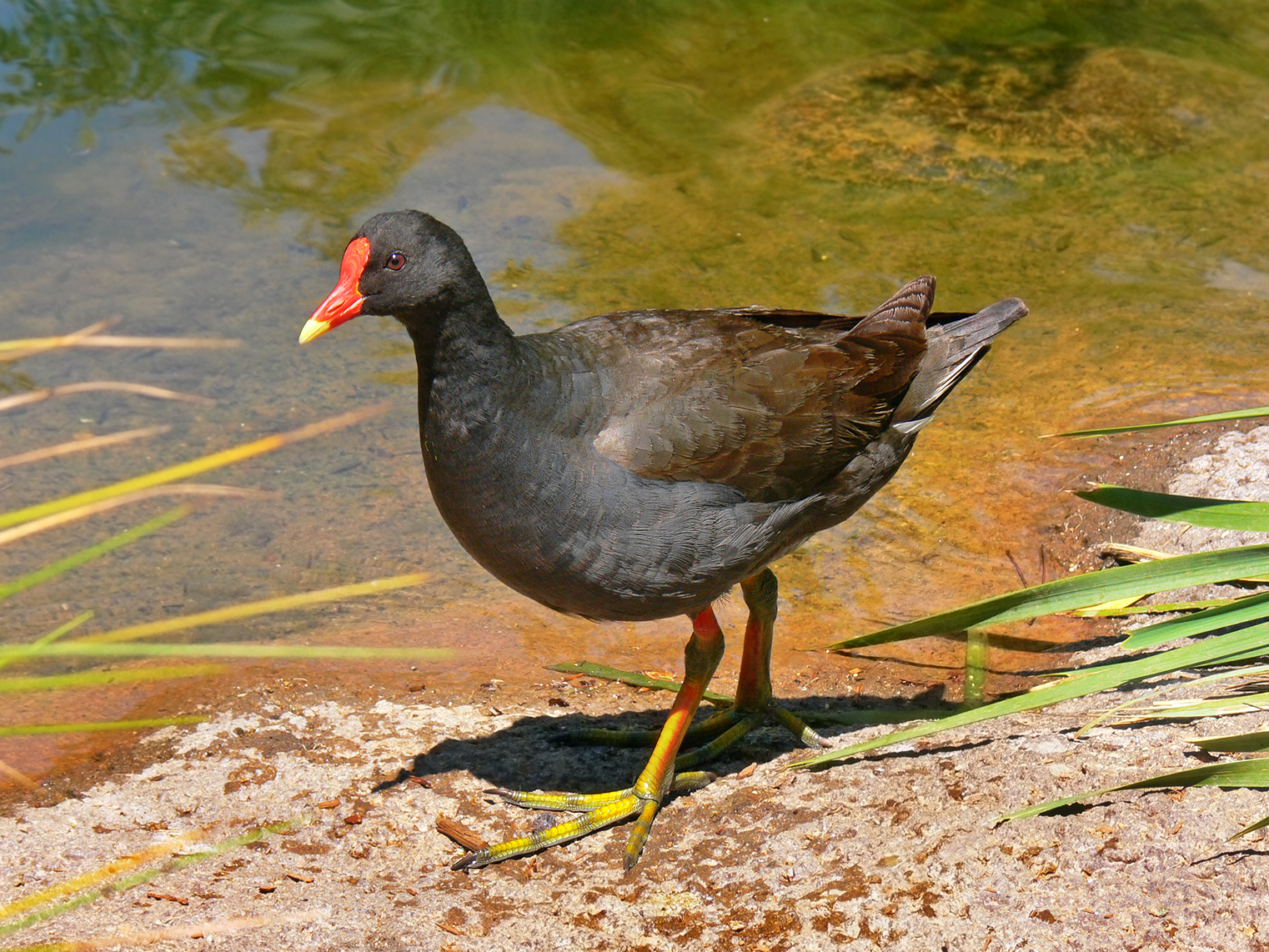
Rails (avian family Rallidae) are a large, cosmopolitan family of small- to medium-sized terrestrial and/or semi-amphibious birds. The family exhibits considerable diversity in its forms, and includes such ubiquitous species as the crakes, coots, and gallinule; other rail species are extremely rare or endangered. Many are associated with wetland habitats, some being semi-aquatic like waterfowl (such as the coot), but many more are wading birds or shorebirds. The ideal rail habitats are marsh areas, including rice paddies, and flooded fields or open forest. They are especially fond of dense vegetation for nesting. The rail family is found in every terrestrial habitat with the exception of dry desert, polar or freezing regions, and alpine areas (above the snow line). Members of Rallidae occur on every continent except Antarctica. Numerous unique island species are known.
"Rail" is the anglicized respelling of the French râle, from Old French rasle. It is named from its harsh cry, in Vulgar Latin *rascula, from Latin rādere ("to scrape").
The rails are a family of small to medium-sized, ground-living birds. They vary in length from 12 to 63 cm (5 to 25 in) and in weight from 20 to 3,000 g (0.7 oz to 6 lb 10 oz). Some species have long necks and in many cases are laterally compressed.
The bill is the most variable feature within the family. In some species, it is longer than the head (like the clapper rail of the Americas); in others, it may be short and wide (as in the coots), or massive (as in the purple gallinules). A few coots and gallinules have a frontal shield, which is a fleshy, rearward extension of the upper bill. The most complex frontal shield is found in the horned coot.
Rails exhibit very little sexual dimorphism in either plumage or size. Two exceptions are the watercock (Gallicrex cinerea) and the little crake (Zapornia parva).
The wings of all rails are short and rounded. The flight of those Rallidae able to fly, while not powerful, can be sustained for long periods of time, and many species migrate annually. The weakness of their flight, however, means they are easily blown off course, thus making them common vagrants, a characteristic that has led them to colonize many isolated oceanic islands. Furthermore, these birds often prefer to run rather than fly, especially in dense habitat. Some are also flightless at some time during their moult periods.
Flightlessness in rails is one of the best examples of parallel evolution in the animal kingdom. Of the roughly 150 historically known rail species, 31 extant or recently extinct species evolved flightlessness from volant (flying) ancestors. This process created the endemic populations of flightless rails seen on Pacific islands today.
Many island rails are flightless because small island habitats without mammalian predators eliminate the need to fly or move long distances. Flight makes intense demands, with the keel and flight muscles taking up to 40% of a bird's weight. Reducing the flight muscles, with a corresponding lowering of metabolic demands, reduces the flightless rail's energy expenditures. For this reason, flightlessness makes it easier to survive and colonize an island where resources may be limited. This also allows for the evolution of multiple sizes of flightless rails on the same island as the birds diversify to fill niches.
Hub AI
Rail (bird) AI simulator
(@Rail (bird)_simulator)
Rail (bird)
Rails (avian family Rallidae) are a large, cosmopolitan family of small- to medium-sized terrestrial and/or semi-amphibious birds. The family exhibits considerable diversity in its forms, and includes such ubiquitous species as the crakes, coots, and gallinule; other rail species are extremely rare or endangered. Many are associated with wetland habitats, some being semi-aquatic like waterfowl (such as the coot), but many more are wading birds or shorebirds. The ideal rail habitats are marsh areas, including rice paddies, and flooded fields or open forest. They are especially fond of dense vegetation for nesting. The rail family is found in every terrestrial habitat with the exception of dry desert, polar or freezing regions, and alpine areas (above the snow line). Members of Rallidae occur on every continent except Antarctica. Numerous unique island species are known.
"Rail" is the anglicized respelling of the French râle, from Old French rasle. It is named from its harsh cry, in Vulgar Latin *rascula, from Latin rādere ("to scrape").
The rails are a family of small to medium-sized, ground-living birds. They vary in length from 12 to 63 cm (5 to 25 in) and in weight from 20 to 3,000 g (0.7 oz to 6 lb 10 oz). Some species have long necks and in many cases are laterally compressed.
The bill is the most variable feature within the family. In some species, it is longer than the head (like the clapper rail of the Americas); in others, it may be short and wide (as in the coots), or massive (as in the purple gallinules). A few coots and gallinules have a frontal shield, which is a fleshy, rearward extension of the upper bill. The most complex frontal shield is found in the horned coot.
Rails exhibit very little sexual dimorphism in either plumage or size. Two exceptions are the watercock (Gallicrex cinerea) and the little crake (Zapornia parva).
The wings of all rails are short and rounded. The flight of those Rallidae able to fly, while not powerful, can be sustained for long periods of time, and many species migrate annually. The weakness of their flight, however, means they are easily blown off course, thus making them common vagrants, a characteristic that has led them to colonize many isolated oceanic islands. Furthermore, these birds often prefer to run rather than fly, especially in dense habitat. Some are also flightless at some time during their moult periods.
Flightlessness in rails is one of the best examples of parallel evolution in the animal kingdom. Of the roughly 150 historically known rail species, 31 extant or recently extinct species evolved flightlessness from volant (flying) ancestors. This process created the endemic populations of flightless rails seen on Pacific islands today.
Many island rails are flightless because small island habitats without mammalian predators eliminate the need to fly or move long distances. Flight makes intense demands, with the keel and flight muscles taking up to 40% of a bird's weight. Reducing the flight muscles, with a corresponding lowering of metabolic demands, reduces the flightless rail's energy expenditures. For this reason, flightlessness makes it easier to survive and colonize an island where resources may be limited. This also allows for the evolution of multiple sizes of flightless rails on the same island as the birds diversify to fill niches.