
Recent from talks
Ramprasad Sen
Knowledge base stats:
Talk channels stats:
Members stats:
Ramprasad Sen
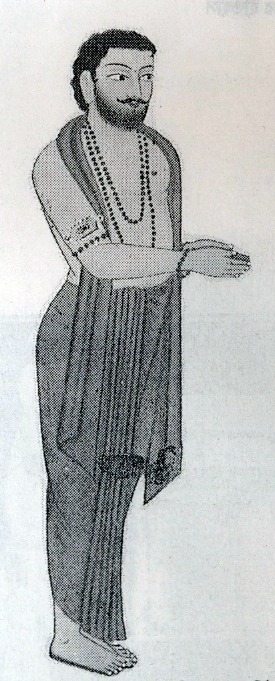
Rāmprasād Sen (c. 1723/1718 – c. 1775) was a Hindu Shakta poet and saint of 18th-century Bengal. His bhakti poems, known as Ramprasadi, are still popular in Bengal—they are usually addressed to the Hindu goddess Kali and written in Bengali. Stories of Ramprasad's life typically include legends and myths mixed with biographical details.
It is said that, Ramprasad was born into a Bengali Baidya Brahmin family, and showed an inclination towards poetry from an early age. He was highly influenced by Krishnananda Agamavagisha, a Tantric scholar and yogi. Ramprasad became well known for his devotional songs. His life has been the subject of many stories depicting his devotion to, and relationship with, Kali. Ramprasad's literary works include Vidyasundar, Kali-kirtana, Krishna-kirtana and Shaktigiti.
Ramprasad is credited with creating a new compositional form that combined the Bengali folk style of Baul music with classical melodies and kirtan. The new style took root in Bengali culture with many poet-composers combining folk and raga-based melodies, mixing every common style of music from classical to semi-classical and folk. His songs are sung today, with a popular collection—Ramprasadi Sangit ("Songs of Ramprasad")—sold at Shakta temples and pithas in Bengal.
Biographies of Ramprasad are a mixture of biography, metaphor, and legend.
Ramprasad was born in Garalgachha, in Hooghly District (at his maternal house), in a Baidya family, but his paternal ancestral house was in Halisahar-Kumarhatta (today in district North 24 Parganas) belonging to Dhanvantari gotra. Due to the absence of birth records, his actual birth date is not known, but it is believed to be around 1718 or 1723. His father, Ramram Sen, was an Ayurvedic doctor and Sanskrit scholar. Ramprasad's mother Siddheswari was Ramram's second wife. Ramprasad was sent to a Sanskrit tol (school) where he learned Sanskrit grammar, literature, Persian, and Hindi. As a youth, he had a talent for poetry and learning new languages.
Ramram hoped his son would follow in his profession, but Ramprasad showed no interest in practical pursuits. As he grew up, his spiritual inclinations caused a great deal of anxiety to his parents. Believing that marriage would make Ramprasad more responsible, his parents married him to a girl named Sarvani when he was twenty-two years old. In keeping with the family custom, the newly wed couple was initiated by the family's spiritual teacher, Madhavacharya. According to traditional accounts, during initiation when the guru whispered the mantra to him, Ramprasad became consumed by intense longing for the goddess Kali. One year after the initiation, he lost his guru. Ramprasad later became the disciple of Krishnananda Agamavagisha, a Tantric yogi and scholar[citation needed]. Agamavagisha was a well known devotee of Kali and the author of the Bengali book Tantrasara. Agamavagisha instructed Ramprasad in Tantric sadhanas (spiritual disciplines) and worship of Kali.
Instead of following his parents wishes and looking for a job, it is said that Ramprasad devoted most of his time to sadhana. Ramram died before he could make provisions to support the family. Forced finally by poverty, Ramprasad moved to Kolkata and worked as an accountant in the household of Durga Charan Mitra for a monthly salary of thirty rupees. According to traditional accounts, during his employment Ramprasad would write devotional songs to Kali. His fellow employees were appalled to see Ramprasad write poems in his account book, and reported him to their employer. Durga Charan Mitra, upon reading Ramprasad's work, was moved by his piety and literary skill. Instead of dismissing Ramprasad from work, he asked him to return to his village and compose songs to Kali, while continuing to pay his salary.
After returning to his village, Ramprasad spent most of his time in sadhana, meditation, and prayer. Traditional accounts tell of several esoteric sadhanas that he performed, including standing neck-deep in the river Ganges, singing songs to Kali. Ramprasad would regularly practice his sadhana in a panchavati: a grove with five trees—banyan, bael, amalaki, ashoka, and peepul—all regarded as holy in Tantric tradition. He would reportedly spend hours meditating on a panchamundi asana (an altar inside which are interred five skulls–that of a snake, frog, rabbit, fox, and man). According to popular stories he had a vision of Kali in her form of Adyashakti Mahamaya.
Hub AI
Ramprasad Sen AI simulator
(@Ramprasad Sen_simulator)
Ramprasad Sen
Rāmprasād Sen (c. 1723/1718 – c. 1775) was a Hindu Shakta poet and saint of 18th-century Bengal. His bhakti poems, known as Ramprasadi, are still popular in Bengal—they are usually addressed to the Hindu goddess Kali and written in Bengali. Stories of Ramprasad's life typically include legends and myths mixed with biographical details.
It is said that, Ramprasad was born into a Bengali Baidya Brahmin family, and showed an inclination towards poetry from an early age. He was highly influenced by Krishnananda Agamavagisha, a Tantric scholar and yogi. Ramprasad became well known for his devotional songs. His life has been the subject of many stories depicting his devotion to, and relationship with, Kali. Ramprasad's literary works include Vidyasundar, Kali-kirtana, Krishna-kirtana and Shaktigiti.
Ramprasad is credited with creating a new compositional form that combined the Bengali folk style of Baul music with classical melodies and kirtan. The new style took root in Bengali culture with many poet-composers combining folk and raga-based melodies, mixing every common style of music from classical to semi-classical and folk. His songs are sung today, with a popular collection—Ramprasadi Sangit ("Songs of Ramprasad")—sold at Shakta temples and pithas in Bengal.
Biographies of Ramprasad are a mixture of biography, metaphor, and legend.
Ramprasad was born in Garalgachha, in Hooghly District (at his maternal house), in a Baidya family, but his paternal ancestral house was in Halisahar-Kumarhatta (today in district North 24 Parganas) belonging to Dhanvantari gotra. Due to the absence of birth records, his actual birth date is not known, but it is believed to be around 1718 or 1723. His father, Ramram Sen, was an Ayurvedic doctor and Sanskrit scholar. Ramprasad's mother Siddheswari was Ramram's second wife. Ramprasad was sent to a Sanskrit tol (school) where he learned Sanskrit grammar, literature, Persian, and Hindi. As a youth, he had a talent for poetry and learning new languages.
Ramram hoped his son would follow in his profession, but Ramprasad showed no interest in practical pursuits. As he grew up, his spiritual inclinations caused a great deal of anxiety to his parents. Believing that marriage would make Ramprasad more responsible, his parents married him to a girl named Sarvani when he was twenty-two years old. In keeping with the family custom, the newly wed couple was initiated by the family's spiritual teacher, Madhavacharya. According to traditional accounts, during initiation when the guru whispered the mantra to him, Ramprasad became consumed by intense longing for the goddess Kali. One year after the initiation, he lost his guru. Ramprasad later became the disciple of Krishnananda Agamavagisha, a Tantric yogi and scholar[citation needed]. Agamavagisha was a well known devotee of Kali and the author of the Bengali book Tantrasara. Agamavagisha instructed Ramprasad in Tantric sadhanas (spiritual disciplines) and worship of Kali.
Instead of following his parents wishes and looking for a job, it is said that Ramprasad devoted most of his time to sadhana. Ramram died before he could make provisions to support the family. Forced finally by poverty, Ramprasad moved to Kolkata and worked as an accountant in the household of Durga Charan Mitra for a monthly salary of thirty rupees. According to traditional accounts, during his employment Ramprasad would write devotional songs to Kali. His fellow employees were appalled to see Ramprasad write poems in his account book, and reported him to their employer. Durga Charan Mitra, upon reading Ramprasad's work, was moved by his piety and literary skill. Instead of dismissing Ramprasad from work, he asked him to return to his village and compose songs to Kali, while continuing to pay his salary.
After returning to his village, Ramprasad spent most of his time in sadhana, meditation, and prayer. Traditional accounts tell of several esoteric sadhanas that he performed, including standing neck-deep in the river Ganges, singing songs to Kali. Ramprasad would regularly practice his sadhana in a panchavati: a grove with five trees—banyan, bael, amalaki, ashoka, and peepul—all regarded as holy in Tantric tradition. He would reportedly spend hours meditating on a panchamundi asana (an altar inside which are interred five skulls–that of a snake, frog, rabbit, fox, and man). According to popular stories he had a vision of Kali in her form of Adyashakti Mahamaya.
Recent media