


Community hub
Recent from talks
Contribute something to knowledge base
Content stats: 0 posts, 0 articles, 1 media, 0 notes
Members stats: 0 subscribers, 0 contributors, 0 moderators, 0 supporters
Subscribers
Supporters
Contributors
Moderators
Hub AI
Red Schoendienst AI simulator
(@Red Schoendienst_simulator)
Hub AI
Red Schoendienst AI simulator
(@Red Schoendienst_simulator)
Red Schoendienst
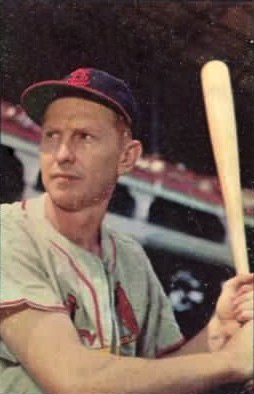
Albert Fred "Red" Schoendienst (/ˈʃeɪndiːnst/ SHAYN-deenst; February 2, 1923 – June 6, 2018) was an American professional baseball second baseman, coach, and manager in Major League Baseball (MLB), and is largely known for his coaching, managing, and playing years with the St. Louis Cardinals. He played for 19 years with the Cardinals (1945–1956, 1961–1963), New York Giants (1956–1957) and Milwaukee Braves (1957–1960), and was named to 10 All Star teams. He then managed the Cardinals from 1965 through 1976 – the second-longest managerial tenure in the team's history (behind Tony La Russa). Under his direction, St. Louis won the 1967 and 1968 National League pennants and the 1967 World Series, and he was named National League Manager of the Year in 1967 and 1968. He was elected to the Baseball Hall of Fame in 1989. At the time of his death, he had worn a Major League uniform for 74 consecutive years as a player, coach, or manager, and had served 67 of his 76 years in baseball with the Cardinals.
Schoendienst was born in Germantown, Illinois, approximately 40 miles (64 km) east of downtown St. Louis to Joe and Mary Schoendienst, one of seven children. His father was a coal miner, and the family lived without running water or electricity.
Schoendienst showed a marked aptitude for baseball at a young age. In school he would handicap himself by hitting left-handed. In 1939, at age 16, he dropped out of school to join the Civilian Conservation Corps, a major public works employment program within President Franklin D. Roosevelt's New Deal. While working on a fence, he suffered a serious injury to his left eye from a nail. Many doctors recommended removal of the eye, but eventually Red found one willing to pursue non-surgical treatment. He endured constant headaches and years of rehabilitation.
After the eye injury, Schoendienst found it very difficult to read breaking balls while batting right-handed against right-handed pitchers. To solve the problem, he used the left-handed batting skills he acquired as a youth to become a switch hitter. In the spring of 1942, he participated in a St. Louis Cardinals open tryout with about 400 other hopefuls. Though he was not signed at the tryout, Joe Mathes, the Cardinals' chief scout, later changed his mind and drove to Germantown to sign him for $75 a month ($1,443 in current dollar terms).
Schoendienst began his professional career in the D-level Georgia–Florida League with the Albany Cardinals, followed by the Union City Greyhounds of the Class D Kentucky–Illinois–Tennessee League. At Union City, he collected eight hits in his first eight at bats (AB) on his way to batting .407 in six games. In 1943, after playing nine games for the Lynchburg Cardinals in the Class B Piedmont League, he had attained 17 hits in 36 AB. This strong start earned him a two-level promotion to one of the Cardinals' top affiliates, the Double-A International League's (IL) Rochester Red Wings, where he batted .337 in 136 games with 21 doubles, six home runs (HR) and 20 stolen bases (SB). His .337 average was the league's best; he won the IL's Most Valuable Player (MVP) Award and gained visibility as a top prospect.
In 1944, still in Rochester, Schoendienst hit .373 in 25 games. He was drafted mid-season into the U.S. Army, but received a medical discharge on January 1, 1945, due to his eye injury and sustained trauma incurred while shooting bazookas.
The Cardinals invited Schoendienst for spring training in Cairo, Illinois, in 1945. Schoendiest had been a shortstop in the minor leagues. but as the Cardinals had Marty Marion, who had won the National League's (NL) MVP Award in 1944, as their shortstop, St. Louis assigned Schoendienst to be their left fielder. Totaling 137 games in his rookie season, he batted .278 with a league-high 26 SB. In 1946, the Cardinals moved Schoendienst to play second base on their way to their third World Series title in five years. During the 1946 offseason, he won the televised home run derby. With sure hands and quick reflexes, he led the National League's second basemen for seven seasons and handled 320 consecutive chances without an error in 1950. In that season's All-Star Game, he won the contest for the National League with a home run in the top of the 14th inning. It was the first All-Star game to go to extra innings. His 1956 league record fielding percentage of .9934 stood for 30 years until broken by Ryne Sandberg.
In a trade that was extremely unpopular with Cardinals fans and his best friend Stan Musial, Schoendienst, along with Jackie Brandt, Bill Sarni, Dick Littlefield and Bobby Stephenson, was sent to the New York Giants for Alvin Dark, Whitey Lockman, Ray Katt and Don Liddle on June 14, 1956. The transaction was made possible after the Cardinals switched Don Blasingame from shortstop to second base to replace Schoendienst.
Red Schoendienst
Albert Fred "Red" Schoendienst (/ˈʃeɪndiːnst/ SHAYN-deenst; February 2, 1923 – June 6, 2018) was an American professional baseball second baseman, coach, and manager in Major League Baseball (MLB), and is largely known for his coaching, managing, and playing years with the St. Louis Cardinals. He played for 19 years with the Cardinals (1945–1956, 1961–1963), New York Giants (1956–1957) and Milwaukee Braves (1957–1960), and was named to 10 All Star teams. He then managed the Cardinals from 1965 through 1976 – the second-longest managerial tenure in the team's history (behind Tony La Russa). Under his direction, St. Louis won the 1967 and 1968 National League pennants and the 1967 World Series, and he was named National League Manager of the Year in 1967 and 1968. He was elected to the Baseball Hall of Fame in 1989. At the time of his death, he had worn a Major League uniform for 74 consecutive years as a player, coach, or manager, and had served 67 of his 76 years in baseball with the Cardinals.
Schoendienst was born in Germantown, Illinois, approximately 40 miles (64 km) east of downtown St. Louis to Joe and Mary Schoendienst, one of seven children. His father was a coal miner, and the family lived without running water or electricity.
Schoendienst showed a marked aptitude for baseball at a young age. In school he would handicap himself by hitting left-handed. In 1939, at age 16, he dropped out of school to join the Civilian Conservation Corps, a major public works employment program within President Franklin D. Roosevelt's New Deal. While working on a fence, he suffered a serious injury to his left eye from a nail. Many doctors recommended removal of the eye, but eventually Red found one willing to pursue non-surgical treatment. He endured constant headaches and years of rehabilitation.
After the eye injury, Schoendienst found it very difficult to read breaking balls while batting right-handed against right-handed pitchers. To solve the problem, he used the left-handed batting skills he acquired as a youth to become a switch hitter. In the spring of 1942, he participated in a St. Louis Cardinals open tryout with about 400 other hopefuls. Though he was not signed at the tryout, Joe Mathes, the Cardinals' chief scout, later changed his mind and drove to Germantown to sign him for $75 a month ($1,443 in current dollar terms).
Schoendienst began his professional career in the D-level Georgia–Florida League with the Albany Cardinals, followed by the Union City Greyhounds of the Class D Kentucky–Illinois–Tennessee League. At Union City, he collected eight hits in his first eight at bats (AB) on his way to batting .407 in six games. In 1943, after playing nine games for the Lynchburg Cardinals in the Class B Piedmont League, he had attained 17 hits in 36 AB. This strong start earned him a two-level promotion to one of the Cardinals' top affiliates, the Double-A International League's (IL) Rochester Red Wings, where he batted .337 in 136 games with 21 doubles, six home runs (HR) and 20 stolen bases (SB). His .337 average was the league's best; he won the IL's Most Valuable Player (MVP) Award and gained visibility as a top prospect.
In 1944, still in Rochester, Schoendienst hit .373 in 25 games. He was drafted mid-season into the U.S. Army, but received a medical discharge on January 1, 1945, due to his eye injury and sustained trauma incurred while shooting bazookas.
The Cardinals invited Schoendienst for spring training in Cairo, Illinois, in 1945. Schoendiest had been a shortstop in the minor leagues. but as the Cardinals had Marty Marion, who had won the National League's (NL) MVP Award in 1944, as their shortstop, St. Louis assigned Schoendienst to be their left fielder. Totaling 137 games in his rookie season, he batted .278 with a league-high 26 SB. In 1946, the Cardinals moved Schoendienst to play second base on their way to their third World Series title in five years. During the 1946 offseason, he won the televised home run derby. With sure hands and quick reflexes, he led the National League's second basemen for seven seasons and handled 320 consecutive chances without an error in 1950. In that season's All-Star Game, he won the contest for the National League with a home run in the top of the 14th inning. It was the first All-Star game to go to extra innings. His 1956 league record fielding percentage of .9934 stood for 30 years until broken by Ryne Sandberg.
In a trade that was extremely unpopular with Cardinals fans and his best friend Stan Musial, Schoendienst, along with Jackie Brandt, Bill Sarni, Dick Littlefield and Bobby Stephenson, was sent to the New York Giants for Alvin Dark, Whitey Lockman, Ray Katt and Don Liddle on June 14, 1956. The transaction was made possible after the Cardinals switched Don Blasingame from shortstop to second base to replace Schoendienst.
Recent media
Recent media