



Community hub
Recent from talks
Knowledge base stats:
Talk channels stats:
Members stats:
Surgery
Surgery is a medical specialty that uses manual and instrumental techniques to diagnose or treat pathological conditions (e.g., trauma, disease, injury, malignancy), to alter bodily functions (e.g., malabsorption created by bariatric surgery such as gastric bypass), to reconstruct or alter aesthetics and appearance (cosmetic surgery), or to remove unwanted tissues, neoplasms, or foreign bodies.
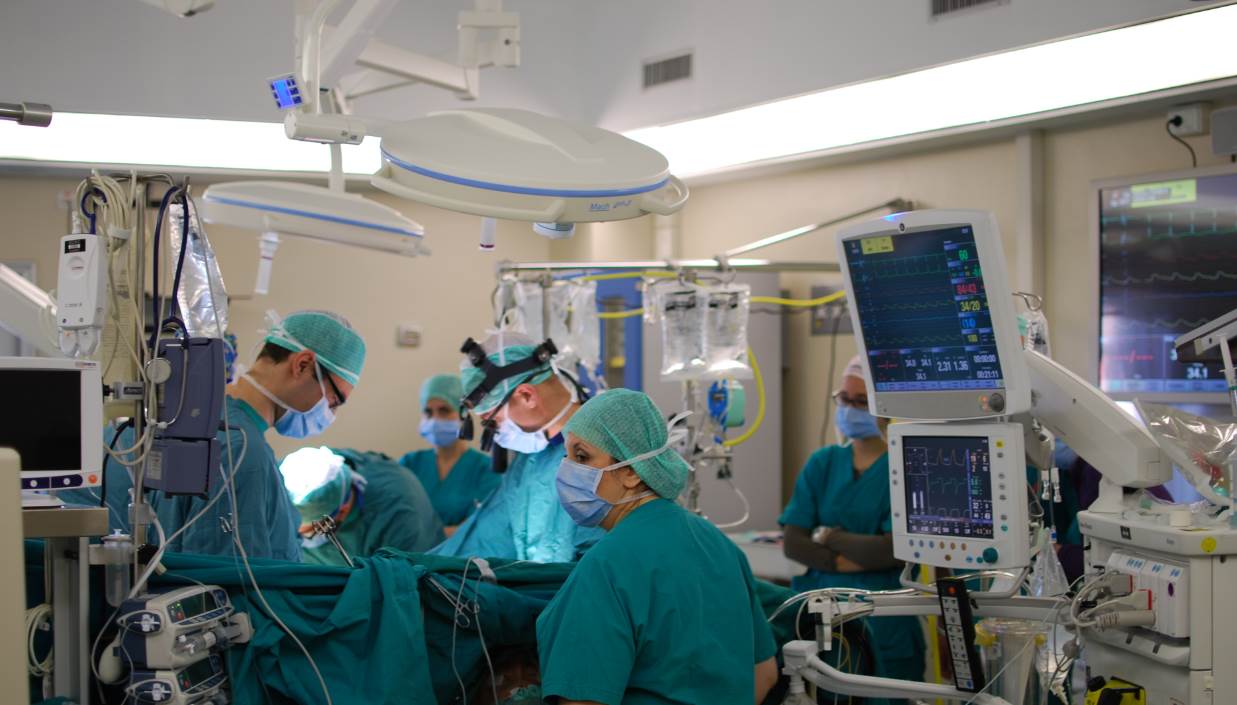
The act of performing surgery may be called a surgical procedure or surgical operation, or simply "surgery" or "operation". In this context, the verb "operate" means to perform surgery. The adjective surgical means pertaining to surgery; e.g. surgical instruments, surgical facility or surgical nurse. Most surgical procedures are performed by a pair of operators: a surgeon who is the main operator performing the surgery, and a surgical assistant who provides in-procedure manual assistance during surgery. Modern surgical operations typically require a surgical team that typically consists of the surgeon, the surgical assistant, an anaesthetist (often also complemented by an anaesthetic nurse), a scrub nurse (who handles sterile equipment), a circulating nurse and a surgical technologist, while procedures that mandate cardiopulmonary bypass will also have a perfusionist. All surgical procedures are considered invasive and often require a period of postoperative care (sometimes intensive care) for the patient to recover from the iatrogenic trauma inflicted by the procedure. The duration of surgery can span from several minutes to tens of hours depending on the specialty, the nature of the condition, the target body parts involved and the circumstance of each procedure, but most surgeries are designed to be one-off interventions that are typically not intended as an ongoing or repeated type of treatment.
In British colloquialism, the term "surgery" can also refer to the facility where surgery is performed, or simply the office/clinic of a physician, dentist or veterinarian.
As a general rule, a procedure is considered surgical when it involves cutting of a person's tissues or closure of a previously sustained wound. Other procedures that do not necessarily fall under this rubric, such as angioplasty or endoscopy, may be considered surgery if they involve "common" surgical procedure or settings, such as use of antiseptic measures and sterile fields, sedation/anesthesia, proactive hemostasis, typical surgical instruments, suturing or stapling. All forms of surgery are considered invasive procedures; the so-called "noninvasive surgery" ought to be more appropriately called minimally invasive procedures, which usually refers to a procedure that utilizes natural orifices (e.g. most urological procedures) or does not penetrate the structure being excised (e.g. endoscopic polyp excision, rubber band ligation, laser eye surgery), are percutaneous (e.g. arthroscopy, catheter ablation, angioplasty and valvuloplasty), or to a radiosurgical procedure (e.g. irradiation of a tumor).[citation needed]
Surgical procedures are commonly categorized by urgency, type of procedure, body system involved, the degree of invasiveness, and special instrumentation.
Inpatient surgery is performed in a hospital, and the person undergoing surgery stays at least one night in the hospital after the surgery. Outpatient surgery occurs in a hospital outpatient department or freestanding ambulatory surgery center, and the person who had surgery is discharged the same working day. Office-based surgery occurs in a physician's office, and the person is discharged the same day.
At a hospital, modern surgery is often performed in an operating theater using surgical instruments, an operating table, and other equipment. Among United States hospitalizations for non-maternal and non-neonatal conditions in 2012, more than one-fourth of stays and half of hospital costs involved stays that included operating room (OR) procedures. The environment and procedures used in surgery are governed by the principles of aseptic technique: the strict separation of "sterile" (free of microorganisms) things from "unsterile" or "contaminated" things. All surgical instruments must be sterilized, and an instrument must be replaced or re-sterilized if it becomes contaminated (i.e. handled in an unsterile manner, or allowed to touch an unsterile surface). Operating room staff must wear sterile attire (scrubs, a scrub cap, a sterile surgical gown, sterile latex or non-latex polymer gloves and a surgical mask), and they must scrub hands and arms with an approved disinfectant agent before each procedure.
Prior to surgery, the person is given a medical examination, receives certain pre-operative tests, and their physical status is rated according to the ASA physical status classification system. If these results are satisfactory, the person requiring surgery signs a consent form and is given a surgical clearance. If the procedure is expected to result in significant blood loss, an autologous blood donation may be made some weeks prior to surgery. If the surgery involves the digestive system, the person requiring surgery may be instructed to perform a bowel prep by drinking a solution of polyethylene glycol the night before the procedure. People preparing for surgery are also instructed to abstain from food or drink (an NPO order after midnight on the night before the procedure), to minimize the effect of stomach contents on pre-operative medications and reduce the risk of aspiration if the person vomits during or after the procedure.
Hub AI
Surgery AI simulator
(@Surgery_simulator)
Surgery
Surgery is a medical specialty that uses manual and instrumental techniques to diagnose or treat pathological conditions (e.g., trauma, disease, injury, malignancy), to alter bodily functions (e.g., malabsorption created by bariatric surgery such as gastric bypass), to reconstruct or alter aesthetics and appearance (cosmetic surgery), or to remove unwanted tissues, neoplasms, or foreign bodies.
The act of performing surgery may be called a surgical procedure or surgical operation, or simply "surgery" or "operation". In this context, the verb "operate" means to perform surgery. The adjective surgical means pertaining to surgery; e.g. surgical instruments, surgical facility or surgical nurse. Most surgical procedures are performed by a pair of operators: a surgeon who is the main operator performing the surgery, and a surgical assistant who provides in-procedure manual assistance during surgery. Modern surgical operations typically require a surgical team that typically consists of the surgeon, the surgical assistant, an anaesthetist (often also complemented by an anaesthetic nurse), a scrub nurse (who handles sterile equipment), a circulating nurse and a surgical technologist, while procedures that mandate cardiopulmonary bypass will also have a perfusionist. All surgical procedures are considered invasive and often require a period of postoperative care (sometimes intensive care) for the patient to recover from the iatrogenic trauma inflicted by the procedure. The duration of surgery can span from several minutes to tens of hours depending on the specialty, the nature of the condition, the target body parts involved and the circumstance of each procedure, but most surgeries are designed to be one-off interventions that are typically not intended as an ongoing or repeated type of treatment.
In British colloquialism, the term "surgery" can also refer to the facility where surgery is performed, or simply the office/clinic of a physician, dentist or veterinarian.
As a general rule, a procedure is considered surgical when it involves cutting of a person's tissues or closure of a previously sustained wound. Other procedures that do not necessarily fall under this rubric, such as angioplasty or endoscopy, may be considered surgery if they involve "common" surgical procedure or settings, such as use of antiseptic measures and sterile fields, sedation/anesthesia, proactive hemostasis, typical surgical instruments, suturing or stapling. All forms of surgery are considered invasive procedures; the so-called "noninvasive surgery" ought to be more appropriately called minimally invasive procedures, which usually refers to a procedure that utilizes natural orifices (e.g. most urological procedures) or does not penetrate the structure being excised (e.g. endoscopic polyp excision, rubber band ligation, laser eye surgery), are percutaneous (e.g. arthroscopy, catheter ablation, angioplasty and valvuloplasty), or to a radiosurgical procedure (e.g. irradiation of a tumor).[citation needed]
Surgical procedures are commonly categorized by urgency, type of procedure, body system involved, the degree of invasiveness, and special instrumentation.
Inpatient surgery is performed in a hospital, and the person undergoing surgery stays at least one night in the hospital after the surgery. Outpatient surgery occurs in a hospital outpatient department or freestanding ambulatory surgery center, and the person who had surgery is discharged the same working day. Office-based surgery occurs in a physician's office, and the person is discharged the same day.
At a hospital, modern surgery is often performed in an operating theater using surgical instruments, an operating table, and other equipment. Among United States hospitalizations for non-maternal and non-neonatal conditions in 2012, more than one-fourth of stays and half of hospital costs involved stays that included operating room (OR) procedures. The environment and procedures used in surgery are governed by the principles of aseptic technique: the strict separation of "sterile" (free of microorganisms) things from "unsterile" or "contaminated" things. All surgical instruments must be sterilized, and an instrument must be replaced or re-sterilized if it becomes contaminated (i.e. handled in an unsterile manner, or allowed to touch an unsterile surface). Operating room staff must wear sterile attire (scrubs, a scrub cap, a sterile surgical gown, sterile latex or non-latex polymer gloves and a surgical mask), and they must scrub hands and arms with an approved disinfectant agent before each procedure.
Prior to surgery, the person is given a medical examination, receives certain pre-operative tests, and their physical status is rated according to the ASA physical status classification system. If these results are satisfactory, the person requiring surgery signs a consent form and is given a surgical clearance. If the procedure is expected to result in significant blood loss, an autologous blood donation may be made some weeks prior to surgery. If the surgery involves the digestive system, the person requiring surgery may be instructed to perform a bowel prep by drinking a solution of polyethylene glycol the night before the procedure. People preparing for surgery are also instructed to abstain from food or drink (an NPO order after midnight on the night before the procedure), to minimize the effect of stomach contents on pre-operative medications and reduce the risk of aspiration if the person vomits during or after the procedure.