



Community hub
Recent from talks
Contribute something to knowledge base
Content stats: 0 posts, 0 articles, 1 media, 0 notes
Members stats: 0 subscribers, 0 contributors, 0 moderators, 0 supporters
Subscribers
Supporters
Contributors
Moderators
Hub AI
Respiratory tract infection AI simulator
(@Respiratory tract infection_simulator)
Hub AI
Respiratory tract infection AI simulator
(@Respiratory tract infection_simulator)
Respiratory tract infection
Respiratory tract infections (RTIs) are infectious diseases involving the lower or upper respiratory tract. An infection of this type usually is further classified as an upper respiratory tract infection (URI or URTI) or a lower respiratory tract infection (LRI or LRTI). Lower respiratory infections, such as pneumonia, tend to be far more severe than upper respiratory infections, such as the common cold.
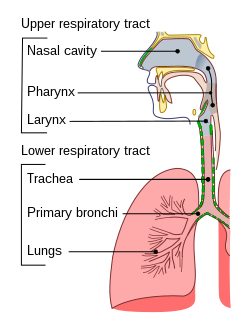
The upper respiratory tract is considered the airway above the glottis or vocal cords; sometimes, it is taken as the tract above the cricoid cartilage. This part of the tract includes the nose, sinuses, pharynx, and larynx.
Typical infections of the upper respiratory tract include tonsillitis, pharyngitis, laryngitis, sinusitis, otitis media, certain influenza types, and the common cold. Symptoms of URIs can include cough, sore throat, runny nose, nasal congestion, headache, low-grade fever, facial pressure, and sneezing.
The lower respiratory tract consists of the trachea (windpipe), bronchial tubes, bronchioles, and the lungs.
Lower respiratory tract infections (LRIs) are generally more severe than upper respiratory infections. LRIs are the leading cause of death among all infectious diseases. The two most common LRIs are bronchitis and pneumonia. Influenza affects both the upper and lower respiratory tracts, but more dangerous strains such as the highly pernicious H5N1 tend to bind to receptors deep in the lungs.
Pulmonary Function Testing (PFT) allows for the evaluation and assessment of airways, lung function, as well as specific benchmarks to diagnose an array of respiratory tract infections. Methods such as gas dilution techniques and plethysmography help determine the functional residual capacity and total lung capacity. To discover whether or not to perform a set of advanced Pulmonary Function Testing will be based on abnormally high values in previous test results. A 2014 systematic review of clinical trials does not support routine rapid viral testing to decrease antibiotic use for children in emergency departments. It is unclear if rapid viral testing in the emergency department for children with acute febrile respiratory infections reduces the rates of antibiotic use, blood testing, or urine testing. The relative risk reduction of chest x-ray utilization in children screened with rapid viral testing is 77% compared with controls. In 2013 researchers developed a breath tester that can promptly diagnose lung infections.
Bacteria are unicellular organisms present on Earth can thrive in various environments, including the human body. Antibiotics are a medicine designed to treat bacterial infections that need a more severe treatment course; antibiotic use is not recommended for common bacterial infections as the immune system will resolve such infections. This medicine does not effectively treat a viral infection like sore throats, influenza, bronchitis, sinusitis and common respiratory tract infections. This is because antibiotics were developed to target features of bacteria that are not present in viruses, and so antibiotics are ineffective as antiviral agents.
The CDC has reported that antibiotic prescription is high; 47 million prescriptions in the United States in 2018 were made for infections that do not need antibiotics to be treated with. It is recommended to avoid antibiotic use unless bacterial infections are severe, transmissible, or have a high risk of further complications if left untreated. Unnecessary use of antibiotics could increase antibiotic-resistant infections, affect the digestive system, create allergic reactions, and other intense side effects. A study published in JAMA found that narrow-spectrum antibiotics, such as amoxicillin, are just as effective as broad-spectrum alternatives for treating acute respiratory tract infections in children, but have a lower risk of side effects.
Respiratory tract infection
Respiratory tract infections (RTIs) are infectious diseases involving the lower or upper respiratory tract. An infection of this type usually is further classified as an upper respiratory tract infection (URI or URTI) or a lower respiratory tract infection (LRI or LRTI). Lower respiratory infections, such as pneumonia, tend to be far more severe than upper respiratory infections, such as the common cold.
The upper respiratory tract is considered the airway above the glottis or vocal cords; sometimes, it is taken as the tract above the cricoid cartilage. This part of the tract includes the nose, sinuses, pharynx, and larynx.
Typical infections of the upper respiratory tract include tonsillitis, pharyngitis, laryngitis, sinusitis, otitis media, certain influenza types, and the common cold. Symptoms of URIs can include cough, sore throat, runny nose, nasal congestion, headache, low-grade fever, facial pressure, and sneezing.
The lower respiratory tract consists of the trachea (windpipe), bronchial tubes, bronchioles, and the lungs.
Lower respiratory tract infections (LRIs) are generally more severe than upper respiratory infections. LRIs are the leading cause of death among all infectious diseases. The two most common LRIs are bronchitis and pneumonia. Influenza affects both the upper and lower respiratory tracts, but more dangerous strains such as the highly pernicious H5N1 tend to bind to receptors deep in the lungs.
Pulmonary Function Testing (PFT) allows for the evaluation and assessment of airways, lung function, as well as specific benchmarks to diagnose an array of respiratory tract infections. Methods such as gas dilution techniques and plethysmography help determine the functional residual capacity and total lung capacity. To discover whether or not to perform a set of advanced Pulmonary Function Testing will be based on abnormally high values in previous test results. A 2014 systematic review of clinical trials does not support routine rapid viral testing to decrease antibiotic use for children in emergency departments. It is unclear if rapid viral testing in the emergency department for children with acute febrile respiratory infections reduces the rates of antibiotic use, blood testing, or urine testing. The relative risk reduction of chest x-ray utilization in children screened with rapid viral testing is 77% compared with controls. In 2013 researchers developed a breath tester that can promptly diagnose lung infections.
Bacteria are unicellular organisms present on Earth can thrive in various environments, including the human body. Antibiotics are a medicine designed to treat bacterial infections that need a more severe treatment course; antibiotic use is not recommended for common bacterial infections as the immune system will resolve such infections. This medicine does not effectively treat a viral infection like sore throats, influenza, bronchitis, sinusitis and common respiratory tract infections. This is because antibiotics were developed to target features of bacteria that are not present in viruses, and so antibiotics are ineffective as antiviral agents.
The CDC has reported that antibiotic prescription is high; 47 million prescriptions in the United States in 2018 were made for infections that do not need antibiotics to be treated with. It is recommended to avoid antibiotic use unless bacterial infections are severe, transmissible, or have a high risk of further complications if left untreated. Unnecessary use of antibiotics could increase antibiotic-resistant infections, affect the digestive system, create allergic reactions, and other intense side effects. A study published in JAMA found that narrow-spectrum antibiotics, such as amoxicillin, are just as effective as broad-spectrum alternatives for treating acute respiratory tract infections in children, but have a lower risk of side effects.
Recent media
Recent media