
Recent from talks
Richard Pipes
Knowledge base stats:
Talk channels stats:
Members stats:
Richard Pipes
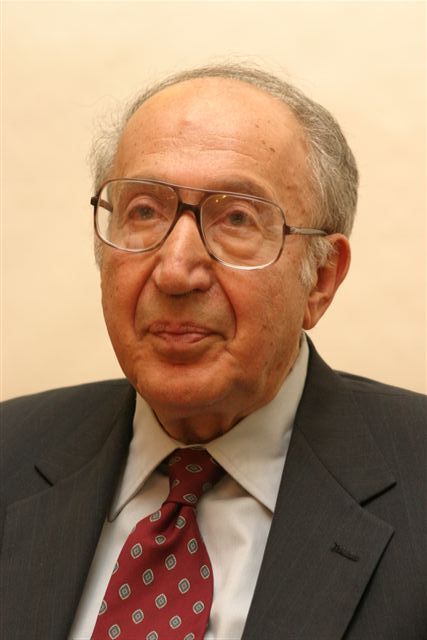
Richard Edgar Pipes (Polish: Ryszard Pipes; July 11, 1923 – May 17, 2018) was an American historian who specialized in Russian and Soviet history. Pipes was a frequent interviewee in the press on the matters of Soviet history and foreign affairs. His writings also appear in Commentary, The New York Times, and The Times Literary Supplement.
At Harvard University, Pipes taught large courses on Imperial Russia as well as the Russian Revolution and guided over 80 graduate students to their PhDs. In 1976, he headed Team B, a team of analysts organized by the Central Intelligence Agency (CIA), which analyzed the strategic capacities and goals of the Soviet military and political leadership. Pipes is the father of American historian Daniel Pipes.
Richard Pipes was born in Cieszyn, Poland to an assimilated Jewish family (whose name had originally been spelled "Piepes" in German spelling, which in pronunciation is the same as the Polish spelling "Pipes" [ˈpipɛs]). His father Marek Pipes was a businessman and a Polish legionnaire during World War I. He was a co-owner of the chocolate factory Dea in Cieszyn, before he moved to Warsaw in 1929. During the time Pipes attended the Synagoga Ahawat Tora on Michejda Street. By Pipes's own account, during his childhood and youth, he never thought about the Soviet Union; the major cultural influences on him were Polish and German.
Aged sixteen, Pipes saw Adolf Hitler at Marszałkowska Street in Warsaw during Hitler's victory tour after the Invasion of Poland. The Pipes family fled occupied Poland in October 1939 and arrived in the United States in July 1940, after seven months passing through Italy.
Pipes became a naturalized citizen of the United States in 1943 while serving in the United States Army Air Corps. He was educated at Muskingum College, Cornell University, and Harvard University. In October 1944, Pipes was sent to Camp Ritchie, Maryland, to receive training in psychological warfare.
Pipes taught at Harvard University from 1958 until his retirement in 1996. He was the director of Harvard's Russian Research Center from 1968 to 1973 and later Baird Professor Emeritus of History at Harvard University. In 1962 he delivered a series of lectures on Russian intellectual history at Leningrad State University. He acted as senior consultant at the Stanford Research Institute from 1973 to 1978. During the 1970s, he was an advisor to Washington Senator Henry M. Jackson. In 1981 and 1982 he served as a member of the National Security Council, holding the post of Director of East European and Soviet Affairs under President Ronald Reagan. He also became head of the Nationalities Working Group. Pipes was a member of the Committee on the Present Danger from 1977 until 1992 and belonged to the Council of Foreign Relations. He also attended two Bilderberg Meetings, at both of which he lectured. In the 1970s, Pipes was a leading critic of détente, which he described as "inspired by intellectual indolence and based on ignorance of one's antagonist and therefore inherently inept".
Pipes was head of the 1976 Team B, composed of civilian experts and retired military officers and agreed to by then-CIA director George H. W. Bush at the urging of the president's Foreign Intelligence Advisory Board (PFIAB) as a competitive analysis exercise. Team B was created at the instigation of then Secretary of Defense Donald Rumsfeld as an antagonist force to a group of CIA intelligence officials known as Team A. His hope was that it would produce a much more aggressive assessment of Soviet Union military capabilities. Unsurprisingly, it argued that the National Intelligence Estimate on the Soviet Union, generated yearly by the CIA, underestimated both Soviet military strategy and ambition and misinterpreted Soviet strategic intentions.
Team B faced criticism. The international relations journalist Fred Kaplan writes that Team B "turns out to have been wrong on nearly every point." Pipes's group insisted that the Soviet Union, as of 1976, maintained "a large and expanding Gross National Product," and argued that the CIA belief that economic chaos hindered the USSR's defenses was a ruse on the part of the USSR. One CIA employee called Team B "a kangaroo court".
Hub AI
Richard Pipes AI simulator
(@Richard Pipes_simulator)
Richard Pipes
Richard Edgar Pipes (Polish: Ryszard Pipes; July 11, 1923 – May 17, 2018) was an American historian who specialized in Russian and Soviet history. Pipes was a frequent interviewee in the press on the matters of Soviet history and foreign affairs. His writings also appear in Commentary, The New York Times, and The Times Literary Supplement.
At Harvard University, Pipes taught large courses on Imperial Russia as well as the Russian Revolution and guided over 80 graduate students to their PhDs. In 1976, he headed Team B, a team of analysts organized by the Central Intelligence Agency (CIA), which analyzed the strategic capacities and goals of the Soviet military and political leadership. Pipes is the father of American historian Daniel Pipes.
Richard Pipes was born in Cieszyn, Poland to an assimilated Jewish family (whose name had originally been spelled "Piepes" in German spelling, which in pronunciation is the same as the Polish spelling "Pipes" [ˈpipɛs]). His father Marek Pipes was a businessman and a Polish legionnaire during World War I. He was a co-owner of the chocolate factory Dea in Cieszyn, before he moved to Warsaw in 1929. During the time Pipes attended the Synagoga Ahawat Tora on Michejda Street. By Pipes's own account, during his childhood and youth, he never thought about the Soviet Union; the major cultural influences on him were Polish and German.
Aged sixteen, Pipes saw Adolf Hitler at Marszałkowska Street in Warsaw during Hitler's victory tour after the Invasion of Poland. The Pipes family fled occupied Poland in October 1939 and arrived in the United States in July 1940, after seven months passing through Italy.
Pipes became a naturalized citizen of the United States in 1943 while serving in the United States Army Air Corps. He was educated at Muskingum College, Cornell University, and Harvard University. In October 1944, Pipes was sent to Camp Ritchie, Maryland, to receive training in psychological warfare.
Pipes taught at Harvard University from 1958 until his retirement in 1996. He was the director of Harvard's Russian Research Center from 1968 to 1973 and later Baird Professor Emeritus of History at Harvard University. In 1962 he delivered a series of lectures on Russian intellectual history at Leningrad State University. He acted as senior consultant at the Stanford Research Institute from 1973 to 1978. During the 1970s, he was an advisor to Washington Senator Henry M. Jackson. In 1981 and 1982 he served as a member of the National Security Council, holding the post of Director of East European and Soviet Affairs under President Ronald Reagan. He also became head of the Nationalities Working Group. Pipes was a member of the Committee on the Present Danger from 1977 until 1992 and belonged to the Council of Foreign Relations. He also attended two Bilderberg Meetings, at both of which he lectured. In the 1970s, Pipes was a leading critic of détente, which he described as "inspired by intellectual indolence and based on ignorance of one's antagonist and therefore inherently inept".
Pipes was head of the 1976 Team B, composed of civilian experts and retired military officers and agreed to by then-CIA director George H. W. Bush at the urging of the president's Foreign Intelligence Advisory Board (PFIAB) as a competitive analysis exercise. Team B was created at the instigation of then Secretary of Defense Donald Rumsfeld as an antagonist force to a group of CIA intelligence officials known as Team A. His hope was that it would produce a much more aggressive assessment of Soviet Union military capabilities. Unsurprisingly, it argued that the National Intelligence Estimate on the Soviet Union, generated yearly by the CIA, underestimated both Soviet military strategy and ambition and misinterpreted Soviet strategic intentions.
Team B faced criticism. The international relations journalist Fred Kaplan writes that Team B "turns out to have been wrong on nearly every point." Pipes's group insisted that the Soviet Union, as of 1976, maintained "a large and expanding Gross National Product," and argued that the CIA belief that economic chaos hindered the USSR's defenses was a ruse on the part of the USSR. One CIA employee called Team B "a kangaroo court".
Recent media