Hubbry Logo
Rick HallRick HallMain
Open search
Rick Hall
Community hub
Rick Hall
logo
8 pages, 0 posts
0 subscribers
Be the first to start a discussion here.
Rick Hall
Rick Hall
from Wikipedia

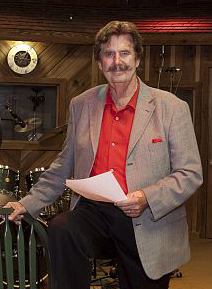
Roe Erister "Rick" Hall[1] (January 31, 1932 – January 2, 2018)[2] was an American record producer, songwriter, and musician who became known as the owner of FAME Studios in Muscle Shoals, Alabama. As the "Father of Muscle Shoals Music", he was influential in recording and promoting both country and soul music, and in helping develop the careers of such musicians as Aretha Franklin, Otis Redding, Duane Allman and Etta James.

Key Information

Hall was inducted into the Alabama Music Hall of Fame in 1985 and also received the John Herbert Orr Pioneer Award.[3] In 2014, he won the Grammy Trustees Award in recognition of his lengthy career. Hall remained active in the music industry with FAME Studios, FAME Records, and FAME Publishing.[4]

Early life

[edit]

Hall was born into a family of sharecroppers in Forest Grove, Tishomingo County, Mississippi to Herman Hall,[2] a sawmill worker and sharecropper[5] and his wife, Dollie Dimple Daily Hall; he had one sister.

After his mother left home when young Hall was aged 4,[2] he and his sister were raised in rural poverty[5] by his father and grandparents in Franklin County, Alabama.[2][6] According to The Guardian, and confirmed by Hall himself in the 2013 documentary Muscle Shoals, Dollie worked in a bordello after leaving the family. His father was a gospel music fan and his uncle gave Rick a mandolin at age 6. Later, he learned to play guitar.[7]

Hall moved to Rockford, Illinois as a teenager, working as an apprentice toolmaker, and began playing in local bar bands.[8] When he was drafted for the Korean War, he declared himself a conscientious objector, joined the honor guard of the Fourth United States Army, and played in a band that also included Faron Young and the fiddler Gordon Terry.[8]

Early career as musician and songwriter

[edit]

When Hall returned to Alabama he resumed factory life, working for Reynolds Aluminum in Florence.[8] When both his new bride Faye and his father died within a two-week period in 1957, he suffered depression and began drinking regularly.[7] He later began moving around the area playing guitar, mandolin, and fiddle with a local group, Carmol Taylor and the Country Pals, and first met saxophonist Billy Sherrill.[8] The group appeared on a weekly regional radio show at WERH in Hamilton.[8] Subsequently, Hall formed a new R&B group, the Fairlanes, with Billy Sherrill, fronted by the singer Dan Penn, with Hall playing bass.[8] He also began writing songs at that time.[9][8]

Hall left the Fairlanes to concentrate on becoming a songwriter and record producer.[10] He had his first songwriting successes in the late 1950s, when George Jones recorded his song "Achin', Breakin' Heart", Brenda Lee recorded "She'll Never Know", and Roy Orbison recorded "Sweet and Innocent".[6] In 1960, he started a company based in Florence, Alabama, together with fellow ex-Fairlanes member Billy Sherrill, the future producer of Tammy Wynette's records. They named their company FAME (Florence Alabama Music Enterprises) and opened their first primitive studio above a drugstore.[7]

Producer Sam Phillips, originally from Florence, Alabama, was an early mentor. During a 2015 interview with The New York Times, Hall recalled those early days. "We would sit up and talk until 2 o'clock in the morning and Sam would tell me, 'Rick, don't go to Nashville, because they'll eat your soul alive.' I wanted to be like Sam — I wanted to be somebody special."[2]

Success with FAME Studios

[edit]

In 1959, Hall and Sherrill accepted an offer from Tom Stafford, the owner of a recording studio, to help set up a new music publishing company in the town of Florence, to be known as Florence Alabama Music Enterprises, or FAME.[11] However, in 1960, Sherrill and Stafford dissolved the partnership, leaving Hall with rights to the studio name.

Hall's first success as a producer in a small studio was with one of his first recordings, Arthur Alexander's "You Better Move On" in 1961.[6] The commercial success of the record gave Hall the financial resources to establish a new, larger FAME recording studio[12] on Avalon Avenue in Muscle Shoals.[6][8][12][7] That song became the first gold record in the history of Muscle Shoals; at the time, Hall had licensed it to Dot Records. The song was recorded by others too, including the Rolling Stones in 1964.[13] In that era, his musicians included Norbert Putnam, David Briggs, Peanut Montgomery and Jerry Carrigan.[12]

Though Hall grew up in a culture dominated by country music, he had a love of R&B music and, in the highly segregated state of Alabama, regularly flouted local policies and recorded many black musicians.[2] Hall wrote: "Black music helped broaden my musical horizons and open my eyes and ears to the widespread appeal of the so-called 'race' music that later became known as 'rhythm and blues".[2] Hall's successes continued after the Atlanta-based agent Bill Lowery brought him acts to record, and the studio produced hits for Tommy Roe, Joe Tex, the Tams, and Jimmy Hughes.[8] However, in 1964, Hall's regular session group — David Briggs, Norbert Putnam, Jerry Carrigan, Earl "Peanut" Montgomery, and Donnie Fritts — became frustrated at being paid minimum union-scale wages by Hall, and left Muscle Shoals to set up a studio of their own in Nashville, Tennessee.[8] Hall then assembled a new studio band, including Spooner Oldham, Jimmy Johnson, David Hood, and Roger Hawkins, and continued to produce hit records.[8]

Hall's FAME studio prospered. "By the mid-'60s it had become a hotbed for pop musicians of various stripes, including the Rolling Stones, Otis Redding, Wilson Pickett, Clarence Carter, Solomon Burke and Percy Sledge," according to the Los Angeles Times. Singer Aretha Franklin credited Hall for the "turning point" in her career in the mid 1960s, taking her from a struggling artist to the "Queen of Soul".[14] According to Hall, one of the reasons for FAME's success at a time of stiff competition from studios in other cities was that he overlooked the issue of race, a perspective he called "colorblind".[2] "It was a dangerous time, but the studio was a safe haven where blacks and whites could work together in musical harmony," Hall wrote in his autobiography.[5] Decades later, a publication in Malaysia referred to Hall as a "white fiddler who became an unlikely force in soul music".[15]

In 1966, he helped license Percy Sledge's "When a Man Loves a Woman", produced by Quin Ivy, to Atlantic Records, which then led to a regular arrangement under which Atlantic would send musicians to Hall's Muscle Shoals studio to record.[16] The studio produced further hit records for Wilson Pickett, James & Bobby Purify, Aretha Franklin, Clarence Carter, Otis Redding, and Arthur Conley, enhancing Hall's reputation as a white Southern producer who could produce and engineer hits for black Southern soul singers.[6][8] He produced many sessions using guitarist Duane Allman.[10] He also produced recordings for other artists, including Etta James, whom he persuaded to record Clarence Carter's song "Tell Mama".[2] However, his fiery temperament led to the end of the relationship with Atlantic after he got into a fistfight with Aretha Franklin's husband, Ted White, in late 1967.[8]

In 1969, FAME Records, with artists including Candi Staton, Clarence Carter and Arthur Conley, established a distribution deal with Capitol Records.[12] Hall then turned his attention away from soul music towards mainstream pop, producing hits for the Osmonds, Paul Anka, Tom Jones, and the Osmond family.[6] Also in 1969, another FAME Studio house band, Muscle Shoals Rhythm Section, affectionately called The Swampers, consisting of Barry Beckett (keyboards), Roger Hawkins (drums), Jimmy Johnson (guitar), and David Hood (bass), left the FAME studio to found the competing Muscle Shoals Sound Studio at 3614 Jackson Highway in Sheffield, with start-up funding from Jerry Wexler.[17][18][19] Subsequently, Hall hired the Fame Gang as the new studio band.[20]

FAME Records was independent in 1962–1963. Hall signed a distribution deal with Vee-Jay from October 1963-June 1965. He moved his label to Atlantic distribution November 1965–September 1967. In May 1969 to May 1971, the label was distributed by Capitol, and finally, to United Artists from May 1972 until approximately April 1974.

The studio continued to do well through the 1970s[20] and Hall was able to convince Capitol Records to distribute FAME recordings.[13] In 1971, he was named Producer of the Year by Billboard magazine,[8] a year after having been nominated for a Grammy Award in the same category.[21] In the same year, Mac Davis recorded the first of his 12 albums at the FAME studio; four of the songs later received gold and platinum records.[12]

Through the 1970s, Hall continued moving back towards country music, producing hits for Mac Davis, Bobbie Gentry, Jerry Reed, and the Gatlin Brothers, as well as returning to work for the Osmonds as they moved to country.[13][8] He also worked with the songwriter and producer Robert Byrne to help a local bar band, Shenandoah, top the national Hot Country Songs chart several times in the 1980s and 1990s.[6] Hall's publishing staff of in-house songwriters wrote some of the biggest country hits in those decades. His publishing catalog included "I Swear" written by Frank Myers and Gary Baker.[6][12] In 1985 he was inducted into the Alabama Music Hall of Fame, his citation referring to him as the "Father of Muscle Shoals Music."[6]

In 2007, Hall reactivated the FAME Records label through a distribution deal with EMI.[22]

Artists who recorded at FAME in subsequent years include Gregg Allman who recorded the Southern Blood LP, Drive-By Truckers, Jason Isbell, Tim McGraw with his hit "I Like It, I Love It", the Dixie Chicks, George Strait, Martina McBride, Kenny Chesney and others.[13]

Later life

[edit]

Some years after the death of his first wife, he met and married Linda Cross of Leighton, Alabama. The couple had three sons, Rick Jr., Mark, and Rodney. Hall had five grandchildren, who affectionately called him Pepaw. Hall's life and career are profiled in the 2013 documentary film Muscle Shoals.[23] During an interview before the release of the movie, Hall told a journalist that in 2009, he and his wife had donated their home of 30 years to the Boys and Girls Ranches of Alabama, a charity for abused and neglected children. The house now serves as a home to up to seventeen teenage girls at a time that have been removed from their families through no fault of their own.

In 2014, Hall was awarded the Grammy Trustees Award for his significant contribution to the field of recording.[24][25]

Hall published his memoirs in a book titled The Man from Muscle Shoals: My Journey from Shame to Fame in 2015.[9][10] On December 17, 2016, Hall was awarded an honorary doctorate by the University of North Alabama in Florence.[26]

He died on January 2, 2018, aged 85, at his home in Muscle Shoals, after a battle with prostate cancer.[23][27]

Legacy

[edit]
External videos
video icon "Oral History: Rick Hall Talks About the Necessity to Modify Equipment and Improvise in the Recording Studio Back in the Day". Interview, July 13, 2015. NAMM Oral History Library

In its obituary, The New Yorker concluded its coverage of Hall's career with this comment: "Muscle Shoals remains remarkable not just for the music made there but for its unlikeliness as an epicenter of anything; that a tiny town in a quiet corner of Alabama became a hotbed of progressive, integrated rhythm and blues still feels inexplicable. Whatever Hall conjured there—whatever he dreamt, and made real—is essential to any recounting of American ingenuity. It is a testament to a certain kind of hope."[28] An Alabama publication commented that Hall is survived by his family "and a Muscle Shoals music legacy like no other".[29] An editorial in the Anniston Star (Alabama) concludes with this epitaph, "If the world wants to know about Alabama — a state seldom publicized for anything but college football and embarrassing politics — the late Rick Hall and his legacy are worthy models to uphold".[30]

Aretha Franklin recorded her hit "I Never Loved a Man (The Way I Love You)" at FAME in 1967, with the "Swampers" providing the accompaniment.[31] She later publicly acknowledged Rick Hall "for the 'turning point'" in her career, taking her from a struggling artist" to a major music star.[32]

In early 2018, Rolling Stone published a retrospective of Hall's career and included this evaluation. "Hall's Grammy-winning production touched nearly every genre of popular music from country to R&B, and his Fame Studio and publishing company were a breeding ground for future legends in the worlds of songwriting and session work, as well as a recording home to some of the greatest musicians and recording artists of all time."[13]

The UK newspaper The Guardian summarized Hall's career with these words: "What made Hall ... stand out was his position at the confluence of the three key strands of black and white American popular music – gospel, country and R&B – which merged to provide the foundation of so much of significance in that and succeeding decades."[7]

References

[edit]
Revisions and contributorsEdit on WikipediaRead on Wikipedia
from Grokipedia
Rick Hall (January 31, 1932 – January 2, 2018) was an American , songwriter, musician, and studio owner renowned as the "Father of Muscle Shoals Music" for establishing FAME Recording Studios in , and pioneering a signature sound that fused , R&B, , and rock influences. Born in , and raised in rural , Hall began his career performing in local bands before co-founding FAME—initially as Florence Alabama Music Enterprises—in 1959 with partners and Tom Stafford, assuming sole ownership the following year after relocating the studio to a former tobacco warehouse. Hall's breakthrough came with producing Arthur Alexander's "You Better Move On" in 1961, Muscle Shoals' first national hit, which reached number 24 on the and paved the way for collaborations with major artists amid the civil rights era. He assembled the house band known as the Swampers, whose tight grooves underpinned landmark recordings such as Wilson Pickett's "," Aretha Franklin's "I Never Loved a Man (The Way I Love You)," and Etta James's "Tell Mama," elevating FAME to a global recording hub that accounted for 2.5% of U.S. by the early . Named Billboard's Producer of the Year in 1971, Hall received the Grammy Trustees Award in 2014 for fostering a merit-based, integrated creative environment that defied regional segregation norms and advanced soul music's commercial and artistic evolution. Throughout his career, Hall navigated business challenges, including a 1969 split with the Swampers who formed their own rival studio, yet continued producing crossover successes in pop and country with acts like and Shenandoah while maintaining FAME's legacy as a cornerstone of American music innovation. Inducted into the Alabama Music Hall of Fame in 1985, his work exemplified entrepreneurial persistence in transforming a small-town facility into an industry powerhouse.

Early Life

Family Background and Childhood Hardships

Roe Erskine "Rick" Hall was born on January 31, 1932, in Forest Grove, , to Herman Hall, a and worker, and Dollie Daily Hall. The family soon relocated to the Freedom Hills region of , where Hall was primarily raised amid rural poverty typical of Depression-era households. His parents had married young, but their union was marked by instability, with Dollie Hall described as restless and ill-suited to farm life. The Halls resided in rudimentary sawmill shacks constructed from reject lumber, featuring dirt floors, no insulation, no indoor plumbing, and straw mattresses for bedding, reflecting the severe economic deprivation of the era. Hall's childhood was further scarred by profound losses, including the accidental death of his younger brother in a scalding from boiling water, an incident that compounded the family's hardships. At around age four, Hall's mother abandoned the family, reportedly to pursue work as a singer, leaving him to be raised by his father and grandparents in an atmosphere of emotional and financial strain. This parental separation, amid ongoing , instilled a resilience that Hall later credited for his drive, though it exposed him to early instability without romanticized narratives of uplift absent from primary accounts.

Initial Musical Exposure

Rick Hall, lacking formal musical education, began playing instruments self-taught during his youth in rural , starting with the , , and later guitar and bass. His early exposure came primarily through radio broadcasts from distant stations in Nashville and New Orleans, which introduced him to country music icons like and rhythm and blues artists such as Ernie K-Doe, shaping his eclectic tastes amid the isolation of Depression-era poverty. By high school, Hall performed in local country bands, including the Country Pals—where he played , , and guitar—and later the Fairlanes, viewing music as both an escape from hardship and a social pursuit.

Career Foundations

Entry into Music as Performer and Songwriter

Hall initially entered the music industry as a performer in local bands during his teenage years. In high school, he played , , and guitar with The Country Pals, a ensemble. Following graduation, Hall relocated to the Muscle Shoals area and formed The Fairlanes around 1957 with musician and future collaborator . Initially a country-oriented group, The Fairlanes shifted toward rock 'n' roll and R&B, with Hall on electric bass, Sherrill on , and Dan Penn as lead vocalist; the band performed regionally but achieved limited commercial success. Concurrently, Hall began songwriting in partnership with Sherrill, marking his transition toward composition over live performance. Their early efforts yielded initial breakthroughs: country singer recorded Hall's "Aching Breaking Heart" in 1958, while Brenda Lee covered "She'll Never Know" the following year. In 1959, Roy Orbison released their co-composition "Sweet and Innocent," which gained modest airplay and demonstrated Hall's growing proficiency in crafting melodic, genre-blending material suitable for emerging rock and pop markets. These recordings represented Hall's first verifiable songwriting credits with national artists, though royalties remained negligible at the time. By the late 1950s, Hall prioritized songwriting and production ambitions, eventually stepping away from The Fairlanes to pursue studio-focused endeavors, reflecting a pragmatic shift from performing amid the band's stagnant trajectory. This period laid foundational skills in musicianship and composition that informed his later innovations, though his performer role diminished as business pursuits intensified.

Formative Business Attempts

In the mid-1950s, Hall partnered with in Phil Campbell, , to form the Fairlanes, a rock 'n' roll and R&B band that performed regionally and represented an initial foray into music through live performances and self-promotion. This venture built on their songwriting collaboration, which yielded "Sweet and Innocent" in , recorded by artists including Roy Orbison, providing modest royalties and exposure but limited commercial scalability due to the nascent regional music scene. By 1959, Hall and Sherrill accepted an invitation from local music enthusiast Tom Stafford to co-found Florence Alabama Music Enterprises (FAME), a publishing company housed above the City Drug Store in Florence, Alabama, aimed at capturing songwriting copyrights and demo recordings in the emerging country and R&B markets. The trio's operation focused on pitching songs to Nashville labels, securing cuts like George Jones's "Aching Breaking Heart," yet internal disputes over creative control and profit shares led to the partnership's dissolution in 1960. Sherrill and Stafford retained the Florence facility, while Hall retained rights to the FAME name and publishing catalog. Following the split, Hall relocated FAME to Muscle Shoals, establishing a rudimentary in a former candy-and-tobacco warehouse on Wilson Dam Road to consolidate publishing with in-house production capabilities, targeting independent releases in and genres. This solo endeavor, operational by early 1961, involved self-financed equipment acquisitions and local talent scouting but faced logistical constraints, including poor acoustics and limited electrical infrastructure, marking a transitional phase of trial-and-error before relocating to a custom-built facility on Avalon Avenue in 1962.

Establishment of FAME Studios

Founding and Relocation to Muscle Shoals

In 1959, Rick Hall co-founded Florence Alabama Music Enterprises (FAME) with and Tom Stafford above the City Drugstore in , initially operating as a song publishing and demonstration recording venture. The partnership aimed to promote local songwriters and produce demo tapes, leveraging Hall's experience in music performance and songwriting. By 1960, disputes led to the dissolution of the partnership, with Hall acquiring sole ownership of FAME and relocating operations temporarily to Wilson Dam Highway in nearby , to establish a dedicated . This move marked the transition from a modest setup to a professional recording facility, driven by Hall's vision for a regional hub amid limited opportunities in the segregated South. The studio's breakthrough came with Arthur Alexander's "You Better Move On," recorded in 1961 and achieving national success, providing profits that, combined with a $10,000 bank loan, funded the permanent relocation to 603 East Avalon Avenue in Muscle Shoals that same year. The first session at the new site produced Jimmy Hughes' "," which became a regional R&B hit, solidifying FAME's role in developing the distinctive Muscle Shoals sound through integrated black and white musical collaborations.

Early Operational Challenges

Following the acrimonious dissolution of his partnership with Tom Stafford and in 1960, Rick Hall assumed sole ownership of , retaining only the company name while his former associates departed for opportunities in Nashville. The split, attributed in part to Hall's intense , left him to manage all aspects of the operation single-handedly, including songwriting, producing, engineering, and promotion, amid limited financial resources and rudimentary facilities initially located above a drugstore in . To reduce overhead and rebuild, Hall relocated the studio in 1961 to a dilapidated former tobacco warehouse on Wilson Dam Road in , constructing the space with assistance from his father-in-law despite ongoing monetary constraints and basic equipment shortages. This move addressed rising costs in but introduced logistical hurdles, such as outfitting an industrial shell for recording and relying on local, underpaid session musicians who often lacked professional polish. Early sessions focused on demos for regional artists, with Hall personally transporting tapes to labels in Nashville and New York to secure deals, yielding minimal returns until breakthroughs like Arthur Alexander's "You Better Move On," recorded in the warehouse that year. Operational viability was further strained by the era's in the , where Hall's decision to record Black artists like in an integrated creative environment defied Jim Crow norms and invited potential backlash, though the studio served as a relative sanctuary amid broader societal tensions. These factors compounded the financial precarity, as initial revenues from publishing and sparse bookings barely covered expenses, forcing Hall to bootstrap through persistence until the 1962 chart success of "You Better Move On" (peaking at No. 24 on the ) enabled a further relocation to 603 Avalon Avenue and studio expansion.

Breakthrough and Commercial Success

Key Hit Productions

Rick Hall achieved his initial breakthrough with the production of Arthur Alexander's "You Better Move On" in late 1961, which became Muscle Shoals' first national hit and later received a cover by . This success, recorded at FAME's original Road location, demonstrated Hall's ability to craft emotive R&B tracks with local session musicians, peaking at number 24 on the in 1962. Following the studio's relocation to Avalon Avenue in 1962, Hall produced Jimmy Hughes' "Steal Away" in 1964, FAME's first soul hit at the new site and one of seven singles that propelled the label's early viability. The track reached number 17 on the Billboard R&B chart, establishing a template for gritty, gospel-infused Southern soul. Commercial momentum accelerated in the mid-1960s through partnerships with Atlantic Records, yielding Wilson Pickett's "Mustang Sally" in 1966, co-produced with Jerry Wexler and featuring guitarist Duane Allman on a one-string riff; the song climbed to number 6 on the Billboard Hot 100. Hall followed with Pickett's "Land of 1000 Dances" (also 1966) and "Funky Broadway" (1967), both R&B staples that solidified FAME's reputation for raw, horn-driven energy. By 1967, Hall's productions included ' "Tell Mama," which hit number 23 on the Hot 100 and became a blues-soul standard recorded in a single take. That same year, Aretha Franklin's sessions at FAME under Hall's production birthed "I Never Loved a Man (The Way I Love You)," peaking at number 9 on the Hot 100 and launching her as the Queen of Soul with its raw vocal intensity and piano-driven groove; the double-sided hit with "Do Right Woman, Do Right Man" sold over a million copies. These tracks, leveraging FAME's , generated multiple gold records and positioned Hall's studio as a hub for crossover soul hits amid the era's civil rights tensions.

Collaboration with Major Artists

Hall's production of Percy Sledge's "When a Man Loves a Woman" in early 1966 marked a pivotal collaboration, yielding a No. 1 Billboard Hot 100 hit upon its release in March of that year. The track, recorded at FAME Studios with a raw emotional delivery backed by Muscle Shoals musicians, established Hall's reputation for capturing authentic soul performances. Wilson Pickett recorded several landmark singles under Hall's production at FAME starting in late 1965, including "Land of a Thousand Dances" (1966, peaking at No. 6 on the Hot 100), "Mustang Sally" (1966, No. 6), and "Funky Broadway" (1967, No. 8). These sessions, often featuring guitarist early in his career, highlighted Hall's ability to blend R&B energy with innovative arrangements, contributing to Pickett's string of successes. In January 1967, Aretha Franklin's sessions at , overseen by Hall alongside Atlantic producer , produced the title track "I Never Loved a Man (The Way I Love You)," which reached No. 9 on the Hot 100 and signaled her transformation into the "Queen of Soul." Franklin later credited the Muscle Shoals environment and Hall's studio for the career turning point, with the album yielding additional hits like "Do Right Woman, Do Right Man" (No. 37). Etta James collaborated with Hall on "Tell Mama" in November 1967, a Records release that climbed to No. 23 on the Hot 100 and No. 10 on the R&B chart, showcasing Hall's production of gritty, horn-driven . These partnerships with established artists like Pickett, Franklin, and James drew national attention to FAME, fostering a pipeline for major label sessions despite the studio's remote location.

Development of the Muscle Shoals Sound

House Band Dynamics and Innovations

The house band at FAME Studios, initially comprising guitarist Jimmy Johnson, bassist David Hood, drummer Roger Hawkins, and keyboardist Barry Beckett—collectively known as the Muscle Shoals Rhythm Section or "Swampers"—formed the backbone of operations from the mid-1960s onward. These white Southern musicians, drawn from local talent pools, developed a signature interplay characterized by loose, intuitive grooves that emphasized rhythmic pocket over metronomic precision, enabling rapid adaptation to diverse artists ranging from soul singers like Wilson Pickett to rock acts. Their dynamics under Rick Hall's oversight involved salaried exclusivity supplemented by union-scale hourly pay, fostering a collaborative environment where spontaneous jamming captured "heartfelt" performances rather than overproduced charts, as Hall prioritized raw emotional delivery in live tracking sessions. A key innovation lay in their fusion of country-rooted picking techniques with R&B swing, producing an authentic sound from an all-white ensemble in Alabama's segregated landscape—a counterintuitive authenticity that attracted black artists seeking fresh alternatives to or Memphis studios. Keyboardist , a frequent collaborator, further advanced this through pioneering use of the and organ swells, adding textured, gospel-inflected layers to tracks like Aretha Franklin's sessions, which yielded hits such as "I Never Loved a Man (The Way I Love You)." Hall's production directives minimized overdubs, leveraging the band's telepathic chemistry to record foundational beds in single takes, which preserved a gritty, human imperfection contrasting the polished formula. In 1969, internal tensions over pay and autonomy led the Swampers to depart and establish nearby, prompting Hall to assemble the "FAME Gang"—a successor group including Clayton Ivey (keyboards), Mickey Buckins (drums), Harvey Thompson (bass), and guitarist Travis Wammack, among others. This iteration introduced within the band itself, incorporating black musicians alongside whites for the first time at FAME, which enriched dynamics with blended , , and influences. Innovations included a permanent for fuller arrangements and bespoke tailoring per project, contributing to commercial peaks like Clarence Carter's "Patches" (1969, No. 1 R&B) and the Osmonds' "" (1971, over 11 million copies sold), while maintaining Hall's ethos of genre-agnostic versatility.

Genre Crossovers and Technical Approaches

Rick Hall's productions at FAME Studios exemplified genre crossovers by fusing soul and R&B with country, rock, and pop elements, often employing white Southern house musicians to underpin African American vocalists, yielding a raw, emotive hybrid that bridged racial and stylistic barriers. This approach produced crossover hits like Percy Sledge's "When a Man Loves a Woman" in 1966, which topped the Billboard Hot 100 and R&B charts through its soulful plea delivered over a tight, country-inflected rhythm section groove. Similarly, Clarence Carter's 1970 single "Patches," blending R&B narrative with pop accessibility, reached number four on the Hot 100, while Bobby Gentry's 1969 country-pop track "Fancy" showcased Hall's versatility in adapting Muscle Shoals techniques to narrative-driven genres. Technically, Hall prioritized radio-ready clarity in mixing, dedicating days to balancing levels and contours for punchy broadcast translation, frequently testing masters at local station WLAY to refine output. He tuned instruments intuitively by , eschewing electronic aids to maintain organic groove and prioritize integrity over perfectionism. Studio expansions, including a 45-foot-long room built in the mid-1960s with input from producer Owen Bradley, enhanced natural reverb and dynamics, capturing the live, unpolished energy central to the Muscle Shoals sound. These methods, combined with reliance on integrated bands like the early Swampers, fostered innovative recordings such as Aretha Franklin's 1967 "I Never Loved a Man (The Way I Love You)," where immediate tracking preserved raw vocal intensity.

Business Expansions and Setbacks

Publishing Empire and Financial Strategies

Rick Hall co-founded FAME Publishing in 1959 with and Tom Stafford as Florence Alabama Music Enterprises, initially operating above a drugstore in . Following the departure of Sherrill and Stafford, Hall assumed full control after the partnership dissolved in 1960, relocating operations to Muscle Shoals and establishing affiliated entities including , Fame Publishing, and Rick Hall Music. This structure enabled Hall to sign in-house songwriters such as , , and George Jackson, building a catalog that eventually exceeded 3,000 songs. A core financial strategy involved retaining publishing rights on recordings produced at , securing perpetual royalty streams beyond one-time production fees. This approach yielded substantial returns from and R&B hits like Percy Sledge's "When a Man Loves a Woman" (1966), which Hall produced and on which FAME held interests, topping the Hot 100. Later diversification into amplified earnings, with FAME songwriters contributing to crossover successes such as Ronnie Milsap's "There's No Getting Over Me" (1981, peaking at No. 1 on Hot Country Songs) and Shenandoah's "" (1989, also No. 1), alongside the latter's album achieving RIAA Gold certification for 500,000 units sold. These royalties provided ongoing revenue, supporting studio operations amid competitive pressures. In 1989, Hall sold the FAME publishing catalog to , capitalizing on its accumulated value from decades of hits, then formed a successor company with his sons Mark, Rodney, and Rick Jr. to continue operations. This transaction offered liquidity for reinvestment while preserving family involvement; the new entity sustained success through the with further country smashes and ASCAP awards, alongside multiple "Song of the Year" honors across genres. Hall's integrated model—combining publishing with studio production and the FAME Records label—maximized control over creative and commercial outputs, fostering long-term financial resilience in an industry prone to volatility.

Talent Departures and Competitive Rivalries

In 1969, the Muscle Shoals Rhythm Section—guitarist Jimmy Johnson, bassist David Hood, drummer Roger Hawkins, and keyboardist Barry Beckett, collectively known as the Swampers—departed FAME Studios after rejecting a contract proposal from Rick Hall that they deemed unfavorable. The split was intensified by prior tensions during an Aretha Franklin session at FAME, where a physical altercation between Hall and Franklin's husband, Ted White, prompted Atlantic Records producer Jerry Wexler to hire the musicians away in retaliation. Wexler subsequently financed their independent venture, establishing Muscle Shoals Sound Studio at 3614 Jackson Highway in nearby Sheffield, Alabama, where the group could operate as studio owners and producers. Hall viewed the exodus as a direct poaching effort, later recounting, “Jerry took the name ‘Muscle Shoals Sound’ and went across town… built a studio for my musicians and hired all of them away from me. That’s where the bitterness comes from.” The loss disrupted FAME's operations, as the Swampers had been central to its signature sound on hits like Franklin's "I Never Loved a Man the Way I Love You" earlier that year, forcing Hall to rebuild his roster. In response, Hall assembled the FAME Gang, a new house band including players like Will McFarlane and Tony Whitehead, which recorded subsequent successes such as Boz Scaggs' "Loan Me a Dime" in 1971. The departures sparked an intense competitive rivalry between FAME and , with the two entities vying for artists, session work, and industry prestige in the northwest area. Hall described the animosity as mutual and prolonged, stating, “We hated each other for about five years… We were terrible rivals.” This competition extended to attracting major labels and performers; for instance, the Swampers secured sessions with and , while Hall retained ties to Atlantic and produced for and others at FAME. Despite the friction, both studios elevated Muscle Shoals' global profile, with the rivalry ultimately fostering innovation rather than stifling output—FAME logged over 100 charting singles post-1969, and Muscle Shoals Sound became synonymous with raw, gritty productions. By the mid-1970s, the acrimony eased into professional respect, culminating in Hall's decision to record Candi Staton's 1975 hit album at the rival studio as a reconciliatory gesture. This reflected a shared recognition of their interdependent roles in the region's musical ecosystem, though Hall maintained FAME's distinct emphasis on producer-driven sessions over the Swampers' musician-led approach.

Later Career and Recognition

Sustained Productions and Industry Awards

Following the 1969 departure of the Muscle Shoals Rhythm Section, Hall rebuilt his studio roster and pivoted toward country music in the 1970s, yielding hits for Mac Davis across twelve albums starting in 1971, as well as for Bobbie Gentry, Jerry Reed, and the Gatlin Brothers. This period also included pop-oriented productions such as the Osmonds' "One Bad Apple" in 1970, which reached number one on the Billboard Hot 100 and garnered Hall a Grammy nomination for Producer of the Year. He sustained genre-crossing work with artists like Paul Anka, Tom Jones, and Wayne Newton, adapting R&B influences to broader commercial appeals. Into the 1980s and beyond, Hall maintained FAME Studios as a viable recording hub, overseeing operations that supported ongoing sessions while focusing on publishing and legacy preservation rather than daily hands-on production. His efforts ensured the studio's endurance, producing material that echoed Muscle Shoals' raw, organic sound amid evolving industry trends. Hall's sustained influence earned him Billboard's Producer of the Year designation in 1971. He was inducted into the Alabama Music Hall of Fame in 1985. In recognition of his career-spanning contributions, the Recording Academy presented him with the Grammy Trustees Award on January 25, 2014, honoring his role in shaping American music production. These accolades underscored his persistence in an industry marked by rapid shifts, with Hall actively involved at FAME until his health declined in later years.

Memoir and Post-Retirement Contributions

In 2015, Hall published his autobiography, The Man from Muscle Shoals: My Journey from Shame to Fame, which chronicles his rise from personal tragedies—including the early deaths of his parents in separate accidents and his own near-fatal car crash in 1957—to founding and pioneering the Muscle Shoals sound through innovative integrations of , R&B, and elements. The emphasizes Hall's hands-on role in producing landmark recordings, such as Arthur Alexander's "You Better Move On" in , and his efforts to assemble integrated house bands amid Alabama's racial tensions of the era, attributing the distinctive "swampy" groove to raw, unpolished studio techniques and local talent. Co-authored with David Vest, the book sold modestly but gained attention for its unvarnished account of industry rivalries, financial struggles, and Hall's self-described "shame-to-fame" arc, drawing from primary experiences rather than secondary narratives. Hall's later contributions extended beyond active production, as he featured prominently in the 2013 documentary Muscle Shoals, directed by Greg Camalier, which spotlighted his foundational work at and spurred a revival of interest in the region's music legacy, leading to increased and recordings at the studio. In recognition of his enduring impact, Hall received the Recording Academy's Trustees Award in 2014, honoring his lifetime achievements in blending genres and nurturing artists like and without reliance on major label infrastructure. He continued overseeing and publishing operations into his final years, maintaining the facility's viability for contemporary sessions until his death in 2018, though formal retirement was not documented.

Personal Life and Philanthropy

Family Dynamics and Personal Struggles

Hall experienced profound early familial disruptions that shaped his resilience amid poverty. Born on January 31, 1932, to parents in , and raised in , he endured a nomadic existence marked by economic hardship as his family moved frequently in search of work. His mother abandoned the family when Hall was four years old, shortly after the accidental death of his younger brother, leaving him and his father to navigate instability without her support. These events, compounded by his parents' eventual , instilled a sense of and that Hall later detailed in his as foundational to his personal narrative. Tragedy intensified in adulthood, fracturing Hall's nascent family life and precipitating severe personal crises. He married Faye Marie Stegall in 1955, but eighteen months later, she died in a car accident in which Hall was driving, an event that triggered immediate guilt and grief. Within two weeks, his father also passed away, plunging Hall into a profound emotional breakdown; he described "freaking out" and turning to heavy alcohol consumption as a coping mechanism, effectively becoming an alcoholic during this period. This spiral of loss and delayed his professional momentum, though he eventually confronted and overcame the addiction, crediting it as a pivotal low point in his journey from personal despair to industry success. Hall found stability in his second marriage to Linda Kay Cross around 1962, with whom he had three sons: Rick Jr., Mark, and Rodney, later joined by five grandchildren. The family provided a supportive backdrop to his demanding career in music production, though Hall's memoir reflects ongoing reflections on how early traumas influenced his relational dynamics and drive for achievement. Despite these anchors, echoes of his struggles persisted, as evidenced by his later establishment of initiatives aiding at-risk youth, underscoring a lifelong commitment to mitigating the familial instabilities he once endured.

Establishment of FAME Girls Ranch

In 2008, Rick Hall and his wife Linda donated their former family home in Russellville, Alabama, to the Alabama Sheriffs Youth Ranches, establishing it as the FAME Girls Ranch to provide residential care and support for abused, neglected, and underserved teen girls in the Tennessee Valley region. The initiative stemmed from Hall's awareness of the need for such facilities, raised through discussions with country music artist Randy Owen, who highlighted the work of the youth ranches organization. Located at 4450 Ligon Springs Road, the ranch operates under the broader Alabama Sheriffs Boys & Girls Ranches framework, focusing on healing, education— including attendance at Colbert Heights High School—and community enrichment activities for its residents. The Halls' contribution transformed the property into a nurturing environment, with subsequent expansions adding two additional houses to accommodate more girls. By 2024, the facility had supported over 200 girls, providing not only shelter but also practical assistance such as attire, preparation, and long-term transitional aid. Linda Hall has remained actively involved post-establishment, overseeing resident needs and fundraising efforts, while Rick Hall's legacy ties the ranch to his FAME Recording Studios enterprise through named affiliation and community philanthropy. Annual benefits, including concerts featuring FAME-associated artists, have sustained operations, reflecting Hall's vision of leveraging his music industry success for local youth welfare.

Death and Enduring Legacy

Final Years and Passing

In his final years, Rick Hall remained actively involved with , overseeing operations and contributing to productions despite advancing age and health challenges. He co-produced Candi Staton's 2014 album Life Happens, which featured collaborations with artists like , and worked on Gregg Allman's final album, Southern Blood, released posthumously in 2017 after sessions in 2016. Hall frequently visited the studio's , maintaining his hands-on approach to the Muscle Shoals sound that defined his career. Hall battled for an extended period, which ultimately led to his health decline. He passed away at his home in , on January 2, 2018, at the age of 85, following a brief stay in a local . He was survived by his wife, Linda Kay Hall, sons Rodney, Mark, and Rick Jr., and five grandchildren. His funeral was held on January 5, 2018, at Highland Park Baptist Church in .

Long-Term Industry Impact

Rick Hall's founding of FAME Studios in 1959 and its relocation to Muscle Shoals in 1961 established a remote Alabama facility as a competitive alternative to major urban recording centers like Detroit and Memphis, pioneering a decentralized model for hit production that emphasized raw, integrated ensemble performances blending R&B, country, and gospel elements into what became known as the "Muscle Shoals sound." This approach yielded early breakthroughs such as Arthur Alexander's "You Better Move On" in 1961, Muscle Shoals' first international hit, and Percy Sledge's "When a Man Loves a Woman" in 1966, which reached number one on the Billboard Hot 100. Subsequent productions, including Aretha Franklin's "I Never Loved a Man (The Way I Love You)" in 1967 and Etta James' Tell Mama album in 1968, demonstrated the sound's commercial viability across soul and crossover genres, influencing production techniques that prioritized emotional authenticity over polished orchestration. Hall's methods reshaped industry practices by proving that self-made, regionally focused studios could attract top talent and generate sustained chart success, as evidenced by FAME recordings topping the pop charts for 17 weeks in 1973, earning him Producer of the Year honors that year. This success fostered rival ventures, such as the 1969 formation of by FAME's departing house band, yet Hall's persistence sustained FAME's output, including crossover hits like ' "" in 1971, which broadened Southern soul's appeal into pop markets. By integrating Black and white musicians in a segregated era, Hall's sessions contributed to a hybrid stylistic evolution that informed later and Americana, challenging the dominance of coastal industry hubs and enabling smaller operations to thrive through distinctive regional identities. The long-term repercussions include FAME's ongoing operation as a working studio, hosting contemporary artists such as and while preserving the Muscle Shoals sound in releases like the 2019 compilation Muscle Shoals – Small Town Big Sound, which featured a number-one Americana album track. Hall's legacy is enshrined in his 1985 induction into the Alabama Music Hall of Fame and the 2013 documentary Muscle Shoals, alongside institutional recognition such as the Hall of Fame's 2025 exhibition on the region's recording history, underscoring how his innovations continue to draw musicians and sustain Muscle Shoals as a pilgrimage site for authentic Southern recording traditions.

References

Add your contribution
Related Hubs
User Avatar
No comments yet.