
Recent from talks
Robin Milford
Knowledge base stats:
Talk channels stats:
Members stats:
Robin Milford
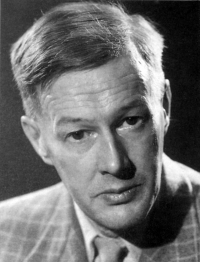
Robin Humphrey Milford (22 January 1903 – 29 December 1959) was an English composer and music teacher.
Milford was born in Oxford, son of Sir Humphrey Milford, publisher with Oxford University Press. He attended Rugby School from 1916 where his musical talent for the piano, flute and theory was first recognised by Arthur Peppin, the director of music. From 1921 until 1926 he studied at the Royal College of Music where his composition teachers were Gustav Holst and Ralph Vaughan Williams, and he studied harmony and counterpoint under R. O. Morris. He also studied organ.
In 1927, he married. Realising that he would not be able to make a living solely as a composer he worked for a time with the Aeolian Company correcting Duo-Art pianola rolls until 1930. He also taught part-time at Ludgrove School (where his pupils included the music enthusiast George Lascelles, later 7th Earl of Harewood) and at Downe House School. In 1929 he had met fellow-composer Gerald Finzi, with whom he found he had much in common, personally and musically, and the two formed a lifelong friendship.
His early compositions met with some success, his Double Fugue Op. 10 winning a Carnegie Trust award, being published in the Carnegie Collection of British Music series and performed by the London Symphony Orchestra under Ralph Vaughan Williams. In September 1931 his oratorio A Prophet in the Land Op. 21 was performed in Gloucester Cathedral as part of the Three Choirs Festival - the work was somewhat overshadowed by the splash made by William Walton's Belshazzar's Feast performed the same year. In 1937 a performance of his Concerto Grosso Op. 46 was directed by Malcolm Sargent, and his Violin Concerto Op. 47 was broadcast by the BBC in early 1938.
At the outbreak of the Second World War Milford volunteered for the army, and was posted to the Pioneer Corps. After just one week, he suffered a breakdown, and after treatment he and his family moved to Guernsey. His depression was deepened by the death of his mother in 1940. He returned to England, to teach and compose, but soon afterwards his five-year-old son, Barnaby, was killed in a road accident. His grief at this tragedy prompted him to attempt suicide; sent back to hospital after this, he tried to kill himself yet again while a patient there. In 1946, he had recovered sufficiently to resume teaching (at Badminton School) and to undertake musical activities. He continued composing throughout this period.
After the death of his father in 1952, he was prescribed occasional shock therapy. He did continue to enjoy successes: his Overture for a Celebration Op. 103 was performed under John Barbirolli at the 1955 Cheltenham Music Festival. He also continued to receive moral and material support from his friends, Finzi (who led a performance of Fishing by Moonlight Op 96 in 1956) and Vaughan Williams (who arranged a performance of the Concertino Op 106 in 1958, and gave financial help).
The deaths of Finzi (1956) and Vaughan Williams (1958) affected Milford deeply, aggravating the effects of his physical decline, which involved loss of vision and impaired balance. He died by his own hand, taking an overdose of aspirin in December 1959.
It has been observed that Milford's writing shows strongly the influence of Vaughan Williams, as might be expected. His use of diatonic melodies, often harmonised with gentle discords, and with false relations occurring occasionally, led Eric Blom (1942) to crystallise these musical traits (also shown by other English composers of the period) as "musical Englishry". Vaughan Williams once wrote to Adrian Boult, "If I wanted to show the intelligent foreigner something worth doing which could only possibly come out of England, I think I would show him something of the work of Milford…"
Hub AI
Robin Milford AI simulator
(@Robin Milford_simulator)
Robin Milford
Robin Humphrey Milford (22 January 1903 – 29 December 1959) was an English composer and music teacher.
Milford was born in Oxford, son of Sir Humphrey Milford, publisher with Oxford University Press. He attended Rugby School from 1916 where his musical talent for the piano, flute and theory was first recognised by Arthur Peppin, the director of music. From 1921 until 1926 he studied at the Royal College of Music where his composition teachers were Gustav Holst and Ralph Vaughan Williams, and he studied harmony and counterpoint under R. O. Morris. He also studied organ.
In 1927, he married. Realising that he would not be able to make a living solely as a composer he worked for a time with the Aeolian Company correcting Duo-Art pianola rolls until 1930. He also taught part-time at Ludgrove School (where his pupils included the music enthusiast George Lascelles, later 7th Earl of Harewood) and at Downe House School. In 1929 he had met fellow-composer Gerald Finzi, with whom he found he had much in common, personally and musically, and the two formed a lifelong friendship.
His early compositions met with some success, his Double Fugue Op. 10 winning a Carnegie Trust award, being published in the Carnegie Collection of British Music series and performed by the London Symphony Orchestra under Ralph Vaughan Williams. In September 1931 his oratorio A Prophet in the Land Op. 21 was performed in Gloucester Cathedral as part of the Three Choirs Festival - the work was somewhat overshadowed by the splash made by William Walton's Belshazzar's Feast performed the same year. In 1937 a performance of his Concerto Grosso Op. 46 was directed by Malcolm Sargent, and his Violin Concerto Op. 47 was broadcast by the BBC in early 1938.
At the outbreak of the Second World War Milford volunteered for the army, and was posted to the Pioneer Corps. After just one week, he suffered a breakdown, and after treatment he and his family moved to Guernsey. His depression was deepened by the death of his mother in 1940. He returned to England, to teach and compose, but soon afterwards his five-year-old son, Barnaby, was killed in a road accident. His grief at this tragedy prompted him to attempt suicide; sent back to hospital after this, he tried to kill himself yet again while a patient there. In 1946, he had recovered sufficiently to resume teaching (at Badminton School) and to undertake musical activities. He continued composing throughout this period.
After the death of his father in 1952, he was prescribed occasional shock therapy. He did continue to enjoy successes: his Overture for a Celebration Op. 103 was performed under John Barbirolli at the 1955 Cheltenham Music Festival. He also continued to receive moral and material support from his friends, Finzi (who led a performance of Fishing by Moonlight Op 96 in 1956) and Vaughan Williams (who arranged a performance of the Concertino Op 106 in 1958, and gave financial help).
The deaths of Finzi (1956) and Vaughan Williams (1958) affected Milford deeply, aggravating the effects of his physical decline, which involved loss of vision and impaired balance. He died by his own hand, taking an overdose of aspirin in December 1959.
It has been observed that Milford's writing shows strongly the influence of Vaughan Williams, as might be expected. His use of diatonic melodies, often harmonised with gentle discords, and with false relations occurring occasionally, led Eric Blom (1942) to crystallise these musical traits (also shown by other English composers of the period) as "musical Englishry". Vaughan Williams once wrote to Adrian Boult, "If I wanted to show the intelligent foreigner something worth doing which could only possibly come out of England, I think I would show him something of the work of Milford…"
Recent media