


Community hub
0 subscribers8 pages, 0 posts
Recent from talks
All channels
Be the first to start a discussion here.
Be the first to start a discussion here.
Be the first to start a discussion here.
Be the first to start a discussion here.
Contribute something
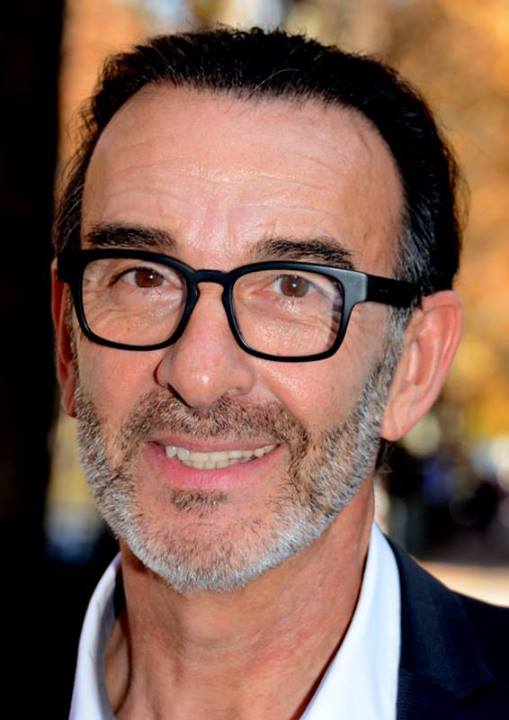
Welcome to the community hub built to collect knowledge and have discussions related to Robin Renucci.
Nothing was collected or created yet.
Robin Renucci
View on Wikipediafrom Wikipedia
 |
Robin Renucci (born 11 July 1956, in Le Creusot, Saône-et-Loire)[1] is a French film and television actor and film director.
Key Information


Acting filmography
[edit] |
- Eaux profondes (1981) : Ralph[2]
- Les Misérables (1982) : Courfeyrac
- Invitation au voyage (1982) : Gérard
- Escalier C (1984)
- La baston (1985) : René Levasseur
- Masks (1987) : Roland Wolf
- The King's Whore (1990) : Charles de Luynes
- Credit Bonheur (1996) : Paul Choquet
- Children of the Century (1999) : François Buloz
- The Dreamers (2003) : Father
- Arsène Lupin (2004) : Duke of Dreux-Soubise
- Comedy of Power (2006) : Philippe Charmant-Killman
- Dolce Fine Giornata (2019)
- Leonardo (2021) : Piero da Vinci
- Jeanne du Barry (2023) : Dumousseaux
Television-acting work
[edit] |
| Year | Title | Genre | Role | Program type | Notes |
|---|---|---|---|---|---|
| 1996 | Maigret in Finland | drama | Prof. Jean Duclos | television series | |
| Since 2009 | Un village français | drama | Daniel Larcher | television series |
Directing filmography
[edit]| Year | Title | Genre | Notes |
|---|---|---|---|
| 1998 | La femme d'un seul homme | television film | |
| 2007 | Sempre vivu! |
References
[edit]- ^ "Robin Renucci". BFI. Archived from the original on September 21, 2018. Retrieved 2020-01-05.
- ^ "Tous les films avec Robin Renucci - Gaumont". www.gaumont.fr. Retrieved 2020-01-05.
External links
[edit]
| International | |
|---|---|
| National | |
| Artists | |
| People | |
| Other | |

 | This article about a French film and television actor is a stub. You can help Wikipedia by expanding it. |
 | This article about a French film director is a stub. You can help Wikipedia by expanding it. |
Robin Renucci
View on Grokipediafrom Grokipedia
Early life and education
Childhood and family
Robin Renucci was born Daniel Robin-Renucci on July 11, 1956, in Le Creusot, a town in the Saône-et-Loire department of Burgundy, France.[12] The grandson of a Corsican blacksmith, he was the son of Louis Robin, a gendarme of Burgundian descent, and Paulette Renucci, a seamstress originally from Corsica.[13][14] The family moved frequently due to his father's profession, leading Renucci to spend much of his early years raised in Auxerre in the Yonne department, first in Tonnerre and later in the rural commune of Villeneuve-Saint-Salves.[12] Each summer, he returned to his mother's ancestral village of Olmi-Cappella in Haute-Corse, where he immersed himself in Corsican traditions, folklore, and polyphonic singing, fostering a deep cultural connection that would later influence his artistic endeavors.[12][15] Renucci's formative environment provided early glimpses into the arts through his mother's work as a seamstress for the Théâtre d'Auxerre, where she repaired costumes on the family dining table.[14] As a teenager, around age 15 or 16 in Auxerre, he observed actors and rehearsals in their home, sparking his initial fascination with theater amid the blend of his parents' worlds—his father's disciplined rural life and his mother's creative, heritage-rooted craftsmanship.[16] This Corsican lineage from his mother also laid the groundwork for his later cultural initiatives in Corsica.[17]Dramatic training
Robin Renucci commenced his formal dramatic training at the Atelier-École Charles Dullin in Paris from 1975 to 1977, building foundational skills in acting through immersive workshops inspired by popular education initiatives. Influenced by his family's Corsican heritage, he advanced to the renowned Conservatoire national supérieur d'art dramatique (CNSAD) in Paris during the late 1970s, where he immersed himself in a comprehensive program culminating in his graduation in 1981.[18][19][20] Under the guidance of esteemed mentors such as Jean-Paul Roussillon, Pierre Debauche, Marcel Bluwal, and Antoine Vitez at the CNSAD, Renucci honed techniques central to classical French theater, including precise verse recitation, embodied character interpretation, and collaborative ensemble dynamics. This curriculum prioritized mastery of the French dramatic canon—encompassing works by playwrights like Molière, Racine, and Corneille—while fostering emotional authenticity and vocal discipline essential for stage presence. The training underscored the balance between textual fidelity and innovative physicality, preparing actors for the rigors of professional repertory theater.[18][21][20] Upon completing his studies, Renucci transitioned into professional theater in the early 1980s, aligning with influential directors such as Marcel Bluwal and Roger Planchon to launch his career in France's vibrant stage community. This period represented his initial foray into sustained acting engagements, bridging academic rigor with practical performance demands.[18][1]Acting career
Theater work
Robin Renucci began his stage career in the early 1980s with roles in ensemble productions that emphasized accessible and innovative theater. In 1980, shortly after graduating from the Conservatoire national supérieur d'art dramatique, he appeared in Bertolt Brecht and Kurt Weill's Le Petit Mahagonny and Clifford Odets's En attendant Lefty, both directed by Marcel Bluwal, contributing to dynamic stagings that blended music, politics, and social commentary. These early performances highlighted his emerging versatility in modernist works.[19] Throughout the decade, Renucci took on supporting roles in major French theater ensembles, including Roland Dubillard's Où boivent les vaches (1984), directed by Roger Planchon at the Théâtre national populaire in Villeurbanne, where he supported explorations of absurdism and rural life. A pivotal moment came in 1987 with his portrayal of Don Camille in Paul Claudel's epic Le Soulier de satin, directed by Antoine Vitez for the Comédie-Française and presented at the Festival d'Avignon. This ambitious production, staged in the Cour d'Honneur of the Palais des Papes, showcased Renucci's ability to navigate Claudel's poetic and philosophical depth amid a large ensemble cast.[19][22] In the 1990s, Renucci continued performing classical and historical pieces, solidifying his presence in France's premier institutions. These roles at venues like the Comédie-Française-associated productions allowed him to interpret nuanced characters in the classical tradition, drawing on his training for precise delivery of verse and prose. Renucci's work transitioned toward contemporary theater in the late 1990s and early 2000s, with notable appearances at the Festival d'Avignon and other festivals emphasizing modern interpretations. He performed in ensemble pieces that bridged classical influences with current themes. This shift underscored his adaptability to innovative directorial visions.[22] Post-2000, Renucci maintained an active stage presence through guest roles that demonstrated his range across dramatic and comedic genres. In 2001, he appeared as Antiochus in Jean Racine's Bérénice, directed by Lambert Wilson at the Théâtre national de Chaillot, delivering a poignant performance in the tragedy's exploration of duty and love. Later, in 2014, he took the lead as the jealous Arnolphe in Molière's L'École des femmes, directed by Christian Schiaretti at the Théâtre national populaire in Villeurbanne, infusing the comedy with sharp physicality and emotional intensity. These performances affirmed his ongoing commitment to both timeless texts and their fresh stagings, often in repertory settings that promoted theatrical accessibility.[23][24]Film roles
Renucci made his screen debut in the 1981 psychological thriller Eaux profondes, directed by Michel Deville and adapted from Patricia Highsmith's novel, in which he portrayed the character Ralph.[25] His breakthrough role came in 1985 with Escalier C, directed by Jean-Charles Tacchella, where he played the troubled and misanthropic art critic Foster Lafont; this performance earned him a César Award nomination for Best Actor in 1986 and brought him widespread recognition in French cinema.[26][27] In 1987, Renucci starred as the investigative journalist Roland Wolf in Claude Chabrol's mystery drama Masques, a complex character drawn into a web of deception surrounding a charismatic television host.[28] Renucci gained international exposure in 2003 with Bernardo Bertolucci's The Dreamers, a coming-of-age story set amid the 1968 Paris student riots, where he contributed to the ensemble as the twins' conflicted poet father.[29] Following the turn of the millennium, Renucci has primarily taken on supporting roles in French arthouse films, including Philippe Charmant-Killman, the beleaguered husband of a powerful magistrate in Chabrol's 2006 L'Ivresse du pouvoir (Comedy of Power), Monsieur de La Rochefoucauld in Isabelle Brocard's Madame de Sévigné (2023), and the mentor figure Roch-Claude Billard in Maïwenn's 2023 historical drama Jeanne du Barry.[30][31]Television roles
Renucci began his television career in the early 1980s with appearances in French miniseries that capitalized on his emerging presence in film. In the 1982 adaptation of Victor Hugo's Les Misérables, he portrayed the revolutionary student Courfeyrac, contributing to a sprawling narrative of social upheaval during the French Revolution.[32] Other early roles included Daix in the maritime adventure miniseries Les Quarantièmes rugissants (1982) and supporting parts in TV films such as La Tentation d'Antoine (1982), which allowed him to explore ensemble dynamics in period settings. By the late 1980s, he appeared in the historical miniseries La Grande Cabriole (1989), playing a character in a tale of 18th-century intrigue, further demonstrating his versatility in literary adaptations. A pivotal point in Renucci's television career came with his lead role as Daniel Larcher in the acclaimed WWII drama Un village français (2009–2017), which aired over seven seasons on France 3. As the village doctor and mayor of the fictional Villeneuve, Larcher navigates moral dilemmas, collaboration, and resistance under Nazi occupation, embodying the complexities of ordinary citizens in extraordinary times. The series, praised for its nuanced portrayal of French history, showcased Renucci's ability to sustain a character's emotional arc across 72 episodes, drawing from his theater-honed depth in character development.[33] Throughout his career, Renucci took on guest spots in both historical and contemporary series, often in adaptations of French literature or real events that highlighted his dramatic range. Notable examples include Professor Jean Duclos in an episode of Maigret (1995), based on Georges Simenon's detective novels, and Father André Vincey in the fact-based drama Le Silence de l'église (2013), addressing clergy abuse scandals.[32] In contemporary settings, he appeared as Benoît Legris in Alice Nevers: Le juge est une femme (2006) and Paul Sorbier in Cassandre (2020), a crime series exploring social tensions in modern France. Following the conclusion of Un village français, Renucci continued with ensemble roles in prestige television addressing social and historical issues. In the international series Leonardo (2021–), he played Piero da Vinci, Leonardo's father, in a biographical drama blending Renaissance intrigue with family dynamics. More recently, he portrayed the Comte de Maurepas in three episodes of the Apple TV+ series Franklin (2024), depicting the French diplomat's role in supporting the American Revolution. These parts underscore his ongoing contribution to serialized narratives that examine power, ethics, and societal change.[34]Directing and leadership
Stage productions
Robin Renucci founded the Association for International Artistic Encounters (ARIA) in 1998 in Pioggiola, Corsica, with the aim of revitalizing theater in the region through annual international meetings that feature original stagings deeply connected to Corsican cultural and regional identity.[18][5] Inspired by his Corsican roots, these initiatives sought to bridge local traditions with global artistic practices, fostering productions that explore themes of heritage and community in rural settings.[35] In the 1990s, Renucci began directing stage productions with Les Tréteaux de France, emphasizing accessible and popular interpretations of classical works to reach diverse audiences across France. A notable example is his 1998 staging of Molière's L'École des femmes, which highlighted the play's comedic elements through straightforward, engaging performances that toured nationally and underscored the troupe's itinerant mission.[36] Following his appointment as director of the Centre Dramatique National Les Tréteaux de France in 2011, Renucci's work shifted toward collaborative productions that prioritize ensemble dynamics and community engagement, often involving local participants in the creative process. Productions such as August Strindberg's Mademoiselle Julie (2012) and Honoré de Balzac's Le Faiseur (2015) exemplified this approach, blending professional actors with regional talents to create immersive, site-specific experiences that toured extensively and promoted theater as a communal dialogue.[37][38] In 2023, Renucci directed an adaptation of Aristophanes' Peace titled À la paix! at Théâtre de La Criée in Marseille, reimagining the ancient comedy in a contemporary urban context to reflect the city's multicultural vibrancy and call for conviviality amid social tensions. Co-written with Serge Valletti, the production featured a large ensemble and interactive elements, inviting audiences to participate in a festive celebration of peace, marking Renucci's inaugural creation as director of the venue.[39][40] In the 2024–2025 season, Renucci directed Jean Racine's Phèdre at La Criée, exploring themes of desire and transgression through a frontal scenic setup that intensifies the emotional and poetic impact of the tragedy. The production premiered in Marseille on 9 January 2025 and toured to venues including Castelnaudary and Agen.[41]Screen works
Renucci made his debut as a screen director with the 1998 television film La Femme d'un seul homme, a romantic drama centered on a woman who, upon discovering her husband's infidelity, crafts an elaborate plan to preserve their marriage.[42] The production, written by Jackye Fryszman and starring Clémentine Célarié as the protagonist alongside Didier Sandre and Barbara Schulz, aired on French networks TF1 and Canal+.[43] This intimate narrative marked Renucci's transition from acting to directing, emphasizing emotional tension within domestic relationships. In 2007, Renucci helmed his first feature film, Sempre vivu!, a Corsican-language comedy-drama that delves into themes of cultural identity and rural migration.[44] Set in a remote, depopulating Corsican village, the story follows the mayor's unconventional scheme to launch a theater workshop—complete with a pact with the devil—to revitalize the community and stem the exodus of young residents.[45] Co-written by Pierre Chosson, Jean-Bernard Pouy, and Jean-Louis Milesi, the film highlights the interplay between tradition and modernity in insular life, drawing on Renucci's deep ties to Corsica through his association ARIA, which supports regional artistic projects.[44] Renucci continued directing in the late 2000s with Jean-Jean (2009), a feature adaptation loosely inspired by Anton Chekhov's Uncle Vanya, incorporating social commentary on aging, family obligations, and the quiet disillusionments of rural existence.[46] The narrative tracks a retired professor returning to his village, where he grapples with his nephew's stagnant life and uncovers layers of unspoken regrets among kin.[47] Produced by Arcanae and La Réplique as part of a creative workshop, the film exemplifies Renucci's interest in literary adaptations that probe interpersonal and societal strains. Throughout his screen directing efforts, Renucci employs stylistic choices rooted in authenticity, notably filming in Corsica's unspoiled natural landscapes to immerse viewers in the region's rugged beauty and cultural specificity, as seen prominently in Sempre vivu!.[44] This approach underscores his focus on location as a narrative element, fostering a sense of place that mirrors the works' explorations of belonging and heritage.Institutional roles
In April 2022, Robin Renucci was appointed director of the Centre Dramatique National de Marseille - La Criée, succeeding Macha Makeïeff, with the aim of fostering a theater project deeply connected to Marseille's diverse territories and promoting accessible cultural engagement.[4] Under his leadership, the institution has continued to emphasize participatory initiatives, including the 2023 staging of À la paix as part of its ongoing programming.[3] Since September 2022, Renucci has served as president of the Centres de jeunes et de séjours du festival d'Avignon (CDJSFA), an association founded to support youth centers and educational stays linked to the Avignon Festival, enhancing arts access for young audiences through structured programs.[48] Renucci was a member of the Haut Conseil de l'éducation artistique et culturelle from January 2017 until its suppression in early 2025, where he contributed to national policy advisory on artistic and cultural education, advocating for theater's role in civic development and broader cultural participation.[49][50][51] From July 2011 to June 2022, Renucci directed the Centre Dramatique National Les Tréteaux de France, an itinerant company dedicated to decentralized theater that brings performances to rural and underserved areas across France, thereby promoting equitable access to live arts beyond urban centers.[7]Personal life
Family and residences
Robin Renucci is married to Lindsey Renucci, an English former dancer, and the couple has four children: daughters Constance and Zelda, as well as twin sons Timon and Ulysse.[2][52][53] Renucci has maintained a private family life, with limited public details shared, emphasizing discretion amid his professional commitments. In a 2009 interview, he described the challenges of managing a large family alongside his career, noting the daily routines of preparing breakfast and school runs for his adolescent children, including the twins.[54] Renucci established a long-term residence in Paris after moving there in the mid-1970s to pursue theater training at the École Charles Dullin, where he remained based for much of his career, including during his tenure as director of Les Tréteaux de France from 2011 to 2022.[2][52] Due to his Corsican heritage—stemming from his mother's side, with summers spent on the island during his youth—he maintains periodic stays in Corsica, where he founded and presides over L'ARIA (Association des Rencontres Internationales Artistiques), organizing annual international theater encounters since 1998.[1][18] In 2022, Renucci relocated to Marseille upon his appointment as director of the Théâtre National de La Criée, marking a significant shift in his personal base that intertwined with his institutional leadership.[55][35] He has since expressed appreciation for the city's vibrant contrasts in interviews, reflecting on how this move enhances his work-life integration by fostering closer community ties.[56]Activism and commitments
Robin Renucci has been an active member of the Secours Populaire Français since the early 2000s, supporting its social aid programs through public endorsements, visits to local branches, and participation in fundraising campaigns such as the 2004 Don'Action initiative aimed at broadening cultural access for underprivileged communities.[57][58] He has served as a patron for various SPF events, including solidarity gatherings and resistance commemorations, emphasizing the role of culture in combating social exclusion.[59] Renucci has also engaged with Amnesty International, participating in its human rights campaigns in France and Europe, including attending annual galas and signing public petitions against restrictive immigration policies in 2024.[60] His involvement highlights a commitment to advocating for civil liberties and international justice through artistic and public platforms. Beyond organizational memberships, Renucci has advocated for accessible theater and arts education via public speeches, interviews, and initiatives that promote the integration of artistic practice into civic life.[17] He argues that theater fosters essential competencies for personal growth and democratic participation, urging policies to ensure equitable access to cultural experiences for all, particularly youth and marginalized groups.[61][62] Post-2020, Renucci has deepened his commitments by contributing to cultural policy as a member of the Haut Conseil de l'éducation artistique et culturelle, appointed in 2018 and actively involved in deliberations on expanding arts education nationwide.[63][50] In this role, he has emphasized the democratic imperative of inclusive cultural policies, drawing on his institutional leadership to amplify advocacy efforts.[17]Awards and recognition
Nominations and honors
Robin Renucci earned a nomination for the César Award for Best Actor in 1986 for his performance in Escalier C, marking an early highlight in his film career and recognizing his nuanced portrayal of a working-class protagonist.[11][64] In theater, he received the Prix Gérard-Philipe in 1987 for his role in Le Soulier de satin. In television, Renucci received the 7 d'Or Award for Best Actor in a TV film in 1997 for his roles in Des enfants dans les arbres and Parents à mi-temps, underscoring his versatility in dramatic family narratives.[65] He later won the Golden FIPA for Best Actor at the Biarritz International Festival of Audiovisual Programming in 2003 for Le train de 16h19, a role that highlighted his ability to convey emotional depth in period dramas.[66][67] In 2010, he was awarded the Prix du Brigadier for his direction of Désiré. Renucci's contributions to theater have been honored through key institutional appointments, reflecting sustained respect among French cultural peers. In 2011, he was appointed director of Les Tréteaux de France, the itinerant National Dramatic Center, by Culture Minister Frédéric Mitterrand, a role he held until 2022 to revitalize classical repertoire for contemporary audiences.[68][69] In 2017, he was elected president of the Association des Centres Dramatiques Nationaux (ACDN) for a two-year term, advocating for national theater networks, a position he continued to hold as of 2025.[70] Most recently, in 2022, Renucci was nominated by Culture Minister Roselyne Bachelot-Narquin to lead La Criée Théâtre National de Marseille, another prominent National Dramatic Center, for a four-year mandate focused on innovative ensemble work.[4] These positions affirm his influence in sustaining French theatrical traditions without major competitive awards dominating his record.Legacy contributions
Robin Renucci has significantly influenced popular theater in France by directing the Centre Dramatique National Les Tréteaux de France since 2011, an itinerant company that brings classical and contemporary productions to rural and underserved communities across the country.[5][4] Through this role, he has expanded access to high-quality theater beyond urban centers, performing in diverse settings to engage audiences in regions often overlooked by mainstream cultural institutions.[71] Complementing this, Renucci founded the Association des Rencontres Internationales Artistiques (ARIA) in 1998, which organizes international theater encounters that promote artistic exchange and education in remote areas, including Corsican islands, thereby democratizing cultural participation.[72][18] Renucci's mentorship of emerging talent is evident in his teaching position at the Conservatoire National Supérieur d'Art Dramatique (CNSAD), where he imparts practical and theoretical knowledge to aspiring actors, drawing from his own training there.[5] As director of La Criée Théâtre National de Marseille since 2022, he has implemented programs such as workshops, participatory projects, and youth festivals like En Ribambelle, which provide hands-on training and creative opportunities for young performers and audiences alike.[4][73] These initiatives at La Criée serve as a platform for his legacy in fostering the next generation of theater professionals through inclusive education.[74] Through ARIA, Renucci has contributed to the cultural revival in Corsica by directing the annual Rencontres Internationales de Théâtre en Corse since 1998, hosting productions and workshops in rural villages of the Balagne region that integrate local traditions with international influences.[18][75] These events, involving over 100 participants in professional-led stagings, encourage community involvement and highlight Corsican heritage in theater settings.[76] In 2025, Renucci continues to shape French arts education policy as president of the Association of National Dramatic Centres and through public advocacy, including a February conference on artistic and popular education that emphasized equitable access to cultural training.[77][78] His efforts promote systemic changes, such as expanded tools for education artistique et culturelle, ensuring theater's role in social emancipation for future generations.[62]Filmography
Film acting credits
| Year | Title | Role | Director |
|---|---|---|---|
| 1981 | Eaux profondes | Ralph | Michel Deville |
| 1982 | Les Misérables | Courfeyrac | Robert Hossein |
| 1981 | Les Quarantièmes rugissants | Daix | Christian de Chalonge |
| 1982 | L'Invitation au voyage | Gérard | Peter Del Monte |
| 1983 | Fort Saganne | Hazan | Alain Corneau |
| 1983 | Coup de foudre | Raymond | Diane Kurys |
| 1983 | Les Mots pour le dire | Le père de Marie | Pierre Granier-Deferre |
| 1983 | La Trace | Le travailleur immigré | Bernard Favre |
| 1983 | Stella | Justin | Laurent Heynemann |
| 1983 | Vive la sociale! | Pater | Gérard Mordillat |
| 1984 | Le Vol du sphinx | Tournier | Laurent Ferrier |
| 1984 | Côté cœur, côté jardin | Bernard | Jean-Daniel Simon |
| 1985 | Escalier C | Foster Lafont | Jean-Charles Tacchella |
| 1985 | Train d'enfer | Muller | Roger Hanin |
| 1985 | États d'âme | Maurice | Jacques Fansten |
| 1985 | La Baston | René Levasseur | Claude Zidi |
| 1986 | Suivez mon regard | Le dandy | Jean Curtelin |
| 1986 | Peau d'ange | Milo | Jean-Louis Daniel |
| 1986 | L'Amant magnifique | Antoine | Guy Gilles |
| 1986 | Le Mal d'aimer | Robert Briand | Jacques Deray |
| 1987 | Masques | Roland Wolf | Claude Chabrol |
| 1988 | Les Mannequins d'osier | Pierre Dufay | Francis de Gueltzl |
| 1988 | Les Deux Fragonard | Cyprien Fragonard | Philippe Le Guay |
| 1988 | Blanc de Chine | Mathieu | Denys Granier-Deferre |
| 1989 | Aventures de Catherine C. | Pierre Indemini | Pierre Beuchot |
| 1990 | Dames galantes | Henri III | Jean-Charles Tacchella |
| 1990 | La Putain du roi | Charles de Luynes | Axel Corti |
| 1990 | Faux et usage de faux | Martin Bassane | Laurent Heynemann |
| 1992 | Poisson-Lune | Tom | Bertrand Van Effenterre |
| 1992 | Je pense à vous | Fabrice | Pierre Barouh |
| 1993 | L'Ordre du jour | Martin K. | Michel Sibra |
| 1993 | L'Écrivain public | Jacques | Jean-François Amiguet |
| 1994 | La Poudre aux yeux | Arnold | Maurice Dugowson |
| 1995 | La Duchesse de Langeais | Marquis de Montriveau | Jean-Daniel Verhaeghe |
| 1995 | Les Frères Gravet | André | André Téchiné |
| 1995 | Parents à mi-temps | Paul | Christine Pascal |
| 1996 | Méfie-toi de l'eau qui dort | Jean | Jacques Deschamps |
| 1996 | Sans mentir | Philippe | Pierre Jolivet |
| 1997 | Mon amour | Richard Couderc | Sébastien Grall |
| 1997 | L'Enfant perdu | Pierre Neuville | Christian de Chalonge |
| 1997 | La Famille Sapajou | Julien | Nelly Kaplan |
| 1998 | Le Danger d'aimer | Julien | Bruno Herbulot |
| 1999 | Les Enfants du siècle | François Buloz | Diane Kurys |
| 2000 | Le Parisien du village | Gérard | Jean-Pierre Thorn |
| 2000 | On n'a qu'une vie | Grégoire | Thierry Redler |
| 2001 | Total Kheops | Ugo | Alain Bévérini |
| 2001 | Taking Sides | Captain Vernay | István Szabó |
| 2002 | T'as voulu voir la mer... | Moïse | Serge Frydman |
| 2002 | Affaire(s) à suivre... | L'inspecteur Charlier | Claude Zidi |
| 2003 | Le Furet | L'inspecteur Bart | Jean-Pierre Mocky |
| 2003 | The Dreamers | Le père | Bernardo Bertolucci |
| 2003 | Les Femmes ont toujours raison | Thierry Briancourt | Henri Helman |
| 2003 | Satan refuse du monde | Dominique Dangès | Catherine Corsini |
| 2004 | Arsène Lupin | Le duc de Dreux-Soubise | Jean-Paul Salomé |
| 2006 | L'Ivresse du pouvoir | Philippe | Claude Chabrol |
| 2007 | La Surprise | Paul | Pierre Carles |
| 2008 | Les Femmes de l'ombre | Melchior | Jean-Paul Salomé |
| 2008 | Almasty, la dernière expédition | Jacques Grangier | Laurent Perreau |
| 2008 | La Fonte des neiges | Vincent | Jean-Pierre Améris |
| 2010 | Colère | Victor le curé | Alain Tasma |
| 2010 | Le Jardin des Eden | M. Eden | Alice Winocour |
| 2011 | Celles qui aimaient Richard Wagner | Franz Litz | Jean-Louis Guillermou |
| 2015 | Couvre-feu | Alain Petit | Fred Grivois |
| 2019 | Un soir en Toscane | Le journaliste | Stefan Liberski |
| 2023 | L'Étrange parcours | Narrateur (voice) | Jean-Michel Ropers[79] |
| 2023 | Jeanne du Barry | Monsieur Dumousseaux | Maïwenn |
| 2023 | Madame de Sévigné | Monsieur de La Rochefoucauld | Isabelle Brocard |
| 2025 | Rainer Maria Rilke - La poésie dans la peau | Narrateur | Thomas von Steinaecker[80] |
Television acting credits
Renucci's television acting career spans over four decades, encompassing guest appearances in popular French series, lead roles in long-running dramas, and performances in TV movies and miniseries. His credits are drawn primarily from established French productions, often broadcast on public channels like France 2 and France 3.[81] The following table provides a chronological overview of his verified television acting credits, focusing on series, miniseries, and TV movies. Details include roles, episode ranges where applicable, and networks.| Year(s) | Title | Role | Type | Network | Notes |
|---|---|---|---|---|---|
| 1983 | Dorothée, danseuse de corde | Mario | TV series (Season 1) | France 2 | Recurring role in early episodes.[81] |
| 1995 | Maigret | Prof. Jean Duclos | TV series (Season 5, Episode 3) | France 2 | Guest appearance in detective drama.[81] |
| 2003 | Le train de 16h19 | Étienne Brenner | TV movie | France 2 | Lead role; winner of FIPA d'Or for Best Actor.[82] |
| 2005 | La bonne copine | Vincent | TV movie | France 3 | Lead role opposite Mimie Mathy.[81] |
| 2006 | Alice Nevers, le juge est une femme | Benoît Legris | TV series (Season 5, Episode 5) | TF1 | Single-episode guest role.[81] |
| 2006 | Commissaire Cordier | Docteur Vidal | TV series (Season 2, Episode 2) | France 2 | Guest role as doctor.[81] |
| 2007 | Chat bleu, Chat noir | Cretelle | TV series (Season 1, Episode 1) | France 2 | Pilot episode appearance.[81] |
| 2009–2017 | Un village français | Daniel Larcher | TV series (Seasons 1–7) | France 3 | Lead role as doctor and Resistance figure; 72 episodes total.[33][81] |
| 2010 | Fracture | Serge Kagan | TV movie | France 3 | Supporting role in family drama.[81] |
| 2012 | Le Silence des églises | Père André Vincey | TV movie | France 3 | Central role as priest in abuse scandal story.[81] |
| 2015 | Chefs | Paul Séraffini / Edouard | TV series (Seasons 1–2) | France 2 | Recurring role as mentor chef; 10 episodes.[81] |
| 2020 | Cassandre | Paul Sorbier | TV series (Season 6, Episode 1) | France 3 | Guest role in crime series.[81] |
| 2021 | Leonardo | Piero da Vinci | TV series (Season 1) | Rai 1 / TV 2000 | Recurring role as Leonardo's father; 8 episodes.[81] |
| 2024 | Franklin | Comte de Maurepas | TV series (Season 1) | Apple TV+ | Recurring role in historical drama; Episodes 1, 4, 6.[81] |
Directing credits
Robin Renucci's directing career spans television, film, and stage, with a particular emphasis on theater productions since the late 1990s. His works often draw from classical and modern repertoires, frequently staged with the Tréteaux de France company during his tenure as its director from 2011 to 2022, and later at La Criée – Théâtre National de Marseille.Television and Film
- La femme d'un seul homme (1998, TV movie): A television adaptation exploring marital infidelity, starring Clémentine Célarié and Didier Sandre.[42]
- Sempre vivu! (2007, feature film): A comedy-drama set in a depopulating Corsican village, focusing on community revival through theater; produced by Agora Films and premiered at festivals.[45]
Stage Productions
Renucci's theater directing credits, primarily mises en scène for French and international classics, are presented chronologically below. Many were created for touring productions with Les Tréteaux de France or resident theaters.| Year | Title | Author | Details |
|---|---|---|---|
| 1998 | L'École des femmes | Molière | Adaptation of the classic comedy, staged at various French venues.[37] |
| 2012 | Mademoiselle Julie | August Strindberg | Modern interpretation of the psychological drama, toured nationally.[37] |
| 2015 | Le Faiseur | Honoré de Balzac | Satirical take on ambition and society, performed at Théâtre de la Porte Saint-Martin.[37] |
| 2016 | L'Avaleur | Jerry Sterner | Adaptation of the American play on corporate ethics, with scenic design by Jean-Marc Stehle.[37] |
| 2017 | L'Enfance à l'œuvre | Romain Gary | Exploration of childhood and creativity, part of educational outreach programs.[37] |
| 2018 | La Guerre des salamandres | Karel Čapek | Sci-fi allegory on exploitation, adapted for contemporary audiences.[37] |
| 2019 | Bérénice | Jean Racine | Part of a Racine cycle; minimalist staging emphasizing emotional intimacy, toured across France.[37][83] |
| 2020 | Oblomov | Ivan Gontcharov (adapted by Nicolas Kerszenbaum) | Slothful protagonist's story, staged during pandemic restrictions at Théâtre de Poche Graslin.[37][35] |
| 2020 | Britannicus | Jean Racine | Intrigue and power dynamics in ancient Rome, adapted for masked performances amid COVID-19 protocols.[37][84] |
| 2021 | Andromaque | Jean Racine | Continuation of Racine series, focusing on unrequited love and captivity.[37] |
| 2021 | Dans le plus simple appareil – Triptyque Racine | Jean Racine | Triptych compiling excerpts from Racine's tragedies, emphasizing nudity and vulnerability in staging.[37] |
| 2022 | Phèdre | Jean Racine | Culmination of the Racine quadrilogy, with a focus on passion and fate; premiered at Festival d'Avignon before national tour.[37][85] |
| 2023 | À la paix! | Aristophanes (adapted by Robin Renucci and Serge Valletti) | Joyful adaptation of the ancient comedy promoting peace and conviviality, premiered at La Criée – Théâtre National de Marseille (November 8–26).[37][86][87] |
| 2023 | Milena – Lettres de Franz Kafka à Milena Jesenská | Franz Kafka | Epistolary staging of Kafka's letters, highlighting themes of love and exile.[37] |
| 2024 | Phèdre (nouvelle version) | Jean Racine | Revised staging of the tragedy, emphasizing light and shadow contrasts; performed at Théâtre National de Nice.[88][89][90] |
| 2026 | La Leçon | Eugène Ionesco | Absurdist satire on power and language, scheduled for production at La Criée and touring venues like Théâtre du Chêne Noir (as of November 2025).[37][91][92] |