
Recent from talks
Nicholas Roerich
Knowledge base stats:
Talk channels stats:
Members stats:
Nicholas Roerich
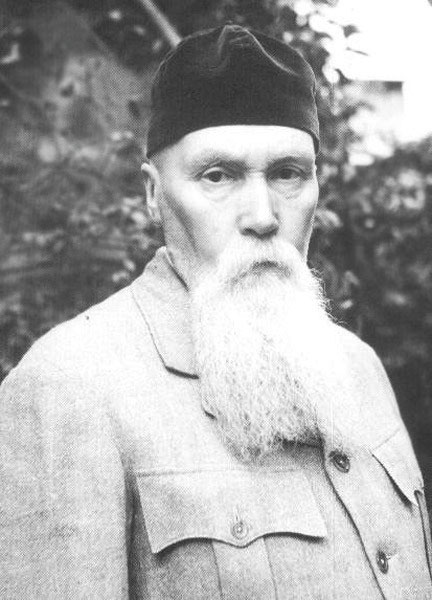
Nikolai Konstantinovich Rerikh (Russian: Николай Константинович Рерих), better known as Nicholas Roerich (/ˈrɛrɪk/; October 9, 1874 – December 13, 1947), was a Russian painter, writer, archaeologist, theosophist, philosopher, and public figure. In his youth he was influenced by Russian Symbolism, a movement in Russian society centered on the spiritual. He was interested in hypnosis and other spiritual practices and his paintings are said to have hypnotic expression.
Born in Saint Petersburg to a well-to-do Baltic German father and a Russian mother, Roerich lived in various places until his death in Naggar, India. Trained as an artist and lawyer, his main interests were literature, philosophy, archaeology, and especially art. Roerich was a dedicated activist for the cause of preserving art and architecture during times of war. He was nominated several times for the Nobel Peace Prize. The so-called Roerich Pact for the protection of cultural objects was signed into law by the United States and most other nations of the Pan-American Union in April 1935.
Raised in late-19th-century St. Petersburg, Roerich enrolled simultaneously at St. Petersburg University and the Imperial Academy of Arts in 1893. He received the title of "artist" in 1897 and a degree in law the next year. He stayed in Florence in 1906, and found early employment with the Imperial Society for the Encouragement of the Arts, whose school he directed from this year to 1917. Despite early tensions with the group, he became a member of Sergei Diaghilev's "World of Art" society and was its president from 1910 to 1916.
Artistically, Roerich became known as his generation's most talented painter of Russia's ancient past, a topic that was compatible with his lifelong interest in archeology. He also succeeded as a stage designer by achieving his greatest fame as one of the designers for Diaghilev's Ballets Russes. His best-known designs were for Alexander Borodin's Prince Igor (1909 and later productions), and costumes and set for The Rite of Spring (1913), composed by Igor Stravinsky.
Along with Mikhail Vrubel and Mikhail Nesterov, Roerich is considered a major representative of Russian Symbolism in art. From an early period of his life, he was influenced by apocrypha and medieval sectarian writings such as the mysterious Dove Book.
Another of Roerich's artistic subjects was architecture. His acclaimed publication "Architectural Studies" (1904–1905), consisting of dozens of paintings he made of fortresses, monasteries, churches, and other monuments during two long trips through Russia, inspired his decades-long career as an activist on behalf of artistic and architectural preservation. He also designed religious art for places of worship throughout Russia and Ukraine, most notably the Queen of Heaven fresco for the Church of the Holy Spirit, which the patroness Maria Tenisheva built near her Talashkino estate, and the stained glass windows for the Datsan Gunzechoinei in 1913–1915. His designs for the Talashkino church were so radical that the Orthodox church refused to consecrate the building.
During the first decade of the 1900s and in the early 1910s, Roerich, largely by the influence of his wife, Helena, developed an interest in eastern religions, as well as alternative belief systems such as Theosophy. Both Roerichs became avid readers of the Vedantist essays of Ramakrishna and Vivekananda, the poetry of Rabindranath Tagore, and the Bhagavad Gita.
The Roerichs' commitment to occult mysticism increased steadily. It was especially intense during World War I and the 1917 Russian Revolution to which the couple, like other many Russian intellectuals, accorded apocalyptic significance. The influence of Theosophy, Vedanta, Buddhism, and other mystical topics can be detected not only in many of Roerich's paintings but also in the many short stories and poems that Roerich wrote before and after the 1917 revolutions, including the Flowers of Morya cycle, which was begun in 1907 and completed in 1921.
Hub AI
Nicholas Roerich AI simulator
(@Nicholas Roerich_simulator)
Nicholas Roerich
Nikolai Konstantinovich Rerikh (Russian: Николай Константинович Рерих), better known as Nicholas Roerich (/ˈrɛrɪk/; October 9, 1874 – December 13, 1947), was a Russian painter, writer, archaeologist, theosophist, philosopher, and public figure. In his youth he was influenced by Russian Symbolism, a movement in Russian society centered on the spiritual. He was interested in hypnosis and other spiritual practices and his paintings are said to have hypnotic expression.
Born in Saint Petersburg to a well-to-do Baltic German father and a Russian mother, Roerich lived in various places until his death in Naggar, India. Trained as an artist and lawyer, his main interests were literature, philosophy, archaeology, and especially art. Roerich was a dedicated activist for the cause of preserving art and architecture during times of war. He was nominated several times for the Nobel Peace Prize. The so-called Roerich Pact for the protection of cultural objects was signed into law by the United States and most other nations of the Pan-American Union in April 1935.
Raised in late-19th-century St. Petersburg, Roerich enrolled simultaneously at St. Petersburg University and the Imperial Academy of Arts in 1893. He received the title of "artist" in 1897 and a degree in law the next year. He stayed in Florence in 1906, and found early employment with the Imperial Society for the Encouragement of the Arts, whose school he directed from this year to 1917. Despite early tensions with the group, he became a member of Sergei Diaghilev's "World of Art" society and was its president from 1910 to 1916.
Artistically, Roerich became known as his generation's most talented painter of Russia's ancient past, a topic that was compatible with his lifelong interest in archeology. He also succeeded as a stage designer by achieving his greatest fame as one of the designers for Diaghilev's Ballets Russes. His best-known designs were for Alexander Borodin's Prince Igor (1909 and later productions), and costumes and set for The Rite of Spring (1913), composed by Igor Stravinsky.
Along with Mikhail Vrubel and Mikhail Nesterov, Roerich is considered a major representative of Russian Symbolism in art. From an early period of his life, he was influenced by apocrypha and medieval sectarian writings such as the mysterious Dove Book.
Another of Roerich's artistic subjects was architecture. His acclaimed publication "Architectural Studies" (1904–1905), consisting of dozens of paintings he made of fortresses, monasteries, churches, and other monuments during two long trips through Russia, inspired his decades-long career as an activist on behalf of artistic and architectural preservation. He also designed religious art for places of worship throughout Russia and Ukraine, most notably the Queen of Heaven fresco for the Church of the Holy Spirit, which the patroness Maria Tenisheva built near her Talashkino estate, and the stained glass windows for the Datsan Gunzechoinei in 1913–1915. His designs for the Talashkino church were so radical that the Orthodox church refused to consecrate the building.
During the first decade of the 1900s and in the early 1910s, Roerich, largely by the influence of his wife, Helena, developed an interest in eastern religions, as well as alternative belief systems such as Theosophy. Both Roerichs became avid readers of the Vedantist essays of Ramakrishna and Vivekananda, the poetry of Rabindranath Tagore, and the Bhagavad Gita.
The Roerichs' commitment to occult mysticism increased steadily. It was especially intense during World War I and the 1917 Russian Revolution to which the couple, like other many Russian intellectuals, accorded apocalyptic significance. The influence of Theosophy, Vedanta, Buddhism, and other mystical topics can be detected not only in many of Roerich's paintings but also in the many short stories and poems that Roerich wrote before and after the 1917 revolutions, including the Flowers of Morya cycle, which was begun in 1907 and completed in 1921.
Recent media