Hubbry Logo
RonoveRonoveMain
Open search
Ronove
Community hub
Ronove
logo
8 pages, 0 posts
0 subscribers
Be the first to start a discussion here.
Ronove
Ronove
from Wikipedia
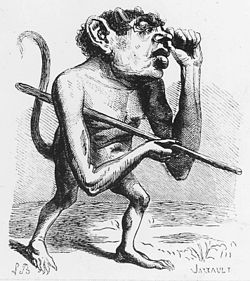
Ronove as depicted in the Dictionnaire Infernal

In demonology, Ronove is a Marquis and Great Earl of Hell, commanding twenty legions of demons. He teaches art, rhetoric, languages, and gives good and loyal servants the favour of friends and foes.

He is depicted as a monster holding a staff, without detailing his appearance. He is also described as taker of old souls; often coming to earth to harvest souls of decrepit humans and animals near death.

It is also spelled Ronové, Ronwe and Ronoweh.

[edit]

See also

[edit]

Sources

[edit]
  • S. L. MacGregor Mathers, A. Crowley, The Goetia: The Lesser Key of Solomon the King (1904). 1995 reprint: ISBN 0-87728-847-X.
Revisions and contributorsEdit on WikipediaRead on Wikipedia
from Grokipedia
Ronove (also Ronwe, Roneve) is the twenty-seventh spirit enumerated in the Ars Goetia, the first book of the 17th-century grimoire The Lesser Key of Solomon, classified as both a marquis and a great earl who commands nineteen legions of demons. He manifests in the form of a monster and is invoked for his ability to teach the art of rhetoric proficiently, to bestow good and loyal servants, and to grant favors from friends and foes, and knowledge of languages. This description draws from earlier demonological traditions, notably Johann Weyer's (1577), where Ronove (alternatively spelled Roneve) is portrayed as a marquis and resembling a monster, who provides singular understanding in , faithful servants, proficiency in tongues, and the favor of both friends and foes while governing nineteen legions. Variations in accounts exist across grimoires, with some editions attributing twenty legions to his command and emphasizing his role in fostering eloquent speech and social alliances. In contemporary contexts, Ronove has appeared in occult practices and , including as a character in the series by , where he serves as a butler-like demon with barrier-creating abilities, reflecting adaptations of his traditional linguistic and rhetorical attributes.

Description

Rank and Hierarchy

In demonological tradition, Ronove holds the dual title of Marquis and Great Earl within the infernal hierarchy, signifying a noble status that grants him considerable authority over lesser spirits. This positioning reflects the structured feudal-like order of as outlined in Goetic texts, where such ranks denote both prestige and command responsibilities. As the 27th spirit among the 72 demons enumerated in the Ars Goetia, Ronove occupies a mid-sequence place that underscores his specialized role without elevating him to the uppermost tiers like Kings or Dukes. The title of Marquis implies oversight of territorial or martial aspects in the infernal realm, akin to a border lord in medieval nobility, while Great Earl emphasizes administrative and loyal command over subordinates, paralleling earthly earls who managed estates and vassals. These ranks position Ronove below higher orders such as Princes, who often command larger forces or broader domains, but above Knights or Presidents, which typically involve more specialized or advisory functions in Goetic lore. This hierarchy ensures a chain of authority, with Ronove exercising direct control to enforce obedience among his charges. Ronove commands 19 legions of spirits, a substantial but not maximal force that highlights his mid-level influence within the broader demonic structure; for comparison, Dukes like oversee 31 legions, illustrating the graduated scale of power distribution. This command reinforces his hierarchical standing, as the number of subordinates directly correlates with a demon's inferred potency and autonomy in executing infernal directives.

Appearance and Attributes

In the Ars Goetia section of the Lesser Key of Solomon, Ronove is described as appearing in the form of a monster, providing a notably vague and minimalistic portrayal typical of Goetic demonology. This depiction emphasizes his otherworldly nature without elaborating on specific physical features, such as color, size, or precise morphology. Subsequent illustrations in demonological texts expand slightly on this, showing Ronove as a monstrous figure holding a staff or scepter, often rendered as a grotesque, non-humanoid entity. For instance, the 1863 edition of Jacques Collin de Plancy's Dictionnaire Infernal depicts him in this manner, portraying a beast-like or hybrid form that lacks detailed humanoid traits, reinforcing the original text's ambiguity. Such variations across sources maintain the core monstrous essence while avoiding intricate anatomical descriptions. The staff held by Ronove serves as a symbolic attribute, representing authority derived from his rank as a Marquis and Great Earl, as well as potentially alluding to tools of instruction in line with his associative roles. Classical accounts consistently omit further embellishments like attire, facial features, or environmental context, underscoring the minimalist imagery prevalent in 17th-century grimoires.

Powers and Abilities

Teaching and Knowledge

Ronove is renowned in demonological traditions for the of proficiently. This enables summoners to gain understanding in persuasive . Beyond rhetoric, Ronove provides of languages. The emphasis on linguistic skills underscores Ronove's role in enhancing communicative prowess. Through these abilities, summoners reportedly achieve enhanced influence, applying the acquired skills in various scenarios.

Servants and Influence

Ronove is renowned in demonological texts for his capacity to provide the summoner with good and loyal servants drawn from the legions under his command. These subordinates, numbering among the 19 legions of spirits he governs as a Marquis and Great Earl of —though some accounts state 20— are depicted as obedient demons capable of assisting with tasks assigned by the conjurer. The nature of these servants underscores Ronove's infernal authority, as they originate directly from his hierarchical domain. This provision of loyal aides facilitates practical aid in worldly endeavors, highlighting Ronove's role in bolstering the conjurer's capacity within practices. Beyond direct servitude, Ronove's influence manifests in securing social favor, granting the summoner goodwill among allies and even adversaries alike. This broader infernal leverage distinguishes Ronove's contributions as a blend of tangible assistance and subtle persuasive power.

Depictions in Occult Literature

Ars Goetia

Ronove is described in the Ars Goetia, the initial section of the 17th-century grimoire The Lesser Key of Solomon (Lemegeton Clavicula Salomonis), where it is listed as the 27th spirit among the 72 demons attributed to King Solomon's conjurations. In this text, Ronove is depicted as a Marquis and Earl commanding 19 legions of spirits, appearing "in ye forme of a Monster." The description emphasizes its instructional role, stating that it "teacheth ye art of Rhetorick very well, and giveth good servants knowledge of Tongues, favouer of friends & foes." The Ars Goetia was compiled during the , drawing heavily from earlier demonological traditions, with its core list of spirits closely mirroring Johann Weyer's (1577), a 16th-century catalog of 69 demons that influenced subsequent grimoires. Weyer's work, part of his , provided the foundational hierarchy and attributes, including Ronove's dual rank and monstrous form, though his phrasing differs slightly: "Ronove [*Roneve] a marquesse and an earle, he is resembled to a monster, he bringeth singular understanding in rhetorike, faithfull servants, knowledge of tongues, and giveth favour both with friends and foes." This influence is evident in the Ars Goetia's adoption of Weyer's structure, as transmitted through Reginald Scot's 1584 English edition of the Pseudomonarchia in , which introduced specific spellings and errors carried into later manuscripts. Early manuscripts of the Ars Goetia exhibit variations in Ronove's depiction, particularly in spelling—such as "Ronove" in Scot's version, "Roneve" in Weyer's Latin, and occasional renderings like "Ronwe" or "Roneve" in related texts—and minor phrasing adjustments, such as "knowledge of Tongues" versus "Languages" or "favour of friends & foes" becoming "favour with Friends and Foes." These differences appear across key sources like Sloane MS 3825 () and Harley MS 6483 (circa 1712–1713), reflecting the grimoire's evolution through handwritten copies without a single authoritative edition. Such textual fluidity underscores the Ars Goetia's role as a synthesized manual rather than a uniform document.

Other Grimoires and Texts

Ronove appears in Johann Weyer's Pseudomonarchia Daemonum (1577), a key precursor to the Ars Goetia, where he is described as a marquis and earl who takes the form of a monster and imparts exceptional knowledge of , provides loyal servants, grants understanding of languages, and secures favor from both friends and enemies, while commanding nineteen legions. This depiction closely parallels the Ars Goetia but emphasizes his role in linguistic proficiency and social influence as core attributes. In the 19th-century occult revival, S.L. MacGregor Mathers' English edition of The Lesser Key of Solomon (1904) reproduces the Ars Goetia description of Ronove with minimal alteration, maintaining his monstrous appearance, teachings in rhetoric and languages, provision of servants, and command over nineteen legions, thereby popularizing the spirit within the Hermetic Order of the Golden Dawn's esoteric framework. Similarly, Jacques Collin de Plancy's Dictionnaire Infernal (1863 edition) includes Ronove among its catalog of demons, attributing to him the same ranks, abilities in art, rhetoric, and tongues, and favor-granting powers, while illustrating him as a diminutive imp-like figure to evoke his deceptive subtlety. Later grimoires exhibit minor variations, such as occasional attributions of twenty legions instead of nineteen, but consistently highlight Ronove's specialization in and eloquent communication as a means of . For instance, some adaptations in 19th- and early 20th-century compilations reinforce his utility in granting fluency in foreign tongues and rhetorical mastery, adapting Solomonic profile for broader use without significant deviation. Ronove receives scant or no mention in non-Goetic Christian demonological texts, such as medieval exorcism manuals or theological treatises on infernal hierarchies, which tend to focus on more archetypal or tempters rather than specialized instructors; this absence underscores his confinement to the Solomonic magical tradition.

Cultural and Modern References

Occult Practices

In contemporary , Ronove is invoked to enhance and rhetorical skills, particularly for practitioners seeking proficiency in foreign tongues or improved abilities. Modern occultists draw on his traditional role as a teacher of rhetoric and languages to facilitate personal development in communication-heavy fields such as , academia, and public discourse. Evocations of Ronove typically involve his specific sigil, a symbolic seal depicting a complex, interlocking design that serves as a focal point for manifestation during rituals. The process includes drawing a protective , placing the sigil within a triangle of art, and using offerings like (frankincense or ) and blue-hued crystals such as to attune the space. Practitioners recite adapted conjurations while visualizing Ronove's monstrous form, emphasizing clarity of intent to establish contact. Ronove is astrologically associated with Mercury, governing intellect and communication, though some traditions link him to for aspects of persuasive charm. Rituals are ideally timed for Wednesdays, Mercury's day, or during of Mercury, often under a waxing moon to amplify learning energies. Ethical considerations in modern occultism stress respectful over coercive commands, viewing Ronove's provision of servants—interpreted as loyal spiritual aides or psychological allies—as requiring mutual consent to avoid energetic backlash. Psychological interpretations frame his teachings as tools for inner empowerment, fostering mental clarity and confidence in expression rather than literal demonic pacts, aligning with therapeutic self-improvement paradigms. Influences from 20th-century occultist Aleister Crowley, who adapted Goetic evocations in his illustrated edition of the Lesser Key of Solomon, have shaped modern approaches to Ronove, emphasizing Enochian invocations for precise contact. In 21st-century chaos magic adaptations, such as the Dukante hierarchy, Ronove (often spelled Ronwe) is reimagined as a demon of knowledge and subtle influence, invoked via personalized sigils to align others' perceptions or gain intuitive wisdom, bypassing traditional hierarchies for eclectic paradigms. Ronove, the Goetic demon known for imparting knowledge of rhetoric and languages, has appeared in various modern media adaptations that draw from demonological lore, often reimagining him as a scholarly or servile figure in supernatural narratives. In video games, Ronove features prominently in the Umineko When They Cry series, a visual novel franchise by 07th Expansion, where he serves as Beatrice's head butler and a high-ranking demon among the 72 pillars of Hell. Voiced by Tomokazu Sugita in Japanese, Ronove is depicted as an elegant, unflappable servant who employs red and blue truths in metaphysical debates, emphasizing his rhetorical prowess. He is playable in fighting game spin-offs like Umineko: Golden Fantasia and Ougon Musou Kyoku, where his abilities include barrier creation and counter boosts, reflecting his protective and intellectual attributes. Additionally, Ronove appears as a demon in the Megami Tensei series, including entries like Shin Megami Tensei: Devil Survivor Overclocked, where he is summonable and embodies his traditional role as a marquis teaching arts and languages. In occult fiction and novels, Ronove serves as a central or ally, leveraging his linguistic expertise in plots involving soul contracts and pacts. J.P. Jackson's 2022 Devil's Due portrays Dominic Ronove as a mid-tier contract who humans into deals for desires, highlighting themes of and over six-year terms. This depiction underscores Ronove's ability to grant favors and servants, adapting his Goetic traits into a of in contemporary horror. Ronove's presence extends to and television, particularly in series inspired by . In Welcome to Demon School! Iruma-kun (2019–present), characters like Romiere Ronove and Roosevelt Ronove head the Discipline Department at Babyls Demon School, echoing the demon's authoritative and educational role through their strict oversight and intellectual demeanor. The Umineko When They Cry anime adaptation (2009) further animates Ronove as Beatrice's refined butler, engaging in witty, language-driven confrontations that amplify his teaching archetype. Within occult communities and forums, Ronove is frequently memed and discussed as a "language tutor" spirit, with users sharing humorous invocations for improving or learning tongues, often blending his Goetic lore with modern tropes. Platforms like Reddit's r/umineko subreddit feature and debates portraying him as a flamboyant mentor figure, while broader esoteric groups on highlight rituals for rhetorical mastery, fostering a lighthearted yet reverent persona.

References

Add your contribution
Related Hubs
User Avatar
No comments yet.