Hubbry Logo
Ruppert JonesRuppert JonesMain
Open search
Ruppert Jones
Community hub
Ruppert Jones
logo
8 pages, 0 posts
0 subscribers
Be the first to start a discussion here.
Ruppert Jones
Ruppert Jones
from Wikipedia

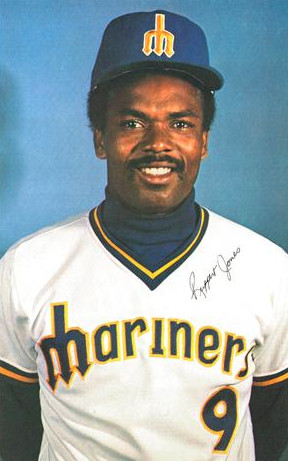
Ruppert Sanderson Jones (born March 12, 1955) is an American former Major League Baseball center fielder. He was the first player selected in the 1976 Major League Baseball expansion draft by the Seattle Mariners.[1]

Key Information

Kansas City Royals

[edit]

Jones was born in Dallas and moved to California as a pre-teen. He played baseball, basketball and football at Berkeley High School in Berkeley, California, earning all-East Bay honors in each sport. He received scholarship offers to play football at Arizona State University, Oregon State University and the University of California, but opted to focus on baseball as he considered himself a better outfielder than wide receiver.[2]

He was drafted by the Kansas City Royals in the third round of the 1973 Major League Baseball draft. After three seasons in their farm system, in which he batted .287 with 38 home runs and 173 runs batted in, Jones went into Spring training 1976 competing for the open outfield job in right field. Though he had a decent Spring, he was beaten out by Tom Poquette, and reassigned to triple A Omaha just as the regular season was set to begin.[3]

After batting .262 with nineteen home runs and 73 RBIs in half a season with the Omaha Royals, Jones earned a call up to the majors for the second half of the 1976 season. He was the hero of his second major league game, going two-for-five and driving in three runs to lead the Royals to an 8–3 victory over the Chicago White Sox.[4] For the season, he batted .216 with one home run and seven RBIs as a fourth outfielder and left-handed bat off the bench.

Seattle Mariners

[edit]

Royals manager Whitey Herzog called Jones one of the top three prospects in his team's organization, and realized that they were likely to lose Jones when he was left unprotected in the 1976 expansion draft. However, given the amount of young talent in the organization, Jones did not fit the team's future plans, and was thereby left unprotected.[5] Actor Danny Kaye, who was part owner of the Seattle Mariners, called Jones' name as the first overall pick in the expansion draft.

Jones' power and range in center field immediately made him a fan favorite in Seattle.[6] He was batting .256 with seventeen home runs and fifty RBIs at the All-Star break to be named the first ever All-Star representative of the club at the 1977 game.[7] He ended the season at .263 with 24 home runs and 76 RBIs to be named the 1977 Topps Rookie All-Star center fielder.

On May 16, 1978, Jones tied a major league record for outfielders with twelve putouts in an extra innings game against the Detroit Tigers.[8] His 1978 season was interrupted by an appendectomy in mid June.[9] He returned in late July, but managed just a .214 batting average the rest of the way. For the season he batted .235 with six home runs and 46 RBIs.

He returned healthy in 1979, and established career highs in runs (109), hits (166), triples (9), RBIs (78) and stolen bases (33) while playing a full 162 game schedule. He became the first Mariner to have at least fifteen home runs and stolen bases before the All-Star break; no Mariner would do so again for nineteen years.[10] Following the season, he was traded to the New York Yankees with pitcher Jim Lewis for Rick Anderson, Jim Beattie, Juan Beníquez and Jerry Narron.[11] He left the Mariners with the club record for most runs scored in a season (109 in 1979) and he is tied for club records for runs and walks in a game.

New York Yankees

[edit]

Jones was batting .223 with nine home runs and 42 RBIs playing center and batting second in the Yankees' line-up when he separated his shoulder on August 25, 1980 crashing into the outfield wall in Oakland–Alameda County Coliseum chasing a Tony Armas fly ball. The Yankees won 103 games that season to win the American League East, however, Jones was unable to appear in the post-season as his injury required season ending surgery.[12] He sued A's owner Charlie Finley after the season.[13]

At one point during the Winter Meetings, Jones was rumored to be heading to the Boston Red Sox in a rare Yankees–Red Sox deal. However, following the Yankees' signing of Dave Winfield as a free agent, the deal fell through.[14] Instead, he was dealt to the San Diego Padres the following Spring with Joe Lefebvre, Tim Lollar and Chris Welsh for Jerry Mumphrey and John Pacella.[15]

San Diego Padres

[edit]

The Padres finished in last place in both halves of the strike shortened 1981 season. For his part, Jones batted .249 and tied for the team lead with 53 runs scored. He was batting .312 with eleven home runs and fifty RBIs at the 1982 All-Star break to earn the second All-Star nod of his career. He was the Padres' sole representative despite the fact that San Diego was in second place in the National League West at the time. In his only at-bat, he led off the third inning with a triple, and scored on a Pete Rose sacrifice fly.[16] Jones was a fan favorite on the 1982 Padres, and Padre Yellow "Rupe's Troops" T-shirts were a frequent sight during the season.[17]

Jones appeared in 133 games for the Padres in 1983, the fewest he'd played in a full season uninterrupted by injury. He was a free agent at the end of the season, and when the Padres acquired Carmelo Martínez from the Chicago Cubs at the Winter meetings,[18] Jones became expendable.

Detroit Tigers

[edit]

Jones spent Spring training 1984 with the Pittsburgh Pirates, but failed to make the club.[19] A week into the season, he signed with the Detroit Tigers. He began the season assigned to triple A with the Evansville Triplets; a .313 batting average, nine home runs and 45 RBIs earned him a call up to the majors by the beginning of June. He spent the rest of the season platooning with Larry Herndon in left field and occasionally spelling a day off for Chet Lemon in center. Perhaps his most indelible moment of his season in Detroit came on June 24, when he cleared the right field roof of Tiger Stadium with a shot off Milwaukee Brewers right-hander Tom Tellmann.[20] For the season, Jones batted .284 with 37 RBIs and nine home runs. Six of which came at Tiger Stadium to earn him the nickname "Rooftop" Ruppert.

The 1984 Tigers won 104 games and coasted into the post-season. Jones went hitless in eight at-bats in the American League Championship Series and World Series (in which he faced off against the Padres), winning the Series with the Tigers. He became a free agent at the end of the season. The Tigers believed that he was a part-time player at this stage of his career, and were only willing to pay him as such. After some bitter negotiation between Jones and the Tigers organization,[21] he signed with the California Angels.

California Angels

[edit]

Jones served as a fourth outfielder and designated hitter his first season in California. His 21 home runs were second only to Reggie Jackson. He and Jackson switched roles in 1986, with Jackson assuming DH duties and Jones earning most of his playing time in right field. The Angels won the American League West that year, earning Jones his second trip to the post-season, but lost the 1986 American League Championship Series to the Boston Red Sox in heart-breaking fashion. Jones collected three hits in the ALCS, scoring four runs and driving in two.

His role became far more diminished in 1987 as he didn't even log his first plate appearance until the eighth game of the season. He ended up with eight home runs and 28 RBIs in just 213 plate appearances.

1988 season

[edit]

Jones was invited to the Milwaukee Brewers' Spring training camp in Tucson, Arizona as a non-roster invitee in 1988.[22] Though he hit well, he failed to make the club.[23] He signed a minor league deal with the Texas Rangers in the beginning of May,[24] and earned American Association "Player of the Week" honors his second week with the Oklahoma City 89ers. His stay in Oklahoma City, however, was brief. After fifty games, he left for Japan, signing with the Hanshin Tigers. He returned to Oklahoma City in 1989, but with a torn rotator cuff and a torn labrum, he called it quits after 27 games.

Personal life

[edit]

Jones is divorced from the mother of his daughter and son (Gabrielle and Ranon Jones), and has been married to his second wife, Betty, since 1997. He lives in Rancho Bernardo, California, a suburb of San Diego, California, and works with The Boon Group, a third-party administrator that sells employee benefits and administrative services to government contractors. He and former major league pitcher Dave Stewart coach the Easton As, a San Diego–based Travel Ball Team for ages thirteen and fourteen.

References

[edit]
[edit]
Revisions and contributorsEdit on WikipediaRead on Wikipedia
from Grokipedia
Ruppert Jones (born March 12, 1955) is an American former professional baseball outfielder who played twelve seasons in (MLB) from 1976 to 1987, amassing a career .250 with 147 home runs and 579 runs batted in across 1,331 games. Selected as the first overall pick in the 1976 MLB expansion draft by the Seattle Mariners from the , he became the franchise's inaugural representative in 1977 and later earned a second nod with the San Diego Padres in 1982, while also contributing to the Detroit Tigers' championship. Born in Dallas, Texas, Jones relocated to , during his teenage years, where he starred as a multisport at Berkeley High School, earning all-league honors in baseball, football, and basketball. Drafted by the Royals in the third round of the 1973 MLB Draft (57th overall), he signed for a $22,000 bonus and made his big-league debut on August 1, 1976, recording his first hit—a single off Hall of Famer —later that season. His early promise led to his selection by the expansion Mariners, where he quickly emerged as a fan favorite, leading the with 10 triples in 1977 and posting career highs in 1979 with 109 runs scored, 78 RBIs, 166 hits, and 33 stolen bases. Jones' MLB career spanned six teams, including stints with the Mariners (1977–1979), New York Yankees (1980), Padres (1981–1983), Tigers (1984), and Angels (1985–1987), as well as a brief appearance in Japan's with the in 1988. Despite battling recurring injuries—such as knee surgery in 1977, an in 1978, and issues in 1980—that limited his consistency, he delivered key moments, including a off future Hall of Famer in 1977 and a triple in the 1982 . With the Tigers, he appeared in 79 regular-season games during their championship year, batting .284 with 12 s. After retiring from playing, Jones transitioned to civilian life in , where he worked in the insurance industry during his 50s and pursued interests in and reading fiction. He has occasionally reflected on his career through interviews and contributions to literature, maintaining a legacy as a pioneering figure for the Mariners franchise.

Early life and amateur career

Childhood and education

Ruppert Sanderson Jones was born on March 12, 1955, in , . He spent the first part of his childhood in , before his family relocated to when he was 12 years old (in 1967). The move to , in 1967 was undertaken by his mother and stepfather in search of improved opportunities for Black families during the . Growing up in Berkeley's urban setting presented initial challenges for Jones, who described himself as a "country boy" unaccustomed to city life and who struggled to form friendships upon arrival. His family's relocation reflected the broader migration patterns of African American families seeking economic and social advancement amid racial barriers in the . During his early years in Texas and shortly after the move, Jones received his primary education in local schools, though specific institutions remain undocumented in available records. Upon settling in Berkeley, he transitioned to the local public school system for his , beginning with junior high. No particular academic interests or non-athletic hobbies from this period are detailed in biographical accounts, but Jones developed an early passion for sports, becoming a devoted fan of the Giants and admiring , which introduced him to baseball's cultural significance. This formative period of adjustment and initial schooling in Berkeley laid the groundwork for Jones's later pursuits in athletics.

High school athletics

Ruppert Jones attended Berkeley High School in , where he distinguished himself as a multi-sport , excelling in , football, and . As a in football and a guard in , Jones earned unanimous All- honors in all three sports during his high school career. His versatility and athletic prowess led to him being voted East Bay Athlete of the Year for the 1972-73 season. In , Jones showcased his hitting ability as an , particularly in his senior year when he batted .457 with seven home runs. He was unanimously selected to the All-Alameda County League, All-East Bay, and All- teams, and recognized as the county's . On the football field, Jones contributed to the team's success by helping lead Berkeley High to two championships. In , he played a key role in guiding the team to the league championship and a second-place finish in the Bay Area’s Tournament of Champions, while also earning All-State honors. Jones's high school accomplishments drew significant recruitment interest, particularly for football, with scholarship offers from Oregon State, Arizona State, and the . Despite these opportunities, he prioritized and ultimately signed a professional contract, forgoing college to pursue a career in the major leagues.

MLB draft and minor leagues

Ruppert Jones was selected by the in the third round, 57th overall, of the out of Berkeley High School in . He signed with the Royals for a bonus of $22,000 under the guidance of scout Dick Hager. Jones began his professional career in 1973 with the Rookie-level of the Pioneer League, where he posted a .301 with 4 home runs and 31 RBIs over 61 games, earning honors and contributing to the team's league pennant win. As a developing , he appeared in 60 games in the field, committing 10 errors for a .923 , showcasing his raw athleticism but room for defensive refinement. In 1974, Jones advanced to Class A ball, starting with the Waterloo Royals of the , where he excelled with a .353 , 13 home runs, and 43 RBIs in 68 games before earning a midseason promotion to the San Jose Bees of the on July 11. At San Jose, he adjusted to a more competitive environment with a .277 average and 8 home runs in 53 games, finishing the year with combined totals of .320, 21 home runs, and 88 RBIs across 121 games. His play improved markedly, logging 120 games with just 4 errors for a .967 fielding percentage, highlighting his growing reliability in center field. Promoted to Triple-A Omaha Royals of the American Association in 1975, Jones faced stiffer competition, batting .243 with 13 home runs and 54 RBIs in 119 games, a dip that tested his adjustment to higher-level pitching. Despite the offensive challenges, he solidified his role as an outfielder, playing all 119 games in the position with a .935 fielding percentage, demonstrating steady defensive progress through the Royals' farm system.

MLB career

Kansas City Royals (1976)

Ruppert Jones made his debut on August 1, 1976, as a for the against the Texas Rangers at . In that game, which the Royals lost 4–8, Jones went 1-for-4 at the plate, recording a single, scoring one run, driving in one run, and drawing a walk, though he was also caught stealing once. During the 1976 season, Jones appeared in 28 games for the Royals as a , primarily in center field but also seeing time in right and left field. He batted .216 with one and seven runs batted in over 54 at-bats, providing depth to the outfield amid the team's push for the title. His call-up came after a strong performance in the minors, where he hit .262 with 19 home runs and 73 RBIs in 102 games for the Triple-A Omaha Royals. Following the season, Jones was selected by the Seattle Mariners with the first overall pick in the 1976 MLB expansion draft on November 5, 1976, marking the end of his brief tenure with the Royals.

Seattle Mariners (1977–1979)

Ruppert Jones joined the Seattle Mariners as their first-ever selection in the 1976 MLB expansion draft and quickly emerged as a cornerstone of the expansion franchise's outfield upon his major league debut in 1977. In his inaugural season with Seattle, Jones posted a .263 batting average with 24 home runs and 76 RBIs over 160 games, leading the team in several offensive categories and earning selection to the American League All-Star Game as the first representative in Mariners history. His performance that year, including 85 runs scored and 13 stolen bases, highlighted his speed and power potential in center field, where he logged 465 putouts and a .981 fielding percentage, contributing to his reputation for range and spectacular catches. The 1978 season proved more challenging for Jones, as injuries including knee surgery and an limited him to 129 games, resulting in a .235 , 6 home runs, and 46 RBIs. Despite the setbacks, he swiped 22 bases and maintained solid defensive play in center field with 328 putouts and a .987 , helping to anchor Seattle's amid the team's rebuilding efforts. Jones rebounded strongly in 1979, slashing .267/.356/.444 with 21 home runs, 78 RBIs, and a team-leading 109 runs scored over 162 games, while also stealing 33 bases to showcase his baserunning prowess. That year, he ranked 13th in the AL for with 276 and demonstrated consistent defense in center field, recording 452 putouts and a .989 . Over his three seasons with the Mariners, Jones appeared in 451 games, batting .257 with 51 home runs, 200 RBIs, and 68 stolen bases, while patrolling center field with 1,245 putouts and a .985 , solidifying his role as a fan favorite and early star for the franchise. Following the 1979 campaign, Jones was traded to the New York Yankees on November 1, along with pitcher Jim Lewis, in exchange for infielder Rick Anderson, pitcher Jim Beattie, outfielder Juan Beníquez, and catcher .

New York Yankees (1980)

Acquired by the New York Yankees in a trade from the Seattle Mariners on November 1, 1979, Ruppert Jones arrived with high expectations, building on his 1979 season where he had batted .270 with 25 home runs. As the team's starting and leadoff or second-place hitter, Jones was positioned to leverage his speed and defensive prowess in Yankee Stadium's expansive outfield, amid a roster featuring stars like and a franchise accustomed to contention. However, his tenure quickly became defined by injuries that curtailed his contributions and adaptation to the pressures of playing in New York. The 1980 season began promisingly for Jones, but setbacks mounted early. On May 26, he underwent surgery for an intestinal obstruction linked to a prior appendectomy, sidelining him for approximately six weeks and disrupting his rhythm in the demanding center field role. Upon returning, he resumed patrolling Yankee Stadium's deep outfield, where his range was tested against the park's dimensions favoring power hitters over speedsters like himself. Jones appeared in 83 games overall, batting .223 with 9 home runs, 42 RBIs, and 18 stolen bases, but his season ended abruptly on August 25 in Oakland when he crashed into the unpadded outfield wall while chasing a fly ball, suffering a severe concussion and separated right shoulder that required hospitalization and rehabilitation. This collision not only limited him to 373 plate appearances but also marked a turning point, as the head trauma affected his recall and recovery, contributing to ongoing physical and mental challenges. Entering 1981 spring training, Jones aimed to reclaim his form amid the Yankees' championship aspirations, but persistent recovery issues from the prior year's injuries diminished his standing. On March 31, late in exhibition play, the Yankees traded him to the Padres in a multi-player deal for Jerry Mumphrey and pitcher John Pacella, effectively ending his brief and injury-plagued stint in New York after just one full season.

San Diego Padres (1981–1983)

Jones was traded to the Padres on March 31, 1981, from the New York Yankees, where injuries had limited his playing time in 1980. With the Padres, he rebounded in 1981, appearing in 105 games and batting .249 with 4 home runs and 39 RBIs. In 1982, Jones earned his second selection after a strong first half that showcased his power and speed, starting the season hitting over .350 early on with 25 RBIs in the initial stretch. He finished the year in 116 games with a .283 , 12 home runs, 61 RBIs, and 18 stolen bases, though an ankle injury sidelined him for nearly a month after the break. Jones's final season with the Padres came in 1983, where he played a team-high 133 games but hit .233 with 12 home runs and 49 RBIs, reflecting a dip in offensive production amid increased competition for outfield spots. He became a at the end of the year on November 7, 1983.

Detroit Tigers (1984)

After becoming a following his departure from the San Diego Padres, Ruppert Jones signed a minor-league contract with the Detroit Tigers on April 10, 1984, and was initially assigned to Triple-A Evansville before being called up in early June. As a platoon partner to left fielder Larry Herndon, Jones provided veteran depth in the outfield for a Tigers team that started the season 9-0 and ultimately finished with a 104-58 record, securing the title. In 79 games, he batted .284 with 12 home runs and 37 RBIs, including four game-winning or lead-securing homers that highlighted his power from the left side. His two "rooftop" home runs—one over the right-field roof at Tiger Stadium and another at —energized fans and teammates alike, earning him the nickname "Rooftop Ruppert." Jones's defensive reliability in the outfield, where he appeared in 73 games with a .986 fielding percentage, complemented Detroit's strong starting outfield of , , and Herndon, allowing the team to maintain a balanced lineup throughout their dominant regular season. As a 29-year-old , he fostered team chemistry by bringing experience and a positive presence to a roster blending and grit, which Jones later described as essential to the Tigers' "warrior" mentality that propelled them to the postseason. In the playoffs, Jones saw limited action but contributed to the Tigers' World Series victory over the Padres, going 0-for-3 in two appearances during the Fall Classic while earning a as part of the roster. His role as a reliable reserve underscored the depth that helped Detroit sweep the in the ALCS and claim the title in five games.

California Angels (1985–1987)

Following his contribution to the Detroit Tigers' championship, Ruppert Jones signed a one-year contract with the California Angels as a on January 30, 1985, to provide left-handed power in the after the trade of to the Baltimore Orioles. In 1985, Jones delivered a strong performance in his first season with the Angels, appearing in 125 games primarily as a fourth and , where he batted .231 with 21 home runs and 67 RBIs. His power output helped stabilize the lineup, earning praise from manager , who described Jones as an "" that had "sure paid off." Despite a modest , Jones's 21 home runs ranked among the team's leaders, showcasing his continued ability to provide extra-base production. Jones's role remained consistent in 1986, as he played 126 games, mostly in right field, and maintained his power stroke with a .229 average, 17 home runs, and 49 RBIs. The Angels captured the title that year, and Jones contributed in the AL Championship Series against the Boston Red Sox, going 3-for-17 with 2 RBIs over six games, including a key run scored in the Angels' dramatic Game 5 victory. His defensive versatility and 10 stolen bases added value to the outfield unit during the regular season. By 1987, at age 32, Jones's playing time diminished to 85 games, where he hit .245 with 8 home runs and 28 RBIs, reflecting a reduced role amid younger competition in the Angels' . He was granted free agency on November 9, following the season, marking the end of his major league tenure with the club.

Post-MLB playing career and retirement

(1988)

Following injuries that limited his playing time with the California Angels in 1987, Ruppert Jones signed a contract with the of Japan's [Nippon Professional Baseball](/page/Nippon_Professional Baseball) league on July 7, 1988, in an effort to prolong his professional career. As a foreign import , Jones primarily patrolled center field for the Tigers during the second half of the season, providing power and defensive range to a team seeking to bolster its lineup amid roster needs. In 52 games, he batted .254, hit 8 home runs, and drove in 27 runs, contributing offensively in a league known for its compact schedule and emphasis on contact hitting. Jones encountered difficulties adapting to the stylistic and cultural nuances of Japanese , where pitchers often rely on precision control, varied breaking pitches, and a focus on small ball tactics, contrasting with the power-oriented approach prevalent in . These differences, combined with rigorous daily practice regimens and team-oriented discipline, presented adjustment hurdles for the American import, resulting in a solid but unremarkable performance that did not lead to a contract renewal. After the 1988 season concluded, Jones opted not to return to the Tigers, instead pursuing opportunities in the United States the following year.

Retirement and injuries

Jones's career was increasingly hampered by a series of injuries starting in , which contributed to his diminished performance and eventual retirement. In May , he underwent for an intestinal obstruction, sidelining him for six weeks, followed by a in August that ended his season. These issues were compounded by a twisted ankle in 1982 that caused him to miss nearly a month, and ongoing shoulder problems resurfaced in 1988 during with the Milwaukee Brewers, preventing him from playing in the field. Additionally, a 1980 outfield wall collision resulted in a that went undiagnosed for decades, further impacting his long-term health and playing ability. Following his release from the California Angels after the 1987 season, Jones attempted a comeback in 1988 with the Texas Rangers' Triple-A affiliate in before moving to Japan's . In 1989, at age 34, he signed another minor-league contract with Texas and appeared in 27 games for , batting .200 with one in 80 at-bats. A torn injury during this stint proved insurmountable, leading him to retire as a player at the end of the 1989 season after failing to secure an MLB return. Over 12 Major League Baseball seasons from 1976 to 1987, Jones compiled a .250 , 147 home runs, 579 runs batted in, and a .746 percentage.

Achievements and legacy

All-Star selections and awards

Ruppert Jones earned two selections to the during his career, both as an representing different franchises. His first appearance came in 1977 with the Seattle Mariners, making him the inaugural representative for the in its second season of existence. In 1977, Jones also led the with 10 triples. Jones entered the game as a for pitcher Jim Kern in the top of the third but went hitless in his only at-bat, finishing 0-for-1 as the National League defeated the 7-5 at . In addition to his All-Star nod, Jones received recognition as a standout that year, earning a spot on the All-Star Rookie Team for his contributions of 14 home runs and strong defensive play in center field during the Mariners' inaugural campaigns. Jones returned to the All-Star stage in 1982 as the lone representative for the Padres in the National League. Pinch-hitting to lead off the third inning against pitcher , he delivered a triple off the wall in right-center field, scoring later in the frame to help extend the NL's lead in a 4-1 victory at Montreal's . His performance in that single at-bat stood out as one of the game's key extra-base hits. Beyond his appearances, Jones garnered votes in balloting in 1977, reflecting his early impact as a power-hitting , though he did not receive formal Gold Glove consideration during his career.

World Series participation and records

Ruppert Jones played a pivotal role in the Seattle Mariners' early franchise history during the season, establishing single-season records that underscored his offensive prowess in an expansion-era context. That year, he led the team with 109 runs scored and 78 RBIs, marks that stood as franchise highs at the time and highlighted his ability to generate production from the center field position. These achievements came in a 162-game campaign where Jones also notched 21 home runs and 33 stolen bases, contributing significantly to a Mariners lineup that was still finding its footing in the . In 1984, Jones signed with the Detroit Tigers on April 10, 1984, after being granted free agency by the Padres following the 1983 season, and became part of their dominant championship run, defeating the Padres 4-1 in the Fall Classic. Jones provided depth in and batted .284 with 12 home runs during the regular season, helping the Tigers secure a league-best 104 wins. Although his postseason role was limited—appearing in four games across the ALCS and with 0 hits in 8 at-bats—he earned a as a valuable reserve contributor to the team's success. Jones's career legacy endures as that of a dynamic defensive and who thrived amid the challenges of expansion baseball in the late 1970s and . Known for his five-tool potential, including Gold Glove-caliber center field play and consistent extra-base production—evidenced by 147 home runs and 215 doubles over 12 MLB seasons—he exemplified the athleticism required to elevate young franchises like the Mariners. Despite injuries curtailing his prime, his contributions to team milestones, such as the 1984 title, cemented his reputation as a key figure in bridging the gap between expansion struggles and competitive contention.

Personal life and post-retirement

Family and residence

Ruppert Jones's first ended in after a period of personal challenges during his later playing years. The couple had three children: , Gabrielle, and Ranon; Jones often prioritized time with them amid his professional commitments. In his 2021 memoir #Never Give Up, Jones detailed how an undiagnosed from 1980 affected his behavior, contributing to strains in his first and subsequent . In 1997, Jones met Betty, whom he later married on July 18, 1999, in , marking a new chapter of stability in his personal life. This remarriage provided a supportive family environment that complemented his post-retirement focus on recovery and community involvement. As of the , Jones resided in Rancho Bernardo, a suburb of , , where he has lived for over two decades, enjoying a quieter life close to his longtime roots.

Coaching and business activities

Following his retirement from professional baseball in the late 1980s, Ruppert Jones entered the financial services sector, where he spent 28 years with The Boon Group selling employee benefits to government contractors. In the realm of baseball instruction, Jones has coached youth players as part of the Easton A's, a San Diego-based travel ball team for 13- and 14-year-olds, alongside former Major League pitcher Dave Stewart; this role was active as of 2012. Jones has also engaged in community involvement, serving as a board member for Job Options Inc., a that provides employment opportunities to individuals with disabilities, veterans, and others facing barriers to work, since 2019 (as of 2023). In 2023, he participated in the Nike N7 Camp in , speaking to over 200 Native American and Indigenous youth about pursuing dreams in and life despite obstacles, drawing on his experience.

References

Add your contribution
Related Hubs
User Avatar
No comments yet.