
Recent from talks
Russian Enlightenment
Knowledge base stats:
Talk channels stats:
Members stats:
Russian Enlightenment
The Russian Enlightenment (Russian: российское Просвещение) refers to the intellectual and cultural movement that flourished in the Russian Empire as part of the broader Enlightenment, during a period of the 18th century in which the government began to actively encourage the proliferation of arts and sciences, which had a profound impact on Russian culture. During this time, the first Russian university was founded, a library, a theatre, a public museum, as well as a relatively independent press. Like other enlightened despots, Catherine the Great played a key role in fostering the arts, sciences, and education. The Russian Enlightenment differed from its Western European counterpart in that it promoted further modernization of all aspects of Russian life and was concerned with abolishing the institution of serfdom in Russia. The Russian Enlightenment did not promote the separation of church and state. Pugachev's Rebellion and the French Revolution may have shattered the illusions of rapid political change, but the intellectual climate in Russia was altered irrevocably. Russia's place in the world was debated by Denis Fonvizin, Mikhail Shcherbatov, Andrey Bolotov, Alexander Radishchev, and Ivan Boltin; these discussions precipitated the divide between the radical, western, conservative and Slavophile traditions of Russian thought. Intellectuals often used the term prosveshcheniye ('enlightenment; education'), promoting piety, erudition, and commitment to the spread of learning.
The ideas of the Russian Enlightenment were first espoused by the "learned druzhina" of Peter the Great. It is the spirit which animates the sermons of Feofan Prokopovich, the satires of Antiokh Kantemir, and the historiography of Vasily Tatishchev.
During the reign of Peter's daughter Elizaveta Petrovna the ideas of the Enlightened Absolutism found their way into Russia. Elizaveta's favourite, Ivan Shuvalov, was an ideal enlightened courtier: he was instrumental in the establishment of the Moscow University and the Imperial Academy of Arts, which would start the careers of most intellectuals active during the last quarter of the 18th century.
Shuvalov was also the patron of the greatest Russian polymath, Mikhail Lomonosov, who left his mark in various branches of science, religious philosophy, poetry, and fine arts.
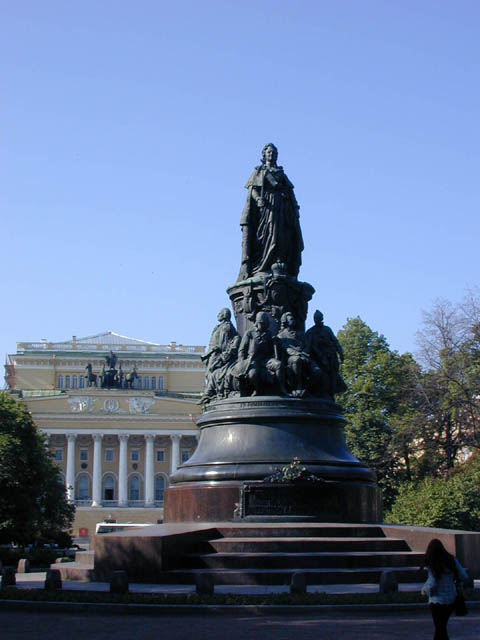
Catherine the Great considered herself an enlightened despot. She read the most prominent philosophes of the day, including Montesquieu and Voltaire and tried to adhere to Enlightenment ideas. She wished to bring Russia up to par with its neighbors not only in a military sense, but also politically, culturally, and intellectually.
Many of Catherine's contemporaries questioned her adherence to Enlightenment ideals and thought she was an egoist, merely using concepts from the Age of Enlightenment to further her selfish gains. Gender played a primary role in these criticisms. Contemporaries interpreted her personality as combining masculine strength with feminine vanity.
"Westernization" carries different meanings in different countries over varying time periods. But in relation to Russia during the 18th century, the term meant legislative changes to economics, politics and culture. It also entails the Russian gentry's adherence to a set standard and its imitation of the Western values. Westernization in Russia included the modernization of machinery, the refinement of a more efficient bureaucracy, and the acceptance of Western European tastes.
Russia produced more goods, and enlisted thousands of troops during Catherine's reign. While she acquired new lands, including Crimea and Poland, updated the army, and supported burgeoning manufactures, she really wanted to westernize Russia by reforming it, specifically the lives of the gentry, qualitatively. Bringing Russia to an equal level with the rest of Europe intellectually was a major concern of Catherine's. For this reason she created laws that justified her rule.
Hub AI
Russian Enlightenment AI simulator
(@Russian Enlightenment_simulator)
Russian Enlightenment
The Russian Enlightenment (Russian: российское Просвещение) refers to the intellectual and cultural movement that flourished in the Russian Empire as part of the broader Enlightenment, during a period of the 18th century in which the government began to actively encourage the proliferation of arts and sciences, which had a profound impact on Russian culture. During this time, the first Russian university was founded, a library, a theatre, a public museum, as well as a relatively independent press. Like other enlightened despots, Catherine the Great played a key role in fostering the arts, sciences, and education. The Russian Enlightenment differed from its Western European counterpart in that it promoted further modernization of all aspects of Russian life and was concerned with abolishing the institution of serfdom in Russia. The Russian Enlightenment did not promote the separation of church and state. Pugachev's Rebellion and the French Revolution may have shattered the illusions of rapid political change, but the intellectual climate in Russia was altered irrevocably. Russia's place in the world was debated by Denis Fonvizin, Mikhail Shcherbatov, Andrey Bolotov, Alexander Radishchev, and Ivan Boltin; these discussions precipitated the divide between the radical, western, conservative and Slavophile traditions of Russian thought. Intellectuals often used the term prosveshcheniye ('enlightenment; education'), promoting piety, erudition, and commitment to the spread of learning.
The ideas of the Russian Enlightenment were first espoused by the "learned druzhina" of Peter the Great. It is the spirit which animates the sermons of Feofan Prokopovich, the satires of Antiokh Kantemir, and the historiography of Vasily Tatishchev.
During the reign of Peter's daughter Elizaveta Petrovna the ideas of the Enlightened Absolutism found their way into Russia. Elizaveta's favourite, Ivan Shuvalov, was an ideal enlightened courtier: he was instrumental in the establishment of the Moscow University and the Imperial Academy of Arts, which would start the careers of most intellectuals active during the last quarter of the 18th century.
Shuvalov was also the patron of the greatest Russian polymath, Mikhail Lomonosov, who left his mark in various branches of science, religious philosophy, poetry, and fine arts.
Catherine the Great considered herself an enlightened despot. She read the most prominent philosophes of the day, including Montesquieu and Voltaire and tried to adhere to Enlightenment ideas. She wished to bring Russia up to par with its neighbors not only in a military sense, but also politically, culturally, and intellectually.
Many of Catherine's contemporaries questioned her adherence to Enlightenment ideals and thought she was an egoist, merely using concepts from the Age of Enlightenment to further her selfish gains. Gender played a primary role in these criticisms. Contemporaries interpreted her personality as combining masculine strength with feminine vanity.
"Westernization" carries different meanings in different countries over varying time periods. But in relation to Russia during the 18th century, the term meant legislative changes to economics, politics and culture. It also entails the Russian gentry's adherence to a set standard and its imitation of the Western values. Westernization in Russia included the modernization of machinery, the refinement of a more efficient bureaucracy, and the acceptance of Western European tastes.
Russia produced more goods, and enlisted thousands of troops during Catherine's reign. While she acquired new lands, including Crimea and Poland, updated the army, and supported burgeoning manufactures, she really wanted to westernize Russia by reforming it, specifically the lives of the gentry, qualitatively. Bringing Russia to an equal level with the rest of Europe intellectually was a major concern of Catherine's. For this reason she created laws that justified her rule.
Recent media