Hubbry Logo
SepoliaSepoliaMain
Open search
Sepolia
Community hub
Sepolia
logo
8 pages, 0 posts
0 subscribers
Be the first to start a discussion here.
Sepolia
Sepolia
from Wikipedia

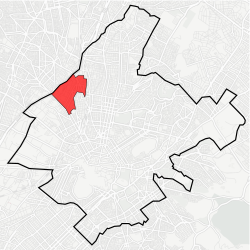
Sepolia (Greek: Σεπόλια pronounced [seˈpo.ʎa]) is a neighborhood in Athens, Greece. The Sepolia metro station is situated in the neighborhood. Sepolia owes to its name in the Greek phrase esopolis (έσω πόλις), which means "inside the city".[1] Sepolia was a remote settlement until the latter part of the 19th century, a few kilometers away from Athens. The Greek Census of that period didn't include Sepolia as part of Athens. The Census of 1879, for example, refers to a population of 278 inhabitants.[2] During the following years, Sepolia joined Athens as a result of a population explosion.

Key Information

Notable people

[edit]
Giannis Antetokounmpo and Thanasis Antetokounmpo playing basketball at a local court in Sepolia, Athens in 2015

Transport

[edit]

In the past, it was also served by the Thymarakia suburban station and by tram 8 in Agios Meletis.

References

[edit]
Revisions and contributorsEdit on WikipediaRead on Wikipedia
from Grokipedia
Sepolia (Greek: Σεπόλια) is a neighborhood in the northwestern part of , .
It is bordered by Kolonos to the east, Kypseli to the south, and Patisia to the north, covering approximately 1.5 square kilometers with a population of around 15,000 as of 2021.
Historically, the area was part of the ancient Great Olive Grove of , which spanned over 150,000 trees and played a key role in the city's production during antiquity.
In modern times, Sepolia developed as a working-class residential district in the 19th and 20th centuries, featuring a mix of neoclassical and interwar architecture, and is served by the Sepolia metro station on Line 2 since 2013.
The neighborhood is known for its community-oriented vibe, local markets, and cultural landmarks, including the Church of Saint Eleftherios, while remaining a gritty, authentic part of the city away from tourist hubs.

History

Early settlement

The area known as Sepolia, located north of ancient Athens in the Attica region, exhibits evidence of sparse early habitation consistent with broader prehistoric patterns across Attica, where settlements emerged from the Palaeolithic period onward, including Neolithic and Bronze Age sites characterized by rudimentary structures and pottery finds. While specific prehistoric artifacts from Sepolia itself remain limited, the surrounding Attica plain supported dispersed rural communities engaged in early agriculture and pastoral activities. In antiquity, Sepolia functioned primarily as a peripheral agricultural outpost, leveraging its fertile location for cultivation outside the urban core of . The neighborhood housed the renowned Great Olive Grove of , encompassing over 150,000 trees that supplied oil, wood, and symbolic significance to the , underscoring its economic and cultural role in the classical period. Archaeological excavations in Sepolia, such as those conducted in near Kolonos and the , confirm activity in the area during antiquity. The etymology of "Sepolia" traces to the Greek phrase exo poleos (έξω πόλεως), translating to "outside the city," which aptly describes its historical status as a remote extension of Athenian territory rather than part of the central polis. This rural outpost, noted for its abundant gardens by the 15th century, maintained its peripheral character well into the early modern period, existing as a village prior to the Ottoman conquest of 1456. Such isolation began to shift only in the 19th century amid broader population expansion in Athens.

19th-century development

In the late , Sepolia remained a distinct village outside the official boundaries of , reflecting its geographical separation from the expanding capital. The Greek census recorded a of 278 inhabitants in Sepolia, excluding it from the city's official count of 63,374 residents due to its distance northwest of the urban core. This period marked the initial influx of residents to Sepolia, spurred by ' rapid expansion following Greek independence in the , as the city transformed from a small post-war settlement into the national capital with growing administrative and economic functions. Basic infrastructure, such as the old road connecting Sepolia to central via , facilitated this movement and began integrating the area into the broader urban fabric. Early economic activities in Sepolia centered on small-scale farming, with the area noted for its gardens and agricultural production that supported local sustenance and limited trade links to ' markets. These ties allowed residents to exchange produce for urban goods, laying the groundwork for Sepolia's evolution from an isolated settlement to an emerging . This modest growth continued into the .

20th-century integration and growth

Sepolia's integration into the broader urban fabric of occurred in the early , formally incorporated into the Municipality of in 1925 amid rapid driven by industrialization and population pressures. This period marked significant transformation, particularly following the 1922 Asia Minor Catastrophe, when an influx of Greek refugees from substantially increased the neighborhood's population and spurred residential and industrial development as a working-class district, with emerging factories and transport links including early electric trams extending to the outskirts. Following , Sepolia experienced further growth through Greece's post-war reconstruction efforts and the ensuing economic boom of the and , which spurred widespread urban development across . The neighborhood saw the proliferation of multi-story residential buildings known as polykatoikies, designed to accommodate the rising demand for housing in a rapidly modernizing city; these concrete structures, often five to seven stories tall, replaced earlier low-rise homes and symbolized the shift toward vertical urban expansion. This not only addressed housing shortages but also reflected broader economic policies promoting private construction to fuel recovery and growth. Continued population growth in Sepolia during the 1960s and 1970s, fueled by from rural as workers sought opportunities in ' expanding industrial and service sectors, further densified the area. This influx, part of a national trend, saw Sepolia's population exceed 30,000 by the mid-20th century, transforming it into a densely populated residential hub with families settling into the new polykatoikies and contributing to the neighborhood's vibrant, multicultural character.

Geography

Location and boundaries

Sepolia is situated at coordinates 38°00′10″N 23°42′49″E, positioning it north of Athens' historic center within the Attica region of Greece. This placement places Sepolia in the northwestern part of the central Athens urban area, approximately 3 kilometers from landmarks like Syntagma Square. The neighborhood's boundaries are defined by adjacent districts, bordered by Kolonos to the south, Agios Eleftherios to the east, Lofos Skouze hill to the north, and Kifissos Avenue to the west. These borders encompass a compact residential zone integrated into the broader urban fabric, with an approximate coverage of under 2 square kilometers based on municipal mapping. Administratively, Sepolia forms part of the Municipality of , falling under its central administrative division without separate municipal status since the 2011 Kallikratis reform. It shares the municipality's postal codes of 104 43 and 104 44, facilitating local mail and services. The telephone area code for Sepolia, consistent with central , is 210.

Physical features and urban layout

Sepolia occupies a position in the northwestern part of the Athens basin, characterized by gently sloping terrain typical of northern , with elevations rising modestly toward surrounding low hills. The neighborhood includes Lofos Skouze, a small hill that provides a localized of approximately 70 , offering panoramic views and serving as a natural focal point amid the urban expanse. While no major rivers traverse the area, Sepolia lies in proximity to the Kifissos River to the west, along with minor streams that contribute to limited natural drainage features, though much of the terrain has been urbanized without significant watercourses. The urban layout of Sepolia reflects mid-20th-century development patterns, dominated by low-rise residential blocks constructed primarily during the 1950s through 1970s as part of ' rapid expansion. These structures, known as polykatoikies, are typically 4- to 5-story apartment buildings arranged in dense, orthogonal grids that prioritize efficient in a working-class context. Narrow side streets interspersed with occasional small squares facilitate pedestrian movement and community gathering, while broader main avenues, such as Lenorman Street, accommodate commercial strips with shops and services integrated into the ground floors of residential buildings. Green spaces in Sepolia are modest but integral to the spatial organization, including Lofos Skouze as a verdant hilltop area and recent pocket parks developed in former vacant lots to enhance urban livability. This mix of compact residential zones, linear commercial corridors, and localized open areas creates a cohesive yet densely , emblematic of ' peripheral neighborhoods.

Demographics

In the late , Sepolia was a sparsely populated on the outskirts of , with the Greek of 1879 recording just 278 inhabitants. This figure reflected its status as a separate settlement not yet integrated into the expanding urban fabric of the capital. Over the subsequent decades, as grew rapidly due to industrialization and , Sepolia experienced gradual incorporation into the city's boundaries, transitioning from agrarian isolation to urban adjacency. Significant growth occurred in the mid-20th century, particularly following the post-World War II economic recovery and the influx of rural migrants seeking opportunities in during the and . By 1975, the population had reached 23,205, marking a substantial increase driven by urban migration waves that swelled Athens' overall from about 1.4 million in 1951 to over 2.5 million by 1971. This expansion was fueled by Greece's broader trends, with Sepolia benefiting from its proximity to central and improved infrastructure, leading to a density of 15,046 inhabitants per km² by 1975. The neighborhood continued to grow through the late 20th century, peaking at 27,464 residents in 2000, a 6.9% rise from 1990 levels of 25,690, amid Athens' metropolitan expansion. However, recent decades have shown stabilization or slight decline, with the population dipping to 27,149 by 2015—a 1.1% decrease from 2000—attributable to suburbanization trends in the Attica region, where residents increasingly moved to peripheral areas for affordable housing and space. This mirrors broader patterns in Athens, where the metro area population has remained relatively flat since 2010, hovering around 3.15 million. As of 2015, Sepolia's estimated population was 27,149, consisting of 47.6% males and 52.4% females, with a median age of 41.7 years and a density of 17,603 inhabitants per km² across its 1.542 km² area.

Socioeconomic characteristics

Sepolia's residents are predominantly ethnic Greeks, reflecting the broader demographic patterns of , alongside small but diverse immigrant communities from regions including the Balkan countries (such as and ), , , , and the , drawn by the city's economic opportunities and migration trends. The neighborhood features a mix of long-established residents and newer immigrants, reflecting its history as a stable working-class enclave. Living conditions in Sepolia feature average household incomes below the metropolitan mean, fostering a focus on options like modest apartments and older homes that support tight-knit community networks amid economic pressures.

Culture and landmarks

Local traditions and community life

Sepolia's community life revolves around a tight-knit, village-like atmosphere that emphasizes social bonds and shared cultural practices among its predominantly residential population. Local events, such as neighborhood festivals and workshops at the Sepolia Cultural Centre, play a central role in fostering ; for instance, programs on traditional customs and costumes for children aged 6 to 12 encourage family-oriented gatherings and the transmission of Greek heritage to younger generations. These initiatives highlight the neighborhood's commitment to preserving customs through interactive, inclusive activities that bring families together. Religious processions tied to local churches form a cornerstone of communal rituals, reflecting the enduring influence of Greek Orthodox traditions in daily and seasonal life. Residents participate in these events, which often coincide with major holidays like or the Feast of the Assumption, parading icons and epitaphs through the streets to honor saints and reinforce collective identity. Annual celebrations, such as the of Agios Meletios, further unite the community with processions and festivities. Such processions not only serve spiritual purposes but also strengthen neighborly ties, with families joining in processions and subsequent celebrations that blend devotion with social festivity. In everyday routines, Sepolia embodies residential tranquility, where bustling local markets offer fresh produce and serve as informal hubs for conversation and exchange among long-term residents. Cafes scattered throughout the neighborhood further enhance social dynamics, providing spaces for leisurely gatherings where locals discuss community matters over coffee, evoking a sense of continuity and familiarity. This unhurried pace contrasts with central ' intensity, allowing for genuine interactions that sustain the area's familial character. The cultural influences in Sepolia weave traditional Greek customs—rooted in Orthodox faith and family-centric values—with subtle multicultural elements from ' 20th-century internal migrations, as rural and island populations settled in working-class neighborhoods like this one during periods of economic expansion. These migrations have enriched community life, introducing varied dialects, recipes, and traditions into local gatherings, while maintaining a core of authentic Hellenic practices that define social harmony.

Notable sites and architecture

Sepolia features several notable churches that serve as focal points for the neighborhood's architectural and communal identity. The Agios Meletios Church, located on Dyrrachiou Street, stands as a central , constructed in 1872; its surrounding buildings exhibit interwar architectural styles, including elements of neoclassical design with simple facades and iron balconies typical of ' residential expansion during that period. Nearby, Agiou Meletiou Square provides a public gathering space adjacent to the church, framed by these early 20th-century edifices that blend functionality with modest ornamental details. The Agios Aimilianos Church crowns Lofos Skouze, a prominent hill in Sepolia that offers recreational opportunities through its green slopes and panoramic views of the city. This church, perched atop the hill, contributes to the area's layered architectural landscape, where 19th-century influences persist amid later developments. Lofos Skouze itself, developed in the early 1800s by banker Skouze who acquired large plots and established olive groves and vineyards, includes preserved remnants such as his former mansion, now repurposed as the Municipal Sports Centre, exemplifying neoclassical features like symmetrical layouts and facades adapted for modern use. Throughout Sepolia, small local parks and open spaces interspersed among residential blocks provide areas for community recreation, often overlooked but integral to daily life. These sites, including the pathways on Lofos Skouze, highlight the neighborhood's from 19th-century agrarian estates to a mix of preserved historical structures and mid-20th-century buildings, with neoclassical and elements visible in quiet streets that showcase ' diverse built heritage.

Economy

Residential and commercial development

Sepolia's residential landscape has evolved significantly since the late , when it functioned primarily as a remote rural settlement on the outskirts of , characterized by low-rise houses and scattered plots. This began to change with the post-World War II urbanization boom, particularly during the and 1970s, as waves of internal migrants from rural flocked to the capital in search of employment opportunities. In response, the neighborhood underwent rapid transformation through the construction of polykatoikies—multi-family apartment blocks—designed to provide for the growing working-class population. These structures, often built via the antiparochi system where landowners exchanged plots for apartments, emphasized vertical density with 4- to 5-story buildings featuring shared balconies and minimal green space, reflecting the broader Athenian trend of speculative building to accommodate urban expansion. Commercial development in Sepolia has historically complemented its residential fabric, centering on small-scale, neighborhood-oriented businesses that cater to daily needs. Along main thoroughfares like Lenorman Street and local streets, a network of shops, bakeries, and open-air markets emerged, offering fresh produce, baked goods, and household essentials to residents. This organic growth, spurred by the population influx of the mid-20th century, fostered a vibrant local economy focused on convenience rather than large retail chains, with establishments like traditional bakeries and mini-markets serving as hubs. Such commercial patterns persist today, supporting the area's self-sufficiency while integrating with improved transport links. Despite these developments, Sepolia faces ongoing challenges related to and the preservation of its neighborhood character. As one of ' most densely populated districts, with high concentrations of residents in compact polykatoikies, the area grapples with issues like limited green spaces, heat island effects, and infrastructure strain, exacerbating socioeconomic vulnerabilities. Efforts to mitigate these include initiatives for "pocket parks" to introduce greenery and enhance livability, alongside calls to balance modernization with the retention of the area's authentic, working-class identity amid broader pressures in .

Employment and local businesses

Sepolia's employment landscape is predominantly service-oriented, with many residents engaged in retail, small-scale , and informal sector jobs. Local workshops specializing in leather goods, , and metalwork, alongside family-run groceries and mini-markets, form the backbone of the neighborhood's economic activities. These enterprises, often employing fewer than five people, reflect the area's working-class character and limited presence of large corporations. A key feature supporting local commerce is the weekly laiki agora () held on Thursdays, where vendors offer fresh produce, olives, cheese, and household items at affordable prices, fostering community-based for farmers, fishmongers, and small traders. This market underscores Sepolia's role as a peripheral hub for everyday necessities, with many participants relying on it as a primary source. However, job remains low, at approximately 5,046 jobs per square kilometer in the surrounding Academy area, contributing to higher rates of commuting to central for more stable opportunities in industries like and . Economic trends in Sepolia have been shaped by broader dynamics, including the post- recovery driven by and services, which has indirectly boosted demand for peripheral labor. While economic led to sharp rises—reaching 31% for women and 24.7% for men by 2013—recent national improvements, with falling to 8.2% as of October 2025, have stabilized local conditions through spillover effects like increased retail footfall from . Nonetheless, the neighborhood maintains a modest scale, with initiatives such as exchanges emerging to address ongoing in informal sectors.

Education

Primary and secondary schools

Sepolia's primary and secondary education is provided through public schools operated under the Athens Municipality and the Greek Ministry of Education. The neighborhood hosts several primary schools, including the 57th Primary School of Athens at 67 Distomou Street, the 61st Primary School of Athens at the same address, the 144th Primary School of Athens at Metochiti Theodorou and Chatziapostolou Nikou Streets, the 145th Primary School of Athens at 5-7 Grigora Nikiforou Street, and the 6th Special Primary School of Athens, established in a renovated former bus station in February 2025, serving approximately 44 students with disabilities. For secondary education, the 52nd General Lyceum of Athens, located at 2-4 Tripoleos Street, serves students in the upper secondary cycle. Enrollment in these institutions varies, but local educational centers in Sepolia collectively served around 277 students aged 6-12 as of 2022, with many schools accommodating hundreds of pupils from diverse backgrounds. These schools follow the standard Greek national curriculum, which emphasizes foundational skills in over six years, including and literature, , , , , , art, and music. Secondary education at the level spans three years and focuses on general academic preparation for higher education entrance exams, with core subjects such as , physics, chemistry, , , , and foreign languages. While primary schools prioritize holistic development without vocational components, the secondary curriculum includes optional directions in sciences or humanities; local emphases on vocational training are limited in Sepolia's general , though students may access nearby vocational institutes in adjacent areas like Peristeri for specialized programs in fields such as technical skills and crafts. The proximity of these schools to residential areas ensures convenient access for Sepolia's youth, with most facilities within for local families. In a neighborhood with a significant migrant population, these institutions play a vital role in community integration by providing to all children, including refugees and asylum seekers, through measures like reception and integration classes that address barriers and support social inclusion. Challenges persist, such as accommodating diverse linguistic needs and ensuring consistent attendance amid socioeconomic pressures, though initiatives like weekly psychological support help mitigate these issues. Some schools briefly link to programs for supplementary migrant support.

Community and cultural education

Community centers in Sepolia provide essential platforms for non-formal through municipal initiatives managed by the City of Athens. The Nikolaou Lifelong Learning Center, located at 2 Filippoupoleos Street, offers programs in , computer skills training, foreign language courses, and voucher-supported workshops aimed at enhancing and for local residents. These efforts align with broader municipal strategies to promote , enabling participants to acquire practical skills outside traditional schooling. Cultural initiatives in Sepolia strengthen ties to Greek heritage via arts programs and local venues. The nearby Kolonos Theatre, an open-air amphitheater in the adjacent Kolonos area, hosts performances and the annual Colonus Festival, featuring theatrical productions inspired by drama to engage the community in cultural expression and historical appreciation. Additionally, the renovated Former Public Tobacco Factory serves as a modern cultural hub, presenting free exhibitions organized by the non-profit organization, which integrates industrial history with current artistic discourse to foster community involvement in Greece's evolving cultural narrative. These programs occasionally collaborate with primary schools for joint cultural events, broadening access to heritage education. In Sepolia's diverse society, community libraries and events play a vital role in supporting older residents and facilitating immigrant integration. The Library, housed within the Former Tobacco Factory, hosts reading groups and cultural discussions that provide social engagement opportunities for seniors, promoting mental stimulation and intergenerational connections amid the neighborhood's aging population. For immigrants, the Athens Migrant Integration Center (KEM) delivers targeted services including classes, computer literacy workshops, and intercultural activities, aiding newcomers in navigating local life and building social ties in multicultural areas like Sepolia. These initiatives underscore the neighborhood's commitment to inclusive cultural enrichment, enhancing cohesion through accessible, community-driven events.

Transport

Public transit systems

Sepolia is primarily served by the Line 2, with the eponymous station acting as the line's northwestern terminus. Opened on 28 2000 as part of the inaugural approximately 4.5 km section linking Sepolia to Syntagma in the city center, the station facilitates for local residents, with trains running every 3-5 minutes during peak hours. Line 2 interchanges at Syntagma with Line 3, enabling seamless connections to approximately 40 km away, a journey that takes about 50 minutes total. Complementing the metro, several bus routes managed by the Athens Urban Transport Organisation (OASA) provide extensive coverage in and around Sepolia. Key lines include 057, which connects to Attiko Nosokomeio Hospital; 420, linking to Piraeus Port; 732, serving the Kifissos intercity bus terminal; and the express X93, offering direct service to the airport. These routes operate from early morning until late evening, with frequencies of 10-20 minutes during rush hours, supporting short-haul trips within the northern suburbs and to central Athens. Historically, the neighborhood relied on the Athens tram network, which extended services to Sepolia and operated continuously from 1882 until its full discontinuation on 17 December 1960 in favor of expanded bus services. The combined metro and bus systems in Sepolia handle substantial daily ridership, with Lines 2 and 3 of the alone accommodating approximately 938,000 passengers across their network as of 2024, underscoring their scale in the . This infrastructure significantly reduces car dependency for Sepolia's residents, who use public transit for commuting to employment centers in , thereby alleviating local and supporting sustainable urban mobility.

Road infrastructure

Sepolia's road network is characterized by a mix of major arteries and narrower local streets that reflect its evolution as a suburban residential area. Acharnon Avenue serves as the primary thoroughfare, running north-south through the neighborhood and providing essential connectivity to central Athens via Patision Avenue, facilitating both local traffic and access to broader urban routes. Other local roads, such as those branching off toward bordering areas like Thymarakia, form a grid-like pattern influenced historically by the Thymarakia suburban railway station, which spurred residential development and shaped early road alignments in the late 19th and early 20th centuries. The neighborhood's internal streets are predominantly narrow, making them well-suited for pedestrian movement and contributing to a sense of community intimacy in this densely built urban setting. remains limited, with few dedicated bike lanes due to the high density of residential buildings and mixed-use spaces, though recent initiatives have introduced segments of a new municipal bike route passing through Sepolia as part of ' broader network expansion. Efforts to enhance infrastructure in Sepolia have focused on alleviating bottlenecks and improving , particularly in residential zones. A notable upgrade involves the long-delayed Sepolia rail underpass , funded through a 2025 Italy-Greece agreement investing €360 million in modernization, which aims to eliminate level crossings and improve vehicular flow by separating rail and . As of November 2025, the remains ongoing to address persistent delays. These improvements integrate with nearby metro access points, supporting smoother multimodal connectivity without disrupting the area's pedestrian-friendly character. Additionally, plans to replace 32 km of tracks on Lines 2 and 3 by 2026, including sections near Sepolia, to enhance reliability.

Notable people

Sports figures

Sepolia, a working-class neighborhood in , , has produced notable athletes, particularly in , with the Antetokounmpo brothers emerging as global stars whose early development was shaped by local courts. , a two-time NBA and champion with the , was born in but raised in Sepolia, where his family of Nigerian immigrants faced economic hardships that influenced his early life. He honed his skills on the neighborhood's outdoor courts, including those at the Sepolia Sports Centre, starting as a teenager selling goods on the streets before dedicating himself to the sport. Early photos from 2015 capture Giannis playing pickup games in Sepolia, showcasing his raw talent amid the community's gritty environment. Thanasis Antetokounmpo, Giannis's older brother and a professional player who has also competed in the NBA with the , shares the same family roots in Sepolia, growing up alongside his siblings in the neighborhood's modest surroundings. Like Giannis, Thanasis began playing on local courts, participating in the same pickup sessions that built their foundational skills and brotherly competitive dynamic. Their shared upbringing in Sepolia underscores the area's role in fostering resilience and teamwork essential to their professional careers. The local sports culture in Sepolia revolves around community basketball courts and youth programs that have inspired talents like the Antetokounmpo brothers, providing accessible venues for underprivileged children to engage in the sport. Facilities such as the Sepolia Sports Centre, where the brothers first played, have been renovated to honor Giannis, including renamed courts that host ongoing training sessions. Initiatives like the AntetokounBros Academy, a free program for ages 10 to 17, combine basketball training with development on these very courts, continuing to nurture the neighborhood's basketball tradition and broader community empowerment.

Other prominent individuals

Kostas Arvanitis, a prominent Greek politician and journalist born in Sepolia in 1964, has represented the Coalition of the Radical Left (Syriza) as a Member of the European Parliament since 2019, serving as vice-chair of The Left group. Raised in the working-class neighborhood amid its post-war industrial growth and waves of internal migration, Arvanitis began his career as a radio producer and journalist, focusing on social issues that resonate with Sepolia's diverse, labor-oriented community. His advocacy for workers' rights and anti-austerity policies has amplified the voices of neighborhoods like Sepolia, contributing to its reputation as a hub of left-wing activism in Athens. Vassilis Moskovis, a noted philologist, writer, and folklorist who resided in Sepolia, founded the in his own home at 119 Dodonis Street, preserving the cultural heritage of islanders who migrated to in the . Born in in 1922 and passing in 2015, Moskovis authored works on Greek and donated his collection of artifacts, photographs, and textiles to establish the museum in 2001, fostering community education on migration histories. This institution has shaped Sepolia's identity by highlighting the neighborhood's role as a settlement for mid-20th-century refugees and economic migrants from the islands, promoting intercultural dialogue in a formerly industrial area.

References

Add your contribution
Related Hubs
User Avatar
No comments yet.