
Hubbry Logo
Seymore ButtsSeymore ButtsMain
Open search
Seymore Butts
Community hub
Seymore Butts
logo
8 pages, 0 posts
0 subscribers
Be the first to start a discussion here.
Seymore Butts
Seymore Butts
from Wikipedia

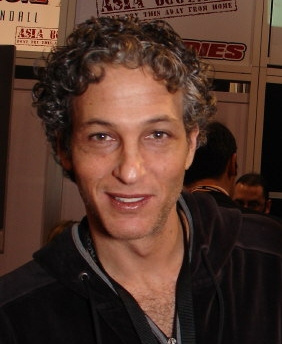
Adam Glasser (born March 18, 1964), known professionally as Seymore Butts, is an American pornographic film director, producer, and occasional performer who has produced hundreds of films in the gonzo genre of pornography.[2]

Key Information

Life and career

[edit]

Butts was born to Jewish parents[3] in the Bronx, New York City. After making several appearances as a supporting actor in the late 1980s, including a role in an early "Buttman" video, featuring Matthew King, by John Stagliano (Buttman's Ultimate Workout, 1991),[4] Glasser adopted the popular gag name Seymore Butts ("see more butts") as a pseudonym and began producing his own videos in the early 1990s after founding the Seymore, Inc. studio. The Seymore Butts series won "Best Gonzo Series" at the 1999 and 2000 AVN Awards.[5]

During 2001–02, Glasser was the focus of an obscenity-based court case, People of the State of California v. Adam Glasser, et al. over the depiction of vaginal fisting in his 1999 video Tampa Tushy Fest 1.[2][6] The film won the "Best All-Girl Sex Scene – Video" award at the 2000 AVN Awards.[5] Glasser pleaded not guilty to violating California Penal Code Sections 311.2(a), "production, distribution or exhibition of obscene matter"; and 311.5, "advertising or promoting matter represented to be obscene", better known as "pandering obscenity". Then before trial, he reached a plea agreement in which his company pleaded "no contest" to "creating a public nuisance", and paid a $1,000 fine, in exchange for all other obscenity charges being dropped against the defendants.[6]

Beginning in 2003, Glasser's life was the focus of Showtime's popular reality TV program Family Business. Appearing with him were his mother, Lila Glasser, and his 60-year-old cousin, Stevie Glasser (a.k.a. "Cousin Stevie"), both of whom help Adam run the "family business" of the series—the Seymore Butts porn "empire".[7] During production of Family Business, Glasser made reference to the court case, and used this as a springboard to mount a successful Internet-based telethon to raise money for freedom of speech causes. The series also focused on his life as a single father and his difficulty as a porn star in finding a meaningful relationship outside the industry. The series ran for five seasons.

Glasser's Do-It-Yourself Porn (2008) is one of a number of how-to guides on shooting porn videos that were released in the 2000s.[8][9]

Glasser is featured in the PBS Frontline documentary on pornography.[10]

Awards and industry recognition

[edit]
  • 1999 AVN Awards Win – 'Best Gonzo Series' for Seymore Butts
  • 2000 AVN Awards Win – 'Best Gonzo Series' for Seymore Butts
  • 2013 XBIZ Award Nomination – 'Director of the Year – Non-Feature Release' for Pool Party at Seymore's Vol.3[11]

References

[edit]
[edit]
Revisions and contributorsEdit on WikipediaRead on Wikipedia
from Grokipedia
Adam Glasser (born March 18, 1964), known professionally as Seymore Butts, is an American director, , and occasional performer specializing in gonzo-style videos emphasizing . Born in , , Glasser entered the adult industry in 1991, founding Seymore Inc. to produce and distribute his content, which has included over 70 titles featuring explicit, unscripted scenes often centered on his signature theme of "butts." His work gained broader visibility through the Showtime reality series (2003–2005), which chronicled his professional operations and personal life as a single father in the business. A notable controversy arose in 2000 when Glasser and his company faced obscenity charges in for the 1998 video Flesh of the Lotus, involving depictions of ; the case ended in a 2002 avoiding trial.

Early Life

Childhood and Family Background

Adam Glasser, professionally known as Seymore Butts, was born on March 18, 1964, in the borough of . He was raised by Jewish parents whose family business involved the garment trade, often referred to in as the shmattah industry. Details on Glasser's early upbringing remain limited in public records, with no widely documented accounts of specific childhood experiences or events beyond his origins and familial occupational background. His mother, Lila Glasser, maintained a close relationship with him into adulthood, eventually participating in aspects of his later professional operations.

Education and Pre-Industry Career

Adam Glasser graduated from in 1982. After high school, Glasser worked as a shoe salesman in 1983. In 1985, he completed a certification program through the . These early pursuits in retail sales and fitness training preceded Glasser's entry into the adult film industry in 1991, with no record of formal higher education.

Entry into the Adult Industry

Initial Performances and Directorial Debut

Adam Glasser adopted the pseudonym Seymore Butts and entered the adult film industry in 1991, initially self-producing gonzo-style videos characterized by handheld camera work and unscripted sexual encounters. Borrowing a video camera, he directed, edited, and starred in his debut production that year, distributing it through adult channels after personal handling of post-production. This marked his entry as both performer and director, with early scenes featuring himself in anal-focused content that echoed the raw aesthetic of predecessors like John Stagliano's Buttman series. Butts' directorial debut emphasized amateurish, voyeuristic filming to capture spontaneous acts, setting the template for his gonzo approach that gained traction in the early 1990s. His first commercially released video, Seymore Butts' In the Love Shack, appeared in 1992, incorporating performances by actors including Bianca Trump and establishing his focus on explicit, location-based shoots. Subsequent early releases like Seymore Butts Rides Again (also 1992) built on this foundation, with Butts performing in multiple scenes per film while handling direction. These initial efforts, produced under the newly founded Seymore Inc., prioritized anal sex and group dynamics, reflecting Butts' personal interests over scripted narratives.

Influences and Style Formation

Butts' gonzo style, characterized by point-of-view (POV) cinematography, performer narration, and unscripted, documentary-like depictions of sexual acts, drew direct inspiration from John Stagliano's pioneering Buttman series in the late 1980s. Stagliano's approach emphasized , work that immersed viewers as active participants, a technique Butts adapted to highlight anal intercourse and spontaneous encounters in his own productions. This influence stemmed from Glasser's early exposure to Stagliano's films, including a 1990 instance where Stagliano filmed at a Glasser managed, followed by Glasser's appearance in Stagliano's Buttman's Ultimate Workout in 1991. A chance encounter with Stagliano at the provided the catalyst for Butts to transition from performer to director, prompting him to experiment with gonzo elements like self-directed footage and minimal crew involvement to capture authentic, voyeuristic energy. In a interview, Butts explicitly credited Stagliano for shaping his foundational ideas, noting that POV filming stripped away production artifice to focus on raw performer-viewer connection. This led to the debut of his signature Adventures of Seymore Butts series in 1992, which refined the style by integrating personal anecdotes, , and thematic emphasis on buttocks-centric acts, distinguishing it from Stagliano's broader fetish explorations. Butts further evolved the format through iterative self-production, prioritizing cost efficiency and immediacy over narrative plots, which aligned with gonzo's roots in but elevated it via and for mainstream appeal. Unlike earlier scripted , his method rejected staged in favor of real-time , fostering a sense of realism that influenced subsequent directors like and . By the mid-1990s, this style had solidified Butts' reputation, with series installments routinely featuring recurring performers and improvised anal scenes filmed in everyday settings to enhance .

Professional Career

Gonzo Productions and Key Series

Seymore Butts Productions, formally known as Seymore Butts Home Movies, focused on gonzo-style adult films, which feature unscripted sexual encounters captured via handheld cameras in a raw, immersive format resembling . Adam Glasser, under the Seymore Butts, initiated this approach in his directorial debut, The Adventures of Seymore Butts, released in 1992, marking an early shift toward interactive, performer-driven content without traditional scripted narratives. By the mid-1990s, the company had produced dozens of such titles, emphasizing , group scenes, and spontaneous elements, with Glasser often participating or narrating on-camera. The core series, simply titled Seymore Butts, became the production's signature line, chronicling real-time sexual escapades at parties, homes, and travel locations, often highlighting female performers' enthusiasm for anal penetration. This series earned for Best Gonzo Series in both 1999 and 2000, recognizing its influence in popularizing the gonzo subgenre within the adult industry. Volumes typically ran 90-120 minutes, incorporating post-coital interviews and behind-the-scenes footage to enhance viewer immersion. Tampa Tushy Fest, launched in 1999, represented another key series, centering on extended filming trips to , for anal-focused group encounters involving multiple performers. The inaugural volume featured performers such as and Montana Gunn in scenes blending hotel romps, public outings, and toy-assisted acts, with runtimes exceeding two hours to capture unedited progression. Subsequent installments maintained this location-specific gonzo formula, contributing to the company's output of over 70 titles by the early . These series solidified Glasser's role in advancing gonzo as a dominant format, prioritizing authenticity over polished production values.

Notable Films and Collaborations

Butts' early directorial efforts established his gonzo style, characterized by work and unscripted scenarios, beginning with Adventures of Seymore Butts (1992), a 110-minute feature distributed by Home Video that documented spontaneous encounters in . This debut was followed by Seymore Butts and (1992), featuring 120 minutes of content centered on newlywed-themed anal scenes, and Seymore Butts in the (1992), which expanded on improvised group dynamics in a domestic setting. These films, part of his numbered "Seymore Butts" series, collectively sold thousands of units in the era and laid the foundation for his focus on anal-centric content without reliance on professional sets. Key collaborations included frequent pairings with performer , his step-cousin, who starred in approximately 25 of his productions between 1997 and 2000, including Seymore Butts' Backdoor to Buttsliding (1997) and various entries in the "Tushy " sub-series, emphasizing personal and recurring themes of enthusiasm for extreme acts. Another prominent partnership was with Shane, co-starring in location-based shoots such as Seymore and Shane Do (2000), a 90-minute video capturing public and private encounters during a European trip, which highlighted Butts' approach to blending with explicit . These works often involved 4-6 performers per scene, with Butts occasionally performing, as in Seymore Butts in Paradise (1993), a 148-minute Hawaiian-set feature with multiple group sequences. Later notable films included Seymore Butts Is Blown Away (2003), incorporating oral-focused variations within his established anal motif, and Cirque du Hole-A (2013), which received the AVN Award for Clever Title of the Year for its punning reference to circus-themed acrobatic sex positions involving 8 performers. Butts' series as a whole earned AVN recognition for Best Gonzo Series in 1999 and 2000, reflecting industry validation of over 150 directed titles averaging 100-150 minutes each, often featuring uncredited cameos from emerging talent scouted via his Tushy Girl program. His collaborations extended to parodies and specials, such as Gapes of Wrath (circa 2005), a thematic nod to expanded anal play with performers like Flower Tucci, underscoring his influence on niche gonzo subgenres.

Business Ventures and Production Company

Adam Glasser, professionally known as Seymore Butts, established Seymore Inc. in the early 1990s as his primary production company focused on gonzo-style adult films, a format characterized by unscripted, first-person perspective footage emphasizing raw sexual encounters. Beginning in 1991, Glasser produced and starred in his initial videos under this banner, amassing over 70 titles by the early 2000s, including the flagship Seymore Butts series that gained prominence for its candid, documentary-like approach to adult content. The company operated as a family-run enterprise from its base, with Glasser's mother, Lila Glasser, handling administrative duties such as booking performers and managing finances, while his cousin Stevie Glasser contributed to production logistics and on-set support. This familial structure was highlighted in Showtime's reality series (2003–2006), which chronicled the daily operations of Seymore Inc., from casting calls to video distribution, portraying it as a small-scale but efficient outfit navigating the industry's competitive landscape. The series underscored the company's reliance on personal networks and low-budget gonzo aesthetics to maintain profitability amid larger studio dominance. Seymore Inc. distributed its content through sales and later digital platforms, capitalizing on the gonzo genre's appeal to niche audiences seeking authenticity over polished narratives. By the mid-2000s, the company's output had earned industry accolades, including for Best Gonzo Series, reflecting its commercial viability despite occasional legal scrutiny over content boundaries. No major diversification beyond adult video production is documented, with the enterprise remaining centered on Glasser's directorial vision and family oversight.

Awards and Industry Recognition

AVN Awards and Wins

Seymore Butts' production work garnered recognition at the , particularly for pioneering gonzo-style content emphasizing anal themes and unscripted realism. His eponymous series, known for raw, performer-driven narratives, secured the Best Gonzo Series award in both 1999 and 2000, highlighting its influence on the genre's shift toward authentic, handheld over staged performances. Earlier, in 1998, his Gluteus to the Maximus won Best Anal-Themed Release, acknowledging its focus on explicit rear-entry scenes that became a staple of his oeuvre.
YearAwardWork
1998Best Anal-Themed ReleaseGluteus to the Maximus
1999Best Gonzo SeriesSeymore Butts series
2000Best Gonzo SeriesSeymore Butts series
In 2014, Butts received the Clever Title of the Year award for du Hole-A, a satirical nod to his penchant for pun-laden titles evoking anal circus antics, reflecting the industry's occasional levity amid competitive categories.

Hall of Fame Inductions and Other Honors

Seymore Butts, whose real name is Adam Glasser, was inducted into the (XRCO) Hall of Fame in 2004, recognizing his contributions to the adult film industry through gonzo-style productions. This induction highlighted his pioneering work in the genre, including the long-running Seymore Butts series. In 2005, he received induction into the AVN Hall of Fame, further affirming his status as a key figure in adult entertainment directing and production. That same year, Butts won the XRCO Award for Mainstream Adult Media Favorite for his Showtime documentary series , which chronicled the operations of his and garnered broader media attention. Additional recognition includes a 2007 AVN Award for Crossover Appeal – Director of the Year, acknowledging his ability to bridge adult content with mainstream visibility through projects like Family Business. These honors collectively underscore his influence in both niche gonzo filmmaking and efforts to normalize adult industry portrayals in popular culture.

Obscenity Prosecution and Court Case

In December 2000, the raided the offices of Seymore Inc., seizing master tapes and other materials following an investigation prompted by an anonymous tip in 1999. The probe involved surveillance of Adam Glasser (professionally known as Seymore Butts), undercover purchases of videos, and attendance at industry events such as the 2000 Adult Video News Awards. On March 16, 2001, Glasser, his company Seymore Inc., and his mother Lila Glasser (as ) were charged with two counts under law: distribution of obscene material and obscene matter for sale, each carrying potential penalties of up to six months in jail and a $1,000 fine. The charges centered on the 1998 gonzo-style video Tampa Tushy Fest, Part 1, filmed in a hotel room and featuring performers and engaging in explicit acts including vaginal and anal , alongside oral, vaginal, and anal intercourse. Prosecutors, led by Deputy Deborah Sanchez, argued the content depicted sexuality in a "patently offensive way" under the standard, which requires material to lack serious literary, artistic, political, or scientific value, appeal to prurient interest, and offend contemporary community standards. Glasser and his attorney Roger Diamond countered that the acts involved consenting adults with no violence or minors, positioning as a established practice in certain adult communities, and maintained the material fell within protected First Amendment expression of consensual sex. Glasser had released dual versions of the video—one edited to exclude scenes—anticipating potential scrutiny, though thousands of unedited copies had already been distributed. The case marked the first obscenity trial to reach a in since 1993 and was scheduled for late February 2002 in Los Angeles Superior Court. On March 20, 2002, prior to , Glasser entered a no-contest plea to a reduced charge of , avoiding conviction on the counts. The agreement imposed a $1,000 fine payable to a victims' restitution fund and required Seymore Inc. to offer an edited version of Tampa Tushy Fest, Part 1 to customers, while explicitly permitting sales of the unedited fisting content in the state without risk of future prosecutions. Glasser described the resolution as a practical compromise that preserved his ability to produce and distribute similar material, effectively treating the plea as a victory for industry standards of consensual adult content.

Unauthorized Acts and Public Incidents

In 1994, Glasser directed the gonzo video Seymore and Shane Playing with Fire, which included a scene depicting his then-girlfriend Shane performing on a fireman aboard the back of a fire truck. The production utilized actual emergency response equipment and involved a uniformed public servant, highlighting the unscripted, location-based risks inherent in early . No criminal charges stemmed directly from this filming, though it has been referenced in analyses of Glasser's work for testing legal and ethical boundaries in adult content production. Glasser's films occasionally incorporated semi-public or improvised settings to enhance realism, but documented claims of non-consensual or unauthorized participant involvement remain absent from verified records. His approach emphasized performer agency within staged scenarios, as later articulated in industry discussions where he critiqued exploitative practices while defending gonzo authenticity. Public incidents beyond production contexts, such as arrests for exposure or disruptions, are not substantiated in available legal or journalistic accounts.

Response to Industry Health Crises

In April , following the disclosure that performer had tested positive for after filming with multiple female co-stars, leading to a temporary industry shutdown and of over 50 performers, Adam Glasser, known professionally as Seymore Butts, announced a policy mandating use in all future productions by his company. This decision contrasted with the broader industry's reliance on mandatory testing through the Adult Industry Medical Healthcare Foundation (AIM), established in 1998 to conduct biweekly nucleic acid amplification tests (NAAT) for early detection, which had maintained low infection rates prior to the incident but failed to prevent the 2004 transmission due to a testing . Glasser cited performer safety as the primary rationale, stating in interviews that the scare underscored the limitations of testing alone, particularly given the potential for false negatives during the virus's incubation phase, and emphasized that condoms provided an additional barrier without compromising production quality in his gonzo-style films. He resumed filming under this protocol after the industry's moratorium lifted on April 21, 2004, positioning his company as an outlier amid resistance from major producers who argued that condom mandates would harm market competitiveness against unregulated foreign content. By 2010, Glasser reaffirmed the condom-only approach, extending it to all scenes involving vaginal or anal penetration, while continuing to enforce rigorous testing and avoiding high-risk practices such as internal creampies or multiple-partner unprotected sequences, which he had already minimized in prior years through selective casting and on-set protocols like the use of lubricants and common-sense . This stance aligned with a of performers and smaller producers advocating for layered precautions amid ongoing debates over occupational health regulations, though California health officials' subsequent push for statewide condom mandates faced legal challenges from the , highlighting tensions between public health imperatives and First Amendment concerns in the unregulated sector.

Criticisms and Industry Impact

Personal Critiques of Production Realities

Adam Glasser, known professionally as Seymore Butts, has described adult film production as a laborious process far removed from the seamless depicted on screen, emphasizing the extensive editing required to create illusions of spontaneity and pleasure. In a 2015 interview, he explained that scenes often involve multiple takes, with performers relying on numbing creams, lubricants, and erectile aids like Viagra to endure prolonged filming under hot lights, countering the myth of effortless enjoyment. Glasser highlighted the physical toll, noting that female performers may experience discomfort or pain during anal scenes, mitigated by desensitizing agents, while male performers face pressure to maintain erections amid distractions and fatigue. He has critiqued the industry's gonzo style—which he pioneered—for its raw, unscripted appearance that belies meticulous planning and splicing to excise mishaps, such as failed penetrations or performer breaks. Glasser asserted that authentic orgasms are rare on set due to the performative nature, with moans and climaxes frequently simulated or induced artificially, underscoring a disconnect between production demands and viewer expectations. In a Frontline interview, he delineated personal ethical boundaries, refusing to produce content involving , bestiality, scenarios, snuff simulations, , , or , framing these as non-negotiable limits amid broader industry practices that test performer consent and safety. Glasser's observations extend to the economic realities, where low-budget productions prioritize volume over performer welfare, leading to rushed shoots and inadequate recovery time between scenes. He has noted the reliance on or semi-professional talent, often under financial duress, which exacerbates exploitation risks in an unregulated environment lacking standardized labor protections. Despite these critiques, Glasser maintains that and mutual respect underpin viable sets, though he acknowledges systemic pressures that can coerce performances beyond natural limits.

Broader Societal and Ethical Concerns

The style popularized by Seymore Butts, characterized by its unscripted, performer-centric approach emphasizing and other explicit acts, has drawn ethical scrutiny for potentially normalizing high-risk behaviors without adequate depiction of precautions. Receptive , a staple in Butts' productions, carries a per-act transmission risk of approximately 1.38% without protection, far higher than vaginal intercourse, alongside risks of rectal tears, bacterial infections, and from inadequate preparation. While professional shoots involve enemas, , and —often omitted from final edits—critics contend this fosters viewer emulation in non-professional settings, contributing to elevated STI rates among young adults influenced by pornographic content. Butts' own disclosures highlight performer welfare concerns, revealing that scenes frequently involve concealed pain, faked orgasms (including simulated via inserted fluids), and reliance on erectile aids or injections, with female participants enduring discomfort from mismatched or coercion-like pressures to continue despite signals for adjustment. These practices, edited for seamless fantasy, raise questions about genuine and exploitation, particularly in gonzo formats where the illusion of spontaneity can mask power imbalances and physical tolls, such as male desensitization from intensive filming schedules. Industry testing mitigates some STD spread, but unprotected scenes persist, underscoring tensions between artistic intent and participant . On a societal level, such content correlates with distorted sexual expectations, with meta-analyses indicating consumption—exemplified by gonzo's aggressive dynamics—associates with reduced relationship satisfaction, increased , and negative attitudes toward partners, though causal links remain contested amid self-reported data limitations. Conservative and feminist critics, including those wary of academia's prevailing biases toward permissive views on sexuality, argue Butts' mainstream ventures like further desensitize audiences to degradation, potentially eroding mutual respect in intimate relations by prioritizing spectacle over relational realism. on direct societal harm from specific directors is sparse, but aggregate studies link frequent exposure to higher risks and intimacy challenges, prompting calls for framing of pornography's unverified safety.

Personal Life

Family Dynamics and Relationships

Adam Glasser, professionally known as Seymore Butts, operates his adult film production company as a family enterprise involving his mother, Lila Glasser, who handles , and his cousin, Stevie Glasser, responsible for distribution . This structure highlights an unconventional integration of familial roles into the entertainment business, with Lila providing administrative support despite the industry's explicit nature. Stevie, often characterized as cantankerous, assists in operational tasks, contributing to the company's day-to-day functionality. The family dynamics gained public visibility through the Showtime reality series (2003–2006), which depicted Lila as a meddling yet well-meaning figure concerned with Glasser's personal stability and urging him to seek a long-term partner to co-parent his son. These interactions underscore tensions between professional collaboration and maternal expectations for conventional family life, as Lila balances business involvement with advocacy for Glasser's emotional and relational fulfillment. Glasser is a single father to his son, Brady Glasser, born on December 2, 1996, from a relationship with adult film actress Taylor Hayes, which ended in 1997. He has never married, and his documented romantic involvements have primarily been with industry performers, including (1997–2000) and Shane (1995), reflecting limited long-term personal commitments amid his career focus. In June 2014, Brady, then 17, briefly went missing after boarding a bus from to , prompting public concern but resolving without further reported incidents. Glasser's fatherhood efforts, as portrayed in media, emphasize balancing professional demands with parental responsibilities in a non-traditional household.

Media Appearances and Public Image

Seymore Butts, whose real name is Adam Glasser, achieved notable mainstream visibility through the Showtime reality television series Family Business, which aired from 2003 to 2006 and chronicled the daily operations of his adult film production company, Seymore Inc., alongside family members including his mother Lila Glasser and cousin Stevie. The program offered audiences an insider's perspective on pornography production, business negotiations, and interpersonal family conflicts within the industry. Promotional efforts for the series included public autograph sessions, such as one held at Hustler Hollywood on the Sunset Strip, where Butts and cast members like Belladonna interacted with fans for over two hours, receiving positive feedback for the show's authentic depiction of adult entertainment realities. Butts made guest appearances on late-night talk shows, including an interview on on April 9, 2003, during which he addressed aspects of his career in adult films. He also featured on Howard Stern on Demand, a television extension of the , with segments airing between 2005 and 2013 that highlighted his persona and industry insights. In a PBS Frontline interview, Butts reflected on the role of programs like in normalizing explicit content, attributing their popularity to audiences' interest in and boundary-testing entertainment. Public perception of Butts centers on his role as a pioneering figure in gonzo-style , emphasizing unscripted, reality-based scenes often focused on anal content, which has drawn both acclaim within the industry and legal scrutiny for . His media presence has portrayed him as forthright about the adult industry's unglamorous underbelly, dispelling viewer assumptions of seamless, pleasurable production. In a 2015 feature, Butts detailed practical challenges, such as male performers' reliance on medications in nearly all scenes, the extensive preparation required for depicted including multiple enemas and fasting, and the frequent faking of female orgasms or through artificial means like squirting water. These disclosures underscore a public image of Butts as a demystifier of pornographic fantasies, prioritizing operational candor over idealized narratives.

Legacy

Adam Glasser, professionally known as Seymore Butts, contributed to the popularization of in the 1990s by producing high-volume, low-budget films that featured the director as an on-screen participant, emphasizing unscripted, voyeuristic perspectives from the male performer's viewpoint. This style, which he helped refine alongside contemporaries like Rodney Moore, shifted adult film production away from elaborate scripted narratives toward raw, reality-based content that prioritized performer interaction and immediacy, influencing a broader industry trend toward accessible, point-of-view formats. His Seymore Butts video series, which garnered for Best Gonzo Series in 1999 and 2000, exemplified this approach through compilations of anal-focused scenes, helping normalize and commercialize extreme anal content as a staple genre within gonzo productions. By partnering with performers like Shane Hunter to blend personal relationships with on-camera dynamics, Butts advanced a "reality-style" gonzo variant that blurred lines between professional and amateur aesthetics, paving the way for subsequent trends in user-generated and POV-dominated adult media. Butts' innovations extended to production efficiency, incorporating storytelling elements into gonzo frameworks to enhance viewer engagement beyond mere explicit acts, setting standards for narrative integration in otherwise minimalist formats. In response to industry crises, such as the 2004 outbreak, he implemented a condom-only policy across his productions starting in 2004, influencing discussions on performer safety protocols amid a traditionally bareback-oriented gonzo sector. His 2007 instructional video series for aspiring directors further disseminated these techniques, democratizing gonzo production methods and contributing to the genre's proliferation in the digital era.

Ongoing Relevance and Retirement

Adam Glasser, professionally known as Seymore Butts, ceased active production of new adult films following a spanning from to approximately 2015, effectively retiring from directing and starring roles in the industry. His final major release, Pool Party at Seymore's 3: The Sext Generation, dates to 2012, after which no further titles have been documented in major databases. This shift followed earlier high-profile activities, including the 2003–2005 Showtime reality series , which chronicled his production life and family dynamics. Post-retirement, Glasser's work retains commercial viability through ongoing distribution and streaming on platforms such as Adult DVD Empire and Pornhub, where searches for his titles yield extensive catalogs of over 140 films, many emphasizing gonzo-style anal content he pioneered in the 1990s. These productions, totaling more than 70 under his direct imprint by the early 2000s, continue to influence niche trends in unscripted, performer-driven adult video, as evidenced by persistent availability and fan discussions on industry forums noting his foundational role without new output. Occasional public appearances, such as at the 2011 EXXXOTICA convention, underscore limited ongoing visibility, though no verified professional engagements have surfaced since. Glasser's 2009 instructional book Rock Her World: The Sex Guide for Men Who Want to Satisfy Their Women, drawing from his industry experience, represents a pivot to written media, offering practical advice on sexual techniques amid his production wind-down. While broader societal debates on adult content ethics have evolved, his archived oeuvre persists as a reference point in discussions of gonzo evolution, unmarred by recent controversies but reflective of pre-digital mainstreaming industry norms.

References

Add your contribution
Related Hubs
User Avatar
No comments yet.