


Community hub
Recent from talks
Contribute something
Nothing was collected or created yet.
The Shirelles
View on Wikipedia
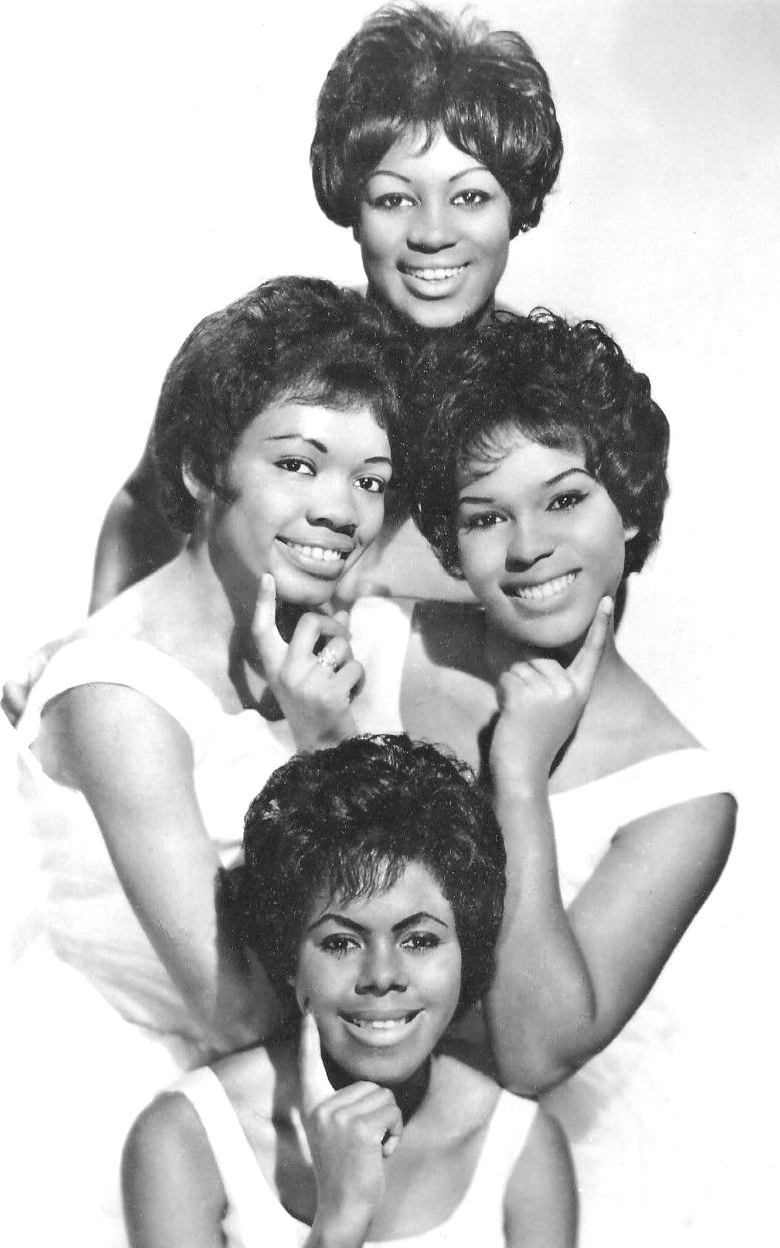
The Shirelles were an American girl group formed in Passaic, New Jersey, in 1957. They consisted of schoolmates Shirley Owens (later Shirley Alston Reeves), Doris Coley (later Doris Kenner-Jackson), Addie "Micki" Harris (later Addie Harris McFadden), and Beverly Lee.
Key Information


Founded in 1957 for a talent show at their high school, they were signed by Florence Greenberg of Tiara Records. Their first single, "I Met Him on a Sunday", was released by Tiara and licensed by Decca Records in 1958. After a brief and unsuccessful period with Decca, they went with Greenberg to her newly formed company, Scepter Records. Working with Luther Dixon, the group rose to fame with "Tonight's the Night". After a successful period of collaboration with Dixon and promotion by Scepter, with seven top 20 hits, the Shirelles left Scepter in 1966. Afterwards, they were unable to maintain their previous popularity.
The Shirelles have been described as having a "naive schoolgirl sound" that contrasted with the sexual themes of many of their songs. Several of their hits used strings and featured the influence of Brazilian baião music. They have been credited with launching the girl group genre, with much of their music reflecting the genre's essence. Their acceptance by both white and black audiences, predating that of the Motown acts, has been noted as reflecting the early success of the Civil Rights Movement. They have received numerous honors, including the Pioneer Award from the Rhythm and Blues Foundation, as well as being inducted into the Rock and Roll Hall of Fame in 1996 and named one of the 100 Greatest Artists of All Time by Rolling Stone in 2004. Two of their songs, "Will You Love Me Tomorrow" and "Tonight's the Night", were selected by Rolling Stone on its list of the greatest songs of all time. In 2022, their debut album Tonight's the Night was selected by the Library of Congress for preservation in the National Recording Registry as being "culturally, historically, or aesthetically significant".[1]
Initial career and success
[edit]

The group that later became the Shirelles was formed in 1957 by four teenage girls from Passaic, New Jersey,[2] under the name the Poquellos[3] (or Pequellos[4]). The founding members, Shirley Owens (born June 10, 1941, Henderson, NC), Doris Coley (August 2, 1941, Goldsboro, NC– February 4, 2000, Sacramento, CA), Addie "Micki" Harris (January 22, 1941, High Point, NC – June 10, 1982, Atlanta, Georgia), and Beverly Lee (born August 3, 1941, Passaic, NJ), entered a talent show at Passaic High School at the suggestion of a teacher. After hearing them sing "I Met Him on a Sunday", a song they had written for the show, their classmate Mary Jane Greenberg convinced the reluctant Poquellos to meet with her mother, Florence, the owner of Tiara Records.[3][5] After several months of avoiding Greenberg and telling her that they were not interested in singing professionally, they were booked to Tiara. By the end of the year they had changed their name to the Shirelles,[2] a combination of the first syllable of Owens's given name and -el, reminiscent of then-popular group the Chantels,[6] after briefly using the name the Honeytunes. That year, they released their first song, "I Met Him on a Sunday"; after local success, it was licensed to Decca Records for national broadcast and charted at No. 50. The song was influenced by doo-wop, but infused with pop melodies.[7]
Tiara Records, along with the Shirelles' contract, was sold to Decca Records in 1959 for $4,000; Greenberg stayed as the manager, securing performances for the group, including one at the Howard Theatre in Washington D.C.[8] After two singles did poorly, including their first release—with Coley as lead vocalist—of "Dedicated to the One I Love", a cover of the "5" Royales song of the same name,[9] Decca returned them to Greenberg and gave up on them, considering them a one-hit act.[8] On Greenberg's new label, Scepter Records,[2] they rereleased "Dedicated to the One I Love" as a single, which peaked at No. 89; Wayne Wadhams, David Nathan, and Susan Lindsay in Inside the Hits attribute the low rating to poor distribution.[10] In order to better promote the group, Greenberg asked songwriter Luther Dixon, who had previously worked with Perry Como, Nat King Cole, and Pat Boone and co-written the 1959 hit "16 Candles", to write for and produce songs for them. Dixon accepted.[11]
Their first single produced with Dixon, "Tonight's the Night", was released in 1960 and peaked at No. 39. The success of "Tonight's the Night" led to the girls being booked to perform with several major artists,[10] such as Etta James and Little Richard,[12] and facilitated Scepter's move to a larger office. It was followed by "Will You Love Me Tomorrow", written by husband-wife songwriting team Gerry Goffin and Carole King;[11] the song went on to become the first Billboard number-one hit by an African-American girl group,[13] possibly the first by any girl group.[3] "Tonight's the Night" was later used as the title song for the 1961 album Tonight's the Night, which also included "Will You Love Me Tomorrow" and "Dedicated to the One I Love".[14]
After the success of their singles, the Shirelles became frequent guests of Murray the K, who hosted them on his "All Star Rock Shows" on the New York radio station WINS.[4] During this same period they reissued "Dedicated to the One I Love", which peaked at No. 3, followed by "Mama Said", then "Baby It's You", written by Burt Bacharach, Luther Dixon, and Mack David, "Soldier Boy",[15] and "Boys", with saxophonist King Curtis.[4]
In 1963 Dixon left Scepter, which presaged a tailing-off of the number of the Shirelles' singles to chart. However, they carried on performing and recording. Dionne Warwick replaced Owens and Coley, who took leave to marry their fiancés, in concerts and the group continued to record material. That year, their song "Foolish Little Girl" reached the pop/R&B Top 10, and they performed two songs, "31 Flavors" and "You Satisfy My Soul," for the soundtrack of the film It's a Mad, Mad, Mad, Mad World; "31 Flavors" was also used to promote Baskin-Robbins.[6] However, later in 1963, the Shirelles learned that the trust, holding their royalties, that they were supposed to receive from Scepter on their 21st birthdays, did not exist.[15] In response, they left the label,[9] and later filed a breach of contract suit against the company. Scepter met this with a countersuit for quitting; both suits were withdrawn in 1965, after an agreement was reached.[16] Knowing that Scepter had lied about the trust disappointed the Shirelles, who felt deceived. In a 1981 interview with Bruce Pollock, Owens said that Greenberg had put on a "mother routine", which the girls had "fall[en] for ... completely".[17]
Later career
[edit]
In later years, the Shirelles declined in popularity due in part to pressure from the British Invasion[6] and the heavy competition from other girl groups, including the Chiffons, the Supremes, the Ronettes, Martha & the Vandellas, and the Crystals.[15] During this period, Warwick often replaced Coley on stage due to the latter's family commitments. The Shirelles were still bound to Scepter and thus unable to record for another company until the end of their contract[9] in 1966.[16] Their last single to chart was 1967's "Last Minute Miracle",[6] which peaked at No. 99.[18]
After the commercial failure of their most recent releases, Coley left the group in 1968 to focus on her family. The remaining three Shirelles recorded songs for several labels, including Bell Records, RCA Victor, and United Artists until 1971. Afterwards, they toured singing their older songs, and participated in the filming of the 1973 documentary Let the Good Times Roll,[6] recording two songs for it.[4] Coley returned as lead singer in 1975,[9] replacing Owens, who left that year to pursue a solo career.[19] Addie "Micki" Harris collapsed of a heart attack in June 1982 in the lobby of Hyatt Regency in Atlanta, Georgia after two performances with the group.[6][7][20][21][22] She was sent to the Grady Memorial Hospital, where she died at 12:50 a.m. on June 10, 1982.[21] The following year, the remaining three original members performed "Will You Love Me Tomorrow" with Warwick on her album How Many Times Can We Say Goodbye.[6]
Current versions of the group
[edit]Today, the original members tour in different, separate groups,[6] although the trademark to the Shirelles name was eventually acquired by Lee. One of the versions of the group had member Geraldine Crowell, who was the daughter of David Jones of The Rays.[23] Shirley Owens performed on the Doo Wop 51 PBS special in 2000. She continued to tour under the name "Shirley Alston Reeves and her Shirelles". Shirley retired in 2020. Lee currently tours with new members, billed as "The Shirelles". Doris Coley died in Sacramento, California on February 4, 2000 of breast cancer.[9][13]
Deaths
[edit]Addie Harris died from a heart attack at the age of 41 on June 10, 1982.[24]
Doris Coley died of breast cancer at the age of 58 on February 4, 2000.[25]
Style
[edit]Wadhams, Nathan, and Lindsay describe the style of the Shirelles early work as "tight, almost doo-wop harmony".[26] Owens's vocals, described by rock n' roll writer Alwyn W. Turner as being "wonderfully expressive", were capable of sounding "almost, but not quite" out of tune, which in his opinion lent Owens an innocent sound in her songs;[27] music critic Albin Zak describes her vocals as being able to intone desire and vulnerability.[11] The other members, singing backup, also convey what Michael Campbell, a professor of music at Western Illinois University, calls a "naive schoolgirl sound".[5] The lyrics sung by the Shirelles tended to be fairly simple and "barely" concealed the subtexts of the songs. The songs were implicitly directed at female listeners, with the male subjects of songs being referred to as "he" instead of "you";[27] this was a change from previous female-written songs, which tended to be more gender neutral, and helped pave the way for the "confessional" songs of 70s singers like Joni Mitchell and Carole King.[5][28]
Musically, their works with Dixon were influenced by Brazilian baião and featured numerous instances of syncopation.[11]
Influence
[edit]Steve Huey of AllMusic notes that the Shirelles defined "the so-called girl group sound with their soft, sweet harmonies and yearning innocence", with their songs predating Motown in their widespread crossing of racial demographics, both in the US and in Britain. He also notes that they spawned "legions of imitators", and laid a blueprint for future female pop stars to follow.[6] Turner writes that the Shirelles "launched [the girl group] genre", noting that their early work already included "the essence" of the genre;[27] Alwyn Zak expands on the statement, noting that the influx of female groups started after the success of "Will You Love Me Tomorrow".[29]
Michael Campbell notes that the Shirelles' success reflected the Civil Rights Movement. He indicates that works such as "Will You Love Me Tomorrow", written by a white couple, produced by an African-American man, with vocals by young African-American women and strings sounding like they were targeted at a white audience, conveyed a "color-blind" message on top of its more obvious sexual one.[5]
The Beatles were large admirers, according to George Harrison, "We always loved those American girl groups, like the Shirelles and the Ronettes, so yeah we developed our harmonies from trying to come up with an English, male version of their vocal feel."[30] Their debut album, Please Please Me included cover versions of two songs by the Shirelles, "Baby It's You", and "Boys", and a third song from the album, "P.S. I Love You" was according to John Lennon, Paul's attempt at "trying to write a "Soldier Boy" like the Shirelles."[31]
Accolades
[edit]In 1994, the Shirelles were honored by the Rhythm and Blues Foundation with the Pioneer Award for their contributions to music.[32] The award was accepted by Owens, Lee, and Kenner. As Coley was accepting her award, she said "This is dedicated to the one I love", and sang an impromptu rendition of "Soldier Boy" together with Owens and Lee.[7] Two years later they were inducted into the Rock and Roll Hall of Fame, together with Gladys Knight & the Pips. At the ceremony in the Waldorf-Astoria Hotel in New York, the three surviving members sang a medley of songs after being presented the awards by Merry Clayton, Marianne Faithfull, and Darlene Love.[33] In 2002, they were inducted into the Vocal Group Hall of Fame. Lee and Owens accepted the award.[34]
In 2004, Rolling Stone ranked them No. 76 on their list of the 100 Greatest Artists of All Time. Paul Shaffer, who did the write-up, wrote that the girl-group sound, originated by them, was "everything to [him]"; he also described their impromptu performance of "Soldier Boy" as inspiring.[7] They also included two of the Shirelles' songs, "Will You Love Me Tomorrow" and "Tonight's the Night", on their list of the 500 Greatest Songs of All Time. In the 2010 edition, "Will You Love Me Tomorrow" was ranked 126th, while "Tonight's the Night" was ranked 409th.[35] The Shirelles' 1963 Greatest Hits album was included in Robert Christgau's "Basic Record Library" of 1950s and 1960s recordings, published in Christgau's Record Guide: Rock Albums of the Seventies (1981).[36] He later characterized it as "merely one of the greatest phonograph albums ever made available to the general public".[37]
In September 2008, the Shirelles' hometown of Passaic honored the group by renaming a section of Paulison Avenue between Passaic and Pennington Avenues (the section where Passaic High School is located) "Shirelles Boulevard". The dedication ceremony was attended by both surviving Shirelles. Owens said that it was different from they were inducted into the Hall of Fame, as it was their home town. She noted that "the people who loves [sic] us and we loved are right here."[38]
In 2022, their debut album Tonight's the Night was selected by the Library of Congress for preservation in the National Recording Registry as being "culturally, historically, or aesthetically significant".[1]
Stage musical
[edit]The Shirelles' story was shown in Baby It's You! (a musical revue written by Floyd Mutrux and Colin Escott), which follows the story of Greenberg and Scepter Records.[39] The revue played on Broadway for 148 performances, opening at the Broadhurst Theatre on April 27, 2011, and closing on September 4 of the same year.[40] The use of their likenesses without permission led to Lee, as well as the estates of Coley and Harris, to sue Warner Bros.[23]
Discography
[edit]Albums
[edit]| Year | Album | Billboard 200 [41] |
Record label |
|---|---|---|---|
| 1960 | Tonight's the Night | — | Scepter Records |
| 1961 | The Shirelles Sing to Trumpets and Strings | — | |
| 1962 | The Shirelles and King Curtis Give a Twist Party (with King Curtis) | — | |
| Baby It's You | — | ||
| 1963 | Foolish Little Girl | 133 | |
| It's a Mad, Mad, Mad, Mad World | — | ||
| 1964 | The Shirelles Sing the Golden Oldies | — | |
| 1965 | Hear & Now | — | Pricewise Records |
| Swing the Most | — | ||
| 1967 | Spontaneous Combustion | — | Scepter Records |
| 1971 | Happy and In Love | — | RCA Records |
| 1972 | The Shirelles | — | |
| 1973 | Eternally, Soul | — | Scepter Records |
| "—" denotes releases that did not chart. | |||
Compilation albums
[edit]| Year | Album | Billboard 200 [42] |
Record label |
|---|---|---|---|
| 1963 | The Shirelles' Greatest Hits | 67 | Scepter Records |
| 1964 | The Shirelles Sing the Golden Oldies | — | |
| 1967 | The Shirelles's Greatest Hits Vol. II | — | |
| 1972 | Remember When Volume 1 | — | Wand Records |
| Remember When Volume 2 | — | ||
| 1973 | The Shirelles Sing Their Very Best | — | Springboard |
| 1975 | The Very Best of the Shirelles | — | United Artists Records |
| 1984 | Anthology 1959–1964 | — | Rhino Records |
| "—" denotes releases that did not chart. | |||
Singles
[edit]


| Year | Single (A-side, B-side) Both sides from same album except where indicated |
Chart positions | Album | |||
|---|---|---|---|---|---|---|
| US [18] |
US R&B [18] |
CAN [43] |
UK [44] | |||
| 1958 | "I Met Him on a Sunday (Ronde-Ronde)" b/w "I Want You to Be My Boyfriend" |
49 | — | 17 | — | Non-album tracks |
| "My Love Is a Charm" b/w "Slop Time" |
— | — | — | — | ||
| "I Got the Message" b/w "Stop Me" |
— | — | — | — | ||
| 1959 | "Dedicated to the One I Love" b/w "Look a Here Baby" (Non-album track) |
83 | — | — | — | Tonight's the Night |
| "Doin' the Ronde" b/w "A Teardrop and A Lollipop" (Non-album track) |
— | — | — | — | ||
| 1960 | "Please Be My Boyfriend" b/w "I Saw a Tear" (from The Shirelles Sing to Trumpets and Strings) |
— | — | — | — | The Shirelles' Greatest Hits Vol. II |
| "Tonight's the Night" b/w "The Dance Is Over" |
39 | 14 | — | — | Tonight's the Night | |
| "Will You Love Me Tomorrow" b/w "Boys" |
1 | 2 | 2 | 4 | ||
| 1961 | "Dedicated to the One I Love" (reissue) b/w "Look a Here Baby" (Non-album track) |
3 | 2 | 13 | — | |
| "Mama Said" b/w "Blue Holiday" |
4 | 2 | 13 | — | The Shirelles Sing to Trumpets and Strings | |
| "A Thing of the Past" b/w "What a Sweet Thing That Was" (from The Shirelles Sing to Trumpets and Strings) |
41
54 |
26 | 40
40 |
—
— |
Baby It's You | |
| "Big John (Ain't You Gonna Marry Me)" b/w "Twenty-One" |
21 | 2 | — | — | Baby It's You | |
| "Baby It's You"
b/w "Things I Want to Hear (Pretty Words)" |
8
107 |
3 | 18
— |
—
— | ||
| 1962 | "Soldier Boy"
b/w "Love Is a Swingin' Thing" (from Give a Twist Party) |
1
109 |
3
— |
1 | 23
— | |
| "Welcome Home, Baby"
b/w "Mama, Here Comes the Bride" |
22
104 |
20
— |
31 | —
— |
Give a Twist Party (With King Curtis) | |
| "Stop the Music"
b/w "It's Love That Really Counts (In the Long Run)" |
36
102 |
—
— |
— | —
— |
The Shirelles' Greatest Hits | |
| "Everybody Loves a Lover" b/w "I Don't Think So" (from Foolish Little Girl) |
19 | 15 | 26 | — | ||
| 1963 | "Foolish Little Girl"
b/w "Not for All the Money in the World" |
4
100 |
9
— |
8 | 38
— |
Foolish Little Girl |
| "Don't Say Goodnight and Mean Goodbye" b/w "I Didn't Mean to Hurt You" |
26 | — | — | — | ||
| "What Does a Girl Do?" b/w "Don't Let It Happen to Us" (Non-album track) |
53 | * | — | — | The Shirelles Swing the Most | |
| "It's a Mad, Mad, Mad, Mad World"
b/w "31 Flavors" |
92
97 |
* | — | —
— |
It's a Mad, Mad, Mad, Mad World | |
| 1964 | "Tonight You're Gonna Fall in Love with Me" b/w "20th Century Rock N' Roll" (from It's a Mad, Mad, Mad, Mad World) |
57 | * | 38 | — | Hear & Now |
| "Sha-La-La" b/w "His Lips Get in the Way" (from The Shirelles Swing the Most) |
69 | * | — | — | ||
| "Thank You Baby" b/w "Dooms Day" (from Hear & Now) |
63 | * | — | — | The Shirelles' Greatest Hits Vol. II | |
| "Maybe Tonight"
b/w "Lost Love" |
88
125 |
* | — | —
— |
Hear & Now | |
| "Are You Still My Baby" b/w "I Saw a Tear" (from The Shirelles Sing to Trumpets and Strings) |
91 | * | 45 [45] |
— | Non-album tracks | |
| 1965 | "Shhh, I'm Watching the Movie" b/w "A Plus B" |
— | — | — | — | |
| "March (You'll Be Sorry)" b/w "Everybody's Goin' Mad" (from It's a Mad, Mad, Mad, Mad World) |
108 | — | — | — | ||
| "My Heart Belongs to You" b/w "Love That Man" (Non-album track) |
125 | — | — | — | The Shirelles' Greatest Hits Vol. II | |
| "Mama, My Soldier Boy Is Coming Home" b/w "Soldier Boy" (from Baby, It's You) |
— | — | — | — | Non-album track | |
| 1966 | "I Met Him on a Sunday - '66" b/w "Love That Man" (Non-album track) |
— | — | — | — | The Shirelles' Greatest Hits Vol. II |
| "Que Sera Sera" b/w "Till My Baby Comes Home" |
— | — | — | — | Remember When | |
| "Shades of Blue" b/w "When the Boys Talk About the Girls" (from Remember When) |
122 | — | — | — | Non-album tracks | |
| "Teasin' Me" b/w "Look Away" |
— | — | — | — | ||
| 1967 | "Don't Go Home (My Little Darlin')" b/w "Nobody Baby After You" (Non-album track) |
110 | — | — | — | The Shirelles' Greatest Hits Vol. II |
| "Bright Shiny Colors" b/w "Too Much of a Good Thing" |
— | — | — | — | Non-album tracks | |
| "Last Minute Miracle" b/w "No Doubt About It" |
99 | 41 | — | — | Spontaneous Combustion | |
| 1968 | "Sweet Sweet Lovin'" b/w "Don't Mess with Cupid" |
— | — | — | — | Non-album tracks |
| "Call Me (If You Want Me)" b/w "There's a Storm Going On in My Heart" |
— | — | — | — | ||
| 1969 | "A Most Unusual Boy" b/w "Look What You've Done to My Heart" |
— | — | — | — | |
| "Playthings" b/w "Looking Glass" |
— | — | — | — | ||
| "Go Away and Find Yourself" b/w "Never Give You Up (Never Gonna Give You Up)" |
— | — | — | — | ||
| 1970 | "There Goes My Baby/Be My Baby" b/w "Strange, I Love You" |
— | — | — | — | |
| "It's Gonna Take a Miracle" b/w "Lost" |
— | — | — | — | ||
| "Dedicated to the One I Love" (new version) b/w "Take Me" |
— | — | — | — | ||
| 1971 | "No Sugar Tonight" b/w "Strange, I Love You" |
— | — | — | — | Happy and In Love |
| 1972 | "Sunday Dreaming" b/w "Brother, Brother" |
— | — | — | — | The Shirelles |
| 1973 | "Let's Give Each Other Love" b/w "Deep in the Night" (from The Shirelles) |
— | — | — | — | Non-album tracks |
| "Do What You've a Mind To" b/w "Touch the Wind" |
— | — | — | — | ||
| "—" denotes releases that did not chart or were not released in that territory. | ||||||
* no R&B Charts printed by Billboard during these chart runs
References
[edit]- Footnotes
- ^ a b "National Recording Registry Inducts Music from Alicia Keys, Ricky Martin, Journey and More in 2022". Library of Congress. Retrieved June 23, 2022.
- ^ a b c Marcus 1994 – 1995, Legends: The Shirelles.
- ^ a b c Wadhams, Nathan & Lindsay 2001, p. 59.
- ^ a b c d Hall of Fame, The Shirelles.
- ^ a b c d Campbell 2005, p. 179.
- ^ a b c d e f g h i Huey, The Shirelles.
- ^ a b c d Shaffer 2005, The Shirelles.
- ^ a b Callahan, Edwards, 2009: The Scepter/Wand Story.
- ^ a b c d e Talevski 2006, pp. 334–335.
- ^ a b Wadhams, Nathan & Lindsay 2001, p. 60.
- ^ a b c d Zak 2010, p. 224.
- ^ James & Ritz 1995, p. 76.
- ^ a b Jet 2000, Dorris Kenner-Jackson.
- ^ Unterberger, Tonight's the Night.
- ^ a b c Wadhams, Nathan & Lindsay 2001, p. 62.
- ^ a b Billboard 1965, Shirelles Drop.
- ^ Wadhams, Nathan & Lindsay 2001, p. 63.
- ^ a b c Billboard.com, The Shirelles Chart.
- ^ Tobler 1991, p. 2001.
- ^ Talevski 2006, p. 410.
- ^ a b "'Shirelles' vocalist Addie McFadden dies". The Fresno Bee. June 11, 1982. p. 30. Retrieved May 1, 2024.
- ^ Ellis, Amy (September 22, 2008). "Passaic dedicates to the Shirelles". nj. Retrieved November 20, 2019.
- ^ a b Perpetua 2011, Dionne Warwick.
- ^ "The Shirelles Page". Soulwalking. Retrieved December 23, 2023.
- ^ Valentine, Penny (February 7, 2000). "Doris Coley". The Guardian. Retrieved June 24, 2022.
- ^ Wadhams, Nathan & Lindsay 2001, p. 61.
- ^ a b c Turner 2003, p. 426.
- ^ Elias, How Many Times.
- ^ Zak 2010, p. 225.
- ^ "Guitar World Interviews George Harrison". 1992.
- ^ Sheff 2000, p. 168.
- ^ Rhythm and Blues Foundation, Pioneer Awards.
- ^ Jet 1996, Gladys Knight.
- ^ Unterberger, The Shirelles.
- ^ Rolling Stone 2010, 500 Songs, p. 121.
- ^ Christgau, Robert (1981). "A Basic Record Library: The Fifties and Sixties". Christgau's Record Guide: Rock Albums of the Seventies. Ticknor & Fields. ISBN 0899190251. Retrieved March 16, 2019 – via robertchristgau.com.
- ^ Christgau, Robert (December 27, 1994). "Consumer Guide". The Village Voice – via RobertChristgau.com.
- ^ Nutt 2008, Passaic dedicates.
- ^ Jones 2010, Shirelles Musical.
- ^ IBDB, Baby It's You!.
- ^ "The Shirelles Foolish Little Girl Chart History". Billboard. Retrieved November 20, 2019.
- ^ "The Shirelles The Shirelles Greatest Hits Chart History". Billboard. Retrieved November 20, 2019.
- ^ "CHUM search results". Archived from the original on July 18, 2006.
- ^ "SHIRELLES - full Official Chart History". Official Charts Company. Retrieved October 9, 2022.
- ^ "RPM Top 100 Singles - December 28, 1964" (PDF).
- Bibliography
^ Clemente, John (2000). Girl Groups—Fabulous Females That Rocked The World. Iola, Wisc. Krause Publications. pp. 276. ISBN 0-87341-816-6. ^ Clemente, John (2013). Girl Groups—Fabulous Females Who Rocked The World. Bloomington, IN Authorhouse Publications. pp. 623. ISBN 978-1-4772-7633-4 (sc); ISBN 978-1-4772-8128-4 (e).
- "500 Greatest Songs of All Time". Rolling Stone. 2010.
- "Baby It's You!". Internet Broadway Database. The Broadway League. Retrieved September 18, 2011.
- Callahan, Mike; Edwards, David (April 8, 2009). "The Scepter / Wand Story". Both Sides Now Publications. Retrieved September 17, 2011.
- Campbell, Michael (2005). Popular Music in America : The Beat Goes On. Belmont: Wadsworth/Thomson Learning. ISBN 978-0-534-55534-4.
- Collins, Clark (April 26, 2011). "Baby It's You". Entertainment Weekly. Retrieved September 26, 2011.
- Company, Johnson Publishing (February 28, 2000). "Dorris Kenner-Jackson, 58, Member of The Shirelles". Jet: 16.
{{cite journal}}:|last1=has generic name (help) - Elias, Jason. "How Many Times Can We Say Goodbye". AllMusic.com. Retrieved September 18, 2011.
- Gans, Andrew (April 29, 2011). "56th Annual Drama Desk Nominations Announced; Book of Mormon Scores 12 Nominations". playbill.com. Archived from the original on September 2, 2011. Retrieved September 26, 2011.
- Company, Johnson Publishing (February 5, 1996). "Gladys Knight & the Pips, The Shirelles Inducted into Rock and Roll Hall of Fame". Jet: 59–60.
{{cite journal}}:|last1=has generic name (help) - Huey, Steve. "The Shirelles". AllMusic.com. Retrieved September 18, 2011.
- Isherwood, Charles (April 27, 2011). "Girl Group Tale Is Reharmonized". New York Times. Retrieved September 26, 2011.
- James, Etta; Ritz, David (1995). Rage to Survive : The Etta James Story. New York: Villard Books. ISBN 978-0-679-42328-7.
- Jones, Kenneth (October 20, 2010). "Shirelles Musical Baby It's You! Takes More Steps Toward Broadway". Playbill.com. Playbill. Archived from the original on November 24, 2010. Retrieved September 17, 2011.
- Jones, Kenneth (January 14, 2011). "Producers of Baby It's You! Eyeing Broadhurst Theatre and Beth Leavel". Playbill.com. Playbill. Archived from the original on March 21, 2011. Retrieved September 18, 2011.
- Jones, Kenneth (February 4, 2011). "Baby It's You! Box Office Will Open Feb. 5". Playbill.com. Playbill. Archived from the original on October 20, 2012. Retrieved September 18, 2011.
- Jones, Kenneth; Gans, Andrew (May 3, 2011). "2011 Tony Nominations Announced; 'Book of Mormon' Earns 14 Nominations". playbill.com. Archived from the original on September 14, 2011. Retrieved September 26, 2011.
- Marcus, Greil (1994–1995). "Legends: The Shirelles". Vibe: 124.
- Nutt, Amy Ellis (September 22, 2008). "Passaic dedicates street to the ones it loves: the Shirelles". The Star-Ledger. NJ.com. Archived from the original on June 5, 2011. Retrieved September 18, 2011.
- Perpetua, Matthew (April 28, 2011). "Dionne Warwick and the Shirelles Sue 'Baby It's You' Producers". Rollingstone.com. Retrieved September 18, 2011.
- "Pioneer Awards: 1994". Rhythm and Blues Foundation. Archived from the original on January 30, 2011. Retrieved September 17, 2011.
- Shaffer, Paul (April 21, 2005). "The Immortals: The First Fifty". Rolling Stone Issue 946. Rolling Stone. Archived from the original on February 6, 2007.
- Sheff, David (2000). All We Are Saying: The Last Major Interview with John Lennon and Yoko Ono. New York: St. Martin's Press. ISBN 0-312-25464-4.
- Nielsen Business Media (June 12, 1965). "Shirelles Drop Suit Against Scepter-Wand". Billboard. p. 4.
{{cite magazine}}:|last1=has generic name (help) - Suskin, Steven (April 27, 2011). "Baby It's You!". Variety Magazine. Retrieved September 26, 2011.
- Talevski, Nick (2006). Knocking on Heaven's Door : Rock Obituaries. London: Omnibus. ISBN 978-1-84609-091-2.
- "The Shirelles". Rock and Roll Hall of Fame. Retrieved September 18, 2011.
- "The Shirelles: Albums". Billboard.com. Billboard. Retrieved September 17, 2011.
- "The Shirelles: Chart History". Billboard.com. Billboard. Retrieved September 17, 2011.
- Tobler, John (1991). Who's Who in Rock & Roll. London: Crescent Books. ISBN 978-0-517-05687-5.
- Turner, Alwyn W. (2003). "Classic Girl Groups". In Peter Buckley (ed.). The Rough Guide to Rock (3rd ed.). London: Rough Guides. pp. 426–428. ISBN 978-1-84353-105-0.
- Unterberger, Richie. "The Shirelles". Vocal Group Hall of Fame. Archived from the original on October 11, 2011. Retrieved September 17, 2011.
- Unterberger, Richie. "Tonight's the Night". AllMusic.com. Retrieved September 18, 2011.
- Wadhams, Wayne; Nathan, David; Lindsay, Susan Gedutis (2001). Inside the Hits. Boston: Berklee. ISBN 978-0-634-01430-7.
- Zak, Albin (2010). I Don't Sound Like Nobody: Remaking Music in 1950s America. Tracking Pop. Ann Arbor: University of Michigan Press. ISBN 978-0-472-11637-9.
External links
[edit]
The Shirelles
View on GrokipediaThe Shirelles were an American girl group formed in 1958 in Passaic, New Jersey, by high school students Shirley Owens, Doris Coley, Addie "Micki" Harris, and Beverly Lee.[1] [2] The quartet initially performed as the Poquellos before adopting their name, inspired by lead singer Owens' surname, and gained early notice through local talent shows and a signing with Florence Greenberg's Tiara Records label.[3] Their debut single, "I Met Him on a Sunday," released in 1958, marked the start of their rise, followed by breakthrough hits under Scepter Records including "Tonight's the Night" (1960, peaking at number 39 on the Billboard Hot 100) and the Carole King-penned "Will You Love Me Tomorrow" (1960), which became the first number-one single by an all-female group on the Billboard Hot 100 in 1961.[4] [5] Additional chart-toppers like "Soldier Boy" (1962) and "Baby It's You" solidified their commercial success, with the group selling millions of records and pioneering the harmonious, teen-oriented sound that defined the girl group era of the early 1960s.[5] [1] Inducted into the Rock & Roll Hall of Fame in 1996, the Shirelles' influence extended to subsequent acts through their blend of doo-wop, R&B, and pop, though lineup changes and shifting musical tastes led to their decline by the mid-1960s.[6] [2]
Formation and Early Career
Origins and Initial Lineup in Passaic, New Jersey
The Shirelles originated in Passaic, New Jersey, where four high school friends—Shirley Owens, Doris Coley, Addie "Micki" Harris, and Beverly Lee—formed a vocal quartet in 1958 while attending Passaic High School.[1][7] Owens (born June 10, 1941, in Henderson, North Carolina) and Harris (born January 22, 1940) had developed a friendship during grammar school in Passaic, later expanding the group by including Coley (born August 2, 1941, in Goldsboro, North Carolina) and Lee (born August 3, 1942).[8][9] At ages 16 to 18, the young women, all classmates, began harmonizing together informally before deciding to perform publicly.[1] The initial lineup coalesced around Owens as lead vocalist, with Coley, Harris, and Lee providing backing harmonies in a style influenced by contemporary doo-wop and R&B groups.[7] Their formation was spurred by encouragement from a gym teacher at Passaic High School, who suggested they enter the school's talent show as a group, marking their first organized performance.[3] This local debut in Passaic laid the groundwork for their transition from amateur singers practicing in school settings to professional recording artists, though they initially performed under names like "The Poquellos" before adopting "The Shirelles" derived from Owens' surname.[8][1]First Recordings and Signing with Tiara/Scepter Records
The Shirelles entered professional recording in early 1958 after catching the attention of Florence Greenberg, a talent scout and songwriter, during a high school talent show performance of their original composition "I Met Him on a Sunday (Ronde-Ronde)".[3] Greenberg signed the quartet—consisting of lead vocalist Shirley Owens, Doris Coley, Addie "Micki" Harris, and Beverly Lee—to her newly established Tiara Records label.[10] On February 7, 1958, they recorded the song at a New York studio, with Owens on lead vocals and minimal instrumentation emphasizing their close harmonies.[11] The single, backed by "My Love Is a Charm", was released on Tiara and licensed to Decca Records for wider distribution later that spring, achieving regional airplay and marking their first national chart entry around May.[3] Despite the debut's limited commercial impact, peaking outside the top 40, Tiara's arrangement with Decca proved short-lived and unprofitable for the group, as subsequent releases stalled.[10] Greenberg, leveraging her publishing firm Scepter Music (established in late 1957 to control the rights to "I Met Him on a Sunday"), transitioned Tiara into the more robust Scepter Records imprint in 1959, focusing on independent promotion and distribution.[12] After persistent negotiations amid the group's dissatisfaction with Decca, she re-signed The Shirelles to Scepter that year, providing stability and enabling producer Luther Dixon to refine their sound with pop-oriented arrangements.[13] This deal positioned Scepter as the group's primary label through their breakthrough period, with initial sessions yielding covers like a remake of The "5" Royales' "Dedicated to the One I Love", which reached number 83 on the Billboard Hot 100 in late 1959.[1]Breakthrough and Rise to National Prominence
Debut Hit "Tonight's the Night" and Early Singles
"Tonight's the Night," released by Scepter Records in April 1960, served as The Shirelles' breakthrough single and debut national hit, written by lead vocalist Shirley Owens and producer Luther Dixon.[1] The song featured Owens on lead vocals, marking a shift from Doris Coley, who had handled most prior leads, and emphasized themes of romantic anticipation.[14] It entered the Billboard Hot 100 on September 12, 1960, ultimately peaking at number 39 on the pop chart and number 14 on the R&B chart.[1][15] Prior to "Tonight's the Night," The Shirelles' early singles under Tiara Records, licensed to Decca, included "I Met Him on a Sunday (Ronde-Ronde)" in April 1958, a self-penned track that reached number 49 on the Billboard Hot 100 but achieved limited commercial traction.[16] After Decca dropped the group following underwhelming sales, Scepter Records—founded by Florence Greenberg—signed them, releasing initial efforts like the 1959 recording of "Dedicated to the One I Love," which failed to chart significantly and peaked outside the top 100.[17] These modest outcomes underscored the challenges of breaking through in the competitive girl group market until Dixon's production on "Tonight's the Night" provided the polished sound that propelled them toward wider recognition.[17] The success of "Tonight's the Night" validated Scepter's investment in the group, establishing a template for their future hits through Dixon's songwriting and arrangement style, which blended doo-wop harmonies with accessible pop appeal.[18] Though not a million-seller itself, it laid the groundwork for subsequent releases, demonstrating the group's vocal synergy and Owens' emotive delivery.[15]"Will You Love Me Tomorrow" as a Cultural Milestone
"Will You Love Me Tomorrow," released by The Shirelles in November 1960, achieved the number-one position on the Billboard Hot 100 chart on January 30, 1961, marking the first time an African-American girl group reached the top spot.[19][20] This milestone underscored the group's role in pioneering the girl group sound, blending doo-wop harmonies with pop sensibilities and addressing themes of romantic vulnerability from a female perspective.[21] Written by Gerry Goffin and Carole King, the song's lyrics explored the emotional risks of intimacy, providing a nuanced portrayal that contrasted with lighter teen pop of the era.[22] The track's success propelled the early-1960s girl group boom, serving as a template for subsequent acts with its sophisticated Brill Building songwriting and string-backed arrangement produced by Luther Dixon.[19] By topping the charts for two weeks and maintaining a presence for 19 weeks total, it demonstrated commercial viability for all-female ensembles, challenging industry norms that previously favored male or mixed groups.[1] Its cultural resonance lay in capturing the tensions of young love and potential regret, resonating with adolescent audiences amid shifting social attitudes toward relationships in the pre-sexual revolution period.[23] Enduring beyond its initial run, "Will You Love Me Tomorrow" influenced covers by artists like Carole King in 1971 and later interpreters, cementing its status in the pop canon; it was inducted into the Grammy Hall of Fame in 1999, affirming its lasting artistic merit.[21] The song's breakthrough also highlighted racial barriers in mainstream music, as The Shirelles' achievement opened pathways for other Black female vocal groups to gain national prominence.[24]Peak Success and Chart Dominance
Major Hits Including "Dedicated to the One I Love" and "Soldier Boy"
In 1961, the Shirelles reissued "Dedicated to the One I Love," originally recorded in 1959 and peaking at number 83 on the Billboard Hot 100 that year.[25] The re-release climbed to number 3 on the Billboard Hot 100 following the group's rising popularity.[26] Written by Lowman Pauling of the Five Royales and producer Ralph Bass, the song's doo-wop ballad style and harmonious vocals contributed to its success, marking a key entry in the group's string of top-ten singles.[27] The same year saw additional hits like "Mama Said," which reached the top ten on both pop and R&B charts, reinforcing the Shirelles' dominance in the girl group genre.[28] "Baby It's You," another 1961 release, peaked at number 8 on the Billboard Hot 100, showcasing the group's ability to deliver emotionally resonant covers arranged for their vocal strengths.[29] In 1962, "Soldier Boy" became the Shirelles' second number-one hit on the Billboard Hot 100, topping the chart for two weeks in May.[30] Written by Luther Dixon and Florence Greenberg, the song's patriotic theme and upbeat rhythm resonated amid contemporary military drafts, leading Billboard to rank it as the tenth-biggest song of the year.[31] This peak performance solidified the group's commercial height before subsequent singles like "Welcome Home Baby" achieved more modest peaks at number 22.[1]Live Performances, Tours, and Media Appearances
The Shirelles frequently performed live during their peak popularity in the early 1960s, including multiple engagements at the Apollo Theater in Harlem, New York, beginning with their debut there in March 1958 and followed by additional shows in June 1959 and March 1963.[1][32] They also appeared at the Howard Theater in Washington, D.C., in June 1959 and headlined the Brooklyn Paramount's Christmas Show in December 1960 alongside Brenda Lee, Bobby Rydell, and Ray Charles.[1] In June 1961, the group performed at the Hollywood Bowl with Jerry Lee Lewis, Brenda Lee, and Bobby Vee.[1] These venues highlighted their draw in major urban and theatrical circuits, often sharing bills with established R&B and rock acts. The group participated in extensive touring, including Dick Clark's Caravan of Stars packages, which ran annually in the early 1960s and featured multi-act rock 'n' roll roadshows across the United States; they joined the 1961 edition with headliners like Paul Anka and appeared in 1964 alongside Gene Pitney, The Crystals, and Fabian, as well as the 1965 fall tour with Peter & Gordon, Tom Jones, and The Turtles.[33][34][35] Earlier tours paired them with artists such as Dion, Chubby Checker, and Fats Domino, while they also navigated the Chitlin' Circuit under chaperones like Etta James and Ruth Brown.[1] By the mid-1960s, they performed in integrated shows, including the first such event in Alabama with acts like Johnny Mathis and Tony Bennett, and undertook international tours reaching Europe, Asia, Australia, and South America.[2] A notable 1965 concert occurred on April 30 in Schenectady, New York, with Little Richard and Gary U.S. Bonds.[36] Media appearances amplified their visibility, with early television exposure on Dick Clark's ABC Saturday show in April 1958.[1] They performed "Will You Love Me Tomorrow" and "Dedicated to the One I Love" on American Bandstand in 1961, followed by "Baby It's You" on January 15, 1962.[37][38] The group also featured in Murray the K's rock 'n' roll extravaganzas in New York and made a brief cameo in the 1963 film It's a Mad, Mad, Mad, Mad World, where they sang phonetically learned lines.[2] These outings, alongside non-stop road work, sustained their prominence until the British Invasion's impact in the mid-1960s.[2]Decline, Label Disputes, and Later Recordings
Effects of British Invasion and Internal Changes
The arrival of the British Invasion in early 1964, spearheaded by the Beatles' appearance on The Ed Sullivan Show on February 9, marked a pivotal shift in popular music tastes toward guitar-driven rock ensembles, which marginalized many American vocal groups including the Shirelles.[39] Their chart momentum, which had peaked with "#1 hits" like "Soldier Boy" in 1962, waned sharply; following the #3 peak of "Foolish Little Girl" in April 1963, subsequent releases such as "Thank You Baby" stalled at #63 on the Billboard Hot 100 in July 1964, reflecting reduced radio play and sales amid dominance by British acts.[16] This external pressure compounded broader challenges for girl groups, as the Invasion not only displaced established American pop but also redirected producer and label focus toward edgier, youth-oriented sounds less aligned with the Shirelles' harmonious, doo-wop-influenced style.[2] Internally, personal life transitions disrupted group cohesion during this period. Lead singer Shirley Owens married in the early 1960s, adopting the name Shirley Alston Reeves, while Doris Coley became Doris Kenner upon marriage, leading to temporary absences due to pregnancies and family obligations that required substitutions like Dionne Warwick for live performances and vocal duties.[1] These changes, alongside growing tensions with Scepter Records owner Florence Greenberg over royalties and creative control, eroded the quartet's operational stability; by mid-decade, the group had effectively parted ways with Scepter amid legal entanglements, forcing recordings under pseudonyms or halting major releases, which further hampered their visibility.[2] The interplay of these factors—market saturation by British rock and internal fragmentation—culminated in sporadic, lower-charting singles, signaling the end of their dominance in mainstream pop by 1965.[16]Final Chart Entries and Shift to R&B Focus
As the British Invasion diminished their pop chart dominance in the mid-1960s, The Shirelles experienced sporadic success with singles that performed better on the R&B charts than the Billboard Hot 100, signaling a pivot toward R&B-oriented material and audiences. In 1964, "Tonight You're Gonna Fall in Love with Me" reached number 57 on the Hot 100 but number 4 on the R&B chart, while "Sha-La-La" peaked at number 69 on the Hot 100 and number 15 on R&B.[16] These relative strengths on R&B reflected the group's adaptation to a core audience less affected by the rock influx from Britain. Subsequent releases showed further decline on the pop charts. "Thank You Baby" charted at number 63 on the Hot 100 in July 1964, with no notable R&B entry, followed by lower placements like "Are You Still My Baby" at number 91 on the Hot 100 and number 37 on R&B later that year.[16] By 1965 and 1966, singles such as "March (You'll Be Sorry)" and "Shades of Blue" bubbled under the Hot 100 at numbers 108 and 122, respectively, without significant R&B traction.[16] The group's final Billboard Hot 100 entry came in 1967 with "Last Minute Miracle," which peaked at number 99 for two weeks in August but reached number 41 on the R&B chart, underscoring the persistent R&B appeal amid waning pop viability.[16] [40] This track, released on Scepter Records, marked the end of their charting singles era, after which commercial failures prompted lineup changes, including Doris Coley's departure.[1] The emphasis on R&B in these later efforts aligned with broader industry trends where established acts sought sustenance in genre-specific markets as mainstream pop evolved.[16]Group Evolution, Dissolution, and Individual Paths
Lineup Changes and 1970s-1980s Activities
In 1968, Doris Coley departed The Shirelles to attend to family matters, leaving the group as a trio of Shirley Alston Reeves, Addie "Micki" Harris, and Beverly Lee.[1] The trio signed with United Artists Records in 1970, releasing singles including a medley of "There Goes My Baby" and "Be My Baby," which failed to chart prominently.[1] By 1971, they transitioned to RCA Records, producing four singles such as "Let's Give Each Other Love" b/w "Deep in the Night" in 1973 and "Do What You've a Mind To" later that year, none of which restored their earlier commercial momentum.[41] [1] Shirley Alston Reeves exited the group in 1975 to launch a solo career, recording material under the pseudonym Lady Rose, after which Doris Coley rejoined, restoring a version of the original quartet configuration with Lee and Harris.[42] [43] Frequent subsequent substitutions occurred due to personal obligations, with no permanent new members documented, as the focus shifted from studio work to sustainability through core participants.[8] During the 1970s and 1980s, The Shirelles sustained operations via extensive touring on the oldies revival circuit, performing their 1960s hits at nostalgia-driven events without securing new recording contracts or achieving fresh chart entries.[1] [8] This period emphasized live endurance over innovation, adapting to diminished industry interest in their style amid evolving musical trends.[3]Disbandment Following Addie Harris's Death in 1982
Addie "Micki" Harris, an original member of The Shirelles, suffered a fatal heart attack on June 10, 1982, at age 42, shortly after completing two performances with the group at the Hyatt Regency hotel in Atlanta, Georgia.[44] [45] The incident occurred backstage, where paramedics were unable to revive her despite immediate efforts.[46] Harris's death effectively ended the Shirelles' activities as constituted by the surviving original members—Shirley Alston Reeves, Doris Coley, and Beverly Lee—who had continued performing together sporadically into the 1970s and early 1980s alongside lineup adjustments.[44] In the immediate aftermath, the group entered retirement, with the remaining trio providing backup vocals for Dionne Warwick's 1983 album How Many Times Can We Say Goodbye before formally disbanding the following year.[47] [44] This disbandment concluded a performing era that had persisted beyond the group's commercial peak in the 1960s, amid ongoing oldies circuit tours but without new recordings or significant chart presence.[13] Subsequent iterations of The Shirelles name appeared in touring configurations led by individual members, such as Beverly Lee, but these did not involve the full original surviving lineup and represented franchise-like continuations rather than a cohesive reunion of the 1982 group.[48] Harris's passing, as the second original fatality after earlier health-related absences, underscored the toll of decades of road performances on the members' physical well-being, contributing to the decision against further joint endeavors.[49]Business Management and Legal Challenges
Role of Florence Greenberg and Scepter Records Dealings
Florence Greenberg, a housewife from Passaic, New Jersey, discovered the group—initially known as the Poquellos—through her daughter Mary Jane, who heard them perform at a high school talent show in 1958 and arranged an audition at home.[50] Impressed by their harmonies, Greenberg signed them to her fledgling Tiara Records label, renamed them the Shirelles after her surname, and released their debut single "I Met Him on a Sunday" in 1958, which she leased to Decca Records for national distribution; the track peaked at number 49 on the Billboard Hot 100.[50][51] Facing limited resources, Greenberg sold Tiara Records and the Shirelles' contract to Decca for $4,000 later in 1958, but Decca's inadequate promotion stalled the group's momentum, leading to the contract's expiration without further hits.[50][52] Using the proceeds, Greenberg co-founded Scepter Records in 1959 with business partner Carl Burgess, establishing it in New York City, and promptly re-signed the Shirelles, assuming roles as their manager, producer, and label head.[50][51] Under her direction, she paired the group with producer Luther Dixon and songwriters like Gerry Goffin and Carole King, yielding major successes including "Dedicated to the One I Love" (number 3, 1961) and "Will You Love Me Tomorrow" (number 1, 1961), which solidified Scepter's position in the pop market.[51][52] Greenberg's managerial oversight extended to launching the Wand Records subsidiary in 1961 for additional Shirelles releases like "Soldier Boy" (number 1, 1962), while her dealings involved retaining creative control and navigating distribution agreements that amplified the group's airplay.[50] However, tensions arose in the mid-1960s over royalties and artistic direction, prompting the Shirelles to attempt departure from Scepter amid disputes with Greenberg, though binding contracts compelled them to record for other labels with masters reverting to Scepter for release, complicating their independence until legal resolutions in the late 1960s.[13] These entanglements underscored Greenberg's firm grip on the group's commercial output, which generated substantial revenue for Scepter but strained relations, contributing to the label's eventual sale in 1972 after her partial divestment.[52]Financial Issues, Songwriting Credits, and Post-Disbandment Lawsuits
The Shirelles faced chronic financial hardships despite their commercial success, largely due to exploitative contracts and mismanagement at Scepter Records. Founder Florence Greenberg, who signed the underage group in 1959, promised to place royalties in a trust accessible upon their 21st birthdays, but in 1963 the members discovered no such fund existed, leading to immediate legal action against Greenberg and Scepter for withheld earnings from hits like "Will You Love Me Tomorrow."[53][54] This reflected broader industry practices where novice artists received minimal advances and advances were recouped against sales, leaving groups like the Shirelles with little net income amid high touring demands and label control over publishing.[55] Songwriting credits further compounded financial inequities, as Greenberg's Tiara Music secured publishing rights on the group's self-penned early material, such as Doris Coley's "I Met Him on a Sunday" (1958), diverting mechanical and performance royalties away from the composers. While no major litigation specifically targeted credit alterations emerged, Scepter's structure prioritized label-affiliated writers like Luther Dixon and the Goffin-King team for hits, sidelining potential group contributions and limiting long-term revenue streams under pay-per-play models common in the era.[50] Post-disbandment, legal battles centered on royalty recovery from reissues. After Scepter's 1975 bankruptcy, its masters passed to Gusto Records, which the Shirelles (joined by Gene Pitney and B.J. Thomas) sued in the 1980s for unpaid obligations under 1960s contracts, alleging non-payment for domestic and foreign exploitation of recordings. On December 2, 1991, the U.S. Supreme Court upheld a district court ruling, affirming awards totaling over $1.2 million in back royalties and interest, including approximately $843,000 principal plus accruals for the Shirelles' share from sales of masters dating to their tenure.[56][57][54] In April 2011, surviving original member Beverly Lee, alongside Dionne Warwick, filed suit against Warner Bros. and producers of the Broadway musical Baby It's You!, claiming unauthorized commercial use of the Shirelles' names, likenesses, biographical details, and music in a production centered on Greenberg's discovery of the group. The complaint sought injunctions and damages for right of publicity violations, but the parties reached an undisclosed settlement by December 2011 after the show's closure.[58][59][60]Original Members and Subsequent Lineups
Profiles of Core Members: Shirley Alston Reeves, Addie Harris, Doris Coley, Beverly Lee
Shirley Alston Reeves, born Shirley Owens on June 10, 1941, in Henderson, North Carolina, was the lead vocalist for The Shirelles, delivering the signature vocals on major hits including "Will You Love Me Tomorrow" and "Tonight's the Night."[61][62] Owens relocated to Passaic, New Jersey, where she met her future bandmates at Passaic High School and co-founded the group in 1958 initially as The Poquellos before adopting the name The Shirelles.[63] After marrying in the 1960s, she became Shirley Alston and pursued solo recordings in the mid-1970s while occasionally reuniting with band members for performances.[1] Addie Harris, born Addie McFadden (professionally known as Addie "Micki" Harris) on January 22, 1940, in Passaic, New Jersey, provided foundational background vocals and harmony for The Shirelles from their inception in high school.[44][1] As one of the original quartet, Harris contributed to the group's early doo-wop influences and their transition to pop-R&B success, though she rarely took lead roles.[45] She remained active with touring lineups into the 1980s until her sudden death from a heart attack on June 10, 1982, immediately following a performance in Los Angeles, California, at age 42.[45] Doris Coley, born August 2, 1941, in Goldsboro, North Carolina, joined The Shirelles as a core member after moving to Passaic, New Jersey, and sang occasional leads such as on "Dedicated to the One I Love" alongside her primary role in harmonies and group dynamics.[64][65] Coley, later known as Doris Kenner-Jackson after marriages, participated in the group's formation at Passaic High School and their breakthrough recordings under Scepter Records.[66] She battled breast cancer in later years and died from complications on February 4, 2000, in Sacramento, California, at age 58.[64] Beverly Lee, born August 3, 1941, in Passaic, New Jersey, rounded out the original Shirelles lineup with her soprano harmonies and contributions to the group's tight vocal blend, emerging from the same high school cohort as her bandmates.[67][9] Lee provided consistent support through the group's chart-topping era and subsequent lineup changes, maintaining involvement in Shirelles performances into the present day as the sole surviving original member.[67] Inducted into the Rock and Roll Hall of Fame with the group in 1996, she has reflected on their pioneering role in interviews, emphasizing the organic development of their sound from school talent shows.[67]
Replacement Singers and Touring Configurations
Following the retirement of Doris Kenner-Jackson in 1968 due to marriage and family commitments, The Shirelles toured as a trio comprising Shirley Alston Reeves, Addie "Micki" Harris, and Beverly Lee through much of the late 1960s and early 1970s.[8] During periods of member absences in the mid-1960s, including when Alston Reeves and Kenner-Jackson temporarily stepped away for personal reasons, Dionne Warwick served as a substitute vocalist for select live engagements.[68] In 1975, Alston Reeves departed to pursue a solo career, prompting Kenner-Jackson's return to the lineup alongside Lee and Harris, enabling continued performances on the oldies revival circuit.[13] Lineup fluctuations became routine amid declining commercial success and label transitions, with the group maintaining a core of surviving original members while adapting to touring demands.[8] After Harris's death from a heart attack on June 10, 1982, following a concert in Atlanta, Georgia, the original configuration dissolved, though sporadic touring persisted under the Shirelles name.[1] In the 1990s, multiple iterations performed on nostalgia circuits, often featuring partial original rosters supplemented by newer vocalists.[69] Beverly Lee, the last active original member, secured the group's trademark and has led touring ensembles with non-original singers into the present, performing classic hits at events like oldies cruises; Alston Reeves retired from stage appearances in 2020.[9][2]Deaths and Surviving Members
Fatalities Among Original Lineup
Addie "Micki" Harris, one of the original Shirelles, died on June 10, 1982, at age 42 from a heart attack shortly after performing two shows at the Hyatt Regency in Atlanta, Georgia.[45][46] Her death occurred backstage, leading to a temporary retirement of the group.[46] Doris Kenner-Jackson (née Coley), another founding member, succumbed to breast cancer on February 4, 2000, at age 58 in Sacramento, California.[64][66] She had battled the disease for two years while continuing to perform until weeks before her passing and was buried in a family plot in Goldsboro, North Carolina.[64]Health and Later Life of Remaining Members
The surviving original members of the Shirelles, Shirley Alston Reeves and Beverly Lee, have both maintained involvement in music and legacy preservation activities well into their 80s, with no publicly reported major health issues impeding their endeavors as of 2025. Shirley Alston Reeves, born Shirley Owens on June 10, 1941, transitioned to solo performances following the group's earlier disbandments, including a notable Broadway debut in 2011 portraying herself in the jukebox musical Baby, It's You!, which chronicled the Shirelles' early career and songwriting connections.[70] She continued selective live appearances and recordings into the late 2010s, such as a 2018 Gulf News-reported performance resurgence, while focusing on honoring the group's hits like "Will You Love Me Tomorrow."[71] Beverly Lee, born August 3, 1941, in Passaic, New Jersey—where she has resided much of her life—remained active in touring configurations of the Shirelles through the 2010s and into the 2020s, often billed with replacement singers to perform the classic repertoire at nostalgia events and hall of fame ceremonies.[72] In November 2024, Lee participated in Rock & Roll Hall of Fame activities, expressing pride in the enduring stage presence of the group's songs during an on-site address.[73] Her public engagements, including a November 2024 interview sharing career anecdotes, underscore ongoing commitments to the Shirelles' historical narrative despite advancing age.[74] Both members have separately represented the group at commemorative events, such as the 2008 street dedication in Passaic to the Shirelles, highlighting their roles as custodians of the ensemble's pioneering contributions to girl group pop without the original quartet's full reunion due to prior losses.[75] As of 2025, Reeves and Lee, now aged 84, continue to embody the Shirelles' legacy through occasional media and honorary appearances, reflecting sustained vitality in their post-peak careers.[76]Musical Style and Production Techniques
Harmonic Arrangements and Vocal Dynamics
The Shirelles' harmonic arrangements centered on a lead vocal delivered by Shirley Alston Reeves, underpinned by the close-knit harmonies of Doris Coley (later Doris Kenner-Jackson), Addie Harris, and Beverly Lee, which echoed doo-wop roots while adapting to pop structures for broader commercial appeal. These backups often employed parallel thirds and fifths, creating interlocking lines that provided rhythmic pulse and emotional reinforcement without dominating the melody. In uptempo tracks like "Tonight's the Night" (1960), the group alternated call-and-response patterns, with the full quartet converging on choruses for a unified, resonant swell that heightened rhythmic drive.[77][78] Vocal dynamics emphasized contrast and buildup, starting with restrained, intimate leads in verses to evoke vulnerability, then expanding into fuller group harmonies during refrains to convey resolution or yearning. Producer Luther Dixon's oversight ensured these shifts were precise, often layering the vocals to simulate depth in monaural recordings, as heard in "Mama Said" (1961), where ascending harmonic progressions mirror the song's maternal reassurance theme. The absence of excessive vibrato maintained clarity, allowing the natural timbres of the singers—Alston's smooth alto lead against the others' supportive ranges—to blend seamlessly, fostering a sense of collective intimacy. Dixon's occasional use of strings, as in several Scepter Records sessions, augmented these dynamics by filling lower registers, enabling the vocals to project forward without strain.[79][80] In ballads such as "Will You Love Me Tomorrow" (1960), the arrangements leveraged harmonic tension through suspended resolutions, positioning key interrogative phrases like the title hook on consonant landings to underscore lyrical doubt, a technique that amplified the song's introspective mood. This approach, co-arranged by Dixon and Carole King, prioritized vocal interplay over instrumental complexity, with backups echoing the lead in subtle overlaps to simulate conversational realism. The result was a dynamic range that transitioned fluidly from solo introspection to quartet affirmation, distinguishing The Shirelles from contemporaneous doo-wop ensembles by integrating pop polish with raw group cohesion. Such methods not only sustained listener engagement across diverse tempos but also influenced subsequent girl group productions by demonstrating how vocal layering could convey narrative progression solely through pitch and volume modulation.[81][77]Contributions of Producers Luther Dixon and Songwriters Goffin-King
Luther Dixon, hired by Scepter Records founder Florence Greenberg in 1960, became the primary producer for The Shirelles, refining their vocal harmonies with subtle instrumentation and emotional depth to appeal to pop audiences. He oversaw the production of "Tonight's the Night" (1959), an early hit co-written by Dixon that peaked at number 39 on the Billboard Hot 100 and established the group's breakthrough sound through its doo-wop-influenced arrangement. Dixon's production on subsequent singles emphasized clean, layered vocals backed by minimal rhythm sections, contributing to seven top-20 Billboard hits for the group during their Scepter tenure.[77][1][82] As a songwriter, Dixon co-authored several Shirelles chart-toppers, including "Soldier Boy" (1962), which he wrote with Greenberg and reached number 1 on the Billboard Hot 100, selling over one million copies. He also penned "Mama Said" (1961) with Willie Denson, a top-10 hit at number 4 that showcased introspective lyrics on maternal comfort amid romantic turmoil. Additional Dixon compositions like "Boys" (1960, co-written with Wes Farrell), which hit number 3 on the UK Singles Chart after a Beatles cover, highlighted his versatility in crafting relatable teen anthems. His dual role as producer and writer ensured tight integration of material to the group's strengths, driving their commercial peak before his 1963 departure from Scepter amid disputes over royalties.[83][84][85] Songwriting duo Gerry Goffin and Carole King provided pivotal material for The Shirelles, with their composition "Will You Love Me Tomorrow" (1960) becoming the group's first Billboard Hot 100 number 1 in January 1961 and the first such chart-topper by an all-Black girl group. Produced by Dixon, the song's introspective lyrics on post-intimacy vulnerability, paired with King's melodic piano and string orchestration, elevated the Shirelles' appeal beyond standard girl-group fare, amassing over two million sales. Goffin and King's contribution marked their breakthrough as hitmakers, though primarily through external recordings like this one, as they supplied fewer Shirelles-specific tracks compared to Dixon's output; the song's success stemmed from its candid exploration of female agency in romance, resonating empirically with 1960s youth demographics per sales data.[86][4] Dixon's collaboration with Goffin-King on "Will You Love Me Tomorrow" exemplified synergistic production, where he adapted their demo—initially skeptical of its intimacy—to suit the Shirelles' lead Shirley Owens' expressive delivery, adding subtle percussion and backing vocals for radio polish. This partnership underscored causal factors in the group's hits: Dixon's studio refinements amplified Goffin-King's structurally sound songs, yielding verifiable chart dominance without reliance on novelty trends. Post-1961, the duo's direct Shirelles output waned, but their template influenced Dixon's later selections, sustaining the group's momentum until internal label frictions eroded it.[77][87]Cultural Influence and Broader Impact
Shaping the Girl Group Genre and Pop Music
The Shirelles pioneered the girl group genre by establishing a template of harmonious female vocals centered on themes of teenage romance and emotional vulnerability, blending doo-wop roots with R&B and pop elements to create the "girl group sound" characterized by soft, sweet harmonies and innocent yearning.[69][77] Their early single "I Met Him on a Sunday," released in 1958, introduced this style with its a cappella elements and lighthearted narrative of fleeting encounters, influencing subsequent groups like the Chiffons through its accessible, chorus-driven structure.[77] This approach contrasted with more dramatic contemporaries, offering a grounded, relatable femininity that resonated widely and opened doors for all-female ensembles in a male-dominated rock landscape.[77] Their breakthrough came with "Will You Love Me Tomorrow" in 1960, which became the first Billboard Hot 100 number-one hit by an African-American girl group—and the first by any girl group—topping the chart on January 30, 1961, and broadening pop music's crossover appeal to diverse audiences.[88][69][89] Followed by another number-one single, "Soldier Boy" in 1962, and six top-10 hits within three years, their chart dominance—spanning 26 U.S. singles from 1958 to 1967—ignited the early 1960s girl group phenomenon, providing a commercial blueprint for acts like the Supremes and Ronettes.[69][8][90] The group's recordings not only popularized uptown soul production techniques but also elevated Brill Building songwriters like Carole King and Gerry Goffin, whose compositions for The Shirelles shaped pop's lyrical focus on youthful introspection, later covered by British Invasion bands such as the Beatles and Manfred Mann.[69][88] Their influence extended to generations of female artists, from the Go-Go's to Madonna, by demonstrating how vocal dynamics and relatable storytelling could drive pop innovation and market female perspectives in mainstream music.[77][88]Influence on Subsequent Artists and British Invasion Groups
The Beatles, emblematic of the British Invasion, directly covered two Shirelles recordings: "Boys," the B-side to their November 1960 single "Will You Love Me Tomorrow," which appeared on the Beatles' debut album Please Please Me (released March 22, 1963), and "Baby It's You," a 1961 Shirelles single written by Burt Bacharach, Hal David, and Barney Williams, incorporated into their early repertoire and later compilations.[78][91] These covers preserved the original girl-group harmonies while adapting them to a beat-group format, reflecting the Shirelles' role in shaping vocal interplay among Liverpool acts.[92] Other British Invasion bands emulated Shirelles material as well; The Rolling Stones drew from "Things I Want to Hear (Pretty Baby)," a 1961 Shirelles track, for their 1964 song "Tell Me" on the album The Rolling Stones, incorporating similar lyrical pleas and rhythmic phrasing.[78] The Yardbirds covered "Putty in Your Hands," another 1961 Shirelles release produced by Luther Dixon, during their 1964 performances, highlighting the group's appeal to guitar-driven ensembles.[78] The Shirelles' "Big John" (from their 1961 album The Shirelles Sing the Country Hits), with its emphatic "yeah yeah yeah" refrains, prefigured The Beatles' signature chant in "She Loves You" (released October 1963), influencing the era's exuberant pop exclamations.[78] The Shirelles' 1963 tour of England, shared with Little Richard and Duane Eddy, amplified their exposure to British musicians, fostering admiration for American R&B girl-group aesthetics amid the Invasion's rise.[91] This cross-Atlantic exchange contributed to the hybrid sound of acts blending doo-wop harmonies with rock energy, as British bands sought to replicate the Shirelles' accessible yet sophisticated vocal dynamics.[92] Subsequent solo artists outside the Invasion framework also cited the Shirelles as formative; Dusty Springfield, emerging in 1963, listed them among key influences alongside Dionne Warwick, integrating their soul-tinged pop into her "blue-eyed soul" approach on tracks like "I Only Want to Be with You" (1964).[93] The group's emphasis on tight harmonies and relatable themes of romance and vulnerability provided a template for later female vocalists navigating pop and R&B boundaries.[92]Accolades and Institutional Recognition
Rock and Roll Hall of Fame Induction and Grammy Hall Awards
The Shirelles were inducted into the Rock and Roll Hall of Fame in 1996 as performers, recognizing their pioneering role in the girl group sound and string of early 1960s hits that bridged rhythm and blues with mainstream pop appeal.[6] The induction ceremony took place on January 17, 1996, at Madison Square Garden in New York City, where surviving members, including Beverly Lee, accepted the award onstage, emphasizing the group's enduring legacy despite lineup changes and industry challenges.[6] This honor positioned The Shirelles alongside other foundational acts like The Supremes and The Ronettes, highlighting their influence on vocal harmony-driven rock and roll.[6] In addition to the Rock Hall induction, The Shirelles received recognition through the Grammy Hall of Fame, which honors recordings of historical, artistic, or significant value at least 25 years old. Their 1960 single "Will You Love Me Tomorrow," the group's first Billboard Hot 100 number-one hit written by Carole King and Gerry Goffin, was inducted in 1999 for its cultural impact and innovative blend of doo-wop harmonies with introspective lyrics.[94] No other Shirelles recordings have been selected for this award, underscoring the singular prominence of that track in preserving their catalog's historical essence.[94]Other Honors, Sales Certifications, and Milestone Achievements
The Shirelles received the Pioneer Award from the Rhythm and Blues Foundation in 1994, recognizing their foundational role in the girl group genre and rhythm and blues music.[2] They were also inducted into the Vocal Group Hall of Fame in 2002, honoring their harmonic style and commercial impact during the early 1960s.[79] In 2014, the group was inducted into the New Jersey Hall of Fame, acknowledging their origins in Passaic and contributions to popular music.[8] Several of their singles achieved RIAA certifications for sales. "Will You Love Me Tomorrow" was certified gold by the RIAA on March 27, 1992, for 500,000 units sold, and platinum on the same date for 1,000,000 units.[95] Earlier hits including "Dedicated to the One I Love" and "Tonight's the Night" were certified gold in 1961 for exceeding 500,000 sales each.[1] The group additionally earned the Soul of America Music Award for their enduring influence on soul and pop recordings.[3] Key milestones include becoming the first girl group to reach number one on the Billboard Hot 100 with "Will You Love Me Tomorrow," which topped the chart on January 30, 1961.[30] They achieved a second number-one hit with "Soldier Boy" on May 5, 1962, and amassed six top-10 singles between 1960 and 1963, establishing benchmarks for female vocal ensembles in the pop charts.[96]Depictions in Media and Revivals
Stage Musical "Baby It's You!" and Related Productions
"Baby It's You!" is a jukebox musical conceived by Floyd Mutrux with book by Mutrux and Colin Escott, centering on Florence Greenberg, the New Jersey housewife who discovered The Shirelles at a high school talent show in 1958, signed them to her fledgling Scepter Records label, and propelled their rise with hits such as "Will You Love Me Tomorrow" and "Soldier Boy."[97][98] The production incorporates over 30 songs from the 1960s era, primarily by The Shirelles but also including tracks by Dionne Warwick, The Isley Brothers, and Little Eva, to dramatize Greenberg's entrepreneurial journey amid personal and professional challenges, including her collaboration with producer Luther Dixon.[99] While praised for its nostalgic evocation of early girl-group sound through vocal performances and period staging, the musical drew criticism for a fragmented narrative that prioritizes song cues over coherent biographical depth.[100][101] The world premiere occurred at the Pasadena Playhouse, running from November 6 to December 20, 2009, after an extension from its initial December 13 closing date due to positive local response.[102][103] Directed by Mutrux with choreography by Brigitte Mutrux, the production featured Beth Leavel in the lead role of Greenberg, marking an early showcase that led to its Broadway transfer.[104] On Broadway, it began previews at the Broadhurst Theatre on March 26, 2011, and opened officially on April 27, 2011, with Leavel reprising her role alongside Allan Louis as Dixon and a quartet portraying The Shirelles (Kyra Da Costa, Crystal A. Dickinson, Jennifer DiNoia, and Ashley D. Reese).[105] The show concluded its run on September 4, 2011, after 33 previews and 151 performances.[106] Leavel received a Tony Award nomination for Best Actress in a Musical for her portrayal of Greenberg, highlighting the production's strongest element amid mixed critical reception that lauded the music but faulted the scripting for historical inaccuracies and emotional shallowness.[107][108] Just prior to opening night, a lawsuit was filed by real-life figures depicted in the show, including Shirelles co-founder Beverly Lee, Dionne Warwick, and Chuck Jackson, alleging defamation and unauthorized portrayal of events; the suit underscored tensions between the dramatized account and actual participants' recollections.[109] Original Shirelles lead Shirley Alston Reeves, who disputed aspects of the musical's depiction, participated in post-performance concerts during the Broadway run but distanced herself from endorsing the narrative.[110] No major national tours or subsequent revivals have been produced, limiting its legacy to these initial stagings.[97]Film, TV Appearances, and Modern Tributes
The Shirelles made a cameo appearance in the 1963 ensemble comedy film It's a Mad, Mad, Mad, Mad World, directed by Stanley Kramer, where they briefly performed amid the chaotic pursuit of hidden treasure.[88] This marked one of their few on-screen acting roles, highlighting their prominence in mid-1960s pop culture.[2] On television, the group appeared as performers on The Merv Griffin Show in 1962, Telescope in 1963, and The Midnight Special in 1972, showcasing hits like "Will You Love Me Tomorrow" to live audiences.[111] Additional footage from 1961 captures them performing "Big John" on variety programs, reflecting their frequent bookings on early rock-oriented broadcasts.[112] These appearances, often in color by 1964, helped sustain their visibility during lineup changes and chart peaks.[113] In modern media, The Shirelles' recordings serve as tributes to their pioneering role in girl group harmony, featured prominently in soundtracks. For instance, "Will You Still Love Me Tomorrow" appears in True Romance (1993), underscoring themes of enduring romance, and in Dirty Dancing (1987), evoking 1960s nostalgia.[114] [115] Their music also features in Ghostbusters: Afterlife (2021) and Filth (2013), where tracks like "Mama Said" and "Baby It's You" provide period authenticity and emotional depth.[114] These inclusions, totaling over 50 placements across films and series per soundtrack databases, affirm their lasting sonic legacy without reliance on reunion performances.[116]Discography
Studio and Compilation Albums
The Shirelles recorded and released their core studio albums primarily under Scepter Records from 1960 to 1964, emphasizing doo-wop harmonies, Brill Building songwriting, and adaptations of contemporary trends like twist and soundtrack material. These albums often incorporated their chart-topping singles alongside covers of standards and new compositions by producers such as Luther Dixon.[117] Later efforts on other labels yielded fewer releases with diminished commercial impact.[118]| Title | Release Date | Label | Notes |
|---|---|---|---|
| Tonight's the Night | December 1960 | Scepter | Debut album featuring the title track and "Will You Love Me Tomorrow"; peaked at #8 on Billboard pop albums.[117] |
| The Shirelles Sing to Trumpets and Strings (also known as Swing to Trumpets and Strings) | May 1961 | Scepter | Orchestral arrangements of hits and standards.[117] |
| Baby It's You | March 1962 | Scepter | Includes the title hit and R&B-influenced tracks.[117] |
| The Shirelles & King Curtis Give a Twist Party | June 1962 | Scepter | Collaboration with saxophonist King Curtis, focused on dance-oriented twist songs.[117] |
| Foolish Little Girl | June 1963 | Scepter | Peaked at #133 on Billboard; features the top-5 single.[117] |
| It's a Mad, Mad, Mad, Mad World | November 1963 | Scepter | Tie-in with the film soundtrack, including group originals and covers.[117] |
| Sing the Golden Oldies | January 1964 | Scepter | Covers of 1950s hits; final primary studio album on Scepter.[117] |
Key Singles and Chart Performance
The Shirelles achieved commercial success primarily through a series of singles released by Scepter Records between 1960 and 1963, with two reaching number one on the Billboard Hot 100 and multiple others entering the top ten.[16] Their breakthrough came with "Will You Love Me Tomorrow," written by Carole King and Gerry Goffin, which topped the Hot 100 for two weeks starting January 30, 1961, marking the first time an all-female group of African American performers reached that position; it also peaked at number two on the R&B chart.[16] [119] This hit, along with earlier singles "Tonight's the Night" and "Dedicated to the One I Love," received RIAA gold certifications in 1961 for sales exceeding 500,000 units each, reflecting renewed interest spurred by the group's rising popularity.[1] Subsequent releases solidified their chart dominance, including "Soldier Boy" in 1962, which also hit number one on the Hot 100 for three weeks while reaching number three on the R&B chart.[16] Other notable top-ten Hot 100 entries encompassed "Dedicated to the One I Love" (number three, 1961), "Mama Said" (number four, 1961), "Baby It's You" (number eight, 1961), and "Foolish Little Girl" (number four, 1963).[16] These tracks demonstrated the group's vocal harmony strengths and appeal to pop audiences, contributing to 12 top-40 Hot 100 singles overall between 1958 and 1967.[119]| Single Title | Release Month/Year | Hot 100 Peak | R&B Peak | Certification |
|---|---|---|---|---|
| Tonight's the Night | September 1960 | 39 | 14 | Gold (1961)[16][1] |
| Will You Love Me Tomorrow | November 1960 | 1 | 2 | Gold (1961)[16][1] |
| Dedicated to the One I Love | January 1961 | 3 | 2 | Gold (1961)[16][1] |
| Mama Said | April 1961 | 4 | 2 | None reported[16] |
| Baby It's You | December 1961 | 8 | 3 | None reported[16] |
| Soldier Boy | March 1962 | 1 | 3 | None reported[16] |
| Foolish Little Girl | March 1963 | 4 | 9 | None reported[16] |