Recent from talks
All channels
Be the first to start a discussion here.
Welcome to the community hub built to collect knowledge and have discussions related to 1959.
Nothing was collected or created yet.
from Wikipedia
From top to bottom, left to right: The Cuban Revolution brings Fidel Castro to power after toppling Fulgencio Batista; construction of the Ho Chi Minh Trail begins, later crucial in the Vietnam War; The Day the Music Died plane crash kills Buddy Holly, Ritchie Valens, and J.P. "The Big Bopper" Richardson; Miss Baker becomes one of the first animals to survive spaceflight; the Kitchen Debate heightens Cold War tensions between Richard Nixon and Nikita Khrushchev; the 1959 Tibetan uprising forces the 14th Dalai Lama into exile; the Léopoldville riots ignite unrest in the Congo; the Malpasset Dam collapse kills hundreds in France; and Typhoon Vera devastates Japan.
| Years |
|---|
| Millennium |
| 2nd millennium |
| Centuries |
| Decades |
| Years |
| 1959 by topic |
|---|
| Subject |
|
| By country |
|
| Lists of leaders |
| Birth and death categories |
| Establishments and disestablishments categories |
| Works category |
| Gregorian calendar | 1959 MCMLIX |
| Ab urbe condita | 2712 |
| Armenian calendar | 1408 ԹՎ ՌՆԸ |
| Assyrian calendar | 6709 |
| Baháʼí calendar | 115–116 |
| Balinese saka calendar | 1880–1881 |
| Bengali calendar | 1365–1366 |
| Berber calendar | 2909 |
| British Regnal year | 7 Eliz. 2 – 8 Eliz. 2 |
| Buddhist calendar | 2503 |
| Burmese calendar | 1321 |
| Byzantine calendar | 7467–7468 |
| Chinese calendar | 戊戌年 (Earth Dog) 4656 or 4449 — to — 己亥年 (Earth Pig) 4657 or 4450 |
| Coptic calendar | 1675–1676 |
| Discordian calendar | 3125 |
| Ethiopian calendar | 1951–1952 |
| Hebrew calendar | 5719–5720 |
| Hindu calendars | |
| - Vikram Samvat | 2015–2016 |
| - Shaka Samvat | 1880–1881 |
| - Kali Yuga | 5059–5060 |
| Holocene calendar | 11959 |
| Igbo calendar | 959–960 |
| Iranian calendar | 1337–1338 |
| Islamic calendar | 1378–1379 |
| Japanese calendar | Shōwa 34 (昭和34年) |
| Javanese calendar | 1890–1891 |
| Juche calendar | 48 |
| Julian calendar | Gregorian minus 13 days |
| Korean calendar | 4292 |
| Minguo calendar | ROC 48 民國48年 |
| Nanakshahi calendar | 491 |
| Thai solar calendar | 2502 |
| Tibetan calendar | ས་ཕོ་ཁྱི་ལོ་ (male Earth-Dog) 2085 or 1704 or 932 — to — ས་མོ་ཕག་ལོ་ (female Earth-Boar) 2086 or 1705 or 933 |
Wikimedia Commons has media related to 1959.
1959 (MCMLIX) was a common year starting on Thursday of the Gregorian calendar, the 1959th year of the Common Era (CE) and Anno Domini (AD) designations, the 959th year of the 2nd millennium, the 59th year of the 20th century, and the 10th and last year of the 1950s decade.
Events
[edit]
January
[edit]
- January 1 – Cuba: Fulgencio Batista flees Havana when the forces of Fidel Castro advance.[1]
- January 2 – Soviet lunar probe Luna 1 is the first human-made object to attain escape velocity from Earth. It reaches the vicinity of Earth's Moon, where it was intended to crash-land, but instead becomes the first spacecraft to go into heliocentric orbit.
- January 3
- Alaska is admitted as the 49th U.S. state.[2]
- The southernmost island of the Maldives archipelago, Addu Atoll, declares its independence from the Kingdom of the Maldives, initiating the United Suvadive Republic.[3]
- January 4
- In Cuba, rebel troops led by Che Guevara and Camilo Cienfuegos enter the city of Havana.
- Léopoldville riots: At least 49 people are killed during clashes between the police and participants of a meeting of the ABAKO Party in Léopoldville in the Belgian Congo.
- January 6 – The International Maritime Organization is inaugurated.
- January 7 – The United States recognizes the new Cuban government of Fidel Castro.
- January 8 – Charles de Gaulle is inaugurated as the first president of the French Fifth Republic.[4]
- January 9 – The Vega de Tera disaster in Spain, a flood caused by a dam collapse, nearly destroys the town of Ribadelago and kills 144 residents.[5]
- January 10 – The Soviet government recognizes the new Castro government of Cuba.
- January 11 – The Confédération Mondiale des Activités Subaquatiques is founded in Monaco.
- January 12 – The Motown record label is founded as Tamla by Berry Gordy in Detroit.
- January 15 – The Soviet Union conducts its first census after World War II.
- January 21 – The European Court of Human Rights is established.
- January 22 – Knox Mine disaster: Water breaches the River Slope Mine in Port Griffith, near Pittston, Pennsylvania, United States; 12 miners are killed.
- January 25
- American Airlines begins the first U.S. domestic jet service with a Boeing 707 airliner flight between New York and Los Angeles.[6]
- Pope John XXIII announces that the Second Vatican Council will be convened in Rome.
- January 30 – Danish passenger/cargo ship MS Hans Hedtoft, returning to Copenhagen after its maiden voyage to Greenland, strikes an iceberg and sinks off the Greenland coast with the loss of all 95 on board.[7]
February
[edit]
- February 2 – Nine ski hikers mysteriously perish in the northern Ural Mountains in the Dyatlov Pass incident and are all found dead a few weeks later.
- February 3
- A chartered plane transporting musicians Buddy Holly, Ritchie Valens and The Big Bopper with pilot Roger Peterson goes down in foggy conditions near Clear Lake, Iowa, killing all four on board. The tragedy is later termed "The Day the Music Died", popularized in Don McLean's 1971 song "American Pie".
- American Airlines Flight 320, a Lockheed L-188 Electra from Chicago crashes into the East River on approach to New York City's LaGuardia Airport, killing 65 of the 73 people on board.
- February 6 – At Cape Canaveral, Florida, the first successful test firing of a Titan intercontinental ballistic missile is accomplished.
- February 9 – Yugoslavia and Spain set trade relations (not diplomatic ones).
- February 13 – TAT-2, AT&T's second transatlantic telephone cable goes into operation between Newfoundland and France.
- February 16 – Fidel Castro becomes Premier of Cuba.
- February 17 – Vanguard 2, the first weather satellite, is launched to measure cloud cover for the United States Navy.
- February 18
- Jesús Sosa Blanco, a colonel in the Cuban army of Fulgencio Batista, is executed in Cuba after being convicted of committing 108 murders for Batista.
- Women in Nepal vote for the first time.
- February 19 – First of the London and Zürich Agreements under which the United Kingdom agrees to grant independence to Cyprus.
- February 20 – The Canadian Government cancels the Avro Canada CF-105 Arrow interceptor aircraft project.
March
[edit]- March 1
- The USS Tuscaloosa, USS New Orleans, USS Tennessee and USS West Virginia are stricken from the United States Naval Vessel Register.
- Archbishop Makarios returns to Cyprus from exile.
- March 3 – Lunar probe Pioneer 4 becomes the first American object to escape dominance by Earth's gravity.
- March 9 – Mattel's Barbie doll debuts in the United States.
- March 10 – The Tibetan uprising erupts in Lhasa when Chinese officials attempt to arrest the Dalai Lama.
- March 11 – The Eurovision Song Contest 1959, staged in Cannes, is won for the Netherlands by "'n Beetje" sung by Teddy Scholten (music by Dick Schallies, lyrics by Willy van Hemert).
- March 17 – Tenzin Gyatso, 14th Dalai Lama escapes Tibet and arrives in India.
- March 18 – U.S. President Dwight D. Eisenhower signs the Hawaii Admission Act, granting statehood to Hawaii.
- March 19 – The other two southern islands of the Maldives, Huvadhu Atoll and Fuvahmulah, join Addu Atoll in forming the United Suvadive Republic (abolished September 1963).
- March 28 – The Kashag, the government of Tibet, is abolished by an order signed by Chinese premier Zhou Enlai. The Dalai Lama is replaced in China by the Panchen Lama.
- March 31 – The Dalai Lama is granted asylum in India.[8]
April
[edit]- April 6 – The 31st Academy Awards ceremony is held in Hollywood. Musical film Gigi receives a record 9 Oscars.
- April 8 – The Inter-American Development Bank (IADB) is established.
- April 9 – NASA announces its selection of seven military pilots to become the first U.S. astronauts, later known as the 'Mercury Seven'.
- April 10 – Crown Prince Akihito of Japan marries Shōda Michiko, the first commoner to marry into the Imperial House of Japan.
- April 25 – The Saint Lawrence Seaway linking the Great Lakes and the Atlantic Ocean officially opens to shipping.
- April 27 – National People's Congress elects Liu Shaoqi as Chairman of the People's Republic of China, as a successor of Mao Zedong.
May
[edit]
- May – In the United Kingdom:
- Import tariffs are lifted.
- The first Ten Tors event is held on Dartmoor.
- May 2 – 1959 FA Cup Final: Nottingham Forest defeat Luton Town 2–1 at Wembley Stadium.
- May 18 – The National Liberation Committee of Côte d'Ivoire is launched in Conakry, Guinea.
- May 21 – Gypsy: A Musical Fable, starring Ethel Merman in her last new musical, opens on Broadway and runs for 702 performances.
- May 23 – In Laos the Laotian Civil War begins between the Kingdom of Laos and communist rebels, the Pathet Lao.
- May 24 – British Empire Day is renamed Commonwealth Day.
- May 28 – Jupiter AM-18 rocket launches two primates, Miss Baker and Miss Able, into space from Cape Canaveral in the United States along with living microorganisms and plant seeds. Successful recovery makes them the first living beings to return safely to Earth after space flight.
June
[edit]- June 3
- Singapore becomes a self-governing crown colony of Britain with Lee Kuan Yew as Prime Minister.
- Real Madrid beat Stade Reims 2–0 at Neckarstadion, Stuttgart and win the 1958–59 European Cup (Association football).
- June 5 – A new government of the State of Singapore is sworn in by Sir William Goode. Two former ministers are re-elected to the Legislative Assembly.
- June 8 – The USS Barbero and United States Postal Service attempt the delivery of mail via Missile Mail.
- June 9 – The USS George Washington is launched as the first submarine to carry ballistic missiles.
- June 14 – A 3-front invasion of the Dominican Republic by exile forces backed by Fidel Castro and Venezuela attempts to overthrow Rafael Trujillo.
- June 18 – The film The Nun's Story, based on the best-selling novel, is released. Audrey Hepburn stars as the title character; she later says that this is her favorite film role. The film is a box-office hit, and is nominated for several Oscars.
- June 23
- Seán Lemass becomes the third Taoiseach of Ireland.
- Convicted Manhattan Project spy Klaus Fuchs is released after nine years in a British prison and allowed to emigrate to Dresden, East Germany where he resumes a scientific career.
- June 26 – Elizabeth II (as monarch of Canada) and United States President Dwight D. Eisenhower open the Saint Lawrence Seaway.
- June 30 – 1959 Okinawa F-100 crash: Twenty-one students are killed and more than a hundred injured when a U.S. Air Force North American F-100 Super Sabre jet crashes into Miamori Elementary School on the Japanese island of Okinawa. The pilot ejected before the plane struck the school.[9]
July
[edit]
- July 2 – Prince Albert of Belgium marries Italian Donna Paola Ruffo di Calabria.
- July 4 – With the admission of Alaska as the 49th U.S. state earlier in the year, the 49-star flag of the United States debuts in Philadelphia.
- July 7 – At 14:28 UT Venus occults the star Regulus. The rare event (which will next occur on October 1, 2044) is used to determine the diameter of Venus and the structure of Venus' atmosphere.
- July 9 – Wing Commander Michael Beetham flying a British Royal Air Force Vickers Valiant sets a record of 11 hours 27 minutes for a non-stop London-Cape Town flight.[10]
- July 14 – Groups of Kurdish and communist militias rebel in Kirkuk, Iraq against the central government.[11]
- July 17 – The first skull of Australopithecus is discovered by Louis Leakey and his wife Mary in the Olduvai Gorge of Tanzania.
- July 22 – A Kumamoto University medical research group studying Minamata disease concludes that it is caused by mercury.
- July 24 – At the opening of the American National Exhibition in Moscow, United States Vice President Richard Nixon and USSR Premier Nikita Khrushchev engage in the "Kitchen Debate".
- July 25 – The British SR.N1 hovercraft crosses the English Channel from Calais to Dover in just over 2 hours, on the 50th anniversary of Louis Blériot's first crossing by heavier-than-air craft.
August
[edit]
- August 4 – Martial law is declared in Laos.
- August 7
- Explorer program: The United States launches Explorer 6 from the Atlantic Missile Range in Cape Canaveral, Florida.
- The Roseburg Blast in Oregon, caused when a truck carrying explosives catches fire, kills 14 and causes $12 million worth of damage.
- August 8 – A flood in Taiwan kills 2,000.
- August 14 – Explorer 6 sends the first picture of Earth from orbit.
- August 15 – Cyprus gains independence.
- August 17 – In the United States:
- The 1959 Hebgen Lake earthquake in southwest Montana kills 28.
- Miles Davis' influential jazz album Kind of Blue is released.
- August 19 – The Central Treaty Organization (CENTO) is established.
- August 21 – Hawaii is admitted as the 50th and last U.S. state.
- August 26 – The original Mini car, designed by Sir Alec Issigonis, is launched in England.
- August 30 – 1959 South Vietnamese legislative election: South Vietnamese opposition figure Phan Quang Dan is elected to the National Assembly despite soldiers being bussed in to vote for President Ngo Dinh Diem's candidate.[12]
- August 31 – The Workers' Stadium sports venue in Beijing (China) is officially opened.[13][14]
September
[edit]
Map key
Tropical depression (≤38 mph, ≤62 km/h)
Tropical storm (39–73 mph, 63–118 km/h)
Category 1 (74–95 mph, 119–153 km/h)
Category 2 (96–110 mph, 154–177 km/h)
Category 3 (111–129 mph, 178–208 km/h)
Category 4 (130–156 mph, 209–251 km/h)
Category 5 (≥157 mph, ≥252 km/h)
Unknown
Tropical storm (39–73 mph, 63–118 km/h)
Category 1 (74–95 mph, 119–153 km/h)
Category 2 (96–110 mph, 154–177 km/h)
Category 3 (111–129 mph, 178–208 km/h)
Category 4 (130–156 mph, 209–251 km/h)
Category 5 (≥157 mph, ≥252 km/h)
Unknown
Storm type
- September 14 – Soviet spacecraft Luna 2 becomes the first human-made object to crash on the Moon.
- September 15–28 – USSR Premier Nikita Khrushchev and his wife tour the United States, at the invitation of U.S. President Dwight D. Eisenhower.
- September 16 – The Xerox 914, the first plain paper copier, is introduced to the public.
- September 17 – The hypersonic North American X-15 research aircraft, piloted by Scott Crossfield, makes its first powered flight at Edwards Air Force Base, California.
- September 23 – The MS Princess of Tasmania, Australia's first passenger roll-on/roll-off diesel ferry, makes her maiden voyage across the Bass Strait.
- September 26
- Typhoon Vera hits central Honshū, Japan, as a 160 miles per hour (260 km/h) Category 5 storm, killing an estimated 5,098, injuring another 38,921, and leaving 1,533,000 homeless. Most of the victims and damage are centered in the Nagoya area.
- First large unit action of the Vietnam War takes place, when two companies of the ARVN's 23rd Division are ambushed by a well-organized Viet Cong force of several hundred, identified as the "2nd Liberation Battalion".
- September 30 – Soviet Union leader Nikita Khrushchev meets Mao Zedong in Beijing.
October
[edit]
- October 1 – The 10th anniversary of the People's Republic of China is celebrated with pomp across the country.
- October 7 – The Soviet probe Luna 3 sends back the first ever images of the far side of the Moon.
- October 12 – At the national Alianza Popular Revolucionaria Americana Congress in Peru, a group of leftist radicals is expelled from the party; they later form APRA Rebelde.
- October 13 – The United States launches research satellite Explorer 7.
- October 21 – The Solomon R. Guggenheim Museum of modern art (designed by Frank Lloyd Wright, who died on April 9) opens to the public in New York City.
- October 29 – First appearance of Astérix the Gaul, in a French comic magazine.[15]
- October 31 – Riots break out in the Belgian Congo.
November
[edit]- November 1 – In Rwanda, Hutu politician Dominique Mbonyumutwa is beaten up by Tutsi forces, leading to a period of violence known as the wind of destruction.
- November 2 – At a ceremony near Toddington, British Minister of Transport Ernest Marples opens the first section of the M1 Motorway, between Watford and Crick, along with two spur motorways, the M45 and M10. Three decades of large scale motorway construction follow, leading to the rapid expansion of the UK motorway network.
- November 15 – The brutal Clutter family murders are committed in Holcomb, Kansas, inspiring Truman Capote's In Cold Blood (1966).
- November 18 – Religious epic film Ben-Hur, starring Charlton Heston, which will be by far the highest-grossing film of the year and will go on to win a record 12 Academy Awards, premieres at New York City's Loews Theater in Ultra Panavision 70.[16]
- November 20 – The Declaration of the Rights of the Child is adopted by the United Nations.
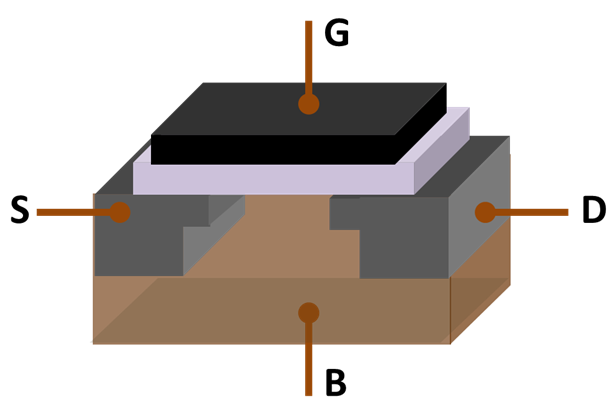
- November – The MOSFET (metal–oxide–semiconductor field-effect transistor), also known as the MOS transistor, is invented by Mohamed Atalla and Dawon Kahng at Bell Labs in the United States.[17][18] It revolutionizes the electronics industry,[19] becomes the fundamental building block of the Information Age[20] and goes on to become the most widely manufactured device in history.[21][22]
December
[edit]- December 1 – Cold War: Antarctic Treaty – 12 countries, including the United States and the Soviet Union, sign a landmark treaty that sets aside Antarctica as a scientific preserve and bans military activity on the continent (the first arms control agreement established during the Cold War).
- December 2 – Malpasset Dam in southern France collapses and water flows over the town of Fréjus, killing 412.
- December 8 – The life-boat Mona, based at Broughty Ferry in Scotland, capsizes during a rescue attempt with the loss of 8 lives.
- December 11 – Charles Robberts Swart is appointed the 11th Governor-General of the Union of South Africa.
- December 14 – Makarios III is selected as the first president of Cyprus.
Date unknown
[edit]- The Supremes girl group is founded as The Primettes in Detroit.
- Nylon pantyhose, or sheer tights, are first sold on the open market as 'Panti-Legs' by Glen Raven Knitting Mills in the United States.[23]
- The first known human with HIV dies in the Congo.[24]
- The current (as of 2024) design of the Japanese 10 yen coin is put into circulation.
- The Caspian tiger becomes extinct in Iran.
- The Henney Kilowatt goes on sale in the United States, becoming the first production electric car in almost three decades, but only 47 models will be sold in its 2-year production run.
- Car tailfin design reaches its apex in the United States with such as the Cadillac Eldorado, Chevrolet Impala second generation model, Dodge Silver Challenger and Imperial Crown Sedan.
- Sprite was created in West Germany by The Coca-Cola Company .
Births
[edit]| Births |
|---|
| January · February · March · April · May · June · July · August · September · October · November · December |


January
[edit]- January 1 – Azali Assoumani, President of the Comoros
- 2 January – Rajinder Gupta, Indian politician and industrialist
- January 4 – Vanity, Canadian singer and actress (d. 2016)[25]
- January 5 – Clancy Brown, American actor
- January 9 – Rigoberta Menchú, Guatemalan recipient of the Nobel Peace Prize[26]
- January 10 – Chris Van Hollen, American politician
- January 11 – Majed Abdullah, Saudi Arabian footballer
- January 16 – Sade, Nigerian-English singer[27]
- January 17
- Susanna Hoffs, American rock vocalist[28]
- Momoe Yamaguchi, Japanese singer[29]
- January 20
- Rusty Anderson, American guitarist
- Joel Rifkin, American serial killer[30]
- January 22 – Linda Blair, American actress[31]
- January 24
- Kevin Magee, American basketball player (d. 2003)[32]
- Jim Moir, English comedian
- January 27 –
- Cris Collinsworth, American professional football player and sports broadcaster
- Keith Olbermann, American news anchor and sportscaster[33]
- January 30
- Steve Augeri, American singer
- Jody Watley, African-American singer[34]
February
[edit]- February 5 – Jennifer Granholm, Canadian-American politician, 47th Governor of Michigan (2003–2011)[35]
- February 8
- Andrew Hoy, Australian equestrian
- Mauricio Macri, President of Argentina[36]
- February 9 – Joachim Kunz, East German Olympic weightlifter
- February 10 – Haku, Tongan wrestler
- February 13 – Benur Pashayan, Soviet Armenian Greco-Roman wrestler (d. 2019)
- February 14 – Renée Fleming, American soprano[37]
- February 16 – John McEnroe, American tennis player[38]
- February 18 – Jayne Atkinson, English-born American film, theatre and television actress
- February 22 – Kyle MacLachlan, American actor
- February 23 – Clayton Anderson, American astronaut[39]
- February 25 – Mike Peters, Welsh musician (d. 2025)
- February 26 – Rolando Blackman, Panamanian-American basketball player[40]
March
[edit]- March 3 – Ira Glass, American radio personality
- March 4 – Irina Strakhova, Russian race walker
- March 5 – Vazgen Sargsyan, 8th Prime Minister of Armenia (d. 1999)
- March 6
- Tom Arnold, American actor and comedian
- Lawrence R. Jacobs, American political scientist and professor
- March 7
- Donna Murphy, American actress and singer
- Tom Lehman, American golfer
- March 8
- Aidan Quinn, Irish-American actor
- Lester Holt, American journalist and news anchor
- March 9 – Takaaki Kajita, Japanese nuclear physicist, recipient of the Nobel Prize in Physics[41]
- March 11 – Dejan Stojanović, Serbian-American poet, writer, essayist and businessman
- March 13 – Kathy Hilton, American socialite and philanthropist[42]
- March 14 – Tamara Tunie, American actress
- March 15 – Eliot Teltscher, American tennis player[43]
- March 16 – Jens Stoltenberg, 27th Prime Minister of Norway[44]
- March 17 – Danny Ainge, American basketball executive and player
- March 18
- Luc Besson, French film producer, writer and director[45]
- Irene Cara, American singer and actress (d. 2022)[46]
- March 21 – Nobuo Uematsu, Japanese composer[47]
- March 22 – Matthew Modine, American actor
- March 26 – Catherine Keener, American actress
- March 28 – Laura Chinchilla, 49th president of Costa Rica[48]
- March 29 – Perry Farrell, American singer, songwriter and musician
- March 30 – Andrew Bailey, executive director banking and chief cashier at the Bank of England
April
[edit]- April 2
- Alberto Fernández, President of Argentina
- Badou Ezzaki, Moroccan football player and manager
- April 3 – David Hyde Pierce, American actor[49]
- April 7 – Rejoice Timire, Zimbabwean activist and politician (d. 2021)[50]
- April 10 – Babyface, American singer, songwriter, and record producer
- April 15
- Emma Thompson, English actress[51]
- Debra Livingston, American Lawyer
- Thomas F. Wilson, American actor
- April 16 – Alison Ramsay, Scottish field hockey player[52]
- April 17 – Sean Bean, British actor[53]
- April 21 – Robert Smith, lead vocalist of The Cure[54]
- April 22 – Ryan Stiles, American-Canadian comedian[55]
- April 24 – Paula Yates, British television presenter (d. 2000)[56]
- April 26 – Pedro Pierluisi, Governor of Puerto Rico
- April 27
- Sheena Easton, Scottish singer[57]
- Nicholas Kristof, American journalist and political commentator
- April 30
- Stephen Harper, 22nd Prime Minister of Canada[58]
- Paul Gross, Canadian actor, producer, director and writer
May
[edit]- May 1 – Yasmina Reza, French playwright, actress, novelist and screenwriter[59]
- May 3
- Uma Bharti, Chief Minister of Madhya Pradesh[60]
- Ben Elton, British comedian and writer[61]
- May 4 – Randy Travis, American singer
- May 9
- Christian Bach, Argentine-Mexican actress and producer of telenovelas (d. 2019)
- János Áder, President of Hungary[62]
- May 10
- Victoria Rowell, American actress
- Cindy Hyde-Smith, US Senator
- May 12 – Ving Rhames, African-American actor
- May 14
- Patrick Bruel, French singer
- Robert Greene, American author
- May 17 – Marcelo Loffreda, Argentine rugby player and coach
- May 20 – Israel Kamakawiwoʻole, Hawaiian singer (d. 1997)[63]
- May 21 – Loretta Lynch, American politician, 83rd United States Attorney General
- May 22 – Morrissey, British singer[64]
- May 23 – Bob Mortimer, English comedian, presenter, and actor
- May 24 – Pelle Lindbergh, Swedish-born hockey player (d. 1985)
- May 25 – Julian Clary, English actor, comedian, novelist and presenter
- May 27 – Donna Strickland, Canadian physicist, recipient of the Nobel Prize in Physics[65]
- May 29
- Rupert Everett, British actor[66]
- Gretchen, Brazilian singer and media personality[67]
- May 30 – Phil Brown, English association football manager
June
[edit]- June 6 – Colin Quinn, American comedian and actor
- June 7 – Mike Pence, American politician and former Vice President of the United States
- June 9 – Paul Graham, Canadian television producer[68]
- June 10
- Carlo Ancelotti, Italian football player and manager
- Eliot Spitzer, American politician and governor of New York
- June 11 – Hugh Laurie, British actor, comedian and musician[69]
- June 13
- Klaus Iohannis, President of Romania[70]
- Jim Irsay, American businessman and former owner of the Indianapolis Colts (d. 2025)
- June 14 – Marcus Miller, American musician, composer and producer
- June 16 – James Brian Hellwig (The Ultimate Warrior), American professional wrestler and bodybuilder (d. 2014)
- June 17 – Ulrike Richter, German swimmer
- June 19
- Anne Hidalgo, French politician, Mayor of Paris (2014–present)
- Christian Wulff, Federal President of Germany[71]
- June 21
- Guerrinha, Brazilian basketball coach and basketball player
- Marcella Detroit, American soprano vocalist, guitarist and songwriter
- Louis Febre, Mexican composer
- Kathy Mattea, American musician and activist
- June 22 – Wayne Federman, American comedian, actor and author
- June 25 – Paris Themmen, American actor and businessman
- June 27
- Khadja Nin, Burundian singer and musician
- Pétur Pétursson, Icelandic footballer
- Lorrie Morgan, American musician
- June 29 – Gina Alajar, Filipino film and television actress and television director
- June 30 – Vincent D'Onofrio, American actor
July
[edit]- July 1
- Mohamed Lemine Ould Guig, Mauritanian academic and political figure
- Giovanni D'Aleo, Italian long-distance runner
- July 4 – Victoria Abril, Spanish actress and singer
- July 5
- María Concepción Navarrete, Mexican politician
- Marc Cohn, American singer-songwriter
- July 6 – Richard Dacoury, French basketball player
- July 7
- Barbara Krause, German swimmer
- Billy Campbell, American actor
- July 8
- Pauline Quirke, English actress
- Mikhail Zingarevich, Russian entrepreneur and philanthropist
- July 9
- Jim Kerr, Scottish rock singer (Simple Minds)
- Kevin Nash, American professional wrestler[72]
- July 11
- Richie Sambora, American musician
- Suzanne Vega, American singer
- July 12
- King Tupou VI of Tonga[73]
- Charlie Murphy, African-American actor and comedian (d. 2017)
- July 14
- Susana Martinez, American politician, Governor of New Mexico
- Lynn Bertholet, Swiss bank executive
- July 15 – Vincent Lindon, French actor and filmmaker
- July 19 – Juan J. Campanella, Argentinian filmmaker
- July 20 – Giovanna Amati, Italian racing driver
- July 24 – Markus Graf, Swiss ice hockey player, coach, and executive[74]
- July 25 – Fyodor Cherenkov, Russian footballer and manager (d. 2014)
- July 26 – Kevin Spacey, American actor
- July 29
- Sanjay Dutt, Indian actor
- Ruud Janssen, Dutch artist
- John Sykes, British guitarist (d. 2024)
- July 30 − Abdullah of Pahang, sixteenth Yang di-Pertuan Agong of Malaysia
August
[edit]- August 3
- John C. McGinley, American actor
- Koichi Tanaka, Japanese scientist, recipient of the Nobel Prize in Chemistry[75]
- August 5 – Pete Burns, English singer, songwriter and television personality (d. 2016)
- August 6 – Rajendra Singh, Indian water conservationist, Magsaysay Award (2001)
- August 7 – Koenraad Elst, Belgian Indologist
- August 10 – Rosanna Arquette, American actress
- August 11 – Gustavo Cerati, Argentinian singer (d. 2014)[76]
- August 13 – Danny Bonaduce, American wrestler, actor and radio/television personality
- August 14
- Marcia Gay Harden, American actress
- Magic Johnson, African-American basketball player
- Bill Hagerty, US Senator
- August 15 – Scott Altman, American astronaut
- August 17
- Jonathan Franzen, American author
- David Koresh, American spiritualist, leader of the Branch Davidian religious cult (d. 1993)
- August 18
- Dorothy Bush Koch, American writer and philanthropist
- Winona LaDuke, Native American environmentalist, author and activist
- August 21 – Liza Araneta Marcos, First Lady of the Philippines and lawyer
- August 25
- Guglielmo Trinci, retired Italian professional baseball player[citation needed]
- Sönke Wortmann, German film director
- August 26 – Stan Van Gundy, American basketball coach and TV commentator[77]
- August 27
- Juan Fernando Cobo, Colombian artist
- Daniela Romo, Mexican singer, actress and TV hostess[78]
- August 28 – Arthur Holden, Canadian actor and writer
- August 29
- Rebecca De Mornay, American actress
- Chris Hadfield, Canadian retired astronaut
- August 30 – Mark Jackson, Australian rules footballer and actor
- August 31 – Tony DeFranco, Canadian singer
September
[edit]- September 2 – Guy Laliberté, Canadian Cirque du Soleil founder
- September 4
- Kevin Harrington, Australian actor
- Armin Kogler, Austrian ski jumper
- September 6 – Gaetano Varcasia, Italian voice actor and theatre director (d. 2014)
- September 7
- Pierre Nanterme, French business executive (d. 2019)
- Drew Weissman, American biochemist, recipient of the Nobel Prize in Physiology or Medicine[79]
- September 8
- Daler Nazarov, Tajik composer, singer and actor
- Kerry Kennedy, American human rights activist
- September 11 – John Hawkes, American actor
- September 12 – Sigmar Gabriel, German politician
- September 13
- Kathy Johnson, American artistic gymnast
- Chris Hansen, American journalist[80]
- September 14
- Morten Harket, Norwegian rock singer (A-ha)
- Mary Crosby, American actress and daughter of Bing Crosby
- September 16 – Peter Keleghan, Canadian actor
- September 17 – Olivia Lozano, Venezuelan politician[81]
- September 18
- Ian Bridge, Canadian soccer player
- Sérgio Britto, Brazilian singer and keyboardist
- Mark Romanek, American director
- Ryne Sandberg, American baseball player and manager (d. 2025)
- September 21
- Dave Coulier, American comedian
- Crin Antonescu, Acting President of Romania in 2012 and history teacher
- September 23
- Jason Alexander, American actor and comedian
- Elizabeth Peña, American actress (d. 2014)
- September 28 – Dantes Tsitsi, Nauruan politician
- September 29 – Jon Fosse, Norwegian Nynorsk novelist, dramatist and poet, recipient of the Nobel Prize in literature[82]
- September 30
- Ana Denicola, Uruguayan scientist[83]
- Ettore Messina, Italian basketball coach
October
[edit]- October 1 – Youssou N'Dour, Senegalese singer
- October 2 – Lena Hades, Russian artist
- October 3 – Fred Couples, American golfer
- October 4 – Chris Lowe, British musician[84]
- October 5 – Maya Lin, American designer and artist
- October 6
- Brian Higgins, American politician
- Walter Ray Williams Jr., American professional bowler
- Smash, American wrestler
- October 7
- Simon Cowell, English music producer and television talent show judge
- Dylan Baker, American actor
- October 8
- Erik Gundersen, Danish motorcycle racer
- Carlos I. Noriega, Peruvian-American colonel and astronaut
- October 9 – Boris Nemtsov, Russian politician (murdered 2015)
- October 10
- Kirsty MacColl, British singer-songwriter (d. 2000)
- Julia Sweeney, American actress and comedian[85]
- Bradley Whitford, American actor and producer
- October 13 – Marie Osmond, American singer
- October 15
- Emeril Lagasse, American chef and restaurant owner[86]
- Sarah, Duchess of York, British royal spouse
- October 17
- Francisco Flores Pérez, President of El Salvador (d. 2016)
- Norm Macdonald, Canadian comedian (d. 2021)
- October 18 – Mauricio Funes, 44th President of El Salvador (d. 2025)
- October 21 – Ken Watanabe, Japanese actor
- October 22 – Arto Salminen, Finnish writer (d. 2005)
- October 23
- "Weird Al" Yankovic, American singer and parodist
- Sam Raimi, American producer, writer and director
- October 24 – Michelle Lujan Grisham, American politician, governor and representative from New Mexico
- October 25 – Chrissy Amphlett, Australian rock singer (d. 2013)
- October 26
- Evo Morales, President of Bolivia
- Dimitris Tsiodras, Greek politician
- October 27 – Rick Carlisle, American basketball coach
- October 29 – John Magufuli, 5th President of Tanzania (d. 2021)
- October 31 – Neal Stephenson, American writer
November
[edit]- November 2 – Saïd Aouita, Moroccan athlete
- November 5 – Bryan Adams, Canadian singer and photographer
- November 10
- Mackenzie Phillips, American actress
- Mike McCarthy, American football coach
- November 11
- Parithi Ilamvazhuthi, Indian politician (d. 2018)
- Christian Schwarzenegger, Swiss legal scientist and professor
- November 14
- Deta Hedman, Jamaican-born English darts player
- Paul McGann, British actor
- November 18 – Jimmy Quinn, Northern Irish footballer
- November 19
- Allison Janney, American actress
- Rob Ashford, American stage director and choreographer
- November 20 – Sean Young, American actress
- November 23
- Dominique Dunne, American actress (d. 1982)
- Maxwell Caulfield, British actor
- November 25 – Charles Kennedy, British politician (d. 2015)[87]
- November 26 – Sergey Golovkin, Russian serial killer and rapist (d. 1996)[88]
- November 27 – Viktoria Mullova, Russian violinist
- November 28 – Judd Nelson, American actor
- November 29
- Rahm Emanuel, American politician
- Platon Lebedev, Russian executive
- Neal Broten, American professional ice hockey player[89]
- November 30
- Cherie Currie, singer, musician, actress, and artist
- Marie Currie, singer, songwriter, actress, and artist
- Sylvia Hanika, German tennis player[90]
December
[edit]- December 1 – Wally Lewis, Australian rugby league player
- December 3
- Kathy Jordan, American tennis player[91]
- Eamonn Holmes, Northern Irish television presenter
- December 4 – Christa Luding-Rothenburger, German speed skater
- December 5 – Yoshitomo Nara, Japanese artist
- December 6 – Satoru Iwata, Japanese president of Nintendo (d. 2015)
- December 11 – Li Gui-min, Taiwanese politician
- December 13 – Johnny Whitaker, American actor
- December 14 – Evan Ziporyn, American composer
- December 15 – Betsy Arakawa, American classical pianist
- December 17 – Gregg Araki, American director
- December 19 – Waise Lee, Hong Kong actor
- December 20
- Stephen Chan Chi Wan, general manager of TVB
- Kazimierz Marcinkiewicz, 51st Prime Minister of Poland
- December 21 – Florence Griffith Joyner, American athlete (d. 1998)
- December 22 – Bernd Schuster, German footballer and manager
- December 24 – Lee Daniels, American director and producer[92]
- December 25 – Michael P. Anderson, American astronaut (d. 2003)
- December 26
- Glenna Cabello, Venezuelan political scientist
- Hans Nielsen, Danish speedway rider
- December 28 – Ana Torroja, Spanish singer
- December 29
- Marco Antonio Solís, Mexican singer
- Patricia Clarkson, American actress
- Paula Poundstone, American stand-up comedian
- December 30 – Tracey Ullman, British-American comedian and actress
- December 31
- Val Kilmer, American actor (d. 2025)
- Baron Waqa, Nauruan politician and composer, 14th President of Nauru
Full date unknown
[edit]- Paul Zgheib, Lebanese photographer[93]
- Bernard Lavigne, French Judge
- Li Qiang, Premier of China since 2023
- Jorge Arroyo, Costa Rican writer
- Terry Smith, American sportsman
- Nina Hartley, American pornographic actress
- Peter Mullan, Scottish actor and filmmaker
Deaths
[edit]January
[edit]- January 9 – Giuseppe Bottai, Italian Fascist journalist and politician (b. 1895)
- January 10 – Colin Gregory, Australian tennis player (b. 1903)
- January 14
- Eivind Berggrav, Norwegian Lutheran bishop and reverend (b. 1884)
- G. D. H. Cole, English political theorist, economist and historian (b. 1889)[94]
- January 21
- Cecil B. DeMille, American film director (b. 1881)
- Frances Gertrude McGill, Canadian forensic pathologist (b. 1882)
- Carl "Alfalfa" Switzer, American actor (b. 1927)
- January 22
- Elisabeth Moore, American tennis champion (b. 1876)
- Mike Hawthorn, English racing driver (b. 1929)
February
[edit]

- February 3 – Killed in the crash of a private plane:
- The Big Bopper (J.P. Richardson), American rock singer (b. 1930)
- Buddy Holly, American rock singer (b. 1936)
- Ritchie Valens, American rock singer (b. 1941)
- February 4 – Una O'Connor, Irish actress (b. 1880)
- February 7 – D. F. Malan, South African politician, 4th Prime Minister of South Africa (b. 1874)[95]
- February 11 – Marshall Teague, American race car driver (b. 1921)
- February 12 – George Antheil, American composer (b. 1900)
- February 14 – Baby Dodds, American jazz musician (b. 1898)
- February 15 – Sir Owen Richardson, British physicist, Nobel Prize laureate (b. 1879)
- February 18 – Gago Coutinho, Portuguese aviation pioneer (b. 1869)
- February 22 – Helen Parrish, American actress (b. 1923)
- February 23 – Pierre Frieden, Luxembourgish politician and writer, 18th Prime Minister of Luxembourg (b. 1892)
- February 25 – Klawdziy Duzh-Dushewski, Soviet architect, diplomat and journalist (b. 1891)
- February 26
- Princess Alexandra, 2nd Duchess of Fife, eldest grandchild of King Edward VII (b. 1891)
- Kōtoku Satō, Japanese general (b. 1893)
- February 28
- Maxwell Anderson, American screenwriter (b. 1888)
- Beatrix Farrand, American gardener and architect (b. 1872)
March
[edit]

- March 1 – Mack Gordon, American composer and lyricist (b. 1904)
- March 2 – Eric Blore, English actor (b. 1887)
- March 3 – Lou Costello, American actor and comedian (b. 1906)
- March 4 – Maxie Long, American athlete (b. 1878)
- March 6
- Guido Brignone, Italian actor (b. 1886)
- Fred Stone, American actor (b. 1873)
- March 7 – Ichirō Hatoyama, Japanese politician, 36th Prime Minister of Japan (b. 1883)
- March 15
- Shalva Dadiani, Soviet novelist (b. 1874)
- Lester Young, American jazz saxophonist (b. 1909)
- March 17 – Galaktion Tabidze, Georgian poet (b. 1891)[96]
- March 19 – Umberto Barbaro, Italian critic (b. 1902)
- March 23 – Dominick Trcka, Czechoslovak Roman Catholic priest and blessed (b. 1886)
- March 24 – Abd al-Rahman al-Mahdi, Sudanese political figure and religious leader, Imam of the Ansar and 1st Prime Minister of Sudan (b. 1885)
- March 26 – Raymond Chandler, American-born novelist (b. 1888)
- March 28 – Lyubov Golanchikova, Soviet pilot (b. 1889)
- March 29 – Barthélemy Boganda, 1st Prime Minister of the Central African Republic (b. 1910)
April
[edit]
- April 2 – Nicholas Charnetsky, Soviet Orthodox priest, bishop, martyr and blessed (b. 1884)
- April 8 – Jonathan Zenneck, German physicist and electrical engineer (b. 1871)[97]
- April 9 – Frank Lloyd Wright, American architect (b. 1867)
- April 18 – Irving Cummings, American actor (b. 1888)
- April 26 – Ki Hajar Dewantara, founder of Taman Siswa school, first Minister of Education of Indonesia (b. 1889)
- April 28 – María Guggiari Echeverría, Paraguayan Roman Catholic religious professed and venerable (b. 1925)
- April 29 – Sir Kenneth Anderson, British general (b. 1891)
May
[edit]
- May 5
- Georges Grente, French Roman Catholic cardinal and eminence (b. 1872)
- Carlos Saavedra Lamas, Argentine politician, recipient of the Nobel Peace Prize (b. 1878)
- May 8
- Renato Caccioppoli, Italian mathematician (b. 1904)
- Ibrahim of Johor, Malaysian sultan (b. 1873)
- May 11 – Marcella Albani, Italian actress (b. 1899)
- May 14 – Sidney Bechet, American-born jazz saxophonist (b. 1897)
- May 17 – George Albert Smith, English film pioneer (b. 1864)
- May 18
- Apsley Cherry-Garrard, Antarctic explorer (b. 1886)
- Enrique Guaita, Argentinian footballer (b. 1910)
- May 20 – Alfred Schütz, Austrian sociologist (b. 1899)
- May 24 – John Foster Dulles, 52nd United States Secretary of State (b. 1888)
- May 29 – Ed Walsh, American baseball player (b. 1881)
June
[edit]

- June 1 – Sax Rohmer, English author (b. 1883)
- June 4 – Charles Vidor, American director (b. 1900)
- June 8 – Pietro Canonica, Italian sculptor (b. 1869)
- June 9 – Adolf Windaus, German chemist, Nobel Prize laureate (b. 1876)
- June 13 – Seán Lester, Irish diplomat (b. 1888)[98]
- June 14 – Jerónimo Méndez, Chilean politician, acting President of the Republic (b. 1887)
- June 15 – Kazimierz Bein, Polish ophthalmologist (b. 1872)
- June 16 – George Reeves, American television actor (b. 1914)
- June 18
- Ethel Barrymore, American stage and screen actress (b. 1879)
- Vincenzo Cardarelli, Italian poet (b. 1887)
- June 20
- Hitoshi Ashida, Japanese politician, 34th Prime Minister of Japan (b. 1887)
- Sir Ian Clunies Ross, Australian scientist (b. 1899)[99]
- June 22 – Bruce Harlan, American Olympic diver (b. 1926)
- June 23
- Cesare Maria De Vecchi, Italian soldier (b. 1884)
- Boris Vian, French writer, poet, singer and musician (b. 1920)
- June 27
- Elias, Duke of Parma (b. 1880)
- Giovanni Pastrone, Italian actor, director and screenwriter (b. 1883)
- June 30 – José Vasconcelos, Mexican politician, writer and philosopher (b. 1882)
July
[edit]

- July 2 – Sergei Chetverikov, Russian biologist (b. 1880)
- July 3 – Johan Bojer, Norwegian novelist and dramatist (b. 1872)
- July 6 – George Grosz, German artist (b. 1893)
- July 7
- Hermenegildo Anglada Camarasa, Spanish painter (b. 1871)
- Ernest Newman, English music critic (b. 1868)[100]
- July 14 – Grock, Swiss clown (b. 1880)
- July 15
- Ernest Bloch, Swiss-born American composer (b. 1880)
- Agostino Gemelli, Italian Franciscan friar and reverend (b. 1878)
- July 17 – Billie Holiday, American singer (b. 1915)[101]
- July 20 – William D. Leahy, American admiral (b. 1875)
- July 25
- Yitzhak HaLevi Herzog, Polish-born Chief Rabbi of Ireland, and later of Israel (b. 1888)
- King Mutara III of Rwanda (b. 1911)
- July 27 – Aleksandar Tsankov, 21st Prime Minister of Bulgaria (b. 1879)
- July 30 – María Natividad Venegas de la Torre, Mexican Roman Catholic nun and saint (b. 1868)
August
[edit]
- August 4 – Ioan Bălan, Romanian Orthodox prelate (b. 1880)
- August 6 – Preston Sturges, American film director and writer (b. 1898)
- August 8
- Albert Namatjira, Australian Aboriginal artist (b. 1902)
- Luigi Sturzo, Italian Roman Catholic priest and politician (b. 1871)
- August 9 – Emil František Burian, Czechoslovak poet (b. 1904)
- August 16
- William Halsey Jr., American US Navy Fleet admiral (b. 1882)[102]
- Wanda Landowska, Polish harpsichordist (b. 1879)
- August 19 – Blind Willie McTell, American Piedmont blues singer and guitarist (b. 1901)
- August 21 – Sir Jacob Epstein, American-born British sculptor (b. 1880)
- August 28
- Raphael Lemkin, Polish lawyer (b. 1900)
- Bohuslav Martinů, Czech composer (b. 1890)
September
[edit]

- September 6
- Edmund Gwenn, English actor (b. 1877)
- Kay Kendall, English actress (b. 1927)
- September 7 – Maurice Duplessis, Premier of Quebec (b. 1890)
- September 9 – Ramón Fonst, Cuban fencer (b. 1883)
- September 11 – Paul Douglas, American actor (b. 1907)
- September 14 – Wayne Morris, American actor (b. 1914)
- September 18 – Adolf Ziegler, German painter (b. 1892)
- September 20 – Nikandr Chibisov, Russian commander (b. 1892)
- September 22
- Josef Matthias Hauer, Austrian composer and music theorist (b. 1883)
- Edmund Ironside, 1st Baron Ironside, British field marshal (b. 1880)
- September 24 – Wolfgang Paalen, German-Austrian-Mexican painter, sculptor and art philosopher (b. 1905)
- September 25 – Helen Broderick, American actress (b. 1891)
- September 26 – S. W. R. D. Bandaranaike, 4th Prime Minister of Ceylon (b. 1899)
- September 28
- Rudolf Caracciola, German racing driver (b. 1901)
- Vinnie Richards, American tennis player (b. 1903)
- September 30 – Taylor Holmes, American actor (b. 1878)
October
[edit]

- October 1 – Enrico De Nicola, Italian jurist, politician and journalist, 1st President of Italy (b. 1877)
- October 3 – Sakiko Kanase, Japanese hostess, model, and teacher (b. 1935)
- October 6 – Bernard Berenson, American art historian (b. 1865)
- October 7 – Mario Lanza, American tenor (b. 1921)
- October 9 – Shirō Ishii, Japanese microbiologist and lieutenant general of Unit 731 (b. 1892)
- October 14 – Errol Flynn, Australian actor (b. 1909)
- October 15 – Stepan Bandera, Ukrainian nationalist leader (b. 1909)
- October 16 – George C. Marshall, United States Secretary of State, recipient of the Nobel Peace Prize (b. 1880)
- October 18 – Boughera El Ouafi, Algerian athlete (b. 1903)
- October 19 –
- Ebrahim Hakimi, 29th Prime Minister of Iran (b. 1869)
- Josef Hoop, Prime Minister of Liechtenstein (b. 1895)
- October 20 – Werner Krauss, German actor (b. 1884)
- October 22 – Joseph Cahill, Australian politician (b. 1891)
- October 28 – Camilo Cienfuegos, Cuban revolutionary (b. 1932)
- October 29 – King Sisavang Vong of Laos (b. 1885)[103]
November
[edit]

- November 1 – Zhang Jinghui, Chinese general and politician, Prime Minister of Manchukuo (b. 1871)
- November 2 – Federico Tedeschini, Italian Roman Catholic cardinal and eminence (b. 1873)
- November 4
- George of Drama, Greek Orthodox priest, elder and saint (b. 1901)[104]
- Friedrich Waismann, Austrian mathematician, physicist and philosopher (b. 1896)
- November 6
- José P. Laurel, Filipino politician and judge, 3rd President of the Philippines (b. 1891)
- Ivan Leonidov, Russian architect (b. 1902)
- November 7 – Victor McLaglen, English actor and boxer (b. 1886)
- November 10 – Lupino Lane, British actor (b. 1892)
- November 15 – Charles Thomson Rees Wilson, Scottish physicist, Nobel Prize laureate (b. 1869)
- November 17 – Heitor Villa-Lobos, Brazilian composer (b. 1887)
- November 20 – Alfonso López Pumarejo, 2-time President of Colombia (b. 1886)
- November 21 – Max Baer, American boxer and actor (b. 1909)
- November 22 – Molla Mallory, American tennis champion (b. 1884)
- November 24
- Stepan Erzia, Russian sculptor (b. 1876)
- Ion Gigurtu, 42nd Prime Minister of Romania (b. 1886)
- November 25 – Gérard Philipe, French actor (b. 1922)
December
[edit]
- December 3 – Juozapas Skvireckas, Soviet Orthodox archbishop and reverend (b. 1873)
- December 4 – Hubert Marischka, Austrian film director (b. 1882)
- December 7
- Charlie Hall, English actor (b. 1899)
- Prince Kuni Asaakira (b. 1901)
- December 11 – Jim Bottomley, American baseball player (b. 1900)
- December 14 – Stanley Spencer, British painter (b. 1891)
- December 19 – Andrés Martínez Trueba, 31st President of Uruguay (b. 1884)
- December 22 – Gilda Gray, Polish-born dancer and actress (b. 1901)
- December 23 – Edward Wood, 1st Earl of Halifax, British politician (b. 1881)
- December 28 – Ante Pavelic, Croatian fascist leader and WWII war criminal (b. 1889)
Unknown
[edit]- Al-Abbas ibn Ibrahim as-Samlali, Moroccan historian (b. 1877)
- Elena Săcălici, Romanian artistic gymnast (b. 1935)
Nobel Prizes
[edit]Notes
[edit]References
[edit]- ^ Handbook on the Cuban Armed Forces. DIA. 1979. p. 1.
- ^ Anderson, Sonja. "On This Day in 1959, Alaska—One of America's Riskiest Investments—Became the 49th State in the Union". Smithsonian Magazine. Retrieved September 4, 2025.
- ^ "The Suvadive Revolt – Addu 1959". Archived from the original on August 12, 2004.
- ^ "The inauguration of Charles de Gaulle". elysee.fr. January 21, 2019. Retrieved September 14, 2025.
- ^ Lera, José (January 10, 1999). "40 años de la tragedia de Ribadelago, en la que murieron 144 personas". El País (in Spanish). Zamora: PRISA. Retrieved September 12, 2018.
- ^ "Today in History". Washington Post Express. January 25, 2012. p. 26.
- ^ "Three Rescue Vessels Reach Ship-Iceberg Collision Scene". Tribune. Oakland. January 31, 1959. p. 1.
- ^ admin (March 5, 2025). "The Dalai Lama's escape to India". Tibetian Refugee Health. Retrieved September 27, 2025.
- ^ "21 Die as Jet Hits School on Okinawa", Oakland Tribune, June 30, 1959, p1
- ^ "Records set by the RAF". Air of Authority – A History of RAF Organisation. Archived from the original on August 12, 2011. Retrieved June 10, 2012.
- ^ "Iraq revolt is Still Reported Raging". St. Petersburg Times. St. Petersburg, FL. July 21, 1959. p. A1. Archived from the original on January 28, 2020. Retrieved June 27, 2012.
- ^ Warner, Denis (1964). The Last Confucian: Vietnam, South-East Asia, and the West. Sydney: Angus and Robertson. pp. 112–114.
- ^ "Beijing Workers Stadium". The Stadium Guide. Retrieved August 17, 2018.
- ^ "Beijing Workers Stadium". Theatre Beijing. Retrieved August 17, 2018.
- ^ "Les BD oubliées D'Astérix". BDoubliées (in French). Retrieved October 3, 2013.
- ^ "Ben-Hur (1959)". The American Film Institute Catalog of Motion Pictures. American Film Institute. Retrieved December 25, 2024.
- ^ "1960 – Metal Oxide Semiconductor (MOS) Transistor Demonstrated". The Silicon Engine. Computer History Museum.
- ^ Bassett, Ross Knox (2007). To the Digital Age: Research Labs, Start-up Companies and the Rise of MOS Technology. Johns Hopkins University Press. p. 22. ISBN 9780801886393.
- ^ Chan, Yi-Jen (1992). Studies of InAIAs/InGaAs and GaInP/GaAs heterostructure FET's for high speed applications. University of Michigan. p. 1.
The Si MOSFET has revolutionized the electronics industry and as a result impacts our daily lives in almost every conceivable way.
- ^ Wong, Kit Po (2009). Electrical Engineering. Vol. II. EOLSS Publications. p. 7. ISBN 9781905839780.
- ^ "13 Sextillion & Counting: The Long & Winding Road to the Most Frequently Manufactured Human Artifact in History". Computer History Museum. March 2, 2018. Retrieved July 28, 2019.
- ^ Baker, R. Jacob (2011). CMOS: Circuit Design, Layout and Simulation. John Wiley & Sons. p. 7. ISBN 978-1118038239.
- ^ Gant, Margaret Elizabeth (1979). The Raven's Story. Glen Raven, NC: Glen Raven, Inc. ISBN 0-9603138-0-X.
- ^ Zhu, T.; Zhu, Tuofu; Korber, Bette T.; Nahmias, Andre J.; Hooper, Edward; Sharp, Paul M. (1998). "An African HIV-1 sequence from 1959 and implications for the origin of the epidemic". Nature. 391 (6667): 594–597. Bibcode:1998Natur.391..594Z. doi:10.1038/35400. PMID 9468138. S2CID 4416837.
- ^ "Vanity 6 Lives Out Daring Fantasies on Stage". Jet. Johnson Publishing Company. January 24, 1983. Retrieved February 18, 2016.
- ^ "UPI Almanac for Thursday, Jan. 9, 2020". United Press International. January 9, 2020. Archived from the original on January 15, 2020. Retrieved January 15, 2020.
- ^ Graham Betts, ed. (2005). Complete UK Hit Albums 1956-2005. Collins. p. 352. ISBN 9780007205325.
- ^ Joel Whitburn (2007). Joel Whitburn presents Billboard top adult songs, 1961-2006: chart data compiled from Billboard's adult contemporary charts, 1961-2006, and adult top 40 charts, 1996-2006. Record Research Incorporated. p. 20. ISBN 9780898201697.
- ^ "60岁了,她依然是这世界最让人怀念的少女".
- ^ "Joel Rifkin - Serial Killer, House & Seinfeld". Biography. October 3, 2023. Retrieved July 24, 2025.
- ^ Paul T Hellmann (2006). Historical Gazetteer of the United States. Taylor & Francis. p. 642. ISBN 9781135948597.
- ^ "Kevin Magee International Stats". Basketball-Reference.com.
- ^ H.W. Wilson Company (2009). "Current Biography Yearbook". Current Biography Yearbook: Annual Cumulation. H. W. Wilson Company. ISSN 0084-9499. Retrieved July 11, 2022.
- ^ Gregory, Hugh (July 2, 2010). Soul Music A-Z. Da Capo Press. ISBN 9780306806438. Retrieved September 10, 2016.
- ^ "Jennifer Granholm (2021-2025) | Miller Center". millercenter.org. September 29, 2021. Retrieved January 26, 2025.
- ^ "Biografía del Presidente Mauricio Macri". Casa Rosada (in European Spanish). Archived from the original on July 20, 2018. Retrieved July 20, 2018.
- ^ Chase's Calendar of Events 2020: The Ultimate Go-to Guide for Special Days, Weeks and Months. Bernan Press. 2019. p. 130. ISBN 9781641433167.
- ^ "John McEnroe". ATP World Tour. Retrieved February 26, 2023.
- ^ "Clayton Anderson". www.esa.int. Retrieved January 26, 2025.
- ^ "Rolando Blackman Biography". ESPN. Retrieved January 26, 2025.
- ^ "Takaaki Kajita – Facts". Nobel Foundation. October 6, 2015. Retrieved October 6, 2015.
- ^ Oppenheimer, Jerry (2006). House of Hilton. Crown Publishing. ISBN 9780307351951.
- ^ "Eliot Teltscher | Overview | ATP Tour | Tennis". ATP Tour.
- ^ "NATO Biography for Jens Stoltenberg, Secretary General". NATO Publications. May 18, 2017. Archived from the original on June 6, 2017. Retrieved May 18, 2017.
- ^ Fifty Contemporary Filmmakers. Routledge. 2002. p. 58. ISBN 9780415189743.
- ^ Staff | Obituaries (November 29, 2022). "Irene Cara, Oscar-winning singer and actress who sang the feel-good theme songs to Fame and Flashdance – obituary". The Telegraph. Archived from the original on November 29, 2022. Retrieved December 12, 2022.
- ^ "N's profile". Square Enix USA. Archived from the original on May 17, 2008. Retrieved June 1, 2008.
- ^ "Biography". CIDOB Foundation (in Spanish). Retrieved February 26, 2023.
- ^ Chase's Calendar of Events 2020: The Ultimate Go-to Guide for Special Days, Weeks and Months. Bernan Press. 2019. p. 207. ISBN 9781641433167.
- ^ "Senator Rejoice Timire Dies". The Zimbabwe Mail. August 11, 2021. Archived from the original on November 18, 2023. Retrieved November 18, 2023.
- ^ Rebecca Flint Marx (2013). "Emma Thompson". Movies & TV Dept. The New York Times. Archived from the original on October 16, 2013. Retrieved October 12, 2013.
- ^ "Alison Ramsay MBE at the British Olympic Committee". Archived from the original on August 30, 2007. Retrieved June 16, 2007.
- ^ Film Review: Special. Visual Imagination Limited. 2005. p. 96.
- ^ Apter, Jeff, Never Enough: The Story of The Cure, (2009) Omnibus Press, pp. 3–4; ISBN 978-1-84772-739-8
- ^ Chase's Calendar of Events 2023: The Ultimate Go-to Guide for Special Days, Weeks and Months. Bernan Press. 2022. p. 235. ISBN 9781636710693.
- ^ "Paula Yates" Archived 27 February 2016 at the Wayback Machine. The Telegraph (18 September 2000). Retrieved 3 October 2020.
- ^ Chase's Calendar of Events 2020: The Ultimate Go-to Guide for Special Days, Weeks and Months. Bernan Press. 2019. p. 245. ISBN 9781641433167.
- ^ Prime Ministers of Canada Gr. 4-8. On The Mark Press. 2006. p. 67. ISBN 1-55035-721-2.
- ^ "Notice de personne". BNF (in French). Retrieved February 26, 2023.
- ^ Rajamani, R. C (2000). Portraits of India's Parliamentarians for the New Millennium: Lok Sabha. Gyan Publishing House. p. 307. ISBN 9788121206921.
- ^ "Ben Elton". British Comedy Guide. Retrieved November 13, 2020.
- ^ B. Turner, ed. (2017). The Statesman's Yearbook 2014: The Politics, Cultures and Economies of the World. Palgrave Macmillan UK. p. 587. ISBN 9781349596430.
- ^ Kekoa Enomoto, Catherine; Kakesako, Gregg K. (June 26, 1997). "'IZ' Will Always Be". Honolulu Star-Bulletin.
- ^ Simpson, Mark (2004). Saint Morrissey. London: SAF Publishing. p. 32. ISBN 0-946719-65-9.
- ^ "Donna Strickland – Facts – 2018". Nobel Foundation. October 6, 2018. Retrieved October 6, 2018.
- ^ Brian McFarlane (May 29, 1959). "Everett, Rupert (1959-) Biography". BFI Screenonline. Retrieved September 17, 2022.
- ^ Ferreira, Caroline (May 29, 2024). "Gretchen faz 65 anos e compartilha reflexão: "Cheia de energia"" (in Brazilian Portuguese). CNN Brasil. Retrieved October 10, 2024.
- ^ "Paul Graham: IIHF Media Award". International Ice Hockey Federation. May 25, 2025. Retrieved May 28, 2025.
- ^ Chase's Calendar of Events 2020: The Ultimate Go-to Guide for Special Days, Weeks and Months. Bernan Press. 2019. p. 318. ISBN 9781641433167.
- ^ B. Turner, ed. (2017). The Statesman's Yearbook 2014: The Politics, Cultures and Economies of the World. Palgrave Macmillan UK. p. 997. ISBN 9781349596430.
- ^ B. Turner, ed. (2017). The Statesman's Yearbook 2014: The Politics, Cultures and Economies of the World. Palgrave Macmillan UK. p. 516. ISBN 9781349596430.
- ^ Hofstede, David (1999). Wrestling's Greatest Heroes and Villains. ECW Press. ISBN 9780823934928. Retrieved January 14, 2022.
- ^ "The Monarch". Consulate of the Kingdom of Tonga. Archived from the original on February 6, 2023. Retrieved March 1, 2023.
- ^ "Markus Graf (SUI)". International Ice Hockey Federation. May 25, 2024. Retrieved November 19, 2024.
- ^ Nobel Prize Announcement (Shimadzu Corporation)
- ^ "Gustavo Cerati, a Star of South America's Pop Scene, Dies at 55". The New York Times. September 8, 2014. Retrieved February 28, 2023.
- ^ "Stan Van Gundy". basketball-reference.com. Retrieved May 4, 2014.
- ^ Camila Diaz (December 18, 2018). "Daniela Romo". Historia-Biografia.com. Retrieved August 24, 2019.
- ^ Gallagher, James (October 2, 2023). "Nobel Prize goes to scientists behind mRNA Covid vaccines". BBC News. Retrieved October 2, 2023.
- ^ Chris Hansen Social Blade, retrieved July 1, 2020
- ^ "Olivia Lozano". Poderopedia. Archived from the original on February 4, 2024. Retrieved April 10, 2021.
- ^ Glynn, Paul (October 5, 2023). "Jon Fosse: 'Innovative' Norwegian author and playwright wins Nobel Literature Prize". BBC News. Retrieved October 6, 2023.
- ^ "Ana Denicola". ianas.org. Inter-American Network of Academics of Sciences. Archived from the original on November 17, 2017. Retrieved November 17, 2017.
- ^ "Pet Shop Boys Official Site, History Section". Petshopboys.co.uk. Archived from the original on May 17, 2016. Retrieved October 28, 2010.
- ^ "Julia Trust Sweeney United States Public Records". FamilySearch. Retrieved February 21, 2015.
- ^ "Emeril Lagasse Biography". A&E Television Networks. Archived from the original on October 7, 2006. Retrieved July 5, 2007.
- ^ "Charles Kennedy obituary". The Guardian. June 2, 2015. Retrieved May 31, 2021.
- ^ "Slaughter-House. Серийные убийцы. Биография Сергея Головкина". Archived from the original on March 6, 2009. Retrieved April 20, 2024.
- ^ Biographical information and career statistics from
- ^ "Sylvia Hanika". Women's Tennis Association.
- ^ "Kathy Jordan". Women's Tennis Association.
- ^ "Lee Daniels biography". TV Guide. Retrieved March 17, 2014.
- ^ "Espace Artistique Polyvalent". SD Space Concept & Design. November 13, 2006. Archived from the original on November 13, 2006. Retrieved June 17, 2024.
- ^ "G. D. H. Cole". The Times. London. January 15, 1959.
- ^ "D. F. Malan, S. African Racist, Dies". Hartford Courant. February 8, 1959. p. 5. Retrieved February 18, 2018 – via Newspapers.com.
- ^ Rayfield, Donald (2000), The Literature of Georgia: A History, pp. 251–4. Routledge, ISBN 0-7007-1163-5
- ^ "Cuxhaven – Jonathan Zenneck". statues.vanderkrogt.net.
- ^ "The Dictionary of Ulster Biography". www.newulsterbiography.co.uk.
- ^ Schedvin, C. B. "Sir William Ian Clunies Ross (1899–1959)". Australian Dictionary of Biography. National Centre of Biography, Australian National University – via Australian Dictionary of Biography.
- ^ "Ernest Newman". May 14, 2020.
- ^ New York Times (The) (July 18, 1959). "Billie Holiday Dies Here at 44 – Jazz Singer Had Wide Influence". The New York Times. Vol. 108, no. 37065 (Late City ed.). p. 15. Retrieved November 25, 2013 – via TimesMachine.
- ^ "Admiral Halsey dies; beat Japanese fleet". Milwaukee Journal. Associated Press. August 17, 1959. p. 4, part 1.[permanent dead link]
- ^ "1959: Sisavang Vong: King of Laos who had around 15 Wives and 50 Children". October 28, 2019.
- ^ "Saint George Karslides of Drama". Monastiriaka.
from Grokipedia
1959 marked a year of profound geopolitical realignments and technological innovations amid escalating Cold War rivalries. On January 1, Cuban dictator Fulgencio Batista fled Havana as Fidel Castro's rebel forces triumphed in the Cuban Revolution, paving the way for Castro's assumption of power and the subsequent nationalization of industries, which strained relations with the United States and drew Cuba into the Soviet orbit. The United States expanded its territory with Alaska's admission as the 49th state on January 3 and Hawaii's as the 50th on August 21, altering its strategic footprint in the Pacific and Arctic.[1]
Ideological confrontations intensified, exemplified by the July 24 "Kitchen Debate" in Moscow, where U.S. Vice President Richard Nixon and Soviet Premier Nikita Khrushchev clashed over the merits of capitalism versus communism during an exhibition of American consumer goods, underscoring divergent visions of prosperity and governance. In science and engineering, Bell Labs researchers Mohamed Atalla and Dawon Kahng demonstrated the first metal-oxide-semiconductor field-effect transistor (MOSFET) in December, a breakthrough enabling the miniaturization and proliferation of electronic devices that underpin contemporary computing.[2] Space achievements highlighted the era's competitive fervor, including the Soviet Luna 1 probe's escape from Earth's gravity toward the Moon in January and the U.S. Explorer 6 satellite's transmission of the first Earth photos from orbit in August.[3]
Culturally, the year witnessed tragedies like the February 3 plane crash killing musicians Buddy Holly, Ritchie Valens, and The Big Bopper—coined "the day the music died"—which reverberated through rock 'n' roll, while architectural landmarks such as the Guggenheim Museum opened in New York, symbolizing modernist ambition.[3] Globally, events like the signing of the Antarctic Treaty in December reserved the continent for peaceful scientific use, reflecting rare superpower cooperation, though underlying tensions persisted amid decolonization struggles and natural disasters such as Typhoon Vera's devastation in Japan.[1]
On March 3, the United States launched Pioneer 4 aboard a Juno II rocket from Cape Canaveral, Florida, achieving the first American spacecraft escape from Earth's gravity to enter a heliocentric orbit. The probe conducted a lunar flyby on March 4, passing within approximately 60,000 kilometers of the Moon's surface while transmitting data on radiation levels until its batteries depleted after 82 hours.[20][21] Tensions in Tibet, under Chinese occupation since 1950, erupted on March 10 when thousands of residents in Lhasa protested against the People's Republic of China, surrounding the Dalai Lama's Norbulingka summer palace to prevent his abduction following rumors of a deceptive invitation to a Chinese theatrical performance. The demonstrations, fueled by opposition to land reforms and cultural suppression imposed by Beijing, escalated into armed clashes between Tibetan fighters and the People's Liberation Army.[22][23] On March 17, after Chinese artillery shells struck near the palace, the 14th Dalai Lama, Tenzin Gyatso, then aged 23, escaped Lhasa in disguise as a soldier, accompanied by family members, officials, and guards. His caravan traversed rugged terrain over the Himalayas, evading patrols, and reached the Indian border on March 31, where he was granted asylum. The flight symbolized the collapse of Tibetan resistance in central regions and initiated a diaspora, with the Dalai Lama establishing a government-in-exile in India.[24][25] Chinese forces crushed the Lhasa uprising by late March, employing artillery and infantry assaults that razed parts of the city and resulted in heavy Tibetan losses. Casualty figures remain disputed, with the Tibetan government-in-exile estimating over 86,000 deaths in central Tibet during the suppression, based on captured documents and eyewitness accounts, while Chinese state reports claim far fewer fatalities and attribute deaths primarily to rebels. The event marked a turning point, accelerating the imposition of communist policies across Tibet and prompting international scrutiny of Beijing's rule, though Western responses were limited by Cold War geopolitics.[26][27]
Events
January
On January 1, 1959, Cuban dictator Fulgencio Batista fled Havana aboard a flight to exile in the Dominican Republic as advancing rebel forces of Fidel Castro's 26th of July Movement seized control of the capital, culminating the Cuban Revolution that had begun in 1956.[1] [4] Rebel troops under commanders Raúl Castro and Camilo Cienfuegos entered Havana unopposed on January 2, consolidating power amid widespread popular support against Batista's corrupt regime marked by economic inequality and political repression. Castro, leading the main rebel column from Santiago de Cuba, arrived triumphantly in Havana on January 8, where he was greeted by massive crowds; he assumed the role of commander-in-chief of the armed forces while Manuel Urrutia was appointed provisional president. [5] On January 2, the Soviet Union launched Luna 1 from the Baikonur Cosmodrome, the first spacecraft designed for a lunar impact mission as part of the Luna program.[6] The probe achieved escape velocity but missed its intended lunar trajectory due to a ground control error, passing within 5,995 to 6,000 kilometers of the Moon on January 4 before entering a heliocentric orbit around the Sun, becoming the first human-made object to do so and earning the designation of an artificial planet from Soviet scientists.[6] [7] January 8 also marked the inauguration of Charles de Gaulle as the first president of France's Fifth Republic, following a constitutional referendum in October 1958 that strengthened executive powers amid the Algerian crisis and the collapse of the Fourth Republic.[8] [9] De Gaulle, who had previously led the Free French Forces during World War II, was elected by an electoral college and tasked with stabilizing the government while addressing decolonization challenges.[9] On January 25, American Airlines inaugurated the first scheduled transcontinental jet passenger service in the United States with a Boeing 707-123 flying from Los Angeles to New York Idlewild Airport in under four hours, ushering in the commercial jet age and reducing transcontinental travel time significantly compared to propeller-driven aircraft.[10] [11] The flight carried 110 passengers and marked a milestone in aviation technology, with the 707's Pratt & Whitney JT3C turbojet engines enabling speeds over 600 miles per hour.[11]February
On February 1–2, nine experienced Soviet ski hikers from the Ural Polytechnical Institute died under mysterious circumstances in the northern Ural Mountains near Kholat Syakhl, known as Dead Mountain. The group, led by Igor Dyatlov, had pitched their tent on a slope during a winter expedition; investigators later found the tent slashed from the inside, with the hikers' bodies scattered downhill, some partially unclothed and showing signs of trauma but no external wounds sufficient to cause death. Hypothermia and possible blunt force injuries were officially cited, though theories including avalanches, infrasound-induced panic, or military involvement have persisted without conclusive evidence.[12][13] On February 3, a chartered Beechcraft Bonanza airplane crashed shortly after takeoff from Mason City Municipal Airport in Iowa, killing rock and roll musicians Buddy Holly, Ritchie Valens, J.P. "The Big Bopper" Richardson, and pilot Roger Peterson. The flight was part of the Winter Dance Party tour amid harsh winter conditions; the crash, occurring in a cornfield about five miles northwest of the airport, was attributed to pilot disorientation in poor visibility and inadequate weather briefing, with no evidence of mechanical failure beyond possible spatial disorientation. The event, later termed "the day the music died" in Don McLean's 1971 song "American Pie," marked a significant loss for early rock music, as Holly had influenced subsequent artists with hits like "Peggy Sue" and "That'll Be the Day."[14][15] On February 16, Fidel Castro was sworn in as prime minister of Cuba, consolidating power following the Cuban Revolution's success in ousting dictator Fulgencio Batista, who had fled on January 1. Castro, aged 32, replaced provisional premier José Miró Cardona after leading guerrilla forces from the Sierra Maestra mountains; his appointment by President Manuel Urrutia signaled the revolutionary government's shift toward agrarian reforms and nationalizations, though tensions with the U.S. soon escalated over expropriations and alignments with Soviet interests.[16][17] On February 17, the United States successfully launched Vanguard 2, the first satellite equipped with instruments to observe Earth's cloud cover from space, aboard a Vanguard SLV-4 rocket from Cape Canaveral. Weighing 9.8 kg and orbiting at about 3,000 km altitude, the satellite's photocell detectors aimed to map global weather patterns, though data transmission was limited by attitude control issues; it represented a key advancement in meteorological satellite technology during the early Space Race.[18][19]March
On March 3, the United States launched Pioneer 4 aboard a Juno II rocket from Cape Canaveral, Florida, achieving the first American spacecraft escape from Earth's gravity to enter a heliocentric orbit. The probe conducted a lunar flyby on March 4, passing within approximately 60,000 kilometers of the Moon's surface while transmitting data on radiation levels until its batteries depleted after 82 hours.[20][21] Tensions in Tibet, under Chinese occupation since 1950, erupted on March 10 when thousands of residents in Lhasa protested against the People's Republic of China, surrounding the Dalai Lama's Norbulingka summer palace to prevent his abduction following rumors of a deceptive invitation to a Chinese theatrical performance. The demonstrations, fueled by opposition to land reforms and cultural suppression imposed by Beijing, escalated into armed clashes between Tibetan fighters and the People's Liberation Army.[22][23] On March 17, after Chinese artillery shells struck near the palace, the 14th Dalai Lama, Tenzin Gyatso, then aged 23, escaped Lhasa in disguise as a soldier, accompanied by family members, officials, and guards. His caravan traversed rugged terrain over the Himalayas, evading patrols, and reached the Indian border on March 31, where he was granted asylum. The flight symbolized the collapse of Tibetan resistance in central regions and initiated a diaspora, with the Dalai Lama establishing a government-in-exile in India.[24][25] Chinese forces crushed the Lhasa uprising by late March, employing artillery and infantry assaults that razed parts of the city and resulted in heavy Tibetan losses. Casualty figures remain disputed, with the Tibetan government-in-exile estimating over 86,000 deaths in central Tibet during the suppression, based on captured documents and eyewitness accounts, while Chinese state reports claim far fewer fatalities and attribute deaths primarily to rebels. The event marked a turning point, accelerating the imposition of communist policies across Tibet and prompting international scrutiny of Beijing's rule, though Western responses were limited by Cold War geopolitics.[26][27]
April
On April 6, the 31st Academy Awards ceremony took place at the RKO Pantages Theatre in Hollywood, California, where Gigi won Best Picture and five other awards, including Best Director for Vincente Minnelli. Oklahoma ended its 51-year prohibition on April 7, becoming the last U.S. state to legalize alcoholic beverages for sale. On the same day, scientists at Stanford University in California successfully bounced radar signals off the Sun for the first time, demonstrating long-range radio detection capabilities. The Inter-American Development Bank was established on April 8 to promote economic and social development in Latin America through financing infrastructure and private sector projects.[28] On April 9, the National Aeronautics and Space Administration (NASA) publicly announced its first group of astronauts, known as the Mercury Seven: Scott Carpenter, L. Gordon Cooper, John H. Glenn Jr., Virgil I. Grissom, Walter M. Schirra Jr., Alan B. Shepard Jr., and Donald K. Slayton, selected from military test pilots to participate in the early U.S. manned spaceflight program.[29] Also on April 9, the Boston Celtics completed a four-game sweep of the St. Louis Hawks to win the NBA Championship, their second consecutive title. Fidel Castro, Prime Minister of Cuba following the revolution that ousted Fulgencio Batista, arrived in Washington, D.C., on April 15 for an official visit intended to foster U.S.-Cuba relations, though underlying ideological differences soon emerged.[30] The tour, lasting 11 days, included stops in major U.S. cities where Castro met with Vice President Richard Nixon and addressed crowds, initially receiving a mixed but often enthusiastic reception amid concerns over Cuba's future alignment.[30] [31] The St. Lawrence Seaway saw its first commercial transit on April 25, when the Canadian vessel John B. Lattimer passed through the new waterway connecting the Atlantic Ocean to the Great Lakes, facilitating increased trade despite the official opening ceremony later in June.[32]May
On May 2, the 85th Kentucky Derby took place at Churchill Downs in Louisville, Kentucky, with Tomy Lee, ridden by jockey Bill Shoemaker, winning the 1+1⁄4-mile race in a time of 2:02.20, edging out Sword Dancer by a nose in a controversial finish involving interference claims that were ultimately dismissed by stewards.[33][34] The inaugural Grammy Awards ceremony occurred on May 4, 1959, simultaneously in Los Angeles and New York City, recognizing musical achievements from October 1, 1957, to December 31, 1958; Domenico Modugno received Record of the Year for "Nel blu dipinto di blu (Volare)", while Henry Mancini's The Music from Peter Gunn won Album of the Year.[35] On May 22, Benjamin O. Davis Jr., commander of the 24th Air Division, was promoted to major general, marking the first time an African American attained that rank in the U.S. Air Force and reflecting gradual integration progress following World War II desegregation efforts.[36] May 24 saw the first observance of Commonwealth Day, supplanting the former Empire Day tradition to align with the evolving post-colonial structure of the British Commonwealth of Nations, as announced by Prime Minister Harold Macmillan the prior December. ![Miss Baker in her bio-pack after the May 28 spaceflight][float-right] On May 28, the U.S. Army launched the Jupiter AM-18 suborbital rocket from Cape Canaveral, Florida, carrying rhesus monkey Miss Able and squirrel monkey Miss Baker to altitudes exceeding 360 miles and speeds over 10,000 mph to test human spaceflight effects; both primates survived the 15-minute flight and were recovered alive from the Atlantic Ocean, though Able died four days later from surgical complications during electrode removal.[37][38] This mission advanced biomedical data for NASA's Mercury program amid the U.S.-Soviet space race, demonstrating primate tolerance to g-forces, reentry heat, and microgravity.[39]June
On June 1, the Tunisian Republic adopted its first constitution since independence from France in 1956, establishing a unitary presidential system with Islam as the state religion, Arabic as the official language, and executive authority vested in a president elected by the National Assembly.[40] The document, promulgated by President Habib Bourguiba, emphasized national sovereignty, separation of powers, and fundamental rights including equality before the law, though it centralized power in the executive amid the country's transition from monarchy to republic.[41] On June 3, Singapore attained internal self-government as a British crown colony, marking a step toward autonomy with elections held on May 30 electing the People's Action Party to form the government; Lee Kuan Yew was sworn in as prime minister, retaining British oversight on defense and foreign affairs until full merger with Malaysia in 1963.[42] Concurrently, the United States Air Force Academy in Colorado Springs, Colorado, conducted its first graduation ceremony, commissioning 207 cadets from the inaugural class established in 1954 to train officers amid Cold War expansion of air power capabilities.[43] On June 9, the USS George Washington (SSBN-598), the lead ship of the U.S. Navy's first class of nuclear-powered ballistic missile submarines, was launched at the General Dynamics Electric Boat Division in Groton, Connecticut; designed to carry 16 Polaris missiles, it represented a strategic advance in sea-based nuclear deterrence, commissioned later that year on December 30.[44] [45] On June 26, the St. Lawrence Seaway—a 3,700-kilometer waterway system of locks, canals, and channels jointly developed by Canada and the United States—was officially opened in a ceremony at St. Laurent, Quebec, attended by Queen Elizabeth II and President Dwight D. Eisenhower.[46] First transited commercially on April 25 by the icebreaker D'Iberville, the seaway enabled oceangoing vessels up to 222 meters long to reach ports on Lakes Ontario, Erie, Huron, Michigan, and Superior, boosting bulk cargo trade in grain, iron ore, and coal but requiring the relocation of over 6,000 residents and flooding of historic sites like the Long Sault Rapids.[47]July
On July 5, President Sukarno of Indonesia issued Decree Number 150, dissolving the Constituent Assembly that had been tasked with drafting a new constitution since 1956 and restoring the 1945 Constitution, thereby inaugurating the era of "Guided Democracy."[48] This shift centralized executive authority under Sukarno, sidelined parliamentary processes, and incorporated greater influence from the military and communist elements, marking a move toward authoritarian governance amid political instability and economic challenges.[49] In Israel, Prime Minister David Ben-Gurion tendered the resignation of his coalition government on July 6 amid a crisis over an alleged secret arms deal involving West Germany, though Mapai remained the dominant party and Ben-Gurion continued as caretaker until elections later that year.[50] The episode highlighted internal divisions within the ruling party and opposition concerns regarding foreign policy alignments during the Cold War. The 73rd Wimbledon Championships concluded on July 3 with American Alex Olmedo defeating Australia's Rod Laver in the men's singles final, 6–4, 10–8, 9–7, while Brazilian Maria Bueno claimed the women's singles title, beating fellow Brazilian Darlene Hard 6–4, 6–3.[51] These victories underscored the growing international competitiveness in tennis beyond European dominance. On July 24, at the American National Exhibition in Moscow, U.S. Vice President Richard Nixon and Soviet Premier Nikita Khrushchev engaged in an impromptu debate inside a model suburban kitchen, symbolizing the contrasting ideologies of capitalism and communism.[52] Nixon emphasized the availability of consumer appliances and washing machines as evidence of American prosperity and individual freedom, while Khrushchev countered that the Soviet Union would soon surpass U.S. production levels and dismissed the gadgets as unnecessary luxuries.[53] The exchange, captured on film, highlighted ideological tensions during the Cold War and was broadcast widely in both nations, influencing public perceptions of the rival systems.August
On August 3, Portuguese colonial forces in Guinea-Bissau fired upon striking dockworkers at the Pijiguiti docks near Bissau, killing an estimated 50 people and wounding over 100 others in what became known as the Pidjiguiti massacre.[54] The incident arose from demands for higher wages and stemmed from broader labor unrest against exploitative colonial practices, galvanizing the independence movement led by figures like Amílcar Cabral.[55] On August 7, NASA launched Explorer 6, also designated S-2, aboard a Thor-Able III rocket from Cape Canaveral's Launch Complex 17A at 14:24 GMT.[56] This small spherical satellite, weighing 63 kilograms, was the first U.S. spacecraft to return images of Earth from orbit, capturing coarse-resolution photos on August 14 from about 27,000 kilometers altitude, revealing cloud cover and a glimpse of the planet's curvature.[57] It also measured trapped radiation in the Van Allen belts and micrometeoroids, operating until October despite partial failures in its tape recorder and cameras.[58] On August 14, representatives from eight cities met in Chicago to formally establish the American Football League as a rival to the National Football League, granting charter franchises to Dallas, Houston, Denver, Los Angeles, New York, and Minneapolis-St. Paul, with Oakland added later.[59] Initiated by Lamar Hunt after failed NFL expansion bids, the AFL introduced innovations like revenue sharing and wider end zones, fostering competition that eventually led to the 1970 merger.[59] On August 21, President Dwight D. Eisenhower signed Proclamation 3309, admitting the Territory of Hawaii into the Union as the 50th state effective immediately, following congressional approval and a March plebiscite where 93% of voters favored statehood.[60] This completed U.S. continental expansion into the Pacific, integrating Hawaii's strategic military bases and diverse population, though it faced opposition from some over cultural and economic integration concerns.[61] The move elevated Hiram Fong as the first U.S. senator of Chinese ancestry and William F. Quinn as the state's inaugural governor.[60]September
On September 12, the Soviet Union launched the Luna 2 spacecraft from the Baikonur Cosmodrome using a Vostok rocket, marking the first successful mission to send a human-made object toward the Moon via direct ascent.[62] The probe, carrying pennants with the Soviet coat of arms, impacted the lunar surface on September 14 near the Mare Cognitum region, confirming the feat through radio signal cessation and providing evidence of the Moon's lack of significant magnetic field or radiation belts via onboard instruments.[63] This achievement intensified the Space Race amid Cold War tensions, as the U.S. had failed in prior lunar attempts.[64] From September 15 to 27, Soviet Premier Nikita Khrushchev conducted the first official state visit by a Soviet leader to the United States, arriving in Washington, D.C., at the invitation of President Dwight D. Eisenhower to foster dialogue on reducing international tensions.[65] Khrushchev toured sites including a Los Angeles film studio, Iowa farms, and New York City, expressing admiration for American productivity while critiquing capitalist excesses; he was denied a visit to Disneyland due to security concerns.[66] The visit culminated in two days of talks at Camp David on September 25–27, where discussions covered Berlin, arms control, and U.S.-Soviet relations, though no formal agreements were reached; Eisenhower emphasized peaceful competition, while Khrushchev reiterated demands for West German disarmament.[67] Typhoon Vera, known in Japan as the Ise-wan Typhoon, formed as a low-pressure area east of the Mariana Islands on September 20 and rapidly intensified into a super typhoon, reaching peak winds of 165 knots before making landfall near Nagoya on September 26.[68] The storm's 30-foot storm surge devastated central Honshu's Ise Bay region, destroying over 800,000 homes, flooding industrial areas, and causing approximately 5,098 deaths—Japan's deadliest natural disaster of the 20th century—with damages exceeding $2 billion in 1959 dollars due to inadequate forecasting and coastal development.[69] The event prompted reforms in Japan's disaster preparedness, including improved typhoon tracking and evacuation protocols.[69] On September 14, President Eisenhower signed the Labor-Management Reporting and Disclosure Act (Landrum-Griffin Act), which established safeguards against corruption in labor unions, mandated financial disclosures, and restricted communist influence in union leadership amid concerns over racketeering in organizations like the Teamsters. The act responded to documented abuses revealed in congressional hearings, balancing workers' rights with anti-fraud measures without endorsing broader ideological narratives.October
On October 2, 1959, the CBS anthology television series The Twilight Zone, created and narrated by Rod Serling, premiered with the episode "Where Is Everybody?", introducing moralistic science fiction and fantasy stories that influenced American popular culture.[70] The Soviet Union launched Luna 3 on October 4, 1959, from the Baikonur Cosmodrome using a Luna 8K72 rocket; the probe flew past the Moon on October 6–7, capturing the first photographs of the lunar far side between 14:28 and 14:48 UTC on October 7, with 29 images transmitted back to Earth starting October 18 despite signal issues, revealing a cratered surface lacking maria.[71][72] IBM announced the 1401 Data Processing System on October 5, 1959, a transistorized stored-program computer designed for business data processing, featuring variable word length and punch card compatibility, which sold over 10,000 units and facilitated widespread commercial adoption of computing by 1964.[73] NASA launched Explorer 7 on October 13, 1959, aboard a Juno II rocket from Cape Canaveral; the satellite measured radiation belts, micrometeoroids, and solar particles, providing data on the Van Allen belts and contributing to early understanding of space environment hazards.[74] General George C. Marshall, U.S. Army Chief of Staff during World War II, author of the 1947 European recovery plan that bore his name, and 1950 Nobel Peace Prize recipient, died on October 16, 1959, at Walter Reed Army Medical Center in Washington, D.C., at age 78 following strokes; he was buried at Arlington National Cemetery.[75] In Cuba, revolutionary leader Huber Matos resigned on October 19, 1959, citing communist infiltration in the government; Fidel Castro denounced him as a traitor on October 21 and ordered his arrest, while sending Camilo Cienfuegos to relieve him, after which Cienfuegos disappeared during a flight on October 28, marking early purges of non-communist elements in the post-revolutionary regime.[76] The Solomon R. Guggenheim Museum, designed by Frank Lloyd Wright as an inverted spiral ramp for continuous art viewing, opened to the public on October 21, 1959, at 1071 Fifth Avenue in New York City, housing Solomon Guggenheim's collection of non-objective art despite construction delays and Wright's death six months prior.[77] The Soviet Union and Egypt signed contracts on October 31, 1959, for the construction of the Aswan High Dam, with the USSR providing technical and financial support after Western withdrawal, enabling the project's completion in 1970 and control of Nile flooding for Egyptian agriculture and power generation.[78]November
On November 1, the Rwandan Revolution began with ethnic violence triggered by an assault on Hutu sub-chief Dominique Mbonyumutwa by Tutsi militants, prompting widespread Hutu reprisals against Tutsi elites and institutions under Belgian colonial rule; this uprising resulted in the deaths of hundreds of Tutsis and the flight of approximately 150,000 Tutsis to neighboring countries, marking the collapse of Tutsi monarchical dominance and paving the way for Hutu-led governance by 1961.[79] The same day in the Belgian Congo, nationalist leader Patrice Lumumba was arrested in Stanleyville for allegedly inciting anti-colonial riots that had erupted days earlier, reflecting intensifying demands for independence amid broader unrest that pressured Belgium to accelerate decolonization plans, culminating in Congo's independence the following June.[80][81] On November 3, Israel's parliamentary elections saw David Ben-Gurion's Mapai party secure 32 of 120 Knesset seats, though with a reduced majority compared to prior votes, amid debates over economic policy and security threats from Arab neighbors.[82] The United Nations General Assembly adopted the Declaration of the Rights of the Child on November 20, affirming principles such as the right to special protection, education, and development free from exploitation, influencing subsequent international child welfare standards despite lacking binding enforcement. Cultural milestones included the Broadway premiere of The Sound of Music on November 16, which ran for over 1,400 performances and became a cornerstone of American musical theater, and the New York debut of the epic film Ben-Hur on November 18, which later received 11 Academy Awards including Best Picture.[82] In scientific developments, Kilauea volcano on Hawaii's Big Island erupted on November 14, producing dramatic lava fountains reaching heights of up to 1,900 feet but causing no fatalities or major property damage, contributing data to volcanic monitoring efforts.[82]December
On December 1, the Antarctic Treaty was signed in Washington, D.C., by representatives of twelve nations active in Antarctica during the International Geophysical Year: Argentina, Australia, Belgium, Chile, France, Japan, New Zealand, Norway, South Africa, the Soviet Union, the United Kingdom, and the United States.[83] The agreement, which entered into force on June 23, 1961, designated Antarctica as a scientific preserve, banned military activity, and promoted international cooperation in research, thereby averting potential territorial conflicts amid Cold War tensions.[84] This treaty established a framework for demilitarization and non-proliferation of nuclear weapons on the continent, reflecting pragmatic diplomacy to prioritize empirical scientific access over nationalistic claims.[85] On December 2, the Malpasset Dam in southeastern France catastrophically failed due to geological instability and design flaws, unleashing a flood that devastated the town of Fréjus and surrounding areas, killing at least 412 people and leaving over 100 missing.[86] The concrete arch-gravity dam, completed in 1954 on unstable alluvial soil over a fault line, ruptured after heavy rains exacerbated water pressure, highlighting causal failures in site assessment and engineering oversight rather than mere weather events. Investigations attributed the collapse to inadequate foundation grouting and underestimation of seismic risks, leading to stricter international standards for dam safety. Rescue efforts involved military and civilian teams recovering bodies amid debris, with economic damages exceeding millions in 1959 francs. Throughout December, space-related milestones advanced U.S. aeronautical capabilities. On December 4, a Jupiter AM-18 rocket launched the rhesus monkey Sam (later renamed Miss Sam) from Cape Canaveral, Florida, reaching suborbital flight to an altitude of about 53 miles before splashdown recovery, testing bio-pack systems for human spaceflight. Sam endured 1.5 g-forces and physiological monitoring, providing data on primate responses to acceleration and reentry, foundational for Project Mercury. On December 14, Major Joseph A. Walker piloted the X-15 rocket plane to 49,000 feet, marking an early hypersonic test flight exceeding Mach 3 speeds, though the first flight above 100,000 feet occurred later in the program. These efforts underscored incremental engineering progress toward orbital manned missions, driven by competition with Soviet achievements. Other notable occurrences included the December 13 imposition of martial law in South Korea following student protests against the government of Syngman Rhee, escalating political instability that contributed to his eventual resignation in April 1960.[87] In cultural spheres, the month saw the U.S. release of films like On the Beach, a post-apocalyptic depiction of nuclear war, reflecting public anxieties over atomic proliferation amid the ongoing arms race.Date unknown
In 1959, engineers Mohamed M. Atalla and Dawon Kahng at Bell Telephone Laboratories fabricated the first metal–oxide–semiconductor field-effect transistor (MOSFET), a device featuring a metal gate insulated from a p-type silicon substrate by a thin thermal oxide layer, with source and drain regions formed by doping.[2] This structure allowed electrical control of conductivity through field effect, offering advantages in power efficiency and scalability over bipolar junction transistors.[88] Concurrently, Jean Hoerni at Fairchild Semiconductor devised the planar diffusion process, involving oxidation of a silicon wafer followed by selective impurity diffusion through oxide windows to create protected p-n junctions, addressing reliability issues in earlier mesa transistors.[89] This method facilitated precise alignment and passivation, essential for integrating multiple components on a single chip and enabling the proliferation of silicon integrated circuits.[90] These semiconductor advancements, rooted in empirical materials science and process engineering, fundamentally transformed electronics manufacturing by permitting denser, more cost-effective device production, with causal impacts on computing power growth observed in subsequent decades.[91]Economic and Social Developments
Economic Recovery and Trends
![Nixon and Khrushchev debating economic systems in a model kitchen at the American National Exhibition in Moscow][float-right] The global economy in 1959 marked a recovery from the 1957-1958 downturn, achieving new peaks in production and incomes across industrial countries.[92] Output expansion was driven by rising demand, employment gains, and stable prices in many regions, though raw material prices remained under pressure from earlier surpluses.[93] International payments positions strengthened, with rapid reserve accumulation particularly evident in Western Europe.[94] In the United States, the recession that began in August 1957 ended by April 1958, with robust recovery in early 1959 pushing gross national product to a record annual rate of $464 billion in the first quarter.[95] Unemployment, which peaked above 5 million during the slump, fell by about 1 million by December 1958, though it hovered around 4 million into 1959 amid lingering effects and a subsequent steel strike starting July 15 that halted production for 116 days.[96] Consumer prices showed stability, with wholesale and consumer indexes resisting expected rises, while wage and salary income reached all-time highs.[97][96] Western Europe sustained post-war growth momentum, with currencies achieving convertibility by 1959 as recovery solidified beyond Marshall Plan dependencies.[98] Economic activity slowed mildly from U.S. recession spillovers but rebounded through internal demand and trade liberalization efforts, including discussions on the European Free Trade Area in February.[94][99] The Soviet Union emphasized industrial expansion, with total investment rising to 30.5% of gross national product from 18% in 1950, prioritizing heavy industry under ongoing five-year plans.[100] On July 24, Vice President Richard Nixon and Premier Nikita Khrushchev engaged in the "Kitchen Debate" at Moscow's American National Exhibition, contrasting capitalist consumer abundance with Soviet claims of superior productivity and future overtaking of the U.S. economy. Soviet budget revenues and expenditures for 1959 reflected state-directed growth, though Western analyses questioned comparability of official figures due to methodological differences like net investment measurement.[101][102]Social and Cultural Milestones
In music, 1959 saw the tragic plane crash on February 3 near Clear Lake, Iowa, which killed rock and roll pioneers Buddy Holly, Ritchie Valens, and J.P. "The Big Bopper" Richardson, an event later immortalized as "the day the music died" in Don McLean's 1971 song American Pie.[103] This loss marked a turning point for early rock and roll, contributing to a perceived decline in its initial vitality amid the genre's rapid commercialization.[104] Concurrently, jazz experienced innovation with the release of Miles Davis's Kind of Blue on August 17, widely regarded as a cornerstone of modal jazz and one of the best-selling jazz albums ever, influencing subsequent developments in the genre by emphasizing improvisation over complex chord structures.[105] Theater highlighted racial themes with the Broadway premiere of Lorraine Hansberry's A Raisin in the Sun on March 9, the first play written by an African American woman to be produced there, addressing housing discrimination and family aspirations in Chicago's South Side.[106] The play ran for 489 performances and won the New York Drama Critics' Circle Award, underscoring emerging voices in American drama amid post-Brown v. Board of Education tensions.[106] In visual arts, the Solomon R. Guggenheim Museum opened on October 21 in New York City, its spiral design by Frank Lloyd Wright challenging traditional gallery spaces and symbolizing modernist architectural experimentation.[107] Consumer culture advanced with the debut of the Barbie doll on March 9 at the American Toy Fair in New York, created by Ruth Handler for Mattel as a teenage fashion model doll, which would later dominate the toy market and shape gender role representations in play.[106] Film achieved spectacle with the release of Ben-Hur on November 18, a historical epic that grossed over $74 million domestically and won a record 11 Academy Awards, reflecting Hollywood's investment in large-scale productions to counter television's rise.[108] Socially, Vance Packard's The Status Seekers analyzed class stratification, noting education's role in dividing white-collar from blue-collar workers, amid broader postwar affluence that masked underlying inequalities.[109]Notable Births
January
On January 1, 1959, Cuban dictator Fulgencio Batista fled Havana aboard a flight to exile in the Dominican Republic as advancing rebel forces of Fidel Castro's 26th of July Movement seized control of the capital, culminating the Cuban Revolution that had begun in 1956.[1] [4] Rebel troops under commanders Raúl Castro and Camilo Cienfuegos entered Havana unopposed on January 2, consolidating power amid widespread popular support against Batista's corrupt regime marked by economic inequality and political repression. Castro, leading the main rebel column from Santiago de Cuba, arrived triumphantly in Havana on January 8, where he was greeted by massive crowds; he assumed the role of commander-in-chief of the armed forces while Manuel Urrutia was appointed provisional president. [5] On January 2, the Soviet Union launched Luna 1 from the Baikonur Cosmodrome, the first spacecraft designed for a lunar impact mission as part of the Luna program.[6] The probe achieved escape velocity but missed its intended lunar trajectory due to a ground control error, passing within 5,995 to 6,000 kilometers of the Moon on January 4 before entering a heliocentric orbit around the Sun, becoming the first human-made object to do so and earning the designation of an artificial planet from Soviet scientists.[6] [7] January 8 also marked the inauguration of Charles de Gaulle as the first president of France's Fifth Republic, following a constitutional referendum in October 1958 that strengthened executive powers amid the Algerian crisis and the collapse of the Fourth Republic.[8] [9] De Gaulle, who had previously led the Free French Forces during World War II, was elected by an electoral college and tasked with stabilizing the government while addressing decolonization challenges.[9] On January 25, American Airlines inaugurated the first scheduled transcontinental jet passenger service in the United States with a Boeing 707-123 flying from Los Angeles to New York Idlewild Airport in under four hours, ushering in the commercial jet age and reducing transcontinental travel time significantly compared to propeller-driven aircraft.[10] [11] The flight carried 110 passengers and marked a milestone in aviation technology, with the 707's Pratt & Whitney JT3C turbojet engines enabling speeds over 600 miles per hour.[11]February
On February 1–2, nine experienced Soviet ski hikers from the Ural Polytechnical Institute died under mysterious circumstances in the northern Ural Mountains near Kholat Syakhl, known as Dead Mountain. The group, led by Igor Dyatlov, had pitched their tent on a slope during a winter expedition; investigators later found the tent slashed from the inside, with the hikers' bodies scattered downhill, some partially unclothed and showing signs of trauma but no external wounds sufficient to cause death. Hypothermia and possible blunt force injuries were officially cited, though theories including avalanches, infrasound-induced panic, or military involvement have persisted without conclusive evidence.[12][13] On February 3, a chartered Beechcraft Bonanza airplane crashed shortly after takeoff from Mason City Municipal Airport in Iowa, killing rock and roll musicians Buddy Holly, Ritchie Valens, J.P. "The Big Bopper" Richardson, and pilot Roger Peterson. The flight was part of the Winter Dance Party tour amid harsh winter conditions; the crash, occurring in a cornfield about five miles northwest of the airport, was attributed to pilot disorientation in poor visibility and inadequate weather briefing, with no evidence of mechanical failure beyond possible spatial disorientation. The event, later termed "the day the music died" in Don McLean's 1971 song "American Pie," marked a significant loss for early rock music, as Holly had influenced subsequent artists with hits like "Peggy Sue" and "That'll Be the Day."[14][15] On February 16, Fidel Castro was sworn in as prime minister of Cuba, consolidating power following the Cuban Revolution's success in ousting dictator Fulgencio Batista, who had fled on January 1. Castro, aged 32, replaced provisional premier José Miró Cardona after leading guerrilla forces from the Sierra Maestra mountains; his appointment by President Manuel Urrutia signaled the revolutionary government's shift toward agrarian reforms and nationalizations, though tensions with the U.S. soon escalated over expropriations and alignments with Soviet interests.[16][17] On February 17, the United States successfully launched Vanguard 2, the first satellite equipped with instruments to observe Earth's cloud cover from space, aboard a Vanguard SLV-4 rocket from Cape Canaveral. Weighing 9.8 kg and orbiting at about 3,000 km altitude, the satellite's photocell detectors aimed to map global weather patterns, though data transmission was limited by attitude control issues; it represented a key advancement in meteorological satellite technology during the early Space Race.[18][19]March
On March 3, the United States launched Pioneer 4 aboard a Juno II rocket from Cape Canaveral, Florida, achieving the first American spacecraft escape from Earth's gravity to enter a heliocentric orbit. The probe conducted a lunar flyby on March 4, passing within approximately 60,000 kilometers of the Moon's surface while transmitting data on radiation levels until its batteries depleted after 82 hours.[20][21] Tensions in Tibet, under Chinese occupation since 1950, erupted on March 10 when thousands of residents in Lhasa protested against the People's Republic of China, surrounding the Dalai Lama's Norbulingka summer palace to prevent his abduction following rumors of a deceptive invitation to a Chinese theatrical performance. The demonstrations, fueled by opposition to land reforms and cultural suppression imposed by Beijing, escalated into armed clashes between Tibetan fighters and the People's Liberation Army.[22][23] On March 17, after Chinese artillery shells struck near the palace, the 14th Dalai Lama, Tenzin Gyatso, then aged 23, escaped Lhasa in disguise as a soldier, accompanied by family members, officials, and guards. His caravan traversed rugged terrain over the Himalayas, evading patrols, and reached the Indian border on March 31, where he was granted asylum. The flight symbolized the collapse of Tibetan resistance in central regions and initiated a diaspora, with the Dalai Lama establishing a government-in-exile in India.[24][25] Chinese forces crushed the Lhasa uprising by late March, employing artillery and infantry assaults that razed parts of the city and resulted in heavy Tibetan losses. Casualty figures remain disputed, with the Tibetan government-in-exile estimating over 86,000 deaths in central Tibet during the suppression, based on captured documents and eyewitness accounts, while Chinese state reports claim far fewer fatalities and attribute deaths primarily to rebels. The event marked a turning point, accelerating the imposition of communist policies across Tibet and prompting international scrutiny of Beijing's rule, though Western responses were limited by Cold War geopolitics.[26][27]
April
On April 6, the 31st Academy Awards ceremony took place at the RKO Pantages Theatre in Hollywood, California, where Gigi won Best Picture and five other awards, including Best Director for Vincente Minnelli. Oklahoma ended its 51-year prohibition on April 7, becoming the last U.S. state to legalize alcoholic beverages for sale. On the same day, scientists at Stanford University in California successfully bounced radar signals off the Sun for the first time, demonstrating long-range radio detection capabilities. The Inter-American Development Bank was established on April 8 to promote economic and social development in Latin America through financing infrastructure and private sector projects.[28] On April 9, the National Aeronautics and Space Administration (NASA) publicly announced its first group of astronauts, known as the Mercury Seven: Scott Carpenter, L. Gordon Cooper, John H. Glenn Jr., Virgil I. Grissom, Walter M. Schirra Jr., Alan B. Shepard Jr., and Donald K. Slayton, selected from military test pilots to participate in the early U.S. manned spaceflight program.[29] Also on April 9, the Boston Celtics completed a four-game sweep of the St. Louis Hawks to win the NBA Championship, their second consecutive title. Fidel Castro, Prime Minister of Cuba following the revolution that ousted Fulgencio Batista, arrived in Washington, D.C., on April 15 for an official visit intended to foster U.S.-Cuba relations, though underlying ideological differences soon emerged.[30] The tour, lasting 11 days, included stops in major U.S. cities where Castro met with Vice President Richard Nixon and addressed crowds, initially receiving a mixed but often enthusiastic reception amid concerns over Cuba's future alignment.[30] [31] The St. Lawrence Seaway saw its first commercial transit on April 25, when the Canadian vessel John B. Lattimer passed through the new waterway connecting the Atlantic Ocean to the Great Lakes, facilitating increased trade despite the official opening ceremony later in June.[32]May
On May 2, the 85th Kentucky Derby took place at Churchill Downs in Louisville, Kentucky, with Tomy Lee, ridden by jockey Bill Shoemaker, winning the 1+1⁄4-mile race in a time of 2:02.20, edging out Sword Dancer by a nose in a controversial finish involving interference claims that were ultimately dismissed by stewards.[33][34] The inaugural Grammy Awards ceremony occurred on May 4, 1959, simultaneously in Los Angeles and New York City, recognizing musical achievements from October 1, 1957, to December 31, 1958; Domenico Modugno received Record of the Year for "Nel blu dipinto di blu (Volare)", while Henry Mancini's The Music from Peter Gunn won Album of the Year.[35] On May 22, Benjamin O. Davis Jr., commander of the 24th Air Division, was promoted to major general, marking the first time an African American attained that rank in the U.S. Air Force and reflecting gradual integration progress following World War II desegregation efforts.[36] May 24 saw the first observance of Commonwealth Day, supplanting the former Empire Day tradition to align with the evolving post-colonial structure of the British Commonwealth of Nations, as announced by Prime Minister Harold Macmillan the prior December. ![Miss Baker in her bio-pack after the May 28 spaceflight][float-right] On May 28, the U.S. Army launched the Jupiter AM-18 suborbital rocket from Cape Canaveral, Florida, carrying rhesus monkey Miss Able and squirrel monkey Miss Baker to altitudes exceeding 360 miles and speeds over 10,000 mph to test human spaceflight effects; both primates survived the 15-minute flight and were recovered alive from the Atlantic Ocean, though Able died four days later from surgical complications during electrode removal.[37][38] This mission advanced biomedical data for NASA's Mercury program amid the U.S.-Soviet space race, demonstrating primate tolerance to g-forces, reentry heat, and microgravity.[39]June
On June 1, the Tunisian Republic adopted its first constitution since independence from France in 1956, establishing a unitary presidential system with Islam as the state religion, Arabic as the official language, and executive authority vested in a president elected by the National Assembly.[40] The document, promulgated by President Habib Bourguiba, emphasized national sovereignty, separation of powers, and fundamental rights including equality before the law, though it centralized power in the executive amid the country's transition from monarchy to republic.[41] On June 3, Singapore attained internal self-government as a British crown colony, marking a step toward autonomy with elections held on May 30 electing the People's Action Party to form the government; Lee Kuan Yew was sworn in as prime minister, retaining British oversight on defense and foreign affairs until full merger with Malaysia in 1963.[42] Concurrently, the United States Air Force Academy in Colorado Springs, Colorado, conducted its first graduation ceremony, commissioning 207 cadets from the inaugural class established in 1954 to train officers amid Cold War expansion of air power capabilities.[43] On June 9, the USS George Washington (SSBN-598), the lead ship of the U.S. Navy's first class of nuclear-powered ballistic missile submarines, was launched at the General Dynamics Electric Boat Division in Groton, Connecticut; designed to carry 16 Polaris missiles, it represented a strategic advance in sea-based nuclear deterrence, commissioned later that year on December 30.[44] [45] On June 26, the St. Lawrence Seaway—a 3,700-kilometer waterway system of locks, canals, and channels jointly developed by Canada and the United States—was officially opened in a ceremony at St. Laurent, Quebec, attended by Queen Elizabeth II and President Dwight D. Eisenhower.[46] First transited commercially on April 25 by the icebreaker D'Iberville, the seaway enabled oceangoing vessels up to 222 meters long to reach ports on Lakes Ontario, Erie, Huron, Michigan, and Superior, boosting bulk cargo trade in grain, iron ore, and coal but requiring the relocation of over 6,000 residents and flooding of historic sites like the Long Sault Rapids.[47]July
On July 5, President Sukarno of Indonesia issued Decree Number 150, dissolving the Constituent Assembly that had been tasked with drafting a new constitution since 1956 and restoring the 1945 Constitution, thereby inaugurating the era of "Guided Democracy."[48] This shift centralized executive authority under Sukarno, sidelined parliamentary processes, and incorporated greater influence from the military and communist elements, marking a move toward authoritarian governance amid political instability and economic challenges.[49] In Israel, Prime Minister David Ben-Gurion tendered the resignation of his coalition government on July 6 amid a crisis over an alleged secret arms deal involving West Germany, though Mapai remained the dominant party and Ben-Gurion continued as caretaker until elections later that year.[50] The episode highlighted internal divisions within the ruling party and opposition concerns regarding foreign policy alignments during the Cold War. The 73rd Wimbledon Championships concluded on July 3 with American Alex Olmedo defeating Australia's Rod Laver in the men's singles final, 6–4, 10–8, 9–7, while Brazilian Maria Bueno claimed the women's singles title, beating fellow Brazilian Darlene Hard 6–4, 6–3.[51] These victories underscored the growing international competitiveness in tennis beyond European dominance. On July 24, at the American National Exhibition in Moscow, U.S. Vice President Richard Nixon and Soviet Premier Nikita Khrushchev engaged in an impromptu debate inside a model suburban kitchen, symbolizing the contrasting ideologies of capitalism and communism.[52] Nixon emphasized the availability of consumer appliances and washing machines as evidence of American prosperity and individual freedom, while Khrushchev countered that the Soviet Union would soon surpass U.S. production levels and dismissed the gadgets as unnecessary luxuries.[53] The exchange, captured on film, highlighted ideological tensions during the Cold War and was broadcast widely in both nations, influencing public perceptions of the rival systems.August
On August 3, Portuguese colonial forces in Guinea-Bissau fired upon striking dockworkers at the Pijiguiti docks near Bissau, killing an estimated 50 people and wounding over 100 others in what became known as the Pidjiguiti massacre.[54] The incident arose from demands for higher wages and stemmed from broader labor unrest against exploitative colonial practices, galvanizing the independence movement led by figures like Amílcar Cabral.[55] On August 7, NASA launched Explorer 6, also designated S-2, aboard a Thor-Able III rocket from Cape Canaveral's Launch Complex 17A at 14:24 GMT.[56] This small spherical satellite, weighing 63 kilograms, was the first U.S. spacecraft to return images of Earth from orbit, capturing coarse-resolution photos on August 14 from about 27,000 kilometers altitude, revealing cloud cover and a glimpse of the planet's curvature.[57] It also measured trapped radiation in the Van Allen belts and micrometeoroids, operating until October despite partial failures in its tape recorder and cameras.[58] On August 14, representatives from eight cities met in Chicago to formally establish the American Football League as a rival to the National Football League, granting charter franchises to Dallas, Houston, Denver, Los Angeles, New York, and Minneapolis-St. Paul, with Oakland added later.[59] Initiated by Lamar Hunt after failed NFL expansion bids, the AFL introduced innovations like revenue sharing and wider end zones, fostering competition that eventually led to the 1970 merger.[59] On August 21, President Dwight D. Eisenhower signed Proclamation 3309, admitting the Territory of Hawaii into the Union as the 50th state effective immediately, following congressional approval and a March plebiscite where 93% of voters favored statehood.[60] This completed U.S. continental expansion into the Pacific, integrating Hawaii's strategic military bases and diverse population, though it faced opposition from some over cultural and economic integration concerns.[61] The move elevated Hiram Fong as the first U.S. senator of Chinese ancestry and William F. Quinn as the state's inaugural governor.[60]September
On September 12, the Soviet Union launched the Luna 2 spacecraft from the Baikonur Cosmodrome using a Vostok rocket, marking the first successful mission to send a human-made object toward the Moon via direct ascent.[62] The probe, carrying pennants with the Soviet coat of arms, impacted the lunar surface on September 14 near the Mare Cognitum region, confirming the feat through radio signal cessation and providing evidence of the Moon's lack of significant magnetic field or radiation belts via onboard instruments.[63] This achievement intensified the Space Race amid Cold War tensions, as the U.S. had failed in prior lunar attempts.[64] From September 15 to 27, Soviet Premier Nikita Khrushchev conducted the first official state visit by a Soviet leader to the United States, arriving in Washington, D.C., at the invitation of President Dwight D. Eisenhower to foster dialogue on reducing international tensions.[65] Khrushchev toured sites including a Los Angeles film studio, Iowa farms, and New York City, expressing admiration for American productivity while critiquing capitalist excesses; he was denied a visit to Disneyland due to security concerns.[66] The visit culminated in two days of talks at Camp David on September 25–27, where discussions covered Berlin, arms control, and U.S.-Soviet relations, though no formal agreements were reached; Eisenhower emphasized peaceful competition, while Khrushchev reiterated demands for West German disarmament.[67] Typhoon Vera, known in Japan as the Ise-wan Typhoon, formed as a low-pressure area east of the Mariana Islands on September 20 and rapidly intensified into a super typhoon, reaching peak winds of 165 knots before making landfall near Nagoya on September 26.[68] The storm's 30-foot storm surge devastated central Honshu's Ise Bay region, destroying over 800,000 homes, flooding industrial areas, and causing approximately 5,098 deaths—Japan's deadliest natural disaster of the 20th century—with damages exceeding $2 billion in 1959 dollars due to inadequate forecasting and coastal development.[69] The event prompted reforms in Japan's disaster preparedness, including improved typhoon tracking and evacuation protocols.[69] On September 14, President Eisenhower signed the Labor-Management Reporting and Disclosure Act (Landrum-Griffin Act), which established safeguards against corruption in labor unions, mandated financial disclosures, and restricted communist influence in union leadership amid concerns over racketeering in organizations like the Teamsters. The act responded to documented abuses revealed in congressional hearings, balancing workers' rights with anti-fraud measures without endorsing broader ideological narratives.October
On October 2, 1959, the CBS anthology television series The Twilight Zone, created and narrated by Rod Serling, premiered with the episode "Where Is Everybody?", introducing moralistic science fiction and fantasy stories that influenced American popular culture.[70] The Soviet Union launched Luna 3 on October 4, 1959, from the Baikonur Cosmodrome using a Luna 8K72 rocket; the probe flew past the Moon on October 6–7, capturing the first photographs of the lunar far side between 14:28 and 14:48 UTC on October 7, with 29 images transmitted back to Earth starting October 18 despite signal issues, revealing a cratered surface lacking maria.[71][72] IBM announced the 1401 Data Processing System on October 5, 1959, a transistorized stored-program computer designed for business data processing, featuring variable word length and punch card compatibility, which sold over 10,000 units and facilitated widespread commercial adoption of computing by 1964.[73] NASA launched Explorer 7 on October 13, 1959, aboard a Juno II rocket from Cape Canaveral; the satellite measured radiation belts, micrometeoroids, and solar particles, providing data on the Van Allen belts and contributing to early understanding of space environment hazards.[74] General George C. Marshall, U.S. Army Chief of Staff during World War II, author of the 1947 European recovery plan that bore his name, and 1950 Nobel Peace Prize recipient, died on October 16, 1959, at Walter Reed Army Medical Center in Washington, D.C., at age 78 following strokes; he was buried at Arlington National Cemetery.[75] In Cuba, revolutionary leader Huber Matos resigned on October 19, 1959, citing communist infiltration in the government; Fidel Castro denounced him as a traitor on October 21 and ordered his arrest, while sending Camilo Cienfuegos to relieve him, after which Cienfuegos disappeared during a flight on October 28, marking early purges of non-communist elements in the post-revolutionary regime.[76] The Solomon R. Guggenheim Museum, designed by Frank Lloyd Wright as an inverted spiral ramp for continuous art viewing, opened to the public on October 21, 1959, at 1071 Fifth Avenue in New York City, housing Solomon Guggenheim's collection of non-objective art despite construction delays and Wright's death six months prior.[77] The Soviet Union and Egypt signed contracts on October 31, 1959, for the construction of the Aswan High Dam, with the USSR providing technical and financial support after Western withdrawal, enabling the project's completion in 1970 and control of Nile flooding for Egyptian agriculture and power generation.[78]November
On November 1, the Rwandan Revolution began with ethnic violence triggered by an assault on Hutu sub-chief Dominique Mbonyumutwa by Tutsi militants, prompting widespread Hutu reprisals against Tutsi elites and institutions under Belgian colonial rule; this uprising resulted in the deaths of hundreds of Tutsis and the flight of approximately 150,000 Tutsis to neighboring countries, marking the collapse of Tutsi monarchical dominance and paving the way for Hutu-led governance by 1961.[79] The same day in the Belgian Congo, nationalist leader Patrice Lumumba was arrested in Stanleyville for allegedly inciting anti-colonial riots that had erupted days earlier, reflecting intensifying demands for independence amid broader unrest that pressured Belgium to accelerate decolonization plans, culminating in Congo's independence the following June.[80][81] On November 3, Israel's parliamentary elections saw David Ben-Gurion's Mapai party secure 32 of 120 Knesset seats, though with a reduced majority compared to prior votes, amid debates over economic policy and security threats from Arab neighbors.[82] The United Nations General Assembly adopted the Declaration of the Rights of the Child on November 20, affirming principles such as the right to special protection, education, and development free from exploitation, influencing subsequent international child welfare standards despite lacking binding enforcement. Cultural milestones included the Broadway premiere of The Sound of Music on November 16, which ran for over 1,400 performances and became a cornerstone of American musical theater, and the New York debut of the epic film Ben-Hur on November 18, which later received 11 Academy Awards including Best Picture.[82] In scientific developments, Kilauea volcano on Hawaii's Big Island erupted on November 14, producing dramatic lava fountains reaching heights of up to 1,900 feet but causing no fatalities or major property damage, contributing data to volcanic monitoring efforts.[82]December
On December 1, the Antarctic Treaty was signed in Washington, D.C., by representatives of twelve nations active in Antarctica during the International Geophysical Year: Argentina, Australia, Belgium, Chile, France, Japan, New Zealand, Norway, South Africa, the Soviet Union, the United Kingdom, and the United States.[83] The agreement, which entered into force on June 23, 1961, designated Antarctica as a scientific preserve, banned military activity, and promoted international cooperation in research, thereby averting potential territorial conflicts amid Cold War tensions.[84] This treaty established a framework for demilitarization and non-proliferation of nuclear weapons on the continent, reflecting pragmatic diplomacy to prioritize empirical scientific access over nationalistic claims.[85] On December 2, the Malpasset Dam in southeastern France catastrophically failed due to geological instability and design flaws, unleashing a flood that devastated the town of Fréjus and surrounding areas, killing at least 412 people and leaving over 100 missing.[86] The concrete arch-gravity dam, completed in 1954 on unstable alluvial soil over a fault line, ruptured after heavy rains exacerbated water pressure, highlighting causal failures in site assessment and engineering oversight rather than mere weather events. Investigations attributed the collapse to inadequate foundation grouting and underestimation of seismic risks, leading to stricter international standards for dam safety. Rescue efforts involved military and civilian teams recovering bodies amid debris, with economic damages exceeding millions in 1959 francs. Throughout December, space-related milestones advanced U.S. aeronautical capabilities. On December 4, a Jupiter AM-18 rocket launched the rhesus monkey Sam (later renamed Miss Sam) from Cape Canaveral, Florida, reaching suborbital flight to an altitude of about 53 miles before splashdown recovery, testing bio-pack systems for human spaceflight. Sam endured 1.5 g-forces and physiological monitoring, providing data on primate responses to acceleration and reentry, foundational for Project Mercury. On December 14, Major Joseph A. Walker piloted the X-15 rocket plane to 49,000 feet, marking an early hypersonic test flight exceeding Mach 3 speeds, though the first flight above 100,000 feet occurred later in the program. These efforts underscored incremental engineering progress toward orbital manned missions, driven by competition with Soviet achievements. Other notable occurrences included the December 13 imposition of martial law in South Korea following student protests against the government of Syngman Rhee, escalating political instability that contributed to his eventual resignation in April 1960.[87] In cultural spheres, the month saw the U.S. release of films like On the Beach, a post-apocalyptic depiction of nuclear war, reflecting public anxieties over atomic proliferation amid the ongoing arms race.Notable Deaths
January
On January 1, 1959, Cuban dictator Fulgencio Batista fled Havana aboard a flight to exile in the Dominican Republic as advancing rebel forces of Fidel Castro's 26th of July Movement seized control of the capital, culminating the Cuban Revolution that had begun in 1956.[1] [4] Rebel troops under commanders Raúl Castro and Camilo Cienfuegos entered Havana unopposed on January 2, consolidating power amid widespread popular support against Batista's corrupt regime marked by economic inequality and political repression. Castro, leading the main rebel column from Santiago de Cuba, arrived triumphantly in Havana on January 8, where he was greeted by massive crowds; he assumed the role of commander-in-chief of the armed forces while Manuel Urrutia was appointed provisional president. [5] On January 2, the Soviet Union launched Luna 1 from the Baikonur Cosmodrome, the first spacecraft designed for a lunar impact mission as part of the Luna program.[6] The probe achieved escape velocity but missed its intended lunar trajectory due to a ground control error, passing within 5,995 to 6,000 kilometers of the Moon on January 4 before entering a heliocentric orbit around the Sun, becoming the first human-made object to do so and earning the designation of an artificial planet from Soviet scientists.[6] [7] January 8 also marked the inauguration of Charles de Gaulle as the first president of France's Fifth Republic, following a constitutional referendum in October 1958 that strengthened executive powers amid the Algerian crisis and the collapse of the Fourth Republic.[8] [9] De Gaulle, who had previously led the Free French Forces during World War II, was elected by an electoral college and tasked with stabilizing the government while addressing decolonization challenges.[9] On January 25, American Airlines inaugurated the first scheduled transcontinental jet passenger service in the United States with a Boeing 707-123 flying from Los Angeles to New York Idlewild Airport in under four hours, ushering in the commercial jet age and reducing transcontinental travel time significantly compared to propeller-driven aircraft.[10] [11] The flight carried 110 passengers and marked a milestone in aviation technology, with the 707's Pratt & Whitney JT3C turbojet engines enabling speeds over 600 miles per hour.[11]February
On February 1–2, nine experienced Soviet ski hikers from the Ural Polytechnical Institute died under mysterious circumstances in the northern Ural Mountains near Kholat Syakhl, known as Dead Mountain. The group, led by Igor Dyatlov, had pitched their tent on a slope during a winter expedition; investigators later found the tent slashed from the inside, with the hikers' bodies scattered downhill, some partially unclothed and showing signs of trauma but no external wounds sufficient to cause death. Hypothermia and possible blunt force injuries were officially cited, though theories including avalanches, infrasound-induced panic, or military involvement have persisted without conclusive evidence.[12][13] On February 3, a chartered Beechcraft Bonanza airplane crashed shortly after takeoff from Mason City Municipal Airport in Iowa, killing rock and roll musicians Buddy Holly, Ritchie Valens, J.P. "The Big Bopper" Richardson, and pilot Roger Peterson. The flight was part of the Winter Dance Party tour amid harsh winter conditions; the crash, occurring in a cornfield about five miles northwest of the airport, was attributed to pilot disorientation in poor visibility and inadequate weather briefing, with no evidence of mechanical failure beyond possible spatial disorientation. The event, later termed "the day the music died" in Don McLean's 1971 song "American Pie," marked a significant loss for early rock music, as Holly had influenced subsequent artists with hits like "Peggy Sue" and "That'll Be the Day."[14][15] On February 16, Fidel Castro was sworn in as prime minister of Cuba, consolidating power following the Cuban Revolution's success in ousting dictator Fulgencio Batista, who had fled on January 1. Castro, aged 32, replaced provisional premier José Miró Cardona after leading guerrilla forces from the Sierra Maestra mountains; his appointment by President Manuel Urrutia signaled the revolutionary government's shift toward agrarian reforms and nationalizations, though tensions with the U.S. soon escalated over expropriations and alignments with Soviet interests.[16][17] On February 17, the United States successfully launched Vanguard 2, the first satellite equipped with instruments to observe Earth's cloud cover from space, aboard a Vanguard SLV-4 rocket from Cape Canaveral. Weighing 9.8 kg and orbiting at about 3,000 km altitude, the satellite's photocell detectors aimed to map global weather patterns, though data transmission was limited by attitude control issues; it represented a key advancement in meteorological satellite technology during the early Space Race.[18][19]March
On March 3, the United States launched Pioneer 4 aboard a Juno II rocket from Cape Canaveral, Florida, achieving the first American spacecraft escape from Earth's gravity to enter a heliocentric orbit. The probe conducted a lunar flyby on March 4, passing within approximately 60,000 kilometers of the Moon's surface while transmitting data on radiation levels until its batteries depleted after 82 hours.[20][21] Tensions in Tibet, under Chinese occupation since 1950, erupted on March 10 when thousands of residents in Lhasa protested against the People's Republic of China, surrounding the Dalai Lama's Norbulingka summer palace to prevent his abduction following rumors of a deceptive invitation to a Chinese theatrical performance. The demonstrations, fueled by opposition to land reforms and cultural suppression imposed by Beijing, escalated into armed clashes between Tibetan fighters and the People's Liberation Army.[22][23] On March 17, after Chinese artillery shells struck near the palace, the 14th Dalai Lama, Tenzin Gyatso, then aged 23, escaped Lhasa in disguise as a soldier, accompanied by family members, officials, and guards. His caravan traversed rugged terrain over the Himalayas, evading patrols, and reached the Indian border on March 31, where he was granted asylum. The flight symbolized the collapse of Tibetan resistance in central regions and initiated a diaspora, with the Dalai Lama establishing a government-in-exile in India.[24][25] Chinese forces crushed the Lhasa uprising by late March, employing artillery and infantry assaults that razed parts of the city and resulted in heavy Tibetan losses. Casualty figures remain disputed, with the Tibetan government-in-exile estimating over 86,000 deaths in central Tibet during the suppression, based on captured documents and eyewitness accounts, while Chinese state reports claim far fewer fatalities and attribute deaths primarily to rebels. The event marked a turning point, accelerating the imposition of communist policies across Tibet and prompting international scrutiny of Beijing's rule, though Western responses were limited by Cold War geopolitics.[26][27]

