
Recent from talks
Sixteen Prefectures
Knowledge base stats:
Talk channels stats:
Members stats:
Sixteen Prefectures
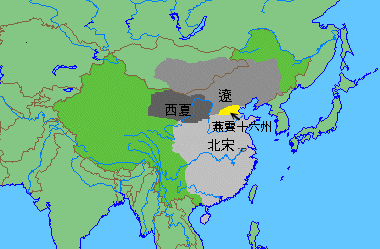
The Sixteen Prefectures, more precisely known as the Sixteen Prefectures of Yan–Yun (traditional Chinese: 燕雲十六州; simplified Chinese: 燕云十六州; pinyin: Yān Yún Shíliù Zhōu) or the Sixteen Prefectures of You–Ji (Chinese: 幽薊十六州; pinyin: Yōu Jì Shíliù Zhōu), were a historical region in North China that comprises present-day municipalities of Beijing, Tianjin and parts of northern Hebei and Shanxi provinces north of the Hai River and its two northern tributaries Sanggan and Juma rivers. The region's name came from the sixteen military district prefectures (zhou) of the Tang dynasty's northeastern borderlands under the fanzhen administration of the Youzhou and Hedong jiedushi, whose administrative seats were in Yan Prefecture and Yun Prefecture, respectively.
Situated around the Great Wall within the Yan Mountains and Heng Mountain, the Sixteen Prefectures were a strategically important gateway region into the Central Plains and shielded the North China Plain from Hu incursions from the northeast, north and northwest, reinforced by riverine logistic transport of the Grand Canal.
During the Five Dynasties and Ten Kingdoms period, the region was ceded to the Khitan-led Liao dynasty in 938 AD by Shi Jingtang, who desperately sought Liao aid in his rebellion against his brother-in-law, the Later Tang emperor Li Congke. This cession subsequently caused various Central Plains dynasties to the region's south (including the Shatuo-led Later Jin dynasty founded by Shi Jingtang himself) to become vulnerable against invaders from the north (who used the region as a strategic staging area), as there were no longer any significant natural barriers north of the Yellow River capable of halting large-scale cavalry incursions. The region was marred by constant military conflicts for the next three centuries, both by the Central Plains regimes (such as the Later Zhou and the Northern Song dynasties) attempting to recapture the region and by new northern invaders (such as the Jurchen-led Jin dynasty and later the Mongol-led Yuan dynasty) against the old occupiers (the Liao and Jin dynasties, respectively), until the Mongol Empire conquered northern China in 1234 AD. After the Yuan dynasty, the region came under the control of the subsequent Ming and Qing dynasties.
After the Tang dynasty collapsed, the Sixteen Prefectures became a site of contention between various ethnicities of North China, including Han, Khitan, Jurchen, and Mongol.
In 938 AD, the prefectures were ceded to the Khitans by Shi Jingtang of the Shatuo-led Later Jin, who submitted to Khitan emperor Yelü Deguang as the latter's "son-emperor" (despite the latter being almost 11 years younger) in exchange of military support in his rebellion against his estranged brother-in-law, Emperor Li Conghou of Later Tang. While Shi succeeded in overthrowing Later Tang, his shameless treason not only fully exposed North China to Khitan invasions and looting, but also doomed his own regime, which were invaded and destroyed by the Khitans nine years later when Yelü Deguang's Liao dynasty defeated and exiled Shi's successor and nephew Shi Chonggui in 947 AD. The Khitan's victory were however short-lived when Yelü Deguang grew tired of constant Chinese insurgencies and decided to withdraw but died of illness on his way back, and the territories newly conquered by the Khitans were quickly recovered by the Later Han. After the Later Han was overthrown by the Later Zhou, Zhou second emperor Chai Rong attempted to recapture the Sixteen Prefectures with a northern expedition in 959 AD, nearly succeeding until the campaign had to be abandoned due to Chai suddenly falling ill and died within a month.
After Later Zhou general Zhao Kuangyin usurped the throne from Chai Rong's 7-year-old son Chai Zongxun with a mutiny at Chenqiao and established the Song dynasty in 960 AD, he chose to deal with other rival states in the south and west first instead of recovering the Sixteen Prefectures, despite that the Liao dynasty had already the been weakened by a decade of internal conflicts and political chaos. However, when his brother and successor Zhao Guangyi finally decided to launch northern expeditions to recapture the Sixteen Prefectures in 979 AD, the Liao dynasty had recovered its strength and decisively defeated the Song dynasty twice in 979 AD and 986 AD. After the failure of a Liao invasion in 1003 AD, the Chanyuan Treaty was signed in 1005 AD, which practically eliminated any possibilities for the Song dynasty to recapture the Sixteen Prefectures from the Khitans.
In 1120s, two principal cities, Youzhou (also called Yanzhou, modern Beijing) and Yunzhou (modern Datong, Shanxi) were taken away from the Liao when the Jurchen-led Jin dynasty conquered the region. In 1123, the Jin ceded most of the territories except Yunzhou to the Song, but retook them in an invasion of Song territory in 1125. The Song dynasty then collapsed two years later in the Jingkang incident in 1127, and the surviving royal court fled south of the Huai River to establish a rump state known as the Southern Song dynasty.
The loss of the Sixteen Prefectures again exposed the plains of Central China to northern threats when the Mongol Empire rose in the 13th century. The Mongols, under Ögedei Khan, would conquer the Jin dynasty in 1232, completing the conquest of all of northern China. The Southern Song dynasty would be conquered by Kublai Khan's Yuan dynasty in 1279.
Hub AI
Sixteen Prefectures AI simulator
(@Sixteen Prefectures_simulator)
Sixteen Prefectures
The Sixteen Prefectures, more precisely known as the Sixteen Prefectures of Yan–Yun (traditional Chinese: 燕雲十六州; simplified Chinese: 燕云十六州; pinyin: Yān Yún Shíliù Zhōu) or the Sixteen Prefectures of You–Ji (Chinese: 幽薊十六州; pinyin: Yōu Jì Shíliù Zhōu), were a historical region in North China that comprises present-day municipalities of Beijing, Tianjin and parts of northern Hebei and Shanxi provinces north of the Hai River and its two northern tributaries Sanggan and Juma rivers. The region's name came from the sixteen military district prefectures (zhou) of the Tang dynasty's northeastern borderlands under the fanzhen administration of the Youzhou and Hedong jiedushi, whose administrative seats were in Yan Prefecture and Yun Prefecture, respectively.
Situated around the Great Wall within the Yan Mountains and Heng Mountain, the Sixteen Prefectures were a strategically important gateway region into the Central Plains and shielded the North China Plain from Hu incursions from the northeast, north and northwest, reinforced by riverine logistic transport of the Grand Canal.
During the Five Dynasties and Ten Kingdoms period, the region was ceded to the Khitan-led Liao dynasty in 938 AD by Shi Jingtang, who desperately sought Liao aid in his rebellion against his brother-in-law, the Later Tang emperor Li Congke. This cession subsequently caused various Central Plains dynasties to the region's south (including the Shatuo-led Later Jin dynasty founded by Shi Jingtang himself) to become vulnerable against invaders from the north (who used the region as a strategic staging area), as there were no longer any significant natural barriers north of the Yellow River capable of halting large-scale cavalry incursions. The region was marred by constant military conflicts for the next three centuries, both by the Central Plains regimes (such as the Later Zhou and the Northern Song dynasties) attempting to recapture the region and by new northern invaders (such as the Jurchen-led Jin dynasty and later the Mongol-led Yuan dynasty) against the old occupiers (the Liao and Jin dynasties, respectively), until the Mongol Empire conquered northern China in 1234 AD. After the Yuan dynasty, the region came under the control of the subsequent Ming and Qing dynasties.
After the Tang dynasty collapsed, the Sixteen Prefectures became a site of contention between various ethnicities of North China, including Han, Khitan, Jurchen, and Mongol.
In 938 AD, the prefectures were ceded to the Khitans by Shi Jingtang of the Shatuo-led Later Jin, who submitted to Khitan emperor Yelü Deguang as the latter's "son-emperor" (despite the latter being almost 11 years younger) in exchange of military support in his rebellion against his estranged brother-in-law, Emperor Li Conghou of Later Tang. While Shi succeeded in overthrowing Later Tang, his shameless treason not only fully exposed North China to Khitan invasions and looting, but also doomed his own regime, which were invaded and destroyed by the Khitans nine years later when Yelü Deguang's Liao dynasty defeated and exiled Shi's successor and nephew Shi Chonggui in 947 AD. The Khitan's victory were however short-lived when Yelü Deguang grew tired of constant Chinese insurgencies and decided to withdraw but died of illness on his way back, and the territories newly conquered by the Khitans were quickly recovered by the Later Han. After the Later Han was overthrown by the Later Zhou, Zhou second emperor Chai Rong attempted to recapture the Sixteen Prefectures with a northern expedition in 959 AD, nearly succeeding until the campaign had to be abandoned due to Chai suddenly falling ill and died within a month.
After Later Zhou general Zhao Kuangyin usurped the throne from Chai Rong's 7-year-old son Chai Zongxun with a mutiny at Chenqiao and established the Song dynasty in 960 AD, he chose to deal with other rival states in the south and west first instead of recovering the Sixteen Prefectures, despite that the Liao dynasty had already the been weakened by a decade of internal conflicts and political chaos. However, when his brother and successor Zhao Guangyi finally decided to launch northern expeditions to recapture the Sixteen Prefectures in 979 AD, the Liao dynasty had recovered its strength and decisively defeated the Song dynasty twice in 979 AD and 986 AD. After the failure of a Liao invasion in 1003 AD, the Chanyuan Treaty was signed in 1005 AD, which practically eliminated any possibilities for the Song dynasty to recapture the Sixteen Prefectures from the Khitans.
In 1120s, two principal cities, Youzhou (also called Yanzhou, modern Beijing) and Yunzhou (modern Datong, Shanxi) were taken away from the Liao when the Jurchen-led Jin dynasty conquered the region. In 1123, the Jin ceded most of the territories except Yunzhou to the Song, but retook them in an invasion of Song territory in 1125. The Song dynasty then collapsed two years later in the Jingkang incident in 1127, and the surviving royal court fled south of the Huai River to establish a rump state known as the Southern Song dynasty.
The loss of the Sixteen Prefectures again exposed the plains of Central China to northern threats when the Mongol Empire rose in the 13th century. The Mongols, under Ögedei Khan, would conquer the Jin dynasty in 1232, completing the conquest of all of northern China. The Southern Song dynasty would be conquered by Kublai Khan's Yuan dynasty in 1279.
Recent media