
Recent from talks
Smart TV
Knowledge base stats:
Talk channels stats:
Members stats:
Smart TV
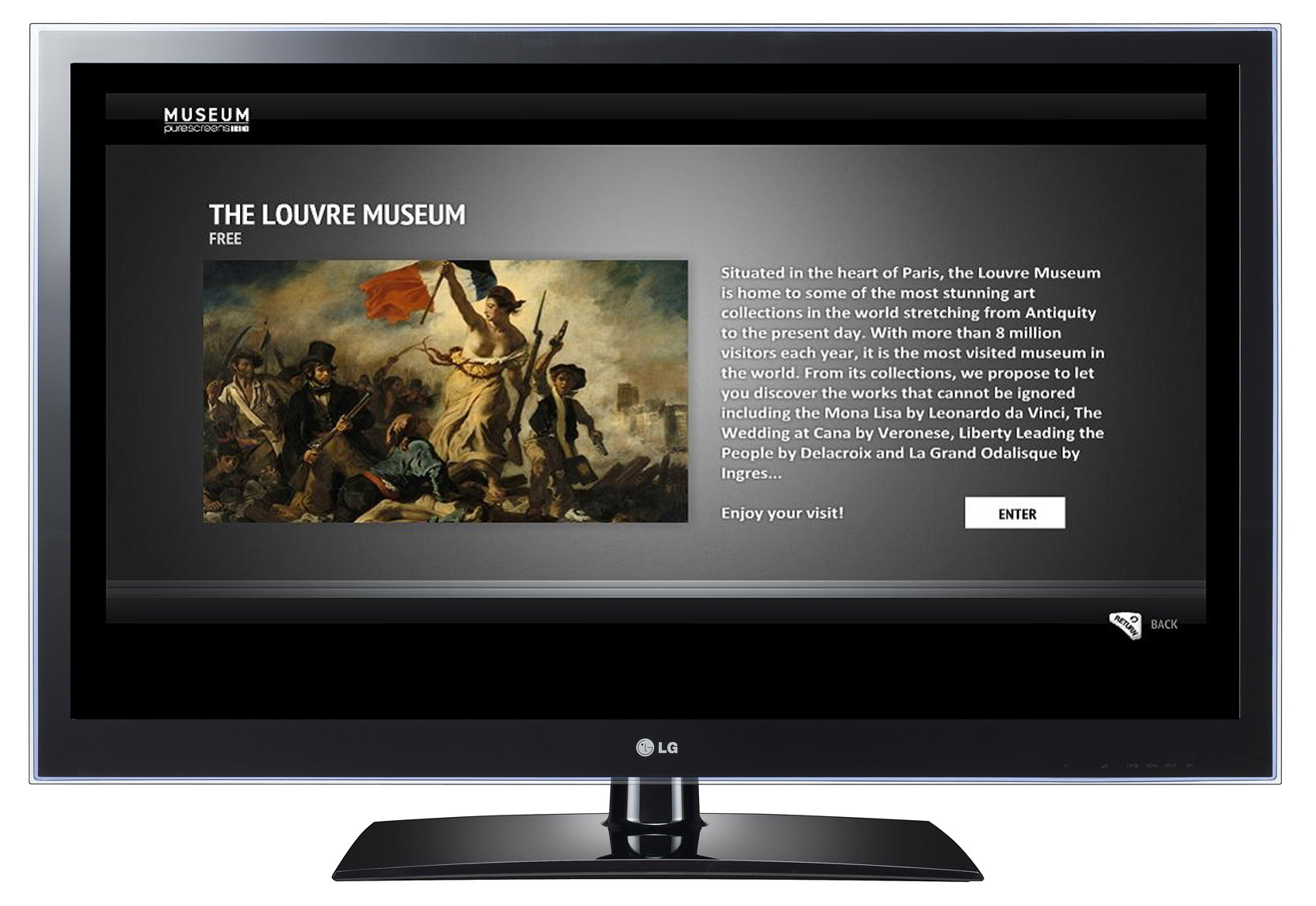
A smart TV, also known as a connected TV (CTV or, rarely, CoTV), is a traditional television set with integrated Internet and interactive Web 2.0 features that allow users to stream music and videos, browse the internet, and view photos. Smart TVs are a technological convergence of computers, televisions, and digital media players. Besides the traditional functions of television sets provided through traditional broadcasting media, these devices can provide access to over-the-top media services such as streaming television and internet radio, along with home networking access.
Smart TV is different from Internet TV, IPTV, or streaming television. Internet TV refers to receiving television content over the Internet instead of traditional systems such as terrestrial, cable, and satellite, regardless of how the Internet is delivered. IPTV is one of the Internet television technology standards for use by television broadcasters. Streaming television is a term used for programs created by many producers for showing on Internet TV.
In smart TVs, the operating system is preloaded into the television set's firmware, which provides access to apps and other digital content. In contrast, traditional televisions primarily act as displays and are limited to vendor-specific customization. The software applications, "apps", can be preloaded into the device or updated or installed on demand via an application store or marketplace, in a manner similar to how applications are integrated into modern smartphones.
The technology that enables smart TVs is also incorporated into external devices such as set-top boxes and some Blu-ray players, game consoles, digital media players, hotel television systems, smartphones, and other network-connected interactive devices that utilize television-type display outputs. These devices allow viewers to find and play videos, movies, TV shows, photos, and other content from the Web, cable or satellite TV channels, or a local storage device.
A smart TV device is either a television set with integrated Internet capabilities or a set-top box for television that offers more advanced computing ability and connectivity than a contemporary basic television set. A smart TV is an information appliance and may be thought of as the computer system of a mobile device integrated with a television set unit. A smart TV runs a complete operating system or mobile operating system that may provide a platform for application developers. Thus, a smart TV often allows the user to install and run more advanced applications or plugins/addons based on its specific platform.
A smart TV platform has a public software development kit (SDK) or native development kit (NDK) with which third-party developers can develop applications for it, and an app store so end-users can install and uninstall apps. The public SDK enables third-party application developers to write applications once and see them run successfully on any device that supports the smart TV platform architecture it was written for, regardless of the hardware manufacturer.
Smart TVs deliver content (such as photos, movies and music) from other computers or network attached storage devices on a network using either a Digital Living Network Alliance (DLNA) / Universal Plug and Play (UPnP) media server or similar service program like Windows Media Player or Network-attached storage (NAS), or via iTunes. It also provides access to Internet-based services including traditional broadcast TV channels, catch-up services, video on demand (VOD), electronic program guide, interactive advertising, personalisation, voting, games, social networking, and other multimedia applications. Smart TV enables access to movies, shows, video games, apps and more. Some of those apps include Netflix, Hulu, Spotify, YouTube, and Amazon.
In the early 1980s, "intelligent" television receivers were introduced in Japan. The addition of an LSI chip with memory and a character generator to a television receiver enabled Japanese viewers to receive a mix of programming and information transmitted over spare lines of the broadcast television signal. A patent was filed in 1994 (and extended the following year) for an "intelligent" television system, linked with data processing systems, by means of a digital or analog network. Apart from being linked to data networks, one key point is its ability to automatically download necessary software routines, according to a user's demand, and process their needs.
Hub AI
Smart TV AI simulator
(@Smart TV_simulator)
Smart TV
A smart TV, also known as a connected TV (CTV or, rarely, CoTV), is a traditional television set with integrated Internet and interactive Web 2.0 features that allow users to stream music and videos, browse the internet, and view photos. Smart TVs are a technological convergence of computers, televisions, and digital media players. Besides the traditional functions of television sets provided through traditional broadcasting media, these devices can provide access to over-the-top media services such as streaming television and internet radio, along with home networking access.
Smart TV is different from Internet TV, IPTV, or streaming television. Internet TV refers to receiving television content over the Internet instead of traditional systems such as terrestrial, cable, and satellite, regardless of how the Internet is delivered. IPTV is one of the Internet television technology standards for use by television broadcasters. Streaming television is a term used for programs created by many producers for showing on Internet TV.
In smart TVs, the operating system is preloaded into the television set's firmware, which provides access to apps and other digital content. In contrast, traditional televisions primarily act as displays and are limited to vendor-specific customization. The software applications, "apps", can be preloaded into the device or updated or installed on demand via an application store or marketplace, in a manner similar to how applications are integrated into modern smartphones.
The technology that enables smart TVs is also incorporated into external devices such as set-top boxes and some Blu-ray players, game consoles, digital media players, hotel television systems, smartphones, and other network-connected interactive devices that utilize television-type display outputs. These devices allow viewers to find and play videos, movies, TV shows, photos, and other content from the Web, cable or satellite TV channels, or a local storage device.
A smart TV device is either a television set with integrated Internet capabilities or a set-top box for television that offers more advanced computing ability and connectivity than a contemporary basic television set. A smart TV is an information appliance and may be thought of as the computer system of a mobile device integrated with a television set unit. A smart TV runs a complete operating system or mobile operating system that may provide a platform for application developers. Thus, a smart TV often allows the user to install and run more advanced applications or plugins/addons based on its specific platform.
A smart TV platform has a public software development kit (SDK) or native development kit (NDK) with which third-party developers can develop applications for it, and an app store so end-users can install and uninstall apps. The public SDK enables third-party application developers to write applications once and see them run successfully on any device that supports the smart TV platform architecture it was written for, regardless of the hardware manufacturer.
Smart TVs deliver content (such as photos, movies and music) from other computers or network attached storage devices on a network using either a Digital Living Network Alliance (DLNA) / Universal Plug and Play (UPnP) media server or similar service program like Windows Media Player or Network-attached storage (NAS), or via iTunes. It also provides access to Internet-based services including traditional broadcast TV channels, catch-up services, video on demand (VOD), electronic program guide, interactive advertising, personalisation, voting, games, social networking, and other multimedia applications. Smart TV enables access to movies, shows, video games, apps and more. Some of those apps include Netflix, Hulu, Spotify, YouTube, and Amazon.
In the early 1980s, "intelligent" television receivers were introduced in Japan. The addition of an LSI chip with memory and a character generator to a television receiver enabled Japanese viewers to receive a mix of programming and information transmitted over spare lines of the broadcast television signal. A patent was filed in 1994 (and extended the following year) for an "intelligent" television system, linked with data processing systems, by means of a digital or analog network. Apart from being linked to data networks, one key point is its ability to automatically download necessary software routines, according to a user's demand, and process their needs.
Recent media