Hubbry Logo
SpokespersonSpokespersonMain
Open search
Spokesperson
Community hub
Spokesperson
logo
8 pages, 0 posts
0 subscribers
Be the first to start a discussion here.
Spokesperson
Spokesperson
from Wikipedia

Spokesperson
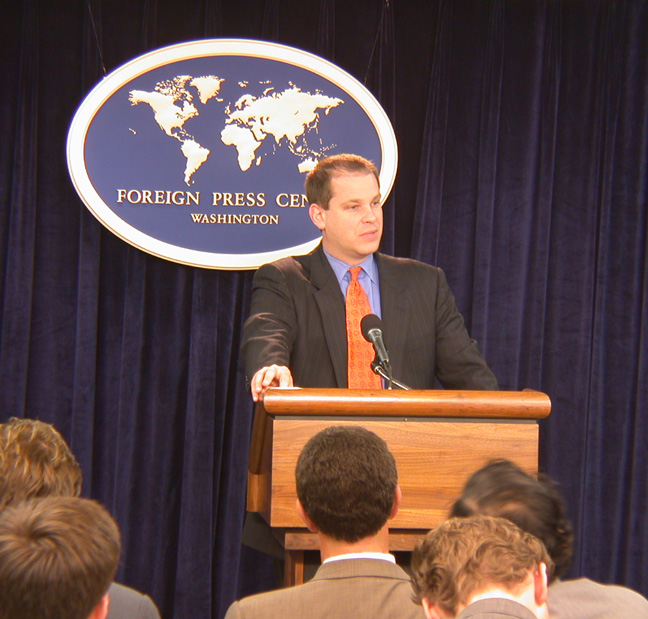
U.S. National Security Council Spokesman Sean McCormack answering questions at the Washington Foreign Press Center
Occupation
NamesSpokesperson, spokesman, spokeswoman
Occupation type
Employment
Activity sectors
Journalism, communications, politics, public relations
Description
CompetenciesPublic speaking, writing
Related jobs
Public relations

A spokesperson, spokesman, or spokeswoman is someone engaged or elected to speak on behalf of others.

Duties and function

[edit]

In the present media-sensitive world, many organizations are increasingly likely to employ professionals who have received formal training in journalism, communications, public relations and public affairs in this role in order to ensure that public announcements are made in the most appropriate fashion and through the most appropriate channels to maximize the impact of favorable messages and minimize the unfavorable.

Celebrity spokespeople such as popular athletes (such as Michael Jordan for Nike and Coca-Cola) or entertainers (such as Beyoncé for Pepsi and L'Oreal) are often chosen as spokespeople for commercial advertising.

Responsibilities

[edit]

Unlike giving a personal testimonial, it is the job of spokespeople to faithfully represent and advocate for the organization's positions, even when these conflict with their own opinion. As a result, spokespeople are generally selected from experienced, long-time employees or other people who are known to support the organization's goals.[1]

Identity

[edit]

A corporation may be represented in public by its chief executive officer, chairperson or president, chief financial officer, counsel or external legal advisor. In addition, on a day-to-day level and for more routine announcements, the job may be delegated to the corporate communications or investor relations departments (or equivalents), who will act as spokespeople.

As an example, in the particle physics community, large collaborations of physicists elect one (or two) spokespeople or leader(s) of the collaboration. The spokesperson in such cases is the lead scientist of the collaboration, not a public speaker.[2] Each collaboration chooses the roles and responsibilities of the spokesperson for internal purposes, but typically spokespeople also have defined roles for liaising with the host laboratory and/or funding agencies.

In certain governmental organizations (i.e. city, county, school district, state government and police/fire departments), a public information officer is the communications coordinator primarily responsible for providing information to the public through media, pursuant to and limited by any applicable laws.

See also

[edit]

References

[edit]
Revisions and contributorsEdit on WikipediaRead on Wikipedia
from Grokipedia
A spokesperson is a chosen to speak officially for a group, , or individual, conveying positions, information, and responses to inquiries on their behalf. The term originated in the early as a gender-neutral variant of "spokesman," combining "spoke" (past tense of speak) with "person" to replace the male-specific . In and , spokespersons act as the designated voice of their entity, particularly in interactions with media, stakeholders, and the , ensuring consistent and authorized messaging. They handle routine announcements, responses, and reputational management, often requiring training in to maintain credibility and control narratives. Spokespersons are prevalent in government agencies, corporations, and non-profits, where their role directly influences perception and organizational outcomes. Effective spokespersons prioritize factual representation over personal opinion, advocating faithfully for the entity's interests amid .

Definition and Historical Context

Core Definition and Distinctions

A is an individual authorized to speak officially on behalf of an , group, or other , serving as its representative in communicating positions, policies, or factual to external audiences such as the media, stakeholders, or the . This role entails conveying messages accurately and consistently with the entity's directives, often in a capacity that prioritizes fidelity to the source's intent over personal interpretation. The term "" emerged as a gender-neutral alternative to "spokesman" or "spokeswoman," reflecting linguistic shifts toward inclusivity while maintaining the core function of authorized representation. Distinct from broader practitioners, who may handle , messaging development, or behind-the-scenes coordination, the spokesperson is specifically the designated public voice empowered to deliver statements directly attributable to the organization, often as its highest visible representative during interactions. This differentiates the role from internal communicators or advisors, emphasizing external-facing and the need for in high-stakes exchanges. In governmental contexts, the spokesperson function may overlap with but is not synonymous with a , whose duties are confined to executive or political entities and center on managing press corps access, briefings, and media rather than general organizational . Unlike an or provider, who might express personal endorsements or aligned but independent views, a spokesperson must adhere strictly to the entity's approved , avoiding to preserve institutional trust and legal consistency. This representational underscores the role's causal link to organizational , where deviations can amplify risks in .

Historical Origins and Evolution

The term "spokesman" entered English usage in the early 16th century, with the citing its earliest evidence in 1519 from the writings of William Horman, denoting an individual who interprets or speaks for others, derived from "speke-man" combining the past participle of "speak" with "man." This linguistic origin reflects a longstanding need for representatives to articulate collective or authoritative positions, as seen in pre-modern contexts where heralds, envoys, and court officials conveyed messages from rulers or assemblies, ensuring consistency in and across ancient civilizations from to medieval . Such roles, while informal, laid the groundwork for structured representation by mitigating miscommunication and aligning narratives amid expanding social complexity. The modern spokesperson role emerged in the early , driven by the proliferation of and the professionalization of , which necessitated designated communicators to interface with journalists and manage organizational narratives. , a foundational figure in PR, exemplified this shift in 1906 during the anthracite coal strike, when he counseled railroad executives to release daily factual bulletins to reporters, pioneering transparent, centralized messaging that preempted adversarial coverage and influenced through verifiable information rather than evasion. In parallel, governmental adaptations formalized the position; the U.S. appointed its first , George Akerson, in 1929 under President , institutionalizing briefings to handle the surge in print inquiries following the expansion of the since 1898. Subsequent evolution accelerated with broadcast media: radio in the amplified the need for articulate, on-demand responses, while television from the onward—marked by televised briefings starting under President —elevated spokespersons to public figures scrutinized for poise and factual accuracy under real-time pressure. The term "spokesperson" gained traction in the as a gender-neutral alternative, first documented in 1972, aligning with broader linguistic shifts amid feminist , though the core function remained rooted in strategic and control. By the late , the role had diffused across sectors, adapting to digital channels that demanded rapid, multifaceted dissemination while preserving causal priorities of and stakeholder alignment over statements.

Roles Across Sectors

Corporate and Organizational Roles

In corporate environments, spokespersons act as the designated faces of companies, delivering official statements to media, stakeholders, and the while ensuring alignment with organizational objectives and messaging. Their primary function involves translating complex internal strategies into accessible communications, such as press releases, executive briefings, and responses to inquiries, thereby controlling the dissemination of to mitigate risks. This role demands deep familiarity with the company's values, operations, and current events to maintain and consistency in external representations. Key responsibilities encompass media interactions, where spokespersons field questions, arrange interviews, and provide on-the-record quotes to shape narratives favorable to the organization. In product launches or financial announcements, they articulate strategic details—for instance, during earnings calls or reveals—to build confidence and . forms a critical , requiring rapid, factual responses to incidents like product recalls or scandals; effective spokespersons prioritize transparency without speculation, as evidenced by protocols emphasizing pre-approved messaging to avoid legal liabilities. Selection of corporate spokespersons often favors subject-matter experts over high-profile executives like CEOs, particularly for technical issues, to ensure authoritative and precise delivery that aids reporters in accurate reporting. Traits such as composure under pressure, articulate , and alignment with brand are prioritized, with training in message to prevent off-script deviations that could harm . In larger firms, dedicated communications teams support spokespersons, coordinating with legal and executive units to vet statements, as seen in protocols where multiple reviews precede public releases. For non-profit and other organizational contexts, spokespersons fulfill analogous roles in and , representing missions to donors, regulators, and communities while navigating over . They manage , such as efforts or program updates, ensuring communications reinforce organizational legitimacy without overpromising outcomes, grounded in verifiable program data to sustain trust. Unlike purely corporate roles, these often emphasize ethical to align with public-interest goals, though from communication audits shows similar emphasis on rapid response times—typically within hours—to maintain operational continuity during controversies.

Political and Governmental Roles

In governmental contexts, spokespersons serve as the official voice for executive agencies, departments, and national security councils, disseminating policy positions and responding to public inquiries on behalf of leadership. Their primary function involves briefing the press, preparing statements for public release, and acting as the designated communicator during routine operations or crises to maintain coordinated narratives. For instance, the White House Press Secretary coordinates the gathering and distribution of information to the president, staff, and media outlets, ensuring accurate conveyance of executive branch activities. The role extends to strategic communication planning, where spokespersons act as conduits for policy advocacy, represent stakeholder interests in messaging, and administer press operations to facilitate access while controlling . In the U.S. Department of State, the spokesperson advises the Secretary on and communicates objectives to both domestic and international audiences through regular briefings and statements. This position requires direct access to principals, enabling rapid response to emerging events without intermediaries, as seen in protocols allowing interruption of meetings for urgent media developments. Politically, spokespersons for parties or campaigns humanize organizational stances, engage in sustained media interactions, and counter opposition narratives to influence . In scenarios, governmental spokespersons prioritize providing a visible, authoritative presence to guide understanding and mitigate , often under intense scrutiny where credibility hinges on factual alignment with verifiable events. Effective performance demands street-level awareness of political dynamics alongside deep to sustain trust amid adversarial questioning.

Responsibilities and Operational Duties

Daily Communication Functions

Spokespersons routinely handle media inquiries by providing factual, researched responses via , phone, or scheduled calls, ensuring accuracy through coordination with subject matter experts and communication teams. This involves promptly acknowledging requests, even if a full reply requires additional time, and respecting journalists' deadlines to facilitate timely reporting. In daily interactions, they participate in interviews or briefings, delivering concise messages aligned with organizational positions while redirecting off-topic questions to maintain focus. Spokespersons build relationships with reporters by remaining professional and honest, avoiding speculation on unknown details to prevent dissemination. They repeat key talking points during these exchanges, recognizing that media outlets may edit responses selectively. Proactive duties encompass issuing statements or press releases on routine organizational activities, such as policy updates or event announcements, to keep the informed. Spokespersons also monitor media coverage daily, verifying the accuracy of portrayals and preparing corrections if discrepancies arise, thereby supporting consistent perception. Only designated individuals respond to avoid uncoordinated messaging, with responses limited to assigned topics.

Crisis and Advocacy Responsibilities

In situations, spokespersons act as the designated public face of an , responsible for disseminating verified information to stakeholders, media, and the to prevent and preserve trust. They coordinate closely with teams to monitor unfolding events, refine key messages based on new developments, and ensure all communications align with established protocols. This role demands rapid response capabilities, as delays can exacerbate reputational damage; for instance, during public health emergencies, spokespersons from agencies like the Centers for Disease Control and Prevention (CDC) prioritize expressing , acknowledging uncertainty, and limiting statements to the organization's direct responsibilities to avoid speculation. Effective crisis spokespersons exhibit through expertise in the subject matter and organizational values, often undergoing specialized to anticipate media inquiries and manage high-stakes interactions. Spokespersons are typically the sole authorized voice interfacing with the media during crises, funneling all external communications through a unified channel to maintain consistency and control flow. In complex or ambiguous scenarios, such as infectious outbreaks, their performance influences perception of institutional competence; studies of health crises indicate that spokespersons from medical institutions who deliver clear, empathetic updates enhance compliance with directives and reduce anxiety. Best practices include pre-designating trained individuals, preparing contingency scripts, and conducting simulations, as outlined in federal guidelines for communication, which emphasize transparency over reassurance to foster long-term . For responsibilities, spokespersons proactively represent and defend the organization's positions in public forums, media engagements, and debates, translating internal strategies into persuasive narratives that align with stakeholder interests. This involves preparing for adversarial interviews, articulating evidence-based arguments, and countering opposing viewpoints without deviating from factual grounding. In governmental or nonprofit contexts, they advocate for legislative priorities or mission-driven initiatives, such as reforms, by building coalitions through targeted communications that highlight causal impacts and empirical outcomes. Unlike roles, demands sustained engagement, including opinion pieces, congressional testimonies, and amplification, where spokespersons must navigate biases in media coverage by prioritizing primary data over interpretive framing. Success metrics include measurable shifts in or influence, as seen in campaigns where designated voices have swayed regulatory decisions through consistent, verifiable .

Skills, Qualifications, and Selection

Essential Competencies and Training

Effective spokespersons require exceptional verbal and written communication abilities, enabling them to articulate complex information clearly and persuasively in high-stakes environments. This encompasses using to avoid , connecting with audiences through relatable , and adapting tone to convey or composure as needed. Subject matter expertise is equally critical, allowing spokespersons to provide contextual depth on organizational positions or crises without evasion, thereby building credibility. Composure under pressure ranks among core competencies, as spokespersons must remain consistent, authentic, and unflappable during adversarial interviews or public scrutiny. facilitates understanding audience perspectives and media dynamics, while preparation—such as anticipating questions and rehearsing key messages—ensures responses align with strategic goals. Professional demeanor, honed through prior or media experience, mitigates risks of emotional leakage or inconsistency that could undermine trust. Training typically begins with formal education, such as a bachelor's degree in communications, public relations, marketing, or business, which provides foundational knowledge in messaging and audience analysis. Specialized media training programs build practical skills through mock interviews, on-camera simulations, and Q&A drills, emphasizing techniques like delivering concise responses in 20 seconds or less and bridging to core messages. Governmental and corporate entities often offer advanced sessions focusing on crisis scenarios, vocal projection, and navigating reporter agendas, with recurring coaching to refine performance. On-the-job complements structured , where aspiring spokespersons shadow experienced practitioners to internalize real-time decision-making, such as prioritizing factual accuracy over spin. Certifications from accredited providers, involving seminars and , certify proficiency in ethical communication and media interaction, though efficacy depends on consistent application rather than rote memorization. Empirical outcomes from such programs show improved handling, with trained individuals demonstrating higher rates of retention in broadcast segments.

Criteria for Effective Spokespersons

Effective spokespersons demonstrate rooted in subject-matter expertise and perceived trustworthiness, which empirical studies link to audience persuasion and message retention in and crisis scenarios. For instance, spokespeople who convey competence through authoritative of industry trends foster greater public compliance with directives, as observed in evaluations of during outbreaks. This is not merely subjective but correlates with measurable outcomes like stakeholder trust metrics, where spokespersons rated high in reliability outperform others in maintaining organizational amid . Clear and adaptable communication forms another core criterion, encompassing the distillation of technical details into accessible that resonates with diverse without relying on acronyms or . Professionals who prioritize audience attunement—understanding cultural contexts and motivational triggers—achieve higher , as evidenced by media protocols that emphasize boundary awareness to avoid alienating listeners. In practice, this involves structured preparation, such as rehearsing key messages to ensure consistency under pressure, which data from PR evaluations show reduces misinterpretation risks by up to 40% in high-stakes interviews. Composure and authenticity under adversity distinguish effective spokespersons, enabling them to navigate adversarial questioning while projecting genuineness, which builds long-term rapport over scripted evasion. Research on crisis response highlights that empathetic yet composed individuals—those who listen actively and respond transparently—enhance message efficacy, with authenticity metrics directly tied to in post-event surveys. Such traits mitigate backlash, as seen in cases where spokespersons maintaining calm demeanor preserved 25% more media goodwill during controversies compared to reactive counterparts. Selection processes further emphasize alignment with organizational values and media savvy, where candidates undergo for both intrinsic qualities like relatability and extrinsic skills such as journalistic background, which aids in anticipating reporter angles. Guidelines from frameworks stress evaluating these via simulations, yielding spokespersons who not only convey facts accurately but also drive action, with success rates improving when expertise matches the issue at hand—e.g., technical leads for product recalls versus executives for policy announcements. Empirical contrasts, including demographic factors like perceived attractiveness in contexts, underscore that while universal traits dominate, contextual fit amplifies impact, though overreliance on without substance erodes long-term effectiveness.

Ethical and Normative Frameworks

Commitments to Truthfulness and Transparency

Spokespersons across sectors are bound by professional ethical frameworks that prioritize truthfulness as a foundational , requiring them to disseminate accurate information without deliberate distortion or omission of material facts. The (PRSA) Code of Ethics explicitly mandates adherence to the highest standards of accuracy and truth in communications, both when advancing client interests and engaging the public, to preserve credibility and avoid misleading stakeholders. Similarly, the (IABC) Code of Ethics underscores honesty by prohibiting false or misleading statements, positioning truthfulness as essential for ethical advocacy. These commitments stem from the recognition that spokespersons serve as intermediaries whose statements shape public perception, demanding verifiable facts over unsubstantiated claims to mitigate risks of or , such as under laws in commercial contexts. Transparency complements truthfulness by obligating spokespersons to conflicts of interest, sources of , and limitations of promptly, enabling audiences to assess statements independently. In organizational settings, this involves routine practices like attributing data origins and correcting errors swiftly, as outlined in PRSA provisions that require prompt rectification of erroneous communications. For crisis situations, ethical guidelines advocate balancing openness with measured disclosure to prevent harm, yet insist on avoiding , as excessive withholding erodes trust more than candid acknowledgment of uncertainties. Empirical studies on communication efficacy reinforce this, showing that transparent responses correlate with higher stakeholder trust levels compared to evasive tactics. In governmental roles, commitments to truthfulness and transparency are codified in policies emphasizing factual public information access, with spokespersons selected for expertise to ensure statements reflect verifiable evidence rather than partisan narratives. U.S. Department of Health and Human Services media guidelines, for example, direct agencies to maximize transparency by designating knowledgeable spokespersons who provide complete, accurate responses without fabrication. International standards, such as those from the Inter American Press Association, further require government communicators to facilitate information access while upholding accuracy, countering tendencies toward opacity in bureaucratic systems. Violations, including knowingly false briefings, can result in accountability measures like congressional oversight or ethics probes, underscoring causal links between deceptive practices and diminished institutional legitimacy. Overall, these norms derive from first-principles accountability: spokespersons' authority hinges on perceived reliability, which falters absent empirical fidelity, prompting ongoing professional training to internalize these duties. Spokespersons frequently confront conflicts of interest stemming from personal financial holdings, familial ties, or previous professional roles that could influence their public representations of an organization. Such conflicts, whether actual or perceived, erode stakeholder trust if unaddressed, as they raise questions about the spokesperson's ability to prioritize organizational facts over self-interest. Ethical standards in , including the (PRSA) Code of Ethics, require spokespersons to actively avoid these conflicts by disclosing them promptly and, where necessary, recusing themselves from relevant communications to maintain . In governmental contexts, federal ethics regulations similarly prohibit participation in matters where personal interests conflict with official duties, mandating written disclosures and supervisory approvals for any potential overlaps. Bias introduces additional complexities, encompassing cognitive tendencies like or ideological leanings that may distort message framing, as well as organizational pressures to align narratives with institutional agendas. Unchecked bias can manifest as selective , undermining the spokesperson's role in fostering informed . To navigate this, spokespersons employ strategies such as rigorous protocols, training in recognizing unconscious es, and using objective criteria for message development, which help ensure communications remain grounded in verifiable evidence rather than preconceptions. For instance, during crisis responses, guidelines recommend acknowledging informational gaps and avoiding premature assurances, thereby mitigating the risk of biased overconfidence that could later discredit the organization. In environments marked by systemic biases—such as those observed in outlets or academic institutions, where empirical scrutiny often yields to prevailing narratives—spokespersons must prioritize primary and causal over secondary interpretations to counteract external distortions. This approach demands meta-awareness of source reliability; for example, attributing claims to peer-reviewed studies or official records rather than opinion-driven reports preserves integrity. Failure to do so risks amplifying unverified biases, as seen in cases where spokespersons from ideologically aligned entities have faced backlash for echoing contested consensus without independent validation. Effective navigation thus hinges on transparency in sourcing and a commitment to recusal or correction when personal or organizational biases threaten factual accuracy, ensuring long-term reputational resilience.

Criticisms, Abuses, and Controversies

Role in Misinformation and Spin

Spokespersons frequently engage in spin, a form of that frames facts selectively to advance an organization's , often minimizing adverse or emphasizing favorable interpretations. This practice, rooted in strategies, can distort public understanding by prioritizing persuasive rhetoric over unvarnished disclosure, as evidenced in political and corporate communications where spokespersons are incentivized to align messaging with objectives. While spin itself involves biased presentation rather than outright falsehoods, it facilitates environments conducive to when facts are omitted or euphemized, such as recharacterizing operational failures as "challenges" during crises. In government contexts, spokespersons have propagated spin that veered into , notably during emergencies. For instance, in 2020, a spokesperson for tweeted that was less deadly than the seasonal flu, citing selective data while the state underreported cases and deaths, contributing to public confusion amid a that claimed over 87,000 Floridians by mid-2023. Similarly, during the height of the , government meetings featured rampant from officials and their representatives, including false claims that masks and were ineffective or harmful, undermining evidence-based responses documented in peer-reviewed analyses of public discourse. Corporate spokespersons have historically amplified denialism to shield scandals, as seen in the tobacco industry's mid-20th-century campaigns. By the late , major companies internally acknowledged smoking's causal role in , yet public statements from industry representatives, including those in coordinated ad campaigns like the 1954 "A Frank Statement to Smokers," sowed doubt by questioning and promoting "balanced" views, delaying regulatory action for decades. This pattern persisted, with firms like Imperial publicly denying proven links in legal defenses as late as the , despite mounting epidemiological evidence from studies showing relative risks exceeding 10-fold for smokers. High-profile failures, such as 's 2010 response, illustrate spokespersons' role in initial spin that eroded trust. executives and representatives underestimated the spill's volume—claiming 1,000 barrels per day initially against later estimates of 4.9 million barrels—while messaging focused on rapid over full , amplifying perceptions of evasion amid environmental devastation affecting 1,100 miles of coastline. Such cases highlight how spokespersons, under pressure to mitigate reputational damage, can perpetuate incomplete narratives, fostering long-term skepticism toward official communications.

High-Profile Case Studies and Failures

One prominent failure in spokesperson effectiveness occurred during the 2010 , where CEO , serving as the company's primary public face, made several ill-advised statements that exacerbated reputational damage. On May 30, 2010, Hayward remarked in a interview, "There's no one who wants this thing over more than I do. I'd like my life back," a comment perceived as self-centered amid the environmental catastrophe affecting Gulf Coast communities and wildlife, leading to widespread public and calls for his resignation. Further gaffes, such as telling a reporter on June 1, 2010, that the spill's environmental impact would be "very, very modest" despite evidence of massive oil plumes, undermined 's credibility and contributed to a $62 billion in total costs, including fines and cleanup. Hayward's remarks highlighted a failure to prioritize and factual alignment in crisis messaging, as 's pre-spill cost-cutting had already reduced its communications team, leaving the CEO unprepared for sustained scrutiny. In the political sphere, , from July 2003 to May 2006 under President , exemplified deferred accountability in defending the administration's rationale. McClellan repeatedly assured reporters that claims of weapons of mass destruction (WMDs) were based on solid intelligence, including during a July 15, 2003, briefing where he dismissed doubts about the Iraq-Niger uranium allegation as mere questions on intelligence sourcing rather than presidential error. However, in his 2008 memoir What Happened, McClellan later conceded that the war was promoted through a "propaganda campaign" that permanently damaged U.S. credibility, admitting he had been unwittingly used to mislead the public while senior officials like and leaked selective information. This case underscored how spokespersons embedded in hierarchical structures may prioritize loyalty over independent verification, contributing to public disillusionment when post-hoc revelations exposed intelligence overstatements that failed to materialize into WMD discoveries. The 2015 Volkswagen emissions scandal, known as Dieselgate, revealed shortcomings in corporate spokesperson responses to technical deception. Initially, VW executives denied knowledge of software that manipulated emissions tests on 11 million diesel vehicles, but on September 22, 2015, CEO admitted awareness without personal fault, delaying full accountability. Successor Matthias Müller, as spokesperson in a January 10, 2016, speech, stated "we didn't " despite evidence of deliberate defeat devices, a phrasing that fueled perceptions of evasion and led to $30 billion in global settlements and recalls. VW's staggered admissions and legalistic tone prolonged distrust, as internal probes showed management ignored engineer warnings, amplifying the fallout from what began as a regulatory violation into a of ethical communication.

Contemporary Adaptations and Impact

Digital and Media Shifts

The proliferation of digital platforms has fundamentally altered the spokesperson's role, shifting from mediated interactions with journalists to direct, unfiltered engagement with audiences via social media and video channels. Traditional gatekeepers like print and broadcast outlets have declined in influence, with 54% of U.S. adults now sourcing news primarily from social and video platforms, compared to 50% from television and 48% from news websites or apps, according to the 2025 Reuters Institute Digital News Report. This evolution demands real-time responsiveness, as audiences expect replies to inquiries within an hour in one-third of cases, per Emplifi's 2025 consumer survey, compelling spokespersons to prioritize platforms like X (formerly Twitter), LinkedIn, and TikTok for immediate messaging. Consequently, social media managers have emerged as de facto spokespersons, handling brand voice in crises and routine communications where delays can amplify reputational damage. Social media's dominance in shaping perceptions underscores this transition, driving 67% of , 60% of customer acquisition, and 58% of customer loyalty, as detailed in Sprout Social's 2025 Impact Report. Spokespersons must now craft concise soundbites optimized for clipping and repurposing across formats—such as radio segments shared on (e.g., with 8.39 million subscribers) or TV clips on —while ensuring technical proficiency in tools like Zoom and to avoid disruptions. This multi-platform imperative fragments control over narratives, as real-time audience feedback via comments or shares can escalate issues virally, requiring spokespersons to balance authenticity with strategic messaging amid a 24/7 cycle. The rise of influencers further complicates dynamics, with figures like drawing access for one in five U.S. adults post-2025 coverage, positioning them as alternative voices that spokespersons must either engage or counter. Emerging technologies exacerbate these shifts, with 77% of public relations professionals incorporating AI tools like ChatGPT into workflows and 59% viewing AI's role as increasingly vital, per a 2025 Muck Rack study. AI enables predictive analytics for sentiment monitoring and automated responses, potentially augmenting spokespersons by scaling outreach but raising concerns over perceived authenticity in human-like interactions. LinkedIn has become a cornerstone for professional communications, integrated into 90% of strategies and valued by 57% of practitioners for targeted earned media. Yet, securing traditional earned media has grown harder, with 72% of professionals reporting increased difficulty, pushing spokespersons toward data-driven, integrated approaches that blend owned, earned, and paid channels to maintain credibility in a fragmented ecosystem. These adaptations demand enhanced media training focused on video production and algorithm navigation to counteract misinformation and preserve organizational narratives.

Emerging Challenges from Technology

Deepfakes pose a significant to spokespersons by enabling the creation of fabricated audio and video content that impersonates official representatives, undermining trust in authentic communications. In June 2024, a video featuring the likeness of U.S. State Department spokesman Matthew Miller circulated online, falsely depicting him making unauthorized statements on , which highlighted vulnerabilities in verifying official pronouncements amid advancing AI tools. Such manipulations exploit publicly available footage and voice samples, allowing adversaries to attribute false positions to organizations or governments, as seen in broader applications where deepfakes have targeted public figures to incite or confusion. This challenge is exacerbated by the accessibility of AI generation software, with reports indicating that deepfakes can be produced in minutes using minimal resources, complicating real-time authentication efforts by spokespersons. AI-driven misinformation further complicates spokespersons' roles by accelerating the dissemination of altered or invented narratives that mimic credible sources, often outpacing traditional fact-checking mechanisms. Public relations professionals, including spokespersons, face heightened difficulties in countering generative AI outputs like those from models such as ChatGPT, which can fabricate plausible but false information without reliable source discernment, leading to viral spread on social platforms. A 2024 analysis noted that AI's propensity for hallucination—generating unverified details—amplifies this issue, as spokespersons must navigate an environment where distinguishing genuine from synthetic content requires specialized detection tools not yet universally adopted. For instance, corporate communications teams reported in early 2025 that AI-generated falsehoods about product safety or executive statements demanded rapid, multi-channel rebuttals, straining resources and risking incomplete corrections amid algorithmic amplification. Emerging technologies also intensify verification demands on spokespersons through the proliferation of and automated bots, which erode public confidence in official channels. By mid-2025, experts observed that deepfakes and AI manipulations were actively deployed in crisis scenarios to destabilize communications, prompting calls for proactive defenses like watermarking protocols that remain inconsistently implemented. Spokespersons must now contend with the causal reality that unchecked AI lowers barriers to , where a single undetected fake can cascade into widespread doubt, as evidenced by political deepfakes influencing voter perceptions without immediate traceability. This necessitates rigorous training in and transparent disclosure practices, though empirical on their remains limited, underscoring ongoing gaps in spokesperson protocols.

References

Add your contribution
Related Hubs
User Avatar
No comments yet.