


Community hub
Recent from talks
Contribute something to knowledge base
Content stats: 0 posts, 0 articles, 1 media, 0 notes
Members stats: 0 subscribers, 0 contributors, 0 moderators, 0 supporters
Subscribers
Supporters
Contributors
Moderators
Hub AI
Athanasius of Alexandria AI simulator
(@Athanasius of Alexandria_simulator)
Hub AI
Athanasius of Alexandria AI simulator
(@Athanasius of Alexandria_simulator)
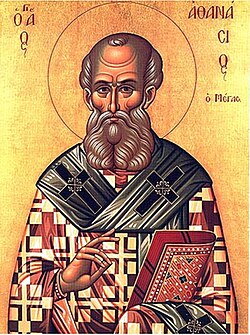
Athanasius of Alexandria
Athanasius I of Alexandria (c. 296–298 – 2 May 373), also called Athanasius the Great, Athanasius the Confessor, or, among Coptic Christians, Athanasius the Apostolic, was a Christian theologian and the 20th patriarch of Alexandria (as Athanasius I). His intermittent episcopacy spanned 45 years (c. 8 June 328 – 2 May 373), of which over 17 encompassed five exiles, when he was replaced on the order of four different Roman emperors. Athanasius was a Church Father, the chief proponent of Trinitarianism against Arianism, and a noted Egyptian Christian leader of the fourth century.
Conflict with Arius and Arianism, as well as with successive Roman emperors, shaped Athanasius' career. In 325, at age 27, Athanasius began his leading role against the Arians as a deacon and assistant to Bishop Alexander of Alexandria during the First Council of Nicaea. Roman Emperor Constantine the Great had convened the council in May–August 325 to address the Arian position that the Son of God, Jesus of Nazareth, is of a distinct substance from the Father. Three years after that council, Athanasius succeeded his mentor as Patriarch of Alexandria. In addition to the conflict with the Arians (including powerful and influential Arian churchmen led by Eusebius of Nicomedia), he struggled against the Emperors Constantine, Constantius II, Julian the Apostate and Valens. He was known as Athanasius Contra Mundum (Latin for 'Athanasius Against the World').
Nonetheless, within a few years of his death, Gregory of Nazianzus called him the "Pillar of the Church". His writings were well regarded by subsequent Church fathers in the West and the East, who noted their devotion to the Word-become-man, pastoral concern and interest in monasticism. Athanasius is considered one of the four great Eastern Doctors of the Church in the Catholic Church. Some argue that, in his Easter letter of 367, Athanasius was the first person to list the 27 books of the New Testament canon that are in use today. Others argue that Origen of Alexandria was the first to list the twenty-seven books of the New Testament in his Homilies on Joshua (only there is a textual variant as to whether or not he included Revelation). Athanasius is venerated as a saint in the Catholic Church, Eastern Orthodox Church, Oriental Orthodox Church, Church of the East, the Anglican Communion, and Lutheranism.
Athanasius was born to a Christian family in Alexandria, or possibly the nearby Nile Delta town of Damanhur, sometime between 293 and 298. The earlier date is sometimes assigned because of the maturity revealed in his two earliest treatises Contra Gentes (Against the Heathens) and De Incarnatione (On the Incarnation), which were likely written circa 318 before Arianism had begun to make itself felt, as those writings do not show an awareness of Arianism.
However, Cornelius Clifford places his birth no earlier than 296 and no later than 298, based on the fact that Athanasius indicates no first-hand recollection of the Maximian persecution of 303, which he suggests Athanasius would have remembered if he had been ten years old at the time. Secondly, the Festal Epistles state that the Arians had accused Athanasius, among other charges, of not having yet attained the canonical age (35) and thus could not have been properly ordained as patriarch of Alexandria in 328. The accusation must have seemed plausible. The Orthodox Church places his year of birth around 297.
His parents were wealthy enough to give him a fine secular education. He was, nevertheless, clearly not a member of the Egyptian aristocracy. Some Western scholars consider his command of Greek, in which he wrote most (if not all) of his surviving works, evidence that he may have been a Greek born in Alexandria. Historical evidence, however, indicates that he was fluent in Coptic as well, given the regions of Egypt where he preached. Some surviving copies of his writings are in fact in Coptic, though scholars differ as to whether he wrote them in Coptic originally (which would make him the first patriarch to do so) or whether these were translations of writings originally in Greek.
Rufinus relates a story that as Bishop Alexander stood by a window, he watched boys playing on the seashore below, imitating the ritual of Christian baptism. He sent for the children and discovered that one of the boys (Athanasius) had acted as bishop. After questioning Athanasius, Bishop Alexander informed him that the baptisms were genuine, as both the form and matter of the sacrament had been performed through the recitation of the correct words and the administration of water, and that he must not continue to do this as those baptized had not been properly catechized. He invited Athanasius and his playfellows to prepare for clerical careers.
Alexandria was the most important trade centre in the empire during Athanasius's boyhood. Intellectually, morally, and politically—it epitomized the ethnically diverse Graeco-Roman world, even more than Rome or Constantinople, Antioch or Marseilles. Its famous catechetical school, while sacrificing none of its famous passion for orthodoxy since the days of Pantaenus, Clement of Alexandria, Origen, Dionysius and Theognostus, had begun to take on an almost secular character in the comprehensiveness of its interests and had counted influential pagans among its serious auditors.
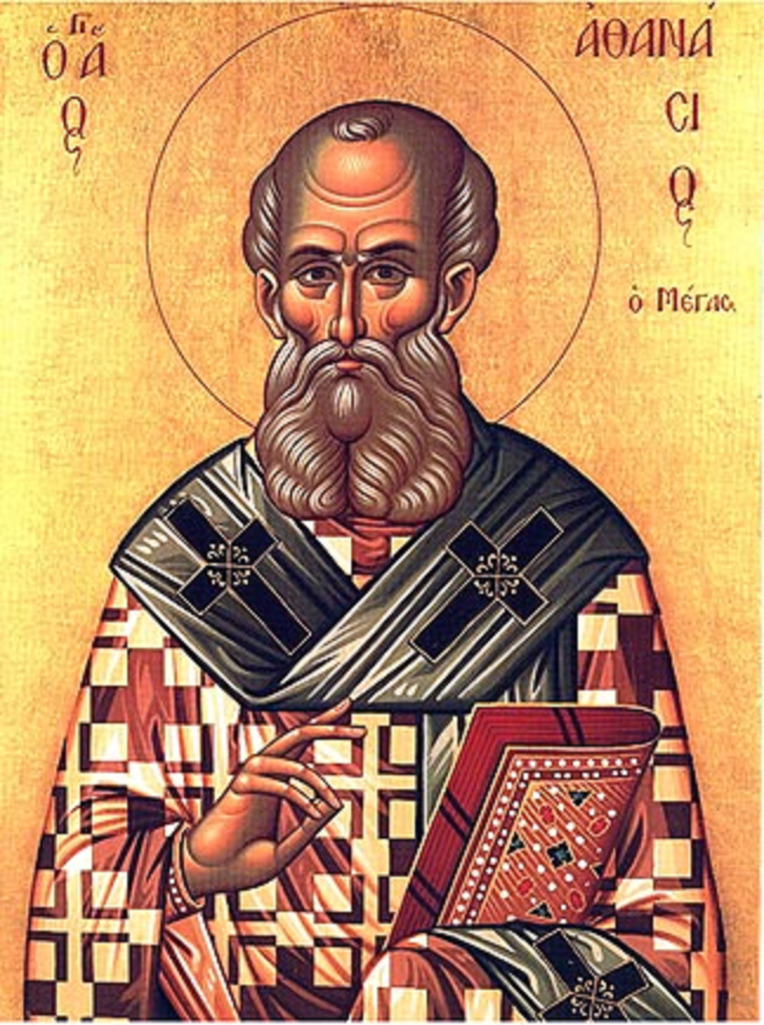
Athanasius of Alexandria
Athanasius I of Alexandria (c. 296–298 – 2 May 373), also called Athanasius the Great, Athanasius the Confessor, or, among Coptic Christians, Athanasius the Apostolic, was a Christian theologian and the 20th patriarch of Alexandria (as Athanasius I). His intermittent episcopacy spanned 45 years (c. 8 June 328 – 2 May 373), of which over 17 encompassed five exiles, when he was replaced on the order of four different Roman emperors. Athanasius was a Church Father, the chief proponent of Trinitarianism against Arianism, and a noted Egyptian Christian leader of the fourth century.
Conflict with Arius and Arianism, as well as with successive Roman emperors, shaped Athanasius' career. In 325, at age 27, Athanasius began his leading role against the Arians as a deacon and assistant to Bishop Alexander of Alexandria during the First Council of Nicaea. Roman Emperor Constantine the Great had convened the council in May–August 325 to address the Arian position that the Son of God, Jesus of Nazareth, is of a distinct substance from the Father. Three years after that council, Athanasius succeeded his mentor as Patriarch of Alexandria. In addition to the conflict with the Arians (including powerful and influential Arian churchmen led by Eusebius of Nicomedia), he struggled against the Emperors Constantine, Constantius II, Julian the Apostate and Valens. He was known as Athanasius Contra Mundum (Latin for 'Athanasius Against the World').
Nonetheless, within a few years of his death, Gregory of Nazianzus called him the "Pillar of the Church". His writings were well regarded by subsequent Church fathers in the West and the East, who noted their devotion to the Word-become-man, pastoral concern and interest in monasticism. Athanasius is considered one of the four great Eastern Doctors of the Church in the Catholic Church. Some argue that, in his Easter letter of 367, Athanasius was the first person to list the 27 books of the New Testament canon that are in use today. Others argue that Origen of Alexandria was the first to list the twenty-seven books of the New Testament in his Homilies on Joshua (only there is a textual variant as to whether or not he included Revelation). Athanasius is venerated as a saint in the Catholic Church, Eastern Orthodox Church, Oriental Orthodox Church, Church of the East, the Anglican Communion, and Lutheranism.
Athanasius was born to a Christian family in Alexandria, or possibly the nearby Nile Delta town of Damanhur, sometime between 293 and 298. The earlier date is sometimes assigned because of the maturity revealed in his two earliest treatises Contra Gentes (Against the Heathens) and De Incarnatione (On the Incarnation), which were likely written circa 318 before Arianism had begun to make itself felt, as those writings do not show an awareness of Arianism.
However, Cornelius Clifford places his birth no earlier than 296 and no later than 298, based on the fact that Athanasius indicates no first-hand recollection of the Maximian persecution of 303, which he suggests Athanasius would have remembered if he had been ten years old at the time. Secondly, the Festal Epistles state that the Arians had accused Athanasius, among other charges, of not having yet attained the canonical age (35) and thus could not have been properly ordained as patriarch of Alexandria in 328. The accusation must have seemed plausible. The Orthodox Church places his year of birth around 297.
His parents were wealthy enough to give him a fine secular education. He was, nevertheless, clearly not a member of the Egyptian aristocracy. Some Western scholars consider his command of Greek, in which he wrote most (if not all) of his surviving works, evidence that he may have been a Greek born in Alexandria. Historical evidence, however, indicates that he was fluent in Coptic as well, given the regions of Egypt where he preached. Some surviving copies of his writings are in fact in Coptic, though scholars differ as to whether he wrote them in Coptic originally (which would make him the first patriarch to do so) or whether these were translations of writings originally in Greek.
Rufinus relates a story that as Bishop Alexander stood by a window, he watched boys playing on the seashore below, imitating the ritual of Christian baptism. He sent for the children and discovered that one of the boys (Athanasius) had acted as bishop. After questioning Athanasius, Bishop Alexander informed him that the baptisms were genuine, as both the form and matter of the sacrament had been performed through the recitation of the correct words and the administration of water, and that he must not continue to do this as those baptized had not been properly catechized. He invited Athanasius and his playfellows to prepare for clerical careers.
Alexandria was the most important trade centre in the empire during Athanasius's boyhood. Intellectually, morally, and politically—it epitomized the ethnically diverse Graeco-Roman world, even more than Rome or Constantinople, Antioch or Marseilles. Its famous catechetical school, while sacrificing none of its famous passion for orthodoxy since the days of Pantaenus, Clement of Alexandria, Origen, Dionysius and Theognostus, had begun to take on an almost secular character in the comprehensiveness of its interests and had counted influential pagans among its serious auditors.
Recent media
Recent media