Hubbry Logo
Launch vehicle system testsLaunch vehicle system testsMain
Open search
Launch vehicle system tests
Community hub
Launch vehicle system tests
logo
8 pages, 0 posts
0 subscribers
Be the first to start a discussion here.
Launch vehicle system tests
from Wikipedia
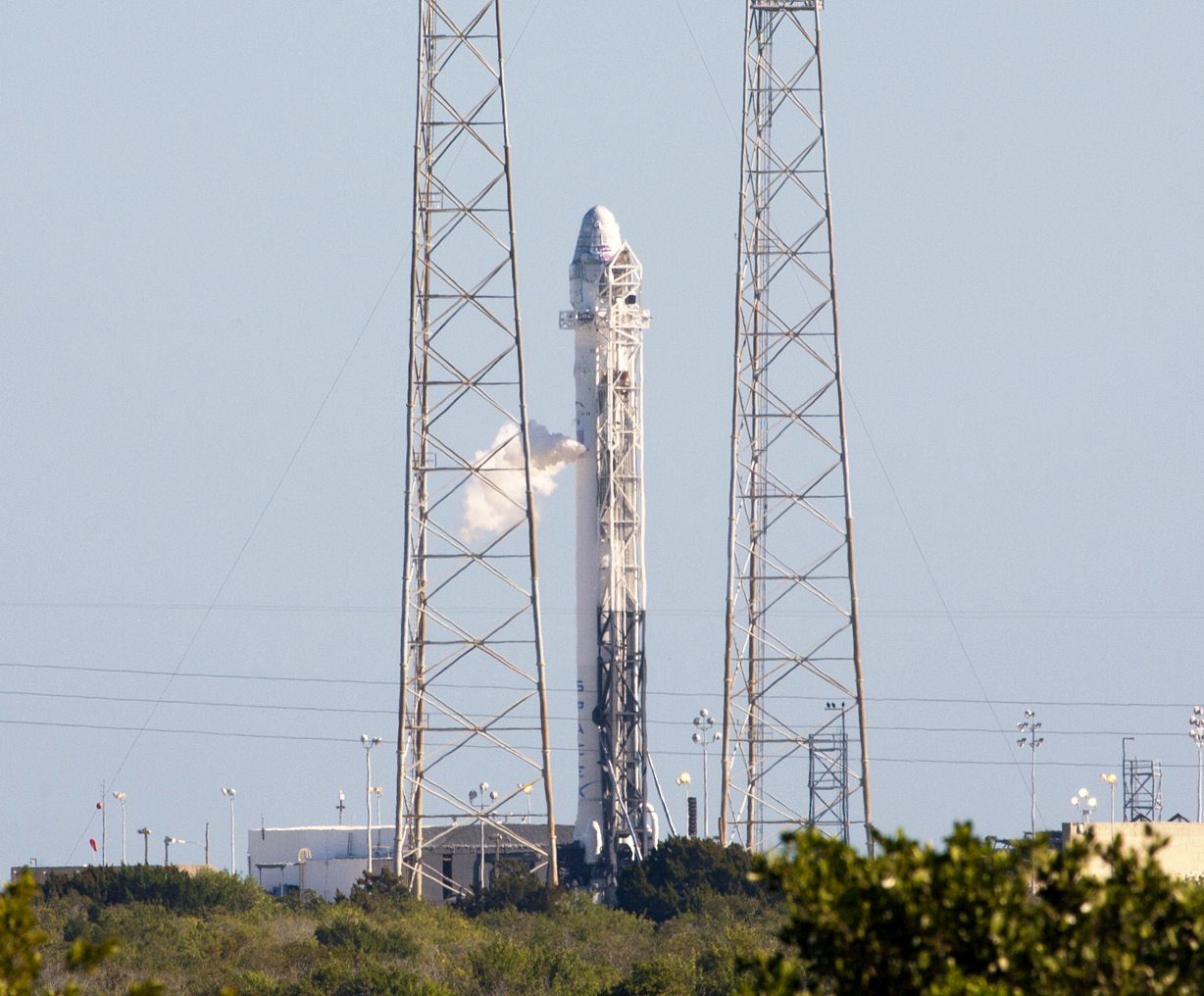
A Falcon 9 rocket during a Wet Dress Rehearsal on 1 March 2012

Launch vehicle system tests assess the readiness of a launch system to safely reach orbit. Launch vehicles undergo system tests before they launch. Wet dress rehearsals (WDR) and more extensive static fire tests prepare fully assembled launch vehicles and their associated ground support equipment (GSE) prior to launch. The spacecraft/payload may or may not be attached to the launch vehicle during the WDR or static fire, but sufficient elements of the rocket and all relevant ground support equipment are in place to help verify that the rocket is ready for flight.

Propellant load tests and static fire tests may also be done on prototype rocket stages, in which case no fully assembled launch vehicle is involved, as is the case of the SpaceX Starship stages, the booster Super Heavy and the second stage Starship.

Wet dress rehearsal

[edit]

A wet dress rehearsal[1] is called "wet" because the liquid propellant components (such as liquid oxygen, liquid hydrogen, etc.) are loaded into the rocket during the test. In a pure wet dress rehearsal the rocket engines are not ignited. Wet dress rehearsals may be used on production launch vehicles before each flight[2] or on prototypes under development.[3]

Static fire

[edit]

A static fire test includes a wet dress rehearsal and adds the step of firing the engines at full thrust.[3] The engine(s) are fired for a few seconds while the launch vehicle is held firmly attached to the launch mount. This tests engine startup while measuring pressure, temperature and propellant-flow gradients, and can be performed with or without payload. The data gathered in such tests may be used to form a unique (rocket- and engine-specific) set of criteria as part of the go/no-go decision tree in the launch software that is used on launch day. Some static fire tests have fired the engines for twelve[4] and even twenty seconds,[5] although shorter firings are more typical.[6][7]

Use

[edit]

Many launch service providers do not regularly perform wet dress rehearsals on new launch vehicles; as of 2018 some regularly perform wet dress rehearsals or even full static fire tests on the launch mount. For example, SpaceX typically performs a full static fire on every new booster before it's first flight. They typically do not static fire reflown boosters unless they are to be used for a crewed launch. In January 2018, SpaceX did two wet dress rehearsals on the Zuma Falcon 9 mission, and conducted multiple wet dress rehearsals on the Falcon Heavy launch vehicle which had its maiden launch on 6 February 2018. Both were explicitly booked as wet dress rehearsals, but with the option to proceed to a static fire test. The second wet dress rehearsal on 24 January 2018 led to a full 12-second static fire test of the 27 engines of the Falcon Heavy — a much longer static fire test than the typical 3–7 second duration tests SpaceX uses for the Falcon 9.[8]

Anomalies

[edit]

Wet rehearsal and static fire tests can fail catastrophically, such as that which resulted in a pad explosion of a SpaceX Falcon 9 on September 1, 2016.[9] The failure resulted from a major breach of the cryogenic helium system of the second stage during propellant-loading operations. The explosion destroyed the rocket and its payload - the AMOS-6 satellite. Furthermore, due to extensive fire, the SLC-40 launch pad was heavily damaged and had to be rebuilt.[10][11]

Static fire test failures have resulted in the unintentional launch of the test vehicle. On June 6, 1952, Viking 8 broke loose of its moorings during a static fire test. After 55 seconds of flight, a command was sent to cut propulsion, and the rocket crashed 4 miles (6 km) or 5 miles (8 km) downrange.[12]: 172–181  On June 30, 2024, during a static fire test of the first stage of the Space Pioneer Tianlong-3, a structural failure between the rocket and test stand resulted in an unintentional launch.[13][14] The rocket landed and exploded in the nearby mountains.

See also

[edit]

References

[edit]
[edit]
Revisions and contributorsEdit on WikipediaRead on Wikipedia
from Grokipedia
Launch vehicle system tests are comprehensive ground-based evaluations conducted on the components, subsystems, and integrated structures of rockets designed for launches to verify functionality, structural integrity, and performance under simulated flight environments. These tests, governed by standards such as those from the Space and Missile Systems Center, include unit-level assessments for individual hardware like valves or batteries, subsystem integrations such as or control systems, and full vehicle acceptance trials to detect defects, confirm margins, and ensure flightworthiness prior to launch. The primary purposes of these tests are to mitigate risks associated with , qualify hardware for operational use, and identify potential failures early in the development process, thereby enhancing overall mission reliability and safety. For instance, environmental simulations like (at levels 6 dB above maximum predicted environments for qualification), acoustic exposure, thermal vacuum cycling (up to 27 cycles at extremes 10°C beyond operational limits), and static load proofs (1.4 times limit loads for manned vehicles) replicate the harsh conditions of ascent, including dynamic loads, pressure changes, and fluctuations. tests, in particular, focus on workmanship screening and verification at hot and cold limits, ensuring no yielding, rupture, or deformation occurs while validating compatibility with launch infrastructure. Beyond technical validation, launch vehicle system tests play a critical role in cost management and incident prevention, as addressing issues during ground testing is significantly less expensive—up to 100 times cheaper—than resolving them post-launch or on-orbit. Historical examples underscore their importance; the 2009 loss of NASA's Orbiting Carbon Observatory (OCO-1) mission, which cost $209 million, due to a payload fairing separation failure later attributed (in a 2019 investigation) to falsified test data and faulty materials from a supplier, highlighting how compromised testing processes can lead to catastrophic failures. Similarly, the 2011 Glory mission failure ($388 million), caused by the same fairing separation issue due to the supplier's falsified certifications, contrasted with the success of OCO-2 (2014, $468 million) on a different launch vehicle, demonstrating the value of rigorous and verified testing in safeguarding high-stakes investments and human-rated flights, where margins are elevated to prioritize crew safety.

Overview

Definition and Objectives

Launch vehicle system tests constitute integrated evaluations of the full stack, incorporating systems, , structural elements, and ground support , to simulate pre-flight conditions without executing an actual ascent. These tests focus on the holistic performance and of the vehicle as an assembled unit, distinguishing them from component-level verifications such as isolated engine firings that assess individual subsystems in isolation. By replicating environmental stresses, operational sequences, and interface dynamics, they ensure the vehicle can withstand launch-site rigors and transition seamlessly to flight. The core objectives of these tests are to validate end-to-end , uncover latent faults or incompatibilities prior to launch, confirm the accuracy of protocols and cryogenic management, and affirm the vehicle's capability for successful orbital insertion. This process aligns with the "test like you fly" philosophy, a NASA-endorsed standard that prioritizes operationally realistic scenarios using flight hardware, software, and timelines to mirror mission demands and thereby enhance overall reliability. Primary examples of such system tests include wet dress rehearsals and static fire tests, which collectively mitigate risks associated with vehicle-ground interactions. Conducted days to weeks before scheduled liftoff at the , these tests provide critical baseline data and enable last-minute adjustments to transportation or assembly-induced variances. They are required under U.S. regulations like 14 CFR Part 417, which mandate demonstrations of flight safety system integrity, including command destruct capabilities and public risk controls. In modern programs, such integrated testing has contributed to on-pad failure risk reduction, supporting launch success rates exceeding 98% in recent operational campaigns as of 2023.

Historical Development

The foundational era of launch vehicle system tests emerged in the early with Robert H. 's pioneering work on . conducted the first static test of a liquid-fueled in December 1925 at his , facility, verifying propellant flow and combustion stability after earlier bench tests beginning in 1923. This was followed by the historic launch of the world's first on March 16, 1926, which rose 41 feet and traveled 184 feet, demonstrating the viability of controlled thrust for future systems. During , the German V-2 program elevated testing to industrial scales, conducting extensive static firings at Peenemünde's to refine the rocket's and alcohol for reliability under combat conditions. Completed in early , this facility enabled full-duration engine burns up to 25 tons of thrust, identifying issues like failures before flight integration and contributing to over 3,000 V-2 launches by war's end. These efforts established static testing as essential for scaling technology to operational use. In the post-war period, Soviet rocketry advanced through rigorous ground testing, exemplified by the program's static firings in the mid-1950s at . These tests validated the clustered engine design and staging mechanisms, enabling the R-7 to serve as the world's first in 1957 and to launch , the first artificial satellite, later that year. In the Cold War period, the U.S. program of the 1960s introduced comprehensive full-stack integrated tests, including structural vibration surveys and wet dress rehearsals at , to validate the Apollo launch system's performance under simulated mission loads. For instance, Apollo 4's underwent months of integrated checkout in 1967, encompassing propellant loading and countdown simulations that confirmed interstage separation and ascent dynamics. This approach ensured the rocket's unprecedented reliability across 13 launches. The 1970s standardized static fire tests for reusable components, with main engine firings at beginning in May 1975 to certify throttle control and thermal protection, while solid rocket booster proofs verified structural . Japan's development in the same decade, starting with the N-I in 1970 under a U.S. agreement, incorporated adapted Delta-derived ground tests for the LE-3 engine, culminating in successful static firings by 1975 that supported seven operational launches through 1982. In the 1990s, NASA's Titan II transitions from ICBM to space launcher involved ground tests, including aeroelastic model validations from 1988 to 1996, to assess dynamics and vibration modes for missions like Landsat. The commercial era accelerated in the 2010s with SpaceX's , whose iterative testing paradigm featured the first full-duration static fire on March 13, 2010, at , firing all nine engines for 3.5 seconds to validate integration and reusability precursors like cryogenic proofs. This shift from government-led to agile private practices emphasized rapid anomaly resolution. Overall, these advancements reflect a progression from isolated component checks to holistic "test like you fly" methodologies, as formalized in NASA's 2014 , which mandates replicating mission phases such as ascent and separation to enhance fault detection and system assurance.

Primary Test Types

Wet Dress Rehearsal

The wet dress rehearsal (WDR) is a critical pre-launch test for launch vehicles, simulating the full sequence through loading, pressurization, and defueling without engine ignition. This process involves loading cryogenic s, such as (LOX) and liquid hydrogen (LH2), into the vehicle's tanks from the propellant farm, followed by system pressurization to verify the of valves, seals, and ground interfaces for leaks or anomalies. It tests the integration of the vehicle's systems with (GSE), ensuring seamless synchronization during the simulated launch timeline. Key procedures in a WDR begin with tank chill-down using subcooled s to prevent ice buildup in lines and tanks, followed by transfer from the farm to the vehicle at controlled flow rates—typically over 1,000 gallons per minute for LOX to achieve efficient loading. The test then progresses to pressurization of the s using or other inert gases, monitoring for (the unsettled at the 's top) to confirm settling mechanisms and prevent issues. Environmental controls, such as insulation and , manage boil-off rates during the hold periods, with the entire sequence usually lasting 4-6 hours before controlled defueling. GSE ensures automated valves and umbilicals operate in unison with the vehicle's flight computers. The WDR originated in NASA's during the 1960s as part of the Countdown Demonstration Test (CDDT), where the "wet" phase loaded the with cryogens to validate pad operations. In modern applications, SpaceX's 2023 WDR at Starbase integrated full-stack fueling with orbital launch pad procedures, demonstrating readiness for complex stacked vehicle tests. Conversely, discontinued routine WDRs for launches several years before 2016 to streamline turnaround times and reduce operational costs. For reusable systems like SpaceX's , WDRs confirm system reliability, supporting rapid reuse goals such as 24-hour reflights by verifying quick loading and venting cycles. Concepts like ullage verification during holds ensure stability for ignition readiness, while boil-off controls maintain density—critical for mission success in cryogenic environments. This test typically precedes the static fire in the overall sequence.

Static Fire Test

A static fire test involves igniting the engines of a while it remains secured to the , simulating the initial moments of flight without allowing liftoff to verify system , structural , and overall stability. The is restrained by heavy bolts or hydraulic hold-down clamps that prevent release upon ignition, enabling the test to assess generation, engine startup sequences, and dynamic loads such as vibrations and acoustic pressures on the . These tests typically last from a few seconds to several minutes, depending on the mission profile, and focus on confirming that the systems operate within nominal parameters under full-throttle conditions. Key elements of a static fire test include the use of hold-down mechanisms to maintain the vehicle in place, allowing engineers to evaluate thrust vector control (TVC) systems that gimbal engines for steering, as well as structural loads and vibration damping across the vehicle. For instance, SpaceX's Falcon 9 conducts full-throttle runs of its nine Merlin engines, producing a total thrust of approximately 1.3 million pounds-force during early tests, to validate integrated performance following a wet dress rehearsal that confirms fueling systems. Telemetry data collected in real-time monitors critical parameters, such as chamber pressures nominally around 1,000 psi for certain engines, while predefined abort criteria—such as excessive over-temperature or pressure deviations—trigger automatic engine shutdowns to protect the vehicle and pad infrastructure. Exhaust plumes are directed into a flame trench, a concrete-lined channel that deflects and dissipates the high-velocity gases, mitigating damage to the launch mount and surrounding areas. Notable examples illustrate the test's role in launch vehicle development and operations. SpaceX performed the first static fire of a Falcon 9 first stage on March 13, 2010, with a 3.5-second firing of its nine Merlin 1C engines to confirm integrated propulsion readiness ahead of the vehicle's . In 2024, SpaceX achieved a 33-engine static fire on October 24 for the Super Heavy booster of its system, validating the simultaneous operation of all Raptor engines under full duration to support upcoming flight tests. NASA's (SLS) conducted a qualification static fire of a five-segment in June 2021 at Northrop Grumman's facility, generating 3.6 million pounds-force of to qualify the boosters for missions, where paired units contribute over 7 million pounds-force to the total liftoff . Rocket Lab has made static fires routine for its rocket since its inaugural launches in 2017, conducting pre-launch engine hot-fires to ensure reliability of the nine Rutherford engines, each producing about 5,600 pounds-force. In contrast, United Launch Alliance has phased out routine pre-launch static fires for some mature vehicles like the after achieving high reliability, relying instead on component-level testing, though newer systems like still perform them.

Test Procedures

Preparation and Setup

Preparation for launch vehicle system tests begins with the logistical transportation of vehicle components to the test site or , often involving specialized infrastructure to handle immense weights and ensure structural integrity. For instance, at NASA's , the core stage is transported via barge from the to for initial testing, then transported by barge to , where it is processed in the and stacked with other components onto the . The complete SLS stack is then moved to Launch Complex 39B using an upgraded , which can carry the stack and its approximately 5,800-ton (11.5 million pound) —a total load of approximately 15 million pounds, within the crawler's 18 million pound capacity—across the approximately 4-mile journey to the pad. Similarly, at SpaceX's Starbase facility, cryogenic proof tests of tank sections, such as those for the Super Heavy booster, are conducted prior to full vehicle stacking and pad integration to verify structural readiness under extreme thermal conditions. Technical preparations include extensive sensor integration to monitor vehicle performance and structural health during tests. Launch vehicles are outfitted with hundreds to thousands of sensors, such as strain gauges to measure structural loads and accelerometers to detect vibrations, along with pressure transducers and thermocouples; for the SLS engine section alone, over 500 sensors are installed, connected via 18 miles of cabling, enabling real-time data acquisition across more than a million channels for the full vehicle. Ground support equipment (GSE) connections are then established, including umbilicals that supply power, data links, conditioned air, and pressurized gases like nitrogen or helium, while incorporating emergency disconnect mechanisms—such as lanyard-release or pyrotechnic systems—that automatically sever connections during anomalies to prevent damage. Test stands, such as the B-2 stand at Stennis for SLS core stage testing, provide the structural interface, often augmented by nitrogen (N2) and helium (He) purge systems to maintain clean environments and prevent contamination of fuel systems or optics by displacing ambient air and moisture. Safety protocols are integral to setup, beginning with comprehensive hazard analysis using methods like Systems-Theoretic Process Analysis (STPA), which models control structures to identify potential unsafe interactions in complex systems such as launch vehicles, rather than relying solely on failure probabilities. This informs the establishment of evacuation zones around the pad, typically extending several miles based on overpressure and toxic plume modeling, and the activation of fire suppression infrastructure, including water deluge systems with a peak flow rate exceeding 1 million gallons per minute to mitigate acoustic shock, heat, and potential fires during tests. Preparations culminate in integration with launch control centers, where supervisory control and data acquisition (SCADA)-like systems monitor up to 400,000 control points in real time, enforcing "redline" limits—predefined thresholds for parameters like engine chamber pressure or tank pressures—that trigger automatic aborts if exceeded to safeguard personnel and hardware. These measures ensure the vehicle and supporting infrastructure are fully configured and verified as safe before proceeding to test execution, applicable to procedures like wet dress rehearsals and static fires.

Execution and Data Analysis

The execution of launch vehicle system tests, such as wet dress rehearsals and static fire tests, involves a structured sequence managed by integrated control systems to simulate flight conditions precisely. This includes "L-minus" timing for pre-liftoff preparations and "T-minus" for engine-specific countdowns, ensuring synchronization across subsystems like and . polls are conducted at critical milestones by cross-functional teams, including launch directors, engineers, and safety officers, to confirm system readiness or halt proceedings if issues arise. Real-time streaming supports these phases, often relayed through NASA's Tracking and Data Relay Satellite System (TDRSS), which provides near-continuous coverage for vehicle position, performance metrics, and command uplinks during ascent-like simulations. Abort sequences are predefined for anomalies, such as pressure deviations or sensor failures, triggering automated or manual shutdowns to protect personnel and hardware; for instance, emergency detection systems in modern vehicles initiate rapid isolation and recovery protocols. Data collection during these tests employs diverse to capture comprehensive performance indicators. High-speed cameras, operating at thousands of frames per second, record and plume behavior for post-processing analysis of events like engine ignition. spectra are measured using accelerometers distributed across the to quantify acoustic loads and modal responses, ensuring structural under simulated . systems monitor fluxes on components like nozzles and tanks, identifying hotspots or insulation failures in real time. Following test completion, a post-test propellant scrub—also known as offloading or defueling—removes residual cryogens to verify tank and prevent hazards, with sensors tracking and boil-off rates during the process. Analysis of collected data follows standardized protocols to validate test objectives and inform design refinements. Anomalies are resolved using discrepancy protocols, where a test discrepancy is defined as any anomalous or unexpected condition encountered during the test process, including failures, deviations, or environmental influences; these are documented in discrepancy reports and dispositioned through material review boards to determine acceptability, rework, or rejection. Finite element modeling verifies structural loads by simulating stress distributions from and data against design limits, enabling correlation with empirical measurements for model refinement. For reusable vehicles, examines wear metrics like cycles and material degradation over multiple tests, using historical datasets to predict longevity and schedule maintenance. Iterative fixes are implemented based on these analyses, with and re-testing cycles ensuring issues are addressed before granting flight clearance, as seen in development programs emphasizing physics-based iteration. SpaceX has integrated AI-assisted monitoring into its test workflows since around 2020, leveraging to process raw for and flight data review, accelerating resolution from days to hours. For example, during the 2023 wet dress rehearsal, extensive sensor data from propellant loading and countdown simulations was analyzed rapidly to confirm system performance, highlighting the scale of modern datasets in iterative validation. These methods ensure that wet dress rehearsals and static fire tests not only demonstrate nominal operations but also build a robust evidence base for operational certification.

Applications

In Development and Qualification

Launch vehicle system tests play a crucial role in the development and qualification phases of new vehicles, where they verify structural integrity under extreme conditions, such as proof tests at 150% of expected loads to ensure margins against flight stresses. These qualification efforts often involve iterative testing cycles, where failures during ground tests prompt design refinements to mitigate risks before flight. For instance, following the June 2015 failure due to a separation caused by a material defect, conducted enhanced static fire tests on upgraded boosters, incorporating denser propellants and improved engine throttling to validate corrections and prevent recurrence. Specific examples illustrate this process in modern programs. prototypes, aimed at qualifying Raptor engine clustering for high-thrust operations, underwent more than 20 static fire tests by the end of 2024, accumulating extensive runtime data to refine integration and control systems across multiple vehicle iterations. Similarly, NASA's (SLS) core stage completed its test series, including a full-duration hot fire in 2021 (originally planned for 2019), which qualified the stage's engines, avionics, and propulsion systems for missions by simulating launch countdown and ascent loads. Commercial programs increasingly adopt a "fail fast, learn fast" philosophy, conducting rapid, hardware-rich tests to accelerate iteration and gather real-world data on emerging designs. This approach generates datasets required for regulatory approvals from bodies like the FAA and , encompassing environmental qualification tests such as vibration table simulations to replicate launch acoustics and dynamics at levels exceeding flight expectations. Blue Origin's first stage, for example, performed wet dress rehearsals in late 2024 (building on 2023 preparations) to qualify fueling sequences and engine startup for operational readiness; these efforts culminated in successful maiden and subsequent flights in 2025. Historical analyses of U.S. programs from 1980 to 2015 demonstrate that such rigorous qualification testing significantly enhances mission success rates by identifying and resolving potential failure modes on the ground, thereby reducing overall flight risks.

For Operational Missions

For operational missions, system tests on flight-proven launch vehicles are streamlined to verify post-refurbishment integrity and system readiness while minimizing turnaround time, leveraging the reliability demonstrated in prior flights. These tests confirm the structural and functional health of reused or mature hardware, such as boosters and stages, after maintenance or storage, ensuring they meet flight criteria without the extensive validation required for new designs. For instance, has reduced static fire tests for operational launches since around 2021, skipping them for more than half of missions that year due to the proven reliability of flight-proven first stages, a practice that continues to support high-cadence reusability. Specific examples illustrate this efficiency in routine operations. The launcher underwent integrated system tests prior to each of its 117 launches from 1996 to 2023, achieving a 96% success rate and focusing on payload integration and countdown simulations to maintain reliability across geostationary transfer orbits and other profiles. Similarly, United Launch Alliance's conducted its inaugural certification flight (Cert-1) in January 2024, blending final development validation with operational demonstration to certify the vehicle for routine national security and commercial launches. These confirmatory tests, often limited to essential checks like cryogenic loading and interface verifications, have enabled mature systems to support over 100 annual global orbital launches in recent years. Key concepts in operational testing emphasize turnaround optimization and seamless integration with downstream processes. Providers aim to compress timelines between tests and launch, such as SpaceX's goals for to achieve rapid reusability with turnarounds on the order of 24 to 48 hours post-landing, incorporating abbreviated wet dress rehearsals to facilitate quick restacking and . High pre-launch test success rates, typically exceeding 94% for established vehicles in the , underpin this efficiency by reducing anomalies and enabling the global launch manifest to exceed 250 attempts annually as of 2025.

Anomalies and Lessons Learned

Notable Incidents

One of the earliest notable anomalies in system testing occurred during the mission on April 4, 1968, when the rocket experienced severe pogo oscillations shortly after liftoff during its first-stage burn. These longitudinal vibrations, reaching amplitudes of up to 0.6 g at approximately 5 Hz between 105 and 140 seconds into flight, were triggered by interactions in the feed lines and nearly caused premature engine shutdowns, though the vehicle completed the test. The incident highlighted how test discrepancies, such as these oscillations, can serve as precursors to potential flight risks by revealing structural and propulsion instabilities not fully anticipated in ground simulations. In a more destructive event, SpaceX's rocket and AMOS-6 payload satellite were completely destroyed on September 1, 2016, during propellant loading preparations for a planned static fire test at Cape Canaveral's Launch Complex 40. The explosion originated from a failure in the second-stage tank's helium pressurization system, where oxygen accumulated in a (COPV), leading to a breach and ignition with an estimated yield equivalent to 1-2 tons of TNT. This anomaly, occurring just hours before the scheduled test, delayed SpaceX's subsequent missions, including the CRS-9 resupply flight to the , by several months as investigations and pad repairs ensued. A similar ground-test failure struck SpaceX's Crew Dragon capsule on April 20, 2019, at , where a static fire test of the abort engines resulted in a catastrophic . The immediate cause was a faulty that allowed hypergolic propellants—specifically nitrogen tetroxide oxidizer—to leak into the helium pressurization lines, igniting upon contact and destroying the vehicle's trunk section in a fireball visible for miles. This incident, which occurred during preparations akin to static fire procedures, underscored propellant system vulnerabilities as early indicators of broader flight hazards. More recently, on June 18, 2025, SpaceX's Ship 36 prototype suffered multiple explosions during preparations for a static fire test at the Massey test site in , tearing the vehicle apart in a massive fireball that damaged surrounding . The anomaly happened around 11:00 p.m. CT while pressurizing and loading , with preliminary reports as of June 2025 pointing to a nitrogen (COPV) failure in the payload bay below its proof , though full investigation details remain pending. Such test explosions, with yields on the order of 1-2 tons based on propellant mass involved, exemplify how ground anomalies can preemptively expose risks to integrated vehicle performance. In another 2025 incident, NASA's (SLS) Block 2 booster test on June 26 at Northrop Grumman's facility in ended with the "liberating" energetically about 10 seconds before the planned two-minute hot-fire conclusion. The anomaly, likely due to a structural in the assembly under high-thrust conditions, produced a secondary plume and fire but did not affect the motor's primary burn performance. This event during acceptance hot-fire testing illustrated vulnerabilities as potential precursors to in-flight structural risks. Firefly Aerospace encountered a setback on September 29, 2025, when the first-stage booster for its Alpha Flight 7 rocket exploded during at a vertical stand in Briggs, . The anomaly, detected mid-test, was later determined as of November 2025 to stem from minute contamination in a line due to an assembly process error, leading to in one of the four engines and the vehicle's total destruction just weeks before its scheduled launch. This prompted an FAA mishap investigation, grounding the next flight; the mission has been rescheduled for late Q4 2025 or early Q1 2026 using a subsequent booster. Like other test failures, this highlighted pressurization and contamination discrepancies as harbingers of operational dangers in small-lift vehicles.

Risk Mitigation and Improvements

Risk mitigation in launch vehicle system tests has evolved through the adoption of advanced techniques, such as Systems-Theoretic Process Analysis (STPA), which identifies unsafe control actions and loss scenarios in complex systems to prevent accidents. STPA enhances traditional methods by modeling control structures and pinpointing scenarios leading to hazardous interactions, particularly in operations. Complementary strategies include the integration of redundant sensors for real-time monitoring and AI-driven to detect anomalies in during tests. For instance, AI systems applied in flight review and have been utilized by organizations like to accelerate issue identification and response. Post-incident improvements have focused on hardware and procedural enhancements to address specific failure modes. Following the 2016 AMOS-6 anomaly, which involved a (COPV) failure due to a strut-related issue, revised COPV pressurization protocols and implemented stricter loading procedures to mitigate ignition risks during ground tests. Similarly, the September 2025 Firefly Aerospace Alpha booster explosion on a test stand in Briggs, , prompted a comprehensive damage assessment and safety review. As of November 2025, corrective actions included increased inspection requirements for fluid systems, optimization of first-stage sensors, addition of automated aborts for testing, and a quality stand-down to implement process improvements, with no injuries or external damage reported. These adaptations emphasize robust controls and rapid post-test evaluations. Key concepts in risk mitigation include collaborative root-cause analysis frameworks, such as those promoted in NASA's annual Spacecraft Anomalies and Failures (SCAF) workshops, which facilitate sharing of anomaly attribution best practices and refine methodologies for investigating on-orbit, launch, and ground failures. Additionally, simulation tools like digital twins—virtual replicas of physical systems—enable predictive modeling to simulate test scenarios, thereby reducing the frequency and scale of physical tests while minimizing risks. From 2023 to 2025, the broader adoption of digital twins in testing has contributed to overall efficiency gains, though specific quantitative reductions in test failures vary by program. Regulatory frameworks further support these improvements by mandating structured protocols. Under 14 CFR Part 417, launch operators must submit detailed schedules for reviews, rehearsals, and safety-critical processing to ensure compliance with flight safety limits and public risk controls. In practice, the SLS program's response to the June 2025 BOLE booster test anomaly, where nozzle debris was observed during firing, involved investigations that informed upgrades to nozzle components, including advanced materials for enhanced durability in Block 2 configurations. These measures collectively advance safer test environments for operational missions.

References

Add your contribution
Related Hubs
User Avatar
No comments yet.