


Community hub
Recent from talks
Contribute something
Nothing was collected or created yet.
Spaceflight
View on Wikipedia
| Part of a series on |
| Spaceflight |
|---|
 |
 Spaceflight portal Spaceflight portal |
Spaceflight (or space flight) is an application of astronautics to fly objects, usually spacecraft, into or through outer space, either with or without humans on board. Most spaceflight is uncrewed and conducted mainly with spacecraft such as satellites in orbit around Earth, but also includes space probes for flights beyond Earth orbit. Such spaceflights operate either by telerobotic or autonomous control. The first spaceflights began in the 1950s with the launches of the Soviet Sputnik satellites and American Explorer and Vanguard missions. Human spaceflight programs include the Soyuz, Shenzhou, the past Apollo Moon landing and the Space Shuttle programs. Other current spaceflight are conducted to the International Space Station and to China's Tiangong Space Station.
Spaceflights include the launches of Earth observation and telecommunications satellites, interplanetary missions, the rendezvouses and dockings with space stations, and crewed spaceflights on scientific or tourist missions.
Spaceflight can be achieved conventionally via multistage rockets, which provide the thrust to overcome the force of gravity and propel spacecraft onto suborbital trajectories. If the mission is orbital, the spacecraft usually separates the first stage and ignites the second stage, which propels the spacecraft to high enough speeds that it reaches orbit. Once in orbit, spacecraft are at high enough speeds that they fall around the Earth rather than fall back to the surface.
Most spacecraft, and all crewed spacecraft, are designed to deorbit themselves or, in the case of uncrewed spacecraft in high-energy orbits, to boost themselves into graveyard orbits. Used upper stages or failed spacecraft, however, often lack the ability to deorbit themselves. This becomes a major issue when large numbers of uncontrollable spacecraft exist in frequently used orbits, increasing the risk of debris colliding with functional satellites. This problem is exacerbated when large objects, often upper stages, break up in orbit or collide with other objects, creating often hundreds of small, hard to find pieces of debris. This problem of continuous collisions is known as Kessler syndrome.
Terminology
[edit]There are several terms that refer to a flight into or through outer space.
A space mission refers to a spaceflight intended to achieve an objective. Objectives for space missions may include space exploration, space research, and national firsts in spaceflight.
Space transport is the use of spacecraft to transport people or cargo into or through outer space. This may include human spaceflight and cargo spacecraft flight.
History
[edit]The first theoretical proposal of space travel using rockets was published by Scottish astronomer and mathematician William Leitch, in an 1861 essay "A Journey Through Space".[1] More well-known is Konstantin Tsiolkovsky's work, "Исследование мировых пространств реактивными приборами" (The Exploration of Cosmic Space by Means of Reaction Devices), published in 1903. In his work, Tsiolkovsky describes the fundamental rocket equation:
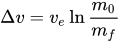
Where:
- () is the change in the rocket's velocity
- () is the exhaust velocity
- () and () are the initial and final masses of the rocket


This equation, known as the Tsiolkovsky rocket equation, can be used to find the total , or potential change in velocity. This formula, which is still used by engineers, is a key concept of spaceflight.
Spaceflight became a practical possibility with the work of Robert H. Goddard's publication in 1919 of his paper A Method of Reaching Extreme Altitudes. His application of the de Laval nozzle to liquid-fuel rockets improved efficiency enough for interplanetary travel to become possible. After further research, Goddard attempted to secure an Army contract for a rocket-propelled weapon in the first World War but his plans were foiled by the November 11, 1918 armistice with Germany. After choosing to work with private financial support, he was the first to launch a liquid-fueled rocket on March 16, 1926.

During World War II, the first guided rocket, the V-2, was developed and employed as a weapon by Nazi Germany. During a test flight in June 1944, one such rocket reached space at an altitude of 189 kilometers (102 nautical miles), becoming the first human-made object to reach space.[2] At the end of World War II, most of the V-2 rocket team, including its head, Wernher von Braun, surrendered to the United States, and were expatriated to work on American missiles at what became the Army Ballistic Missile Agency, producing missiles such as Juno I and Atlas. The Soviet Union, in turn, captured several V2 production facilities and built several replicas, with 5 of their 11 rockets successfully reaching their targets. (This was relatively consistent with Nazi Germany's success rate.)
The Soviet Union developed intercontinental ballistic missiles to carry nuclear weapons as a counter measure to United States bomber planes in the 1950s. The Tsiolkovsky-influenced Sergey Korolev became the chief rocket designer, and derivatives of his R-7 Semyorka missiles were used to launch the world's first artificial Earth satellite, Sputnik 1, on October 4, 1957.
The U.S., after the launch of Sputnik and two embarrassing failures of Vanguard rockets, launched Explorer 1 on February 1, 1958. Three years later, the USSR launched Vostok 1, carrying cosmonaut Yuri Gagarin into orbit. The US responded with the suborbital launch of Alan Shepard on May 5, 1961, and the orbital launch of John Glenn on February 20, 1962. These events were followed by a pledge from U.S. President John F. Kennedy to go to the moon and the creation of the Gemini and Apollo programs. After successfully performing a rendezvous and docking and an EVA, the Gemini program ended just before the Apollo 1 tragedy. Following multiple uncrewed test flights of the Saturn 1B and the Saturn V, the U.S. launched the crewed Apollo 7 mission into low Earth orbit. Shortly after its successful completion, the U.S. launched Apollo 8 (first mission to orbit the Moon), Apollo 9 (first Apollo mission to launch with both the CSM and the LEM) and Apollo 10 (first mission to nearly land on the Moon). These events culminated with the first crewed Moon landing, Apollo 11, and six subsequent missions, five of which successfully landed on the Moon.
Spaceflight has been widely employed by numerous government and commercial entities for placing satellites into orbit around Earth for a broad range of purposes. Certain government agencies have also sent uncrewed spacecraft exploring space beyond the Moon and developed continuous crewed human presence in space with a series of space stations, ranging from the Salyut program to the International Space Station.
Phases
[edit]Launch
[edit]Rockets are the only means currently capable of reaching orbit or beyond. Other non-rocket spacelaunch technologies have yet to be built, or remain short of orbital speeds. A rocket launch for a spaceflight usually starts from a spaceport (cosmodrome), which may be equipped with launch complexes and launch pads for vertical rocket launches and runways for takeoff and landing of carrier airplanes and winged spacecraft. Spaceports are situated well away from human habitation for noise and safety reasons. ICBMs have various special launching facilities.
A launch is often restricted to certain launch windows. These windows depend upon the position of celestial bodies and orbits relative to the launch site. The biggest influence is often the rotation of the Earth. Once launched, orbits are normally located within relatively constant flat planes at a fixed angle to the axis of the Earth, and the Earth rotates within this orbit.
A launch pad is a fixed structure designed to dispatch airborne vehicles. It generally consists of a launch tower and flame trench. It is surrounded by equipment used to erect, fuel, and maintain launch vehicles. Before launch, the rocket can weigh hundreds of tons. The Space Shuttle Columbia, on STS-1, weighed 2030 metric tons (4,480,000 lb) at takeoff.
Reaching space
[edit]The most commonly used definition of outer space is everything beyond the Kármán line, which is 100 kilometers (62 mi) above the Earth's surface. (The United States defines outer space as everything beyond 50 miles (80 km) in altitude.)
Rocket engines remain the only currently practical means of reaching space, with planes and high-altitude balloons failing due to lack of atmosphere and alternatives such as space elevators not yet being built. Chemical propulsion, or the acceleration of gases at high velocities, is effective mainly because of its ability to sustain thrust even as the atmosphere thins.
Alternatives
[edit]Many ways to reach space other than rocket engines have been proposed. Ideas such as the space elevator, and momentum exchange tethers like rotovators or skyhooks require new materials much stronger than any currently known. Electromagnetic launchers such as launch loops might be feasible with current technology. Other ideas include rocket-assisted aircraft/spaceplanes such as Reaction Engines Skylon (currently in early stage development), scramjet powered spaceplanes, and RBCC powered spaceplanes. Gun launch has been proposed for cargo.
Leaving orbit
[edit]On some missions beyond LEO (Low Earth Orbit), spacecraft are inserted into parking orbits, or lower intermediary orbits. The parking orbit approach greatly simplified Apollo mission planning in several important ways. It acted as a "time buffer" and substantially widened the allowable launch windows. The parking orbit gave the crew and controllers time to thoroughly check out the spacecraft after the stresses of launch before committing it for a long journey to the Moon.[3]

Robotic missions do not require an abort capability and require radiation minimalization only for delicate electronics, and because modern launchers routinely meet "instantaneous" launch windows, space probes to the Moon and other planets generally use direct injection to maximize performance by limiting the boil off of cryogenic propellants. Although some might coast briefly during the launch sequence, they do not complete one or more full parking orbits before the burn that injects them onto an Earth escape trajectory.
The escape velocity from a celestial body decreases as the distance from the body increases. However, it is more fuel-efficient for a craft to burn its fuel as close as possible to its periapsis (lowest point); see Oberth effect.[5]
Astrodynamics
[edit]Astrodynamics is the study of spacecraft trajectories, particularly as they relate to gravitational and propulsion effects. Astrodynamics allows for a spacecraft to arrive at its destination at the correct time without excessive propellant use. An orbital maneuvering system may be needed to maintain or change orbits.
Non-rocket orbital propulsion methods include solar sails, magnetic sails, plasma-bubble magnetic systems, and using gravitational slingshot effects.


Transfer energy
[edit]The term "transfer energy" means the total amount of energy imparted by a rocket stage to its payload. This can be the energy imparted by a first stage of a launch vehicle to an upper stage plus payload, or by an upper stage or spacecraft kick motor to a spacecraft.[6][7]
Reaching space station
[edit]In order to reach a space station, a spacecraft would have to arrive at the same orbit and approach to a very close distance (e.g. within visual contact). This is done by a set of orbital maneuvers called space rendezvous.
After rendezvousing with the space station, the space vehicle then docks or berths with the station. Docking refers to joining of two separate free-flying space vehicles,[8][9][10][11] while berthing refers to mating operations where an inactive vehicle is placed into the mating interface of another space vehicle by using a robotic arm.[8][10][11]
Reentry
[edit]Vehicles in orbit have large amounts of kinetic energy. This energy must be discarded if the vehicle is to land safely without vaporizing in the atmosphere. Typically this process requires special methods to protect against aerodynamic heating. The theory behind reentry was developed by Harry Julian Allen. Based on this theory, reentry vehicles present blunt shapes to the atmosphere for reentry. Blunt shapes mean that less than 1% of the kinetic energy ends up as heat reaching the vehicle, and the remainder heats the atmosphere.
Landing and recovery
[edit]The Mercury, Gemini, and Apollo capsules splashed down in the sea. These capsules were designed to land at relatively low speeds with the help of a parachute. Soviet/Russian capsules for Soyuz make use of a big parachute and braking rockets to touch down on land. Spaceplanes like the Space Shuttle land like a glider.
After a successful landing, the spacecraft, its occupants, and cargo can be recovered. In some cases, recovery has occurred before landing: while a spacecraft is still descending on its parachute, it can be snagged by a specially designed aircraft. This mid-air retrieval technique was used to recover the film canisters from the Corona spy satellites.
Types
[edit]Uncrewed
[edit]

Uncrewed spacecraft or robotic spacecraft are spacecraft without people on board. Uncrewed spacecraft may have varying levels of autonomy from human input, such as remote control, or remote guidance. They may also be autonomous, in which they have a pre-programmed list of operations that will be executed unless otherwise instructed. A robotic spacecraft for scientific measurements is often called a space probe or space observatory.
Many space missions are more suited to telerobotic rather than crewed operation, due to lower cost and risk factors. In addition, some planetary destinations such as Venus or the vicinity of Jupiter are too hostile for human survival, given current technology. Outer planets such as Saturn, Uranus, and Neptune are too distant to reach with current crewed spaceflight technology, so telerobotic probes are the only way to explore them. Telerobotics also allows exploration of regions that are vulnerable to contamination by Earth micro-organisms since spacecraft can be sterilized. Humans can not be sterilized in the same way as a spaceship, as they coexist with numerous micro-organisms, and these micro-organisms are also hard to contain within a spaceship or spacesuit.
The first uncrewed space mission was Sputnik, launched October 4, 1957 to orbit the Earth. Nearly all satellites, landers and rovers are robotic spacecraft. Not every uncrewed spacecraft is a robotic spacecraft; for example, a reflector ball is a non-robotic uncrewed spacecraft. Space missions where other animals but no humans are on-board are called uncrewed missions.
Many habitable spacecraft also have varying levels of robotic features. For example, the space stations Salyut 7 and Mir, and the International Space Station module Zarya, were capable of remote guided station-keeping and docking maneuvers with both resupply craft and new modules. Uncrewed resupply spacecraft are increasingly used for crewed space stations.Human
[edit]
The first human spaceflight was Vostok 1 on April 12, 1961, on which cosmonaut Yuri Gagarin of the USSR made one orbit around the Earth. In official Soviet documents, there is no mention of the fact that Gagarin parachuted the final seven miles.[12] As of 2020, the only spacecraft regularly used for human spaceflight are Soyuz, Shenzhou, and Crew Dragon. The U.S. Space Shuttle fleet operated from April 1981 until July 2011. SpaceShipOne has conducted three human suborbital space flights.
Sub-orbital
[edit]
On a sub-orbital spaceflight the spacecraft reaches space and then returns to the atmosphere after following a (primarily) ballistic trajectory. This is usually because of insufficient specific orbital energy, in which case a suborbital flight will last only a few minutes, but it is also possible for an object with enough energy for an orbit to have a trajectory that intersects the Earth's atmosphere, sometimes after many hours. Pioneer 1 was NASA's first space probe intended to reach the Moon. A partial failure caused it to instead follow a suborbital trajectory to an altitude of 113,854 kilometers (70,746 mi) before reentering the Earth's atmosphere 43 hours after launch.
The most generally recognized boundary of space is the Kármán line 100 km (62 mi) above sea level. (NASA alternatively defines an astronaut as someone who has flown more than 80 km (50 mi) above sea level.) It is not generally recognized by the public that the increase in potential energy required to pass the Kármán line is only about 3% of the orbital energy (potential plus kinetic energy) required by the lowest possible Earth orbit (a circular orbit just above the Kármán line.) In other words, it is far easier to reach space than to stay there. On May 17, 2004, Civilian Space eXploration Team launched the GoFast rocket on a suborbital flight, the first amateur spaceflight. On June 21, 2004, SpaceShipOne was used for the first privately funded human spaceflight.
Point-to-point
[edit]Point-to-point, or Earth to Earth transportation, is a category of sub-orbital spaceflight in which a spacecraft provides rapid transport between two terrestrial locations.[13] A conventional airline route between London and Sydney, a flight that normally lasts over twenty hours, could be traversed in less than one hour.[14] While no company offers this type of transportation today, SpaceX has revealed plans to do so as early as the 2020s using Starship. Suborbital spaceflight over an intercontinental distance requires a vehicle velocity that is only a little lower than the velocity required to reach low Earth orbit.[15] If rockets are used, the size of the rocket relative to the payload is similar to an Intercontinental Ballistic Missile (ICBM). Any intercontinental spaceflight has to surmount problems of heating during atmospheric re-entry that are nearly as large as those faced by orbital spaceflight.
Orbital
[edit]
A minimal orbital spaceflight requires much higher velocities than a minimal sub-orbital flight, and so it is technologically much more challenging to achieve. To achieve orbital spaceflight, the tangential velocity around the Earth is as important as altitude. In order to perform a stable and lasting flight in space, the spacecraft must reach the minimal orbital speed required for a closed orbit.
Interplanetary
[edit]Interplanetary spaceflight is flight between planets within a single planetary system. In practice, the use of the term is confined to travel between the planets of the Solar System. Plans for future crewed interplanetary spaceflight missions often include final vehicle assembly in Earth orbit, such as NASA's Constellation program and Russia's Kliper/Parom tandem.
Interstellar
[edit]New Horizons is the fifth spacecraft put on an escape trajectory leaving the Solar System. Voyager 1, Voyager 2, Pioneer 10, Pioneer 11 are the earlier ones. The one farthest from the Sun is Voyager 1, which is more than 100 AU distant and is moving at 3.6 AU per year.[16] In comparison, Proxima Centauri, the closest star other than the Sun, is 267,000 AU distant. It will take Voyager 1 over 74,000 years to reach this distance. Vehicle designs using other techniques, such as nuclear pulse propulsion are likely to be able to reach the nearest star significantly faster. Another possibility that could allow for human interstellar spaceflight is to make use of time dilation, as this would make it possible for passengers in a fast-moving vehicle to travel further into the future while aging very little, in that their great speed slows down the rate of passage of on-board time. However, attaining such high speeds would still require the use of some new, advanced method of propulsion. Dynamic soaring as a way to travel across interstellar space has been proposed as well.[17][18]
Intergalactic
[edit]Intergalactic travel involves spaceflight between galaxies, and is considered much more technologically demanding than even interstellar travel and, by current engineering terms, is considered science fiction. However, theoretically speaking, there is nothing to conclusively indicate that intergalactic travel is impossible. To date several academics have studied intergalactic travel in a serious manner.[19][20][21]
Spacecraft
[edit]
Spacecraft are vehicles designed to operate in space.
The first 'true spacecraft' is sometimes said to be Apollo Lunar Module,[22] since this was the only crewed vehicle to have been designed for, and operated only in space; and is notable for its non-aerodynamic shape.
Propulsion
[edit]Spacecraft today predominantly use rockets for propulsion, but other propulsion techniques such as ion drives are becoming more common, particularly for uncrewed vehicles, and this can significantly reduce the vehicle's mass and increase its delta-v.
Launch systems
[edit]Launch systems are used to carry a payload from Earth's surface into outer space.
Expendable
[edit]Most current spaceflight uses multi-stage expendable launch systems to reach space.
Reusable
[edit]The first reusable spacecraft, the X-15, was air-launched on a suborbital trajectory on 19 July 1963. The first partially reusable orbital spacecraft, the Space Shuttle, was launched by the USA on the 20th anniversary of Yuri Gagarin's flight, on 12 April 1981. During the Shuttle era, six orbiters were built, all of which flown in the atmosphere and five of which flown in space. The Enterprise was used only for approach and landing tests, launching from the back of a Boeing 747 and gliding to deadstick landings at Edwards AFB, California. The first Space Shuttle to fly into space was the Columbia, followed by the Challenger, Discovery, Atlantis, and Endeavour. The Endeavour was built to replace the Challenger, which was lost in January 1986. The Columbia broke up during reentry in February 2003.
The first automatic partially reusable spacecraft was the Buran (Snowstorm), launched by the USSR on 15 November 1988, although it made only one flight. This spaceplane was designed for a crew and strongly resembled the US Space Shuttle, although its drop-off boosters used liquid propellants and its main engines were located at the base of what would be the external tank in the American Shuttle. Lack of funding, complicated by the dissolution of the USSR, prevented any further flights of Buran.
The Space Shuttle was retired in 2011 due mainly to its old age. The Shuttle's human transport role is to be replaced by the SpaceX Dragon 2 and CST-100 in the 2020s. The Shuttle's heavy cargo transport role is now done by commercial launch vehicles.
Scaled Composites SpaceShipOne was a reusable suborbital spaceplane that carried pilots Mike Melvill and Brian Binnie on consecutive flights in 2004 to win the Ansari X Prize. The Spaceship Company has built its successor SpaceShipTwo. A fleet of SpaceShipTwos operated by Virgin Galactic planned to begin reusable private spaceflight carrying paying passengers (space tourists) in 2008, but this was delayed due to an accident in the propulsion development.[23]
SpaceX achieved the first vertical soft landing of a reusable orbital rocket stage on December 21, 2015, after delivering 11 Orbcomm OG-2 commercial satellites into low Earth orbit.[24]
The first Falcon 9 reflight occurred on 30 March 2017.[25] SpaceX now routinely recovers and reuses their first stages and fairings.[26] SpaceX is now developing a fully reusable super heavy lift rocket known as Starship, with the goal of drastically reducing the price of space exploration.[27] As of April 2025, three Super Heavy boosters, the first stage of Starship, have been recovered.[28][29][30]


.jpg)
Challenges
[edit]Safety
[edit]All launch vehicles contain a huge amount of energy that is needed for some part of it to reach orbit. There is therefore some risk that this energy can be released prematurely and suddenly, with significant effects. When a Delta II rocket exploded 13 seconds after launch on January 17, 1997, there were reports of store windows 10 miles (16 km) away being broken by the blast.[31]
Space is a fairly predictable environment, but there are still risks of accidental depressurization and the potential failure of equipment, some of which may be very newly developed.
In April 2004 the International Association for the Advancement of Space Safety was established in the Netherlands to further international cooperation and scientific advancement in space systems safety.[32]
Weightlessness
[edit]
In a microgravity environment such as that provided by a spacecraft in orbit around the Earth, humans experience a sense of "weightlessness." Short-term exposure to microgravity causes space adaptation syndrome, a self-limiting nausea caused by derangement of the vestibular system. Long-term exposure causes multiple health issues. The most significant is bone loss, some of which is permanent, but microgravity also leads to significant deconditioning of muscular and cardiovascular tissues.
Radiation
[edit]Once above the atmosphere, radiation due to the Van Allen belts, solar radiation and cosmic radiation issues occur and increase. Further away from the Earth, solar flares can give a fatal radiation dose in minutes, and the health threat from cosmic radiation significantly increases the chances of cancer over a decade exposure or more.[33]
Life support
[edit]In human spaceflight, the life-support system is a group of devices that allow a human being to survive in outer space. NASA often uses the phrase Environmental Control and Life-Support System or the acronym ECLSS when describing these systems for its human spaceflight missions.[34] The life-support system may supply: air, water and food. It must also maintain the correct body temperature, an acceptable pressure on the body and deal with the body's waste products. Shielding against harmful external influences such as radiation and micro-meteorites may also be necessary. Components of the life-support system are life-critical, and are designed and constructed using safety engineering techniques.
Space weather
[edit]
Space weather is the concept of changing environmental conditions in outer space. It is distinct from the concept of weather within a planetary atmosphere, and deals with phenomena involving ambient plasma, magnetic fields, radiation and other matter in space (generally close to Earth but also in interplanetary, and occasionally interstellar medium). "Space weather describes the conditions in space that affect Earth and its technological systems. Our space weather is a consequence of the behavior of the Sun, the nature of Earth's magnetic field, and our location in the Solar System."[35]
Space weather exerts a profound influence in several areas related to space exploration and development. Changing geomagnetic conditions can induce changes in atmospheric density causing the rapid degradation of spacecraft altitude in Low Earth orbit. Geomagnetic storms due to increased solar activity can potentially blind sensors onboard spacecraft, or interfere with on-board electronics. An understanding of space environmental conditions is also important in designing shielding and life-support systems for crewed spacecraft.
Environmental considerations
[edit]Exhaust pollution of rockets depends on the produced exhausts by the propellants reactions and the location of exhaustion. They mostly exhaust greenhouse gases and sometimes toxic components. Particularly at higher levels of the atmosphere the potency of exhausted gases as greenhouse gases increases considerably.[36] Many solid rockets have chlorine in the form of perchlorate or other chemicals, and this can cause temporary local holes in the ozone layer. Re-entering spacecraft generate nitrates which also can temporarily impact the ozone layer. Most rockets are made of metals that can have an environmental impact during their construction. While spaceflight altogether pollutes at a fraction of other human activities, it still does pollute heavily if calculated per passenger.[36]
In addition to the atmospheric effects there are effects on the near-Earth space environment. There is the possibility that orbit could become inaccessible for generations due to exponentially increasing space debris caused by spalling of satellites and vehicles (Kessler syndrome). Many launched vehicles today are therefore designed to be re-entered after use.
Regulation
[edit]A wide range of issues such as space traffic management or liability have been issues of spaceflight regulation.
Participation and representation of all humanity in spaceflight is an issue of international space law ever since the first phase of space exploration.[37] Even though some rights of non-spacefaring countries have been secured, sharing of space for all humanity is still criticized as imperialist and lacking, understanding spaceflight as a resource.[37]
Access
[edit]Inclusion has been a national and international issue, resulting in 1967 in the Outer Space Treaty and its claim of outer space as the "province of all mankind". Furthermore social inclusion in human spaceflight has been demanded, with women to fly to space being limited, and minorities, like people with disability, only having been selected in European Space Agency's 2022 astronaut group.
The dominating issue about access in most recent years has been the issue of space debris and space sustainability, since established spacefaring countries endanger access to outer space with their orbital space polluting activity.[38]
Applications
[edit]
Current and proposed applications for spaceflight include:
- Earth observation satellites such as spy satellites, weather satellites
- Space exploration
- Communication satellites
- Satellite television
- Satellite navigation
- Space telescopes
- Space tourism
- Protecting Earth from potentially hazardous objects
- Space colonization
Most early spaceflight development was paid for by governments. However, today major launch markets such as communication satellites and satellite television are purely commercial, though many of the launchers were originally funded by governments.
Private spaceflight is a rapidly developing area: space flight that is not only paid for by corporations or even private individuals, but often provided by private spaceflight companies. These companies often assert that much of the previous high cost of access to space was caused by governmental inefficiencies they can avoid. This assertion can be supported by much lower published launch costs for private space launch vehicles such as Falcon 9 developed with private financing. Lower launch costs and excellent safety will be required for the applications such as space tourism and especially space colonization to become feasible for expansion.
Spacefaring
[edit]

To be spacefaring is to be capable of and active in the operation of spacecraft. It involves a knowledge of a variety of topics and development of specialised skills including: aeronautics; astronautics; programs to train astronauts; space weather and forecasting; spacecraft operations; operation of various equipment; spacecraft design and construction; atmospheric takeoff and reentry; orbital mechanics (a.k.a. astrodynamics); communications; engines and rockets; execution of evolutions such as towing, microgravity construction, and space docking; cargo handling equipment, dangerous cargos and cargo storage; spacewalking; dealing with emergencies; survival at space and first aid; fire fighting; life support. The degree of knowledge needed within these areas is dependent upon the nature of the work and the type of vessel employed. "Spacefaring" is analogous to seafaring.
There has never been a crewed mission outside the Earth–Moon system. However, the United States, Russia, China, European Space Agency (ESA) countries, and a few corporations and enterprises have plans in various stages to travel to Mars (see Human mission to Mars).
Spacefaring entities can be sovereign states, supranational entities, and private corporations. Spacefaring nations are those capable of independently building and launching craft into space.[39][40][41] A growing number of private entities have become or are becoming spacefaring.
Global coordination
[edit]The United Nations Office for Outer Space Affairs (UNOOSA) has been the main multilateral body servicing international contact and exchange on space activity among spacefaring and non-spacefaring states.
Crewed spacefaring nations
[edit]Currently Russia, the United States and China are the only crewed spacefaring nations. Spacefaring nations listed by date of first crewed launch:
- Soviet Union (Russia) (1961)
- United States (1961)
- China (2003)
Uncrewed spacefaring nations
[edit]The following nations or organizations have developed their own launch vehicles to launch uncrewed spacecraft into orbit either from their own territory or with foreign assistance (date of first launch in parentheses):[42]
- Soviet Union (1957)
- United States (1958)
- France (1965)
- Italy (1967)★
- Australia (1967)★
- Japan (1970)
- China (1970)
- United Kingdom (1971)
- European Space Agency (1979)
- India (1980)
- Israel (1988)
- Ukraine (1991)*[43]
- Russia (1992)*
- Iran (2009)[44]
- North Korea (2012)[45]
- South Korea (2013)★[46]
- New Zealand (2018)★
- *Previously part of the Soviet Union
- ★Launch vehicle fully or partially developed by another country
Also several countries, such as Canada, Italy, and Australia, had semi-independent spacefaring capability, launching locally built satellites on foreign launchers. Canada had designed and built satellites (Alouette 1 and 2) in 1962 and 1965 which were orbited using U.S. launch vehicles. Italy has designed and built several satellites, as well as pressurized modules for the International Space Station. Early Italian satellites were launched using vehicles provided by NASA, first from Wallops Flight Facility in 1964 and then from a spaceport in Kenya (San Marco Platform) between 1967 and 1988;[citation needed] Italy has led the development of the Vega rocket programme within the European Space Agency since 1998.[47] The United Kingdom abandoned its independent space launch program in 1972 in favour of co-operating with the European Launcher Development Organisation (ELDO) on launch technologies until 1974. Australia abandoned its launcher program shortly after the successful launch of WRESAT, and became the only non-European member of ELDO.
Suborbital
[edit]Considering merely launching an object beyond the Kármán line to be the minimum requirement of spacefaring, Germany, with the V-2 rocket, became the first spacefaring nation in 1944.[48] The following nations have only achieved suborbital spaceflight capability by launching indigenous rockets or missiles or both into suborbital space:
- Nazi Germany (June 20, 1944)
- East Germany (April 12, 1957)
- Canada (September 5, 1959)
- Lebanon (November 21, 1962)
- Switzerland (October 27, 1967)
- Argentina (April 16, 1969)
- Brazil (September 21, 1976)
- Spain (February 18, 1981)
- West Germany (March 1, 1981)
- Iraq (June 1984)
- South Africa (June 1, 1989)
- Sweden (May 8, 1991)
- Yemen (May 12, 1994)
- Pakistan (April 6, 1998)
- Taiwan (December 15, 1998)
- Syria (September 1, 2000)
- Indonesia (September 29, 2004)
- Democratic Republic of the Congo (2007)
- New Zealand (November 30, 2009)
- Norway (September 27, 2018)
- Netherlands (September 19, 2020)[49][50][51][52][53][54][55]
- Turkey (October 29, 2020)
See also
[edit]

- Aerial landscape art – Visual art depicting the appearance of a landscape as viewed from an aircraft or spacecraft
- List of crewed spacecraft
- List of Solar System probes
- List of spaceflight records – Extreme benchmarks set off Earth by astronauts, launchers and probes
- List of uncrewed spacecraft by program – Overview of and topical guide to space exploration
- Orbiter (simulator) – 2000 video game or Solar System Simulator
- Animals in space
- Plants in space – Growth of plants in outer space
- Private spaceflight – Spaceflight not by a government
- Space and survival – Idea that spacefaring is necessary for long-term human survival
- Space advocacy – Advocacy for exploration and/or colonization of space
- Space colonization – Concept of permanent human habitation outside of Earth
- Human outpost – Human habitats located in environments inhospitable for humans
- Space logistics – Logistics for space travel
- Space travel in science fiction
- Spacecraft propulsion – Method used to accelerate spacecraft
- Timeline of artificial satellites and space probes
- Timeline of Solar System exploration
- Soviet space exploration history on Soviet stamps – Space exploration on Soviet stamps
- U.S. space exploration history on U.S. stamps – Overview of ventures beyond Earth as depicted for ease of American postage
- Kardashev scale – Measure of a civilization's evolution
References
[edit]- ^ Leitch, William (1867). God's Glory in the Heavens. A. Strahan.
- ^ Rogers, Lucy (2008). It's ONLY Rocket Science: An Introduction in Plain English. Springer Science & Business Media. p. 25. ISBN 978-0-387-75377-5.
- ^ "Apollo lunar landing launch window: The controlling factors and constraints". NASA.
- ^ "NASA – NSSDC – Spacecraft – Details". Nssdc.gsfc.nasa.gov. Retrieved November 5, 2013.
- ^ Escape Velocity of Earth Archived 2007-07-13 at the Wayback Machine. Van.physics.uiuc.edu. Retrieved on 2011-10-05.
- ^ Erickson, Lance K. (2010). Space Flight: History, Technology, and Operations. Government Institutes. p. 187.
- ^ "Musk pre-launch backgrounder on Falcon 9 Flight 20" (Press release). SpaceX. 22 December 2015. Archived from the original on 8 March 2017. Retrieved 28 December 2015.
- ^ a b Cook, John; Aksamentov, Valery; Hoffman, Thomas; Bruner, Wes (1 January 2011), ISS Interface Mechanisms and their Heritage (PDF), Houston, Texas: Boeing, retrieved 31 March 2015 – via NASA,
Docking is when one incoming spacecraft rendezvous with another spacecraft and flies a controlled collision trajectory in such a manner so as to align and mesh the interface mechanisms. The spacecraft docking mechanisms typically enter what is called soft capture, followed by a load attenuation phase, and then the hard docked position which establishes an air-tight structural connection between spacecraft. Berthing, by contrast, is when an incoming spacecraft is grappled by a robotic arm and its interface mechanism is placed close to the stationary interface mechanism. Then typically there is a capture process, coarse alignment and fine alignment, and then structural attachment.
- ^ "International Docking Standardization" (PDF). NASA. 2009-03-17. p. 15. Retrieved 2011-03-04.
Docking: The joining or coming together of two separate free flying space vehicles
- ^ a b Fehse, Wigbert (2003). Automated Rendezvous and Docking of Spacecraft. Cambridge, UK: Cambridge University Press. ISBN 978-0521824927.
- ^ a b "Advanced Docking/Berthing System – NASA Seal Workshop" (PDF). NASA. 2004-11-04. p. 15. Archived from the original (PDF) on September 22, 2011. Retrieved 2011-03-04.
Berthing refers to mating operations where an inactive module/vehicle is placed into the mating interface using a Remote Manipulator System-RMS. Docking refers to mating operations where an active vehicle flies into the mating interface under its own power.
- ^ Vostok 1. Astronautix.com. Retrieved on 2011-10-05.
- ^
Burghardt, Thomas (December 26, 2020). "Preparing for "Earth to Earth" space travel and a competition with supersonic airliners". NASA Spaceflight. Retrieved January 29, 2021.
The most prevalent concept for suborbital Earth to Earth transportation comes from none other than Elon Musk and SpaceX. Primarily designed for transporting large payloads to Mars for the purpose of colonization, the next generation Starship launch system offers a bonus capability for transporting large amounts of cargo around Earth.
- ^ "Becoming a Multiplanetary Species" (PDF). 68th annual meeting of the International Astronautical Congress in Adelaide, Australia. SpaceX. 29 September 2017. Archived from the original (PDF) on 8 August 2018. Retrieved 15 April 2018.
- ^ Hoerr, David (May 5, 2008). "Point-to-point suborbital transportation: sounds good on paper, but…". The Space Review. Retrieved November 5, 2013.
- ^ "Spacecraft escaping the Solar System". Heavens-Above GmbH. Archived from the original on April 27, 2007.
- ^ Mcrae, Mike (6 December 2022). "'Dynamic Soaring' Trick Could Speed Spacecraft Across Interstellar Space". ScienceAlert. Retrieved 6 December 2022.
- ^ Larrouturou, Mathias N.; Higgns, Andrew J.; Greason, Jeffrey K. (28 November 2022). "Dynamic soaring as a means to exceed the solar wind speed". Frontiers in Space Technologies. 3. arXiv:2211.14643. Bibcode:2022FrST....317442L. doi:10.3389/frspt.2022.1017442.
- ^ Burruss, Robert Page; Colwell, J. (September–October 1987). "Intergalactic Travel: The Long Voyage From Home". The Futurist. 21 (5): 29–33.
- ^ Fogg, Martyn (November 1988). "The Feasibility of Intergalactic Colonisation and its Relevance to SETI". Journal of the British Interplanetary Society. 41 (11): 491–496. Bibcode:1988JBIS...41..491F.
- ^ Armstrong, Stuart; Sandberg, Anders (2013). "Eternity in six hours: intergalactic spreading of intelligent life and sharpening the Fermi paradox" (PDF). Acta Astronautica. 89. Future of Humanity Institute, Philosophy Department, Oxford University: 1. Bibcode:2013AcAau..89....1A. doi:10.1016/j.actaastro.2013.04.002.
- ^ Apollo Expeditions to the Moon: Chapter 10. History.nasa.gov (1969-03-03). Retrieved on 2011-10-05.
- ^ Launch aircraft development continues while suborbital ship awaits investigation into fatal explosion in California, retrieved 2012-01-27.
- ^ "SpaceX on Twitter". Twitter.
- ^ "SpaceX successfuly [sic] launches first recycled rocket – video". The Guardian. Reuters. 31 March 2017.
- ^ "SpaceX Recovered Falcon Heavy Nose Cone, Plans to Re-fly it This Year (Photos)". Space.com. 12 April 2019.
- ^ Wattles, Jackie (29 September 2019). "Elon Musk says SpaceX's Mars rocket will be cheaper than he once thought. Here's why". CNN Business. Archived from the original on 26 June 2023. Retrieved 3 January 2024.
- ^ SpaceX Rolls Booster 12 to the Production Site After Catch | Starbase. NASASpaceflight. 2024-10-15. Retrieved 2024-10-15 – via YouTube.
- ^ NASASpaceflight (2025-01-09). SpaceX Launches Starship Flight 7 and Attempts Another Booster Catch. Retrieved 2025-01-17 – via YouTube.
- ^ NASASpaceflight (2025-03-06). SpaceX Starship Flight 8 - Second Attempt. Retrieved 2025-04-22 – via YouTube.
- ^ "Unmanned rocket explodes after liftoff". CNN.
- ^ "The second IAASS: Introduction". Congrex. European Space Agency. Archived from the original on 24 July 2012. Retrieved 3 January 2009.
- ^ Super Spaceships Archived 2019-07-13 at the Wayback Machine, NASA, 16 September 2002, Retrieved 25 October 2011.
- ^ "Breathing Easy on the Space Station". NASA. Archived from the original on 2008-09-21.
- ^ Space Weather: A Research Perspective Archived 2009-03-26 at the Wayback Machine, National Academy of Sciences, 1997
- ^ a b Gammon, Katharine (2021-07-19). "How the billionaire space race could be one giant leap for pollution". the Guardian. Retrieved 2022-05-05.
- ^ a b Haris Durrani (19 July 2019). "Is Spaceflight Colonialism?". The Nation. Retrieved 2 October 2020.
- ^ Yap, Xiao-Shan; Heiberg, Jonas; Truffer, Bernhard (2023). "The emerging global socio-technical regime for tackling space debris: A discourse network analysis". Acta Astronautica. 207: 445–454. Bibcode:2023AcAau.207..445Y. doi:10.1016/j.actaastro.2023.01.016.
- ^ "spacefaring – Definitions from Dictionary.com".
- ^ "Homework Help and Textbook Solutions | bartleby". www.bartleby.com. Archived from the original on March 26, 2005.
- ^ "space-faring nation". TheFreeDictionary.com.
- ^ "Space Today Online – Iran space satellite launch". www.spacetoday.org.
- ^ "Launches of Ukrainian LV". State Space Agency of Ukraine. Retrieved 20 April 2014.
- ^ "Iran Launches Small Earth-Watching Satellite Into Orbit: Report". space.com. 2012-02-03. Retrieved 2014-01-01.
- ^ "North Korea defies warnings to launch rocket". BBC. 12 December 2012. Retrieved 12 December 2012.
- ^ "S. Korea successfully launches space rocket". xinhuanet.com. 2013-01-30. Archived from the original on 2013-02-04. Retrieved 2013-02-10.
- ^ "Vega Programme". www.esa.int. ESA. Archived from the original on March 14, 2016. Retrieved February 10, 2013.
- ^ Peenemünde, Walter Dornberger, Moewig, Berlin 1984. ISBN 3-8118-4341-9.
- ^ "T-Minus Engineering – T-Minus DART". www.t-minus.nl. Archived from the original on 2020-10-01. Retrieved 2020-09-19.
- ^ "Couriermail.com.au | Subscribe to The Courier Mail for exclusive stories". www.couriermail.com.au. Retrieved 2020-09-19.
- ^ "Australia re-enters the space race". Cosmos Magazine. 2020-09-14. Retrieved 2020-09-19.
- ^ "Australian Space Agency". Twitter. Retrieved 2020-09-19.
- ^ "Southern Launch". forum.nasaspaceflight.com. Retrieved 2020-09-19.
- ^ "Upcoming Launches". Southern Launch. Archived from the original on 2020-11-23. Retrieved 2020-09-19.
- ^ "Successful fire". Twitter. Retrieved 2020-09-19.
Further reading
[edit]- Erik Gregerson (2010): An Explorer's Guide to the Universe – Unmanned Space Missions, Britannica Educational Publishing, ISBN 978-1-61530-052-5 (eBook)
- Neufeld, Michael J. (2018). Spaceflight: A Concise History. Cambridge: The MIT Press. ISBN 978-0262536332.
- Sarah Scoles, "Why We'll Never Live in Space: The technological, biological, psychological and ethical challenges to leaving Earth", vol. 329, no. 3 (October 2023), pp. 22–29. "Perhaps the most significant concern is radiation, something that is manageable for today's astronauts flying in low-Earth orbit but would be a bigger deal for people traveling farther and for longer." (p. 25.) "On the edge of terrestrial frontiers, people were seeking, say, gold or more farmable land. In space, explorers can't be sure of the value proposition at their destination." (p. 27.) "Harmful extraterrestrial microbes could return with astronauts or equipment – a planetary-protection risk called backward contamination." (p. 28.)
- Rebecca Boyle, "A Space Settler Walks into a Dome...: A very funny book about why living on Mars is a terrible idea" (review of Kelly Weinersmith and Zach Weinersmith, A City on Mars: Can We Settle Space, Should We Settle Space, and Have We Really Thought This Through?, Penguin Press, 2023), Scientific American, vol. 329, no. 4 (November 2023), p. 93.
External links
[edit]

- Aerospace engineering at Wikiversity
- Encyclopedia Astronautica
- Basics of Spaceflight
- Hankins, Tedd E.; Shuch, H. Paul (1987-03-04). "Reflections – manned vs. unmanned spaceflight" (PDF). Retrieved 2011-04-15.
| General | |||||||
|---|---|---|---|---|---|---|---|
| Applications | |||||||
| Human spaceflight |
| ||||||
| Spacecraft | |||||||
| Destinations | |||||||
| Space launch | |||||||
| Ground segment | |||||||


| Space races | |||||||||||||||||||||||||||||
|---|---|---|---|---|---|---|---|---|---|---|---|---|---|---|---|---|---|---|---|---|---|---|---|---|---|---|---|---|---|
| Chinese space program |
| ||||||||||||||||||||||||||||
| ESA Science Programme |
| ||||||||||||||||||||||||||||
| EU Space Programme |
| ||||||||||||||||||||||||||||
| Other European initiatives and bodies |
| ||||||||||||||||||||||||||||
| Indian space policy | |||||||||||||||||||||||||||||
| British space programme |
| ||||||||||||||||||||||||||||
| US space policy |
| ||||||||||||||||||||||||||||
| USSR and Russia |
| ||||||||||||||||||||||||||||
| Other policies |
| ||||||||||||||||||||||||||||
| United Nations | |||||||||||||||||||||||||||||
| Other intergovernmental or inter-agency bodies |
| ||||||||||||||||||||||||||||
| Space law |
| ||||||||||||||||||||||||||||
| Commercial use | |||||||||||||||||||||||||||||
| Militarisation |
| ||||||||||||||||||||||||||||
| Space advocacy |
| ||||||||||||||||||||||||||||


| Africa |
| ||||||||||||
|---|---|---|---|---|---|---|---|---|---|---|---|---|---|
| Americas |
| ||||||||||||
| Asia |
| ||||||||||||
| Europe |
| ||||||||||||
| Oceania | |||||||||||||
| World | |||||||||||||
| Former | |||||||||||||
| |||||||||||||


Spaceflight
View on GrokipediaDefinition and Fundamentals
Core Concepts and Terminology
Spaceflight denotes the use of engineered vehicles to traverse outer space, distinct from aeronautics confined to Earth's atmosphere.[10] This domain relies on propulsion systems capable of overcoming gravitational and atmospheric constraints to achieve trajectories beyond planetary boundaries.[11] The demarcation between atmosphere and outer space is set at the Kármán line, an altitude of 100 kilometers above mean sea level, where aerodynamic lift becomes ineffective for sustained flight and orbital dynamics predominate. This convention, adopted by the Fédération Aéronautique Internationale, serves regulatory and record-keeping purposes, though physical atmospheric effects extend higher.[12][13] Fundamental distinctions include suborbital flight, which attains space altitudes but follows a ballistic arc returning to Earth without circling the planet, and orbital flight, entailing a closed trajectory sustained by tangential velocity matching gravitational curvature, typically requiring at least 7.8 kilometers per second at low Earth orbit altitudes around 200 kilometers.[14] Orbital parameters such as apogee (farthest point from the primary body) and perigee (nearest point) define elliptical paths, with circular orbits exhibiting equal values.[15] Propulsive requirements are quantified by delta-v (Δv), the total velocity increment a spacecraft must impart to execute maneuvers like launch, orbit insertion, or interplanetary transfer, derived from conservation of momentum in vacuum.[16] This is governed by the Tsiolkovsky rocket equation, where is exhaust velocity, initial mass, and final mass after propellant expulsion, highlighting the exponential mass ratio needed for significant Δv due to onboard fuel carriage.[11][16] For Earth escape, escape velocity represents the threshold speed—approximately 11.2 kilometers per second from the surface, ignoring drag—beyond which a body departs gravitational influence without additional thrust, equivalent to achieving zero total energy in the gravitational potential.[17] Additional terms encompass inclination (orbital plane angle relative to equator) and specific impulse (efficiency measure of propellant expulsion, in seconds or meters per second).[15] These elements underpin mission feasibility, as Δv budgets dictate payload fractions and staging necessities.[11]Orbital Mechanics and Energy Requirements
Orbital mechanics describes the motion of spacecraft under gravitational forces, primarily governed by Newton's law of universal gravitation, which states that the force between two masses is , where is the gravitational constant. For Earth-orbiting satellites, this simplifies to the two-body problem, yielding elliptical orbits as solutions per Kepler's laws, with circular orbits requiring a centripetal force balance where orbital velocity , being Earth's standard gravitational parameter of m³/s², and the orbital radius from Earth's center.[18] In low Earth orbit (LEO) at altitudes of 200–2,000 km, typical speeds range from 7 to 8 km/s; for instance, at a mean altitude of 300 km, km/s.[19][20] The energy requirements for orbital insertion encompass both kinetic and potential components. For a circular orbit, the specific total mechanical energy , negative indicating a bound orbit, with kinetic energy per unit mass equaling half the magnitude of gravitational potential energy . Launching from Earth's surface demands overcoming the initial potential well depth of approximately MJ/kg (where km is Earth's radius) to reach orbital energy levels around MJ/kg for LEO, but practical trajectories incur additional costs from gravity losses during vertical ascent and atmospheric drag. Thus, while the ideal horizontal velocity for LEO is about 7.8 km/s, the total budget from ground to orbit typically exceeds 9 km/s, accounting for these inefficiencies.[18] Achieving this relies on the Tsiolkovsky rocket equation, , where is exhaust velocity, initial mass, and final mass after propellant expulsion. For chemical propulsion, ranges from 2.5 km/s for solids to 4.5 km/s for high-performance bipropellants, necessitating mass ratios of 10–20 for LEO insertion, hence multi-stage designs to discard dead weight. NASA analyses indicate that for orbital missions, propellant can constitute up to 90% of launch mass under ideal conditions.[11][16] In practice, launches optimize via gravity turns, gradually pitching over to minimize losses, yet the exponential sensitivity to underscores propulsion efficiency's primacy in spaceflight economics.[11]Historical Development
Precursors to Powered Flight (Pre-1957)
Early rocketry emerged from pyrotechnic devices using black powder, with the first documented military applications in China during the 13th century, where "fire arrows" propelled arrows via gunpowder charges.[21] These evolved into barrage weapons, spreading to Europe by the 13th-15th centuries through Mongol invasions and Ottoman use, though limited by inaccuracy and short range.[21] In the 19th century, British colonel William Congreve refined solid-fuel rockets for naval and land warfare, achieving ranges up to 3 kilometers with iron-cased designs tested against Napoleonic forces in 1807 and later in the War of 1812.[21] American inventor William Hale introduced spin stabilization in the 1840s via canted nozzles, improving accuracy for U.S. military applications, yet rockets remained inferior to rifled artillery for precision targeting.[21] Theoretical advancements laid the groundwork for space applications in the early 20th century. Russian scientist Konstantin Tsiolkovsky derived the rocket equation in 1903, quantifying the change in velocity achievable through propellant mass ratio and exhaust velocity, while advocating multi-stage designs and liquid propellants like hydrogen and oxygen to overcome Earth's gravity for interplanetary travel.[22] German physicist Hermann Oberth expanded on these principles in his 1923 monograph Die Rakete zu den Planetenräumen, demonstrating rocket functionality in vacuum, the superiority of liquid fuels over solids for controllability, and basic orbital mechanics, though his designs emphasized manned spacecraft feasibility over immediate engineering.[23] Practical experiments shifted focus to liquid propellants. American physicist Robert H. Goddard patented a liquid-fueled rocket design in 1914 and achieved the first successful launch on March 16, 1926, in Auburn, Massachusetts, using gasoline and liquid oxygen in a 4.6-meter-tall engine that burned for 2.5 seconds and ascended 12.5 meters at 60 meters per second, proving controlled thrust in atmosphere.[24] Goddard's subsequent flights from 1930-1935 reached altitudes up to 2.2 kilometers and speeds of 885 km/h, incorporating gyroscopic guidance and vacuum-tested nozzles, though funding shortages and skepticism limited scaling.[24] Parallel efforts in Europe, including amateur groups inspired by Oberth, tested hybrid and solid motors but yielded no major altitude breakthroughs before World War II. Wartime imperatives drove the first powered vehicles to reach space. Germany's Aggregat program under Wernher von Braun developed the V-2 (A-4) rocket, a 14-meter, 12.5-tonne liquid-fueled missile using ethanol and liquid oxygen, first successfully launched on October 3, 1942, from Peenemünde.[1] Operational V-2s from 1944 achieved supersonic speeds over 5,700 km/h and ranges of 320 kilometers, with test flights like MW 18014 on June 20, 1944, attaining 174.6 kilometers altitude—surpassing the Kármán line (100 km) and marking the first human artifact in outer space via suborbital trajectory.[25] Over 3,000 V-2s were produced, providing empirical data on high-altitude propulsion, though guidance errors and production costs underscored limitations for precision spaceflight.[1] Postwar, captured V-2s enabled U.S. and Soviet suborbital tests at White Sands and Kapustin Yar, reaching similar altitudes through 1952 and validating liquid rocket scalability for future orbital attempts.[1]Cold War Space Race (1957-1975)
The Soviet Union initiated the space race on October 4, 1957, with the launch of Sputnik 1 from the Baikonur Cosmodrome using an R-7 Semyorka rocket, marking the first successful orbiting of an artificial satellite around Earth at an altitude of 215 to 939 kilometers and a mass of 83.6 kilograms.[26][27] The satellite transmitted radio signals for 21 days and remained in orbit for 92 days until atmospheric reentry on January 4, 1958, demonstrating Soviet rocketry superiority derived from intercontinental ballistic missile technology developed under Sergei Korolev.[26] This event shocked U.S. leadership, leading to the creation of the National Aeronautics and Space Administration (NASA) on October 1, 1958, and increased funding for defense and space programs amid fears of a technological gap.[28] The Soviets maintained early dominance through rapid advancements. On January 2, 1959, Luna 1 became the first spacecraft to escape Earth's gravity, passing within 5,995 kilometers of the Moon before entering heliocentric orbit, validating Soviet deep-space capabilities.[28] Luna 2 followed on September 14, 1959, as the first human-made object to impact the lunar surface near the Mare Serenitatis basin, traveling 384,000 kilometers in 36 hours.[28] Luna 3 achieved the first photographs of the Moon's far side on October 7, 1959.[28] The U.S. responded with Explorer 1 on January 31, 1958, discovering the Van Allen radiation belts via James Van Allen's instruments, though initial U.S. launches like Vanguard TV3 had failed spectacularly in December 1957.[28] Human spaceflight escalated the competition. Yuri Gagarin became the first human in space aboard Vostok 1 on April 12, 1961, launched from Baikonur on a Vostok-K rocket, completing one orbit in 108 minutes at altitudes up to 327 kilometers before ejecting at 7 kilometers and parachuting to safety in Kazakhstan.[29] The U.S. countered with Alan Shepard's suborbital Mercury-Redstone 3 flight on May 5, 1961, reaching 187 kilometers altitude, followed by John Glenn's three-orbit Mercury-Atlas 6 mission on February 20, 1962.[28] Soviet milestones included Valentina Tereshkova as the first woman in space on Vostok 6 for nearly three days in June 1963, and Alexei Leonov's 12-minute extravehicular activity from Voskhod 2 on March 18, 1965, the first spacewalk despite suit inflation issues that nearly prevented reentry.[30] U.S. efforts shifted to lunar ambitions under President Kennedy's May 25, 1961, goal of landing humans on the Moon by decade's end. The Gemini program (1965-1966) demonstrated rendezvous, docking, and extended duration: Gemini 3 launched March 23, 1965; Gemini 4 featured Ed White's 20-minute EVA on June 3, 1965; and Gemini 10 docked with an Agena target on July 18, 1966.[31] Apollo development faced setbacks, including the January 27, 1967, fire killing astronauts Gus Grissom, Ed White, and Roger Chaffee during a ground test.[31] Apollo 8 orbited the Moon on December 24, 1968, with Frank Borman, Jim Lovell, and William Anders broadcasting the "Earthrise" image.[6] The lunar race culminated in Apollo 11's launch on July 16, 1969, from Kennedy Space Center aboard a Saturn V rocket, with Neil Armstrong, Buzz Aldrin, and Michael Collins.[6] On July 20, 1969, Eagle lunar module landed in the Sea of Tranquility; Armstrong descended at 20:17 UTC, followed by Aldrin 19 minutes later, spending 21 hours 36 minutes on the surface and collecting 21.5 kilograms of samples before liftoff and rendezvous with Collins' command module.[6][32] This achieved Kennedy's goal, as Soviet N1 lunar rocket explosions (four failures, 1969-1972) prevented competitive crewed landings due to engine reliability issues and Korolev's 1966 death.[31] Subsequent Apollos (12-17, 1969-1972) expanded exploration, with Apollo 17 ending U.S. lunar missions on December 14, 1972. Parallel programs included Soviet Salyut 1, the first space station, launched April 19, 1971, hosting Soyuz 11 for 23 days until the crew's fatal depressurization on reentry June 30, 1971.[28] The U.S. Skylab station followed in May 1973, occupied until February 1974.[28] Détente marked the era's symbolic end with the Apollo-Soyuz Test Project: Soyuz 19 launched July 15, 1975, from Baikonur, Apollo from Kennedy July 15; docking occurred July 17 at 200 kilometers altitude, enabling crew handshakes and joint experiments before separation July 19.[33] This joint venture tested compatible docking mechanisms and foreshadowed international cooperation, amid U.S. program cuts post-Apollo and Soviet focus on stations.[33]Shuttle and Station Era (1975-2000)
The Shuttle and Station Era commenced with the Apollo-Soyuz Test Project on July 15, 1975, when an Apollo spacecraft launched from Kennedy Space Center and docked with a Soviet Soyuz spacecraft in orbit on July 17, marking the first international crewed space mission and symbolizing a thaw in U.S.-Soviet relations.[33] This joint effort involved three American astronauts—Thomas P. Stafford, Vance D. Brand, and Deke Slayton—and two Soviet cosmonauts, Alexei Leonov and Valery Kubasov, who conducted experiments and exchanged visits during the nine-day mission.[33] Following this, the United States shifted focus to developing the Space Shuttle, a partially reusable spacecraft designed for routine access to low Earth orbit, with the first orbital flight, STS-1, occurring on April 12, 1981, aboard Columbia, crewed by John Young and Robert Crippen.[34] The Shuttle fleet, comprising orbiters Columbia, Challenger, Discovery, Atlantis, and Endeavour, enabled the deployment of large satellites, scientific payloads, and the Hubble Space Telescope in 1990, completing 100 missions by 2000.[35] Parallel to U.S. efforts, the Soviet Union advanced permanent human presence in space through the Salyut program, which began in 1971 but continued with multiple stations into the 1980s, followed by the modular Mir space station launched on February 19, 1986, as its core module.[36] Mir, operated initially by the Soviet Union and later Russia, hosted continuous habitation from 1986 to 2000, accumulating over 9,000 days of crewed operations across 28 expeditions, with expansions via add-on modules for research in microgravity, life sciences, and materials processing.[37] The era saw a pivotal U.S.-Russian collaboration in the Shuttle-Mir Program from 1994 to 1998, involving nine Space Shuttle dockings to Mir, during which seven NASA astronauts completed long-duration stays totaling nearly 1,000 days, fostering technical exchanges and risk mitigation for future joint ventures.[38] This program included missions like STS-71 in June 1995, the first Shuttle docking to Mir, and supported U.S. adaptation to extended spaceflight.[38] A major setback occurred on January 28, 1986, when Challenger disintegrated 73 seconds after liftoff during STS-51-L due to the failure of an O-ring seal in its right solid rocket booster, exacerbated by unusually cold temperatures, resulting in the loss of all seven crew members: Francis R. Scobee, Michael J. Smith, Judith A. Resnik, Ellison S. Onizuka, Ronald E. McNair, Gregory B. Jarvis, and Christa McAuliffe.[39] The accident prompted a 32-month grounding of the Shuttle fleet, extensive redesigns of boosters, and a reevaluation of NASA's operational culture, with flights resuming on September 29, 1988, via STS-26 on Discovery.[40] By the late 1990s, international cooperation intensified, culminating in the initial assembly of the International Space Station (ISS) on November 20, 1998, with the launch of the Russian Zarya module from Baikonur Cosmodrome, followed by the U.S. Unity module delivered by STS-88 on December 4.[41] These milestones laid the groundwork for continuous multinational habitation in orbit starting in 2000.[42]Commercial Revolution and Multipolar Competition (2000-Present)
The period from 2000 onward marked a transition in spaceflight from predominantly government-led efforts to a commercial revolution driven by private enterprise, particularly in the United States, coupled with intensified competition among multiple nations. NASA's Commercial Orbital Transportation Services (COTS) program, initiated in 2006, awarded contracts to companies like SpaceX to develop cargo resupply capabilities for the International Space Station (ISS), culminating in the first operational Dragon cargo mission in October 2012. This shift reduced U.S. dependence on Russian Soyuz vehicles following the Space Shuttle's retirement in 2011, after 135 missions. The Commercial Crew Program, established in 2010 and with major development contracts awarded in 2014 to SpaceX and Boeing, enabled SpaceX's Crew Dragon to achieve the first crewed orbital flight from U.S. soil since 2011 on May 30, 2020, via Demo-2, restoring domestic crewed launch capacity.[43] By 2025, SpaceX had conducted multiple crew rotations under this program, demonstrating reliability with over 450 Falcon 9 first-stage recoveries and reuses.[9] Reusability innovations pioneered by SpaceX drastically lowered launch costs, with Falcon 9 achieving costs around $2,700 per kilogram to low Earth orbit (LEO) by leveraging refurbished boosters, a reduction by factors of 10 to 20 compared to expendable rockets or the Shuttle's $54,500 per kg.[44] Founded in 2002, SpaceX's Falcon 1 became the first privately developed liquid-fueled rocket to reach orbit on September 28, 2008. Subsequent milestones included the first successful booster landing in December 2015 and rapid launch cadences exceeding 100 annually by 2023, enabling mega-constellations like Starlink, which deployed over 6,000 satellites by 2025 for global broadband.[9] Other private ventures, such as Blue Origin's New Shepard suborbital flights starting in 2021 and Virgin Galactic's space tourism operations from 2021, expanded access to suborbital space, with SpaceShipOne's 2004 X Prize win marking the first private crewed spaceflight.[45] Multipolar competition emerged as China developed an independent manned program, launching its first taikonaut on Shenzhou 5 in October 2003 and completing the Tiangong space station core modules by 2022, achieving sample return from the Moon via Chang'e 5 in December 2020—the first by any nation since 1976.[46] India's space agency ISRO advanced with the Mars Orbiter Mission in 2014, the cheapest interplanetary mission at $74 million, and Chandrayaan-3's successful lunar south pole landing in August 2023. Russia maintained Soyuz launches but faced challenges post-2022, while Europe's Ariane 6 debuted in 2024 for independent access. Emerging players like Japan and South Korea contributed through satellite constellations and reusable rocket tests, fostering a global market where commercial launches dominated over half of orbital attempts by 2025.[47] Private initiatives extended to orbital tourism and infrastructure, with Axiom Space's Ax-1 mission in April 2022 sending the first all-private crew to the ISS, followed by plans for independent commercial stations to succeed the ISS by 2030. SpaceX's Inspiration4 mission in September 2021 carried four civilians in orbit for three days, proving fully private crewed operations feasible, while ongoing Starship development aimed for full reusability to further slash costs toward $10 per kg for Mars ambitions. This era's causal driver—innovation from competition—prioritized empirical cost efficiencies over subsidized government models, enabling unprecedented launch frequency and payload diversity despite geopolitical tensions.[48]Mission Architecture
Launch and Ascent Phases
The launch phase initiates with the countdown sequence culminating in engine ignition, where the rocket's thrust-to-weight ratio exceeds unity, enabling liftoff from the pad as gravitational and structural constraints are overcome.[49] Vertical ascent immediately follows to clear the launch tower and umbilical structures, typically lasting 10-20 seconds, after which a tilt program pitches the vehicle eastward or along the planned azimuth to align with the orbital plane.[50] This maneuver transitions into a gravity turn, a fuel-efficient trajectory relying on gravitational torque and residual aerodynamic forces to gradually curve the flight path from vertical to near-horizontal, minimizing steering losses and gravity drag that would otherwise require additional propellant expenditure.[51] Ascent through the denser atmospheric layers subjects the vehicle to increasing dynamic pressures, peaking at Max Q—maximum dynamic pressure—around 50-100 seconds after liftoff when vehicle velocity squares with remaining air density to maximize aerodynamic loading, often reaching 30-60 kilopascals for heavy-lift rockets.[52] Engineers mitigate these stresses via throttle-down maneuvers, structural reinforcements, and flight control laws that limit angle of attack, as excessive loads can induce structural failure, as evidenced in historical incidents like the 1986 Challenger disaster where solid rocket booster anomalies compounded ascent stresses.[50] Beyond Max Q, as altitude surpasses 40-50 kilometers and air density diminishes, payload fairings are jettisoned to shed mass and expose the payload to vacuum, followed by first-stage burnout and separation, typically 120-180 seconds post-liftoff for medium-lift vehicles like the Falcon 9, discarding empty propellant tanks to adhere to the rocket equation's efficiency imperatives.[49] [53] Upper-stage ignition then accelerates the stack toward orbital insertion, targeting a tangential velocity of approximately 7.8 kilometers per second at low Earth orbit altitudes of 200-300 kilometers, where centrifugal force balances gravitational pull for stable circular orbits.[54] This phase demands precise guidance, navigation, and control systems—often employing inertial measurement units augmented by GPS for later segments—to counteract dispersions from winds, thrust variations, and minor trajectory perturbations, culminating in main engine cutoff (MECO) or second-stage cutoff (SECO) when the desired apogee and perigee are achieved.[55] Abort capabilities, such as launch escape systems for crewed missions, remain active throughout, with hypergolic thrusters or solid motors providing redundancy against propulsion failures, underscoring the phase's inherent risks despite redundancy in modern designs from entities like NASA and SpaceX.[56] Successful completion transitions the mission to coast or circularization burns in the subsequent in-space operations.In-Space Operations and Maneuvering
In-space operations encompass the adjustments and activities performed by spacecraft after initial orbit insertion to achieve mission objectives, including orbital corrections, rendezvous with other vehicles, docking or berthing, and station-keeping to counteract perturbations. These maneuvers rely on controlled velocity changes, denoted as Δv, governed by the Tsiolkovsky rocket equation: Δv = v_e \ln(m_0 / m_f), where v_e is exhaust velocity, m_0 initial mass, and m_f final mass.[57] Efficient planning minimizes Δv to conserve propellant, as each maneuver exponentially increases required fuel mass.[58] Orbital maneuvering techniques include impulsive burns for orbit raising, plane changes, and transfers, with Hohmann transfers being optimal for circular orbit shifts by using two tangential burns at perigee and apogee.[57] Orbit trim maneuvers (OTMs) provide fine adjustments, typically small Δv values of tens to hundreds of meters per second, to maintain desired trajectories amid drag and gravitational influences.[59] For low Earth orbit (LEO) station-keeping, satellites expend about 50 meters per second of Δv annually to counter atmospheric drag at altitudes around 400-550 km.[60] Rendezvous requires matching position and velocity vectors between spacecraft, demonstrated first on December 15, 1965, when Gemini VI-A approached Gemini VII within 1 foot without docking.[61] The inaugural docking occurred on March 16, 1966, during Gemini VIII, linking with an Agena target vehicle, though the mission aborted early due to thruster malfunction.[62] Subsequent advancements enabled assembly of the International Space Station (ISS), where vehicles like the Space Shuttle executed multi-burn profiles involving ground-relative and relative navigation phases.[63] Propulsion systems for these operations contrast chemical rockets, providing high thrust for rapid Δv changes like docking approaches (e.g., Space Shuttle's Orbital Maneuvering System using hypergolic propellants), against electric propulsion, offering high specific impulse (2000-5000 seconds) but low thrust suited for gradual station-keeping.[64] Chemical systems dominate impulsive maneuvers due to their thrust-to-weight advantages, while electric thrusters, such as Hall-effect or ion engines, reduce propellant needs by factors of 4-10 for long-duration adjustments.[65] International cooperation, exemplified by the Apollo-Soyuz Test Project docking on July 17, 1975, highlighted compatible mechanisms and procedures for joint operations.[63]Trajectory Transfers and Interplanetary Injection
Trajectory transfers encompass orbital maneuvers designed to efficiently alter a spacecraft's path between different orbits, primarily leveraging gravitational dynamics to minimize propellant use. The Hohmann transfer, named after Walter Hohmann who proposed it in 1925, represents the optimal two-impulse strategy for coplanar circular orbits, involving an initial prograde burn to enter an elliptical transfer orbit tangent to both the departure and arrival orbits, followed by a second burn at apogee or perigee to match the target orbit's velocity. This method exploits the vis-viva equation, where velocity varies inversely with orbital radius, yielding fuel savings over direct high-thrust paths; for instance, transferring from low Earth orbit (LEO) at 300 km altitude to geostationary orbit at 36,000 km requires approximately 2.45 km/s total Δv, with the first burn of 2.45 km/s raising apogee and the second circularizing.[66] Deviations from pure Hohmann, such as bi-elliptic transfers, can offer marginal efficiency gains for large radius ratios exceeding 11.94, but Hohmann remains standard for most applications due to its simplicity and near-optimality in two-body approximations.[66] Interplanetary injection extends these principles beyond Earth-centric orbits, requiring a departure burn from parking orbit to achieve hyperbolic excess velocity (v_∞) sufficient to escape Earth's sphere of influence (SOI), approximately 925,000 km radius, and enter a heliocentric trajectory toward the target body. This maneuver, often termed trans-planetary injection, aligns the departure asymptote with the desired interplanetary arc, computed via patched conic approximations that model the initial hyperbolic leg around Earth transitioning to a heliocentric ellipse. Delta-v demands scale with target distance and launch windows; for Mars via Hohmann transfer, v_∞ typically ranges 2.9-3.6 km/s depending on opposition class, added to LEO escape costs of ~3.2 km/s for a total upper-stage Δv of ~6 km/s from LEO.[67] Ballistic trajectories classify as Type I (short-arc, <180° solar phase) or Type II (>180°), with Type I minimizing time but demanding higher energy during inferior conjunctions.[68] For lunar missions, trans-lunar injection (TLI) exemplifies the process, delivering ~3.05-3.25 km/s Δv to reach a perigee-velocity-matched hyperbolic path intersecting the Moon's orbit after ~3 days. In the Apollo program, TLI occurred ~2-3 hours post-launch via the Saturn V's J-2 powered S-IVB stage, achieving velocities of ~10.8 km/s relative to Earth; Apollo 11's TLI on July 16, 1969, precisely targeted a free-return trajectory, verifiable by ground tracking that confirmed perilune at 58.9 km.[69] Subsequent mid-course corrections, typically <10 m/s total Δv, refined the path using spacecraft thrusters, underscoring the precision required as errors amplify in the weak lunar gravity well. Interplanetary variants, like the MESSENGER probe's 2004 TLI en route to Mercury, incorporated gravity assists to reduce direct Δv, but initial injection from LEO still necessitated ~3.6 km/s for Earth departure hyperbola.[70] Advanced techniques mitigate Δv via low-energy transfers, exploiting Lagrange points L1/L2 for resonant orbits with longer durations but up to 30% propellant savings over Hohmann; Japan's Hiten mission in 1990 demonstrated this with a 1.6 km/s Δv reduction for lunar insertion after 6 months versus 4 days direct.[67] Real-world implementations account for n-body perturbations, planetary ephemerides, and launch energy (C3 metric, where C3 = v_∞²), with NASA trajectory tools optimizing via Lambert's problem for finite-burn arcs. These transfers demand high-thrust stages like Centaur or RL10 engines, capable of specific impulses >400 s, to achieve the requisite velocity changes within minutes.[71]Descent, Reentry, and Recovery
Descent from orbit begins with a deorbit burn, a retrograde thruster firing that reduces spacecraft velocity by approximately 100-200 m/s, depending on altitude and desired entry point, thereby lowering perigee into the upper atmosphere to initiate uncontrolled or controlled deceleration.[72] For low Earth orbit missions, this maneuver typically occurs over a targeted location, such as the Indian Ocean for Space Shuttle returns, ensuring the entry interface—defined at around 120 km altitude—is reached after about 30-90 minutes of coasting.[73] The burn duration varies by propulsion system; Soyuz capsules perform it in 4-4.5 minutes using attitude control engines, while larger vehicles like the Shuttle used orbital maneuvering system engines for precise trajectory shaping.[72] Atmospheric reentry subjects the vehicle to peak heating rates exceeding 10 MW/m² due to hypersonic compression of air molecules at velocities near 7.8 km/s for Earth orbital returns, generating temperatures up to 1,650°C and a luminous plasma envelope that disrupts radio communications for several minutes.[74] Thermal protection systems mitigate this: ablative heat shields on capsules like Apollo and Soyuz char and erode, carrying away heat through pyrolysis and vaporization, while the Space Shuttle employed over 24,000 reusable silica tiles and reinforced carbon-carbon panels on high-heat areas, capable of withstanding multiple flights despite occasional damage risks as seen in the Columbia disaster.[74][75] Entry trajectories are designed for specific deceleration profiles; non-lifting ballistic paths for capsules impose g-forces up to 8g, whereas lifting bodies like the Shuttle use bank-to-turn maneuvers to extend range and reduce peak heating and loads to 3g.[72]
Recovery follows deceleration below Mach 1, where parachutes deploy to achieve terminal velocities of 5-7 m/s. Historical capsule designs, from Mercury to Apollo, relied on ocean splashdowns with two or three main parachutes, buoyed flotation and beacons aiding ship or helicopter retrieval; Apollo capsules impacted at about 7 m/s, with recovery fleets like USS Hornet for Apollo 11 ensuring rapid crew extraction within hours.[76] Modern variants like SpaceX Crew Dragon continue splashdown protocols off U.S. coasts, using SuperDraco thrusters for initial separation and PICA-X ablative shielding, followed by four Mark 3 parachutes and recovery ships hoisting the capsule within 30-60 minutes post-landing.[77] Winged vehicles such as the Shuttle transitioned to unpowered glider flight at 10-12 km altitude, executing S-turns for energy dissipation before runway touchdown at 340 km/h, with steering via speedbrake and elevons for crosswinds up to 15 m/s.[78] Early uncrewed recoveries, like the 1960 Corona program, involved mid-air parachute snags by C-119 aircraft, demonstrating precision for classified film capsules over the Pacific.[79] Challenges include weather-dependent targeting, structural integrity post-heating, and biohazard protocols for crew isolation upon return.[72]
Spaceflight Categories
Suborbital and Point-to-Point Trajectories
Suborbital trajectories describe ballistic paths where a vehicle reaches altitudes above the Kármán line at 100 kilometers but lacks the tangential velocity—typically around 7.8 km/s for low Earth orbit—to maintain a stable orbit, resulting in a parabolic arc and reentry into the atmosphere.[80][81] These flights require substantially lower delta-v than orbital missions; vertical ascent to 100 km demands roughly 2 km/s accounting for gravity and drag losses, while range-extending profiles for point-to-point travel may necessitate 4-6 km/s depending on distance and efficiency.[82] Early suborbital spaceflight emerged during the 1960s with the North American X-15 rocket-powered aircraft, launched from a B-52 mother plane. On August 22, 1963, NASA test pilot Joseph A. Walker piloted X-15-3 to an altitude of 108 km, qualifying as the first civilian astronaut and demonstrating hypersonic aerodynamics and human tolerance to high-speed reentry.[83] The program conducted 199 flights through 1968, with 13 exceeding 80 km and providing data foundational to later spacecraft design, though limited by air-breathing launch constraints to suborbital profiles.[83] Private enterprise advanced suborbital capabilities with Scaled Composites' SpaceShipOne, which on June 21, 2004, during Flight 15P, carried pilot Mike Melvill to 100.1 km apogee—the first privately funded human spaceflight—using a hybrid rocket motor released from White Knight carrier aircraft.[84] This success secured the Ansari X Prize and validated air-launched, reusable suborbital systems for tourism and research.[84] Contemporary operations center on vertical-takeoff vehicles for tourism and experimentation. Blue Origin's New Shepard booster and capsule, first flown uncrewed in 2015, achieved its inaugural crewed suborbital mission on July 20, 2021, carrying founder Jeff Bezos to 106 km; by October 8, 2025, it had completed its 15th crewed flight, each providing passengers 3-4 minutes of microgravity.[85] Virgin Galactic's SpaceShipTwo, air-launched like its predecessor, reached space on December 13, 2018, with VSS Unity attaining 83 km; subsequent commercial flights, such as Galactic 07 in 2023, have supported payload research while carrying paying participants to similar altitudes for brief weightless experiences.[86][87] Point-to-point suborbital trajectories extend these concepts to continental-scale transport, leveraging high-thrust reusable rockets for suborbital hops along great-circle routes. SpaceX envisions its Starship system enabling such travel, with projections for New York to Shanghai in 39 minutes via offshore launches and vertical landings, though realization depends on achieving full reusability and navigating airspace regulations.[88] These missions prioritize rapid transit over sustained space access, with reentry profiles managed through heat shields and parachutes or propulsive landing, but face challenges including acoustic impacts and public safety certification.[89]Earth-Orbiting Missions
Earth-orbiting missions deploy spacecraft into closed trajectories around Earth, enabling sustained operations for observation, communication, navigation, and human activity, in contrast to suborbital or escape paths. These missions require achieving orbital velocity to balance gravitational forces, with low Earth orbit (LEO) typically spanning altitudes of 160 to 2,000 kilometers, medium Earth orbit (MEO) from 2,000 to 35,786 kilometers, and geostationary orbit (GEO) at 35,786 kilometers for equatorial synchronization.[90][91] The inaugural uncrewed Earth-orbiting mission launched Sputnik 1 on October 4, 1957, by the Soviet Union, marking the onset of the space age with a 58-centimeter sphere transmitting radio signals for 21 days.[28] The first crewed orbit followed on April 12, 1961, with Soviet cosmonaut Yuri Gagarin completing one revolution aboard Vostok 1 in 108 minutes at speeds of 27,400 kilometers per hour.[92] As of May 2025, approximately 11,700 active satellites populate Earth orbit, with the surge driven by LEO mega-constellations for global internet coverage.[93] Satellite Types and Applications- Communications: Predominantly in GEO for stationary coverage, these relay television, telephony, and data; LEO variants like Starlink reduce latency via dense networks.[94][95]
- Navigation: MEO constellations such as GPS, orbiting at about 20,000 kilometers, provide precise positioning using trilateration from 24-32 satellites.[96]
- Earth Observation: LEO platforms enable high-resolution imaging for weather, agriculture, and disaster monitoring, exemplified by NASA's Landsat series tracking land changes since 1972.[94][97]
- Scientific and Military: Include telescopes like Hubble in LEO for astronomical data and reconnaissance satellites for intelligence.[98]
Deep Space and Interplanetary Ventures
Deep space and interplanetary ventures involve spacecraft trajectories that escape Earth's gravitational sphere of influence, typically achieving heliocentric orbits to reach other Solar System bodies such as planets, moons, asteroids, and comets. These missions demand high-velocity injections, often exceeding 11 km/s for Earth escape, and rely on gravitational assists from planetary flybys to conserve propellant for distant targets. Primarily robotic due to the extended durations—ranging from months for Venus to decades for outer planets—they have mapped surfaces, analyzed compositions, and tested formation theories through instruments like spectrometers, imagers, and magnetometers.[98][104] Pioneering efforts began with the Soviet Union's Luna 1 on January 2, 1959, the first probe to reach solar orbit after unintended escape from lunar trajectory, detecting Earth's radiation belts en route. NASA's Mariner 2 achieved the inaugural successful planetary flyby at Venus on December 14, 1962, measuring surface temperatures above 400°C and a thick CO2 atmosphere, validating early theories of runaway greenhouse effects. Subsequent Mariners and Pioneers extended reconnaissance: Mariner 4's 1965 Mars flyby revealed a cratered, barren landscape thinner than expected atmosphere, while Pioneer 10's 1973 Jupiter encounter provided the first close-up images of its banded clouds and Great Red Spot, crossing the asteroid belt unscathed.[98][105] Grand tours of the outer planets marked escalation in ambition, with NASA's Voyager 1 and 2, launched September 5 and August 20, 1977, respectively, exploiting a rare planetary alignment for gravity assists. Voyager 2 uniquely surveyed all four gas giants, discovering Neptune's Great Dark Spot in 1989 and Uranus' faint rings in 1986, while both probes entered interstellar space in 2012 and 2018, continuing data relay on heliopause plasma. Mars exploration intensified with Viking 1's July 20, 1976, landing, the first to image surface details and conduct soil experiments seeking organic traces, though inconclusive for life. Recent robotic feats include New Horizons' July 14, 2015, Pluto flyby, unveiling nitrogen ice mountains and hazy tholins, and OSIRIS-REx's 2020 Bennu sample collection, returned September 24, 2023, with over 100 grams of carbonaceous material analyzed for primordial volatiles.[106][98] International contributions have diversified targets: Japan's Hayabusa2 returned Ryugu asteroid samples in 2020, revealing aqueous alteration and organics; ESA's Rosetta orbited comet 67P/Churyumov–Gerasimenko in 2014, deploying Philae lander for in-situ analysis of pristine volatiles. As of 2025, missions like NASA's Europa Clipper (launched October 2024) aim to assess Jupiter's moon habitability via magnetic and plume data, while China's Tianwen-2 (launched May 2025) targets near-Earth asteroid samples. JAXA's Martian Moons eXploration (MMX) plans Phobos orbit and regolith return by 2029.[106][98]| Mission | Agency | Target | Key Achievement | Launch Year |
|---|---|---|---|---|
| Voyager 2 | NASA | Outer Planets | Sole spacecraft to visit Uranus and Neptune | 1977 |
| New Horizons | NASA | Pluto/Kuiper Belt | First reconnaissance of dwarf planet system | 2006 |
| OSIRIS-REx | NASA | Bennu Asteroid | Largest asteroid sample return to date | 2016 |
| Hayabusa2 | JAXA | Ryugu Asteroid | Subsurface sample via impactor | 2014 |
Crewed Versus Robotic Distinctions
Robotic spaceflight employs uncrewed spacecraft operated remotely or via onboard autonomy, eliminating the need for human life support systems, radiation shielding for personnel, and psychological support measures required in crewed missions.[110] This distinction fundamentally alters mission design: robotic probes prioritize durability in extreme environments, such as Venusian surfaces enduring 460°C temperatures or Jovian radiation belts, without the mass penalties of crew quarters, food supplies, or waste management that can add thousands of kilograms to crewed vehicles.[111] Crewed missions, by contrast, demand closed-loop environmental controls to sustain human physiology, including oxygen generation, temperature regulation, and countermeasures against microgravity-induced bone loss and fluid shifts, which robotic systems bypass entirely.[112] Cost disparities underscore a core economic distinction, with robotic missions achieving planetary exploration at fractions of crewed expenditures. The NASA Mars Perseverance rover mission, launched in 2020, totaled $2.7 billion, encompassing development, launch, and operations for surface mobility, sample caching, and astrobiology investigations over multiple Earth years.[113] In comparison, the Apollo program, which conducted six crewed lunar landings from 1969 to 1972, incurred $25.8 billion in unadjusted costs (equivalent to approximately $257 billion in 2020 dollars), reflecting the amplified expenses of human-rated reliability, redundant safety systems, and recovery infrastructure.[114] A prospective crewed Mars mission faces estimates ranging from $100 billion to $500 billion, driven by propulsion for crew return trajectories, in-situ resource utilization for propellant, and habitat modules to mitigate long-duration isolation effects.[115] These figures highlight how crewed endeavors allocate resources to human survival—evident in the Space Shuttle program's per-launch costs exceeding $1.5 billion—while robotic platforms leverage expendable components and simplified logistics.[116] Operational flexibility differentiates the paradigms further, as human crews enable real-time improvisation and sensory judgment unattainable by current robotic autonomy levels. During Apollo missions, astronauts selected and returned 382 kilograms of lunar regolith and rocks, facilitating decades of geological analysis that revealed solar wind implantation and volcanic histories beyond the scope of pre-mission robotic surveys. Robotic missions, constrained by predefined programming, yield limited sample masses—such as the few grams from Soviet Luna probes—necessitating intricate mechanisms for collection and return that inflate complexity and failure risk.[110] In deep space, one-way communication delays of 3 to 22 minutes between Earth and Mars preclude teleoperated control for robotics, mandating error-prone autonomy, whereas on-site human presence permits adaptive responses to anomalies, such as rerouting traverses or improvising repairs observed in International Space Station extravehicular activities.[117] However, crewed operations introduce human error vulnerabilities and physiological limits, curtailing mission durations to months or years versus robotic endurance spanning decades, as demonstrated by Voyager probes operational since 1977.[112] Risk profiles diverge starkly, with robotic failures entailing financial loss alone, unburdened by human casualties that have historically grounded programs, such as the 1967 Apollo 1 fire or 1986 Challenger disaster.[112] Crewed missions necessitate probabilistic safety margins, including abort capabilities and medical evacuation plans, amplifying design conservatism and testing rigor absent in robotics, where redundancy focuses on instrumentation survival rather than crew egress. Despite these burdens, human intuition excels in serendipitous discovery—astronauts on Skylab identified solar coronal holes through direct observation, informing plasma physics models—and complex assembly tasks, like Hubble Space Telescope servicing, which robots have yet to replicate at equivalent dexterity.[110] Empirical data from precursor robotics, such as Mars rovers informing landing site selection, often precede crewed ventures to de-risk human deployment, blending paradigms for cumulative knowledge gains without supplanting human agency's unique causal leverage in uncertain terrains.[118]Technologies and Systems
Propulsion Principles and Innovations
The fundamental principle of rocket propulsion derives from Newton's third law of motion, whereby a spacecraft generates thrust by expelling high-velocity exhaust mass rearward, producing an equal and opposite forward force on the vehicle. This reaction mass, typically propellant, is accelerated through a nozzle, with thrust , where is the mass flow rate and is the exhaust velocity relative to the rocket. Efficiency is quantified by specific impulse , defined as , where is standard gravity (9.81 m/s²), representing thrust per unit propellant weight flow rate; higher indicates better fuel economy for achieving velocity change .[119] The Tsiolkovsky rocket equation governs achievable , where is initial mass and is final mass after propellant expulsion, underscoring the exponential mass ratio required for orbital or escape velocities, often necessitating over 90% of launch mass as propellant for Earth orbit insertion.[16] Chemical propulsion dominates launch and ascent phases due to its high thrust-to-weight ratio, essential for overcoming Earth's gravity well, though limited by combustion energy densities yielding vacuum of 300–450 seconds for bipropellant systems like liquid oxygen/kerosene or methane.[120] Innovations in chemical engines emphasize reusability and cycle efficiency: SpaceX's Merlin engine (RP-1/LOX, open-cycle gas generator, sea-level ≈ 311 s) enabled Falcon 9 booster recoveries since 2015, reducing costs via vertical landings after 300+ flights by 2025.[121] The Raptor engine (methane/LOX, full-flow staged combustion) achieves vacuum up to 380 s with higher chamber pressures (300 bar), facilitating Starship's rapid reusability goals through independent turbopumps minimizing wear and enabling 100+ flights per engine.[121] Electric propulsion, ionizing and accelerating propellants like xenon via electromagnetic fields, offers of 1,000–5,000 s but millinewton-level thrust, suiting low-acceleration in-space maneuvers such as station-keeping or deep-space trajectory corrections.[122] Ion thrusters (e.g., gridded electrostatic) and Hall-effect thrusters (closed-drift, magnetic confinement) exemplify this: NASA's Evolutionary Xenon Thruster logged 5.5 years of continuous operation on Dawn spacecraft, delivering cumulative exceeding chemical limits for asteroid missions.[122] Recent innovations include NASA's NGHT-1X sub-kilowatt Hall thruster (2024 qualification), supporting small satellite constellations with >120 kg propellant throughput and enabling solar system exploration by CubeSats.[123] Nuclear propulsion concepts address chemical limitations for interplanetary transit: nuclear thermal propulsion (NTP) heats hydrogen via fission reactor for ≈ 850–900 s and thrust comparable to chemical systems, potentially halving Mars trip times.[124] The DARPA-NASA DRACO program aimed for an orbital NTP demonstration by 2027 but was canceled in 2025 due to budget constraints and technical risks, shifting focus to ground testing.[125] Nuclear electric propulsion (NEP), pairing reactors with electric thrusters, promises even higher (>2,000 s) but lower thrust, suitable for cargo missions.[124]| Propulsion Type | Typical Vacuum (s) | Thrust Level | Primary Applications | Key Limitations |
|---|---|---|---|---|
| Chemical | 300–450 | High (kN–MN) | Launch, ascent | Low efficiency, high mass fraction |
| Electric (Ion/Hall) | 1,000–5,000 | Low (mN–N) | In-space maneuvering | Low thrust, power-dependent |
| Nuclear Thermal | 850–900 | High (kN) | Interplanetary | Radiation shielding, development delays |
Spacecraft Architecture and Subsystems
Spacecraft architecture organizes the vehicle's components into a bus—housing core supporting subsystems—and a payload for mission-specific functions, optimizing for mass, volume, power budgets, and reliability under space conditions. This modular approach facilitates integration, testing, and scalability across robotic probes and crewed vehicles. Design tradeoffs prioritize fault tolerance, redundancy, and compliance with launch vehicle constraints, often employing distributed architectures for small satellites versus centralized systems in larger craft. Structural SubsystemThe structural subsystem forms the mechanical skeleton, enduring launch accelerations up to 10g, thermal expansions, and micrometeoroid impacts while minimizing mass. Primary materials include aluminum alloys such as 6061-T6 (yield strength ~240 MPa, density 2.7 g/cm³) and 7075-T6 for high-strength frames, with carbon fiber reinforced polymers (CFRP) offering up to 50% mass savings in tension-dominated elements. Designs range from monocoque panels in CubeSats (e.g., 1U dimensions: 100×100×113.5 mm) to truss frameworks in interplanetary probes, incorporating mounting interfaces for subsystems and deployables.[128] Propulsion Subsystem
Propulsion provides delta-v for orbit insertion, station-keeping, and trajectory corrections, typically using chemical thrusters (e.g., hydrazine monopropellant, specific impulse ~220 s) or electric ion engines (e.g., xenon Hall thrusters, Isp ~1500-3000 s) for efficiency in deep space. Cold gas systems deliver low-thrust attitude control via nitrogen expulsion at ~70 s Isp. Subsystem components include tanks, valves, and nozzles, with total delta-v budgeted via the Tsiolkovsky equation, Δv = v_e ln(m_0 / m_f), where fuel mass fraction often exceeds 50% in transfer stages. NASA expertise emphasizes certification for human-rated reliability, including leak detection and plume impingement analysis.[129][130][131] Electrical Power Subsystem (EPS)
The EPS generates, stores, and distributes electricity, primarily via photovoltaic solar arrays (efficiency ~30% for triple-junction GaAs cells, generating 100-300 W/m² at 1 AU) paired with lithium-ion batteries (energy density ~150-250 Wh/kg) for eclipse periods. Radioisotope thermoelectric generators (RTGs) provide continuous ~100-500 W for missions beyond Mars, using Pu-238 decay heat (half-life 87.7 years). Regulation ensures stable 28V DC buses with fault protection against solar flares. Power budgets allocate 20-40% to propulsion and communications in typical designs.[130][132] Thermal Control Subsystem
Thermal management maintains component temperatures within -20°C to +60°C operational limits amid solar fluxes varying from 0 to 1400 W/m². Passive methods dominate, using multi-layer insulation (MLI) blankets (emissivity <0.05) and radiators, supplemented by active heaters (resistive, ~10-100 W) and cryocoolers for detectors. Coatings like white paint (solar absorptivity α ~0.2, emissivity ε ~0.8) balance heat rejection. Design tools model conductive, radiative, and convective paths, critical for electronics longevity.[130][131] Attitude Determination and Control Subsystem (ADCS)
ADCS orients the spacecraft using sensors (star trackers, gyros, magnetometers; accuracy ~0.001°/s) and actuators (reaction wheels at 0.01-1 Nm torque, thrusters, or control moment gyros). It enables three-axis stabilization for Earth-pointing or spin for simplicity, computing quaternions from Kalman filters. Momentum dumping via magnetic torquers prevents wheel saturation. For crewed vehicles, it integrates with GNC for rendezvous precision within 1 m/s.[130][131] Command and Data Handling (C&DH) Subsystem
C&DH processes commands, manages autonomy, and handles telemetry via radiation-hardened processors (e.g., RAD750, 200 MIPS at 5-10 krad tolerance). It synchronizes via spacecraft clock, executes sequences, and stores data on solid-state recorders (capacity 1-100 Gb). Fault detection isolates failures, safing to safe mode. Interfaces like MIL-STD-1553 buses link subsystems.[130] Communications Subsystem
Telecommunications enable TT&C using S-band (2-4 GHz, data rates 2-256 kbps) for near-Earth and X/Ka-band (8-26 GHz, up to 600 Mbps) for deep space, with high-gain antennas (gain 40-60 dBi) and traveling wave tube amplifiers (output 20-100 W). Low-gain omnidirectional backups ensure contact during anomalies. Doppler tracking refines orbits to <1 km accuracy.[130][131] For crewed spacecraft, additional subsystems like environmental control and life support (ECLSS) regulate atmosphere (O2 partial pressure 21 kPa, CO2 <0.5%), water recycling (>90% efficiency), and waste management, as in the ISS's closed-loop systems processing 5-10 kg/day per crewmember. Integration testing verifies electromagnetic compatibility and vibration response, with redundancy levels (e.g., triple modular redundancy) scaling with mission risk.[131]
Launch Vehicles: Design Tradeoffs and Reusability
Launch vehicles must impart sufficient delta-v, approximately 9.4 km/s including atmospheric and gravitational losses, to place payloads into low Earth orbit, as governed by the Tsiolkovsky rocket equation , where is exhaust velocity, initial mass, and final mass.[11] This equation imposes stringent constraints, necessitating mass ratios exceeding 10:1, typically achieved via multi-stage architectures that jettison empty tanks to maximize efficiency.[133] Design tradeoffs center on optimizing payload fraction against factors like structural mass, propulsion specific impulse, reliability, and lifecycle costs, with staging enabling sequential optimization of velocity increments per stage.[49] Expendable launchers prioritize single-use performance, employing lightweight composites and high-thrust engines without recovery hardware, yielding higher payload capacities—up to 10% of gross liftoff mass for advanced designs—but at the expense of recurring hardware fabrication costs often exceeding $100 million per vehicle.[134] Reliability benefits from static testing and avoidance of reentry stresses, though failure rates historically averaged 5-10% across programs like Ariane 5 or Delta IV.[135] In contrast, reusability seeks to reduce marginal launch costs by recovering major components, such as first stages comprising 60-70% of vehicle mass, but introduces mass penalties from propellant reserves (10-20% extra), landing gear, and thermal protection, curtailing payload by 20-40% relative to expendable counterparts.[136][137]| Tradeoff Aspect | Expendable Designs | Reusable Designs |
|---|---|---|
| Payload Capacity | Maximized (e.g., 27 tons LEO for Falcon 9 expendable mode) | Reduced by recovery mass (e.g., 22 tons LEO reusable)[136] |
| Cost Structure | High recurring (~$200M+ per launch) | High development, low marginal (~$60M after amortization)[138] |
| Reliability/Development | Simpler qualification, but no flight heritage reuse | Iterative testing needed for durability; higher initial failures[139] |
| Turnaround Time | N/A (new build) | 1-3 months initially, targeting days with refinement[140] |
| Scalability | Limited by production rates | Enabled by high cadence (100+ flights/year fleet-wide)[141] |
Operational Challenges
Human Factors: Physiology, Psychology, and Safety
Exposure to microgravity during spaceflight induces significant physiological changes in the human body, primarily due to the absence of gravitational loading on weight-bearing structures. Astronauts experience bone mineral density loss at a rate of 1% to 1.5% per month in the spine, hip, and femur, akin to disuse osteoporosis, which increases fracture risk upon return to Earth gravity.[148] Skeletal muscle atrophy occurs rapidly without countermeasures, with losses up to 20% in lower limbs after missions lasting several months, impairing strength and coordination. Fluid shifts cause facial puffiness and reduced leg volume, contributing to cardiovascular deconditioning such as orthostatic intolerance post-flight.[149] Vision impairments, including spaceflight-associated neuro-ocular syndrome (SANS), affect up to 70% of long-duration astronauts, involving optic disc edema and potential permanent changes from intracranial pressure alterations.[150] Galactic cosmic rays and solar particle events pose radiation risks beyond low Earth orbit, elevating lifetime cancer probability by up to 3% for a Mars mission under current NASA exposure limits, alongside potential central nervous system damage and degenerative diseases.[151] In low Earth orbit, astronauts receive radiation doses equivalent to one year's terrestrial exposure per week on the International Space Station, necessitating monitoring and shielding.[152] Countermeasures include daily exercise regimens of 2 hours using devices like treadmills and resistance machines with harnesses to simulate loading, which mitigate but do not fully prevent muscle and bone loss.[153] Pharmacological agents, bisphosphonates for bone preservation, and nutritional supplements are under evaluation, while radiation protection relies on spacecraft materials and storm shelters.[154] Psychological challenges arise from prolonged isolation, confinement, and high-stakes operations, leading to stress, anxiety, sleep disturbances, and disrupted circadian rhythms due to lack of natural light cycles.[155] Analog studies and mission data indicate risks of depression and cognitive impairment from composite stressors, exacerbated by limited privacy and interpersonal conflicts in small crews.[156] Team dynamics and Earth communication delays in deep space missions amplify these effects, with evidence from International Space Station expeditions showing elevated fatigue and mood variability. Mitigation involves psychological screening, training in coping strategies, and real-time behavioral health support via delayed telemetry.[157] Safety in human spaceflight encompasses launch, orbital operations, and reentry phases, with a historical fatality rate of approximately 3% across missions, higher than commercial aviation but reflecting exploratory risks.[158] Notable accidents include the Apollo 1 fire on January 27, 1967, killing three astronauts during a ground test due to pure oxygen atmosphere and wiring faults; the Challenger shuttle disintegration on January 28, 1986, from O-ring failure in cold temperatures, resulting in seven deaths; and Columbia's breakup on February 1, 2003, caused by foam debris damaging thermal tiles, also claiming seven lives. Extravehicular activities carry puncture and suit failure hazards, while debris collisions pose ongoing threats. Probabilistic risk assessments guide design, with redundancy and abort systems reducing but not eliminating uncertainties inherent to unproven technologies.[159]Environmental Hazards: Radiation, Microgravity, and Debris
Spaceflight missions encounter severe environmental hazards that threaten human health, spacecraft integrity, and mission success, primarily from ionizing radiation beyond Earth's magnetosphere, the physiological toll of microgravity, and the proliferation of high-velocity orbital debris. These factors necessitate robust shielding, countermeasures, and mitigation strategies, as unaddressed exposure can lead to acute injuries, chronic diseases, or catastrophic collisions. Empirical data from NASA and ESA monitoring underscore their escalating risks for long-duration and deep-space operations.[160][161] Radiation poses acute and delayed threats due to galactic cosmic rays (GCRs) and solar particle events (SPEs), which consist of high-energy protons and heavy ions penetrating spacecraft hulls. GCRs deliver ionizing doses that elevate cancer risk by damaging DNA, with NASA estimating a 3% career lifetime risk of exposure-induced death (REID) for astronauts adhering to exposure limits of approximately 600-1000 mSv.[162] SPEs can deliver doses exceeding 1 Sv in hours, causing central nervous system damage, cognitive deficits, and motor function impairment, as observed in animal models and analog studies.[160] Cardiovascular effects include arterial hardening and heart tissue damage, with epidemiological data linking radiation to increased atherosclerosis in exposed cohorts.[163] Electronics face single-event upsets from particle strikes, disrupting avionics; countermeasures like polyethylene shielding reduce but do not eliminate risks, particularly for Mars missions where transit doses could reach 1 Sv.[164][165] Microgravity induces rapid physiological adaptations that undermine crew performance, including 1-2% monthly bone mineral density loss in weight-bearing sites due to suppressed osteoblast activity and elevated osteoclast resorption, as measured in ISS astronauts via dual-energy X-ray absorptiometry.[166] Muscle atrophy affects antigravity muscles at rates of 0.5-1% per week without resistance exercise, stemming from reduced mechanical loading and protein synthesis downregulation, per ground-based bed rest analogs and spaceflight biopsies.[167] Fluid shifts cephalad cause facial edema, reduced plasma volume by 10-15%, and orthostatic intolerance upon reentry, while cardiovascular deconditioning manifests as decreased baroreflex sensitivity and arterial stiffness.[168] Visual impairment from intracranial pressure elevation, linked to 20-30% of long-duration crew, involves optic disc edema and globe flattening, confirmed by MRI studies.[169] Countermeasures such as aerobic and resistance training mitigate losses to 50-70%, but full recovery post-mission requires months, highlighting causal links to unloading rather than confounding factors like diet alone.[148][170] Orbital debris amplifies collision probabilities in crowded low Earth orbit (LEO), where over 40,000 trackable objects (>10 cm) orbit at velocities up to 18,000 mph (29,000 km/h), capable of puncturing hulls or shattering satellites upon impact.[161][171] ESA models predict doubling object counts exponentially raises catastrophic collision odds, potentially triggering Kessler syndrome—a cascade of fragmentations rendering orbits unusable, as evidenced by the 2009 Iridium-Cosmos collision generating 2,000+ fragments.[172] Approximately 11,000 are active satellites, but defunct objects and fragments dominate, with NASA reporting over 36,000 maneuvers by the ISS since 1999 to evade conjunctions.[173] Debris under 10 cm evades tracking, yet causes micrometeoroid-like hypervelocity impacts; mitigation via passivation and deorbiting guidelines curbs growth, though rising launch rates—projected to add thousands annually—exacerbate densities in key altitudes like 800-1000 km.[174][175]Logistical and Sustainability Constraints
Logistical constraints in spaceflight primarily stem from the high costs and complexities of transporting supplies to orbit or beyond, necessitating meticulous planning for payload mass, volume, and storage. For the International Space Station (ISS), resupply missions under NASA's Commercial Resupply Services (CRS) contracts have averaged approximately $175 million per launch for providers like SpaceX, covering cargo delivery of up to several thousand kilograms per flight.[176] These operations deliver essentials such as food, water, oxygen, and scientific equipment, but per-kilogram costs can exceed $86,000 due to launch vehicle limitations and the need for specialized packaging to withstand launch vibrations and microgravity.[177] In deep space missions, logistics intensify; NASA's guidelines estimate crew consumables at 5-50 kg per person-day depending on mission duration, compounded by the inability to return waste or retrieve unscheduled failures without multi-year lead times. Sustainability challenges arise from resource depletion, orbital congestion, and environmental externalities that limit long-term viability of space activities. Orbital debris, numbering over 40,000 trackable objects larger than 10 cm as of 2025, poses collision risks that could trigger cascading failures known as Kessler syndrome, endangering operational satellites and crewed habitats.[161] Launch vehicles exacerbate this through upper stage discards and fragmentation, while their exhaust emissions— including black carbon and chlorine compounds—contribute to stratospheric ozone depletion and radiative forcing, with projections indicating significant climate impacts if launch cadences rise without mitigation.[178][179] Efforts to address these constraints include reusability advancements, which reduce per-launch costs and waste; for instance, SpaceX's Falcon 9 has lowered marginal costs to under $3,000 per kg to low Earth orbit through booster recovery, though full sustainability requires in-orbit depots and closed-loop life support systems to minimize Earth dependency.[180] International guidelines, such as those from the UN Committee on the Peaceful Uses of Outer Space, emphasize debris mitigation and resource-efficient designs to ensure indefinite conduct of activities without irreversible degradation.[181] For sustained lunar or Mars exploration, integrated logistics models project needs for autonomous supply chains, including propellant depots and habitat recycling, to overcome the exponential mass penalties from Earth's gravity well.Controversies and Critical Debates
Economic Justification: Returns Versus Expenditures
The economic rationale for spaceflight hinges on balancing substantial public and private expenditures against measurable returns in technology, commerce, and strategic capabilities. Government spending on civil space programs, exemplified by the United States' Apollo initiative, totaled $25.8 billion from 1960 to 1973, equivalent to roughly $257 billion in 2020 dollars when adjusted for inflation.[114] This investment yielded foundational advancements in computing, materials science, and propulsion, though direct economic multipliers—such as claims of $4 in benefits per $1 spent—remain contested due to methodological reliance on self-reported NASA data and indirect attributions.[182] Broader historical analyses indicate that space activities in the 1960s and 1970s correlated with a 2.2% average increase in U.S. real GDP growth, driven by procurement spillovers into manufacturing and engineering sectors, yet these effects diminished post-Apollo as programs shifted toward lower-priority orbital operations.[183] Contemporary expenditures continue at scale, with global government space budgets reaching $132 billion annually as of 2024, funding crewed missions, infrastructure like the International Space Station (cumulative cost exceeding $150 billion since 1998), and exploratory probes.[184] NASA's fiscal year 2023 outlays alone generated an estimated $75.6 billion in U.S. economic output through vendor contracts and job creation across 50 states, though such figures derive from agency-commissioned models prone to optimism bias by including multiplier effects from baseline federal spending.[185] Private investments have surged, with commercial launch services markets valued at $14.94 billion in 2023 and projected to reach $41.31 billion by 2030, fueled by reusable rocket technologies that reduced per-kilogram-to-orbit costs by over 90% since 2010.[186] [187] Returns manifest most tangibly in the commercial domain, where the global space economy expanded to $613 billion in 2024—a 7.8% year-over-year increase—dominated by satellite communications ($108 billion in services revenue) and ground equipment ($155 billion).[188] [189] These sectors underpin essential services like global broadband, precision agriculture, and disaster monitoring, generating sustained revenues independent of government subsidies; for instance, 259 orbital launches occurred in 2024, with 224 commercially procured, enabling a satellite constellation industry projected to contribute trillions in downstream value by 2035.[190] [191] Empirical evidence from macroeconomic models supports positive spillovers, with space-derived innovations enhancing productivity in non-space industries, though causal attribution is complicated by concurrent technological progress.[192] Critics highlight opportunity costs, arguing that spaceflight diverts resources from terrestrial priorities like poverty alleviation or infrastructure, with programs like Apollo representing inefficient state-directed industrial policy yielding prestige over profit—evidenced by stalled follow-on lunar efforts post-1972.[193] [194] Independent assessments underscore that while early exploratory missions provided intangible strategic deterrence during the Cold War, modern justification rests on commercial viability: private firms like SpaceX have achieved profitability through vertical integration and reusability, contrasting with traditional cost-plus contracts that inflated Shuttle program expenses to $196 billion over 30 years.[114] Overall, spaceflight's economic case strengthens with market-driven scalability, as declining launch barriers enable exponential growth in applications, though pure scientific pursuits demand scrutiny against verifiable fiscal returns rather than projected utopias.[195]Ethical Dilemmas: Risk, Equity, and Prioritization
Human spaceflight inherently involves substantial risks to participants, with historical data indicating elevated mortality rates compared to terrestrial professions. Between 1959 and 1991, accidental deaths accounted for 16 of 20 astronaut fatalities, including major incidents like the Apollo 1 fire (1967, 3 deaths) and Soyuz 11 (1971, 3 deaths).[196] The Space Shuttle program's disasters—Challenger (1986, 7 deaths) and Columbia (2003, 7 deaths)—highlighted systemic vulnerabilities, with overall U.S. astronaut standardized mortality ratios (SMR) for accidents remaining high at 574 (95% CI: 335-919) from 1980 to 2009, despite improvements in other causes.[197] Ethically, this raises questions of informed consent and voluntariness, as astronauts accept risks far exceeding those in aviation (e.g., commercial pilots' accidental death rate ~1-2 per 100,000 flight hours vs. spaceflight's compounded per-mission probabilities historically around 1-2%).[198] While proponents argue such risks drive technological progress, critics contend that non-governmental missions exacerbate ethical lapses by potentially bypassing rigorous medical screening, prioritizing participant selection based on wealth or celebrity over health criteria.[199] Equity concerns center on the uneven distribution of spaceflight opportunities and benefits, predominantly accessible to participants from affluent nations or private entities. As of 2024, only a handful of countries—led by the United States, Russia, China, and emerging players like India—have conducted human spaceflight, with private ventures like SpaceX and Blue Origin further concentrating access among high-net-worth individuals, as seen in suborbital tourism flights costing millions per seat.[200] Developing nations, despite contributing to global challenges addressable by space technologies (e.g., Earth observation for agriculture), face barriers in participation due to high entry costs and Outer Space Treaty (1967) ambiguities on resource sharing, prompting calls for reformed international frameworks to ensure equitable data access and technology transfer.[201] NASA's Artemis program, while inclusive in rhetoric, has been critiqued for limited involvement from low-income countries, raising dilemmas about whether space-derived advancements (e.g., satellite-based disaster monitoring) justify exclusionary governance structures that favor established powers.[202] Prioritization debates question allocating resources to spaceflight amid terrestrial crises, though empirical comparisons reveal space budgets as marginal relative to global needs. NASA's 2023 budget of approximately $25.4 billion represented 0.48% of U.S. federal spending, dwarfed by anti-poverty programs exceeding $1 trillion annually in the U.S. alone and global aid flows surpassing $200 billion yearly.[200] Critics, including development economists, argue that even modest reallocations could address immediate humanitarian imperatives like hunger affecting 783 million people (2022 data), positing an ethical imperative to resolve Earth's solvable problems before extraterrestrial pursuits, given uncertain long-term returns from human spaceflight.[203] Proponents counter with evidence of spillovers, such as space-derived innovations contributing to medical imaging and materials science, but causal attribution remains contested, with studies suggesting indirect benefits do not offset opportunity costs in high-poverty contexts where basic needs persist.[204] This tension underscores a core dilemma: whether spaceflight's inspirational and strategic value warrants precedence over empirically verifiable earthly investments, absent robust prioritization frameworks balancing short-term equity against species-level resilience.[205]Geopolitical Tensions: Militarization and Resource Claims
The Outer Space Treaty of 1967 prohibits the placement of nuclear weapons or other weapons of mass destruction in orbit or on celestial bodies and bars national appropriation of outer space, though it permits military activities short of those restrictions.[206] This framework has constrained overt weaponization but not defensive or dual-use capabilities, fostering tensions as major powers interpret "peaceful uses" differently amid advancing technologies.[207] The United States established the U.S. Space Force on December 20, 2019, as the sixth branch of the armed forces to organize, train, and equip personnel for space operations, reflecting space's integration into military strategy for satellite protection, communication, and intelligence.[208] [209] Militarization has escalated through anti-satellite (ASAT) demonstrations, which generate debris and threaten shared orbital infrastructure. China conducted a kinetic ASAT test on January 11, 2007, destroying its Fengyun-1C weather satellite and producing over 3,000 trackable debris fragments that persist as collision risks.[210] India followed with Mission Shakti on March 27, 2019, using a ground-launched missile to eliminate a low-Earth orbit satellite, asserting indigenous capabilities amid regional security concerns.[211] Russia executed a direct-ascent ASAT test on November 15, 2021, obliterating its Kosmos-1408 satellite and creating more than 1,500 debris pieces, endangering the International Space Station and prompting international condemnation for reckless escalation.[212] These tests underscore a tit-for-tat dynamic, with U.S. officials citing Russian and Chinese satellite maneuvering—such as Russia's Cosmos 2543 "stalking" a U.S. reconnaissance satellite in 2019—as coercive threats to American assets. Recent developments heighten nuclear risks in space. U.S. intelligence in February 2024 revealed Russia is advancing a satellite-borne nuclear anti-satellite system, potentially capable of emitting electromagnetic pulses to disable multiple satellites, violating the Outer Space Treaty's spirit if operationalized.[213] [214] Russia denied deployment intentions but rejected a U.S.-sponsored UN resolution in April 2024 against space nuclear arms, while China abstained, signaling alignment against perceived U.S. dominance.[215] China-Russia space cooperation, including joint satellite navigation and lunar projects, aims to counter U.S. superiority, with both nations conducting non-kinetic ASAT tests and cyber operations against space systems.[216] These actions reflect causal incentives for militarization: space underpins terrestrial power projection, as disruptions to GPS or reconnaissance could cripple economies and militaries, per analyses of Taiwan contingency scenarios.[217] Resource claims amplify disputes, as interpretations of the Outer Space Treaty's non-appropriation clause clash with extraction ambitions. The U.S. Commercial Space Launch Competitiveness Act of 2015 authorizes American firms to possess asteroid-mined resources without asserting sovereignty, prioritizing first-come utilization over communal preservation.[218] The Artemis Accords, signed by over 40 nations since 2020, reinforce this by endorsing resource extraction for sustainability—such as lunar water ice for fuel—while establishing "safety zones" to prevent interference, framed as compliant with treaty obligations but criticized by non-signatories as de facto territorial claims.[219] [220] In response, China and Russia announced the International Lunar Research Station (ILRS) in 2021, envisioning a joint base at the lunar south pole by 2036 to rival Artemis, emphasizing multilateralism excluding the U.S. and focusing on shared infrastructure without explicit resource protocols.[221] This bifurcation risks fragmented norms, with U.S.-China rivalry transforming space from a global commons into contested domains, as parallel frameworks could enable exclusionary mining and heighten conflict over helium-3 or rare earths. Absent binding updates to the 1967 treaty, empirical precedents—like U.S. lunar landings—may dictate effective control, incentivizing rapid capabilities over diplomacy.[222]Applications and Outcomes
Scientific Discoveries and Data Yield
Spaceflight missions have generated over 100 petabytes of scientific data archived by NASA, equivalent to storing 20 billion smartphone photos, with more than 50% of recent astronomical publications drawing from these archives to enable ongoing discoveries.[223][224] This data yield supports empirical advancements across astrophysics, planetary science, and microgravity biology, revealing phenomena inaccessible from Earth-based observations. In astrophysics, the Hubble Space Telescope has provided decisive evidence for supermassive black holes at the centers of most galaxies, with masses equivalent to millions or billions of suns.[225] It delivered the first direct images of a star's surface beyond the Sun and detected oxygen in the atmosphere of exomoon Europa, alongside initial visual confirmation of planetary building blocks in protoplanetary disks.[226] These findings, derived from Hubble's ultraviolet, visible, and near-infrared observations over three decades, have refined models of galaxy formation and exoplanet atmospheres.[227] Planetary exploration via probes like Voyager 1 and 2 uncovered 23 new moons across Jupiter, Saturn, Uranus, and Neptune, active volcanoes on Jupiter's moon Io, and detailed ring systems for all outer planets.[228] Voyager data also characterized Titan's thick nitrogen-rich atmosphere and Neptune's dynamic winds exceeding 1,500 km/h.[229] On Mars, Curiosity rover analyses confirmed Gale Crater once held liquid water and chemical conditions suitable for microbial life, based on drilled samples from sedimentary layers dating to billions of years ago.[230] Perseverance rover identified potential biosignatures in Jezero Crater rocks, including organic compounds and leopard-spot patterns suggestive of ancient microbial activity, though abiotic origins remain possible; these findings, from samples collected in 2024, await Earth-based confirmation.[231][232] Microgravity research on the International Space Station has yielded insights into human physiology and materials, including accelerated protein aggregation in Alzheimer's models without gravity interference, advancing neurodegeneration studies.[233] Experiments demonstrated DNA sequencing feasibility in orbit, enabling real-time microbial monitoring, and cultivated stem cells for cancer therapies, with tissue growth patterns differing markedly from Earth controls.[234] Fluid dynamics tests revealed bubbles in microgravity boiling grow 30 times faster than on Earth, informing combustion and heat transfer models.[235] These results, from over 3,000 experiments since 1998, underscore spaceflight's role in causal mechanisms of disease and physics, distinct from terrestrial gravity effects.[236]Commercial Exploitation and Market Growth
The commercialization of spaceflight has accelerated since the early 2010s, driven by private sector innovations in launch vehicles, satellite deployment, and human spaceflight services. In 2024, the global space economy reached $613 billion, reflecting an 8% year-over-year growth, with commercial revenues accounting for approximately 80% of total activity.[188][237] Projections from economic analyses forecast expansion to $1.8 trillion by 2035, fueled by demand for satellite-based services, reduced launch costs, and emerging markets in orbital logistics.[195] This shift has transitioned spaceflight from predominantly government-funded endeavors to a market-oriented ecosystem, where private firms like SpaceX capture over half of global launch manifests through competitive pricing and reliability. Reusable launch technology has been pivotal in lowering barriers to entry and enabling market expansion. SpaceX's Falcon 9, with boosters reflown up to 20 times by 2024, has driven marginal launch costs down to around $30 million per mission, a reduction of up to 70% compared to expendable rockets of equivalent capability.[238][239] In 2024, orbital launch attempts totaled 259 worldwide, with 70% classified as commercial and 60% conducted by U.S. providers; SpaceX alone executed 134 launches, deploying payloads for telecommunications, Earth observation, and government contracts.[240][241] These efficiencies have supported the proliferation of mega-constellations, such as SpaceX's Starlink, which generated $8.2 billion in revenue in 2024 from broadband services, surpassing the company's launch operations for the first time.[242] Commercial human spaceflight represents another vector of exploitation, with NASA's Commercial Crew Program certifying SpaceX's Crew Dragon in 2020 for routine ISS transport at approximately $55 million per seat—less than half the $90 million cost of alternatives like Russia's Soyuz at the time.[243][244] This has enabled private cargo resupply missions and astronaut rotations, with SpaceX's overall revenue reaching $13.1 billion in 2024, including $4.2 billion from launches.[245] Space tourism, though nascent, has seen suborbital flights by Virgin Galactic (over 10 missions by 2024 with tickets at $450,000) and Blue Origin (multiple New Shepard crews), contributing to a market valued at $888 million in 2023 and projected to grow at a 44.8% CAGR to $10 billion by 2030.[246] Over 120 private individuals have flown to space via these providers by mid-2025, primarily for brief zero-gravity experiences.[247] Beyond launches and crew services, commercial exploitation extends to in-orbit economies, including satellite servicing and manufacturing. Firms like Northrop Grumman have demonstrated robotic refueling, while experiments in microgravity production—such as pharmaceuticals and fiber optics—yield higher purities than Earth-based methods, with NASA reporting potential annual markets exceeding $1 billion by 2030.[248] However, realization depends on sustained cost reductions and regulatory clarity, as current returns remain concentrated in established sectors like communications (70% of small satellite launches in 2024).[240] Private investment, totaling over $10 billion annually in recent years, underscores viability, though risks from orbital congestion and geopolitical dependencies persist.[249]Strategic and Military Advancements
Spaceflight's military applications emerged from intercontinental ballistic missile (ICBM) development during the Cold War, with Nazi Germany's V-2 rocket program providing foundational technology for both nuclear delivery and orbital launch vehicles.[250] The Soviet Union's Sputnik 1 launch on October 4, 1957, demonstrated space access for potential reconnaissance and signaling, prompting the United States to accelerate its efforts, including the Army's Redstone rocket that enabled Explorer 1 in 1958.[251] These advancements integrated space into strategic deterrence, as ICBMs like the U.S. Atlas and Soviet R-7 blurred lines between terrestrial weaponry and spaceflight infrastructure.[105] Reconnaissance satellites marked a pivotal strategic gain, with the U.S. Corona program achieving the first successful orbital imagery recovery on August 19, 1960, via mid-air capsule retrieval, yielding over 800,000 images across 145 missions by 1972 and revealing Soviet military deployments previously unverifiable by aerial means.[252] The Global Positioning System (GPS), operationalized by the U.S. Department of Defense with its first satellite launched on February 22, 1978, and full constellation by 1995, revolutionized military navigation and targeting, enabling precision-guided munitions that reduced collateral damage and amplified force effectiveness, as evidenced in the 1991 Gulf War where GPS-denied operations highlighted its indispensability.[253] Missile warning systems like the Space-Based Infrared System (SBIRS), deploying geosynchronous satellites since 2011, provide early detection of ballistic launches, enhancing strategic response times against threats from adversaries such as North Korea and Iran.[254] Counter-space capabilities underscore the domain's contested nature, with major powers developing anti-satellite (ASAT) weapons to deny adversary orbital assets. The U.S. conducted a direct-ascent ASAT test on September 13, 1985, destroying the Solwind P78-1 satellite using an F-15-launched missile; China followed with a kinetic kill vehicle test on January 11, 2007, at 865 km altitude, generating over 3,000 trackable debris pieces; Russia tested on November 15, 2021, fragmenting the Kosmos-1408 satellite and endangering the International Space Station.[255] India joined with Mission Shakti on March 27, 2019, intercepting a low-orbit target, while non-kinetic threats like jamming and cyber intrusions proliferate, as seen in Russian disruptions of Ukrainian GPS during the 2022 invasion.[256] These developments affirm space as a warfighting domain, where superiority ensures terrestrial advantages in intelligence, surveillance, reconnaissance (ISR), and command-control.[257] The establishment of the U.S. Space Force on December 20, 2019, formalized dedicated space operations, achieving milestones like the ATLAS system's operational acceptance on September 30, 2025, for proliferated low-Earth orbit (LEO) tracking to counter hypersonic and maneuvering threats.[258] By 2024, the service supported 45 exercises, tracked 226 launches, and cataloged 3,345 orbital objects, emphasizing resilient architectures such as the Proliferated Warfighter Space Architecture with over 150 satellites for missile warning and communications.[259] Adversaries like China and Russia advance parallel capabilities, including fractional orbital bombardment systems tested by Russia in 2021, heightening geopolitical tensions over space domain awareness and arms control. Strategic advancements thus pivot toward denial-resistant networks, integrating commercial proliferated constellations to sustain military edge amid escalating orbital competition.[260]Broader Societal and Economic Ripples
The global space economy expanded to $613 billion in 2024, marking an 8% growth from the prior year, propelled by commercial activities in satellite manufacturing, launches, and downstream services such as data analytics and connectivity.[261] [188] In the United States, the sector generated $131.8 billion in value added, equivalent to 0.5% of national GDP in 2022, with contributions spanning government expenditures, private investments, and export revenues.[262] Projections indicate potential tripling to $1.8 trillion by 2035, contingent on sustained advancements in reusable launch vehicles and orbital infrastructure.[263] These figures underscore spaceflight's role as a multiplier for economic activity, where upstream investments in propulsion and avionics cascade into broader industrial outputs, though returns vary by nation and hinge on policy stability rather than guaranteed yields. Technological spin-offs from space programs have permeated civilian sectors, yielding tangible productivity gains; NASA's imaging enhancements for planetary missions informed digital signal processing used in computed tomography (CT) scanners, reducing diagnostic times and improving resolution in medical applications.[264] Similarly, miniaturized components developed for satellites advanced portable defibrillators and water filtration systems, with the latter enabling efficient purification in remote or disaster-stricken areas by adapting microgravity-tested membranes.[265] These transfers, facilitated through NASA's Technology Transfer Program, have generated over 2,000 documented spinoffs since 1976, contributing to sectors like healthcare, agriculture, and environmental monitoring without direct subsidies.[266] Economic analyses attribute indirect benefits, such as enhanced global positioning systems derived from military and civilian satellite constellations, to annual savings exceeding $100 billion in logistics and navigation efficiencies worldwide. Societally, spaceflight has influenced public engagement and education by demonstrating engineering feats, as evidenced by sustained interest in missions like Apollo, which correlated with temporary upticks in STEM enrollment among youth cohorts exposed via media coverage.[267] Satellite-enabled services have augmented disaster response, with Earth observation data improving hurricane forecasting accuracy and enabling rapid aid deployment, as during the 2024 Atlantic season where geostationary imagery facilitated evacuations saving thousands of lives.[268] However, broader perceptual shifts remain mixed; surveys indicate 65% of Americans in 2023 viewed private sector involvement positively for accelerating innovation, yet persistent concerns over cost-benefit ratios temper enthusiasm, with only 40% prioritizing human spaceflight over terrestrial issues.[269] These ripples extend to cultural narratives of human capability, fostering resilience mindsets through real-time broadcasts of orbital achievements, though empirical links to long-term scientific literacy gains are debated and not uniquely attributable to space over other technological domains.[270]Global Actors and Dynamics
State-Sponsored Programs and Nations
The United States' National Aeronautics and Space Administration (NASA), established in 1958, has led state-sponsored spaceflight efforts through programs like Apollo, which achieved the first crewed Moon landing on July 20, 1969, with Apollo 11.[31] NASA's current Artemis initiative aims to return humans to the Moon, with Artemis II—the first crewed flight of the Orion spacecraft—targeted for no earlier than February 2026, following delays from technical issues and supply chain constraints.[271] Artemis III, planned for 2027, faces further scrutiny as NASA opened competition for lunar lander providers in October 2025, citing SpaceX Starship development setbacks.[272] Russia's Roscosmos, successor to the Soviet space program that launched Sputnik 1 on October 4, 1957—the first artificial satellite—and achieved the first human spaceflight with Yuri Gagarin on April 12, 1961, maintains capabilities in crewed launches via Soyuz rockets. In 2025, Roscosmos executed missions including Progress 93 cargo delivery to the International Space Station on September 11, carrying 2.8 tons of supplies, and plans over 20 orbital launches amid engine production challenges exacerbated by international sanctions.[273][274] These efforts sustain Russia's role in ISS operations but reflect diminished scope compared to Cold War peaks, with recent lunar probe failures like Luna 25 in 2023 underscoring technical hurdles.[275] China's China National Space Administration (CNSA), operational since 1993, has rapidly advanced through the Shenzhou program, enabling the Tiangong space station's core module launch in 2021 and crewed missions thereafter. In 2025, CNSA scheduled intensive activities including the Tianwen-2 asteroid sample-return mission launching in May via Long March 3B, targeting near-Earth object 469219 Kamoʻoalewa.[276][277] China's program demonstrates consistent milestone achievement, with plans for Chang'e-8 lunar mission around 2029 to test resource utilization technologies, positioning it as a peer to NASA in lunar ambitions.[278][279] The European Space Agency (ESA), formed in 1975 by 10 member states, coordinates multinational efforts in satellite deployments and exploration, with 2025 marking its 50th anniversary and launches like the SMILE mission for magnetosphere studies.[280] ESA's budget for 2025 slightly declined from 2024 levels, supporting programs in Earth observation and future transport systems, often in partnership with NASA.[281][282] India's Indian Space Research Organisation (ISRO), founded in 1969, gained prominence with the Chandrayaan-3 lunar south pole landing on August 23, 2023, and in 2025 advanced Gaganyaan human spaceflight to 90% completion, targeting uncrewed tests ahead of crewed flights. ISRO achieved over 200 milestones in 2025, including satellite docking demonstrations and preparations for Chandrayaan-4 sample return via in-orbit assembly.[283][284] Japan's Japan Aerospace Exploration Agency (JAXA), established in 2003, focuses on robotics and propulsion, launching the HTV-X1 uncrewed cargo spacecraft to the ISS on October 25, 2025, via H3 rocket for enhanced resupply capabilities.[285][286] Other nations, including over 70 agencies worldwide, contribute through specialized missions, though major advancements concentrate among these established programs.[287]Private Enterprises and Innovation Drivers
Private enterprises have accelerated spaceflight innovation primarily through the development of reusable launch vehicles, which substantially lower costs compared to expendable rockets used predominantly by government programs. Space Exploration Technologies Corp. (SpaceX), founded in 2002, achieved the first successful orbital launch by a private company with Falcon 1 on September 28, 2008.[288] The company's Falcon 9 rocket demonstrated partial reusability with the first landing of an orbital-class booster stage on December 21, 2015, followed by the first reflight of a used booster on March 30, 2017.[289] By 2024, Falcon 9 boosters have been reused up to 23 times, enabling launch costs as low as $2,700 per kilogram to low Earth orbit (LEO), a fraction of the $10,000–$50,000 per kilogram typical before widespread adoption of reusability.[141] This cost reduction stems from amortizing manufacturing expenses across multiple flights and minimizing refurbishment needs, with first-stage turnaround times dropping to under 60 days by 2022.[290] Other private firms have contributed targeted innovations, often complementing SpaceX's scale. Blue Origin, established in 2000, pioneered vertical landing for suborbital flights with New Shepard, achieving crewed suborbital tourism on July 20, 2021, and developing the BE-4 methane-fueled engine for larger vehicles.[288] Rocket Lab's Electron rocket, operational since May 2017, specializes in small satellite launches with frequent cadence, completing over 50 missions by 2025 and introducing reusable kick stages for precise orbit insertion.[291] These advancements reflect market-driven incentives, where competition and revenue from launches, satellite deployments, and tourism foster rapid iteration absent in government-led efforts constrained by procurement cycles and risk aversion.[292] The proliferation of private innovation has enabled emergent applications, such as large-scale satellite constellations for global internet access—SpaceX's Starlink deployed over 6,000 satellites by mid-2025—and commercial resupply to the International Space Station via missions like those under NASA's Commercial Crew Program, which certified Crew Dragon for human spaceflight on May 30, 2020.[293] Unlike state programs, which historically prioritized national prestige over cost efficiency, private entities leverage vertical integration and iterative testing to achieve higher launch cadences; SpaceX alone accounted for over 80% of global orbital launches in 2023.[48] This shift has democratized access to space, spurring secondary markets in propulsion, materials, and autonomous operations, though reliance on government contracts underscores ongoing public-private interdependence rather than pure market independence.[294]Collaborative Frameworks Versus Competitive Rivalries
Spaceflight endeavors have historically oscillated between intense competition, which accelerated technological breakthroughs during the Cold War era, and structured collaborations that enable sustained operations and resource sharing. The 1960s U.S.-Soviet rivalry culminated in the Apollo 11 Moon landing on July 20, 1969, driven by geopolitical imperatives rather than joint efforts, yet subsequent détente facilitated limited cooperative ventures like the 1975 Apollo-Soyuz Test Project, marking the first international crewed docking in orbit. Post-Cold War, competition persisted alongside selective partnerships, with frameworks like the International Space Station (ISS) exemplifying multilateral commitments amid underlying national interests. The ISS, operational since November 2, 2000, represents the pinnacle of collaborative space infrastructure, involving five primary space agencies: NASA (United States), Roscosmos (Russia), ESA (representing 11 European nations), JAXA (Japan), and CSA (Canada), formalized under the 1998 Intergovernmental Agreement. This partnership has enabled continuous human presence in low Earth orbit, facilitating over 3,000 scientific experiments in microgravity, with contributions exceeding $100 billion collectively, though U.S. funding alone totals approximately $90 billion as of 2023. Despite geopolitical strains, such as Russia's 2022 invasion of Ukraine prompting threats to withdraw, interdependence—evident in cross-agency crew rotations via Soyuz and Crew Dragon vehicles—has preserved operations, underscoring collaboration's role in mitigating risks like single-point failures in launch capabilities.[295] Emerging frameworks like the Artemis Accords, launched October 13, 2020, by NASA and the U.S. Department of State, extend cooperative principles to lunar and deep-space exploration, emphasizing transparency, interoperability, and peaceful use under the Outer Space Treaty of 1967. As of July 24, 2025, 56 nations, including Australia, Canada, Japan, and the United Arab Emirates, have signed, representing nearly 30% of global countries and fostering shared norms for sustainable activities, such as data exchange and emergency assistance. These accords exclude major competitors like China and Russia, reflecting strategic alignments that prioritize allied interoperability over universal inclusion, thereby enhancing U.S.-led initiatives like the Lunar Gateway while countering alternative visions.[296] In contrast, competitive dynamics persist, particularly between the United States and China, where restrictions like the 2011 Wolf Amendment prohibit NASA from bilateral cooperation with China absent congressional approval, prompting Beijing to develop the Tiangong space station independently, fully assembled by 2022 and hosting its first foreign astronaut from Pakistan in 2025. China, alongside Russia, advances the International Lunar Research Station (ILRS) as a counter to Artemis, planning operations by 2030 to assert influence in cislunar space. Such rivalries extend to militarization, with China and Russia conducting anti-satellite tests—Russia's 2021 Kosmos-1408 destruction generating over 1,500 trackable debris pieces—and the U.S. establishing the Space Force in 2019 to deter threats, highlighting how competition bolsters national capabilities but risks escalation and orbital congestion.[297][298] While collaborations reduce costs through pooled expertise—evident in ISS's shared propulsion and life support systems—potentially accelerating progress via diverse innovations, they introduce dependencies vulnerable to political disruptions, as seen in delayed ESA-Russia ExoMars missions post-2022. Competition, conversely, drives rapid advancements, such as reusable rocketry pioneered amid U.S.-China launch cadence races, with China's 60+ orbital launches in 2023 surpassing NASA's, yet it fosters duplication and secrecy, limiting collective gains in areas like debris mitigation. Empirical evidence from the Apollo era suggests rivalry spurs investment, yielding technologies like miniaturized computing, whereas ISS data yields sustained scientific output, including protein crystal growth informing pharmaceuticals, illustrating that hybrid models—collaboration among allies juxtaposed with competition—optimize outcomes without compromising strategic autonomy.[299][300]Future Trajectories
Imminent Milestones (2025-2030)
NASA's Artemis II mission, the first crewed flight of the program, is targeted for launch no earlier than April 2026, sending four astronauts on a 10-day journey around the Moon to test the Orion spacecraft's systems in deep space.[301] This follows uncrewed tests and addresses prior delays from heat shield issues and software anomalies identified in Artemis I.[302] Artemis III, planned for September 2027, aims to achieve the first human lunar landing since 1972, utilizing SpaceX's Starship Human Landing System to place two astronauts on the lunar south pole for approximately seven days to explore water ice resources.[303] SpaceX's Starship program anticipates rapid iteration through 2025-2026, with orbital refueling demonstrations enabling sustained lunar and Mars operations; a tanker mission involving multiple Starships is projected for 2026 to validate cryogenic propellant transfer in orbit.[304] Uncrewed Starship cargo flights to Mars are slated to begin in 2026, focusing on entry, descent, and landing data collection, with crewed variants and routine cargo deliveries targeted by 2030 at a cost of approximately $100 million per metric ton.[305] Lunar cargo missions using Starship for Artemis support are planned to commence in 2028, delivering up to 100 metric tons per flight to bolster surface infrastructure.[306] China's crewed lunar program progresses toward taikonaut landings by 2030, building on the completed Tiangong space station and Chang'e-6 sample return; key enablers include the Long March 10 heavy-lift rocket's debut flights in 2027 and a new lunar lander for south polar exploration.[307] The Tianwen-2 asteroid sample return mission launched in May 2025, marking China's entry into deep-space retrieval, while Tianwen-3 aims for Mars sample collection around 2030 to analyze potential biosignatures.[308][309] Commercial and international efforts include India's Gaganyaan crewed orbital test flights in 2025-2026, paving the way for three-astronaut missions by 2027 using the indigenous GSLV Mk III.[310] Multiple private lunar landers, such as Firefly Aerospace's Blue Ghost Mission 1 in early 2025, target resource prospecting and technology validation amid NASA's Commercial Lunar Payload Services.[311] The International Space Station's operations extend to 2030, after which deorbit preparations will transition to successors like Axiom Space's commercial modules and NASA's planned Lunar Gateway outpost assembly starting with Artemis missions.[312]| Program | Milestone | Target Date | Key Objective |
|---|---|---|---|
| Artemis II | Crewed lunar flyby | April 2026 | Orion deep-space validation[301] |
| Starship Refueling | Orbital propellant transfer | 2026 | Enable lunar/Mars sustainability[304] |
| Artemis III | Human lunar landing | September 2027 | South pole exploration[303] |
| Starship Lunar Cargo | Surface delivery | 2028 | Infrastructure support[306] |
| China Crewed Moon | Taikonaut landing | By 2030 | Permanent presence foundation[307] |
| Starship Mars Cargo | Uncrewed planetary arrival | 2026-2030 | Entry/landing tests, resource utilization[305] |
Long-Range Ambitions: Settlement and Expansion
Long-term ambitions for space settlement envision establishing permanent human outposts on the Moon and Mars, as well as potential habitats in Earth orbit or beyond, to ensure humanity's survival as a multi-planetary species and enable resource utilization for further expansion.[305] These goals stem from the recognition that Earth-bound civilization faces existential risks, such as asteroid impacts or nuclear conflict, necessitating self-sustaining colonies capable of independent growth.[313] Proponents argue that in-situ resource utilization—extracting water, metals, and fuels from celestial bodies—will reduce launch costs and enable exponential scaling, though skeptics highlight unproven technologies like closed-loop life support and radiation shielding as barriers to viability.[312] NASA's Artemis program targets a sustainable lunar presence by the late 2020s, including the Lunar Gateway orbital station and surface habitats at the south pole to exploit water ice for propellant and life support, serving as a precursor to Mars missions.[312] Artemis II, planned for September 2025, will send four astronauts on a crewed lunar flyby, while Artemis III aims for the first crewed landing since 1972, potentially delayed beyond 2026 due to development challenges with partners like SpaceX's Starship Human Landing System.[271] The program's architecture emphasizes international collaboration via the Artemis Accords, signed by over 40 nations, but faces criticism for budget constraints and reliance on commercial providers amid shifting U.S. political priorities.[314] SpaceX drives Mars settlement ambitions with its Starship vehicle, planning uncrewed missions in 2026 to test entry, descent, and landing, followed by crewed flights as early as 2028 to build a self-sustaining city of one million inhabitants by mid-century.[305] [315] Elon Musk has outlined deploying Tesla Optimus robots for initial infrastructure, such as habitat construction and propellant production via the Sabatier process, with the colony designed for eventual independence from Earth resupply.[313] These timelines reflect rapid prototyping successes, including over 10 Starship test flights by 2025, but historical delays in Musk-led projects underscore the need for iterative risk-taking over rigid schedules.[316] China, partnering with Russia, advances the International Lunar Research Station (ILRS) at the Moon's south pole, with a basic facility targeted for 2035 featuring modular habitats, rovers, and a nuclear reactor for power generation up to 100 kilowatts.[317] [318] The ILRS blueprint includes orbital and surface nodes linked by 2050 for scientific research and resource prospecting, inviting participation from up to 50 nations outside Western alliances, contrasting with NASA's model by prioritizing state-led engineering over private innovation.[319] [320] Expansion beyond the Moon may involve asteroid mining or Lagrangian point stations, though current efforts remain Earth-Moon focused due to propulsion limitations like chemical rockets' delta-v constraints.[321]References
- https://science.[nasa](/page/NASA).gov/learn/basics-of-space-flight/chapter11-1/
- https://www.[nasa](/page/NASA).gov/johnson/frontdoor/capabilities/spacecraft-subsystems/