
Recent from talks
Sun Microsystems
Knowledge base stats:
Talk channels stats:
Members stats:
Sun Microsystems
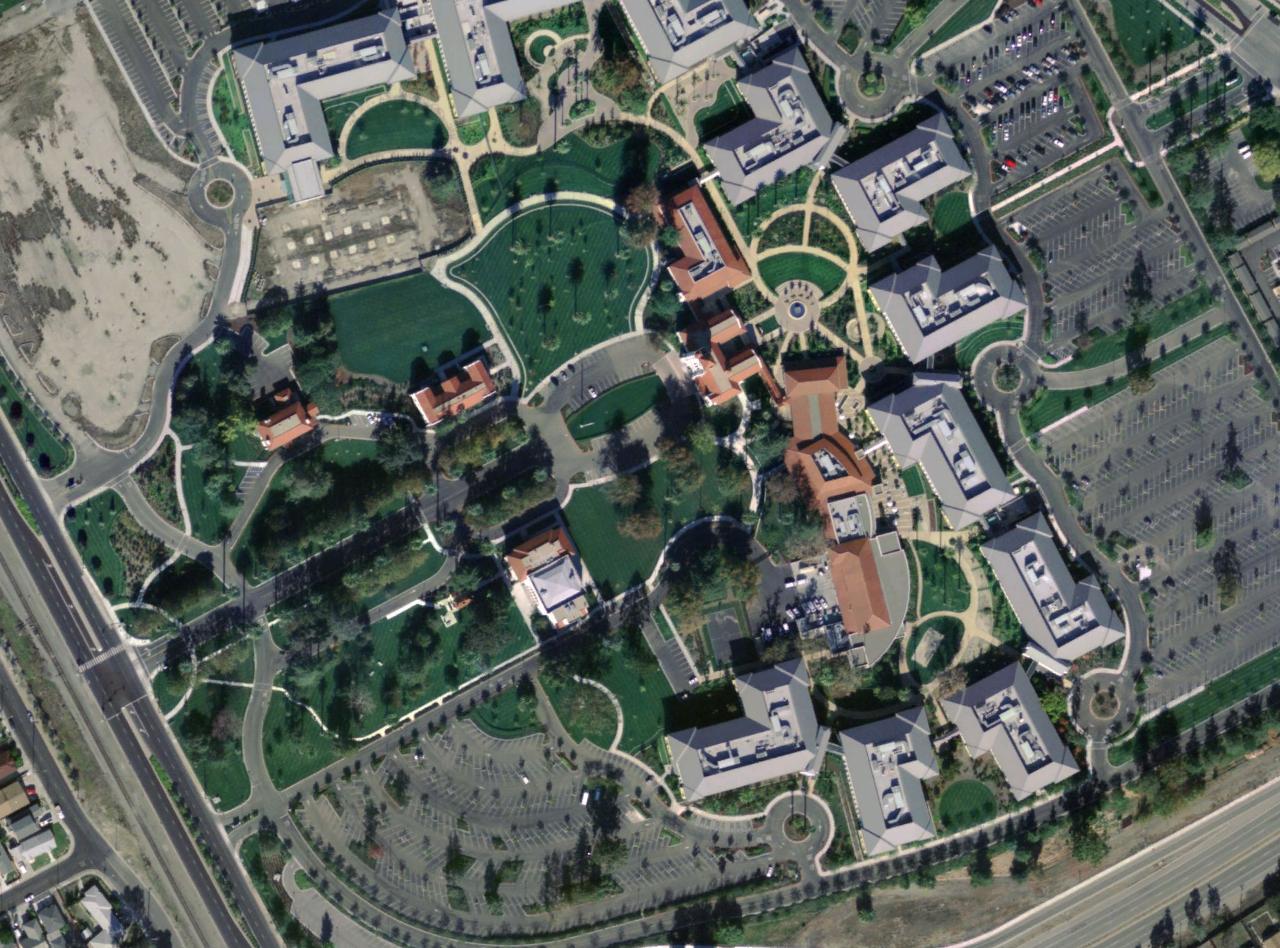
Sun Microsystems, Inc., often known as Sun for short, was an American technology company that existed from 1982 to 2010 which developed and sold computers, computer hardware, software, and information technology services. Sun contributed significantly to the evolution of several key computing technologies, among them Unix, RISC processors, thin client computing, and virtualized computing. At its height, Sun's headquarters were in Santa Clara, California (part of Silicon Valley), on the former west campus of the Agnews Developmental Center.
Sun products included computer servers and workstations built on its own RISC-based SPARC processor architecture, as well as on x86-based AMD Opteron and Intel Xeon processors. Sun also developed its own storage systems and a suite of software products, including the Unix-based SunOS and later Solaris operating systems, developer tools, Web infrastructure software, and identity management applications. Technologies that Sun created include the Java programming language, the Java platform and Network File System (NFS).
In general, Sun was a proponent of open systems, particularly Unix. It was also a major contributor to open-source software, as evidenced by its $1 billion purchase, in 2008, of MySQL, an open-source relational database management system. Other notable Sun acquisitions include Cray Business Systems Division, Storagetek, and Innotek GmbH, creators of VirtualBox. On April 20, 2009, it was announced that Oracle would acquire Sun for US$7.4 billion, or US$5.6 billion net of Sun's cash and debt. The deal was completed on January 27, 2010.
The initial design for what became Sun's first Unix workstation, the Sun-1, was conceived by Andy Bechtolsheim when he was a graduate student at Stanford University in Palo Alto, California. Bechtolsheim originally designed the SUN workstation for the Stanford University Network communications project as a personal CAD workstation. It was designed around the Motorola 68000 processor with an advanced memory management unit (MMU) to support the Unix operating system with virtual memory support. He built the first examples from spare parts obtained from Stanford's Department of Computer Science and Silicon Valley supply houses.
On February 24, 1982, Scott McNealy, Andy Bechtolsheim, and Vinod Khosla, all Stanford graduate students, founded Sun Microsystems. Bill Joy of Berkeley, a primary developer of the Berkeley Software Distribution (BSD), joined soon after and is counted as one of the original founders. The company was the second, after rival Apollo Computer, to specialize in workstations. The name "Sun" is derived from the initials of the Stanford University Network (SUN). McNealy focused on operations; Fortune described him as "notoriously cheap". Sun was profitable from its first quarter in July 1982.
By 1983, Sun was known for producing 68k-based systems with high-quality graphics that were the only computers other than DEC's VAX to run 4.2BSD. It licensed the computer design to other manufacturers, which typically used it to build Multibus-based systems running Unix from UniSoft. Wall Street was an important early market, as were CAD/CAM, CAE, CASE, and other technical markets. By 1989, InfoWorld described Sun as "the unqualified leader in the workstation arena", and target of DEC and Hewlett-Packard (HP)'s own products.
Sun's initial public offering was in 1986 under the stock symbol SUNW, for Sun Workstations (later Sun Worldwide). The symbol was changed in 2007 to JAVA; Sun stated that the brand awareness associated with its Java platform better represented the company's current strategy.
Sun's logo, which features four interleaved copies of the word sun in the form of a rotationally symmetric ambigram, was designed by professor Vaughan Pratt, also of Stanford. The initial version of the logo was orange and had the sides oriented horizontally and vertically, but it was subsequently rotated to stand on one corner and re-colored purple, and later blue.
Hub AI
Sun Microsystems AI simulator
(@Sun Microsystems_simulator)
Sun Microsystems
Sun Microsystems, Inc., often known as Sun for short, was an American technology company that existed from 1982 to 2010 which developed and sold computers, computer hardware, software, and information technology services. Sun contributed significantly to the evolution of several key computing technologies, among them Unix, RISC processors, thin client computing, and virtualized computing. At its height, Sun's headquarters were in Santa Clara, California (part of Silicon Valley), on the former west campus of the Agnews Developmental Center.
Sun products included computer servers and workstations built on its own RISC-based SPARC processor architecture, as well as on x86-based AMD Opteron and Intel Xeon processors. Sun also developed its own storage systems and a suite of software products, including the Unix-based SunOS and later Solaris operating systems, developer tools, Web infrastructure software, and identity management applications. Technologies that Sun created include the Java programming language, the Java platform and Network File System (NFS).
In general, Sun was a proponent of open systems, particularly Unix. It was also a major contributor to open-source software, as evidenced by its $1 billion purchase, in 2008, of MySQL, an open-source relational database management system. Other notable Sun acquisitions include Cray Business Systems Division, Storagetek, and Innotek GmbH, creators of VirtualBox. On April 20, 2009, it was announced that Oracle would acquire Sun for US$7.4 billion, or US$5.6 billion net of Sun's cash and debt. The deal was completed on January 27, 2010.
The initial design for what became Sun's first Unix workstation, the Sun-1, was conceived by Andy Bechtolsheim when he was a graduate student at Stanford University in Palo Alto, California. Bechtolsheim originally designed the SUN workstation for the Stanford University Network communications project as a personal CAD workstation. It was designed around the Motorola 68000 processor with an advanced memory management unit (MMU) to support the Unix operating system with virtual memory support. He built the first examples from spare parts obtained from Stanford's Department of Computer Science and Silicon Valley supply houses.
On February 24, 1982, Scott McNealy, Andy Bechtolsheim, and Vinod Khosla, all Stanford graduate students, founded Sun Microsystems. Bill Joy of Berkeley, a primary developer of the Berkeley Software Distribution (BSD), joined soon after and is counted as one of the original founders. The company was the second, after rival Apollo Computer, to specialize in workstations. The name "Sun" is derived from the initials of the Stanford University Network (SUN). McNealy focused on operations; Fortune described him as "notoriously cheap". Sun was profitable from its first quarter in July 1982.
By 1983, Sun was known for producing 68k-based systems with high-quality graphics that were the only computers other than DEC's VAX to run 4.2BSD. It licensed the computer design to other manufacturers, which typically used it to build Multibus-based systems running Unix from UniSoft. Wall Street was an important early market, as were CAD/CAM, CAE, CASE, and other technical markets. By 1989, InfoWorld described Sun as "the unqualified leader in the workstation arena", and target of DEC and Hewlett-Packard (HP)'s own products.
Sun's initial public offering was in 1986 under the stock symbol SUNW, for Sun Workstations (later Sun Worldwide). The symbol was changed in 2007 to JAVA; Sun stated that the brand awareness associated with its Java platform better represented the company's current strategy.
Sun's logo, which features four interleaved copies of the word sun in the form of a rotationally symmetric ambigram, was designed by professor Vaughan Pratt, also of Stanford. The initial version of the logo was orange and had the sides oriented horizontally and vertically, but it was subsequently rotated to stand on one corner and re-colored purple, and later blue.
Recent media