Hubbry Logo
SwarupanandaSwarupanandaMain
Open search
Swarupananda
Community hub
Swarupananda
logo
8 pages, 0 posts
0 subscribers
Be the first to start a discussion here.
Swarupananda
Swarupananda
from Wikipedia

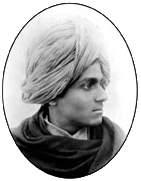
Swarupananda (8 July 1871 – 27 June 1906) was a direct monastic disciple of Vivekananda and the first president of the Advaita Ashrama, set up by Vivekananda in 1899 at Mayavati, near Champawat. The ashram is a branch of the religious monastic order, Ramakrishna Math, also set up by Vivekananda on the teachings of his guru Ramakrishna.

Key Information

Swarupananda remained as editor of Prabuddha Bharata, an English-language monthly journal of the Ramakrishna Order, when it shifted base from Chennai in 1898 and remained so till 1906.[1]

Vivekananda exclaimed to Sara Bull and other friends about the young disciple whom he had initiated into the monastic order, "we have made an acquisition today."[2]

Pre Monastic life

[edit]

Swarupananda's pre monastic name was Ajay Hari Bannerjee. He was born on 8 July 1871 at Bhawanipur in Calcutta, in a well-to-do Brahmin family.[2] Early experiences with sorrows and tribulations in life and human misery inspired him to develop a spiritual outlook.[3] He developed friendship with Satishchandra Mukherjee, who was in his later years a patriot and a scholar, and together started a school for imparting knowledge of Indian scriptures and Sanskrit education. The aim of the school was spread noble ideas among student community.[4] They also started a monthly magazine, named as Dawn and Ajay became its first editor. In 1897 Ajay inspired his friend Satishchandra to start the Dawn Society.[5] The journal Dawn had made a lot of contribution to national education and to the freedom movement. Till Ajay Hari embraced monastic life, he and Satishchandra acted as joint editors.[5]

Meeting with Vivekananda

[edit]

Ajay first met Vivekananda after the latter's return to India, in April–May 1897, in Nilambar Mukherjee's Garden House in Belur.[5] He met the Swami several times, before the latter initiated him into the monastic order. According to Swami Swarupananda's diary, he was initiated into the vow of renunciation on 29 March 1898, Tuesday.[6]

Advaita Ashrama and Prabuddha Bharata: Contributions

[edit]
Advaita Ashrama, Mayavati

Swarupananda was married early in his youth, but continued to live as a Brahmachari or celibate at his parents' home in Calcutta. After three or four visits to the Belur Math, he decided to leave home and become a full-time disciple of Vivekananda, and within a few days of his stay at the Math, he was initiated into the monastic order, (sanyas),[7] by Vivekananda on 29 March 1898.[8]

Meanwhile, John Henry Sevier who had earlier come in contact with Vivekananda during his visit to London and become his disciple, travelled to India with Vivekananda, along with his wife Charlotte. Sevier, with the help of Swarupananda, found an old tea estate suitable for the Ashram, at Mayavati, near Almora in July 1898. Soon the land was purchased and construction commenced.[9] The Advaita Ashrama had its formal opening on 19 March 1899, which happened to be the birth anniversary of Ramakrishna (Hindu calendar), that year, with Swarupananda its first head upon its opening.[10][11]

Sister Nivedita had become a monastic disciple of Vivekananda when she took sanyas four days prior to Swarupananda at Belur, in March–April 1898. Swarupananda taught her Bengali and Hindu religious literature every day. Later at Almora under his guidance she started reading the Bhagavad Gita.[8]

The publication of Prabuddha Bharata, the Official Journal of the Ramakrishna Order was halted abruptly due to the death of its editor B. R. Rajam Iyer, who was only twenty-four years old, on 13 May 1898 in Chennai. Vivekananda, who was then resting at Almora, asked Sevier and his wife to revive the magazine. The next issue of the magazine was published from Thompson house in Almora town in August 1898 with Swarupananda as its editor, then in 1899 it shifted base with the opening of the ashram in a secluded hilly region in Mayavati, near Almora.[12]

During his editorship, Prabuddha Bharata became a powerful medium for disseminating ideals of Ramakrishna and Vivekananda and earned much appreciation from the intellectuals.[13] Vivekananda had also praised Swarupananda's work in one of his letters.[13][14]

Swarupananda became the president of the Mayavati ashrama. He was very close to Captain and Mrs. Sevier. The most memorable event during his tenure was the visit of Vivekananda to Mayavati in January 1901, after his return from his second visit to the West. He discussed about his ideas of the work to be carried out from the Ashrama with Swarupananda.[15]

Swarupananda was keen to work for the upliftment of the tribal and the poor people in the region. He initiated education of hill people in modern methods of cultivation to address their acute poverty and shortage of food. He established two schools, one in Mayavati and the other in the village of Shore for the local children.[16] He also started a charitable dispensary which even today serves the people of the region.[16] He also arranged to teach Hindi and English to the tribal employees of the Ashrama. He would travel to Nainital, Almora and other places to spread both secular and spiritual knowledge among local people.[16]

In 1899, he worked to provide relief to the local people who were affected by a terrible famine in the Kishangarh area, near Jaipur. There he worked with Swami Kalyanananda, his brother disciple. He also begged from door to door in Nainital for Swami Kalyanananda to enable him to serve the old and sick monks and poor people in Haridwar and Rishikesh.[16] In 1902, he went to Allahabad for giving lectures on Vedanta and inspired the local people to start a permanent centre there.[16] In 1905 when the Dharmashala region was hit by a severe earthquake, Swarupananda collected funds for the relief work and directed the work.[17]

He was regular in his spiritual practices and austerities, apart from the various secular activities that kept him engaged. He built a hut near the ashrama which came to be known as Swarupananda hut, for the purpose of meditating in seclusion. He worked among youth and students to spread the message of Vivekananda.[18] He was also invited by His Highness of Baroda to preach Vedanta, together with Swami Vivekananda. But Vivekananda could not come owing to his ill health.[18] Another important project in which Swarupananda worked was collection and publication of Swami Vivekananda's works, but he could not finish it owing to his short lifespan. As a distinguished scholar he wrote several articles in Prabuddha Bharata and strongly rebutted the criticisms of a certain Professor Fraser on Vivekananda in Hindustan Review magazine.[19] He authored the translation of Bhagavad Gita in English.

Last days

[edit]

The location of Mayavati however didn't suit Swarupananda well, as the constant uphill and downhill of Mayavati terrain, took a toll on his heart. In November 1901 he was recuperating in Calcutta with Vivekananda;[20] while he continued to edit the magazine and run the ashram for another six years until his 1906 death in Nainital. He suffered from pneumonia after being drenched by rain while travelling to Nainital and died on 27 June 1906. His obituary in Prabuddha Bharata was written by Sister Nivedita.[21]

Literary works

[edit]
  • Srimad-Bhagavad-Gita. Advaita Ashrama. 1909. ISBN 81-7505-096-9. {{cite book}}: ISBN / Date incompatibility (help)

Further reading

[edit]

References

[edit]
[edit]
Revisions and contributorsEdit on WikipediaRead on Wikipedia
from Grokipedia
Swami Swarupananda (8 July 1871 – 27 June 1906) was an Indian Hindu monk and a direct monastic disciple of , renowned for establishing the at Mayavati as its first president and contributing to the propagation of through scholarly translations. Born Ajay Hari Banerjee into an affluent family in south Calcutta, Swarupananda imbibed early qualities of piety and devotion before renouncing worldly life to join the under Vivekananda's guidance. In 1899, alongside Western disciple J.H. Sevier, he founded the in the Himalayan foothills of Mayavati, , dedicated exclusively to the study and dissemination of non-dualistic philosophy, free from organizational affiliations. His notable achievements include authoring an English translation of the with word-for-word rendering, running commentary, and notes drawn from Adi Shankara's exegesis, which remains a standard reference for beginners in Vedantic study published by the ashram. Swarupananda also engaged in practical service by teaching local villagers improved agricultural methods, establishing schools, and fostering to combat and in the region. Despite his brief life, cut short by illness at age 34, his leadership solidified the ashram's role as a center for contemplative and enduring publications.

Early Life and Background

Pre-Monastic Life and Family

Swarupananda was born as Ajay Hari Banerjee on 8 July 1871 in Bhawanipore, Calcutta (now ), into an affluent family of south Calcutta. From an early age, he absorbed qualities of piety and humility from his parents, which shaped his character amid a household environment conducive to spiritual values. Specific details regarding his parents' names or siblings remain undocumented in available records, though the family's afforded him access to quality upbringing in a culturally rich setting.

Education and Initial Spiritual Inclinations

Swarupananda was born on 8 July 1871 into an affluent family in South Calcutta, where his parents instilled in him qualities of piety and humility from an early age. These influences fostered his initial spiritual inclinations, evident in his deep engagement with Hindu scriptures. He received a high level of formal , developing a particular flair for , which became a cornerstone of his intellectual and devotional pursuits. Prior to his monastic life, Swarupananda demonstrated his commitment to spiritual learning by collaborating with Satishchandra Mukherjee to establish a Bhagavat Chatushpathi, a traditional Sanskrit school focused on the study of the Bhagavata Purana. This initiative reflected his early dedication to scriptural exegesis and the dissemination of devotional knowledge, bridging scholarly rigor with bhakti traditions.

Monastic Initiation

Encounter with Swami Vivekananda

Ajay Hari Banerjee, born on 8 July 1871 in an affluent family in south Calcutta, first encountered in April or May 1897 at Nilambar Mukherjee's garden house in Belur, shortly after Vivekananda's return to from the West on 15 1897. Banerjee, then in his mid-twenties and inclined toward spiritual pursuits amid a background of piety and detachment, was drawn to Vivekananda's exposition of and the Ramakrishna Mission's ideals during this meeting. The association deepened over the following months, with participating in discussions and activities among Vivekananda's early followers. By early March 1898, at the Baranagore Math, remained after other visitors departed and directly expressed his resolve to renounce worldly life and join the monastic order. Vivekananda subjected him to rigorous tests of character and commitment, including inquiries into his obligations and personal sacrifices, and found him resolute, particularly in his willingness to forgo a recent early arranged by his . This encounter marked 's full commitment to discipleship under Vivekananda, who recognized his potential as a dedicated aligned with the principles of and service. ![Swami Vivekananda in 1893][float-right] Vivekananda's influence during these interactions emphasized practical , , and the synthesis of knowledge with devotion, profoundly shaping Banerjee's transition from a to a sannyasin. Accounts from contemporaries highlight Vivekananda's affectionate yet discerning approach, lifting Banerjee symbolically to the feet of Sri during the ceremonial affirmation of his monastic vows. This period of encounter underscored Vivekananda's role in identifying and nurturing disciples capable of advancing the Mission's work in disseminating .

Sannyasa and Early Training

Swami Swarupananda, originally named Ajoyhari Bandopadhyay, first encountered Swami Vivekananda in late 1888 at Hathras railway station during the latter's wandering phase as a monk, though he did not immediately join the monastic fold. Following Vivekananda's return from the West in 1897, Ajoyhari met him again in Calcutta and expressed his resolve to renounce worldly life, having already experienced personal loss including the early death of his child bride, which deepened his spiritual inclinations. This culminated in his formal commitment to monasticism. On March 29, 1898, at the temporary monastery in Nilambar Mukherjee's garden house near Calcutta, initiated Ajoyhari and another disciple, Surendra, into during a private ceremony in the shrine room. Vivekananda personally administered the vows, bestowing the monastic name Swami Swarupananda on Ajoyhari, symbolizing his rebirth into the order. Emerging from the initiation, Swarupananda displayed a transformed demeanor of serene detachment, prompting Vivekananda to declare to fellow monks, "We have made a great acquisition for the Order," highlighting his immediate recognition of the new sannyasin's potential. In the ensuing months at the Alambazar Math and later , Swarupananda underwent rigorous early training under Vivekananda's direct supervision, which emphasized daily meditation, (repetitive chanting), scriptural study of texts like the and , and practical monastic discipline including selfless service (seva) and physical labor to build character and detachment. Vivekananda, prioritizing the formation of ideal sannyasins, devoted personal time to instructing him in non-dualistic philosophy and inner , fostering a balance between intellectual rigor and devotional practices rooted in Sri Ramakrishna's teachings. This foundational phase prepared Swarupananda for leadership roles, instilling the order's ethos of work as worship and propagation.

Contributions to the Ramakrishna Mission

Founding and Leadership of Advaita Ashrama

, located in Mayavati near Lohaghat in the Himalayan foothills of , was founded on 19 March 1899 at the direction of to serve as a center for the practice and dissemination of . The establishment was initiated by Western devotees Captain James Henry Sevier and Janet Sevier, who purchased the land and constructed the initial buildings with funds raised in Europe. Swami Swarupananda, a direct monastic disciple of Vivekananda whose pre-monastic name was Ajay Hari Bhattacharya, accompanied the Seviers in scouting and securing the site, ensuring alignment with Vivekananda's vision for an isolated retreat conducive to meditation and scholarly work. Upon inauguration, Swami Swarupananda was appointed as the first president of , a position he held from 1899 until his death on 27 June 1906 at age 34. Under his leadership, the ashrama gained formal recognition from , the central headquarters of the , affirming its adherence to the order's principles of non-sectarian propagation and selfless service. Swarupananda supervised the installation of a , enabling the production of early editions of Vivekananda's complete works, his , and other Vedantic texts, which laid the foundation for the ashrama's enduring role as a publishing hub. Swarupananda's tenure emphasized rigorous intellectual pursuits alongside spiritual discipline, fostering an environment where engaged in translation, commentary, and editorial work on classical scriptures. He personally edited Prabuddha Bharata, the English monthly journal revived under Vivekananda's instructions and shifted to Mayavati, ensuring its focus on Advaita philosophy and without dogmatic impositions. His dedication to these activities, often amid challenging mountainous conditions and limited resources, exemplified Vivekananda's directive for the ashrama to prioritize jnana () over ritualistic practices, contributing to the global outreach of non-dualistic .

Editorial Role in Prabuddha Bharata

Swami Swarupananda assumed the editorship of Prabuddha Bharata in August 1898, reviving the journal after its initial publication run from 1896 in Madras had lapsed due to logistical challenges. Under his direction, the monthly resumed from Thompson House in Almora, Uttarakhand, with assistance from Captain J.H. Sevier and Mrs. Sevier in management and printing. This relocation aligned with Swami Vivekananda's vision for a stable base amid the Himalayan retreats established for monastic work. As editor from 1898 to 1906—until his passing—Swarupananda steered Prabuddha Bharata toward disseminating core principles, Ramakrishna-Vivekananda teachings, and responses to contemporary intellectual currents, including scientific and . His tenure emphasized rigorous scholarship, with the journal publishing translations, essays on Advaita, and critiques of religious dogmatism, reflecting Vivekananda's directive for an "awakened India" through spiritual intellect. In 1899, editorial operations shifted to the newly founded in Mayavati, enhancing its focus on unadulterated Vedantic exposition free from ritualistic accretions. Swarupananda's own contributions to the journal underscored his editorial influence, including scholarly articles on scriptural interpretation and Vedanta's harmony with modern thought, which demonstrated his depth in texts and philosophical synthesis. His leadership ensured Prabuddha Bharata's role as a primary vehicle for the Order's literature, maintaining while prioritizing empirical spiritual inquiry over . This period solidified the journal's reputation as a beacon for Vedantic revivalism in late 19th- and early 20th-century .

Teachings and Literary Output

Core Philosophical Contributions

Swami Swarupananda's philosophical work primarily advanced by providing an accessible yet faithful interpretation of the , rooted in Adi Shankara's non-dualistic commentary. His translation includes the original verses in script, accompanied by word-for-word English renderings and concise explanatory notes that highlight the Gita's core tenet: the essential identity between the individual self (Atman) and the ultimate reality (). This unity, he expounded, transcends apparent duality, with the world of phenomena arising as a superimposition (adhyasa) due to ignorance (avidya), resolvable only through discriminative wisdom () and renunciation of egoistic attachments. Central to his exposition is the integration of action (karma), devotion (), and knowledge (jnana) as interdependent paths to , aligning with the synthetic of his guru . Swarupananda portrayed Krishna's teachings as prescribing selfless work without attachment to fruits () as a foundation for higher , leading to the direct intuitive apprehension (aparoksha jnana) of non-duality. His notes stress that true liberation () emerges not from ritualism or blind faith, but from intellectual inquiry into the nature of existence, substantiated by scriptural authority (shruti) and personal verification. This approach rendered abstract metaphysical principles practical, urging practitioners to embody Vedantic ideals amid worldly duties. Through his editorial role at Prabuddha Bharata, Swarupananda further contributed by curating content that bridged classical Advaita with contemporary issues, such as the harmony of science and , and the ethical imperatives of social service as expressions of inner divinity. These efforts propagated the view that Advaita is not mere but a transformative fostering fearlessness (abhaye) and strength, verifiable through ethical living and meditative rather than dogmatic assertion.

Key Translations and Writings

Swami Swarupananda's principal translation is Srimad , first published in the early 20th century by , featuring the original text in script alongside word-for-word English equivalents, a flowing prose translation, and interpretive notes aligned with Adi Shankara's Advaita commentary. This edition, prepared during his leadership at in Mayavati, emphasizes non-dualistic realization through knowledge (jnana) as the core path to liberation, rendering the text suitable for both scholarly study and practical application in Vedantic practice. In addition to translations, Swarupananda produced original writings focused on philosophy, including expositions on and the integration of scriptural wisdom with ethical living, as seen in works like The Way of Knowledge with Realization, which delineates the discipline of intellect leading to direct experiential insight. These texts underscore his commitment to distilling complex metaphysical concepts into precise, actionable guidance rooted in primary sources such as the and Gita. As editor of starting in 1898, Swarupananda authored scholarly articles that explored themes of spiritual awakening, the unity of religions under Advaita principles, and critiques of , contributing to the journal's role in propagating Swami Vivekananda's universalist . His contributions therein, marked by rigorous scriptural fidelity and analytical depth, helped establish the publication as a key platform for intellectual discourse on amid colonial-era challenges.

Final Years and Legacy

Health Decline and Last Days

Swami Swarupananda's health deteriorated rapidly in mid-1906 when a cold he contracted progressed into , leading to his untimely death at the age of 34. Despite his youth and vigorous involvement in the leadership of , the illness struck suddenly amid his demanding responsibilities in editing Prabuddha Bharata and overseeing monastic activities at Mayavati. During his final days, Swarupananda traveled from Mayavati toward via , likely seeking respite or medical attention in the hill station's milder climate, but he fell critically ill en route. He passed away on 27 June 1906 at the residence of Lala Amar Sah in , British , succumbing to the that had overwhelmed his constitution. Sister Nivedita, a close associate in the Ramakrishna circle, later reflected on his passing, stating that to those who relied on him, Swarupananda embodied the spirit of his guru, . His death marked a profound loss for the fledgling , where he had served as the first president since its founding in 1899, leaving the institution to navigate his absence during its formative years.

Enduring Influence on Vedanta Dissemination

Swami Swarupananda's leadership as the first president of , established on March 19, 1899, laid the foundation for an institution dedicated to the propagation of through publication and study. The Ashrama, under his guidance until his passing in 1906, focused on producing and distributing Vedantic literature, a mission that persists today with ongoing publications from the . His editorial stewardship of Prabuddha Bharata from 1897 transformed the journal into a key vehicle for disseminating the teachings of Sri Ramakrishna and Swami Vivekananda, earning acclaim from intellectuals for its clarity and depth. The monthly periodical, revived under his direction, continues publication by Advaita Ashrama, maintaining its role in elucidating Vedantic principles to contemporary audiences. A cornerstone of his literary legacy is the translation Srimad Bhagavad Gita, featuring Devanagari text, word-for-word meanings, and notes derived from Adi Shankaracharya's commentary, first issued by Advaita Ashrama. This accessible rendition remains a standard reference in Vedanta studies, recommended by contemporary Ramakrishna Mission monks for its fidelity to traditional interpretation and utility in self-study. Its enduring availability underscores Swarupananda's contribution to making core Vedantic scriptures approachable for global seekers. Through these institutional and textual efforts, Swarupananda's work fostered a structured approach to dissemination, influencing subsequent generations within the and beyond, as evidenced by the Ashrama's 125-year milestone in 2024.

References

Add your contribution
Related Hubs
User Avatar
No comments yet.