Hubbry Logo
Tent caterpillarTent caterpillarMain
Open search
Tent caterpillar
Community hub
Tent caterpillar
logo
8 pages, 0 posts
0 subscribers
Be the first to start a discussion here.
Tent caterpillar
Tent caterpillar
from Wikipedia

Tent caterpillars
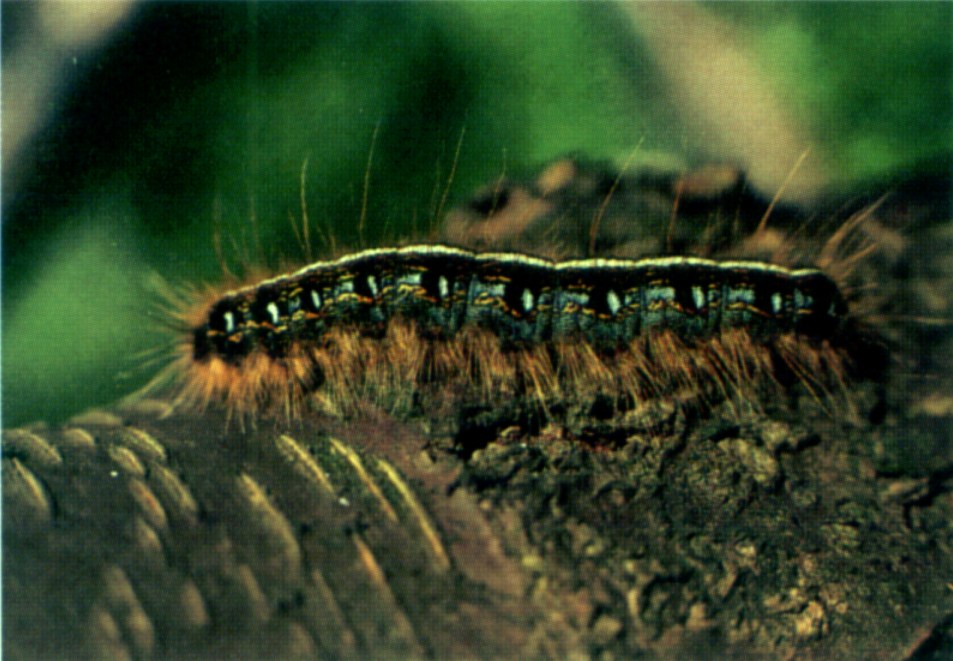
Eastern tent caterpillar, Malacosoma americanum
Scientific classificationEdit this classification
Kingdom: Animalia
Phylum: Arthropoda
Class: Insecta
Order: Lepidoptera
Family: Lasiocampidae
Subfamily: Lasiocampinae
Tribe: Lasiocampini
Genus: Malacosoma
Hübner, 1822
Species

About 26, including:

Tent caterpillars are moderately sized caterpillars, or moth larvae, belonging to the genus Malacosoma in the family Lasiocampidae. Twenty-six species have been described, six of which occur in North America and the rest in Eurasia. Some species are considered to have subspecies as well. They are often considered pests for their habit of defoliating trees. They are among the most social of all caterpillars and exhibit many noteworthy behaviors.

Tent caterpillars are readily recognized because they are social, colorful, diurnal and build conspicuous silk tents in the branches of host trees. Some species, such as the eastern tent caterpillar, Malacosoma americanum, and caterpillars of the small eggar moth, Eriogaster lanestris, build a single large tent which is typically occupied through the whole of the larval stage, while others build a series of small tents that are sequentially abandoned. Whereas tent caterpillars make their tents in the nodes and branches of a tree's limbs, fall webworms enclose leaves and small branches at the ends of the limbs.

Life cycle

[edit]

The following description of the tent caterpillar life cycle is based on that of the eastern tent caterpillar, the best-known species. The details of the life histories of other species vary to a small extent.

Tent caterpillars hatch from their eggs in the early spring at the time the leaves of their host trees are just unfolding. The caterpillars establish their tent soon after they hatch. The tent is constructed at a site that intercepts the early morning sun. The position of the tent is critical because the caterpillars must bask in the sun to elevate their temperatures above the cool ambient temperatures that occur in the early spring. Studies have shown that when the body temperature of a caterpillar is less than about 15 °C (59 °F), digestion cannot occur. The tent consists of discrete layers of silk separated by gaps and the temperature in these compartments varies markedly. Caterpillars can adjust their body temperatures by moving from one compartment to another. On cool mornings they typically rest in a tight aggregate just under a sunlit surface of the tent. It is not uncommon to find that the temperature of the aggregate is as much as 30 °C (54 °F) warmer than the surrounding air temperature on cold but sunny spring mornings. Later on in the spring, temperatures may become excessive at midday and the caterpillars may retreat to the shaded outside surface of the tent to cool down.

The digestive physiology of tent caterpillars is tuned to young leaves, and their need to complete their larval development before the leaves of the host trees become too aged for them to eat compels them to feed several times each day. At the onset of a bout of foraging, caterpillars leave the tent en masse, moving to distant feeding sites. Immediately after feeding the caterpillars return to the tent and aggregate in sunlight to facilitate the digestive process. Thus, eastern tent caterpillars are central place foragers. In contrast, the forest tent caterpillar is a nomadic forager that establishes a series of temporary resting sites during the course of its larval development.

Studies have shown that eastern tent caterpillars recruit their tent mates to go on food finds. Caterpillars move from the tent in search of food, laying down an exploratory pheromone trail as they pass over the branches of the host tree. These chemical exploratory trails allow caterpillars to find their way back to the tent. If a caterpillar finds food and feeds to repletion, it returns to the tent, laying down a recruitment trail that serves to recruit hungry tent mates to its food find. The chemical nature of the pheromone has been determined, but it is unclear how exploratory and recruitment trails differ. The chemical recruitment trail of the eastern tent caterpillar is remarkably similar to the pheromone trails that are used by ants and termites to alert nest mates to the discovery of food.

Leaves consist largely of nondigestible components, and it has been estimated that tent caterpillars void as frass (fecal pellets) nearly half of the energy they ingest. As a consequence, a colony of caterpillars produces large quantities of frass. This is particularly noticeable during outbreaks of the forest tent caterpillar. Frass dropping from treetops in which the caterpillars are feeding create the auditory illusion of rainfall. Tent caterpillars typically have five to six larval instars. It is estimated that the last instar consumes about 80% of all the food taken in by a larva during the whole of its life cycle. Consequently, it is not uncommon for populations of forest tent caterpillars to go unnoticed until the last instar, when their feeding causes extensive defoliation of trees.

Caterpillars grow rapidly and typically complete their larval development in seven to eight weeks. When fully grown, the caterpillars leave the natal tree and seek protected places on the ground or under the eaves of buildings to spin their cocoons. About two weeks later, they emerge as adults. Shortly after eclosing from the cocoon, the female moth secretes a pheromone which draws males to her. Mating typically occurs in the early evening and the mated female, already fully laden with eggs, typically oviposits the full complement later that same evening. The eggs are placed around the circumference of a branch and covered with a frothy material called spumaline. Spumaline is hydrophilic and prevents the eggs from drying out. It also serves as a protective covering which limits the ability of small wasps to parasitize the eggs. Although the male moth may live for a week or more, the female dies soon after laying her eggs. Thus, the whole of the female's adult life may take place in fewer than 24 hours.

Shortly after the egg mass is deposited, embryogenesis begins. Within three weeks or so, small larvae can be found within each egg mass. These pharate larvae lie sequestered within the shells of the eggs until the following spring. Henceforth, these encased larvae are the most durable of the insect's life stages. In northern areas, the pharate larvae are highly freeze-tolerant and can withstand midwinter temperatures of −40 °C (−40 °F) or lower.

Tent caterpillars exhibit boom-or-bust population dynamics. The most notorious of the outbreak species is the forest tent caterpillar. During outbreaks, the caterpillars can become so abundant that they are capable of completely defoliating tens of thousands of acres of forest. Even though these outbreaks do not follow true cycles in the sense that they occur at regular intervals, some particularly prone regions have recorded outbreaks every ten years or so. Caterpillars rarely remain in outbreak numbers for more than two to three years. Factors which bring outbreaks to a close include parasitoids and disease. In some cases populations collapse because caterpillars starve to death either because trees are completely defoliated before the caterpillars are fully grown or because the quality of host leaves declines to the point where they are no longer palatable. Defoliated trees typically refoliate after caterpillar attacks and experience no lasting damage. In some cases, however, trees or parts of trees may be killed after several seasons of repeated defoliation. This has occurred when forest tent caterpillars defoliated sugar maples that were already stressed due to drought.

See also

[edit]
  • Fall webworm, a North American moth whose caterpillar creates similar webs

References

[edit]
[edit]
Revisions and contributorsEdit on WikipediaRead on Wikipedia
from Grokipedia
Tent caterpillars are the larval stage of moths belonging to the genus Malacosoma in the family Lasiocampidae, characterized by their communal silk tents constructed in tree branches and their gregarious feeding behavior on broadleaf foliage. These native North American insects, distributed across temperate regions, include several species that exhibit cyclic population outbreaks every 8–15 years, causing significant but usually temporary defoliation of host trees without typically killing healthy specimens. The genus Malacosoma comprises at least six species in , with the (M. americanum) and forest tent caterpillar (M. disstria) being among the most widespread and economically notable. The builds distinctive silken tents in the crotches of branches, serving as shelters where larvae aggregate at night and during bad weather, while the forest tent caterpillar constructs mats or trails on branches and trunks rather than true tents. Other species, such as the western tent caterpillar (M. californicum), show similar behaviors but vary in host preferences and geographic range, extending from coastal regions to interior forests. The life cycle of tent caterpillars is univoltine, with eggs laid in frothy masses of 100–400 on twigs in summer, overwintering until hatching in early spring when leaves emerge. Larvae, which are hairy and often marked with stripes or spots for , undergo 5–8 instars over 4–7 weeks, feeding primarily in the morning and evening before retreating to their silk structures. Pupation occurs in loose cocoons on tree trunks or debris, lasting 2–3 weeks, after which tan-colored adult moths emerge to mate and oviposit; adults are nocturnal and do not feed. Ecologically, tent caterpillars play a key role in forest dynamics as herbivores that influence growth and serve as prey for birds, mammals, and parasitoids, though outbreaks can reduce and predispose trees to secondary pests or diseases. Preferred hosts include rosaceous trees like cherry, apple, and crabapple for M. americanum, and a broader array of hardwoods such as , , and aspen for M. disstria, with defoliation most severe on young or stressed trees. In landscapes, their webs are unsightly and can pose minor health risks from irritating hairs, prompting management via mechanical removal, biological controls like , or targeted insecticides during early larval stages.

Taxonomy and Diversity

Classification

Tent caterpillars are classified within the genus Malacosoma Hübner, 1820, which belongs to the Lasiocampidae (commonly known as eggar moths) in the order Lepidoptera. This placement situates them among the macromoths, a diverse group characterized by scaled wings and complete . The Lasiocampidae encompasses over 2,000 species globally, many of which produce , reflecting the genus's evolutionary adaptations for communal silk use. The genus Malacosoma comprises approximately 26 recognized worldwide, primarily distributed across the , with six native to . These share phylogenetic ties to other silk-producing moths in the Lasiocampidae, supported by molecular analyses of mitochondrial and nuclear markers that highlight their position within the Lasiocampinae subfamily. Key diagnostic traits for identification include the gregarious of the larvae and their construction of silken communal tents, distinguishing Malacosoma from solitary lasiocampid relatives. Historically, the genus was first described by Jacob Hübner in 1820 based on morphological features of adult moths. Subsequent revisions, such as the comprehensive North American study by Stehr and Cook in 1968, refined species boundaries using and . Modern classifications incorporate molecular phylogenetic data, including phylogeographic analyses of oxidase and loci, confirming the monophyly of Malacosoma and resolving evolutionary relationships among its . One prominent North American example is Malacosoma americanum, the .

Species and Distribution

The genus Malacosoma comprises 26 of tent caterpillars, with six occurring in and the remainder primarily in . In , the (Malacosoma americanum) is widespread across the eastern and and southern , ranging from southward to and westward to the . The forest tent caterpillar (Malacosoma disstria) has the broadest distribution on the continent, occurring throughout the and southern , though it is most prevalent east of the . The western tent caterpillar () is primarily found along the , extending from through the to northern , with some populations reaching eastward to . The other three North American species are more restricted in range: M. constrictum in the Pacific states of the , while M. incurvum and M. tigris are found in the . Eurasian species include the lackey moth (Malacosoma neustria), which is distributed across from to , including widespread presence in countries such as , , , and . Another example is Malacosoma alpicola, found in mountainous regions with a disjunct range from and through the and to , often at elevations starting around 1,000 meters and extending to alpine zones up to approximately 2,500 meters. Tent caterpillars are native to the Holarctic region, encompassing temperate and boreal zones of and , with no major documented outside this native range.

Morphology

Larval Characteristics

Tent caterpillar larvae, belonging to the genus Malacosoma, exhibit a typical lepidopteran adapted for arboreal life, featuring an elongated, cylindrical form with a well-developed head capsule, three thoracic segments bearing true legs, and ten abdominal segments with prolegs on segments 3–6 and 10 for gripping branches and climbing trees. At maturity, they measure 50–65 mm in length, covered in sparse to moderate hairs (setae) that provide some protection and sensory input. Coloration and patterning vary among species but serve functions in camouflage and species recognition. In the eastern tent caterpillar (Malacosoma americanum), larvae have a predominantly black body with a prominent white dorsal stripe along the midline, flanked by thin yellow and brown lateral stripes, and a row of oval blue spots on each side; the overall appearance is sparsely hairy. In contrast, forest tent caterpillar (Malacosoma disstria) larvae display a dark gray to brownish-black base color accented by broad pale blue longitudinal lines and narrow, interrupted yellow lines along the sides, with distinctive white, keyhole- or footprint-shaped markings on the dorsal surface of each abdominal segment; they bear fine, whitish setae sparsely distributed across the body. Silk production is facilitated by specialized labial spinnerets connected to modified salivary glands, which secrete a proteinaceous silk primarily composed of , enabling the construction of communal tents and trails. Sensory structures include six simple eyes (stemmata) per side, arranged in a on the head to detect and motion, and chemoreceptors on the antennae and mouthparts that allow detection of pheromones for trail following.

Adult Characteristics

Adult tent caterpillars, belonging to the genus Malacosoma in the family Lasiocampidae, emerge as moths with a typically ranging from 25 to 50 mm, varying slightly by species such as M. americanum (about 25 mm) and M. disstria (25–38 mm). Their wings are generally tan to brown, often featuring subtle white or creamy oblique lines or stripes across the forewings, providing against tree bark. The body of these moths is robust and covered in , with a hairy and that contribute to their fluffy appearance; the head and typically match the wing coloration in shades of yellow-brown to orange-brown. Females are larger and more robust than males, an supporting their role in egg production and dispersal. Antennae in adult tent caterpillar moths are bipectinate, resembling combs or feathers, which aids in detecting pheromones; these are more pronounced and wider in males compared to females, enhancing male sensory capabilities for mate location. Both sexes exhibit in antenna structure and overall size, with males possessing the more elaborate antennae. These moths are primarily nocturnal, attracted to lights at night, though they possess the capability for diurnal flight when necessary. Their short lifespan, often lasting only days to weeks, is primarily devoted to , as they do not feed during this stage.

Life History

Egg Stage

Female tent caterpillars lay eggs in clusters typically containing 150 to 400 spherical eggs, each measuring approximately 1 to 2 mm in diameter, encircling small twigs or branches of host trees. These egg masses are secured and protected by bands of spumaline, a frothy secretion produced by the female that hardens into a dark, varnish-like coating, providing a barrier against environmental stresses. Following oviposition in late summer, the eggs enter as pharate larvae, overwintering through fall and winter in this dormant state. The spumaline covering plays a crucial role in overwintering survival by shielding the eggs from and predation, while the is maintained until spring when cumulative cues, such as warming above a threshold, terminate and initiate hatching. Hatching occurs synchronously across the egg mass in early spring, coinciding with host plant bud break to ensure food availability. Upon emergence, the first-instar larvae initially consume the spumaline coating before dispersing to feed on expanding leaves. Tent caterpillar eggs exhibit remarkable cold hardiness through freeze-avoidance mechanisms, to temperatures as low as -40°C, facilitated by proteins and cryoprotectant polyols in the embryos that prevent and lethal intracellular freezing. This adaptation allows survival in temperate regions where subzero winter conditions are common, though extreme cold below -42°C can exceed tolerance limits.

Larval Development

Tent caterpillars, such as species in the genus Malacosoma, undergo larval development through typically 5 to 6 , involving 4 to 5 molts over a period of 4 to 8 weeks, depending on environmental conditions and species. Growth follows Dyar's rule, where head capsule width approximately doubles across instars with a consistent growth ratio of about 1.3 to 1.5 per molt, enabling predictable sizing despite variations in instar number between sexes or under nutritional stress. During these instars, feeding efficiency escalates dramatically, with the final instar accounting for 80-86% of total foliage consumption across the larval period, reflecting the larvae's increasing size and metabolic demands. Daily can reach up to 20% in later instars under optimal conditions, supporting exponential accumulation. Physiological adaptations underpin this rapid growth, including a high metabolic rate that facilitates efficient conversion of ingested foliage into body mass, often exceeding 30% in favorable temperatures. During population outbreaks, larvae exhibit enhanced immune responses, such as increased hemocyte activity and melanization, to counter heightened exposure from nuclear polyhedrosis viruses and fungal infections, though food limitation can suppress these defenses. Upon reaching maturity in the final , larvae disperse en masse from host trees, wandering individually or in loose groups to locate sheltered pupation sites on trunks, branches, or ground litter, often traveling distances of several meters. Throughout development, they utilize tents primarily as shelters for molting and resting, returning to them between feeding bouts.

Pupal and Adult Stages

Following the larval stage, mature tent caterpillars disperse from their communal tents to individual pupation sites, where they spin silken cocoons measuring approximately 20-30 mm in length. These cocoons, constructed from white or yellowish , are typically attached to trunks, branches, bark crevices, or ground litter for protection. The pupal stage lasts 10-21 days, with duration influenced by environmental temperature—warmer conditions accelerate development while cooler ones extend it. During this period, the pupa undergoes within the cocoon, remaining immobile and vulnerable to predators and parasitoids. Adult moths emerge in or , depending on species and location, with eclosion often synchronized across populations. Upon emergence, the soft wings expand rapidly and harden within a few hours, enabling flight. Reproduction is the primary focus of the adult phase; females release sex pheromones to attract males, leading to shortly after emergence. Following copulation, females oviposit egg masses on host plant twigs within 1-2 days. Adult tent caterpillar moths are non-feeding, relying on larval reserves for , and have a brief lifespan of 3-5 days dedicated exclusively to mating and egg-laying.

Behavior

Nest Construction

Tent caterpillars, primarily species in the genus Malacosoma, construct communal nests known as tents, which serve as central hubs for the larval colony. The process begins shortly after , when first-instar larvae aggregate in the crotches of host branches and spin an initial framework of strands to form the basic structure. Over the subsequent weeks, as the larvae progress through instars, they expand the tent by collectively depositing additional layers of onto the existing framework during intermittent building bouts that occur between foraging excursions. This expansion involves the larvae moving across the tent's surface, extruding under slight tension from spinnerets located on their labium, which creates a multi-layered, three-dimensional with air-filled interstices that enhance insulation. The is produced by specialized glands derived from modified salivary glands in the larvae's head. The primary material of the tent is silk composed of fibrous proteins, which the larvae secrete as a viscous fluid that solidifies upon exposure to air into strong, flexible threads. These protein fibers often feature beta-sheet crystalline structures, contributing to the silk's tensile strength and resistance to environmental degradation, including ultraviolet radiation. While the core structure is pure silk, the interior of the tent accumulates frass (larval excrement) and occasionally bits of incorporated leaves, which may provide minor camouflage against visual predators by blending with the surrounding foliage. The 's primary function is , acting as a solar collector that traps radiant to elevate internal temperatures significantly above ambient levels, up to 22°C, enabling the larvae to maintain optimal body temperatures of 30–35°C for metabolic processes and development. This warming effect is achieved through the tent's semi-transparent walls, which allow solar penetration while the dark bodies of the clustered larvae absorb , and the multi-layered design minimizes convective loss. Secondarily, the tent provides a refuge, offering physical protection from predators and parasitoids by serving as a secure aggregation site where larvae can retreat en masse. Nest architecture varies among species: eastern tent caterpillars (Malacosoma americanum) build prominent, central, rigid tents in branch forks that expand into elaborate, multi-ribbed structures. In contrast, forest tent caterpillars (Malacosoma disstria) construct looser, web-like mats or silken platforms on tree trunks and branches, lacking the enclosed, tent-like rigidity of their eastern counterparts.

Foraging Patterns

Tent caterpillars exhibit highly social behaviors, with larvae embarking on group excursions typically 3 to 5 times per day to feed on foliage. These excursions are coordinated through the use of trails marked with a , such as 5β-cholestane-3-one, which is deposited by the larvae as they move, guiding nestmates along established paths. The trails serve as a communication system that maintains group cohesion during movement. Foraging strategies differ among tent caterpillar species. In tent-building species like the (Malacosoma americanum), larvae employ central-place , departing from the silk tent as a base and returning to it after each feeding bout. In contrast, nomadic species such as the forest tent caterpillar (Malacosoma disstria) lack a fixed nest and instead relocate their resting mats between feeding sites as resources are depleted. The use of pheromone-marked silk trails enhances foraging efficiency by reducing energy expenditure associated with random searching. Larvae follow these trails at speeds of up to 10 cm per minute, preferentially targeting young, tender leaves that are more nutritious and easier to process. This trail system minimizes exposure to predators and optimizes path selection during movement. Foraging patterns shift with larval development across instars. Early instars remain close to the nest or resting site, limiting excursions to short distances for . As larvae progress to later instars, they venture farther, extending foraging ranges up to 10 meters or more to access additional food resources as colony needs increase.

Ecology and Interactions

Habitat and Host Plants

Tent caterpillars of the Malacosoma primarily inhabit temperate and boreal forests, orchards, and urban landscapes across the Holarctic , with the most widespread species occurring throughout from the Atlantic coast to the Pacific and northward into southern . These environments provide the necessary host vegetation and seasonal climate patterns, including cold winters for and warm springs for larval emergence. Within these habitats, tent caterpillars show a strong preference for sunny exposures, often constructing their silk tents on the south-facing or sunlit sides of trees to facilitate through basking, which can elevate internal tent temperatures significantly above ambient levels on cool spring days. Host plants for tent caterpillars are predominantly broadleaf trees and shrubs, with exhibiting polyphagous feeding habits but distinct preferences based on regional and -specific factors. For instance, the (Malacosoma americanum) favors members of the family, such as cherry (Prunus spp.), apple (Malus spp.), and crabapple, though it may occasionally feed on other when preferred hosts are defoliated. In contrast, the forest tent caterpillar (Malacosoma disstria) commonly utilizes (Quercus spp.), (Acer spp.), poplar, and aspen, with host preferences varying geographically—such as a stronger inclination toward aspen in western . The western tent caterpillar () similarly targets a broad range of hosts, including stonefruits and oaks, but avoids entirely across all Malacosoma due to their to broadleaf foliage. Microhabitat selection is precise during oviposition, with adult females laying egg masses—typically containing 150–350 eggs—that encircle small twigs of suitable host plants, often those from the previous season's growth to synchronize hatching with budbreak. Larvae subsequently avoid coniferous hosts, reinforcing their dependence on deciduous microhabitats for feeding and shelter construction. Climate plays a key role in habitat suitability, with optimal conditions featuring cold winters that support egg diapause and warm springs that align larval development with host plant phenology; deviations, such as milder winters, can disrupt this synchrony. Some studies suggest potential northward range expansions in North America driven by climate warming that reduces winter mortality and extends suitable habitats into previously cooler regions, though long-term analyses as of 2025 show no clear impact on population cycles.

Predators, Parasites, and Symbionts

Tent caterpillars face significant predation pressure from various birds, particularly during outbreak periods. Species such as yellow-billed and black-billed cuckoos (Coccyzus americanus and C. erythropthalmus) are primary predators, consuming large quantities of larvae, with individual birds capable of ingesting up to 200 caterpillars in a single meal. Baltimore orioles (Icterus galbula) also target hairy larvae, stripping outer hairs before consumption to access the nutritious interior. Predation pressure varies by species; for example, western tent caterpillars experience limited avian predation due to their hairy appearance, with baculovirus infections playing a more dominant regulatory role. In the pupal stage, small mammals including (Soricidae) serve as key predators, contributing to population declines by targeting overwintering pupae on the . Parasitic exert substantial control on tent caterpillar populations, with hymenopteran wasps and dipteran flies among the most impactful. Braconid wasps, such as Rogas spp. and Apanteles clisiocampae, parasitize larvae. Tachinid flies, including Leschenaultia exul and aldrichi, lay eggs on host larvae, leading to levels of 15-20% for the (Malacosoma americanum) and up to 90% during peak outbreak years for the forest tent caterpillar (Malacosoma disstria). Additionally, the nucleopolyhedrovirus (NPV), such as MadiNPV in the forest tent caterpillar (Malacosoma disstria), induces a fatal characterized by sluggish behavior, emaciation, fragile cuticles, and milky body fluids, often reaching epidemic proportions 4-6 years into outbreaks and causing over 50% mortality in later instars at low doses. Symbiotic relationships in tent caterpillars primarily involve transient microbial associates rather than mutualists. Gut , though low in abundance due to the caterpillars' alkaline and rapid transit, assist in detoxifying secondary compounds like phenolics and from host foliage, enhancing larval survival on chemically defended trees. Fungal endophytes within host plants, such as those in aspen () and cherry ( spp.), indirectly influence caterpillar palatability by altering leaf chemistry and defense signaling, often deterring feeding or reducing nutritional quality. In response to attacks, tent caterpillar larvae exhibit behavioral defenses including regurgitation of deterrent fluids containing plant allelochemicals and enzymes, which can repel predators like birds and . When threatened, larvae may also drop from branches on silk threads, allowing escape and potential return via the strand, a tactic that reduces predation success. These natural enemies collectively regulate outbreak dynamics, preventing indefinite .

Impacts and Management

Ecological and Economic Effects

Tent caterpillars play a role in nutrient cycling within forest ecosystems through the deposition of , their nutrient-rich excrement, which enhances and alters biogeochemical processes. Outbreaks of forest tent caterpillars (Malacosoma disstria) have been shown to increase soil nutrient levels, including and , by accelerating the breakdown and redistribution of foliar nutrients from consumed . This frass input can stimulate microbial activity and promote nutrient availability for vegetation and tree regeneration. As an occasional food source, tent caterpillars support avian populations during outbreaks, providing a source for certain species, though varies by and effects on differ among species. For instance, influxes of warblers and cuckoos have been observed in response to abundant caterpillars, increasing local densities and aiding nestling growth in spring when other prey is scarce. Defoliation by tent caterpillars during outbreaks can lead to complete stripping of leaves on preferred host trees, such as aspens, oaks, and maples, causing significant stress through reduced and carbon uptake, with up to 100% foliage loss in heavily affected branches. This early-season defoliation disrupts the peak period of photosynthetic activity, forcing trees to expend stored energy reserves on refoliation, which weakens vigor but rarely results in mortality of healthy, mature individuals. Secondary effects include increased susceptibility to pathogens and reduced radial growth, particularly in suppressed or stressed trees. Economically, tent caterpillar outbreaks impose costs on and by damaging timber resources and orchards. In forested areas, repeated defoliation reduces growth and timber quality, leading to losses in silvicultural productivity and supplies. In orchards, such as those with apples, cherries, and s, edge and scattered defoliation can diminish yields and increase management expenses, though impacts are typically localized rather than widespread. While primarily disruptive, tent caterpillar outbreaks can have positive ecological effects by clearing understory and opening the canopy, which fosters structural diversity and multi-cohort regeneration in mixedwood forests. Increased light penetration post-defoliation enhances seedling establishment and promotes species-rich understories in some systems.

Outbreak Dynamics

Outbreaks of tent caterpillars, such as the forest tent caterpillar (Malacosoma disstria) and (Malacosoma americanum), follow cyclical patterns with intervals of 8 to 12 years between major events for most species in . These cycles typically include prolonged low-density (endemic) periods interrupted by eruptive outbreaks lasting 2 to 4 years, during which populations can increase exponentially and defoliate 10,000 to 100,000 acres of forests in affected regions. For instance, in 2024, an outbreak of the forest tent caterpillar defoliated approximately 79,100 acres in , marking a sixfold increase from 2023 and continuing the upward trend in population cycles. The triggers for outbreak initiation often stem from reduced pressure by natural enemies following a population collapse, where low densities of predators and parasites allow a small number of survivors to reproduce unchecked and build numbers over several generations. Favorable weather, particularly warm and dry springs, further promotes outbreaks by accelerating egg hatch and larval development, shortening generation times, and minimizing mortality from cold snaps or excessive rainfall. Outbreak progression unfolds in distinct phases: a build-up phase of 3 to 6 years where population densities gradually rise due to favorable conditions and reduced mortality; an outbreak phase of 2 to 4 years featuring explosive growth, mass dispersal of larvae, and widespread defoliation as colonies exhaust local foliage; and a collapse phase triggered by resource depletion, leading to starvation, alongside surging incidence of density-dependent diseases like nucleopolyhedrosis virus that rapidly decimate populations. These dynamics are governed by density-dependent regulation, where high population levels amplify negative feedbacks such as transmission and for food, ultimately restoring equilibrium. Historical data from Canadian surveys illustrate this pattern, with major outbreaks in the affecting 1 to 2 million acres across provinces like and , contributing to episodic timber losses during peak years.

Control Strategies

Control strategies for tent caterpillars primarily involve (IPM) approaches that combine biological, chemical, and cultural methods to suppress populations while minimizing environmental impact. Biological controls are often prioritized due to their specificity and safety. (Bt) var. kurstaki is a widely used bacterial applied to early-instar larvae, which ingest it while feeding on foliage; it disrupts their gut, leading to starvation and death, and is effective when applied before silk tents fully form. Bt provides good suppression of defoliation in landscapes and forests, with minimal effects on non-target organisms. Another biological option is the nucleopolyhedrovirus (NPV), a naturally occurring specific to certain tent caterpillar like the western tent caterpillar; NPV has been developed as a since the early and is applied as a spray to induce epizootics, achieving effective control in outbreaks. Encouraging natural enemies through habitat diversification, such as maintaining diverse , supports predators and parasitoids that regulate caterpillar numbers without direct intervention. Chemical controls are reserved for severe outbreaks, targeting early instars to maximize efficacy and reduce resistance development. Insecticides like provide contact and stomach poison activity when sprayed on foliage or tents, effectively reducing larval populations during active feeding periods. Spinosad, derived from soil bacteria, offers a lower-toxicity alternative with similar modes of action and is suitable for organic systems when applied timely. These treatments should be timed based on monitoring to avoid unnecessary applications, as mature larvae within dense tents are less susceptible. Cultural practices focus on prevention and physical removal. and destroying egg masses during winter, when they appear as frothy bands on branches, can eliminate up to 90% of potential infestations on small trees or accessible limbs; this method is labor-intensive but non-toxic. Planting resistant host varieties, such as certain red apple cultivars tolerant to defoliation, reduces vulnerability in s without relying on pesticides. Integrated pest management emphasizes monitoring to inform decisions. Pheromone-baited traps capture adult males, allowing prediction of egg-laying and larval outbreaks; traps are placed at canopy height during flight periods for accurate detection. This approach integrates the above methods, starting with cultural and biological options to prevent escalation to chemical use, promoting long-term population stability.

References

Add your contribution
Related Hubs
User Avatar
No comments yet.