
Recent from talks
Terrestrial planet
Knowledge base stats:
Talk channels stats:
Members stats:
Terrestrial planet
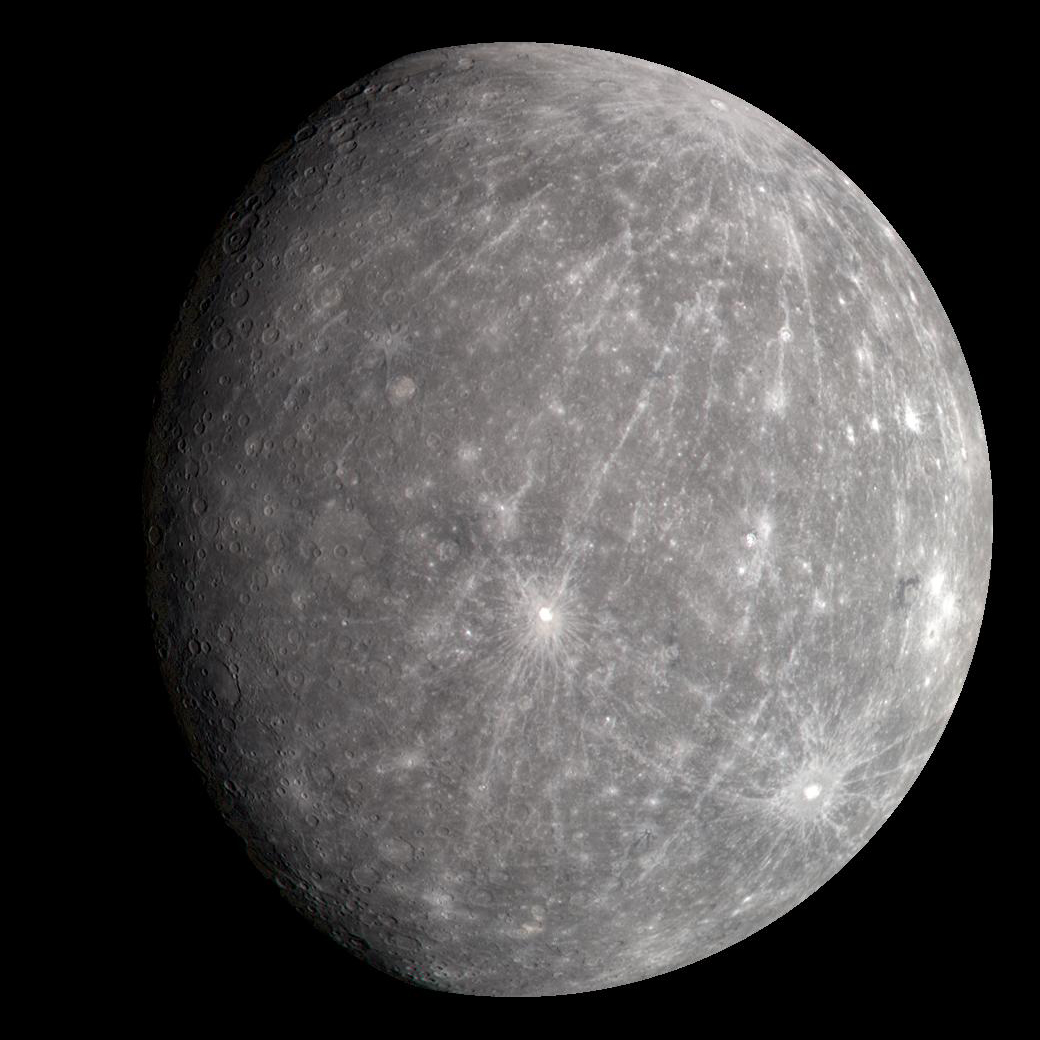
A terrestrial planet, tellurian planet, telluric planet, or rocky planet, is a planet that is composed primarily of silicate, rocks or metals. Within the Solar System, the terrestrial planets accepted by the International Astronomical Union are the inner planets closest to the Sun: Mercury, Venus, Earth and Mars. Among astronomers who use the geophysical definition of a planet, two or three planetary-mass satellites – Earth's Moon, Io, and sometimes Europa – may also be considered terrestrial planets. The large rocky asteroids Pallas and Vesta are sometimes included as well, albeit rarely. The terms "terrestrial planet" and "telluric planet" are derived from Latin words for Earth (Terra and Tellus), as these planets are, in terms of structure, Earth-like. Terrestrial planets are generally studied by geologists, astronomers, and geophysicists.
Terrestrial planets have a solid planetary surface, making them substantially different from larger gaseous planets, which are composed mostly of some combination of hydrogen, helium, and water existing in various physical states.
All terrestrial planets in the Solar System have the same basic structure, such as a central metallic core (mostly iron) with a surrounding silicate mantle.
The large rocky asteroid 4 Vesta has a similar structure; possibly so does the smaller one 21 Lutetia. Another rocky asteroid 2 Pallas is about the same size as Vesta, but is significantly less dense; it appears to have never differentiated a core and a mantle. The Earth's Moon and Jupiter's moon Io have similar structures to terrestrial planets, but Earth's Moon has a much smaller iron core. Another Jovian moon Europa has a similar density but has a significant ice layer on the surface: for this reason, it is sometimes considered an icy planet instead.
Terrestrial planets can have surface structures such as canyons, craters, mountains, volcanoes, and others, depending on the presence at any time of an erosive liquid or tectonic activity or both.
Terrestrial planets have secondary atmospheres, generated by volcanic out-gassing or from comet impact debris. This contrasts with the outer, giant planets, whose atmospheres are primary; primary atmospheres were captured directly from the original solar nebula.
The Solar System has four terrestrial planets under the dynamical definition: Mercury, Venus, Earth and Mars. The Earth's Moon as well as Jupiter's moons Io and Europa would also count geophysically, as well as perhaps the large protoplanet-asteroids Pallas and Vesta (though those are borderline cases). Among these bodies, only the Earth has an active surface hydrosphere. Europa is believed to have an active hydrosphere under its ice layer.
During the formation of the Solar System, there were many terrestrial planetesimals and proto-planets, but most merged with or were ejected by the four terrestrial planets, leaving only Pallas and Vesta to survive more or less intact. These two were likely both dwarf planets in the past, but have been battered out of equilibrium shapes by impacts. Some other protoplanets began to accrete and differentiate but suffered catastrophic collisions that left only a metallic or rocky core, like 16 Psyche or 8 Flora respectively. Many S-type and M-type asteroids may be such fragments.
Hub AI
Terrestrial planet AI simulator
(@Terrestrial planet_simulator)
Terrestrial planet
A terrestrial planet, tellurian planet, telluric planet, or rocky planet, is a planet that is composed primarily of silicate, rocks or metals. Within the Solar System, the terrestrial planets accepted by the International Astronomical Union are the inner planets closest to the Sun: Mercury, Venus, Earth and Mars. Among astronomers who use the geophysical definition of a planet, two or three planetary-mass satellites – Earth's Moon, Io, and sometimes Europa – may also be considered terrestrial planets. The large rocky asteroids Pallas and Vesta are sometimes included as well, albeit rarely. The terms "terrestrial planet" and "telluric planet" are derived from Latin words for Earth (Terra and Tellus), as these planets are, in terms of structure, Earth-like. Terrestrial planets are generally studied by geologists, astronomers, and geophysicists.
Terrestrial planets have a solid planetary surface, making them substantially different from larger gaseous planets, which are composed mostly of some combination of hydrogen, helium, and water existing in various physical states.
All terrestrial planets in the Solar System have the same basic structure, such as a central metallic core (mostly iron) with a surrounding silicate mantle.
The large rocky asteroid 4 Vesta has a similar structure; possibly so does the smaller one 21 Lutetia. Another rocky asteroid 2 Pallas is about the same size as Vesta, but is significantly less dense; it appears to have never differentiated a core and a mantle. The Earth's Moon and Jupiter's moon Io have similar structures to terrestrial planets, but Earth's Moon has a much smaller iron core. Another Jovian moon Europa has a similar density but has a significant ice layer on the surface: for this reason, it is sometimes considered an icy planet instead.
Terrestrial planets can have surface structures such as canyons, craters, mountains, volcanoes, and others, depending on the presence at any time of an erosive liquid or tectonic activity or both.
Terrestrial planets have secondary atmospheres, generated by volcanic out-gassing or from comet impact debris. This contrasts with the outer, giant planets, whose atmospheres are primary; primary atmospheres were captured directly from the original solar nebula.
The Solar System has four terrestrial planets under the dynamical definition: Mercury, Venus, Earth and Mars. The Earth's Moon as well as Jupiter's moons Io and Europa would also count geophysically, as well as perhaps the large protoplanet-asteroids Pallas and Vesta (though those are borderline cases). Among these bodies, only the Earth has an active surface hydrosphere. Europa is believed to have an active hydrosphere under its ice layer.
During the formation of the Solar System, there were many terrestrial planetesimals and proto-planets, but most merged with or were ejected by the four terrestrial planets, leaving only Pallas and Vesta to survive more or less intact. These two were likely both dwarf planets in the past, but have been battered out of equilibrium shapes by impacts. Some other protoplanets began to accrete and differentiate but suffered catastrophic collisions that left only a metallic or rocky core, like 16 Psyche or 8 Flora respectively. Many S-type and M-type asteroids may be such fragments.
Recent media