


Community hub
Recent from talks
Contribute something
Nothing was collected or created yet.
The Rokes
View on Wikipedia
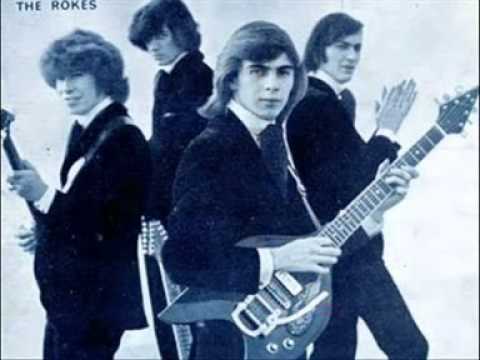
The Rokes were a pop rock band formed in 1963 in Italy by English expatriates. Their most successful songs included "Piangi con me", the original version of "Let's Live for Today", a US hit when covered by The Grass Roots; and "Che colpa abbiamo noi", an Italian-language version of "Cheryl's Going Home" by Bob Lind.
Key Information


History
[edit]Norman David "Shel" Shapiro (born 16 August 1943, Stanmore, Middlesex) began performing in London, England, as a guitarist and singer with rock and roll band Rob Storm & the Whispers. After a spell playing in Gene Vincent's backing band during a tour of Great Britain in 1959, Shapiro decided to form his own band, The Shel Carson Combo, with guitarist Vic Briggs (14 February 1945, Twickenham, Middlesex – 25 June 2021), drummer Mike Shepstone (born 29 March 1943, Weymouth, Dorset), and bassist Bobby Posner (born 6 May 1945, Edgware, Middlesex).
The band performed rhythm and blues in clubs around London and had regular shows at American base camps around the south of England plus a couple of tours in the north including Scotland, before deciding to try their luck in the club scene in continental Europe. In January 1963, they travelled to then West Germany, where they had a residency at the Top Ten Club in Hamburg with a short stay at the Top Ten Club in Hanover. The group was then invited to tour Italy as the backing band for Colin Hicks, the brother of Tommy Steele. Briggs left the combo, preferring to stay in England, and was replaced by Johnny Charlton (born 3 April 1945, Walthamstow, London). The band toured around Italy with Hicks, increasingly performing more of their own material.[1][2]
In June 1963, they broke their ties with Hicks and were signed up by Teddy Reno, the manager and husband of Italian pop singer Rita Pavone. They toured with Pavone, appearing as The Shel Carson Combo, warming up the fans before she did her show. Then the band gained a recording contract with the ARC record label and renamed themselves The Rokes for their first single, a cover version of Big Joe Turner's "Shake, Rattle and Roll": it was unsuccessful, but the group established themselves in a club residency at The Piper Club, in Rome. The Rokes also made a series of short commercials for the ice cream brand Algida, on Italian television. On later recordings, they sang mainly in English-accented Italian versions of American and British chart hits. In 1965, their version of Jackie DeShannon's "When You Walk in the Room" ("C'è una strana espressione nei tuoi occhi"), reached no. 11 on the Italian charts, followed by "Grazie a te", a cover of "I'm Alive" by The Hollies.
In 1966, the band was voted the second most popular beat music group in Italy, after having had further hits with versions of Bob Lind's songs "Cheryl's Going Home" ("Che colpa abbiamo noi") and "Remember The Rain" ("E la pioggia che va"). The B-side of "Che colpa abbiamo noi" was a song that Shapiro co-wrote with Italian lyricist Mogol, "Piangi con me" ("Cry with Me" in English). The group re-recorded the song in English as "Let's Live for Today", with lyrics by Michael Julien of Dick James Music. Worldwide sales of "Piangi con me" exceeded one million copies, qualifying the record for a gold disc.[3] The single was released in England at the same time as a cover version by another English band was done, The Living Daylights. Then the song was heard by American record producers P. F. Sloan and Steve Barri, and successfully recorded by them with The Grass Roots, an American group.[1][2][4]
The Rokes released four albums between 1965 and 1968, and continued to record successfully in Italy. The band also toured and appeared regularly on Italian TV shows and in several editions of the annual Sanremo Music Festival. The group also ventured into psychedelic rock in 1968 with "Il vento" (written by Mogol and Lucio Battisti), also recorded in English as "When the Wind Arises", with lyrics by Mike Shepstone. Then they also recorded a version of The Equals' UK hit "Baby, Come Back" ("Non c'è pace per me"). However, their records had little success outside Italy due to RCA/ARC's lack of publicity. With changing tastes and declining sales, the group disbanded in 1970, having sold more than five million records.[1][2]
Later activities
[edit]Shapiro continued to compose and perform his own music. He recorded seven albums and embarked on an acting career, working with directors such as Mario Monicelli and Marco Risi. In 1977 he founded his own label in Milan.[1] In 2018 he recorded an album with former rival and Equipe 84 lead vocalist Maurizio Vandelli. Johnny Charlton opened his own art gallery, Galleria Charlton, in Rome. He now works as a visual artist. Bobby Posner and Mike Shepstone initially returned to England. Posner bought various pubs in London and eventually sold these and moved to Hastings where he acquired other music pubs. He continues to perform in various rock, reggae, and blues bands. Mike Shepstone formed the duo 'Shepstone and Dibbens', toured with AC/DC and continued to write songs for other artists. In 2000, serious discussions about putting the band back together for an Italian tour gained momentum. However, Shapiro and Charlton weren't interested, so Posner and Shepstone decided to form The Rokes M&B (Mike and Bobby). They have been playing regularly in Italy since 2000. In 2013 Posner moved permanently back to Italy and now lives with his fiancée Paola Salvadeo in Novi Ligure (AL).[2]
Discography
[edit]Albums
[edit]- 1965 – The Rokes (ARC, SA 4)
- 1966 – The Rokes vol. 2 (ARC, SA 8)
- 1966 – Che mondo strano (ARC, SA 15)
- 1968 – The Rokes (ARC, ALPS 11006)
Singles
[edit]| Title | Year | Peak chart positions |
|---|---|---|
| IT [5] | ||
| "Shake and Rattle" b/w "Quando eri con me" |
1964 | — |
| "Un'anima pura" b/w "She Asks of You" |
1965 | — |
| "C'è una strana espressione nei tuoi occhi" b/w "Ci vedremo domani" |
— | |
| "Grazie a te" b/w "La mia città" |
1966 | 12 |
| "Ascolta nel vento" b/w "Il primo sintomo" |
— | |
| "Che colpa abbiamo noi" b/w "Piangi con me" |
3 | |
| "È la pioggia che va" b/w "Finché c'è musica mi tengo su" |
1 | |
| "Bisogna saper perdere" b/w "Non far finta di no" |
1967 | 4 |
| "Eccola di nuovo" b/w "Ricordo quando ero bambino" |
— 8 | |
| "Let's Live for Today" b/w "Ride On" |
— | |
| "Cercate di abbracciare tutto il mondo come noi" b/w "Regency Sue" |
12 | |
| "Hold My Hand" b/w "Regency Sue" |
— | |
| "Le opere di Bartolomeo" b/w "Siamo sotto il sole" |
1968 | 15 |
| "Lascia l'ultimo ballo per me" b/w "Io vivrò senza te" |
16 | |
| "The Works of Bartholomew" b/w "When the Wind Rises" |
— | |
| "Qui non c'è nessuno" b/w "La luna è bianca, la notte è nera" |
— | |
| "Baby Come Back" b/w "Hello, come stai" |
— | |
| "Ma che freddo fa" b/w "Per te, per me" |
1969 | — |
| "28 giugno" b/w "Mary" |
23 | |
| "Ombre blu" b/w "Sempre giorno" |
— | |
| "—" denotes releases that did not chart or were not released in that territory. | ||
References
[edit]- ^ a b c d Bruce Eder. "The Rokes | Biography". AllMusic. Retrieved 19 August 2015.
- ^ a b c d "Featured Content on Myspace". Myspace.com. 10 April 2015. Retrieved 19 August 2015.
- ^ Murrells, Joseph (1978). The Book of Golden Discs (2nd ed.). London: Barrie and Jenkins Ltd. p. okofgoldendisc00murr/page/228 228. ISBN 0-214-20512-6.
- ^ "Italian Beat Groups (Complessi Beat)". Music Graffiti. Retrieved 19 August 2015.
- ^ "Classifiche". Musica e dischi (in Italian). Set "Tipo" on "Singoli". Then, in the "Artista" field, search "Rokes".
External links
[edit]- The Rokes official site (files from original url)
- The Rokes Discography
- The Rokes discography at Discogs
- The Rokes at IMDb
- Shel Shapiro official site
- Johnny Charlton Art official site
- The Rokes – MySpace page
- The Rokes site, managed by Bobby Posner
- The Rokes site, managed by Mike Shepstone and Bobby Posner
- The Rokes Fans Club Italy – YouTube
| International | |
|---|---|
| Artists | |

The Rokes
View on GrokipediaFormation and Early Career
Origins in the UK
The Shel Carson Combo was formed in 1963 in London by guitarist and vocalist Shel Shapiro, who had previously gained experience in the British music scene, including stints with groups like Rob Storm & the Whispers and as part of Gene Vincent's backing band during a 1959 UK tour.[1] The initial lineup featured Shapiro on guitar and vocals, drummer Mike Shepstone, bassist Bobby Posner, and guitarist Vic Briggs, establishing a core rhythm and blues ensemble rooted in the burgeoning British beat movement.[1] As a rhythm and blues band, the Shel Carson Combo quickly began performing in UK clubs, honing their sound through live gigs that captured the energetic style of the era's R&B revival. One early appearance took place at the Brentwood Jazz Club in Essex on February 23, 1963, where they shared the bill with local acts, drawing crowds eager for authentic American-influenced blues interpretations.[6] These club performances helped build their reputation among British music circles, emphasizing covers of R&B standards and original material performed with a raw, driving energy. The band's early momentum extended to European tours, including residencies in Hamburg's vibrant club scene, where they backed various American artists and refined their act amid the competitive environment of post-war Germany's rock circuit.[1] These outings generated interest from Italian promoters, notably Teddy Reno—manager of pop star Rita Pavone—who spotted their potential during initial forays into continental Europe.[7] This attention paved the way for their relocation to Italy later that year.Relocation to Italy and Initial Success
After completing European tours as the Shel Carson Combo, the band—with John Charlton replacing Vic Briggs on guitar—relocated to Italy in 1963, settling there by June to pursue opportunities in the burgeoning music scene.[7] Initially backing Australian performer Colin Hicks on his Italian engagements and billed as The Cabin Boys, they soon attracted attention from influential figures in the local industry.[1] In June 1963, the group severed ties with Hicks and signed with Teddy Reno, the manager and husband of rising Italian pop star Rita Pavone, who secured them a recording contract with RCA Italiana.[8] Reno arranged for them to serve as Pavone's backing band on her nationwide tour, providing crucial exposure and helping them adapt to the Italian market through performances across the country. This collaboration marked their transition from supporting acts to establishing a presence in Italy's pop landscape. In 1963, following their signing with Teddy Reno, the band renamed themselves The Rokes and released their debut single, a cover of Bill Haley's "Shake, Rattle and Roll," issued on the ARC label (an affiliate of RCA) in 1964.[1] Though it did not achieve major chart success, it represented their first original recording under the new moniker. Follow-up singles included "Un'anima pura" in 1964 and "C'è una strana espressione nei tuoi occhi," an Italian adaptation of The Searchers' "When You Walk in the Room," released in 1965, which began to build their audience.[1] These efforts further solidified their foothold in the domestic entertainment circuit.Musical Career and Achievements
Breakthrough in 1966
In 1966, The Rokes marked their breakthrough in the Italian music scene with a series of successful singles that propelled them to national prominence. Their single "Che colpa abbiamo noi," an Italian-language adaptation of Bob Lind's "Cheryl's Going Home," peaked at number 3 on the Italian charts, showcasing the band's ability to blend English folk-rock influences with local appeal. Released on ARC Records, the track's B-side, "Piangi con me"—co-written by band member Shel Shapiro and lyricist Mogol—emerged as the real standout, becoming an enduring hit that sold over one million copies worldwide and qualified for a gold disc. This original composition by the group would later inspire The Grass Roots' international success with their English adaptation, "Let's Live for Today."[9][3] Building on this momentum, The Rokes followed with "È la pioggia che va," their Italian version of Bob Lind's "Remember the Rain," which climbed to number 1 on the Italian charts, dominating airplay and sales throughout the year. These 1966 releases not only highlighted the band's knack for reinterpreting Anglo-American pop but also capitalized on the growing beat music craze in Italy, following their earlier singles from 1964–1965 that had begun building a fanbase. The string of hits culminated in widespread recognition, as The Rokes were voted the second most popular beat group in Italy that year based on a national poll.[10][11][12] By the late 1960s, the cumulative impact of these breakthrough tracks and subsequent releases had driven The Rokes' total record sales in Italy to exceed 5 million copies, cementing their status as one of the era's top acts.[13]Peak Popularity and Tours
Following their breakthrough in 1966, The Rokes experienced their peak popularity in Italy from 1967 to 1969, characterized by sustained chart success, multiple album releases, and widespread media exposure. The band issued The Rokes in 1965, followed by Volume 2° and Che mondo strano in 1966, and another self-titled album in 1968, which helped solidify their position as a dominant force in the Italian pop-rock scene.[14] These records featured a mix of original material and covers, reflecting the group's evolving style amid the beat and emerging psychedelic trends.[15] The Rokes became fixtures on Italian television during this era, with regular appearances on popular variety programs that amplified their visibility. They performed on Senza rete in 1969, showcasing hits like "28 giugno" in live segments broadcast on RAI.[16] The group also featured in several editions of the prestigious Sanremo Music Festival in 1967, 1968, and 1969, further cementing their status as national stars.[15] Live performances defined much of their peak period, as the band embarked on extensive tours across Italy and parts of Europe, drawing large crowds at concerts and festivals. These tours often included opening slots for prominent Italian artists, contributing to their reputation as a dynamic live act.[15] Their international profile rose notably when "Piangi con me" (1966), an Italian adaptation of the song originally written by band member Shel Shapiro, was re-recorded by the American group The Grass Roots as "Let's Live for Today." This version climbed to number eight on the Billboard Hot 100 in 1967, introducing The Rokes' material to a global audience.[17] By 1967, The Rokes' music began incorporating psychedelic influences, evident in singles like "When the Wind Arises," which blended beat rhythms with experimental elements and marked a shift toward more adventurous sounds in their later output.[5] This evolution aligned with broader trends in European rock, helping sustain their relevance through 1969.[15]Musical Style and Influences
Core Sound and Evolution
The Rokes originated in the United Kingdom with roots in rhythm and blues and beat music, drawing heavily from the British Invasion sound exemplified by bands such as The Beatles and The Rolling Stones.[18][10] Formed initially as the Shel Carson Combo in London, the group performed in clubs like the Roaring Twenties, where they absorbed influences from early rock and roll figures including Elvis Presley and Gene Vincent, as well as folk artists like Bob Dylan and Donovan.[18] This foundation emphasized energetic guitar riffs and rhythmic drive, aligning with the burgeoning beat scene that swept across Europe in the mid-1960s.[10] Upon relocating to Italy in 1963, The Rokes adapted their style to the local market, transitioning into pop rock characterized by harmonic vocals and guitar-driven arrangements.[18] The band's use of vocal harmonies, inspired by The Everly Brothers and a hallmark of English groups, became a defining trait, blending seamlessly with their beat roots to create accessible, melody-focused songs.[18] This shift was evident in their early Italian recordings, where they maintained a British accent in performances while incorporating elements that appealed to Mediterranean audiences, solidifying their position in the "Bitt" movement—a localized version of beat music.[10] By 1967-1968, The Rokes evolved further, incorporating psychedelic rock elements such as longer tracks and experimental sonorities, reflecting global trends in rock music.[18] Lead singer Shel Shapiro noted the band's interest in "discovering new sounds," which led to explorations beyond straightforward pop structures.[18] This phase marked a maturation from their initial beat influences, embracing the psychedelic wave while retaining core guitar and vocal elements. A key aspect of their sound was a bilingual approach, where English originals were frequently adapted with Italian lyrics to enhance local appeal, and vice versa for Italian compositions.[18][10] This strategy allowed them to navigate cross-cultural markets effectively, often securing rights to foreign hits and reinterpreting them for Italian audiences, which contributed to their commercial longevity in Italy.[10]Key Songs and Covers
The Rokes' breakthrough track "Piangi con me," released in 1966, exemplified their original songwriting with its urgent, carpe diem theme, blending rhythmic beat energy with poignant Italian lyrics penned by renowned adapter Mogol. This composition was later translated and adapted into English as "Let's Live for Today," which The Grass Roots recorded and propelled to number 8 on the Billboard Hot 100 in 1967, marking a significant cross-cultural success that introduced The Rokes' melody to American audiences.[19] Among their notable covers, "C'è una strana espressione nei tuoi occhi" (1965) adapted Jackie DeShannon's 1964 hit "When You Walk in the Room" into an emotional ballad that captured the introspective longing of the original while infusing it with Italian pop sensibilities, highlighting the band's ability to transform Anglo-American rock into heartfelt, localized expressions. Similarly, "Che colpa abbiamo noi" (1966), a cover of Bob Lind's folk-rock tune "Cheryl's Goin' Home," delivered an upbeat yet melancholic narrative of regret and escape, adapted by Mogol to resonate with Italian listeners through its vivid storytelling and harmonious vocals. These adaptations underscored The Rokes' focus on emotional ballads and lively pop arrangements, often featuring close vocal harmonies and guitar-driven rhythms.[20] The Rokes' approach to covers and originals significantly influenced the Italian beat scene of the 1960s, where over 1,600 bands emerged, by seamlessly blending Anglo-American rock influences—like those from The Beatles and American folk-rock—with local pop traditions through Italian lyric adaptations. This fusion not only popularized beat music among Italian youth but also positioned The Rokes as cultural bridges, contributing to a vibrant movement that emphasized accessible, emotionally charged songs tailored to domestic tastes.[10][21]Band Members
Original and Core Lineup
The Rokes' original and core lineup, which solidified by 1964, consisted of four English musicians who relocated to Italy to capitalize on the burgeoning beat music scene there. This stable quartet drove the band's success through their active years until 1970.[1] Shel Shapiro, born Norman David Shapiro on 16 August 1943 in London, England, served as the band's lead guitarist, lead vocalist, primary songwriter, and frontman. His songwriting contributions, often drawing from rhythm and blues influences, shaped much of The Rokes' repertoire, while his charismatic stage presence positioned him as the group's focal point. Prior to forming the band, Shapiro had performed in London groups like Rob Storm & the Whispers and gained experience in Hamburg clubs.[22][23][24] Mike Shepstone, born on 23 March 1943 in Weymouth, Dorset, England, provided the band's drumming and contributed to backing vocals. His solid rhythmic foundation anchored The Rokes' energetic live performances and recordings, supporting their transition from club gigs to international hits. Shepstone had earlier played in British combos before joining Shapiro in the early lineup.[25][26] Bobby Posner, born on 6 May 1945 in Edgware, Middlesex, England, handled bass guitar duties and added harmonies to the vocal arrangements. His low-end playing complemented the dual-guitar setup, enhancing the band's tight, harmony-driven sound. As one of the younger members, Posner brought fresh energy from the London music circuit to the group.[1][27] Johnny Charlton, born Johnny Raymond Charlton on 3 April 1945 in Walthamstow, London, England, joined as the rhythm guitarist shortly after the band's 1963 formation, replacing an earlier member and becoming a core part of the lineup. His contributions to guitar work and occasional vocals helped define The Rokes' polished beat style during their Italian heyday. Charlton, like his bandmates, was an expatriate drawn to opportunities abroad.[1][28]Personnel Changes
The Rokes underwent their sole significant personnel change in 1963, shortly before relocating to Italy. Original guitarist Vic Briggs, who had been part of the initial lineup formed in England as the Shel Carson Combo, chose to remain in the UK and was replaced by Johnny Charlton upon the band's move to support Colin Hicks on tour.[18][29] This adjustment resulted in a stable quartet that persisted without further major alterations through the band's active years. From 1964 to 1970, the core members—Shel Shapiro on guitar and vocals, Johnny Charlton on guitar and vocals, Bobby Posner on bass and vocals, and Mike Shepstone on drums and vocals—remained consistent, supporting their rise to prominence in the Italian music scene.[18][12] The continuity of this lineup contributed to the band's cohesive sound, characterized by dual guitar interplay and vocal harmonies that defined their beat and pop rock style during peak success.[18]Discography
Studio Albums
The Rokes, primarily active in Italy, produced four original studio albums between 1965 and 1968, all released on the ARC label, an imprint of RCA Italiana. These records captured the band's evolution from beat and pop covers to more original material influenced by folk rock and emerging psychedelic elements, often featuring Italian adaptations of international hits alongside compositions by members like Shel Shapiro and external writers such as Sergio Bardotti.[1][30] Their debut album, The Rokes, marked their entry into long-form recording following early singles success, with a tracklist heavy on covers like "Walking the Dog" and "Dancing in the Street" that showcased their energetic beat style. Released in 1965 on ARC (SA 4), it was recorded at RCA's Studio D in Rome during January and February sessions, establishing their sound rooted in British Invasion influences adapted for Italian audiences.[31][30] In 1966, the band followed with Volume 2° (ARC SA 8), expanding on their pop-rock foundation with tracks such as "Take a Look" and originals like "No, No, No," reflecting a maturing songwriting approach while incorporating subtle folk elements. This release, also issued internationally in regions like Argentina and Brazil under RCA Victor, highlighted hits from their rising popularity, including adaptations that later influenced global covers.[32][30] Che mondo strano, released later in 1966 on ARC (SA 15), introduced more introspective and experimental tones, blending beat rhythms with folk rock arrangements in songs like the title track and a cover of Bob Dylan's "It's All Over Now, Baby Blue" as "Baby Blue." Available in mono format and exported to markets including the US (RCA Victor FPM-185), it signaled the band's shift toward psychedelic influences amid Italy's evolving music scene.[33][30] The final studio effort, a self-titled The Rokes in 1968 (ARC ALP 11006), embraced fuller psychedelic and pop experimentation with gatefold packaging and tracks like "Le Opere di Bartolomeo" and "Io Vivrò Senza Te," co-written by band members and lyricist Mogol. Issued in mono as their swan song before disbandment, it featured sophisticated arrangements that underscored their artistic peak.[34][30] Post-1970, RCA Italiana released a retrospective compilation titled These Were The Rokes in 1977, collecting key tracks from these albums exclusively for the Italian market, preserving their legacy amid the band's inactivity.[35][15]Singles and EPs
The Rokes issued a total of 21 singles on 7-inch vinyl between 1964 and 1969, predominantly for the Italian market through labels like ARC and RCA, with only a handful of releases in the UK and US that garnered minimal commercial attention. These singles frequently consisted of Italian-language covers or adaptations of international hits, blending beat and pop rock styles to appeal to local audiences, and they formed the backbone of the band's chart success in Italy. While exact chart data from the era is sparse in English-language sources, several achieved top positions on the Italian Hit Parade, reflecting the group's dominance in the mid-1960s beat scene. Key singles included their debut "Shake, Rattle and Roll" b/w "Quando eri con me" in 1964 on ARC, marking their entry into the Italian music scene with a cover of the Bill Haley classic. Breakthrough hits followed in 1966 with "Che colpa abbiamo noi" b/w "Piangi con me" on ARC, where the A-side—an adaptation of Bob Lind's "Cheryl's Going Home"—peaked at number 3 in Italy, and the B-side "Piangi con me" soared to number 2, selling over 2 million copies and becoming their signature song. Later that year, "È la pioggia che va" b/w "Finché c'è musica mi tengo su" also topped the Italian charts at number 1, another Mogol adaptation of a Bob Lind track that underscored their prowess in translating folk-rock into Italian pop.| Year | Title (A-Side / B-Side) | Label (Catalog) | Notes |
|---|---|---|---|
| 1964 | Shake, Rattle and Roll / Quando eri con me | ARC (AN 4013) | Debut single; cover of Bill Haley track. |
| 1966 | Che colpa abbiamo noi / Piangi con me | ARC (AN 4081) | #3 (A-side) and #2 (B-side) in Italy; over 2 million sales for B-side.[30][1] |
| 1966 | È la pioggia che va / Finché c'è musica mi tengo su | ARC (AN 4100) | #1 in Italy; adaptation of Bob Lind's "Remember the Rain."[30][1] |