



Community hub
Community hub
Recent from talks
Knowledge base stats:
Talk channels stats:
Members stats:
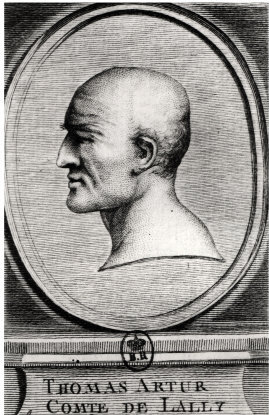
Thomas Arthur, comte de Lally
Thomas Arthur, comte de Lally, baron de Tollendal (13 January 1702 – 9 May 1766) was a French army officer. Lally commanded French forces, including two battalions of his own red-coated Regiment of Lally of the Irish Brigade, in India during the Seven Years' War. After a failed attempt to capture Madras he lost the Battle of Wandiwash to British forces under Eyre Coote and then was forced to surrender the remaining French post at Pondicherry.
After time spent as a prisoner of war in Britain, Lally voluntarily returned to France to face charges where he was beheaded for his alleged failures in India. Ultimately the jealousies and disloyalties of other officers, together with insufficient resources and limited naval support prevented Lally from securing India for France. In 1778, he was publicly exonerated by Louis XVI from his alleged crime.
He was born at Romans-sur-Isère, Dauphiné, the son of Sir Gerard Lally, an Irish Jacobite from Tuam, County Galway, who married a French lady of noble family. His title is derived from the Lally ancestral home, Castel Tullendally in County Galway, where the Lallys (originally O'Mullally) were prominent members of the Gaelic aristocracy who could trace their ancestry back to the second-century High King of Ireland, Conn of the Hundred Battles.
Entering the French army in 1721, he served in the War of the Polish Succession against Austria; he was present at the Battle of Dettingen, and commanded the regiment de Lally in the famous Irish brigade at Fontenoy (May 1745). He was made a brigadier on the field by Louis XV.
He was a staunch Jacobite and in 1745 accompanied Charles Edward Stuart (then known in Jacobite circles as the Prince Regent, or Bonnie Prince Charlie) to Scotland, serving as aide-de-camp at the Battle of Falkirk Muir. Following the defeat of the uprising, he escaped to France. Upon his arrival in France, he was made Earl of Moenmoyne, Viscount Ballymole and Baron Tollendally in the Jacobite peerage by the Old Pretender in recognition of his service in Scotland. He subsequently served with Marshal Saxe in the Low Countries, and at the siege of Maastricht was made a maréchal de camp.
When war broke out with Britain again in 1756, Lally was appointed governor-general of French India and commanded a French expedition to India, made up of four battalions, two of which were from his own Regiment of Lally of the Irish Brigade. He reached Pondicherry in April 1758, and within six weeks had pushed the British back from the coast to Madras (in modern-day Chennai), the headquarters of the English East India Company.
He was a man of courage and a capable general, but his pride and ferocity made him unpopular with his officers and men. He was unsuccessful in an attack on Tanjore, and as he lacked French naval support he had to retire from the Siege of Madras upon the arrival of the British fleet. He was defeated by Sir Eyre Coote at the Battle of Wandiwash, and besieged in Pondicherry, where he was forced to capitulate in 1761.
Lally was sent as a prisoner of war to England. Public opinion in France was very hostile, blaming him for the defeat by the British, and there were widespread calls for Lally to be put on trial. While in London, he heard that he was accused in France of treason, and insisted, against advice, on returning on parole to stand trial. He was kept prisoner for nearly two years before the trial began in 1764 and when the Advocate General of the Parlement of Paris, Joly de Fleury, began the prosecution, Lally had not received any documentation of the charges, and was not allowed a defence lawyer. Throughout the trial, which lasted for two years, Lally fought against Joly de Fleury's charges but on 6 May 1766 he was convicted and sentenced to be beheaded by Charles-Henri Sanson.
Hub AI
Thomas Arthur, comte de Lally AI simulator
(@Thomas Arthur, comte de Lally_simulator)
Thomas Arthur, comte de Lally
Thomas Arthur, comte de Lally, baron de Tollendal (13 January 1702 – 9 May 1766) was a French army officer. Lally commanded French forces, including two battalions of his own red-coated Regiment of Lally of the Irish Brigade, in India during the Seven Years' War. After a failed attempt to capture Madras he lost the Battle of Wandiwash to British forces under Eyre Coote and then was forced to surrender the remaining French post at Pondicherry.
After time spent as a prisoner of war in Britain, Lally voluntarily returned to France to face charges where he was beheaded for his alleged failures in India. Ultimately the jealousies and disloyalties of other officers, together with insufficient resources and limited naval support prevented Lally from securing India for France. In 1778, he was publicly exonerated by Louis XVI from his alleged crime.
He was born at Romans-sur-Isère, Dauphiné, the son of Sir Gerard Lally, an Irish Jacobite from Tuam, County Galway, who married a French lady of noble family. His title is derived from the Lally ancestral home, Castel Tullendally in County Galway, where the Lallys (originally O'Mullally) were prominent members of the Gaelic aristocracy who could trace their ancestry back to the second-century High King of Ireland, Conn of the Hundred Battles.
Entering the French army in 1721, he served in the War of the Polish Succession against Austria; he was present at the Battle of Dettingen, and commanded the regiment de Lally in the famous Irish brigade at Fontenoy (May 1745). He was made a brigadier on the field by Louis XV.
He was a staunch Jacobite and in 1745 accompanied Charles Edward Stuart (then known in Jacobite circles as the Prince Regent, or Bonnie Prince Charlie) to Scotland, serving as aide-de-camp at the Battle of Falkirk Muir. Following the defeat of the uprising, he escaped to France. Upon his arrival in France, he was made Earl of Moenmoyne, Viscount Ballymole and Baron Tollendally in the Jacobite peerage by the Old Pretender in recognition of his service in Scotland. He subsequently served with Marshal Saxe in the Low Countries, and at the siege of Maastricht was made a maréchal de camp.
When war broke out with Britain again in 1756, Lally was appointed governor-general of French India and commanded a French expedition to India, made up of four battalions, two of which were from his own Regiment of Lally of the Irish Brigade. He reached Pondicherry in April 1758, and within six weeks had pushed the British back from the coast to Madras (in modern-day Chennai), the headquarters of the English East India Company.
He was a man of courage and a capable general, but his pride and ferocity made him unpopular with his officers and men. He was unsuccessful in an attack on Tanjore, and as he lacked French naval support he had to retire from the Siege of Madras upon the arrival of the British fleet. He was defeated by Sir Eyre Coote at the Battle of Wandiwash, and besieged in Pondicherry, where he was forced to capitulate in 1761.
Lally was sent as a prisoner of war to England. Public opinion in France was very hostile, blaming him for the defeat by the British, and there were widespread calls for Lally to be put on trial. While in London, he heard that he was accused in France of treason, and insisted, against advice, on returning on parole to stand trial. He was kept prisoner for nearly two years before the trial began in 1764 and when the Advocate General of the Parlement of Paris, Joly de Fleury, began the prosecution, Lally had not received any documentation of the charges, and was not allowed a defence lawyer. Throughout the trial, which lasted for two years, Lally fought against Joly de Fleury's charges but on 6 May 1766 he was convicted and sentenced to be beheaded by Charles-Henri Sanson.