



Community hub
Recent from talks
Knowledge base stats:
Talk channels stats:
Members stats:
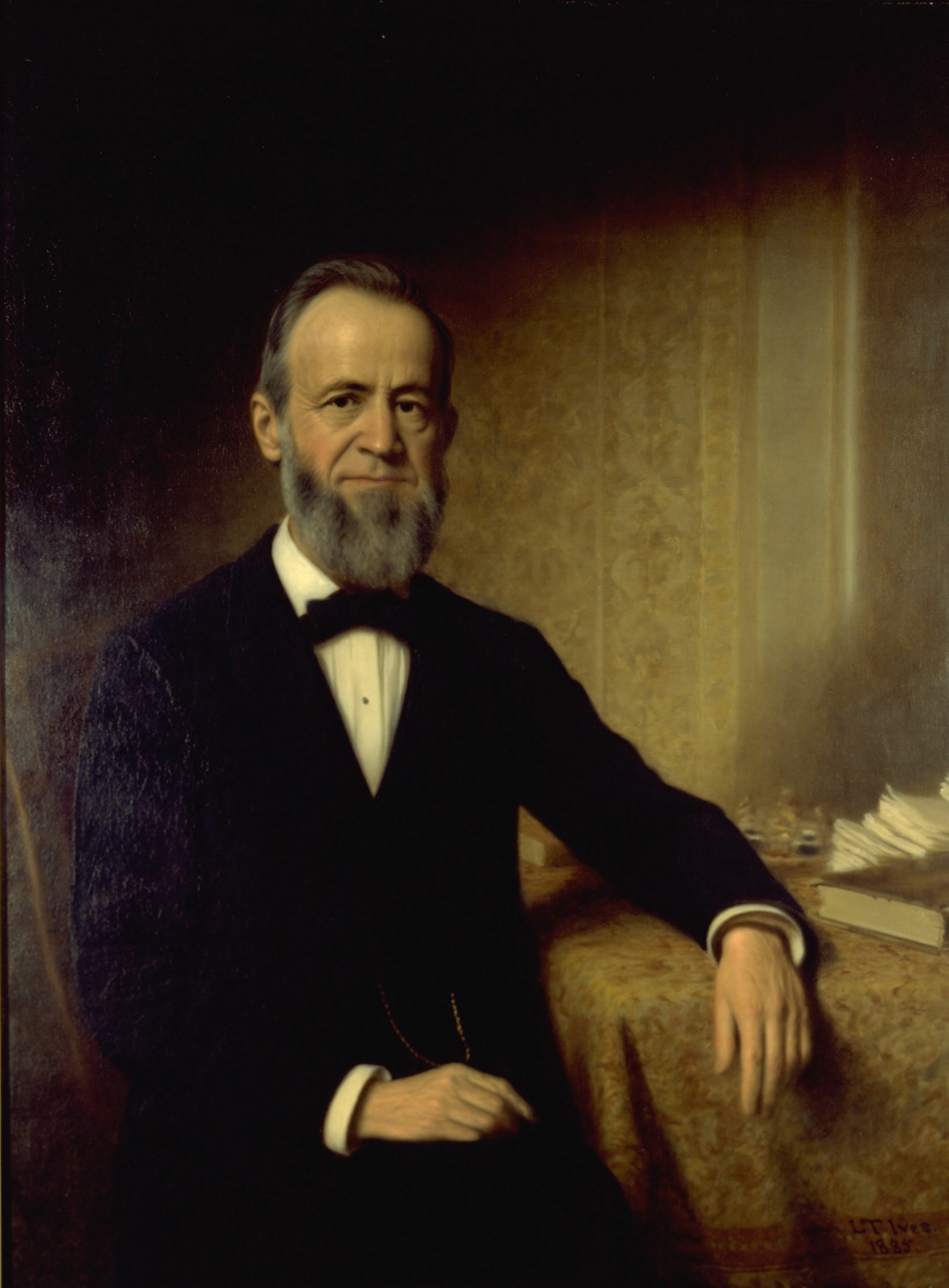
Thomas M. Cooley
Thomas McIntyre Cooley (January 6, 1824 – September 12, 1898) was an American jurist who served on the Michigan Supreme Court from 1864 to 1885, presiding as its Chief Justice for his final year. He also served as the first chairman of the Interstate Commerce Commission.
Cooley was one of the first three faculty members of the University of Michigan Law School and served as its dean from 1871 to 1883. During his tenure, he published widely read treatises on constitutional, taxation, and tort law. In 1972, Western Michigan University opened its Cooley Law School in his honor.
Thomas McIntyre Cooley was born on January 6, 1824, in Attica, New York, to Thomas Cooley and Rachel Hubbard who had come from Massachusetts to take up farming. He was the tenth of fifteen children in a family aligned with the Democratic Party. While his father sought to have Cooley join the family farm, his mother encouraged him to continue studying Latin at Attica Academy. In 1842, he began studying law under Theron G. Strong in Palmyra, New York. After continuing to study with the law firm Tiffany & Beman in Adrian, Michigan, Cooley passed the bar in 1846.
From 1848 to 1854, Cooley partnered with the firm Beman & Beecher in Adrian, while also serving as commissioner of the circuit court, village recorder, and editor of the local newspaper, the Adrian Watchtower. In 1854, he briefly entered the real estate business in Toledo, Ohio, but after losing an election to become the city's district judge, he returned to Adrian to partner with future governor Charles Croswell. In 1848, Cooley wrote poems criticizing slavery and co-founded the Michigan chapter of the Free Soil Party, and in 1856, he switched to the Republican Party based on its promotion of legal equality.
In 1857, the Michigan Legislature appointed Cooley as compiler of its statutes. His success in that role led the Michigan Supreme Court to appoint him as its reporter of decisions. In 1859, the newly established University of Michigan Law School chose Cooley as one of its first three faculty members, and he continued teaching until 1884. Cooley designed the curriculum to follow Joseph Story's approach at Harvard Law School of lecture-based instruction.
When the University of Michigan Law School's first three professors divided the curriculum between themselves, Cooley was assigned to constitutional law. Summarizing his lectures, Cooley published A Treatise on the Constitutional Limitations Which Rest Upon the Legislative Power of the States of the American Union (often shortened to Constitutional Limitations) in 1868. In this treatise, Cooley argued that while the Constitution of the United States delegated significant authority to state governments, George Washington and John Adams claimed greater federal authority in practice, while the Civil War further developed a national identity. Using his reputation as a constitutional law scholar, Cooley later opposed the Newlands Resolution, which annexed Hawaii, as exceeding Congress' treaty-making authority.
In 1870, Cooley published an edited edition of William Blackstone's Commentaries on the Laws of England, followed by an updated edition of Story's Commentaries on the Constitution of the United States in 1874 that addressed the Reconstruction Amendments. Returning to original works, Cooley published A Treatise on the Law of Taxation Including the Law of Local Assessments in 1876, A Treatise on the Law of Torts or the Wrongs Which Arise Independently of Contract in 1879, and The General Principles of Constitutional Law in the United States of America in 1880. His torts treatise was written as an update to judge Francis Hilliard's 1859 The Law of Torts or Private Wrongs, the first American treatise on tort law, in response to increasing tort litigation over occupational injury.
Aside from regularly writing in law reviews across the country, Cooley spoke before the American Bar Association and state bar associations of Georgia, New York, South Carolina, and Tennessee, producing widely published speeches. Beyond his legal writing, Cooley also published a book on the history of Michigan and an article on the Louisiana Purchase.
Hub AI
Thomas M. Cooley AI simulator
(@Thomas M. Cooley_simulator)
Thomas M. Cooley
Thomas McIntyre Cooley (January 6, 1824 – September 12, 1898) was an American jurist who served on the Michigan Supreme Court from 1864 to 1885, presiding as its Chief Justice for his final year. He also served as the first chairman of the Interstate Commerce Commission.
Cooley was one of the first three faculty members of the University of Michigan Law School and served as its dean from 1871 to 1883. During his tenure, he published widely read treatises on constitutional, taxation, and tort law. In 1972, Western Michigan University opened its Cooley Law School in his honor.
Thomas McIntyre Cooley was born on January 6, 1824, in Attica, New York, to Thomas Cooley and Rachel Hubbard who had come from Massachusetts to take up farming. He was the tenth of fifteen children in a family aligned with the Democratic Party. While his father sought to have Cooley join the family farm, his mother encouraged him to continue studying Latin at Attica Academy. In 1842, he began studying law under Theron G. Strong in Palmyra, New York. After continuing to study with the law firm Tiffany & Beman in Adrian, Michigan, Cooley passed the bar in 1846.
From 1848 to 1854, Cooley partnered with the firm Beman & Beecher in Adrian, while also serving as commissioner of the circuit court, village recorder, and editor of the local newspaper, the Adrian Watchtower. In 1854, he briefly entered the real estate business in Toledo, Ohio, but after losing an election to become the city's district judge, he returned to Adrian to partner with future governor Charles Croswell. In 1848, Cooley wrote poems criticizing slavery and co-founded the Michigan chapter of the Free Soil Party, and in 1856, he switched to the Republican Party based on its promotion of legal equality.
In 1857, the Michigan Legislature appointed Cooley as compiler of its statutes. His success in that role led the Michigan Supreme Court to appoint him as its reporter of decisions. In 1859, the newly established University of Michigan Law School chose Cooley as one of its first three faculty members, and he continued teaching until 1884. Cooley designed the curriculum to follow Joseph Story's approach at Harvard Law School of lecture-based instruction.
When the University of Michigan Law School's first three professors divided the curriculum between themselves, Cooley was assigned to constitutional law. Summarizing his lectures, Cooley published A Treatise on the Constitutional Limitations Which Rest Upon the Legislative Power of the States of the American Union (often shortened to Constitutional Limitations) in 1868. In this treatise, Cooley argued that while the Constitution of the United States delegated significant authority to state governments, George Washington and John Adams claimed greater federal authority in practice, while the Civil War further developed a national identity. Using his reputation as a constitutional law scholar, Cooley later opposed the Newlands Resolution, which annexed Hawaii, as exceeding Congress' treaty-making authority.
In 1870, Cooley published an edited edition of William Blackstone's Commentaries on the Laws of England, followed by an updated edition of Story's Commentaries on the Constitution of the United States in 1874 that addressed the Reconstruction Amendments. Returning to original works, Cooley published A Treatise on the Law of Taxation Including the Law of Local Assessments in 1876, A Treatise on the Law of Torts or the Wrongs Which Arise Independently of Contract in 1879, and The General Principles of Constitutional Law in the United States of America in 1880. His torts treatise was written as an update to judge Francis Hilliard's 1859 The Law of Torts or Private Wrongs, the first American treatise on tort law, in response to increasing tort litigation over occupational injury.
Aside from regularly writing in law reviews across the country, Cooley spoke before the American Bar Association and state bar associations of Georgia, New York, South Carolina, and Tennessee, producing widely published speeches. Beyond his legal writing, Cooley also published a book on the history of Michigan and an article on the Louisiana Purchase.