Hubbry Logo
Thomas SheratonThomas SheratonMain
Open search
Thomas Sheraton
Community hub
Thomas Sheraton
logo
8 pages, 0 posts
0 subscribers
Be the first to start a discussion here.
Thomas Sheraton
Thomas Sheraton
from Wikipedia

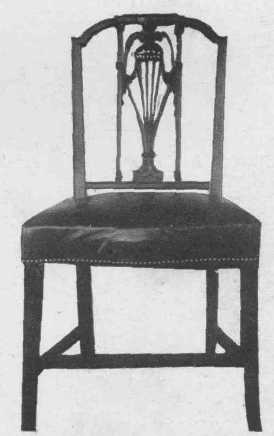
A Sheraton style chair with rectangular back

Key Information

Thomas Sheraton (1751 – 22 October 1806)[1] was a furniture designer, one of the "big three" English furniture makers of the 18th century, along with Thomas Chippendale and George Hepplewhite.[2] Sheraton gave his name to a style of furniture characterised by a feminine refinement of late Georgian styles[1] and became the most powerful source of inspiration behind the furniture of the late 18th century.

Biography

[edit]

Sheraton was born in Stockton-on-Tees, County Durham, England[3] – where nowadays there is a pub named after him.[4] He was one of the leaders and preachers of the Stockton Baptist church and also preached elsewhere on his travels. He was apprenticed to a local cabinet maker and continued working as a journeyman cabinet maker until he moved to London in 1790, aged 39.[1] There he set up as professional consultant and teacher, teaching perspective, architecture, and cabinet design for craftsmen.[5] It is not known how he gained either the knowledge or the reputation which enabled him to do this but he appears to have been moderately successful.

Starting in 1791 he published in four volumes The Cabinet Maker's and Upholsterer's Drawing Book.[3] At least six hundred cabinet makers and joiners subscribed to his book and it was immediately widely influential over a large part of the country.[3] During this period he did not have a workshop of his own and it is believed that Sheraton himself never made any of the pieces shown in his books. No piece of furniture has ever been traced to him directly.[5] So a piece of furniture described as being "by Sheraton" refers to the design and not to the maker of the piece.[6]

In 1803 he published The Cabinet Dictionary, a compendium of instructions on the techniques of cabinet and chair making.[3] Then a year before his death, in 1805 he published the first volume of The Cabinet Maker, Upholsterer and General Artist's Encyclopaedia.[3]

Sheraton's name is associated with the styles of furniture fashionable in the 1790s and early 19th century.[1] Many of the designs are based on classical architecture, knowledge of which was an essential part of a designer's technical education.[1] Not all of the drawings are of his own design – he acknowledged that some of them came from works in progress in the workshops of practising cabinet makers[3] – but he was a superb draughtsman and he set his name on the style of the era.

See also

[edit]

References

[edit]
Revisions and contributorsEdit on WikipediaRead on Wikipedia
from Grokipedia
Thomas Sheraton (1751–1806) was an influential English furniture designer, author, and Baptist minister whose neoclassical designs, characterized by rectilinear forms, delicate inlays, and a preference for satinwood, shaped late 18th- and early 19th-century cabinetmaking. Born in , , to a schoolmaster father also named Thomas, Sheraton trained as a cabinetmaker and married Margaret Mitchinson in 1779, with whom he had two children. After working as an itinerant cabinetmaker and preacher in , he relocated to around 1790, residing at addresses such as 4 Hart Street and later 106 Wardour Street, where he focused on authoring design books and religious tracts amid financial hardships. Sheraton's most notable contribution was The Cabinet-Maker and Upholsterer's Drawing-Book (1791–1793), a multi-part publication with 111 engraved plates that disseminated his refined neoclassical style, drawing from influences like and while critiquing heavier elements. Subsequent works included the expanded second edition of the Drawing-Book (1794), The Cabinet Dictionary (1803) with 85 engraved plates, and the incomplete Cabinet-Maker, Upholsterer, and General Artist's Encyclopaedia (1804–1805), which aimed to catalog comprehensive furniture knowledge. These publications, often issued by subscription, not only provided practical designs but also elevated Sheraton's name as synonymous with elegant, proportioned furniture featuring minimal carving and exotic wood inlays. Despite his impact on the trade, Sheraton produced few pieces himself and lived in , supplementing through and preaching; he died on 22 October 1806 in , , and was buried at St James's , leaving his family in distress. His legacy endures through the widespread adoption of "Sheraton style" in American and European furniture, emphasizing symmetry, lightness, and classical motifs.

Early Life

Birth and Family Background

Thomas Sheraton was born in 1751 in , , , to Thomas Sheraton, a local , and his wife, whose name is not recorded in historical accounts. The Sheraton family resided in modest circumstances as part of the town's , where the father's role as an educator likely afforded young Thomas early opportunities for basic schooling and exposure to and . On 8 February 1779, Sheraton married Margaret Mitchinson in Norton, ; the couple went on to have two children, though their names and exact birth dates remain undocumented. Sheraton's formative years in , a thriving , immersed him in the local traditions of craftsmanship and the vibrant religious community, including the Baptist congregation that would shape his later ministerial pursuits.

Apprenticeship and Early Training

Thomas Sheraton received his initial training in the craft of cabinetmaking and in his native , where he was to a local cabinetmaker during his youth. This practical education, typical of the period, equipped him with the foundational skills necessary for and furniture construction, though details of his specific mentor or the duration of his apprenticeship remain undocumented. By early adulthood, Sheraton had advanced to journeyman status, working for several years in the trade while based in Stockton, a role that involved executing commissions for local clients without establishing his own workshop. Lacking formal schooling beyond a rudimentary level, Sheraton developed his abilities in draughtsmanship, perspective drawing, and ornamental design through self-directed study, drawing on available books and local resources. His innate talent for and artistic representation emerged early, as he later recalled a youthful inclination toward , which occasionally found in rural settings. This independent learning complemented his trade apprenticeship, allowing him to visualize and sketch designs with a precision uncommon among provincial craftsmen of the era. During his early career in Stockton, Sheraton produced furniture as a local cabinetmaker, but these pieces were unremarkable in style and innovation, reflecting standard regional practices without neoclassical flourishes. No surviving examples can be definitively attributed to his hand from this period, underscoring the obscurity of his initial output before his later fame as a . By the late , Sheraton's interests began expanding beyond pure cabinetmaking, incorporating and instructional pursuits, as evidenced by his production of engravings depicting Stockton High Street in 1785. This shift marked the onset of his transition toward broader creative and educational endeavors, building on his self-taught expertise to explore teaching and theoretical design. His modest family background, which afforded basic access to educational materials, likely facilitated this early .

Professional Career

Cabinetmaking in Stockton-on-Tees

Thomas Sheraton established his career as a cabinetmaker in , where he worked from the 1770s until around 1790, contributing to the local furniture trade through skilled craftsmanship and . During this time, he focused on creating practical, custom pieces for regional clients, leveraging his practical training to produce functional furniture suited to provincial needs. His work as a likely involved employment within local workshops, where he honed his abilities in and , reflecting an early inclination toward decorative elements. He also demonstrated skills by engraving two views of in 1785 and 1794. Sheraton gained a reputation as a talented and versatile designer in , known among local tradespeople for his ability to interpret and adapt sophisticated styles to everyday use. Although direct evidence of his output is limited, his designs during this period incorporated emerging neoclassical influences—such as clean lines and classical motifs—tempered for the more modest tastes and budgets of northern English clients, distinguishing his contributions from the opulent fashions. This adaptation helped bridge urban trends with rural practicality, positioning him as a key figure in disseminating refined aesthetics to provincial markets. No surviving furniture can be definitively attributed to Sheraton from his Stockton years, underscoring the challenges of in 18th-century provincial cabinetmaking, where pieces were often unsigned and collaborative. Instead, his influence is inferred through later publications that reference practical experiences from this era, emphasizing his role in promoting London-derived styles locally without the grandeur of metropolitan workshops. The economic and social context of Sheraton's work in Stockton-on-Tees was shaped by the town's growing port status and modest industrial base, which supported a network of small-scale furniture producers serving farmers, merchants, and . As a , he operated within this interconnected trade, collaborating with local upholsterers to furnish homes completely—from case pieces to soft furnishings—ensuring affordability and utility in a region distant from London's luxury markets. This partnership was essential in an era when cabinetmakers and upholsterers often shared commissions to meet client demands for coordinated interiors.

Baptist Ministry and London Period

Sheraton's deep religious convictions shaped much of his early career, leading him to preach as a Baptist in during the 1780s, where he delivered sermons at the local Baptist church that reflected his devout faith and commitment to spiritual matters. Upon relocating to around 1790, he continued his preaching activities among Baptist communities, balancing his religious duties with emerging professional pursuits in design. In 1800, Sheraton briefly returned to , where he was formally ordained as a Baptist minister, marking a significant milestone in his ecclesiastical role before resuming his residence. In , Sheraton resided at several addresses, including 4 Hart Street in 1791, 41 Davies Street in 1793, and 106 Wardour Street in 1795, before settling at 8 Broad Street by 1802 following his . Without establishing a personal workshop, he sustained himself through teaching, offering instruction in perspective, , and ornamental to aspiring cabinetmakers and selling patterns for their use. His emphasized these services, positioning him as a rather than a producer of furniture. A highlight of this period was Sheraton's 1796 commission to design the case for an elaborate constructed by Broadwood & Sons, intended as a gift from Don Manuel de Godoy to Queen Maria Louisa of , which underscored his growing reputation among elite patrons. This neoclassical piece, with its finely detailed inlays and proportions, exemplified his skill in integrating architectural principles into functional objects.

Publications

Religious Writings

Thomas Sheraton's engagement with religious writing stemmed from his deep commitment to Baptist theology, culminating in his sole known theological publication, A Scriptural Illustration of the Doctrine of Regeneration, issued in 1782 as a pamphlet in Stockton-on-Tees. In this work, Sheraton defended core Baptist principles regarding spiritual rebirth, drawing extensively on scriptural references to argue against alternative interpretations of regeneration. The text also includes interspersed critiques of doctrines held by Quakers, Socinians, Methodists, and members of the Church of England, appended with a short letter on the subject of baptism addressed to a gentlewoman. Sheraton introduced the pamphlet by humbly positioning himself as "a mechanic, and one who never received the advantages of a collegiate or academical education," underscoring his self-taught approach to theological discourse. Composed amid Sheraton's dual roles as a cabinetmaker and in , the publication targeted local Baptist congregations and contributed to ongoing theological debates within nonconformist circles in the region. His preaching activities at the Stockton Baptist Church provided the immediate context for this work, reflecting a period of fervent religious involvement before his formal as a Baptist minister in 1800. The pamphlet's content emphasized personal through , aligning with Sheraton's broader evangelical efforts to instruct and edify his . Though indicative of Sheraton's intellectual rigor in religious matters, A Scriptural Illustration of the Doctrine of Regeneration achieved only modest circulation, largely confined to local audiences in , unlike the international renown of his subsequent furniture design books. Following his relocation to around 1790, Sheraton ceased producing religious writings, redirecting his scholarly energies toward practical treatises on cabinetmaking and design. This shift marked the end of his output as a religious polemicist, though his early theological efforts reveal the foundational role faith played in shaping his .

Furniture Design Books

Thomas Sheraton's most influential contributions to furniture design were his pattern books, which provided detailed engravings and instructions that standardized neoclassical forms for cabinetmakers across Britain and beyond. His flagship publication, The Cabinet-Maker and Upholsterer's Drawing-Book, appeared in 42 biweekly installments from 1791 to 1793, compiled into two volumes in 1793 with 69 engraved plates depicting designs for tables, chairs, cabinets, and other pieces reflective of sophisticated neoclassical taste. A second edition in 1794 added an "" with 14 more plates, bringing the total to 83, while a third edition followed in 1802; the work was issued via subscription at one per number, attracting over 600 subscribers primarily from the cabinetmaking trade. These designs emphasized elegant proportions, inlaid motifs, and functional innovations, establishing Sheraton's reputation and widely influencing late 18th-century furniture production. In 1803, Sheraton released The Cabinet Dictionary, an alphabetical compendium explaining terminology, tools, materials, and techniques in , chair-making, and , accompanied by 79 illustrative engravings that showcased emerging Regency styles. This reference served as a practical guide for artisans, bridging theoretical design with workshop application and further solidifying neoclassical standards through its precise visual aids. Sheraton's final major effort, The Cabinet-Maker, Upholsterer, and General Artist's Encyclopaedia, began in 1803 with plans for 125 parts but remained unfinished, with only the first covering 30 sections from "A" to "Capstan" published by 1805–1806; it offered discursive essays on design principles alongside engravings of stylish furniture. The project's incompletion stemmed from Sheraton's declining health and death in 1806, limiting its scope despite its ambition to encompass broader artistic practices. These books were self-financed through subscription models, with Sheraton personally overseeing costly engravings and installment-based distribution, which posed logistical challenges and yielded only modest commercial success amid competitive conditions.

Design Style

Neoclassical Influences

Thomas Sheraton's design philosophy was profoundly shaped by the neoclassical movement, which revived ancient Greek and Roman motifs through 18th-century British interpretations, particularly the elegant and archaeologically inspired work of architect . Sheraton adapted these classical elements to furniture, emphasizing symmetry, proportion, and understated grandeur that echoed the archaeological discoveries influencing Adam's designs, such as those from Pompeii and . This neoclassical foundation allowed Sheraton to bridge architectural principles with domestic objects, creating pieces that evoked the refined aesthetics of antiquity without overwhelming ornamentation. A significant French dimension entered Sheraton's oeuvre through the , which he encountered via imported pattern books and engravings circulating in during the late . This influence manifested in his preference for elegant proportions and balanced symmetry, softening the more robust English with a lighter, more delicate touch derived from the post-Rococo refinements of . Sheraton's exposure to these continental sources through London's vibrant trade networks enabled him to infuse his designs with a graceful that prioritized forms over excess decoration. Sheraton integrated classical architectural principles into his furniture forms, adapting elements like pediments and columns to create structural and visual unity in pieces such as bookcases and cabinets. Pediments, often triangular or broken, crowned case furniture to mimic temple facades, while columnar motifs appeared in stylized legs and supports, drawing directly from Greco-Roman precedents to lend a sense of monumental stability and proportion. These adaptations, evident in plates from his books, transformed everyday objects into subtle homages to , aligning with the broader neoclassical goal of elevating the mundane through historical revival. Central to Sheraton's approach was a characterized by "feminine refinement" within late Georgian styles, which favored grace, , and subtle over heavy ornamentation. This reflected a deliberate shift toward lighter, more approachable , influenced by both Adam's poise and Louis XVI's , allowing his designs to appeal to a widening middle-class audience while maintaining artistic sophistication. By prioritizing refined lines and balanced compositions, Sheraton articulated a vision where furniture embodied quiet luxury and intellectual harmony.

Characteristic Features

Thomas Sheraton's furniture designs are renowned for their slender, tapering legs, which often feature or fluting to create a lightweight and elegant appearance, typically terminating in or feet that enhance the sense of delicacy and proportion. These legs, whether round or square in section, support a variety of pieces while maintaining structural integrity without visual heaviness, as seen in his illustrations for chairs and tables where the taper emphasizes neoclassical refinement. A hallmark of Sheraton's aesthetic is the use of finely executed inlaid motifs, such as strings, bellflowers, and wheat sheaves, applied to surfaces of satinwood or to add subtle contrast and decorative interest. stringing often outlines panels and edges, framing more intricate elements like trailing bellflowers or bundled wheat sheaves that evoke classical motifs of abundance and grace, particularly on drawer fronts and friezes. These inlays, executed with precision, contribute to the overall polished and understated luxury of the pieces, distinguishing Sheraton's work from more ornate predecessors. Sheraton favored symmetrical forms in items like sideboards, chairs, and beds, incorporating bowed fronts and minimal carving to prioritize clean lines and inherent elegance over exuberant decoration. This creates balanced compositions, as evident in designs with gently curved aprons that harmonize with rectangular or oval tops, allowing the wood's grain and inlays to take center stage. He also innovated multifunctional pieces suited to neoclassical domestic spaces, such as Pembroke tables featuring drop leaves that expand for dining or tea while folding compactly for everyday use. These tables, often in with satinwood banding, exemplify Sheraton's practical approach to adaptable furniture that fits smaller, enlightened interiors.

Legacy

Impact on Furniture Design

Thomas Sheraton's designs achieved widespread dissemination through his seminal publication The Cabinet-Maker and Upholsterer's Drawing-Book (1791–1794), which garnered subscriptions from more than 600 tradesmen and cabinetmakers, facilitating the of neoclassical furniture styles in during the and . These books provided detailed plates and instructions that allowed makers to replicate intricate yet refined forms, promoting a unified aesthetic characterized by geometric precision and classical motifs across workshops. Sheraton's later works, including the Cabinet Dictionary (1803), exerted significant influence on Regency furniture by bridging the ornate late Georgian period with the simplified elegance of early 19th-century designs, emphasizing clean lines and functional innovation. This transition is evident in the adoption of his progressive motifs, which tempered earlier exuberance with neoclassical restraint, shaping the tastes of the . In America, Sheraton's pattern books were extensively exported and adopted during the Federal period (c. 1780–1820), where the "Sheraton style" emerged as a dominant influence on neoclassical pieces, particularly in urban centers like . cabinetmakers, such as Joseph Barry, incorporated Sheraton's designs from plates in the Drawing-Book's appendix—such as those for chairs and sideboards—into local production, adapting them to American materials and preferences while preserving the style's hallmark simplicity. Sheraton maintained no personal workshop and produced no attributed furniture pieces, yet his indirect legacy endured through emulators in and who faithfully reproduced and varied his designs, ensuring their integration into both British and American cabinetmaking traditions.

Recognition and Revivals

By the early 19th century, Thomas Sheraton had been classified alongside and as one of the "big three" English furniture designers of the 18th century, a designation that underscored his influence on neoclassical styles. This recognition stemmed in part from the initial dissemination of his designs through publications like The Cabinet-Maker and Upholsterer's Drawing-Book (1791–94), which continued to circulate posthumously. A notable revival of Sheraton's work occurred in 1895, prompted by a facsimile reprint of his Drawing-Book by Batsford, which fueled demand for reproductions that highlighted the neoclassical purity of his designs, including slender tapered legs, inlaid motifs, and geometric simplicity. This resurgence aligned with broader historical interests in the late , though Sheraton's emphasis on refined classical forms distinguished his reproduced pieces from contemporaneous trends. In the 20th century, Sheraton received further acknowledgment through inclusions in major museum collections and scholarly analyses of furniture history. For instance, the holds a circa 1790 manuscript design attributed to Sheraton for a looking-glass frame, exemplifying his detailed drafting techniques. The preserves a copy of his 1793 Drawing-Book, while studies such as Pat Kirkham's 1988 article in Furniture History have examined his contributions to late Georgian design. Attribution of furniture to Sheraton remains challenging due to the scarcity of signed pieces and the fact that few surviving items precisely match his engravings, as many were produced by unnamed cabinetmakers inspired by his patterns. Nevertheless, the "Sheraton style" nomenclature persists for neoclassical furniture dating from approximately 1790 to , a term coined by 19th-century collectors and dealers to describe works featuring straight lines, contrasting veneers, and classical ornamentation.

References

Add your contribution
Related Hubs
User Avatar
No comments yet.