Hubbry Logo
Tojo YamamotoTojo YamamotoMain
Open search
Tojo Yamamoto
Community hub
Tojo Yamamoto
logo
8 pages, 0 posts
0 subscribers
Be the first to start a discussion here.
Tojo Yamamoto
Tojo Yamamoto
from Wikipedia

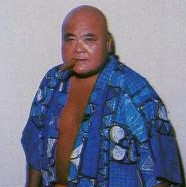
Harold Watanabe (January 6, 1927 – February 19, 1992), better known by his ring name Tojo Yamamoto, was an American professional wrestler.

Key Information

Early life

[edit]

Watanabe was born in Hawaii in 1927 to a Japanese father and an American mother. He served in the United States Marine Corps and worked as a judo instructor.[2]

Professional wrestling career

[edit]

In-ring career

[edit]

Yamamoto had success as a heel as an individual wrestler and part of a tag team, particularly in the southern United States, invoking the natural hatred for World War II enemies (in his case, Prime Minister Tojo and IJN admiral Yamamoto; also successful were The Von Brauners, who wore Iron Crosses and goose-stepped around the ring). He worked in hundreds of different tag-team combinations, and even wrestled Hulk Hogan. According to Hogan, "he hit me in the throat with his cheap shot, I fell through the ropes...(on the floor) he grabbed a cigar out of a guy's mouth and dropped it in my boot".[3] These exemplify the kind of over-the-top heel tactics Yamamoto would use, in addition to the general distrust of the Japanese that many Americans held even after the war.

He was affiliated with Nashville-area wrestling promoter Nick Gulas for most of his career. In Nashville, he was promoted as "the most hated wrestler of all time" and "the epitome of evil".[3] Nick Gulas was notorious for supposedly underpaying his wrestlers, but Yamamoto and Jackie Fargo were notable exceptions. They were two of Gulas's best draws from the early 1960s to the early 1970s, but in addition to the money they generated, they were also reliable and loyal. Yamamoto showed his allegiance despite offers from other promoters, including an offer from his close friend and student Jerry Jarrett when he started promoting shows of his own.

Gulas recognized Yamamoto's loyalty and paid him back with more than just a regular place on the card and more pay than almost any wrestler Gulas had; he was entrusted with an incredible number of titles. His ability to draw heat (by purposefully playing off of Japanese stereotypes) and his reputation as a ring-general who could be counted on to have a good match – regardless of the quality of his partner or opponent. As a result, he held an incredible number of championships in his career: 7 Six-Man Titles and an astounding tally of 52 various Tag Team Titles, usually with different partners, which makes the feat even more remarkable. While he enjoyed fantastic success as a Tag-Team champion, he saw less success as a singles wrestler. He only held 3 singles titles, but 2 of those runs was with the NWA Mid-America Heavyweight Title, the most prestigious title in his home territory. His lack of singles titles suggests that Yamamoto's value was in helping develop other wrestlers (rookies, unpolished talent, mid-carders) and guide their progress to the next level. It could also be mark of Gulas's booking style, where he preferred to have a strong "babyface" champion and felt a "heel" world champion would not sell as many tickets.

Over time, Tojo Yamamoto became aware that his body was failing him, and his in-ring career would come to an end. He constantly wrestled a full schedule without taking days off, leading to injuries that never healed. The problem was compounded by complications from his weight which eventually caused diabetes. All of these factors had taken their toll on his body, but after enjoying so much success he would struggle to accept his physical limitations even up to the day he died. However, it was impossible for him to accept a life away from the sport he loved. Unlike many of his contemporaries, especially his fellow Asian wrestlers, Tojo stuck to wrestling and never appeared in any films or television shows.

As a manager

[edit]

Yamamoto was able to stay in the wrestling business and later became a manager of other wrestlers. His rise to fame late in his career took place in the late-1980s, when Yamamoto, while in World Class Championship Wrestling, was managing Phil Hickerson, who was known as P.Y. Chu-Hi. They were involved in a lengthy storyline with Eric Embry, involving control of the World Class promotion. Later, Yamamoto and Hickerson worked a storyline with Chris and Toni Adams, which began with an attack on Toni by Hickerson and Yamamoto during a wrestling match at the Sportatorium.

Yamamoto and Hickerson left World Class in 1990, but Yamamoto returned to the Sportatorium in early 1991 (under the USWA banner) to manage Embry, who had turned heel. During this time he managed many other wrestlers, including Dennis Knight, who later went on to play the roles of Phineas Godwin and Mideon.

Contributions as a trainer

[edit]

During and after his years as a manager, knowing that his in-ring career was long since over, Yamamoto continued to contribute to the wrestling business as a prolific trainer. The impact he had on the world of professional wrestling through his training is far-reaching and spans across generations and promotions. He trained dozens of wrestlers who in turn went on to train scores, perhaps hundreds, of additional performers. An example of one of his trainees who went on to teach future generations is Bobby Eaton. Eaton trained countless hopefuls at the WCW Power Plant, but he was also known for his informal coaching of countless younger talent in WCW, until he was released in 2000. He would often go out of his way to make himself available whether it be backstage, in the ring, or most commonly on the road, driving long distances from town to town. Like Yamamoto, he was never considered a "main-eventer", but both had a reputation and willingness to help their opponents look good in the ring and get better from just being in the ring with them.

He passed his decades of wrestling knowledge down to many students, including several future world champions such as Jeff Jarrett, Mike Rapada, and Sid Vicious. He even had a hand in training Jeff Jarrett's father, Jerry Jarrett. Tojo's other students include The Moondogs (Spike and Spot), Jackie Fargo, Bobby Eaton, and "Wildfire" Tommy Rich. Yamamoto would manage some of the wrestlers he trained, but more incredibly he later faced several of his students in the ring; winning (and losing) many of his Tag Team and Six-Man Tag Team Titles in matches with his former students.

Death

[edit]

Watanabe retired in 1991 due to health problems which included severe diabetes and kidney problems. He died in his home in Hermitage, Tennessee of a self-inflicted gunshot wound in his head in 1992.[4]

Championships and accomplishments

[edit]

References

[edit]
[edit]
Revisions and contributorsEdit on WikipediaRead on Wikipedia
from Grokipedia

Harold Watanabe (January 6, 1927 – February 19, 1992), professionally known as Tojo Yamamoto, was an American professional wrestler of Japanese descent who gained prominence as a territorial heel in Southern United States wrestling promotions during the mid- to late 20th century. Born in Hawaii to a Japanese father and Hawaiian mother, Watanabe served in the United States Marine Corps before adopting the ring persona of Tojo Yamamoto, a sneaky and ruthless Japanese villain inspired by wartime figures to provoke audience hostility. Primarily active in Nick Gulas' Mid-Southern Wrestling and later Jerry Jarrett's Continental Wrestling Association in Memphis, he specialized in tag team competition, winning numerous regional championships with partners including Taro Myaki and Gypsy Joe as part of the "No Pain Train" stable. Known for his judo chops, eye gouges, and use of loaded wooden geta sandals to cheat, Yamamoto's in-ring style emphasized cunning aggression, contributing to his status as one of the era's most effective antagonists. In his later career, he transitioned to managing wrestlers like P.Y. Chu-Hi and Eric Embry while also training influential figures such as Jerry Jarrett, Bobby Eaton, and George Gulas, leaving a legacy in talent development despite never achieving national stardom. Yamamoto was discovered deceased in his Hermitage, Tennessee home in 1992, with the circumstances indicating possible violence.

Early Life

Birth and Family Background

Harold Watanabe, who later adopted the ring name Tojo Yamamoto, was born on January 6, 1927, in Hawaii, United States. His father was a Japanese immigrant, while his mother was of native Hawaiian descent, reflecting a mixed ethnic heritage common among some families in the Territory of Hawaii during that era. Limited public records exist on his immediate family structure beyond his parents, with no verified details on siblings or extended relatives influencing his early upbringing. This background situated him in a multicultural environment amid the pre-statehood tensions affecting Japanese Americans following World War II, though Watanabe himself later served in the U.S. Marine Corps, indicating assimilation into American military service.

Military Service and Pre-Wrestling Influences

Harold Watanabe was born on January 6, 1927, in Kaanapali, Hawaii, to a father of Japanese descent and a mother of Hawaiian ancestry. This mixed heritage later informed his wrestling persona, which drew on Japanese stereotypes for heel heat in American territories, though Watanabe himself was a native Hawaiian and U.S. citizen. Prior to entering professional wrestling, Watanabe served in the United States Marine Corps, an experience that instilled physical discipline and toughness later evident in his in-ring style. Specific details of his enlistment period or deployments remain undocumented in available records, but his military background aligned with the era's post-World War II service opportunities for Hawaii residents of Japanese ancestry, distinguishing him from wartime internment experiences on the mainland. No evidence indicates combat involvement or advanced rank, but the Corps' rigorous training likely contributed to his endurance as a territorial wrestler debuting in 1953.

Professional Wrestling Career

Debut and Initial In-Ring Development (1950s)

Harold Watanabe, who would later gain fame as Tojo Yamamoto, entered professional wrestling in 1953 under the ring name P.Y. Chong, a portrayal of an Asian antagonist designed to generate audience antagonism through ethnic stereotyping common in mid-century American territories. His early matches emphasized brawling fundamentals and heel tactics, leveraging his compact build—standing 5 feet 8 inches and weighing around 250 pounds—to execute stiff strikes and submissions that tested opponents' resilience. As a former U.S. Marine, Watanabe brought physical toughness to his performances, honing a style that prioritized realism and crowd provocation over high-flying maneuvers prevalent in other eras. By the late 1950s, Watanabe transitioned to wrestling as P.Y. Chung in promotions across the Northeast and Carolinas, where he refined his ability to draw "heat" by embodying foreign menace, often facing regional favorites in preliminary and mid-card bouts. These appearances, typically in National Wrestling Alliance-affiliated territories, allowed him to develop ring psychology, including calculated rule-breaking and post-match confrontations that built storylines around nationalistic tensions. His work during this period remained under the radar of major stardom, serving as foundational experience that emphasized endurance matches and tag team experimentation, though championships eluded him amid a roster dominated by established draws. Watanabe's 1950s tenure laid the groundwork for his later heel mastery, as he navigated small crowds and grueling road schedules, gradually shifting from generic Asian gimmicks toward more defined characters informed by historical references. This era's challenges, including adapting to varied regional styles without formal training pedigrees, underscored his self-taught progression from novice to competent antagonist, setting the stage for his persona evolution in the following decade.

Peak as a Territorial Heel (1960s-1970s)

Yamamoto solidified his position as a premier territorial heel in the promotion during the early , adopting a Japanese militarist under the name Tojo—evoking , the wartime Japanese prime minister—to exploit anti-Japanese sentiments from World War II among Southern audiences. Working primarily in Nick Gulas and Paul Welch's circuit covering Tennessee, Alabama, Kentucky, and surrounding areas, he debuted regionally around 1961, quickly ascending to main-event status through a stiff, karate-infused style that emphasized realistic strikes and submissions like the abdominal claw. His pre-match rituals, such as scattering salt toward fans and brandishing wooden geta clogs as improvised weapons, heightened crowd animosity and positioned him as a sly, untrustworthy antagonist. By , Yamamoto had captured the Southern alongside Perez, defeating Karl and Stroheim on in a that underscored prowess; he frequently led partnerships, dictating with ruthless . Throughout the mid-1960s, he teamed with compatriots like Tamayo Soto, Ito, Great Higami, Sugi Sito, , and Mitsu Hirai, amassing multiple reigns with the and Southern titles, often defending in high-profile bouts at like Birmingham's Boutwell . These victories, combined with occasional singles pursuits—including two Heavyweight wins—established him as the territory's most reliable heat magnet, drawing packed houses through consistent villainy. Key feuds defined his heel dominance, notably a protracted rivalry with babyface Jackie Fargo from the early 1960s into the early 1970s, which promoters Gulas and Welch credited as one of their top box-office draws due to its intensity and longevity. The animosity occasionally transcended kayfabe, as in roadside brawls following matches, reflecting the era's territorial authenticity where scripted conflicts mirrored real grudges. Yamamoto also clashed with Jerry Jarrett, who briefly aligned as his heel partner in late-1960s Birmingham cards before turning, further amplifying his role in multi-layered storylines that boosted attendance across the region. Into the 1970s, he maintained heel prominence until the mid-decade, headlining weekly television on Channel 42's "Live Studio Wrestling" and transitioning toward occasional babyface turns amid evolving audience tastes.

Tag Team Dominance and Key Feuds

Yamamoto achieved considerable prominence in tag team wrestling during the 1960s and 1970s, functioning primarily as a cunning heel in NWA-affiliated southern territories including Mid-America, Memphis, and Florida, where his Japanese persona capitalized on post-World War II animosities to generate heat from audiences. He partnered with a variety of wrestlers, securing regional tag team championships that underscored his versatility and longevity in the division. A key collaboration formed with Jerry Jarrett, with whom he won tag team gold at least seven times, leveraging Jarrett's technical prowess alongside Yamamoto's ruthless tactics to dominate matches and boost gate attendance in Memphis promotions. Early highlights included his November 16, 1961, victory alongside Taro Myaki over Eddie Graham and Dick Steinborn for the Florida NWA United States Tag Team Championship, holding the titles until November 30 of that year. In Memphis during 1970, Yamamoto unusually portrayed a face character, teaming with the emerging Jerry Jarrett to feud extensively against heel factions such as The Infernos, positioning them as the territory's central protagonists in a year marked by high-stakes tag bouts. Another milestone occurred on August 16, 1975, when Yamamoto and Tommy Rich defeated Karl Von Steiger and Otto Von Heller in Chattanooga, Tennessee, to claim the NWA United States Tag Team Championship, exemplifying his continued relevance into the mid-1970s. Key rivalries amplified his tag team stature, often pitting his alliances against established duos in bloody, crowd-inciting encounters. In Nashville's Mid-America promotion, Yamamoto and Tor Kamata clashed in a prolonged feud with the team of Rossi and Jackie Fargo, featuring brutal exchanges that highlighted territorial grudges. Feuds with the Von Steiger brothers extended across matches, emphasizing Yamamoto's role in elevating opponents through stiff, realistic brawls. Later territorial runs involved rivalries with teams led by Eric Embry and Chris Adams in Birmingham, where Yamamoto's heel aggression drew strong responses. By the 1980s, interpersonal tensions surfaced in a heated angle with the Jarrett family, including a September 20, 1986, escalation involving Jeff Jarrett, Pat Tanaka, and others, blending scripted drama with real animosity from prior partnerships.

Transition to Management and Late-Career Matches (1980s-1991)

As Yamamoto entered his later years, he increasingly shifted from full-time in-ring competition to a managerial capacity, leveraging his established heel persona to guide younger or allied wrestlers in NWA-affiliated territories. This transition began in earnest during the early 1980s in the Continental Wrestling Association (CWA), where he managed Japanese imports Masa Fuchi and Atsushi Onita, who held the CWA International Tag Team Championship multiple times under his guidance, including defenses against teams like the Rock 'n' Roll Express. While still active as a wrestler sporadically—such as in multi-man brawls at Mid-South Coliseum events—he focused on interference and promos to advance his charges' storylines. By the mid-1980s, following the merger of and promotions into a unified , Yamamoto's wrestling appearances diminished, with his last regular around 1986. In (WCCW), he took on a prominent managerial for Phil Hickerson, rebranded as "P.Y. Chu-Hi" to evoke Yamamoto's earlier "P.Y. Chung" alias, engaging in feuds that highlighted ethnic tropes against babyfaces like the Von Erichs. This pairing ended in 1990 when they departed WCCW amid the promotion's declining landscape. Yamamoto's final run came in 1991 with the United States Wrestling Association (USWA), where he managed heel turns and alliances involving Eric Embry, Leatherface, and Tom Prichard, contributing to angles at the Dallas Sportatorium. He wrestled select matches, including a defeat to Paul Neighbors on July 29, 1991, in Memphis, and another on May 17, 1991. Kidney disease and diabetes ultimately forced his full retirement later that year, ending a career spanning nearly four decades.

Notable Incidents and Real-Life Altercations

In 1973, Yamamoto was involved in a severe backstage assault on fellow wrestler Jack Donovan during a dispute stemming from an in-ring altercation. The incident began during a match in Louisville, Kentucky, where Yamamoto slapped Donovan, prompting Donovan to respond with a legitimate poke to Yamamoto's eye; Jackie Fargo, Yamamoto's protégé, allegedly struck Donovan with a snub-nosed revolver in retaliation. Days later, on July 18, 1973, at a television studio taping, Yamamoto, along with Jerry Jarrett and Fargo, ambushed Donovan in what has been described as a premeditated attack. Yamamoto struck Donovan repeatedly with a wooden shoe, inflicting deep lacerations to his face and head that required 85 stitches and resulted in a concussion, sidelining Donovan for five weeks. Donovan later recounted the assault in a 1996 interview, calling it "the worst representation of animalistic inhumanity I ever witnessed," emphasizing its unscripted brutality amid territorial politics and refusal to follow a predetermined match finish. The motivations appeared rooted in jealousy and business rivalries within ' promotion, including unsubstantiated rumors of Donovan double-crossing a booker; however, Jarrett has denied his participation, attributing the violence primarily to . This event, widely regarded by insiders as a genuine shoot fight rather than , effectively ended Donovan's regular bookings in territories outside limited Chattanooga appearances, highlighting the era's blurred lines between performance and personal vendettas. Another heated encounter unfolded on September 27, 1986, during a Continental Wrestling Association television broadcast at WMC-TV Channel 5 in Memphis, where Jeff Jarrett—Yamamoto's longtime trainee and godson—dumped a can of yellow paint on him as part of a feud angle. The scripted spot escalated into a physical brawl, with Yamamoto responding aggressively, leading observers to note Jarrett's immediate regret amid the stiff exchange; while primarily kayfabe, it underscored Yamamoto's reputation for not tolerating perceived disrespect even from protégés.

Training and Mentorship Roles

Yamamoto served as a trainer in the Southeastern wrestling territory, particularly under promoter , where he instructed aspiring wrestlers in fundamental techniques and match psychology. His training regimen emphasized selling moves effectively, utilizing facial expressions to convey character, and grasping the psychological elements of in-ring storytelling, as recounted by trainee . Among his notable students were Jerry Jarrett, who credited Yamamoto with foundational guidance before becoming a promoter and wrestler; Jeff Jarrett, who later achieved stardom in multiple promotions; Bobby Eaton, a key figure in tag team wrestling; Tommy Rich, known for his early 1980s runs; and Sid Vicious, a dominant power performer. Other trainees included Jerry Faith, Moondog Spike, and Reno Riggins, many of whom competed prominently in Memphis-area cards. Yamamoto extended his influence through mentorship by managing select trainees, including Dennis Knight and Eric Embry in the United States Wrestling Association (USWA), while occasionally facing them in matches to test their progress. This dual role underscored his commitment to developing talent amid his own late-career appearances, contributing to the continuity of territorial wrestling styles into the 1980s.

Personal Life and Health

Family and Relationships

Tojo Yamamoto maintained a highly private personal life, with details about his relationships largely unknown to even close professional associates. He was married twice, both marriages ending in divorce, though the identities of his spouses and specific dates remain undocumented in public records. Yamamoto had at least one son, Tojo Yamamoto Jr. (born circa 1974), who pursued a career in professional wrestling, competing in independent promotions and adopting a similar ring persona. The younger Yamamoto has described personal struggles including early involvement with drugs and gangs, later transitioning to motivational speaking and anti-drug advocacy. No further children or extended family details have been publicly confirmed.

Health Challenges Leading to Retirement

In the final years of his wrestling involvement, Tojo Yamamoto grappled with severe diabetes that exacerbated kidney dysfunction, progressively impairing his physical endurance and capacity for the rigors of professional wrestling. These ailments, compounded by the cumulative toll of decades in the ring, rendered sustained participation unsustainable, leading to his full retirement from active roles in 1991 after a career spanning nearly four decades. Despite adapting to managerial positions in promotions like Continental Wrestling Association during the 1980s, the advancing complications necessitated cessation of even limited in-ring appearances, marking the end of his direct influence in matches. Medical accounts from contemporaries highlight how uncontrolled diabetes contributed to systemic decline, including potential neuropathy and renal failure risks, though Yamamoto's stoic persona delayed public acknowledgment until symptoms became prohibitive.

Death

Circumstances of Murder

On February 19, 1992, Tojo Yamamoto (born Harold Watanabe) was discovered deceased in his apartment in Hermitage, Tennessee, at the age of 65, from a self-inflicted gunshot wound to the head. The incident occurred amid ongoing battles with severe diabetes and kidney disease, which had prompted his retirement from wrestling in 1991 and contributed to depression. Authorities ruled the death a suicide, with no evidence of foul play reported in official accounts. Yamamoto lived alone at the time, and the gunshot was determined to be self-administered based on the position of the weapon and wound forensics. Chronic pain and declining health had isolated him in his final months, exacerbating mental health struggles common among retired wrestlers facing physical deterioration. While isolated online discussions have occasionally speculated about unusual circumstances or accidental elements, these claims lack substantiation from primary investigations or medical reports, which consistently affirm suicide as the cause. Yamamoto's death on February 19, 1992, was officially ruled a suicide by self-inflicted gunshot wound to the head, using a .25-caliber pistol, at his residence in Hermitage, Tennessee. Contributing factors included chronic health conditions such as diabetes and kidney disease, compounded by depression following his retirement from wrestling in 1991. As the incident involved no other parties, no criminal investigation or legal proceedings against any perpetrator occurred; authorities confirmed the self-inflicted nature without evidence of foul play. The wrestling community responded with widespread mourning, recognizing Yamamoto's enduring influence as a territorial performer and trainer. Numerous peers, including figures from the Memphis and Nashville scenes he helped shape, attended his funeral to pay respects, reflecting on his role in developing talents like Jerry Lawler and Bill Dundee. Tributes highlighted his in-ring psychology and heel persona, which drew intense crowd reactions across decades, though his personal struggles underscored the toll of long-term physical wear from the profession.

Championships and Accomplishments

Major Title Wins

Tojo Yamamoto secured numerous regional championships during his career, primarily in tag team competitions under NWA-affiliated promotions, with a focus on the Mid-America territory. He is credited with winning tag team titles 52 times across various partnerships, often portraying a cunning Japanese heel character that complemented his technical style. These victories underscored his longevity and adaptability in territorial wrestling, where consistent defenses against local favorites built his reputation. In singles , Yamamoto captured the on May 27, 1977, by defeating the reigning champion, The , at an event in . This win highlighted his to compete effectively beyond tag divisions, though such were less frequent than his tag successes. Yamamoto's most prolific title run involved the Southern Tag Team , which he held multiple times with partners like Johnny Long (capturing it on June 16, 1969, for a one-day reign) and others throughout the 1960s and 1970s. He also teamed with Professor Ito to win the World Tag Team on February 6, 1967, defeating Herb Welch and Jackie Fargo. Earlier, on November 16, 1961, he and Taro Miyake claimed the Florida version of the NWA United States Tag Team by beating Eddie Graham and Dick Steinborn. Later partnerships included George Gulas for the Tag Team around April 1978. In the 1980s, Yamamoto won the CWA World Tag Team Championship with Jerry Jarrett on July 28, 1980, via a tournament victory over Austin Idol and Dutch Mantell. He further held the AWA Southern Tag Team Championship with Wayne Golden, contributing to his extensive resume in Memphis-area promotions. These regional triumphs, while not elevating him to NWA World Heavyweight status, established him as a cornerstone of Southern wrestling's tag team landscape.

Other Recognitions

Yamamoto was posthumously inducted into the Memphis Wrestling Hall of Fame in 1994, recognizing his decades-long contributions as a territorial wrestler and heel performer in the Mid-South region. The induction, conducted by announcer Lance Russell, highlighted Yamamoto's role in elevating matches through his cunning tactics and physicality, which drew strong fan reactions in venues across Tennessee and surrounding states from the 1950s to the 1980s. His training legacy received informal acknowledgment from peers and protégés, with wrestlers such as Jerry Lawler and Jeff Jarrett crediting Yamamoto's guidance in developing in-ring psychology and heel personas during stints at the Continental Wrestling Association's facility in the 1970s and 1980s. However, no formal awards beyond regional honors were documented for his mentorship work.

Legacy

Influence on Wrestling Psychology and Heels


Tojo Yamamoto demonstrated exceptional proficiency in wrestling psychology as a heel, employing subtle tactics to generate authentic crowd animosity without overt rule-breaking that could undermine believability. His approach focused on realistic manipulation of audience emotions, portraying a cunning Japanese antagonist who exploited opportunities for cheap shots and interference, thereby heightening territorial rivalries in promotions like Memphis and Birmingham. Jeff Jarrett observed that Yamamoto "could draw heat like nobody’s business" through these understated methods.
Yamamoto's ring generalship enabled precise control over match dynamics, seamlessly guiding opponents while amplifying psychological tension via expressive selling of moves and facial contortions that conveyed villainy or feigned vulnerability. Jerry Lawler described him as "a ring general in every sense," highlighting his ability to dictate pace and build narrative investment from spectators. This mastery extended to training, where he prioritized "working smart" over brute force, instructing students in facial expressions, selling authenticity, and psychological layering to craft enduring heel characters. His influence permeated through protégés like Jarrett and Lawler, who adopted Yamamoto's emphasis on emotional realism and crowd psychology, shaping heel archetypes in southern territories during the 1970s and 1980s. By fostering believable antagonism rooted in character-driven storytelling, Yamamoto elevated the heel's role from mere physical aggressor to psychological provocateur, impacting territorial wrestling's narrative depth. Ricky Morton credited Yamamoto's psychological acumen for enhancing his own early performances, noting how the veteran intuitively knew "when to do what" to elevate matches.

Impact Through Students and Territorial Wrestling

Tojo Yamamoto exerted considerable influence on territorial wrestling, particularly in the Southern United States, through his long tenure with promotions such as NWA Mid-America under Nick Gulas and Roy Welch, where he became a prominent figure from the 1950s onward, and later Jerry Jarrett's Continental Wrestling Association (CWA) in Memphis starting in 1979. His role extended beyond performing to training and managing talent, sustaining the regional wrestling ecosystem amid the territorial model's emphasis on localized rivalries and house shows. Yamamoto's brawling style and heel persona helped define the gritty, fan-engaged matches characteristic of Memphis territory cards, drawing crowds with feuds involving weapons and interference. As a trainer, Yamamoto mentored a roster of wrestlers who rose to in territories and beyond, imparting lessons in , , and character work. Notable students included "Beautiful" , , , (later ), , Jerry , , and Haste. These trainees often faced Yamamoto in the ring post-training, with outcomes varying to build storylines, such as wins and losses that reinforced his managerial authority or highlighted their growth. Yamamoto's emphasis on psychological depth over athletic flash influenced his students' territorial performances; for example, Tommy Rich noted that Yamamoto focused on "teaching the psychology of the business," enabling wrestlers to craft compelling narratives in multi-week angles typical of the era. Trainees like and the Jarretts carried this forward in Memphis and other NWA-affiliated territories, perpetuating Yamamoto's legacy of resilient, audience-provoking heels amid the and territorial decline. His indirect impact amplified as students such as Eaton trained subsequent generations, embedding Yamamoto's territorial-hardened approach into broader wrestling lineages.

References

Add your contribution
Related Hubs
User Avatar
No comments yet.