Hubbry Logo
Gypsy JoeGypsy JoeMain
Open search
Gypsy Joe
Community hub
Gypsy Joe
logo
8 pages, 0 posts
0 subscribers
Be the first to start a discussion here.
Gypsy Joe
Gypsy Joe
from Wikipedia

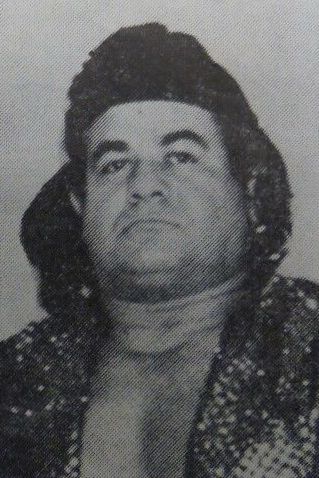
Gilberto Meléndez (December 2, 1933 – June 15, 2016) was a Puerto Rican professional wrestler better known under the ring name Gypsy Joe. While attaining much of his United States success in the Tennessee area, Meléndez also gained a following in Japan. His career lasted six decades, and his highly physical brawling style and tough reputation made him an early pioneer of the hardcore wrestling scene.[1]

Key Information

Professional wrestling career

[edit]

Early career

[edit]

Meléndez began his wrestling career in 1951 at age 18. During a lengthy tenure in his native Puerto Rico, he went under various monikers and learned the ropes with the likes of Pedro Morales and Carlos Colón Sr. Meléndez made his United States debut at Sunnyside Garden Arena in Sunnyside, Queens, New York City in 1963. Primarily using the name Gypsy Joe by this point, he mainly worked for Nick Gulas and later Jerry Jarrett in the Southeastern region, particularly Mid-Southern Wrestling. During his Gulas run, he was often teamed with heels like Tojo Yamamoto, with whom he formed the No Pain Train, and The Cuban Assassin. He also joined forces with Frank Martinez to be collectively known as the Blue Infernos. The masked duo would attain tag team championships on numerous occasions. By the 1970s, Gypsy Joe was a local star of Chattanooga, Tennessee, regularly performing at Soldiers and Sailors Memorial Auditorium on Saturdays and appearing on local WDEF-TV. His career wasn't limited to the South, however, winning championships around the country as well as in Canada's Stampede Wrestling.

However, with the rise of national promotions like the World Wrestling Federation and World Championship Wrestling in the 1980s, the local industry that Joe had developed a career in began to dwindle. He would not be among those fortunate enough to find success in the major US promotions. Joe eventually made his way overseas into the Japanese wrestling scene, to work for All Japan Pro Wrestling where his highly physical brawling style akin to The Sheik and Abdullah the Butcher was met with success. Bloody encounters with the likes of Mr. Pogo and a penchant for taunting his opponents to attack him with weapons earned Joe a strong reputation in the death match scene and helped solidify his cult following in the region. Despite his aging body, Joe remained active in Japan throughout the 1980s and 1990s where he also refereed and mentored upcoming stars of the hardcore style.

Return to the United States and retirement

[edit]

After many taxing years in the ring, an elderly Gypsy Joe returned to the United States in the 2000s where he performed on the independent circuit primarily in the Southeast.[2] In 2001, he attended the International Wrestling Association's Juicio Final event held in his native Puerto Rico, where he received the recognition of the promotion.[3]

In April 2003, a 69-year-old Joe faced New Jack in an infamous hardcore match before a small crowd. Due to Joe's no-selling throughout the match and headbutting New Jack hard on the nose, New Jack legitimately attacked Joe with a chain, a baseball bat wrapped in barbed wire, and several other weapons. With audience members angrily shouting racial slurs at Jack, the match ended in a chaotic no-contest and became a widely circulated viral video.[4][5] New Jack was then arrested and charged with assault with a weapon.

During this period, although mainly working in his home state of Tennessee, the haggard Gypsy Joe maintained his reputation as a resilient veteran with indie appearances throughout the US. On July 30, 2005, he was enlisted as the special guest referee for CZW Tournament of Death IV held in New Castle, Delaware. The tournament featured various performers that credit Joe for pioneering the in-ring style they now emulate. In 2007, WWE Magazine named Gypsy Joe the world's oldest wrestler at the age of 73. On February 13, 2010, he appeared in the corner of Eddie Kingston and Necro Butcher as Butcher's mentor for their No Rules tag team match at the Ring of Honor 8th Anniversary Show in New York City.

Joe wrestled his last match at the Gypsy Joe retirement show on January 7, 2011. Held in Tullahoma, Tennessee by the Southern Wrestling Federation, the bout marked an end to a career which began 60 years prior.[6]

Legacy

[edit]

Although he never found success in major American promotions, Gypsy Joe is known for his longevity in the wrestling business, which spanned seven decades, as well as his innate toughness as a hardcore brawler. According to legend, he was the first wrestler ever to jump successfully off a steel cage onto an opponent. Joe's extensive career in Japan and participation in death matches solidified this fierce reputation, and his highly physical in-ring approach helped popularize the hardcore style.

Gypsy Joe was inducted into the Tennessee Wrestling Hall of Fame on November 7, 2015, by Mick Foley at Money Mark Productions' event "A Night with Foley" at the Nashville Fairgrounds.

Personal life

[edit]

Meléndez was born in Orocovis, Puerto Rico[7] He had a daughter and a nephew who served as his manager.[1]

In August 2013, Meléndez had his right foot amputated after suffering from gout and rickets .[1] He died in June 2016 while hospitalized in Nashville.[8]

Championships and accomplishments

[edit]

See also

[edit]

References

[edit]
[edit]
Revisions and contributorsEdit on WikipediaRead on Wikipedia
from Grokipedia
Gypsy Joe, whose real name was Gilberto Meléndez (December 2, 1933 – June 16, 2016), was a Puerto Rican professional wrestler celebrated for his extraordinary career spanning over 60 years, from his debut in 1951 until his retirement in 2011, during which he became a pioneer of known for his resilience and brutal in-ring style. Born in , Meléndez began wrestling locally at age 18 before making his U.S. debut in 1963 at Sunnyside Garden in New York, quickly establishing himself in the Southeast territories under promoters like and . He adopted the ring name Gypsy Joe, among other personas such as Gene Madrid, Aztec Joe, and Blue Inferno #1, and gained widespread recognition for his brawling prowess, often engaging in bloody, high-impact matches that earned him the moniker "Wandering Assassin." His career took him across , including stints in Canada's and various NWA territories, where he captured numerous regional titles, including the NWA Central States Tag Team Championship (three times) and seven NWA Mid-America Tag Team Championships with partners like Dutch Mantell and the . In the and , Gypsy Joe achieved international acclaim through multiple tours of with , where he excelled in death matches and teamed with legends like as the "No Pain Train," innovating hardcore elements such as diving off steel cages—a feat he pioneered in promotions like IWE. Returning to the U.S. indie circuit in the late , he continued performing into his 70s, notably in a infamous 2003 match against that highlighted his unyielding toughness, and was named the world's oldest wrestler by in 2007 at age 73. His influence extended to mentoring younger talent and shaping the death match scene in ’s W*ING promotion, solidifying his legacy as one of wrestling's most enduring and hardcore figures. In 2015, he was inducted into the Wrestling Hall of Fame by , just a year before his death at age 82 in .

Early life and background

Birth and family origins

Gilberto Meléndez, professionally known as Gypsy Joe, was born on December 2, 1933, in . Of Puerto Rican heritage, he was the son of Celestino Hernandez Melendez and Ramona Figueroa De Melendez, both of whom predeceased him. No records detail siblings or specific early family dynamics that may have influenced his later nomadic persona, though his upbringing occurred in rural during the mid-20th century. This foundational period in laid the groundwork for his eventual pursuit of wrestling training on the island.

Initial influences and pre-wrestling activities

Gilberto Meléndez, who would later become known as Gypsy Joe, spent his childhood in , during the 1930s and 1940s, a period marked by economic hardship on the island following the and amid U.S. colonial administration. Puerto Rico's vibrant cultural scene, including traditional festivals and emerging entertainment forms, provided early exposure to performance elements, though specific personal experiences from Meléndez's youth remain sparsely documented. Local sports, particularly —which had deep roots in Puerto Rican society since the early —sparked his interest in athletic pursuits, as evidenced by his later aspiration to join the New York Yankees upon arriving . Before turning 18, Meléndez participated in informal physical activities common to rural life, such as farm work and community games, which built the resilience necessary for his future endeavors. He later trained in in New York before transitioning to .

Professional wrestling career

Debut and early years in Puerto Rico and the United States

Gilberto Meléndez, known professionally as Gypsy Joe, made his professional wrestling debut in 1951 at the age of 18 in his native . During his initial 12 years there, he competed under various ring names, including Gene and the masked persona El Grande Pistolero, establishing himself with gimmicks that highlighted his agile and resilient style in regional promotions. In 1963, Meléndez relocated to the , debuting as Gypsy Joe at Sunnyside Garden Arena in , , where he faced in a match for the World Wide Wrestling Federation (WWWF). He quickly integrated into the territorial system, primarily working for promoter in the Southeastern region through , and later for after their 1977 split. Key partnerships defined his early U.S. career, including the "No Pain Train" with in the late 1970s, known for their rugged, unyielding matches, and the masked "Blue Infernos" duo with Frank Martinez around 1966-1967, which captured multiple titles in and territories. By the 1970s, Gypsy Joe had risen to stardom as a fan favorite in , drawing sellout crowds to Soldiers and Sailors Memorial Auditorium with his intense, hardcore-style brawls that showcased his toughness and no-sell reputation. His territorial pursuits extended beyond the South, including early title challenges in , where he and won the Stampede Wrestling International Tag Team Championship in 1960 by defeating Tarzan Tourville and The Mighty Ursus.

Career in Japan and international exposure

Following the closure of the International Wrestling Enterprise (IWE) in 1981, Gypsy Joe relocated to in the early , seeking new opportunities in the burgeoning scene there. He joined (AJPW) in August 1981, where he quickly established himself through his aggressive brawling style, which built on his earlier reputation for intense matches in the United States. Regular appearances in AJPW throughout the included high-profile bouts, such as a United National Heavyweight Championship loss to on September 4, 1981, at Furitsu Gymnasium, and All challenges with various partners in the . These matches highlighted his resilience and physicality, earning him a dedicated following among Japanese audiences who appreciated his no-holds-barred approach. In the mid-to-late and into the , Joe became a pioneer of in , particularly through his involvement in deathmatches that incorporated extreme elements like , steel cages, and weapons. His most notable rivalry was with , beginning with intense encounters in promotions like (FMW) and escalating in Wrestling International New Generations (WING), where they clashed in stipulation-heavy bouts such as cage death matches. Key examples include a chain match inside a steel cage against Pogo on March 28, 1985, and multiple WING cage death matches in 1992, including losses at Korakuen Hall on February 16 and September 10, which often featured bloody, weapon-filled chaos that pushed the boundaries of in-ring violence. These performances not only solidified Joe's status as a hardcore icon but also helped popularize the deathmatch genre internationally by blending his American brawling roots with Japanese strong style. Beyond Japan, Joe's international exposure extended to other territories, including stints in Mexico where he competed as Aztec Joe, adapting his persona to local audiences with a native warrior gimmick. He also made sporadic returns to Puerto Rico throughout the 1980s and 1990s, drawing on his origins there to participate in events that bridged his global career. In Japan, Joe took on a mentorship role for emerging hardcore talents, refereeing matches and guiding wrestlers through the rigors of extreme stipulations in promotions like W*ING, where facing him became a rite of passage that elevated the style's global appeal. His influence helped transition hardcore wrestling from niche spectacles to a respected subgenre, inspiring wrestlers across borders to embrace high-risk innovation.

Return to the United States and later matches

Following his extensive tenure in Japan, Gypsy Joe returned to the in the late , focusing on circuit in the Southeast where he continued to showcase the hardcore brawling style he had honed abroad. In , he made a notable appearance at the International Wrestling Association's Juicio Final event in , where he was honored for his contributions to the industry. Later that year, Joe resumed active competition on U.S. independents, including a infamous hardcore match against on April 5, 2003, for NWA Main Event Wrestling in , which incorporated weapons such as chains and a bat. By 2005, at age 71, Joe transitioned to a supporting role, serving as the special guest for the final match of Zone Wrestling's Tournament of Death IV on July 30 in , overseeing a canvas and light tubes elimination bout between , , and . Throughout his final active decade, Joe adapted to advancing age and reduced mobility by emphasizing his veteran toughness in shorter brawls rather than high-impact maneuvers, preserving his no-nonsense persona in regional promotions. He wrestled his last match on January 7, 2011, at age 77, defeating JP Jones and Yukon Jack in a two-on-one handicap bout at his retirement show for the Southern Wrestling Federation in .

Championships and accomplishments

Major title wins

Gypsy Joe's championship successes began in the early 1950s with the NWA World Light Heavyweight Championship, which he won on November 6, 1952, in , holding the title for approximately nine months before losing it to Frank Stojack. Later in his career, he claimed the NWA World Championship three times, establishing his reputation for hardcore-style bouts in various territories. In the 1960s, Gypsy Joe transitioned to competition, partnering with to win the on July 1, 1960, in , , . He followed this with victories in the NWA Southern Tag Team (Georgia version), first alongside until May 5, 1961, and then with starting November 23, 1962. As part of the masked Blue Infernos tag team with partner Frank Martinez (Blue Inferno #2) in promotions during the mid-1960s, Gypsy Joe secured multiple regional titles, including the on September 19, 1966, in , and the NWA Mid-America Southern Tag Team Championship twice. The duo further triumphed in the (Mid-America version) on two occasions in 1967, with reigns from March 23 to April 27 and May 11 to May 27. He also achieved extensive success in the NWA Central States territory, holding over 50 championships across various titles in that promotion. Extending their success to in the 1970s, the Blue Infernos won the WWC North American three times, with documented defenses occurring as late as , 1976, in Bayamón. In Chattanooga-area promotions under , Gypsy Joe individually held the NWA Mid-America nine times with various partners, including four reigns with , underscoring his territorial dominance. Later regional accolades included the ICW United States Tag Team Championship with Tojo Yamamoto in 1983 and the NWA Central States Tag Team Championship with Mr. Pogo on October 11, 1984, in Kansas City, Kansas.

Notable matches and innovations

One of his pioneering contributions to professional wrestling came in the 1970s, when he claimed to be the first performer to execute a successful top-rope dive onto an opponent from inside a steel cage, predating similar high-risk maneuvers popularized by others like Jimmy Snuka. In the , Gypsy Joe became a key figure in Japan's burgeoning deathmatch scene, particularly with the W*ING promotion, where he participated in brutal contests involving weapons such as and chains. A standout example was his 1992 Cage Death Match against , which exemplified the extreme, no-holds-barred style that defined the era. His enduring commitment to hardcore wrestling was highlighted in a controversial 2003 inter-generational match against in NWA Main Event Wrestling, where the 69-year-old Joe no-sold intense attacks, including strikes with a barbed wire-wrapped bat, underscoring his resilience and setting a benchmark for veteran involvement in extreme bouts. Spanning from his debut in to his final match in 2011, Gypsy Joe's 60-year career stands as a record for longevity in , allowing him to bridge multiple eras and territories.

Legacy

Influence on hardcore wrestling

Gypsy Joe's highly physical brawling style, characterized by intense street fights and weapon usage, positioned him as an early pioneer of extreme wrestling in American territories during the and , well before the rise of promotions like ECW in 1992 and FMW in 1989. Working in Southern circuits such as and Memphis, he engaged in no-holds-barred matches that emphasized toughness and realism, setting a template for the unscripted violence that would later define . His approach influenced an entire generation of performers by demonstrating the endurance required for such bouts, including figures like , whose own ultra-violent persona echoed Joe's willingness to endure punishment. In , where Joe toured extensively from the onward, his participation in death matches for promotions like W*ING further amplified his impact, serving as a for emerging wrestlers who tested themselves against his relentless style. These encounters, often involving and other hazards, helped mentor a cadre of Japanese deathmatch specialists by showcasing the physical and mental fortitude needed to excel in extreme environments. One notable example was his brutal 1992 against , which exemplified the global exchange of hardcore techniques. Joe's contributions extended to the worldwide dissemination of through his repeated Japanese tours and the circulation of match footage, which exposed international audiences to innovative brawling tactics predating modern extreme promotions. This visibility helped bridge regional styles, inspiring wrestlers beyond U.S. territories to adopt elements of his no-sell resilience and weapon-based aggression. In 2007, recognized him as the world's oldest active wrestler at age 73, underscoring his enduring role in sustaining and evolving the hardcore genre into his later years.

Honors, inductions, and tributes

Gypsy Joe was inducted into the Tennessee Wrestling Hall of Fame on November 7, 2015, at the "A Night with Foley" event held at the , with performing the induction ceremony. Earlier in his career, he received recognition from the International Wrestling Association during their Juicio Final event in in 2001. In 2007, at the age of 73, named him the world's oldest active wrestler. He also served as a special guest referee for Combat Zone Wrestling's (CZW) Tournament of Death IV on July 30, 2005. In 2013, amid his health struggles, local wrestlers organized a benefit show in , to assist with his mounting medical bills and support his family. In 2022, he was posthumously inducted into the Memphis Wrestling Hall of Fame. Following his death on June 16, 2016, wrestling media outlets including Slam Wrestling published tributes highlighting his toughness and longevity in the industry, spanning over six decades. A funeral service was held on June 26, 2016, at Heritage Funeral Home in Columbia, Tennessee, officiated by Rick Reynolds, with burial in the Garden of Eternity at Maury Memorial Gardens.

Personal life and death

Family and residences

Gypsy Joe, born Gilberto Meléndez in Orocovis, Puerto Rico, relocated to New York City in the early 1960s to launch his professional wrestling career, marking the beginning of a nomadic lifestyle that took him across the United States and internationally. In the early 1980s, he moved to Japan, where he worked extensively as a wrestler, referee, and trainer, further emphasizing his peripatetic existence driven by wrestling opportunities. Upon returning to the United States, Meléndez settled into multiple residences that reflected his ongoing travels, including time spent in West Virginia and a primary home in Tullahoma, Tennessee, during the later years of his career, where he divided his time between these locations. Meléndez's adult life intertwined with his itinerant profession, providing a stable anchor amid frequent relocations. He was married at least once, though details of partnerships remain limited in ; his offered essential support during his extensive tours, helping manage the demands of his globe-trotting schedule from through U.S. territories and . By his later career, this support network had rooted in , aligning with his long-term residence there. His child included daughter Jenee Beal of Murfreesboro, Tennessee, and grandchildren Brad Beal of Springfield, Tennessee, and Bryce Beal of Murfreesboro, who exemplified the family's ties to the region in his final years. The wrestling community and family collaboratively sustained him through his nomadic phases, underscoring the personal resilience behind his enduring career.

Health struggles and passing

In the later years of his life, Gypsy Joe faced severe health challenges stemming from a prolonged battle with gout, which culminated in the amputation of his right foot in July 2013. This procedure was necessitated after five years of complications that had severely impacted his mobility and overall well-being. To help cover his mounting medical expenses, the Chattanooga wrestling community organized fundraisers in 2013, including a benefit event held on August 10 in Rossville, Georgia, near his longtime home base. These efforts highlighted the respect he had earned among peers and fans, providing financial support during his recovery from the amputation and related treatments. Joe's health continued to decline due to ongoing illnesses, and he passed away on June 16, 2016, at the age of 82, at Centennial Medical Center in Manchester, Tennessee, from complications of an extended illness. His funeral service was held on June 26, 2016, at Heritage Funeral Home in Columbia, Tennessee, where donations were accepted in his memory; he was subsequently buried at Maury Memorial Gardens in Columbia.

References

Add your contribution
Related Hubs
User Avatar
No comments yet.