
Recent from talks
Tom Thumb
Knowledge base stats:
Talk channels stats:
Members stats:
Tom Thumb
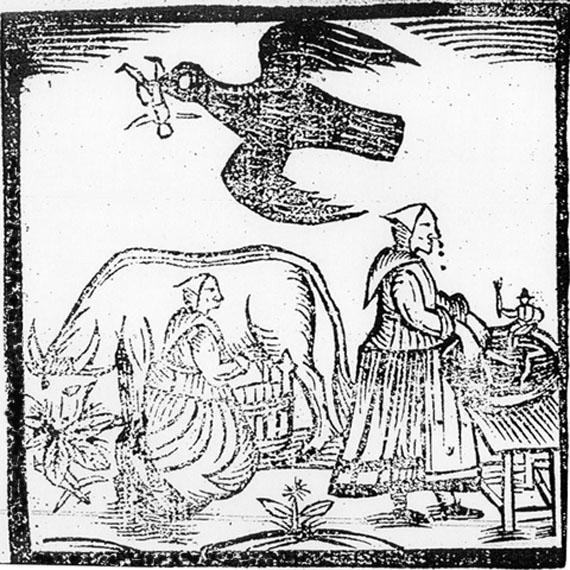
Tom Thumb is a character of English folklore. The History of Tom Thumb was published in 1621 and was the first known fairy tale printed in English. Tom is no bigger than his father's thumb, and his adventures include being swallowed by a cow, tangling with giants, and becoming a favourite of King Arthur. The earliest allusions to Tom occur in various 16th-century works such as Reginald Scot's Discovery of Witchcraft (1584), where Tom is cited as one of the supernatural folk employed by servant maids to frighten children. Tattershall in Lincolnshire, England, reputedly has the home and grave of Tom Thumb.
Aside from his own tales, Tom figures in Henry Fielding's 1730 play Tom Thumb, a companion piece to his The Author's Farce. It was expanded into a single 1731 piece titled The Tragedy of Tragedies, or the History of Tom Thumb the Great.
In the mid-18th century, books began to be published specifically for children (some with their authorship attributed to "Tommy Thumb"), and by the mid-19th century, Tom was a fixture of the nursery library. The tale took on moral overtones and some writers, such as Charlotte Mary Yonge, cleansed questionable passages. Dinah Mulock, however, refrained from scrubbing the tale of its vulgarities. Tom Thumb's story has been adapted into several films.
Tom Thumb may have been a real person born around 1519, as there is a grave purporting to be his. It is set into the floor adjacent to the font of the main chapel in Holy Trinity Church at Tattershall, Lincolnshire, UK. The inscription reads: "T. THUMB, Aged 101 Died 1620". The grave measures just 16" (40 cm) in length. However, without any proof this is likely to be a later forgery or joke, for in his 1846 text Popular Rhymes and Nursery Tales (p. 83) James Orchard Halliwell wrote that: "According to popular tradition, Tom Thumb died at Lincoln, and a little blue flagstone in the pavement of the cathedral used to be pointed out as his monument." This source therefore suggests that the "grave" at Holy Trinity Church was probably engraved post -1846.
The earliest surviving text is a 40-page booklet printed in London for Thomas Langley in 1621 entitled The History of Tom Thumbe, the Little, for his small stature surnamed, King Arthur's Dwarfe: whose Life and adventures containe many strange and wonderfull accidents, published for the delight of merry Time-spenders. The author is presumed to be Londoner Richard Johnson (1579–1659?) because his initials appear on the last page. The only known copy is in the Morgan Library & Museum, New York.
Tom was already a traditional folk character when the booklet was printed, and it is likely that printed materials circulated prior to Johnson's. It is not known how much Johnson contributed to Tom's character or his adventures. William Fulke referred to Tom in 1579 in Heskins Parleament Repealed, and Thomas Nashe referred to him in 1592 in his prose satire on the vices of the age Pierce Penniless, His Supplication to the Divell. Reginald Scot listed Tom in his Discoverie of Witchcraft (1584) as one of the creatures used by servant maids to frighten children, along with witches, dwarfs, elves, fairies, giants, and other supernatural folk.
Tom was mentioned by James Field in Coryat's Crudities (1611): "Tom Thumbe is dumbe, until the pudding creepe, in which he was intomb'd, then out doth peepe." The incident of the pudding was the most popular in connection with the character. It is alluded to in Ben Jonson's masque of the Fortunate Isles: "Thomas Thumb in a pudding fat, with Doctor Rat."
Richard Johnson's History may have been in circulation as early as this date because the title page woodblock in the 1621 edition shows great wear. Johnson himself makes it clear in the preface that Tom was long known by "old and young... Bachelors and Maids... and Shepheard and the young Plow boy".
Hub AI
Tom Thumb AI simulator
(@Tom Thumb_simulator)
Tom Thumb
Tom Thumb is a character of English folklore. The History of Tom Thumb was published in 1621 and was the first known fairy tale printed in English. Tom is no bigger than his father's thumb, and his adventures include being swallowed by a cow, tangling with giants, and becoming a favourite of King Arthur. The earliest allusions to Tom occur in various 16th-century works such as Reginald Scot's Discovery of Witchcraft (1584), where Tom is cited as one of the supernatural folk employed by servant maids to frighten children. Tattershall in Lincolnshire, England, reputedly has the home and grave of Tom Thumb.
Aside from his own tales, Tom figures in Henry Fielding's 1730 play Tom Thumb, a companion piece to his The Author's Farce. It was expanded into a single 1731 piece titled The Tragedy of Tragedies, or the History of Tom Thumb the Great.
In the mid-18th century, books began to be published specifically for children (some with their authorship attributed to "Tommy Thumb"), and by the mid-19th century, Tom was a fixture of the nursery library. The tale took on moral overtones and some writers, such as Charlotte Mary Yonge, cleansed questionable passages. Dinah Mulock, however, refrained from scrubbing the tale of its vulgarities. Tom Thumb's story has been adapted into several films.
Tom Thumb may have been a real person born around 1519, as there is a grave purporting to be his. It is set into the floor adjacent to the font of the main chapel in Holy Trinity Church at Tattershall, Lincolnshire, UK. The inscription reads: "T. THUMB, Aged 101 Died 1620". The grave measures just 16" (40 cm) in length. However, without any proof this is likely to be a later forgery or joke, for in his 1846 text Popular Rhymes and Nursery Tales (p. 83) James Orchard Halliwell wrote that: "According to popular tradition, Tom Thumb died at Lincoln, and a little blue flagstone in the pavement of the cathedral used to be pointed out as his monument." This source therefore suggests that the "grave" at Holy Trinity Church was probably engraved post -1846.
The earliest surviving text is a 40-page booklet printed in London for Thomas Langley in 1621 entitled The History of Tom Thumbe, the Little, for his small stature surnamed, King Arthur's Dwarfe: whose Life and adventures containe many strange and wonderfull accidents, published for the delight of merry Time-spenders. The author is presumed to be Londoner Richard Johnson (1579–1659?) because his initials appear on the last page. The only known copy is in the Morgan Library & Museum, New York.
Tom was already a traditional folk character when the booklet was printed, and it is likely that printed materials circulated prior to Johnson's. It is not known how much Johnson contributed to Tom's character or his adventures. William Fulke referred to Tom in 1579 in Heskins Parleament Repealed, and Thomas Nashe referred to him in 1592 in his prose satire on the vices of the age Pierce Penniless, His Supplication to the Divell. Reginald Scot listed Tom in his Discoverie of Witchcraft (1584) as one of the creatures used by servant maids to frighten children, along with witches, dwarfs, elves, fairies, giants, and other supernatural folk.
Tom was mentioned by James Field in Coryat's Crudities (1611): "Tom Thumbe is dumbe, until the pudding creepe, in which he was intomb'd, then out doth peepe." The incident of the pudding was the most popular in connection with the character. It is alluded to in Ben Jonson's masque of the Fortunate Isles: "Thomas Thumb in a pudding fat, with Doctor Rat."
Richard Johnson's History may have been in circulation as early as this date because the title page woodblock in the 1621 edition shows great wear. Johnson himself makes it clear in the preface that Tom was long known by "old and young... Bachelors and Maids... and Shepheard and the young Plow boy".
Recent media