



Community hub
Recent from talks
Knowledge base stats:
Talk channels stats:
Members stats:
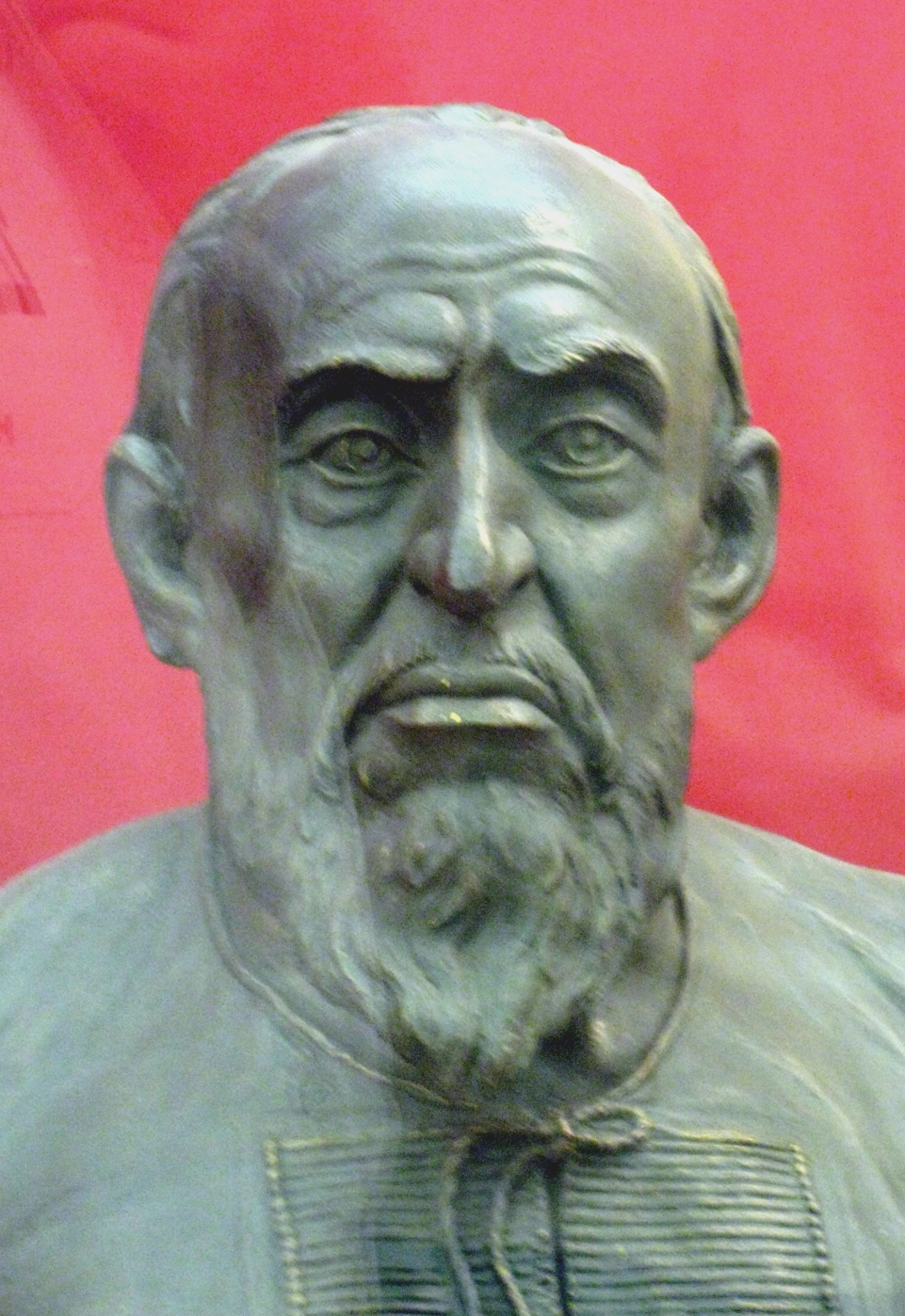
Ivan the Terrible
Ivan IV Vasilyevich (Russian: Иван IV Васильевич; 25 August [O.S. 15 August] 1530 – 28 March [O.S. 18 March] 1584), commonly known as Ivan the Terrible, was Grand Prince of Moscow and all Russia from 1533 to 1547, and the first Tsar and Grand Prince of all Russia from 1547 until his death in 1584. Ivan's reign was characterised by Russia's transformation from a medieval state to a fledgling empire, but at an immense cost to its people and long-term economy.
Ivan IV was the eldest son of Vasili III by his second wife Elena Glinskaya, and a grandson of Ivan III. He succeeded his father after his death, when he was three years old. A group of reformers united around the young Ivan, crowning him as tsar in 1547 at the age of 16. In the early years of his reign, Ivan ruled with the group of reformers known as the Chosen Council and established the Zemsky Sobor, a new assembly convened by the tsar. He also revised the legal code and introduced reforms, including elements of local self-government, as well as establishing the first Russian standing army, the streltsy. Ivan conquered the khanates of Kazan and Astrakhan, bringing the entire length of the Volga river under Russian control.
After he had consolidated his power, Ivan rid himself of the advisers from the Chosen Council and, in an effort to establish a stronghold in the Baltic Sea, he triggered the Livonian War of 1558 to 1583, which ravaged Russia and resulted in failure to take control over Livonia and the loss of Ingria, but allowed him to establish greater autocratic control over the Russian nobility, which he violently purged using Russia's first political police, the oprichniki. The later years of Ivan's reign were marked by the massacre of Novgorod by the oprichniki and the burning of Moscow by the Tatars. Ivan also pursued cultural improvements, such as importing the first printing press to Russia, and began several processes that would continue for centuries, including deepening connections with other European states, particularly England, fighting wars against the Ottoman Empire, and the conquest of Siberia.
Contemporary sources present disparate accounts of Ivan's complex personality. He was described as intelligent and devout, but also prone to paranoia, rage, and episodic outbreaks of mental instability that worsened with age. Historians generally believe that in a fit of anger, he murdered his eldest son and heir, Ivan Ivanovich; he might also have caused the miscarriage of the latter's unborn child. This left his younger son, the politically ineffectual Feodor Ivanovich, to inherit the throne, a man whose rule and subsequent childless death led to the end of the Rurik dynasty and the beginning of the Time of Troubles.
The English word terrible is usually used to translate the Russian word grozny (грозный) in Ivan's epithet, but this is a somewhat archaic translation. The Russian word grozny reflects the older English usage of terrible as in "inspiring fear or terror; dangerous; powerful" (i.e., similar to modern English terrifying or formidable). It does not convey the more modern connotations of English terrible such as "defective" or "evil". According to Edward L. Keenan, Ivan the Terrible's image in popular culture as a tyrant came from politicised Western travel literature of the Renaissance era. Anti-Russian propaganda during the Livonian War portrayed Ivan as a sadistic and oriental despot. Vladimir Dal defines grozny specifically in archaic usage and as an epithet for tsars: "courageous, magnificent, magisterial and keeping enemies in fear, but people in obedience". Other translations have also been suggested by modern scholars, including formidable, as well as awe-inspiring.
Ivan Vasilyevich was the first son of Vasili III by his second wife, Elena Glinskaya. Vasili's mother, Sophia Palaiologina, was a Byzantine princess of the Palaiologos family. She was a daughter of Thomas Palaiologos, the younger brother of the last Byzantine emperor, Constantine XI Palaiologos (r. 1449–1453). Elena's mother was a Serbian princess and her father's family, the Tatar Glinski clan (nobles based in the Grand Duchy of Lithuania), claimed descent both from Orthodox Hungarian nobles and the Mongol ruler Mamai (1335–1380). Born on 25 August, he received the name Ivan in honor of St. John the Baptist, the day of whose beheading falls on 29 August. In some texts of that era, it is also occasionally mentioned with the names Titus and Smaragd, in accordance with the tradition of polyonymy among the Rurikids. He was baptized in the Trinity Lavra of St. Sergius by Abbot Joasaph (Skripitsyn) and two elders of the Joseph-Volokolamsk Monastery were elected as recipients—the monk Cassian Bossoy and the hegumen Daniel. Tradition says that in honor of the birth of Ivan, the Church of the Ascension was built in Kolomenskoye.
When Ivan was three years old, his father died from an abscess and inflammation on his leg that developed into blood poisoning. The closest contenders to the throne, except for the young Ivan, were the younger brothers of Vasily. Of the six sons of Ivan III, only two remained: Andrey and Yuri. Ivan was proclaimed the grand prince at the request of his father. His mother Elena Glinskaya initially acted as regent, but died in 1538, when Ivan was eight years old; many believe that she was poisoned. The regency then alternated between several feuding boyar families that fought for control. According to his own letters, Ivan, along with his younger brother Yuri, often felt neglected and offended by the mighty boyars from the Shuisky and Belsky families. In a letter to Andrey Kurbsky, Ivan remembered, "My brother Iurii, of blessed memory, and me they brought up like vagrants and children of the poorest. What have I suffered for want of garments and food!" That account has been challenged by the historian Edward Keenan, who doubts the authenticity of the source in which the quotations are found.
On 16 January 1547, at the age of 16, Ivan was crowned at the Cathedral of the Dormition in the Moscow Kremlin. The metropolitan placed on Ivan the signs of royal dignity: the Cross of the Life-Giving Tree, barmas, and the cap of Monomakh; Ivan Vasilyevich was anointed with myrrh, and then the metropolitan blessed the tsar. He was the first Russian monarch to be crowned the tsar of all Russia, partly imitating his grandfather, Ivan III. Until then, the rulers of Moscow were crowned as grand princes, but Ivan III assumed the title of sovereign of all Russia and used the title of tsar in his correspondence with other monarchs.
Hub AI
Ivan the Terrible AI simulator
(@Ivan the Terrible_simulator)
Ivan the Terrible
Ivan IV Vasilyevich (Russian: Иван IV Васильевич; 25 August [O.S. 15 August] 1530 – 28 March [O.S. 18 March] 1584), commonly known as Ivan the Terrible, was Grand Prince of Moscow and all Russia from 1533 to 1547, and the first Tsar and Grand Prince of all Russia from 1547 until his death in 1584. Ivan's reign was characterised by Russia's transformation from a medieval state to a fledgling empire, but at an immense cost to its people and long-term economy.
Ivan IV was the eldest son of Vasili III by his second wife Elena Glinskaya, and a grandson of Ivan III. He succeeded his father after his death, when he was three years old. A group of reformers united around the young Ivan, crowning him as tsar in 1547 at the age of 16. In the early years of his reign, Ivan ruled with the group of reformers known as the Chosen Council and established the Zemsky Sobor, a new assembly convened by the tsar. He also revised the legal code and introduced reforms, including elements of local self-government, as well as establishing the first Russian standing army, the streltsy. Ivan conquered the khanates of Kazan and Astrakhan, bringing the entire length of the Volga river under Russian control.
After he had consolidated his power, Ivan rid himself of the advisers from the Chosen Council and, in an effort to establish a stronghold in the Baltic Sea, he triggered the Livonian War of 1558 to 1583, which ravaged Russia and resulted in failure to take control over Livonia and the loss of Ingria, but allowed him to establish greater autocratic control over the Russian nobility, which he violently purged using Russia's first political police, the oprichniki. The later years of Ivan's reign were marked by the massacre of Novgorod by the oprichniki and the burning of Moscow by the Tatars. Ivan also pursued cultural improvements, such as importing the first printing press to Russia, and began several processes that would continue for centuries, including deepening connections with other European states, particularly England, fighting wars against the Ottoman Empire, and the conquest of Siberia.
Contemporary sources present disparate accounts of Ivan's complex personality. He was described as intelligent and devout, but also prone to paranoia, rage, and episodic outbreaks of mental instability that worsened with age. Historians generally believe that in a fit of anger, he murdered his eldest son and heir, Ivan Ivanovich; he might also have caused the miscarriage of the latter's unborn child. This left his younger son, the politically ineffectual Feodor Ivanovich, to inherit the throne, a man whose rule and subsequent childless death led to the end of the Rurik dynasty and the beginning of the Time of Troubles.
The English word terrible is usually used to translate the Russian word grozny (грозный) in Ivan's epithet, but this is a somewhat archaic translation. The Russian word grozny reflects the older English usage of terrible as in "inspiring fear or terror; dangerous; powerful" (i.e., similar to modern English terrifying or formidable). It does not convey the more modern connotations of English terrible such as "defective" or "evil". According to Edward L. Keenan, Ivan the Terrible's image in popular culture as a tyrant came from politicised Western travel literature of the Renaissance era. Anti-Russian propaganda during the Livonian War portrayed Ivan as a sadistic and oriental despot. Vladimir Dal defines grozny specifically in archaic usage and as an epithet for tsars: "courageous, magnificent, magisterial and keeping enemies in fear, but people in obedience". Other translations have also been suggested by modern scholars, including formidable, as well as awe-inspiring.
Ivan Vasilyevich was the first son of Vasili III by his second wife, Elena Glinskaya. Vasili's mother, Sophia Palaiologina, was a Byzantine princess of the Palaiologos family. She was a daughter of Thomas Palaiologos, the younger brother of the last Byzantine emperor, Constantine XI Palaiologos (r. 1449–1453). Elena's mother was a Serbian princess and her father's family, the Tatar Glinski clan (nobles based in the Grand Duchy of Lithuania), claimed descent both from Orthodox Hungarian nobles and the Mongol ruler Mamai (1335–1380). Born on 25 August, he received the name Ivan in honor of St. John the Baptist, the day of whose beheading falls on 29 August. In some texts of that era, it is also occasionally mentioned with the names Titus and Smaragd, in accordance with the tradition of polyonymy among the Rurikids. He was baptized in the Trinity Lavra of St. Sergius by Abbot Joasaph (Skripitsyn) and two elders of the Joseph-Volokolamsk Monastery were elected as recipients—the monk Cassian Bossoy and the hegumen Daniel. Tradition says that in honor of the birth of Ivan, the Church of the Ascension was built in Kolomenskoye.
When Ivan was three years old, his father died from an abscess and inflammation on his leg that developed into blood poisoning. The closest contenders to the throne, except for the young Ivan, were the younger brothers of Vasily. Of the six sons of Ivan III, only two remained: Andrey and Yuri. Ivan was proclaimed the grand prince at the request of his father. His mother Elena Glinskaya initially acted as regent, but died in 1538, when Ivan was eight years old; many believe that she was poisoned. The regency then alternated between several feuding boyar families that fought for control. According to his own letters, Ivan, along with his younger brother Yuri, often felt neglected and offended by the mighty boyars from the Shuisky and Belsky families. In a letter to Andrey Kurbsky, Ivan remembered, "My brother Iurii, of blessed memory, and me they brought up like vagrants and children of the poorest. What have I suffered for want of garments and food!" That account has been challenged by the historian Edward Keenan, who doubts the authenticity of the source in which the quotations are found.
On 16 January 1547, at the age of 16, Ivan was crowned at the Cathedral of the Dormition in the Moscow Kremlin. The metropolitan placed on Ivan the signs of royal dignity: the Cross of the Life-Giving Tree, barmas, and the cap of Monomakh; Ivan Vasilyevich was anointed with myrrh, and then the metropolitan blessed the tsar. He was the first Russian monarch to be crowned the tsar of all Russia, partly imitating his grandfather, Ivan III. Until then, the rulers of Moscow were crowned as grand princes, but Ivan III assumed the title of sovereign of all Russia and used the title of tsar in his correspondence with other monarchs.