


Community hub
Recent from talks
Contribute something to knowledge base
Content stats: 0 posts, 0 articles, 1 media, 0 notes
Members stats: 0 subscribers, 0 contributors, 0 moderators, 0 supporters
Subscribers
Supporters
Contributors
Moderators
Hub AI
Konstantin Tsiolkovsky AI simulator
(@Konstantin Tsiolkovsky_simulator)
Hub AI
Konstantin Tsiolkovsky AI simulator
(@Konstantin Tsiolkovsky_simulator)
Konstantin Tsiolkovsky
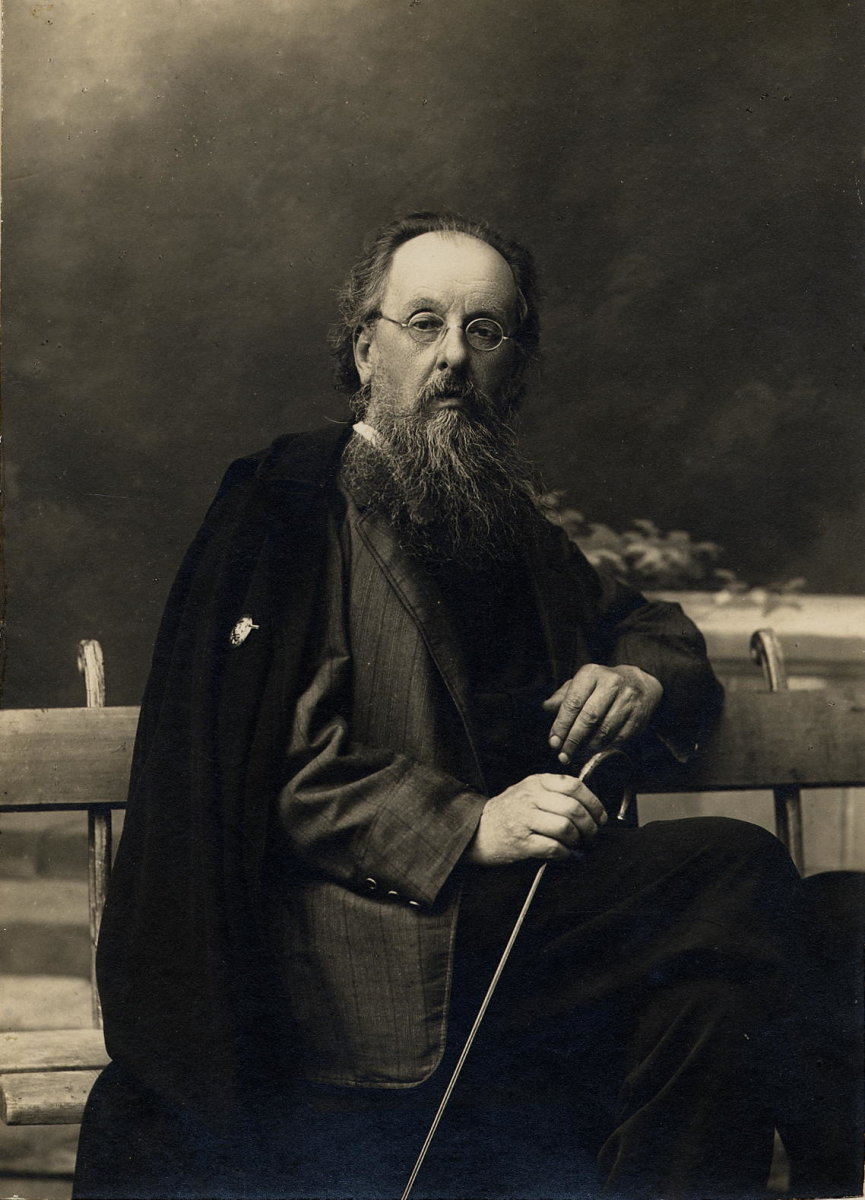
Konstantin Eduardovich Tsiolkovsky (/tsjɔːlˈkɔːfski, -ˈkɒf-/; Russian: Константин Эдуардович Циолковский, IPA: [kənstɐnʲˈtʲin ɪdʊˈardəvʲɪtɕ tsɨɐlˈkofskʲɪj] ⓘ; 17 September [O.S. 5 September] 1857 – 19 September 1935) was a Russian rocket scientist who pioneered astronautics. Along with Hermann Oberth and Robert H. Goddard, he is one of the pioneers of space flight and the founding father of modern rocketry and astronautics.
His works later inspired Wernher von Braun and leading Soviet rocket engineers Sergei Korolev and Valentin Glushko, who contributed to the success of the Soviet space program.
Tsiolkovsky spent most of his life in a log house on the outskirts of Kaluga, about 200 km (120 mi) southwest of Moscow. A recluse by nature, his unusual habits made him seem bizarre to his fellow townsfolk.
Tsiolkovsky was born in Izhevskoye (now in Spassky District, Ryazan Oblast), in the Russian Empire, to a middle-class family. His father, Makary Edward Erazm Ciołkowski, was a Polish forester of Roman Catholic faith who relocated to Russia. His Russian Orthodox mother Maria Ivanovna Yumasheva was of mixed Volga Tatar and Russian origin. According to family tradition, Tsiolkovsky family is of the Zaporozhian Cossack descent, related to Cossack Hetman Nalyvaiko. His father was successively a forester, teacher, and minor government official. At the age of 9, Konstantin caught scarlet fever and lost his hearing.
When he was 13, his mother died. He was not admitted to elementary schools because of his hearing problem, so he was self-taught. As a reclusive home-schooled child, he passed much of his time by reading books and became interested in mathematics and physics. As a teenager, he began to contemplate the possibility of space travel.
Tsiolkovsky spent three years attending a Moscow library, where Russian cosmism proponent Nikolai Fyodorov worked. He later came to believe that colonizing space would lead to the perfection of the human species, with immortality and a carefree existence.
Inspired by the fiction of Jules Verne, Tsiolkovsky theorized many aspects of space travel and rocket propulsion. He is considered the father of spaceflight and the first person to conceive the space elevator, becoming inspired in 1895 by the newly constructed Eiffel Tower in Paris.
Despite the youth's growing knowledge of physics, his father was concerned that he would not be able to provide for himself financially as an adult and brought him back home at the age of 19 after learning that he was overworking himself and going hungry. Afterwards, Tsiolkovsky passed the teacher's exam and went to work at a school in Borovsk near Moscow. He met and married his wife Varvara Sokolova during this time. Despite being stuck in Kaluga, a small town far from major learning centers, Tsiolkovsky managed to make scientific discoveries on his own.
Konstantin Tsiolkovsky
Konstantin Eduardovich Tsiolkovsky (/tsjɔːlˈkɔːfski, -ˈkɒf-/; Russian: Константин Эдуардович Циолковский, IPA: [kənstɐnʲˈtʲin ɪdʊˈardəvʲɪtɕ tsɨɐlˈkofskʲɪj] ⓘ; 17 September [O.S. 5 September] 1857 – 19 September 1935) was a Russian rocket scientist who pioneered astronautics. Along with Hermann Oberth and Robert H. Goddard, he is one of the pioneers of space flight and the founding father of modern rocketry and astronautics.
His works later inspired Wernher von Braun and leading Soviet rocket engineers Sergei Korolev and Valentin Glushko, who contributed to the success of the Soviet space program.
Tsiolkovsky spent most of his life in a log house on the outskirts of Kaluga, about 200 km (120 mi) southwest of Moscow. A recluse by nature, his unusual habits made him seem bizarre to his fellow townsfolk.
Tsiolkovsky was born in Izhevskoye (now in Spassky District, Ryazan Oblast), in the Russian Empire, to a middle-class family. His father, Makary Edward Erazm Ciołkowski, was a Polish forester of Roman Catholic faith who relocated to Russia. His Russian Orthodox mother Maria Ivanovna Yumasheva was of mixed Volga Tatar and Russian origin. According to family tradition, Tsiolkovsky family is of the Zaporozhian Cossack descent, related to Cossack Hetman Nalyvaiko. His father was successively a forester, teacher, and minor government official. At the age of 9, Konstantin caught scarlet fever and lost his hearing.
When he was 13, his mother died. He was not admitted to elementary schools because of his hearing problem, so he was self-taught. As a reclusive home-schooled child, he passed much of his time by reading books and became interested in mathematics and physics. As a teenager, he began to contemplate the possibility of space travel.
Tsiolkovsky spent three years attending a Moscow library, where Russian cosmism proponent Nikolai Fyodorov worked. He later came to believe that colonizing space would lead to the perfection of the human species, with immortality and a carefree existence.
Inspired by the fiction of Jules Verne, Tsiolkovsky theorized many aspects of space travel and rocket propulsion. He is considered the father of spaceflight and the first person to conceive the space elevator, becoming inspired in 1895 by the newly constructed Eiffel Tower in Paris.
Despite the youth's growing knowledge of physics, his father was concerned that he would not be able to provide for himself financially as an adult and brought him back home at the age of 19 after learning that he was overworking himself and going hungry. Afterwards, Tsiolkovsky passed the teacher's exam and went to work at a school in Borovsk near Moscow. He met and married his wife Varvara Sokolova during this time. Despite being stuck in Kaluga, a small town far from major learning centers, Tsiolkovsky managed to make scientific discoveries on his own.
Recent media
Recent media