


Community hub
Recent from talks
Contribute something
Nothing was collected or created yet.
Tuck Rule Game
View on Wikipedia
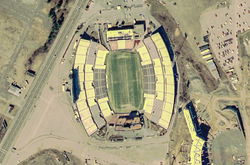
 Foxboro Stadium, site of the game | ||||||||||||||||||||||
| ||||||||||||||||||||||
| ||||||||||||||||||||||
| Date | January 19, 2002 | |||||||||||||||||||||
|---|---|---|---|---|---|---|---|---|---|---|---|---|---|---|---|---|---|---|---|---|---|---|
| Stadium | Foxboro Stadium Foxborough, Massachusetts | |||||||||||||||||||||
| Favorite | Patriots by 3[1] | |||||||||||||||||||||
| Referee | Walt Coleman | |||||||||||||||||||||
| Attendance | 60,292[2] | |||||||||||||||||||||
| TV in the United States | ||||||||||||||||||||||
| Network | CBS | |||||||||||||||||||||
| Announcers | Greg Gumbel and Phil Simms | |||||||||||||||||||||
The 2001 AFC Divisional Playoff game, also known as the Tuck Rule Game or the Snow Bowl,[3][4] and sometimes referred to as Snow Bowl 2, was a National Football League (NFL) playoff game between the New England Patriots and the Oakland Raiders. Part of the second round of the 2001–02 NFL playoffs, the game was played on January 19, 2002 at Foxboro Stadium in Foxborough, Massachusetts, at the time the Patriots' home stadium, and was the last game ever played at the stadium. There was a heavy snowfall during the game.
The name Tuck Rule Game originates from the controversial play that changed the course of the game. In the fourth quarter, Raiders' cornerback Charles Woodson tackled Patriots' quarterback Tom Brady, causing what game officials initially ruled to be a fumble that was recovered by Raiders' linebacker Greg Biekert. However, upon review of the play, officials eventually determined that even though Brady had seemingly halted his passing motion and was attempting to "tuck" the ball back into his body, it was an incomplete pass and not a fumble under the then-effective NFL rules. As a result, the original call was overturned; had it stood, the play would have sealed a victory for the Raiders. The ball was instead given back to the Patriots, who subsequently moved it into field goal range. With under a minute remaining in regulation time, Patriots' placekicker Adam Vinatieri kicked a 45-yard field goal to tie the game at 13, sending the game into overtime. In the overtime, Vinatieri kicked a 23-yard field goal to win the game for the Patriots. New England went on to win Super Bowl XXXVI, beginning a run of championships with Brady and head coach Bill Belichick, appearing in nine Super Bowls and winning six.[5][6] Due to the game's controversial call, dramatic overtime finish, and significance in kickstarting the Patriots' dynasty, it is regarded as one of the most famous and consequential games in league history and as an important part of NFL lore.
Background
[edit]The Tuck Rule Game was played as part of the 2001–02 NFL playoffs, which would crown the NFL champion for the 2001 season. Under the playoff structure in place at the time, six teams from each of the NFL's two conferences – the AFC and NFC – qualified for the playoffs. These six teams would consist of the champions of each of the three divisions of each conference (the East, Central, and West), plus three wild card teams, which were the three teams who finished with the best win–loss record in each conference who were not division champions. These six teams would be seeded 1–6 based on win–loss record for purposes of playoff bracketing, with the three division champions seeded 1–3 and the three wild card qualifiers seeded 4–6.
The playoff system stipulated that the top two division winners in each conference would receive a first-round bye into the second round of the playoffs (the divisional playoff), while the third, fourth, fifth, and sixth-ranked teams would play in the first round of the playoffs (the wild card playoff), with the #3 seed playing the #6 seed and the #4 seed squaring off against the #5 seed. The victors of the wild card playoff games would then face the top two seeds in the divisional playoff, with the #1 seed facing the lowest-surviving seed from the wild card playoff and the #2 seed pairing off against the other wild card playoff winner.
The AFC East champion Patriots were the #2 seed in the AFC playoffs, having posted an 11–5 win–loss record during the 2001 season. Although the Miami Dolphins had also compiled an 11–5 record during the regular season, New England was awarded the division title and first-round bye as the #2 seed due to having a better division record than Miami (6–2 compared to the Dolphins' 5–3); the Dolphins instead qualified for the playoffs as a wild card team and the #4 seed. The season had been wild for the Patriots, who began the year 0–2 after veteran quarterback Drew Bledsoe suffered a sheared blood vessel in his chest[7] in the Week 2 game against the New York Jets. Backup quarterback Tom Brady then led the offense to a playoff berth. As the #2 seed, the Patriots earned a bye into the divisional playoff.
The Raiders had clinched the AFC West division title with a 10–6 regular-season record and qualified as the #3 seed in the AFC playoffs. As such, they played the Jets (a #6 seeded wild-card team) in an AFC wild-card playoff game on January 12 at Network Associates Coliseum, in which they emerged victorious, 38–24. With the Jets eliminated, the Patriots would face the Raiders in the one divisional playoff game and the Pittsburgh Steelers would face the winner of Baltimore Ravens, the #5 seed, and the #4 seeded Miami Dolphins as the lowest-remaining seed. The Ravens beat the Dolphins 20–3 in the other wild-card playoff game.
The game
[edit]Both teams struggled in the heavy snowstorm during the first half, combining for the same number of punts as first downs (11) and converting only one of 13 third downs. Nonetheless, Raiders quarterback Rich Gannon completed 10 of 14 passes for 87 yards. With 1:12 left in the first quarter, a 15-yard fair-catch interference penalty against Patriots defensive back Je'Rod Cherry at the end of Ken Walter's 39-yard punt gave Oakland a first down at midfield, where they drove to a 7–0 lead on Gannon's 13-yard touchdown pass to James Jett. A few plays later, Raiders defensive back Johnnie Harris intercepted a pass from Brady on the Patriots 41-yard line, but New England's defense managed to force a punt, which would be the final result of every following drive from either team until the end of the half.
In the second half, New England almost completely abandoned its running game and relied on Brady's passing. On the opening drive of the third quarter, he connected with David Patten for gains of 25 and 19 yards as he led the Patriots 62 yards in 12 plays to the Raiders' 5-yard line, where Adam Vinatieri made a 23-yard field goal to make it 7–3. Terry Kirby returned the ensuing kickoff 22 yards to the Oakland 37-yard line and the Raiders produced a 10-play, 43-yard drive to score on a 38-yard field goal from Sebastian Janikowski. Then, after a 33-yard punt by Walter gave the Raiders a first down on their own 49, a 22-yard reception by receiver Jerry Rice set up Janikowski's second field goal, from 45 yards, giving the Raiders a 13–3 lead with two minutes left in the third quarter.
The Raiders appeared to be dominating to this point of the game. However, in the fourth quarter, Brady led the Patriots on a 10-play, 67-yard drive, completing nine consecutive passes for 61 yards and finishing it with a 6-yard touchdown run with 7:57 left that made the score 13–10. Later in the quarter, Patriots receiver Troy Brown returned Shane Lechler's 37-yard punt 27 yards to the Patriots 46-yard line. Brown fumbled the ball at the end of the return, but Pats linebacker Larry Izzo recovered it with 2:06 left on the clock. Brady then completed a seven-yard pass to Kevin Faulk before scrambling for five yards and running out of bounds to the Patriots' sideline, picking up a first down at the Oakland 42. New England had no timeouts left, but with the clock stopped, Brady here had a short conversation with offensive coordinator Charlie Weis.
The "tuck rule" play and call
[edit]With 1:50 left, Raiders cornerback Eric Allen, lurking at the Patriots' sideline, heard Brady's talk with Weis. Allen stated that he heard the Patriots' play call; he then rushed to his sideline and told his team what he had heard. While the Patriots were slightly out of field-goal range, Brady dropped back to pass, with no open receivers. While pumping the football, Brady was hit on his right side by blitzing Raiders cornerback Charles Woodson (his former college teammate at Michigan). While it appeared that Brady had tucked the ball back towards his body, the officials were not sure and ruled it a fumble so they could review the play.
In 1999, a new rule had been introduced, which eventually became known as the tuck rule:
NFL Rule 3, Section 22, Article 2, Note 2. When [an offensive] player is holding the ball to pass it forward, any intentional forward movement of his arm starts a forward pass, even if the player loses possession of the ball as he is attempting to tuck it back toward his body. Also, if the player has tucked the ball into his body and then loses possession, it is a fumble.[8]

After a video-replay review, referee Walt Coleman reversed the call, declaring the play an incomplete forward-pass and giving possession back to the Patriots.[9] Coleman's announcement stated that the ball was moving forward at the time at which it was dropped. Thus, the original call was overturned, and the Patriots maintained possession.
Because the play was initially ruled a fumble, instant-replay rules required the referee to see "incontrovertible visual evidence" on the replay that Brady had not "tucked the ball into his body and then {lost} possession" of it before reversing the original call on the field. In 2012, on the ten-year anniversary of the game, Coleman told ESPN that he did not see Brady lose the ball, and, as NFL referees were trained to do in this situation, ruled it a fumble because that call could be reviewed while an incomplete pass could not. Once he saw a replay, Coleman quickly reversed his previous ruling, telling ESPN it was an "easy" call.[10]
This was not the first time the Patriots had seen the tuck rule invoked in the 2001 NFL season.[11] On September 23, Patriots defensive end Anthony Pleasant apparently forced Jets quarterback Vinny Testaverde to fumble,[12] but the call was overturned upon review and ruled an incomplete pass. In the aftermath of the Tuck Rule Game, Patriots head coach Bill Belichick explained, "I knew what the ruling should have been because we had dealt with that play a little bit earlier in the year on the other side of it."[13]
The Raiders complained extensively that the call was wrong, and that it was made against them because the league had a vendetta against the team, an attitude Raiders quarterback Rich Gannon said was "totally nonsense."[14] Several Raiders players and observers also said that the Tuck Rule led to head coach Jon Gruden's departure from the team, as owner Al Davis was apparently angry that Gruden did not protest the call vehemently enough. Gruden was dismissive of Davis' views on the matter, and the subsequent breakdown in relations between owner and coach led to Gruden being traded to Tampa Bay and becoming their head coach in 2002. (Gruden would return to the Raiders in 2018 after spending a stint as a broadcaster with ESPN.)
The tuck rule was abolished on March 20, 2013, by a 29–1 vote of current teams.[15] The Pittsburgh Steelers voted against abolition, while two teams, the Patriots and Washington Commanders, abstained from the vote.[16] Patriots owner Robert Kraft noted, "I know Al Davis, may he rest in peace, is probably smiling."[17]
Conclusion of game after the ruling
[edit]After the Patriots maintained possession, Brady completed a 13-yard pass to David Patten to the Raiders' 29. After two incomplete passes and a Brady scramble, Vinatieri came on to hit a game-tying 45-yard field goal through the snow with just 27 seconds left, a kick considered to have been one of the most difficult kicks in NFL history,[18] or the most "clutch-kick ever."[19] With seconds left on the clock after the ensuing kickoff, the Raiders decided not to attempt to advance the ball, instead letting it go to overtime.
The Patriots won the toss and took the ball to start overtime. They drove 61 yards in 15 plays, with Brady completing all eight of his pass attempts, for a total of 45 yards. On fourth down and 4 from the Raiders' 28, Brady hit Patten for a six-yard completion. Three plays later, Antowain Smith picked up eight yards for a first down at the Oakland 9 and the Patriots, now going against the wind, fought to set up the game-winning kick. After Brady dove to the 5 and centered the ball, Vinatieri kicked a 23-yard field goal, giving the Patriots a 16–13 victory and advancing them to the AFC Championship Game. Brady ended up completing 26 of 39 passes for 238 yards in the second half.
Statistics
[edit]| Quarter | 1 | 2 | 3 | 4 | OT | Total |
|---|---|---|---|---|---|---|
| Raiders | 0 | 7 | 6 | 0 | 0 | 13 |
| Patriots | 0 | 0 | 3 | 10 | 3 | 16 |
at Foxboro Stadium, Foxborough, Massachusetts
- Date: January 19, 2002
- Game time: 8:05 p.m. EST
- Game weather: 25 °F or −3.9 °C, snow
- Game attendance: 60,292
- Referee: Walt Coleman
- TV announcers (CBS): Greg Gumbel and Phil Simms
- Boxscore
| Game information | ||
|---|---|---|
|
Aftermath
[edit]The Patriots went on to defeat the Pittsburgh Steelers, 24–17, in the AFC Championship Game, and then defeated the NFC champion St. Louis Rams, 20–17, in Super Bowl XXXVI on a last-second field goal by Vinatieri. The Super Bowl championship was the first in Patriots' history and began a period of dominance for the team in the 2000s and 2010s that included eight additional Super Bowl appearances with five more titles, in Super Bowls XXXVIII, XXXIX, XLIX, LI, and LIII.
The Tuck Rule Game was Gruden's last contest of his first stint as Raider head coach; he was traded to the Tampa Bay Buccaneers before the following season. The Raiders went to the Super Bowl the next year, but were beaten by Gruden's Buccaneers, 48–21, and did not make the playoffs again until 2016. In 2018, Gruden returned to coach the Raiders after a nine-year stint as a television analyst. He made reference to the Tuck Rule Game in his introductory press conference upon his return to the Raiders, turning to former Raiders cornerback Charles Woodson and saying, "Brady fumbled that ball."[20] Brady himself has also suggested that the play "might have been a fumble."[21]
Up to his retirement at the end of the 2018 season, Coleman officiated 265 more NFL games, including 21 more involving the Patriots, but none involving the Raiders. As it happened, his last game involved the Patriots.[22]
As for Tom Brady, he went on to have a massive career-winning seven Super Bowls: Super Bowls XXXVI, XXXVIII, XXXIX, XLIX, LI, LIII, and LV. After his retirement, he went on to become an NFL analyst with Fox, as well as a minority stakeholder in the Raiders franchise – the team he beat in the Tuck Rule game.
Starting lineups
[edit]Hall of Fame‡
| Oakland | Position | New England |
|---|---|---|
| Offense | ||
| Tim Brown‡ | WR | Troy Brown |
| Barry Sims | LT | Matt Light |
| Steve Wisniewski | LG | Mike Compton |
| Adam Treu | C | Damien Woody |
| Frank Middleton | RG | Joe Andruzzi |
| Lincoln Kennedy | RT | Greg Robinson-Randall |
| Roland Williams | TE | Rod Rutledge |
| Jerry Rice‡ | WR | David Patten |
| Rich Gannon | QB | Tom Brady |
| Charlie Garner | RB | Antowain Smith |
| Jon Ritchie | FB | Marc Edwards |
| Defense | ||
| Regan Upshaw | LE | Bobby Hamilton |
| Rod Coleman | LDT | Brandon Mitchell |
| Grady Jackson | RDT | Riddick Parker |
| Tony Bryant | RE | Anthony Pleasant |
| William Thomas | LOLB | Mike Vrabel |
| Greg Biekert | MLB | Tedy Bruschi |
| Elijah Alexander | ROLB | Roman Phifer |
| Charles Woodson‡ | LCB | Ty Law‡ |
| Eric Allen‡ | RCB | Otis Smith |
| Johnnie Harris | SS | Lawyer Milloy |
| Anthony Dorsett | FS | Tebucky Jones |
Officials
[edit]- Referee: Walt Coleman (#65)
- Umpire: Undrey Wash (#96)
- Head linesman: Dale Williams (#8)
- Line judge: Gary Arthur (#108)
- Field judge: Scott Edwards (#3)
- Side judge: Dean Look (#49)
- Back judge: Phil Luckett (#59)
See also
[edit]- 1976-77 NFL playoffs (the Patriots and Raiders played a divisional round game that featured a controversial, last minute roughing the passer penalty against the Patriots' Ray "Sugar Bear" Hamilton)
- Snowplow Game
- Immaculate Reception
- Red Right 88
- List of nicknamed NFL games and plays
References
[edit]- ^ Sports Odds History https://www.sportsoddshistory.com/nfl-playoffs/?o=s&fv=&hv=&fd=&chv=&cfd=&ou=&rd=Div.
{{cite web}}: Missing or empty|title=(help) - ^ "Divisional Round - Oakland Raiders at New England Patriots - January 19th, 2002". Pro-Football-Reference.com. Retrieved October 13, 2025.
- ^ Silver, Michael (February 4, 2005). "The five most significant plays in recent NFL history". Sports Illustrated. Archived from the original on February 6, 2005. Retrieved September 19, 2007.
- ^ Ross Jr., Sam (January 23, 2003). "After further review, coaches worth it". Pittsburgh Tribune-Review. TRIB: Total Media. Archived from the original on December 11, 2007. Retrieved September 19, 2007.
- ^ Swartz, Bryn. "The NFL's 10 Greatest Postseason Games of the 2000s". Bleacher Report. Retrieved June 26, 2022.
- ^ Akelson, Michael. "Top 10 NFL Games of the 21st Century". Bleacher Report. Retrieved June 26, 2022.
- ^ Bump, Lary. "Bledsoe's near-death experience". Scout.com. Retrieved November 27, 2015.
- ^ Maske, Mark (October 15, 2005). "Tuck Rule Hard to Grasp". The Washington Post. Retrieved January 25, 2024.
- ^ "The Tuck Rule". 30 for 30. Season 4. Episode 20. ESPN.
- ^ The Tuck Rule – 10 Year Anniversary. YouTube. January 22, 2012. Archived from the original on December 17, 2021.
- ^ Young, Shalise Manza (March 20, 2013). "NFL overwhelmingly kills 'Tuck Rule'". The Boston Globe. Retrieved January 25, 2024.
- ^ "New York Jets at New England Patriots - September 23rd, 2001 - Pro-Football-Reference.com". Pro-Football-Reference.com.
- ^ Boren, Cindy (January 11, 2024). "The biggest wins and controversies from Bill Belichick's career". The Washington Post. Retrieved January 25, 2024.
- ^ Weinreb, Michael (January 19, 2017). "Holy Tuck". The Ringer. Retrieved January 25, 2024.
- ^ Yates, Field (March 20, 2013). "NFL votes to get rid of tuck rule". ESPN. Retrieved January 25, 2024.
- ^ "'Tuck Rule' eliminated by wide margin at NFL Annual Meeting". NFL.com. March 20, 2013. Retrieved March 22, 2013.
- ^ Reiss, Mike (March 18, 2013). "Robert Kraft discusses tuck rule". ESPN. Retrieved January 25, 2024.
- ^ Wells, Mike (October 3, 2018). "Best kick ever? Blizzard boot started Adam Vinatieri's legacy". ESPN. Retrieved January 25, 2022.
- ^ Davis, Noah (September 15, 2015). "The Toughest Position in Football Is... Kicker?". Esquire. Retrieved January 25, 2022.
- ^ Young, Shalise Manza (January 9, 2018). "10 highlights from Jon Gruden's Raiders news conference, including 'Tom Brady fumbled'". Yahoo! Sports. Retrieved January 25, 2024.
- ^ McCarriston, Shanna (May 5, 2022). "Tom Brady admits controversial 'Tuck Rule Game' play 'might have been a fumble' and not an incomplete pass". CBS Sports.
- ^ "Walt Coleman at Pro Football Reference". Pro-Football-Reference.com.
External links
[edit]- The Tuck Rule Game: NFL Full Game on YouTube
- ESPN recap of the game
- 'Tuck Rule Game' changed destinies
| Main | |
|---|---|
| Family |
|
| Film and television |
|

Tuck Rule Game
View on GrokipediaBackground and Context
2001 NFL Season Overview
The 2001 NFL season featured a 16-game regular season for each of its 31 teams, organized into the American Football Conference (AFC) and National Football Conference (NFC), with three divisions per conference. The playoff format included six teams from each conference: the three division winners automatically qualified, joined by three wild-card teams selected based on the best records among non-winners, with seeding determined by overall regular-season performance and tiebreakers such as conference record. This structure ensured a postseason tournament culminating in the Super Bowl. In the AFC final standings, the Pittsburgh Steelers secured the top seed with a 13–3 record as Central Division champions, the New England Patriots earned the No. 2 seed at 11–5 as East Division winners, and the Oakland Raiders claimed the No. 3 seed with a 10–6 mark as West Division victors. The wild-card qualifiers were the Miami Dolphins (No. 4, 11–5), Baltimore Ravens (No. 5, 10–6), and New York Jets (No. 6, 10–6). The Patriots and Raiders both posted strong regular-season records, with New England at 11–5 and Oakland at 10–6. The season was profoundly impacted by the September 11, 2001, terrorist attacks, which prompted the NFL to postpone its entire Week 2 schedule (September 16–17) out of respect for the national tragedy and safety concerns; these games were rescheduled as Week 17 at the end of the regular season, resulting in a 16-game schedule spanning 17 weeks, with the playoffs and Super Bowl shifted one week later to accommodate the adjustment.[5] In the AFC wild-card round on January 12–13, 2002, the Raiders routed the Jets 38–24, while the Ravens edged the Dolphins 20–3, advancing the No. 3 Raiders to face the No. 2 Patriots in the divisional playoffs. This divisional matchup took place on January 19, 2002, at Foxboro Stadium in Foxborough, Massachusetts.[3]Team Performances and Playoff Path
The New England Patriots entered the 2001 playoffs with an 11–5 regular-season record, securing the AFC East title and the No. 2 seed in the conference.[6] Under second-year head coach Bill Belichick, the team overcame early inconsistencies following starting quarterback Drew Bledsoe's severe injury in Week 3 against the New York Jets, where Bledsoe suffered internal bleeding from a hit by linebacker Mo Lewis.[7] Sixth-round draft pick Tom Brady stepped in as starter, leading the Patriots to a pivotal 44–13 victory over the Indianapolis Colts in Week 9 and reeling off six consecutive wins to close the season, establishing his emergence as a poised leader capable of managing games effectively.[6] As the No. 2 seed, the Patriots earned a first-round bye in the wild-card round.[8] The Oakland Raiders finished the regular season at 10–6, claiming the AFC West crown and the No. 3 seed despite a midseason slump that included six losses by a combined 24 points.[9] In his fourth season as head coach, Jon Gruden guided a squad anchored by a tenacious defense. The Raiders advanced past the wild-card round with a decisive 38–24 home win over the No. 6 New York Jets, setting up a divisional-round matchup in New England.[8] The victor of the divisional playoff between the Patriots and Raiders would advance to the AFC Championship Game against the No. 1 Pittsburgh Steelers, who had earned a first-round bye with a league-best 13–3 record.[8]Game Summary
First Half Action
The game commenced at Foxboro Stadium with the New England Patriots kicking off to the Oakland Raiders, who started from their own 23-yard line following a 20-yard return by Terry Kirby. The Raiders advanced 80 yards over 12 plays, culminating in a 13-yard touchdown pass from quarterback Rich Gannon to wide receiver James Jett at the 12:14 mark of the second quarter, followed by a successful extra-point kick from Sebastian Janikowski, giving Oakland a 7-0 lead.[1][10] Later in the second quarter, with 12:02 on the clock, Patriots safety Johnnie Harris intercepted a Gannon pass, but New England could not capitalize on the turnover. The Raiders sustained a drive but did not score, and the half ended with Oakland leading 7-0. The Raiders' defense pressured Brady, including a sack, contributing to New England's scoreless first half.[1][10]Snowstorm Conditions and Momentum Shift
The Tuck Rule Game, played on January 19, 2002, at Foxboro Stadium, unfolded amid deteriorating winter weather that significantly influenced the contest's dynamics. The match began with light snow falling as kickoff approached at 8:18 p.m. EST, under temperatures in the mid-20s°F and northerly winds averaging 10 mph with occasional gusts reaching 20 mph. By the second half, the precipitation escalated into heavy snowfall—peaking between 8 and 10 p.m.—blanketing the field with several inches of accumulation and transforming the turf into a slick, unpredictable surface. This progression reduced visibility for players and officials, obscured yard markers despite intermittent use of snowblowers, and compromised footing, particularly within the hash marks where the grass turned muddy and inconsistent.[2][3] These conditions forced tactical adjustments from both teams, shifting emphasis toward conservative strategies to navigate the hazards. The Patriots and Raiders alike leaned on shorter passing routes and ground-based plays to minimize errors from slips or obscured sightlines, with long-range attempts becoming riskier due to the ball's tendency to wobble in the wind and snow. Field position became paramount, as sustained drives proved challenging; kickers like Adam Vinatieri and Sebastian Janikowski capitalized on opportunities within manageable distances, underscoring how the blizzard favored possession battles over explosive scoring. Players reported struggling with cleat selection for traction, contributing to fumbles and stalled momentum in key moments.[11][12] The second half's early action encapsulated this environmental toll while igniting a pivotal momentum swing. Trailing 7-0 at halftime, the Patriots opened the third quarter with a 12-play, 62-yard drive, capped by Vinatieri's 23-yard field goal at the 8:39 mark to trim the deficit to 7-3. The Raiders quickly countered, marching 43 yards in 10 plays for Janikowski's 38-yard field goal at 4:14, increasing their lead to 10-3, before adding a 45-yard kick at 1:41 following a seven-play, 24-yard possession, extending the advantage to 13-3. These field-goal exchanges reflected the snow's stifling effect on offensive fluidity, limiting both sides to modest gains amid slipping ball carriers and defensive stands bolstered by the weather.[1][10] The tide turned decisively early in the fourth quarter, as New England responded to the 13-3 hole with a gritty 10-play, 67-yard march that showcased their resilience in the blizzard. Quarterback Tom Brady, leveraging quick handoffs and short throws to counter the slippery conditions, scrambled for the game's lone touchdown—a 6-yard run at 7:52—followed by Vinatieri's extra point to close the gap to 13-10. This sequence not only marked the Patriots' first points of the second half but also injected urgency into their comeback, exploiting Raider defensive lapses amid the chaos of swirling snow and fatigued footing. The scoreline shift highlighted New England's superior adaptation, setting an intense tone for the game's closing stages as the storm raged on.[1][3]The Tuck Rule Play
With 1:50 remaining in the fourth quarter and the Raiders leading 13-10, the Patriots faced third-and-13 from their own 45-yard line during a drive starting from their 20-yard line.[3] Tom Brady dropped back to pass, scanning for an open receiver amid the intensifying snowstorm, when his arm was struck by Raiders cornerback Charles Woodson as he began to tuck the ball back toward his body while attempting to throw forward.[13] The ball popped loose and was immediately recovered by Raiders linebacker Greg Biekert at the Patriots' 42-yard line, an on-field ruling of fumble that appeared to hand Oakland possession near midfield for what would have been a potential game-sealing drive.[14] The initial call sparked immediate controversy, as the Raiders' recovery positioned them to run out the clock or attempt a field goal. Referee Walt Coleman, however, initiated a video review from the booth to examine the play under NFL passing rules. After a five-minute delay for officials to scrutinize multiple angles of the replay, Coleman overturned the fumble ruling, declaring it an incomplete forward pass.[3][14] The decision hinged on the NFL's "tuck rule," codified in the 2001 rulebook as Rule 3, Section 22, Article 2, Note 2, which specified: "When [an offensive] player is holding the ball to pass it forward, any intentional forward movement of his hand starts a forward pass, even if the player loses possession of the ball as he is attempting to tuck it back toward his body." This interpretation treated the ball's release as part of a passing motion because Brady's arm was still moving forward at the moment of contact, rendering the play an incomplete pass rather than a fumble regardless of his subsequent tuck attempt.[15] The reversal returned possession to the Patriots at the original line of scrimmage (their 45-yard line), but facing fourth-and-13, they punted, fueling ongoing debate about the rule's application in real-time scenarios.[13]Drive to Victory
Following the controversial tuck rule ruling with 1:50 remaining, the Patriots punted on fourth-and-13 from their 45-yard line. The Oakland Raiders took possession at their own 35-yard line, leading 13-10, with the Patriots out of timeouts. Over the next 1:28, the Raiders ran three plays for a net gain of 9 yards—a 7-yard run by Charlie Garner, a 2-yard run by Garner, and no gain by Zack Crockett—forcing them to punt from their 44-yard line at the 1:13 mark. Shane Lechler's 37-yard punt was fielded by Patriots returner Troy Brown, who advanced it 27 yards to the New England 46 before fumbling; the ball was recovered by teammate Larry Izzo at the 46, providing excellent starting field position near midfield.[1] With 1:13 left and no timeouts remaining, quarterback Tom Brady orchestrated a rapid drive to tie the game. The drive featured short passes and scrambles to manage the clock and snow conditions: a completion to running back J.R. Redmond for 8 yards, a scramble by Brady for 6 yards to gain a first down at the Oakland 42, followed by two incomplete passes, then a 13-yard completion to wide receiver David Patten to the Oakland 29. Facing further resistance, Brady scrambled for 1 yard on third down, setting up fourth-and-9 at the Raiders' 45-yard line with 0:32 on the clock. The incomplete passes stopped the clock, allowing the Patriots to maintain tempo without needing to spike the ball, while the quick runs by Brady helped manage the limited time effectively under head coach Bill Belichick's guidance. The Raiders used their timeouts in last-gasp efforts to disrupt the rhythm and ice Vinatieri, but their defensive stands limited the Patriots to a field goal rather than a potential game-winning touchdown.[1] Adam Vinatieri then attempted and made a 45-yard field goal through heavy snow as time expired, tying the score at 13-13 and forcing overtime, where the Patriots would ultimately prevail 16-13. This sequence highlighted the Raiders' aggressive defense but could not prevent the tie.[1][3]Statistics and Records
Scoring and Possession Breakdown
The Tuck Rule Game concluded with the New England Patriots defeating the Oakland Raiders 16-13 in overtime, a low-scoring affair marked by defensive struggles and the harsh snowstorm conditions that limited offensive efficiency.[1] The Patriots mounted a comeback from a 13-3 deficit, tying the game late in regulation and securing the win with a field goal in overtime, highlighting their resilience despite fewer explosive plays early on.[10]Scoring Summary
| Quarter | Time | Scoring Play | Score (Raiders-Patriots) |
|---|---|---|---|
| 2nd | 12:14 | Raiders: James Jett 13 yd. pass from Rich Gannon (Sebastian Janikowski kick) | 7-0 |
| 3rd | 8:39 | Patriots: Adam Vinatieri 23 yd. field goal | 7-3 |
| 3rd | 4:14 | Raiders: Sebastian Janikowski 38 yd. field goal | 10-3 |
| 3rd | 1:41 | Raiders: Sebastian Janikowski 45 yd. field goal | 13-3 |
| 4th | 7:52 | Patriots: Tom Brady 6 yd. run (Adam Vinatieri kick) | 13-10 |
| 4th | 0:27 | Patriots: Adam Vinatieri 45 yd. field goal | 13-13 |
| OT | 6:31 | Patriots: Adam Vinatieri 23 yd. field goal | 13-16 |
Key Player Performances
Tom Brady delivered a resilient performance in his first playoff start, completing 32 of 52 passes for 312 yards with no touchdown passes and one interception, while adding 16 rushing yards on five carries, including a crucial 6-yard touchdown run that narrowed the score to 13-10 in the fourth quarter.[1] He was sacked twice for a loss of 15 yards, but his ability to distribute the ball effectively under pressure, despite the interception returned for a touchdown, allowed the Patriots to accumulate 312 total passing yards and maintain possession in key moments, contributing to their overtime victory.[1] Rich Gannon, the Raiders' MVP-caliber quarterback, completed 17 of 31 passes for 159 yards and one touchdown—a 13-yard strike to James Jett—but was held without interceptions while taking one sack for a loss of 6 yards.[1] Gannon's modest output, combined with the sack that disrupted rhythm, limited Oakland to 230 total yards on 62 plays and prevented them from capitalizing on their early lead.[1] On the ground, the game's rushing efforts were balanced but inefficient due to the slippery snow conditions, with neither team breaking 70 yards from a single back. Antowain Smith paced the Patriots with 20 carries for 65 yards, providing steady short-yardage gains that controlled the clock and set up field goal opportunities.[1] Charlie Garner led the Raiders with 17 carries for 64 yards, offering bursts of speed early but unable to sustain momentum as Oakland's rushing attack totaled just 84 yards on 28 attempts.[1] In the passing game, David Patten emerged as Brady's primary target, hauling in 8 of 16 targets for 107 yards—more than a third of New England's passing production—which helped sustain drives during the comeback, including a key 13-yard reception after the tuck rule play.[1] Jerry Rice, in what would be one of his final playoff appearances, caught 4 of 8 targets for 48 yards, serving as Gannon's go-to option but unable to break big plays amid tight coverage.[1] Defensively, Tedy Bruschi anchored the Patriots' front seven with 9 tackles (8 solo) and 1 sack, playing a pivotal role in containing Garner's runs and pressuring Gannon to disrupt third-down conversions.[1] His efforts contributed to New England's 1 sack, limiting the Raiders to 4-of-15 third-down conversions and forcing punts in critical situations.[1]Aftermath and Legacy
Immediate Reactions
Following the overturned fumble call on Tom Brady in the final minutes of regulation, Raiders players and coaches erupted in protest on the snowy field at Foxboro Stadium. Oakland cornerback Charles Woodson, who had stripped the ball from Brady, immediately confronted the officials during the replay review, arguing the initial ruling should stand. In his post-game interview, Woodson vented his anger, declaring, "It's some bullshit, it's some bullshit... That's exactly how I feel, I feel like it was a bullshit call. It never should have been overturned."[16] Raiders head coach Jon Gruden, known for his fiery sideline demeanor, labeled the decision a "bullshit call" immediately after the game, underscoring the frustration within the Oakland locker room over what he viewed as an unjust reversal that swung momentum. In contrast, Patriots quarterback Tom Brady downplayed his role in the controversy post-game, deflecting attention from the play by crediting his teammates' resilience and expressing relief at the ruling without dwelling on its merits. Referee Walt Coleman stood firm in defending the call during his post-game explanation to reporters, stating that the replay clearly showed Brady's arm moving forward when the ball came loose, making it an incomplete pass under the tuck rule provisions in the NFL rulebook; he offered no apology or suggestion of error.[17] The CBS broadcast captured the confusion and debate in real time, with play-by-play announcer Greg Gumbel questioning on air, "Ooh. The question is, did he pull it down? His arm was going forward, but was he throwing the football?" Color analyst Boomer Esiason echoed the skepticism, asserting, "I don’t think there’s much doubt [that it’s a fumble]," and later critiquing the tuck rule's fairness during the post-whistle analysis, which fueled immediate viewer backlash through calls to the network questioning the obscure regulation. As Adam Vinatieri's overtime field goal sealed the 16-13 Patriots victory—the final game at the aging Foxboro Stadium—ecstatic New England supporters celebrated the win amid the blizzard conditions.Rule Evolution and Repeal
The tuck rule originated in the 1999 NFL rulebook as a clarification under Rule 3, Section 22, Article 2, Note 2, to distinguish between a forward pass and a fumble during a quarterback's throwing motion.[15] It specified that "when [an offensive] player is holding the ball to pass it forward, any intentional forward movement of his arm starts a forward pass, even if the player loses possession of the ball as he is attempting to tuck it back toward his body."[15] This provision aimed to protect the integrity of passing plays by treating the initial forward arm motion as the start of an incomplete pass if possession was lost during the tuck, rather than a fumble recoverable by the defense.[15] The controversial application of the tuck rule in the 2001 AFC Divisional playoff game between the New England Patriots and Oakland Raiders intensified scrutiny, though the core provision remained intact until its repeal.[18] The rule endured for over a decade, applied in several high-profile instances, but faced growing criticism for creating inconsistent officiating and favoring offensive plays. In March 2013, during the NFL Annual Meeting in Phoenix, owners voted overwhelmingly to repeal the tuck rule by a margin of 29-1, with the Pittsburgh Steelers casting the lone dissenting vote and the New England Patriots and Washington Redskins abstaining.[18] The repeal simplified the rulebook by eliminating the distinction, stipulating that if a quarterback loses possession while attempting to tuck the ball back to his body or after tucking it, the play is now treated as a fumble.[18] This change addressed long-standing complaints about ambiguity, ensuring that such plays are reviewable as potential turnovers rather than incomplete passes. Post-repeal, similar plays have been ruled as fumbles, altering game outcomes in ways that would not have occurred under the old rule. For instance, in Super Bowl LI in 2017, Atlanta Falcons quarterback Matt Ryan lost possession on a strip-sack by New England Patriots linebacker Dont'a Hightower; the play, which nearly invoked tuck rule considerations, was upheld as a fumble after review, shifting momentum decisively.[19] The tuck rule's application in the 2001 playoff game also spotlighted New England Patriots head coach Bill Belichick, whose visible frustration during the on-field review and post-game press conference—delivered in his signature cut-sleeve hoodie—became an iconic symbol of defiance and intensity.[20] This moment, often replayed in NFL lore, underscored Belichick's unyielding style and contributed to the narrative of his coaching dynasty, which the rule inadvertently helped launch by preserving a critical drive leading to victory.[18] The eventual repeal marked a regulatory closure to that chapter, affirming the rule's role in shaping Belichick's early success while prioritizing clearer, more equitable officiating.[18]Cultural Impact
The Tuck Rule Game is widely regarded as the pivotal moment that launched the New England Patriots' dynasty under quarterback Tom Brady and head coach Bill Belichick, propelling them to three Super Bowl victories between the 2001 and 2004 seasons.[21] The controversial call preserved a drive that ended in a game-winning field goal, allowing the Patriots to advance and ultimately defeat the St. Louis Rams in Super Bowl XXXVI, marking the beginning of an era defined by resilience and strategic innovation.[22] Even Brady himself later acknowledged the ruling's dubious nature while crediting it with igniting the franchise's dominance.[23] The game significantly intensified the rivalry between the Patriots and Oakland Raiders, embedding lasting resentment among Raiders fans who view it as the theft of a potential championship run.[24] This tension persisted into the following season, when the Raiders reached Super Bowl XXXVII but suffered a decisive 48-21 loss to the Tampa Bay Buccaneers, an outcome often retrospectively tied to the motivational and psychological fallout from the Tuck Rule defeat.[25] In media portrayals, the game has achieved enduring prominence through documentaries, books, and podcasts that dissect its dramatic and divisive elements. ESPN's 30 for 30 short film The Tuck Rule, directed by Ken Rodgers and Nick Mascolo, premiered in 2022 and features reflections from Brady and Raiders safety Charles Woodson on the play's immediate chaos and long-term ripple effects.[26] Books such as former Raiders tackle Lincoln Kennedy's collaboration with Paul Gutierrez explore the event from the Oakland perspective, framing it as a symbol of institutional bias against the franchise.[24] In the 2020s, anniversary episodes on podcasts like Rise and Schein and The ESPN Daily have revisited the game, often during milestone years such as the 20th in 2022, to analyze its role in NFL officiating debates.[27] Among fans, the "Tuck Rule" has evolved into a cultural shorthand for egregious referee controversies, synonymous with perceived favoritism toward powerhouse teams.[28] Raiders supporters continue to express bitterness through merchandise like "It Was a Fumble" apparel and online chants, while social media platforms see surges in discussions and memes around anniversaries, amplifying the game's status in NFL folklore.[29] This fan-driven narrative underscores how the event transcends sports, embodying themes of injustice and alternate histories in popular discourse.Personnel Details
Starting Lineups
The lineups for the 2001 AFC Divisional playoff game between the New England Patriots and Oakland Raiders featured established veterans and emerging talents on both sides, with the Patriots relying on second-year quarterback Tom Brady due to injuries on the depth chart.[1] Drew Bledsoe, the Patriots' regular starting quarterback, was sidelined for the postseason after suffering internal bleeding from a hit in Week 2 of the regular season against the New York Jets, paving the way for Brady to lead the offense.[30]New England Patriots
Offense
| Position | Players |
|---|---|
| QB | Tom Brady |
| RB | Antowain Smith |
| WR | David Patten, Troy Brown |
| TE | Jermaine Wiggins, Rod Rutledge |
Defense
| Position | Players |
|---|---|
| DE | Anthony Pleasant, Richard Seymour |
| LB | Tedy Bruschi, Mike Vrabel |
| CB | Ty Law, Otis Smith |
Oakland Raiders
Offense
| Position | Players |
|---|---|
| QB | Rich Gannon |
| RB | Charlie Garner |
| WR | Jerry Rice, Tim Brown |
| TE | Roland Williams, Jon Ritchie |
Defense
| Position | Players |
|---|---|
| DE | Roderick Coleman, Regan Upshaw |
| LB | Bill Romanowski, William Thomas |
| CB | Charles Woodson, Tory James |