


Community hub
Recent from talks
Contribute something to knowledge base
Content stats: 0 posts, 0 articles, 1 media, 0 notes
Members stats: 0 subscribers, 0 contributors, 0 moderators, 0 supporters
Subscribers
Supporters
Contributors
Moderators
Hub AI
Wetting AI simulator
(@Wetting_simulator)
Hub AI
Wetting AI simulator
(@Wetting_simulator)
Wetting
Wetting is the ability of a liquid to maintain contact with a solid surface by displacing another substance or material - either a gas, or other liquid not miscible with the wetting liquid - due to the differential strength of intermolecular interactions with the surface.
The degree of wetting, or wettability, is dependent on the force balance between adhesive and cohesive forces, occurring when liquid and solid make contact in the presence of another physical phase. As such, wetting is of importance to bonding and adherence of substances in different phases.
The wetting power of a liquid, and surface forces contributing to its wettability, are also responsible for capillary action. Surfactants can be used to increase the wetting power of liquids (i.e., water) by reducing surface forces.
There are two types of wetting: non-reactive and reactive wetting.
Wetting has gained increased attention in nanotechnology and nanoscience research following the development of nanomaterials, such as graphene, carbon nanotubes, and boron nitride nanomesh.
Wetting of a solid material with a liquid substance occurs when adhesive forces allow the liquid (as a droplet) to spread across the surface of the solid at the solid-liquid interface. However, cohesive forces acting on the liquid - at the liquid-vapor interface - counteract the adhesive forces to prevent the droplet from making full contact with the surface.
The contact angle (θ), as seen in Figure 1, is the angle at which the liquid–vapor interface meets the solid–liquid interface, and is determined by the balance between adhesive and cohesive forces. As the tendency of a drop to spread out over a flat, solid surface increases, the contact angle decreases. Thus, the contact angle is used as an inverse measure of wettability.
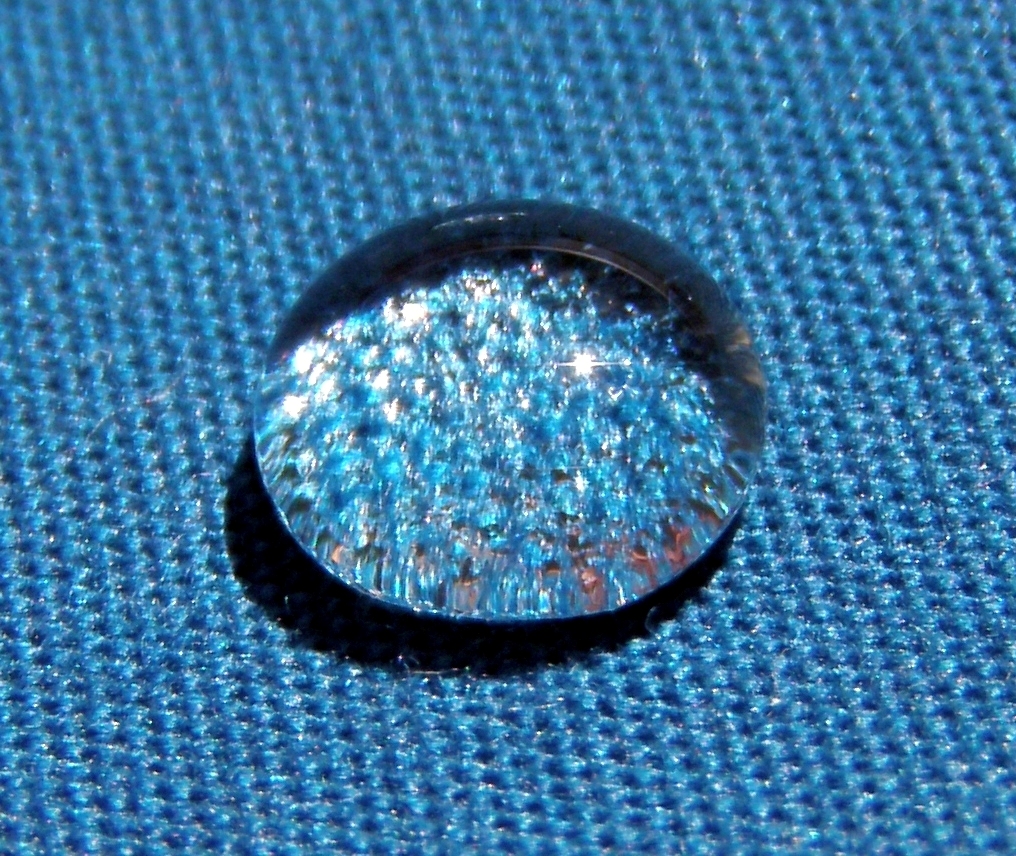
A contact angle less than 90° (low contact angle) usually indicates that wetting of the surface is very favorable, and the fluid will spread over a large area of the surface. Contact angles greater than 90° (high contact angle) generally mean that wetting of the surface is unfavorable, so the fluid will minimize contact with the surface and form a compact liquid droplet.
Wetting
Wetting is the ability of a liquid to maintain contact with a solid surface by displacing another substance or material - either a gas, or other liquid not miscible with the wetting liquid - due to the differential strength of intermolecular interactions with the surface.
The degree of wetting, or wettability, is dependent on the force balance between adhesive and cohesive forces, occurring when liquid and solid make contact in the presence of another physical phase. As such, wetting is of importance to bonding and adherence of substances in different phases.
The wetting power of a liquid, and surface forces contributing to its wettability, are also responsible for capillary action. Surfactants can be used to increase the wetting power of liquids (i.e., water) by reducing surface forces.
There are two types of wetting: non-reactive and reactive wetting.
Wetting has gained increased attention in nanotechnology and nanoscience research following the development of nanomaterials, such as graphene, carbon nanotubes, and boron nitride nanomesh.
Wetting of a solid material with a liquid substance occurs when adhesive forces allow the liquid (as a droplet) to spread across the surface of the solid at the solid-liquid interface. However, cohesive forces acting on the liquid - at the liquid-vapor interface - counteract the adhesive forces to prevent the droplet from making full contact with the surface.
The contact angle (θ), as seen in Figure 1, is the angle at which the liquid–vapor interface meets the solid–liquid interface, and is determined by the balance between adhesive and cohesive forces. As the tendency of a drop to spread out over a flat, solid surface increases, the contact angle decreases. Thus, the contact angle is used as an inverse measure of wettability.
A contact angle less than 90° (low contact angle) usually indicates that wetting of the surface is very favorable, and the fluid will spread over a large area of the surface. Contact angles greater than 90° (high contact angle) generally mean that wetting of the surface is unfavorable, so the fluid will minimize contact with the surface and form a compact liquid droplet.
Recent media
Recent media