Hubbry Logo
search
logo
2210567

Will Hutton

logo
Community Hub0 Subscribers
Read side by side
from Wikipedia

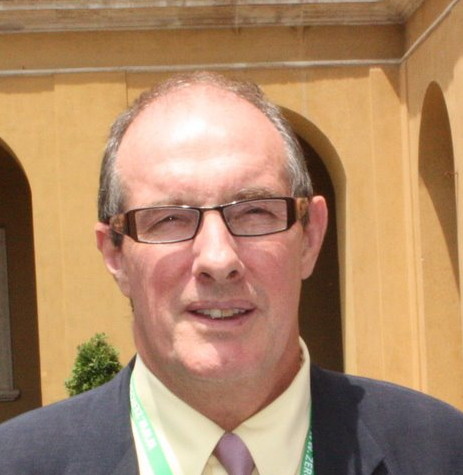
William Nicolas Hutton (born 21 May 1950) is an English journalist. As of 2022, he writes a regular column for The Observer, co-chairs the Purposeful Company, and is the president-designate of the Academy of Social Sciences. He is the chair of the advisory board of the UK National Youth Corps. He was principal of Hertford College, University of Oxford from 2011 to 2020, and co-founder of the Big Innovation Centre,[1] an initiative from the Work Foundation (formerly the Industrial Society), having been chief executive of the Work Foundation from 2000 to 2008. He was formerly editor-in-chief of The Observer.

Key Information

Early life

[edit]

Although born in Woolwich, where his father had worked at the Royal Ordnance factory (Royal Arsenal), Hutton began his education in Scotland. He went to Bishopton Primary School in Bishopton, Renfrewshire, then Paisley Grammar School when he was eight. His father moved to Bromley, then to Kent, and he attended Southborough Lane County Primary School in Petts Wood.[2]

Hutton studied at Chislehurst and Sidcup Grammar School in Sidcup, where he was introduced to A level economics by a teacher, Garth Pinkney. He only got average marks at O-level but enjoyed the sixth form more, studying geography, history, and economics. He also organised the school tennis team. After studying sociology and economics at the University of Bristol,[3] gaining a BSocSc (2.1), he started his career as an equity salesman for a brokerage firm, before leaving to study for an MBA at INSEAD at Fontainebleau near Paris.[citation needed]

Career

[edit]
Hutton (right) with Vince Cable in 2013

Hutton moved on to work in television and radio. He spent ten years with the BBC, including working as economics correspondent for Newsnight from 1983 to 1988, where he replaced Peter Hobday.[4] He spent four years as editor-in-chief at The Observer and director of the Guardian National Newspapers, before joining the Industrial Society, now known as The Work Foundation, as chief executive in 2000. In 2010, he was criticised for his handling of the Industrial Society by a number of publications, including The Sunday Times and Private Eye, for having used the company for campaigning purposes rather than focusing on it as a business enterprise. Under Hutton's management, The Work Foundation became insolvent and was wound up. It was then sold to Lancaster University.[5]

As well as a columnist, author, and chief executive, Hutton is a governor of the London School of Economics, a visiting professor at the University of Manchester Business School and the University of Bristol, a visiting fellow at Mansfield College, Oxford, a shareholder of the Scott Trust Limited, which owns the Guardian Media Group, rapporteur of the Kok Group, and a member of the Design Council's Millennium Commission.[6] In March 2011, he was appointed as Principal of Hertford College, Oxford,[7] taking up the post later in the year and retiring in 2020.[8] He sits on the European Advisory Board of Princeton University Press.[9]

Writing

[edit]

As an author, Hutton's best-known and most influential works are The State We're In (an economic and political look at Britain in the 1990s from a social democratic point of view) and The World We're In, in which he expands his focus to include the relationship between the United States and Europe, emphasising cultural and social differences between the two blocs and analysing the UK as sitting between the two.[10] In The World We're In, Hutton argues that many viewpoints in this book are neo-Keynesian and that it is critical of short-termism, viewing stakeholder capitalism as an alternative.[11]

Hutton's book The Writing on the Wall was released in the UK in January 2007. The book examines Western concerns and responses to the rise of China and the emerging global division of labour, and argues that the Chinese economy is running up against a set of increasingly unsustainable contradictions that could have a damaging universal fallout. On 18 February 2007, Hutton was a featured guest on BBC's Have Your Say programme, discussing the implications of China's growth. The analysis in his books is characterised by a support for the European Union and its potential, alongside a disdain for what he calls American conservatism —defined, among other factors, as a certain attitude to markets, property, and the social contract. In 1992, he won the What the Papers Say award for Political Journalist of the Year. In 2003, he was made an honorary Doctor of Laws (LLD) by the University of Bristol.

In 2010, he published Them and Us: Changing Britain – Why We Need a Fair Society.

His latest book, How Good We Can Be: Ending the Mercenary Society and Building a Great Country, was published in 2015.[citation needed]

Personal life

[edit]

Hutton married Jane Atkinson, the daughter of a neurosurgeon, in 1978, and lives in London. They have two daughters and a son. His wife, who died in 2016, was a director of a property development company called First Premise, based in Richmond upon Thames, which she founded in 1987. Hutton calls himself an agnostic.[12]

Bibliography

[edit]

Awards and honours

[edit]

References

[edit]
[edit]
Revisions and contributorsEdit on WikipediaRead on Wikipedia
from Grokipedia
William Nicolas Hutton (born 21 May 1950) is a British political economist, author, journalist, and academic administrator.[1] He has held prominent roles including editor-in-chief of The Observer (1996–1998), chief executive of The Work Foundation (2000–2008), and principal of Hertford College, Oxford (2011–2020).[2] Hutton's career began in investment banking in the City of London, followed by positions as economics editor for BBC Newsnight and The Guardian.[2] Hutton gained prominence with his 1995 book The State We're In, a critique of Britain's post-Thatcher economic and social structures that highlighted short-termism in corporate governance and financial markets, advocating instead for a "stakeholder" model inspired by continental European practices to foster long-term investment and social cohesion.[3] The book sold widely and influenced discussions on economic reform during the New Labour era, though its proposed shifts toward greater state involvement and institutional reform faced empirical challenges in implementation amid persistent market dynamics.[3] He has authored several subsequent works, including The World We're In (2002) and Them and Us (2010), continuing to analyze global and British economic imbalances.[2] Currently, Hutton writes a weekly column for The Observer, serves as president of the Academy of Social Sciences since 2021, and co-chairs The Purposeful Company, promoting corporate purposes beyond profit maximization.[2] His contributions earned him the Political Journalist of the Year award in 1993, reflecting recognition within journalistic circles for his economic commentary.[4]

Early Life and Education

Family Background and Childhood

William Hutton was born on 21 May 1950 in Woolwich, London, to William Thomas Hutton, a civil servant who worked at the Royal Ordnance factory there, and Dorothy Anne Hutton.[1] The family soon relocated to Scotland, where Hutton spent his early childhood and began his schooling amid the social transitions of post-war Britain, including the rollout of the National Health Service in 1948 and the end of food rationing in 1954. This environment, characterized by emerging welfare provisions and class-based community dynamics, shaped his initial exposure to notions of fairness, which he later attributed to Scottish influences.[5] Hutton has recounted childhood experiences of cultural adjustment in Scotland, such as playground tensions between English and Scottish children, reflecting the era's regional identities and post-austerity rebuilding efforts. His family's middle-class civil service background provided relative stability during a time of national economic recovery and labor market shifts toward state-supported employment.[1]

Academic Training and Influences

Hutton attended Chislehurst and Sidcup Grammar School in Sidcup, Kent, where he developed an early interest in economics through A-level studies guided by teacher Garth Pinkney, who introduced him to the subject.[6][7] He then pursued higher education at the University of Bristol, graduating in 1971 with a Bachelor of Arts degree in Economics and Sociology.[8][2] This program provided foundational training in economic theory and social structures, aligning with the interdisciplinary approaches common in British social sciences during the late 1960s, amid growing debates over state roles in managing industrial economies.[9] After seven years working in London's financial sector as an investment analyst and account executive, Hutton enrolled at INSEAD in Fontainebleau, France, completing an MBA in 1977.[9][7] The international business school's curriculum emphasized global management and comparative economic systems, exposing him to perspectives beyond British parochialism and fostering analytical frameworks attuned to multinational dynamics during the era's oil shocks and currency instabilities.[7]

Professional Career

Journalism and Broadcasting Roles

Hutton commenced his broadcasting career at the BBC, initially as a producer and reporter on radio programs before advancing to television roles. From 1983 to 1988, he held the position of economics correspondent for Newsnight, where he analyzed economic policies and political developments under Margaret Thatcher's administration, including the privatization of state-owned industries and the fiscal impacts of labor conflicts such as the 1984–1985 miners' strike, which involved over 140,000 participants and contributed to a peak national unemployment rate of 11.9% in 1984.[10][11] In 1990, he transitioned to The Guardian as economics editor, focusing his reporting on Britain's structural economic issues, such as the contraction of manufacturing output—which fell by approximately 25% between 1979 and 1990—and persistent productivity stagnation, with UK labor productivity growth averaging under 2% annually in the late 1980s amid debates over deindustrialization and trade imbalances.[12] Between 1988 and 1990, following his stint as editor-in-chief of the European Business Channel, Hutton pursued freelance journalism, which facilitated contributions across print and broadcast media on UK economic indicators, including regional disparities in unemployment that exceeded 10% in northern England by the early 1990s. He later extended his broadcasting to Channel 4, producing documentaries that examined empirical data on economic downturns, such as the post-2008 crisis analyses highlighting stagnant real wage growth and household debt accumulation averaging £1.3 trillion in bank bailouts' aftermath.[13][14][15]

Editorial and Leadership Positions in Media

Hutton served as editor-in-chief of The Observer from 1996 to 1998, succeeding David Astor amid expectations to restore the paper's prestige following internal disruptions under previous management.[16] During this tenure, The Observer, owned by Guardian Media Group since its acquisition from Lonrho in 1993, confronted intensifying competition from tabloids and the nascent internet's erosion of print dominance, with UK Sunday newspaper circulations beginning a gradual decline that accelerated into the 2000s. Hutton's leadership focused on editorial strategy to differentiate the title's serious journalism in a fragmenting market, though specific circulation metrics for 1996–1998 show stability around 450,000 copies weekly before broader industry pressures mounted.[13] Concurrently, Hutton held the position of director at Guardian National Newspapers, the division overseeing The Observer, which amplified his influence on operational decisions during the late 1990s consolidation of quality Sunday titles under GMG.[17] This role positioned him to integrate economic reporting with broader institutional priorities, contributing to the group's adaptation strategies as digital platforms emerged, though print revenues remained the primary concern until the early 2000s.[18] Following his editorship, Hutton's media leadership indirectly informed policy-oriented advocacy through executive roles bridging journalism and think tanks, such as his chief executive position at The Work Foundation from 2000 to 2008, where insights from his editorial experience shaped analyses of workplace economics without direct media management.[19] This transition underscored a pattern in British media where editorial figures leveraged platforms to influence left-of-centre discourse on post-1997 Labour-era reforms, emphasizing stakeholder capitalism amid globalization's strains.[20]

Academic and Institutional Leadership

Hutton served as Principal of Hertford College at the University of Oxford from 2011 until his retirement in August 2020.[21] [22] In this role, he led the college's academic and administrative affairs, including oversight of teaching and student welfare initiatives.[21] In January 2012, Hutton chaired the Independent Commission on Fees, established by the Sutton Trust and Ucas to evaluate the effects of the UK's tuition fee cap rising to £9,000 per year.[23] [24] The commission's August 2012 report documented a 15,000-applicant decline among English domiciled students for the 2012 entry cycle compared to prior years, attributing it partly to fee-related deterrence and warning of risks to higher education participation rates among lower-income groups.[25] [26] Subsequent analyses under the commission highlighted persistent enrollment gaps, with applications from disadvantaged areas lagging despite government access targets.[27] Since September 2015, Hutton has co-chaired The Purposeful Company, a non-profit steering group that promotes corporate governance models integrating stakeholder interests and long-term societal value.[28] [29] The organization, comprising business leaders and academics, has issued policy recommendations on reforming company law to prioritize purpose-driven management, drawing on empirical studies of firm performance under such frameworks.[28] Hutton was appointed President of the Academy of Social Sciences in April 2021 for a six-year term, succeeding Roger Goodman.[30] [31] In this capacity, he has emphasized the Academy's role in advancing evidence-based interdisciplinary research to inform public policy, including on post-pandemic recovery and economic challenges, without alignment to partisan ideologies.[22] [32]

Key Writings and Publications

Major Books and Their Themes

In The State We're In (1995), Hutton critiques Britain's economic model as characterized by short-termism driven by dispersed shareholder ownership and low investment rates, contrasting it with the more stable, long-term oriented systems in Germany and Japan where stakeholder involvement fosters higher productivity and firm longevity; he supports this with data showing Britain's investment-to-GDP ratio lagging behind Continental peers by approximately 5-7 percentage points in the early 1990s, attributing it to quarterly profit pressures that undermine industrial strategy.[33][34] The World We're In (2002) extends this analysis globally, positing a fundamental divide between the Anglo-American "short-termist" capitalism, marked by individualism and market deregulation leading to inequality and financial instability, and the Continental European "long-term" variant emphasizing social solidarity, coordinated wage bargaining, and public investment; Hutton argues that Britain's alignment with the U.S. model exacerbates domestic weaknesses, advocating instead for deeper European integration to balance American dominance, evidenced by Europe's superior unemployment resilience post-2000 dot-com bust compared to U.S. volatility.[35][36] In How Good We Can Be: Ending the Mercenary Society and Building a Great Country (2015), Hutton advocates for an "ethical capitalism" rooted in stakeholder governance, where firms prioritize long-term value creation over shareholder extraction, drawing on empirical evidence of higher returns on equity in stakeholder-oriented companies (e.g., German Mittelstand firms outperforming U.S. counterparts by 2-4% annually in sustained growth metrics); he proposes reforms like employee board representation and purpose-driven charters to address inequality, citing UK's Gini coefficient rise to 0.35 by 2014 as symptomatic of mercenary incentives eroding social cohesion.[37] Co-authored works such as Saving Britain (2018, with Andrew Adonis) reinforce these themes by applying stakeholder principles to post-financial crisis recovery, arguing for public investment in infrastructure yielding 1.5-2x multipliers in GDP growth based on European comparator data, while critiquing austerity's drag on potential output.[38] This Time No Mistakes: How to Remake Britain (2024) synthesizes prior arguments into a call for a new "public philosophy" of mutual obligation, using post-Brexit evidence like a 4-5% cumulative GDP shortfall relative to baseline forecasts by 2023 to underscore the costs of insularity; Hutton outlines institutional reforms for stakeholder capitalism, including devolved investment banks and ethical corporate codes, backed by cross-national firm performance studies showing stakeholder models delivering 10-15% higher resilience during shocks.[39][40]

Contributions to Journalism and Columns

Hutton has contributed weekly columns to The Observer since the late 1990s, offering analysis of contemporary economic and political developments through shorter-form journalism.[10] His pieces frequently draw on empirical indicators, such as trends in inequality measured by Gini coefficients, to frame discussions of policy impacts.[41] These columns have covered pivotal events, including the 2008 financial crisis, where he examined the contraction in credit markets and its disproportionate effects on Britain compared to the United States.[42] In a September 2008 column, he highlighted the erosion of trust in financial institutions amid the crisis, advocating for restored fairness in sector practices.[43] Following the 2016 Brexit referendum, Hutton's Observer columns addressed the policy's ongoing economic repercussions, such as constraints on financial services and trade.[44] In the context of the July 2024 UK general election, his writings critiqued the preceding Conservative government's economic record and urged strategic voter responses to prevent its resurgence.[45] Earlier columns from the 1990s conveyed optimism about potential reforms under Tony Blair's New Labour administration, contrasting with a more guarded tone in the 2020s regarding Keir Starmer's Labour Party's reform agenda.[46] In addition to print columns, Hutton hosts the "We Society" podcast, launched in June 2022 in association with the Academy of Social Sciences.[47] The series features interviews with experts on social science applications to societal challenges, including causal analyses of policy shortcomings like deregulation contributing to banking sector vulnerabilities.[48] New seasons continue to release episodes, with Season 9 debuting in October 2025, maintaining a focus on evidence-based ideas for public policy.[49]

Political and Economic Views

Advocacy for Stakeholder Models and Critiques of Short-Termism

Hutton has long advocated for a stakeholder model of corporate governance, positing that prioritizing shareholders' short-term returns undermines long-term investment and firm stability, whereas a stakeholder approach—encompassing employees, suppliers, and communities—fosters sustained productivity and innovation. In his 1995 book The State We're In, he contrasts the UK's shareholder primacy, which encourages quarterly reporting pressures and hostile takeovers, with the Rhine model prevalent in Germany, where co-determination and bank-centered financing promote enduring commitments; empirical data from the era showed German firms investing approximately twice as much in R&D as a percentage of sales compared to UK counterparts, correlating with higher productivity growth rates of around 2-3% annually in manufacturing sectors versus the UK's stagnation below 1%.[50][51][52] He attributes much of the UK's underinvestment to Thatcher-era deregulations and privatizations in the 1980s, which shifted utilities and industries toward profit maximization over capital expenditure, initiating causal sequences of asset stripping and boom-bust volatility; for instance, post-privatization entities like British Telecom exhibited initial efficiency gains but subsequent chronic underfunding, contributing to the 1990s credit-fueled expansion followed by the 2008 financial implosion, as evidenced by fixed investment rates lagging the G7 average by 1-2% of GDP annually.[53][54][37] To counter this short-termism, Hutton emphasizes "patient capital" through mechanisms like reformed pension funds and sovereign wealth vehicles, arguing they enable tolerance for extended horizons in high-risk sectors; he highlights disparities where UK R&D intensity hovered at 1.7% of GDP in the 2010s, far below Germany's 3%, linking this gap to the absence of stable, non-exit-driven funding that Rhine-style institutions provide, thereby perpetuating cycles of low innovation and economic fragility.[55][56][51]

Positions on Europe, Globalization, and Public Policy

Hutton has consistently advocated for the United Kingdom's continued membership in the European Union, emphasizing the economic advantages of the single market in the lead-up to the 2016 Brexit referendum. He argued that access to the EU single market, which prior to Brexit accounted for approximately 44% of UK goods exports and facilitated seamless trade flows, was essential for sustaining foreign direct investment (FDI) and economic stability.[57] Following the referendum, Hutton critiqued the decision as exacerbating the UK's structural weaknesses, noting that post-Brexit UK exports to the single market had declined to below 50% of total exports by 2023, and called for reforms within the EU rather than exit, positing that rejoining the single market and customs union would restore lost trade efficiencies.[58][59] Regarding globalization, Hutton views it as an inexorable process that has produced both beneficiaries and casualties, particularly highlighting the UK's manufacturing sector's contraction from 25% of GDP in 1979 to around 10% by the 2000s, attributed in part to competition from low-cost producers like China. He advocates for a managed approach to trade, arguing that while mass production manufacturing is in long-term decline akin to agriculture and mining, globalization enables gains in high-value sectors such as software, media, and education services.[60][61] In this context, he points to the UK's position as Europe's largest investor in China, with nearly 6,000 projects worth over $15 billion by 2008, as evidence of potential opportunities, though he cautions against unmitigated exposure without supportive domestic policies to address displaced workers and industrial hollowing.[62] On public policy, Hutton has supported reforms to inheritance tax, particularly in 2024 debates over agricultural property relief, contending that curtailing 100% exemptions for farms valued above £1 million would prevent land hoarding and inject vitality into rural economies by enabling transfers to more productive uses.[63] He ties such fiscal measures to broader investment strategies, asserting that public spending multipliers—estimated at up to 1.5 for infrastructure—justify increased green investments to drive growth, as higher investment levels are a prerequisite for escaping stagnation without relying solely on private sector impulses.[64] This stance aligns with his emphasis on state-led initiatives to counter globalization's uneven effects, including targeted green fiscal policies to bolster long-term productivity.[64]

Empirical Assessments of Advocated Reforms

Hutton's advocacy for stakeholder-oriented corporate governance, emphasizing long-term incentives over short-term shareholder returns, dates to works like The State We're In (1995), where he critiqued UK firms' focus on quarterly pressures leading to underinvestment. Despite subsequent reforms such as the 2006 Companies Act's inclusion of stakeholder considerations in directors' duties, empirical adoption remains limited, with shareholder primacy dominant in practice. CEO-to-median employee pay ratios in FTSE 350 companies reached medians of 53:1 by recent reports, up from ratios around 20:1 in the early 1990s, contradicting calls for bounded multiples akin to his 2011 Fair Pay Review's 20:1 public sector proposal.[65] [66] Long-term firm performance under this model shows FTSE 100 total returns averaging 7.2% annually from 1995–2023, but studies indicate no robust outperformance versus stakeholder alternatives, with UK productivity stagnation (0.4% annual growth 2008–2019) potentially linked to short-termism rather than refuting it outright.[67] On public investment, Hutton consistently argued against post-2008 austerity, positing that deficit reduction via spending cuts would suppress demand and growth, as in his critiques of the 2010 coalition budget. UK real GDP growth averaged 1.8% yearly from 2010–2019, lagging the 2.1% G7 average and accompanied by near-zero productivity growth (0.3% per annum), with public sector net debt rising from 79% of GDP in 2010 to 85% by 2019 despite £100 billion+ in welfare and capital cuts. Comparative analyses suggest higher fiscal multipliers than assumed (1.7 vs. Treasury's 0.5–1.0), implying austerity prolonged the recovery versus investment-led paths seen in the US (2.2% average growth). Debt sustainability improved marginally via lower borrowing costs, but output gaps persisted, partially validating Hutton's causal warnings of growth trade-offs over neoliberal restraint. Hutton's pro-EU stance, including Remain campaign contributions, forecasted severe trade disruptions from Brexit, estimating 5–10% GDP losses from barriers. Post-2021 implementation, UK-EU goods exports declined 15% below counterfactual trends by 2023, per Office for Budget Responsibility models, with total trade openness (exports+imports as % GDP) falling to 60% from 65% pre-referendum. Imports from EU dropped 14% in real terms 2019–2023, amplifying supply shocks, though non-EU trade rose 20% (partly COVID rebound), yielding net GDP drag of 2–4% versus continuity scenarios. These shifts align with warned frictions but fall short of apocalyptic predictions, as services exports held firmer and regulatory divergence enabled some gains, highlighting overestimation risks in Remain models amid global factors.

Reception, Influence, and Criticisms

Positive Impacts and Recognitions

Hutton's 1995 book The State We're In shaped policy debates within the Labour Party from the mid-1990s onward, offering a critique of short-termist British capitalism and proposing stakeholder models that informed progressive discussions on economic reform and public governance under the Blair and Brown governments.[68][69] The work's emphasis on addressing structural weaknesses in finance and industry resonated in Labour's efforts to balance market efficiency with social equity, as evidenced by its role in prompting reevaluations of inherited Thatcher-era policies.[70] In 2004, the European Commission invited Hutton to join its High-Level Group for the mid-term review of the Lisbon Strategy, where he served as rapporteur, reflecting acknowledgment of his contributions to analyses of European competitiveness and innovation policy.[4][10] This role involved synthesizing recommendations on enhancing EU growth models, drawing on his prior writings to advocate for coordinated public investment and skills development.[71] Through founding leadership of the Big Innovation Centre in 2011, Hutton fostered discourse on human resources and systemic innovation, with outputs informing UK reports on labor market deficiencies, including empirical assessments of skills mismatches in high-growth sectors.[72]

Critiques of Economic Prescriptions and Predictions

Critics have challenged Will Hutton's predictions regarding the long-term effects of Margaret Thatcher's economic reforms, particularly privatization, which Hutton argued would lead to sustained stagnation and underinvestment in productive capacity. Empirical analyses, however, indicate productivity improvements in key privatized sectors following the reforms of the 1980s and 1990s. For instance, studies of England's privatized water and sewerage companies documented significant total factor productivity gains, with average annual increases of 2-3% post-privatization compared to negligible growth under public ownership, alongside price reductions relative to costs. The Institute of Economic Affairs has highlighted these outcomes as evidence of efficiency enhancements from market discipline, contradicting claims of inherent short-termism eroding Britain's industrial base.[73][74] Hutton's advocacy for a stakeholder model of capitalism, emphasizing long-term investment over shareholder primacy, has faced scrutiny for lacking scalability in diverse firm environments. Comparative data on UK firms, which incorporate more stakeholder-oriented governance elements than the US shareholder-focused system, reveal higher compliance and coordination costs without proportional performance uplifts. UK-listed companies exhibited lower return on equity (averaging 8-10% in recent decades) and innovation outputs relative to US counterparts (12-15% ROE), attributed to diffused decision-making that dilutes incentives for risk-taking and capital allocation efficiency. Right-leaning analyses argue this reflects stakeholder prescriptions' vulnerability to agency conflicts, where balancing multiple interests hampers agility in global markets, as evidenced by the UK's lag in high-growth tech sectors dominated by US firms.[75][76] Post-2008 financial crisis assessments further question Hutton's prescriptions for enhanced regulatory frameworks and stakeholder protections, which aligned more closely with continental European approaches. While Hutton critiqued Anglo-Saxon deregulation for exacerbating vulnerabilities, recovery trajectories showed the US achieving faster GDP rebound (averaging 2.5% annual growth 2010-2019) and unemployment reduction (from 10% to 3.5%) compared to the Eurozone's sluggish 1.2% growth and persistent 7-8% unemployment, correlating with lighter post-crisis regulatory burdens in the US. UK's hybrid model, retaining some deregulation, outperformed much of Europe in employment recovery, suggesting heavier stakeholder-mandated regulations may prolong adjustments by constraining credit and investment flows. These patterns, per IMF and Federal Reserve analyses, underscore causal links between flexible market responses and resilience, challenging views that stricter oversight would have yielded superior outcomes.[77][78]

Controversies Involving Personal and Familial Business Interests

In April 2004, The Sunday Telegraph published investigations revealing that Will Hutton's family maintained a substantial property portfolio through companies linked to his father and his wife's firm, First Premise Ltd., which profited from the UK's housing market boom despite Hutton's public criticisms of landlord culture, prohibitive rents, and property speculation as exacerbating inequality.[79] [80] The disclosures highlighted holdings comprising dozens of residential properties, with the family benefiting as beneficiaries or through inheritance arrangements, capitalizing on rising asset values and rental income amid national average gross yields of approximately 7-8% for buy-to-let investments in 2003-2004, driven by low interest rates and demand pressures.[81] Critics, including the Telegraph reports, argued this contradicted Hutton's writings, such as in The State We're In (1995), where he decried short-term financialization and speculative gains distorting housing access.[79] Hutton did not issue a direct public rebuttal to the Telegraph exposures in contemporaneous columns, though subsequent media commentary framed the episode as an embarrassment highlighting potential inconsistencies between his advocacy for stakeholder capitalism and familial reliance on market-driven property profits.[82] Empirical data from the period underscored the portfolio's alignment with broader trends: UK residential property prices rose 18.5% in 2003 alone, per Nationwide Building Society indices, enabling leveraged returns that amplified wealth concentration among existing owners, a dynamic Hutton had critiqued as undermining social cohesion.[80] In 2024, amid Labour government proposals to cap inheritance tax reliefs for agricultural and business property at £1 million per estate (effective April 2026, imposing 20% tax on excess value), Hutton defended the reforms in The Guardian, arguing they would counter land hoarding by wealthy estates and revitalize rural economies by enabling transfers to younger entrants, despite average farm sizes exceeding the threshold and facing bills up to £400,000 on £3 million valuations.[63] This stance drew accusations of overlooking practical impacts on family-held assets, including potential applicability to estates with significant property components like Hutton's own familial holdings, where thresholds could trigger liabilities on values surpassing £1 million after prior gifting rules.[83] Critics in outlets like The Critic questioned the portrayal of affected owners as "rich hoarders," noting empirical constraints such as subsidy-dependent farm incomes averaging £27,000 net annually (Defra 2023 data), and raised hypocrisy given Hutton's prior property-related scrutiny, though he maintained the changes targeted inefficient perpetuation of large holdings rather than viable operations.[83] No verified details emerged linking Hutton's immediate family to qualifying agricultural land, but the debate amplified scrutiny of his consistency on wealth transfer policies intersecting with personal inheritance contexts.[63]

Awards and Honors

Journalism and Writing Accolades

Hutton was awarded Political Journalist of the Year in 1993 by What the Papers Say for his coverage of the United Kingdom's withdrawal from the European Exchange Rate Mechanism (ERM) in September 1992, which precipitated a sharp devaluation of the pound sterling and the political fallout including Chancellor Norman Lamont's eventual resignation.[84][4][10] This recognition highlighted his timely economic analysis amid the Black Wednesday crisis, where the government's defense of the ERM parity failed despite billions in reserves expended.[85] In 2013, Hutton received the Lifetime Achievement Award from HR Magazine's HR Most Influential list, cited for his enduring contributions through writings on workplace governance, employee stakeholding, and critiques of short-termist corporate practices that have shaped debates in economic journalism and policy discourse.[86] This honor, shared with management scholar Lynda Gratton, underscored the impact of his columns and books in advocating structural reforms to British capitalism, distinct from his earlier crisis reporting.[86] His weekly column in The Observer, maintained since 1996 after a prior stint at The Guardian, has sustained his profile in economic commentary, though formal media prizes tied specifically to this output remain limited in public records beyond the foundational 1993 accolade.[18][2]

Institutional and Thought Leadership Awards

Hutton received the honorary degree of Doctor of Letters from York St John University on November 12, 2014, during his tenure as Principal of Hertford College, in recognition of his services to economics and public policy.[87] In February 2021, shortly after concluding his principalship, Hutton was elected a Fellow of the Academy of Social Sciences, comprising distinguished figures from academia, public policy, and related fields; he assumed the presidency in June 2021 for a six-year term, a position underscoring his influence on advancing social sciences in policy debates.[31][30] Hutton's thought leadership in economic policy was affirmed in 2004 when he served as rapporteur for the European Commission's High Level Group, chaired by former Dutch Prime Minister Wim Kok, tasked with the mid-term review of the Lisbon Strategy on growth and jobs, contributing analysis on EU competitiveness and transatlantic economic challenges.[2]

Personal Life and Recent Activities

Family and Personal Relationships

Will Hutton married Jane Atkinson, daughter of a neurosurgeon and later a housing consultant, on October 10, 1978.[1][88] The couple resided in a 13th-century country mansion in Oxfordshire.[89] Hutton and Atkinson had three children: daughters Sarah and Alice, and son Andrew.[9][11] Atkinson died in 2016 after a career focused on social housing initiatives, including early work at Notting Hill Housing Trust.[88]

Post-2020 Engagements and Public Commentary

Following his retirement as principal of Hertford College, Oxford, in 2020, Will Hutton assumed the presidency of the Academy of Social Sciences in April 2021, a role in which he has chaired events such as the October 2025 launch of a report on the contemporary relevance of social sciences.[32][90] In this capacity, he has co-chaired the steering group for The Purposeful Company's Growth Trilogy, publishing reports in January and September 2025 that analyze UK economic challenges through data on firm ownership, investment patterns, and productivity metrics.[91][92] Hutton launched and hosts The We Society podcast under the Academy's auspices, with Season 9 debuting on October 1, 2025, featuring episodes on social science applications to issues like public policy and societal cohesion, drawing on empirical studies from fellows.[49][93] He has continued weekly columns in The Observer, critiquing the 2024 Labour government's early performance, such as a July 14, 2024, piece on wealth entitlement delusions amid policy shifts and an October 6, 2024, assessment after 100 days urging clearer philosophical underpinnings over tactical errors.[94][95] In April 2024, Hutton promoted his book This Time No Mistakes: How to Remake Britain—published that month by Bloomsbury—at an Intelligence Squared debate titled "How to Remake Britain," joined by Keir Starmer, Alastair Campbell, and Sonia Sodha, where panelists discussed Labour's potential post-election strategies based on historical economic data and institutional reforms.[40][96] A November 17, 2024, column addressed Labour's inheritance tax proposals for agricultural land, citing Defra data showing 30% of farmland held by owners with over 5,000 acres—far exceeding viable farm sizes—and arguing that tax reliefs since 1984 have enabled hoarding, reducing turnover to under 1% annually and stifling rural investment.[63] Hutton has emphasized empirical evidence on growth drivers in recent commentary, asserting in a November 3, 2024, column that sustained investment—averaging 18% of GDP in high-growth economies like Germany versus the UK's 16%—outweighs deregulation, as OECD data links public and private capital formation to productivity gains exceeding those from regulatory easing alone.[64] He contrasted this with critiques of budget forecasts, noting IMF models project 1-2% higher long-term GDP from investment-led policies over supply-side reforms.[64]

References

User Avatar
No comments yet.