
Recent from talks
Willard Van Orman Quine
Knowledge base stats:
Talk channels stats:
Members stats:
Willard Van Orman Quine
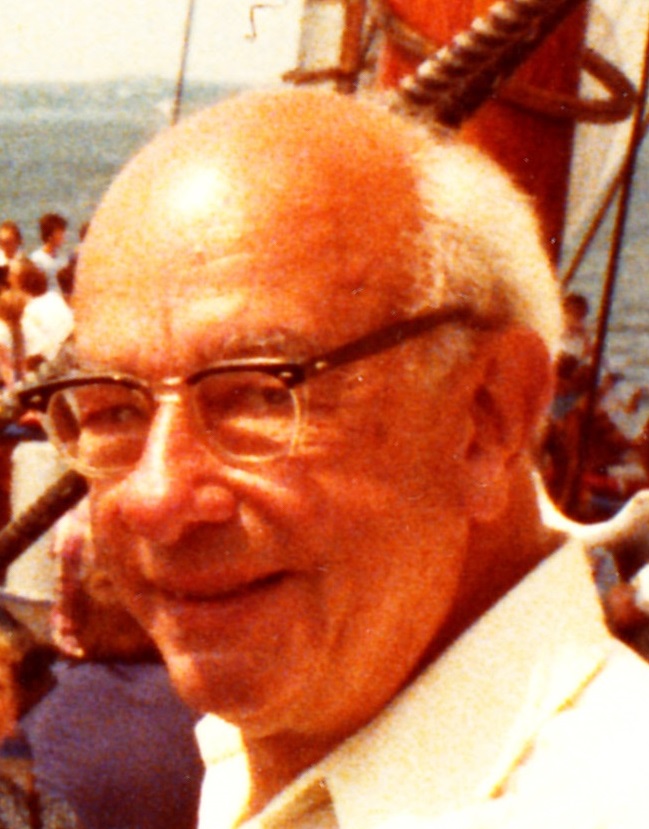
Willard Van Orman Quine (/kwaɪn/ KWYNE; known to his friends as "Van"; June 25, 1908 – December 25, 2000) was an American philosopher and logician in the analytic tradition, recognized as "one of the most influential philosophers of the twentieth century". He was the Edgar Pierce Chair of Philosophy at Harvard University from 1956 to 1978.
Quine was a teacher of logic and set theory. He was famous for his position that first-order logic is the only kind worthy of the name, and developed his own system of mathematics and set theory, known as New Foundations. In the philosophy of mathematics, he and his Harvard colleague Hilary Putnam developed the Quine–Putnam indispensability argument, an argument for the reality of mathematical entities. He was the main proponent of the view that philosophy is not conceptual analysis, but continuous with science; it is the abstract branch of the empirical sciences. This led to his famous quip that "philosophy of science is philosophy enough". He led a "systematic attempt to understand science from within the resources of science itself" and developed an influential naturalized epistemology that tried to provide "an improved scientific explanation of how we have developed elaborate scientific theories on the basis of meager sensory input". He also advocated holism in science, known as the Duhem–Quine thesis.
His major writings include the papers "On What There Is" (1948), which elucidated Bertrand Russell's theory of descriptions and contains Quine's famous dictum of ontological commitment, "To be is to be the value of a variable", and "Two Dogmas of Empiricism" (1951), which attacked the traditional analytic-synthetic distinction and reductionism, undermining the then-popular logical positivism, advocating instead a form of semantic holism and ontological relativity. They also include the books The Web of Belief (1970), which advocates a kind of coherentism, and Word and Object (1960), which further developed these positions and introduced Quine's famous indeterminacy of translation thesis, advocating a behaviorist theory of meaning.
Quine's parents were Robert Cloyd Quine and Harriet Ellis Van Orman. Quine grew up in Akron, Ohio, where he lived with his parents and older brother Robert Cloyd. His father was a manufacturing entrepreneur (founder of the Akron Equipment Company, which produced tire molds) and his mother was a schoolteacher and housewife. Quine became an atheist around the age of 9 and remained one for the rest of his life.
Quine received his B.A. summa cum laude in mathematics from Oberlin College in 1930, and his Ph.D. in philosophy from Harvard University in 1932. His thesis supervisor was Alfred North Whitehead. He was then appointed a Harvard Junior Fellow, which excused him from having to teach for four years. During the academic year 1932–33, he travelled in Europe thanks to a Sheldon Fellowship, meeting Polish logicians (including Jan Łukasiewicz, Stanislaw Lesniewski and Alfred Tarski) and members of the Vienna Circle (including Rudolf Carnap), as well as the logical positivist A. J. Ayer. It was in Prague that Quine developed a passion for philosophy, thanks to Carnap, whom he defined as his "true and only maître à penser".
Quine arranged for Tarski to be invited to the September 1939 Unity of Science Congress in Cambridge, for which the Jewish Tarski sailed on the last ship to leave Danzig before Nazi Germany invaded Poland and triggered World War II. Tarski survived the war and worked another 44 years in the US. During the war, Quine lectured on logic in Brazil, in Portuguese, and served in the United States Navy in a military intelligence role, deciphering messages from German submarines, and reaching the rank of lieutenant commander. Quine could lecture in French, German, Italian, Portuguese, and Spanish as well as his native English.
He had four children by two marriages. Guitarist Robert Quine was his nephew.
Quine was politically conservative, but the bulk of his writing was in technical areas of philosophy removed from direct political issues. He did, however, write in defense of several conservative positions: for example, he wrote in defense of moral censorship; while, in his autobiography, he made some criticisms of American postwar academics.
Hub AI
Willard Van Orman Quine AI simulator
(@Willard Van Orman Quine_simulator)
Willard Van Orman Quine
Willard Van Orman Quine (/kwaɪn/ KWYNE; known to his friends as "Van"; June 25, 1908 – December 25, 2000) was an American philosopher and logician in the analytic tradition, recognized as "one of the most influential philosophers of the twentieth century". He was the Edgar Pierce Chair of Philosophy at Harvard University from 1956 to 1978.
Quine was a teacher of logic and set theory. He was famous for his position that first-order logic is the only kind worthy of the name, and developed his own system of mathematics and set theory, known as New Foundations. In the philosophy of mathematics, he and his Harvard colleague Hilary Putnam developed the Quine–Putnam indispensability argument, an argument for the reality of mathematical entities. He was the main proponent of the view that philosophy is not conceptual analysis, but continuous with science; it is the abstract branch of the empirical sciences. This led to his famous quip that "philosophy of science is philosophy enough". He led a "systematic attempt to understand science from within the resources of science itself" and developed an influential naturalized epistemology that tried to provide "an improved scientific explanation of how we have developed elaborate scientific theories on the basis of meager sensory input". He also advocated holism in science, known as the Duhem–Quine thesis.
His major writings include the papers "On What There Is" (1948), which elucidated Bertrand Russell's theory of descriptions and contains Quine's famous dictum of ontological commitment, "To be is to be the value of a variable", and "Two Dogmas of Empiricism" (1951), which attacked the traditional analytic-synthetic distinction and reductionism, undermining the then-popular logical positivism, advocating instead a form of semantic holism and ontological relativity. They also include the books The Web of Belief (1970), which advocates a kind of coherentism, and Word and Object (1960), which further developed these positions and introduced Quine's famous indeterminacy of translation thesis, advocating a behaviorist theory of meaning.
Quine's parents were Robert Cloyd Quine and Harriet Ellis Van Orman. Quine grew up in Akron, Ohio, where he lived with his parents and older brother Robert Cloyd. His father was a manufacturing entrepreneur (founder of the Akron Equipment Company, which produced tire molds) and his mother was a schoolteacher and housewife. Quine became an atheist around the age of 9 and remained one for the rest of his life.
Quine received his B.A. summa cum laude in mathematics from Oberlin College in 1930, and his Ph.D. in philosophy from Harvard University in 1932. His thesis supervisor was Alfred North Whitehead. He was then appointed a Harvard Junior Fellow, which excused him from having to teach for four years. During the academic year 1932–33, he travelled in Europe thanks to a Sheldon Fellowship, meeting Polish logicians (including Jan Łukasiewicz, Stanislaw Lesniewski and Alfred Tarski) and members of the Vienna Circle (including Rudolf Carnap), as well as the logical positivist A. J. Ayer. It was in Prague that Quine developed a passion for philosophy, thanks to Carnap, whom he defined as his "true and only maître à penser".
Quine arranged for Tarski to be invited to the September 1939 Unity of Science Congress in Cambridge, for which the Jewish Tarski sailed on the last ship to leave Danzig before Nazi Germany invaded Poland and triggered World War II. Tarski survived the war and worked another 44 years in the US. During the war, Quine lectured on logic in Brazil, in Portuguese, and served in the United States Navy in a military intelligence role, deciphering messages from German submarines, and reaching the rank of lieutenant commander. Quine could lecture in French, German, Italian, Portuguese, and Spanish as well as his native English.
He had four children by two marriages. Guitarist Robert Quine was his nephew.
Quine was politically conservative, but the bulk of his writing was in technical areas of philosophy removed from direct political issues. He did, however, write in defense of several conservative positions: for example, he wrote in defense of moral censorship; while, in his autobiography, he made some criticisms of American postwar academics.
Recent media