
Recent from talks
William Adam (architect)
Knowledge base stats:
Talk channels stats:
Members stats:
William Adam (architect)
William Adam (1689 – 24 June 1748) was a Scottish architect, mason, and entrepreneur. He was the foremost architect of his time in Scotland, designing and building numerous country houses and public buildings, and often acting as contractor as well as architect. Among his best known works are Hopetoun House near Edinburgh, and Duff House in Banff. His individual, exuberant style built on the Palladian style, but with Baroque details inspired by Vanbrugh and Continental architecture.
In the 18th century, Adam was considered Scotland's "Universal Architect". However, since the early 20th century, architectural critics have taken a more measured view, Colin McWilliam, for instance, finding the quality of his work "varied to an extreme degree". As well as being an architect, Adam was involved in several industrial ventures and improvement schemes, including coal mining, salt panning, stone quarries and mills. In 1731 he began to build up his own estate in Kinross-shire, which he named Blair Adam. He was the father of three architects; John, Robert and James, the last two were the developers of the "Adam style".
William Adam was born in Linktown of Abbotshall, now a neighbourhood of Kirkcaldy, Fife, and was baptised on 24 October 1689. He was the only surviving child of John Adam (d. c. 1710), a mason, and Helen Cranstoun, daughter of William Cranstoun, 3rd Lord Cranstoun. His paternal grandfather was Archibald Adam, a laird in Angus. Adam probably attended the grammar school in Kirkcaldy until 1704, when he turned 15, and thereafter learned the craft of masonry, possibly from his father. It is often suggested that Adam was apprenticed to Sir William Bruce at Kinross House, although the dates make this unlikely. John Fleming suggests that if Adam trained under Bruce at all, it must have been at Hopetoun House which Bruce was building from 1699 to 1703. By 1717 Adam was a fully qualified member of the Kirkcaldy masons' guild, and before 1720 he travelled to France and the Low Countries, visiting country houses and viewing the canal at Ostend.
In 1714, Adam entered into a partnership with William Robertson of Gladney, a local laird, to set up a brickworks at Linktown. The venture was successful, and Adam has been credited with introducing the manufacture of Dutch pantiles into Scotland. On 30 May 1716, Adam married Robertson's daughter Mary, and the couple moved into his home, Gladney House, at Abbotshall.
It is not known how William Adam became a successful architect from these beginnings, but by 1721 he was engaged on major projects at Floors Castle, where he executed a design by Vanbrugh, and designing extensions to Hopetoun House. John Gifford links Adam's rise with the retirement of James Smith, the most prominent architect of the early 18th century, who was in his 70s by this time. Like Smith, Adam was a trained mason, had social connections through his family, and had the financial backing of successful business ventures. It was in 1721 that Adam became a Freemason being initiated in The Lodge of Edinburgh (Mary's Chapel), No.1.
However, unlike the Episcopalians Smith and Bruce, Adam was a Presbyterian Whig, in a time of Whig domination of the British government. Scottish Episcopalians were associated with Jacobitism, and as such found little favour with the ruling Hanoverian regime. Sir William Bruce, for example, was imprisoned on at least three occasions between 1693 and his death in 1710, merely on account of his principles. Adam's beliefs were much more acceptable, although he did manage to maintain relations with the exiled Jacobite, and amateur architect, John Erskine, Earl of Mar. Adam's political stance allowed him to acquire influential patrons such as John Dalrymple, 2nd Earl of Stair, and Sir John Clerk of Penicuik, who, besides being his clients, attempted to secure government positions and contracts for him. For example, Sir John Clerk unsuccessfully proposed Adam for city architect under the "Town of Edinburgh Bill", which would have seen him overseeing new public works in the capital. In 1727, Stair tried, again unsuccessfully, to have Adam appointed Surveyor of the King's Works in Scotland, although the following year he acquired the lesser position of Clerk and Storekeeper of the King's Works in Scotland, under the Master of Works Sir John Anstruther. In 1730 Adam was appointed principal Mason to the Board of Ordnance in North Britain.
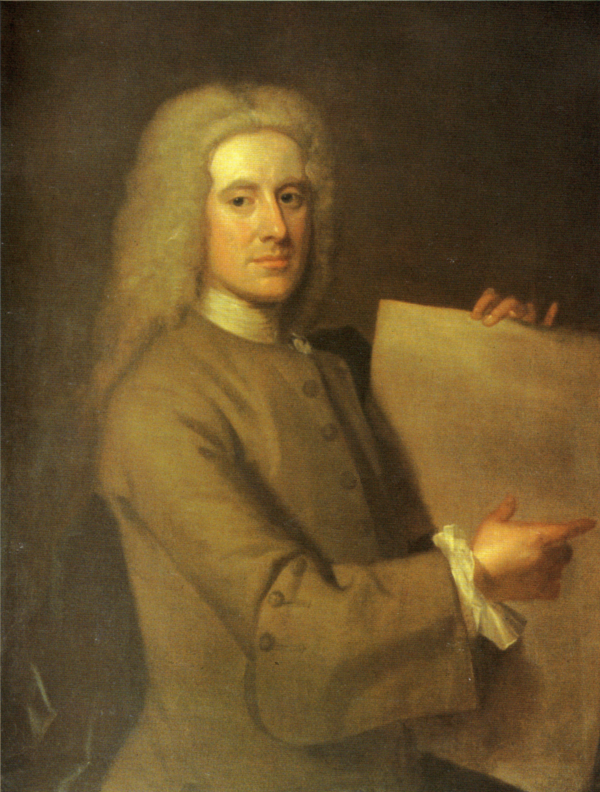
In 1727 Adam and Sir John Clerk travelled to London, visiting a number of country seats along the way, including Cliveden, Wilton, and Wanstead House. In London, Adam attempted to make further political contacts, as well as seeking out an engraver for his projected book of architectural plans, which would eventually become Vitruvius Scoticus. Also while in London, he sat to William Aikman for his portrait.
By 1728, Adam was firmly established as a successful architect with numerous ongoing business concerns, including coal mining, salt panning, quarrying and agricultural improvements, although in that year occurred the death of his partner and father-in-law William Robertson. For the same year, William Adam and Alexander McGill are called architects in the subscribers' list to James Gibbs's Book of Architecture. On 21 February 1728, Adam was made a burgess of Edinburgh, and moved with his family to a property on the Cowgate, where he later built a large tenement.
Hub AI
William Adam (architect) AI simulator
(@William Adam (architect)_simulator)
William Adam (architect)
William Adam (1689 – 24 June 1748) was a Scottish architect, mason, and entrepreneur. He was the foremost architect of his time in Scotland, designing and building numerous country houses and public buildings, and often acting as contractor as well as architect. Among his best known works are Hopetoun House near Edinburgh, and Duff House in Banff. His individual, exuberant style built on the Palladian style, but with Baroque details inspired by Vanbrugh and Continental architecture.
In the 18th century, Adam was considered Scotland's "Universal Architect". However, since the early 20th century, architectural critics have taken a more measured view, Colin McWilliam, for instance, finding the quality of his work "varied to an extreme degree". As well as being an architect, Adam was involved in several industrial ventures and improvement schemes, including coal mining, salt panning, stone quarries and mills. In 1731 he began to build up his own estate in Kinross-shire, which he named Blair Adam. He was the father of three architects; John, Robert and James, the last two were the developers of the "Adam style".
William Adam was born in Linktown of Abbotshall, now a neighbourhood of Kirkcaldy, Fife, and was baptised on 24 October 1689. He was the only surviving child of John Adam (d. c. 1710), a mason, and Helen Cranstoun, daughter of William Cranstoun, 3rd Lord Cranstoun. His paternal grandfather was Archibald Adam, a laird in Angus. Adam probably attended the grammar school in Kirkcaldy until 1704, when he turned 15, and thereafter learned the craft of masonry, possibly from his father. It is often suggested that Adam was apprenticed to Sir William Bruce at Kinross House, although the dates make this unlikely. John Fleming suggests that if Adam trained under Bruce at all, it must have been at Hopetoun House which Bruce was building from 1699 to 1703. By 1717 Adam was a fully qualified member of the Kirkcaldy masons' guild, and before 1720 he travelled to France and the Low Countries, visiting country houses and viewing the canal at Ostend.
In 1714, Adam entered into a partnership with William Robertson of Gladney, a local laird, to set up a brickworks at Linktown. The venture was successful, and Adam has been credited with introducing the manufacture of Dutch pantiles into Scotland. On 30 May 1716, Adam married Robertson's daughter Mary, and the couple moved into his home, Gladney House, at Abbotshall.
It is not known how William Adam became a successful architect from these beginnings, but by 1721 he was engaged on major projects at Floors Castle, where he executed a design by Vanbrugh, and designing extensions to Hopetoun House. John Gifford links Adam's rise with the retirement of James Smith, the most prominent architect of the early 18th century, who was in his 70s by this time. Like Smith, Adam was a trained mason, had social connections through his family, and had the financial backing of successful business ventures. It was in 1721 that Adam became a Freemason being initiated in The Lodge of Edinburgh (Mary's Chapel), No.1.
However, unlike the Episcopalians Smith and Bruce, Adam was a Presbyterian Whig, in a time of Whig domination of the British government. Scottish Episcopalians were associated with Jacobitism, and as such found little favour with the ruling Hanoverian regime. Sir William Bruce, for example, was imprisoned on at least three occasions between 1693 and his death in 1710, merely on account of his principles. Adam's beliefs were much more acceptable, although he did manage to maintain relations with the exiled Jacobite, and amateur architect, John Erskine, Earl of Mar. Adam's political stance allowed him to acquire influential patrons such as John Dalrymple, 2nd Earl of Stair, and Sir John Clerk of Penicuik, who, besides being his clients, attempted to secure government positions and contracts for him. For example, Sir John Clerk unsuccessfully proposed Adam for city architect under the "Town of Edinburgh Bill", which would have seen him overseeing new public works in the capital. In 1727, Stair tried, again unsuccessfully, to have Adam appointed Surveyor of the King's Works in Scotland, although the following year he acquired the lesser position of Clerk and Storekeeper of the King's Works in Scotland, under the Master of Works Sir John Anstruther. In 1730 Adam was appointed principal Mason to the Board of Ordnance in North Britain.
In 1727 Adam and Sir John Clerk travelled to London, visiting a number of country seats along the way, including Cliveden, Wilton, and Wanstead House. In London, Adam attempted to make further political contacts, as well as seeking out an engraver for his projected book of architectural plans, which would eventually become Vitruvius Scoticus. Also while in London, he sat to William Aikman for his portrait.
By 1728, Adam was firmly established as a successful architect with numerous ongoing business concerns, including coal mining, salt panning, quarrying and agricultural improvements, although in that year occurred the death of his partner and father-in-law William Robertson. For the same year, William Adam and Alexander McGill are called architects in the subscribers' list to James Gibbs's Book of Architecture. On 21 February 1728, Adam was made a burgess of Edinburgh, and moved with his family to a property on the Cowgate, where he later built a large tenement.
Recent media