Hubbry Logo
search
logo
1928669

William Elliot Griffis

logo
Community Hub0 Subscribers
Read side by side
from Wikipedia

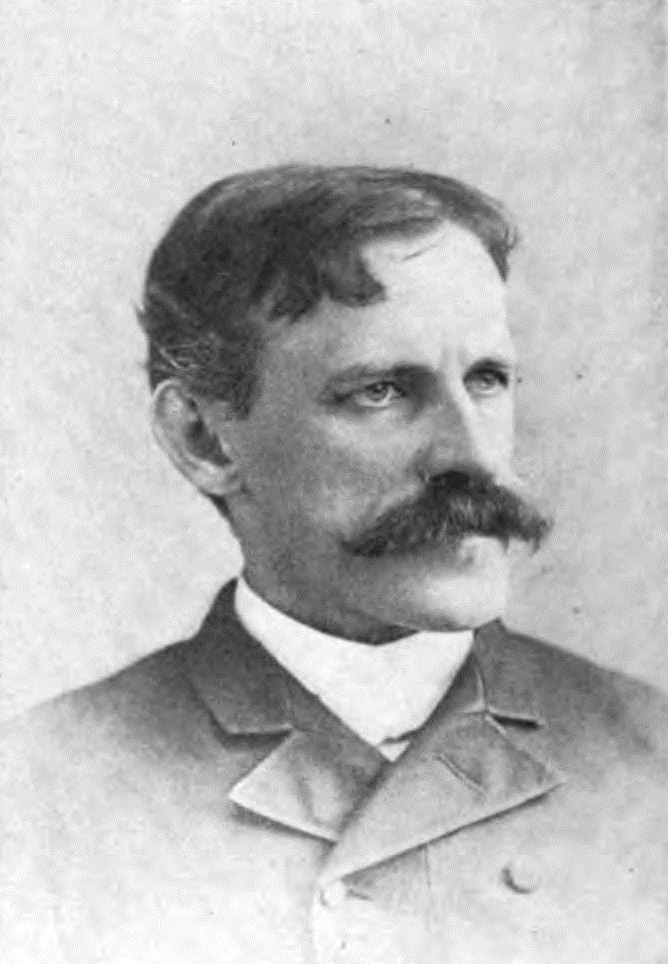
William Elliot Griffis (September 17, 1843 - February 5, 1928) was an American orientalist, Congregational minister, lecturer, and prolific author.[1]

Key Information

Early life

[edit]

Griffis was born in Philadelphia, Pennsylvania, the son of a sea captain and later a coal trader. During the American Civil War, he served two months as a corporal in Company H of the 44th Pennsylvania Militia after Robert E. Lee invaded Pennsylvania in 1863.[2] After the war, he attended Rutgers University at New Brunswick, New Jersey, graduating in 1869.[1] At Rutgers, Griffis was an English and Latin language tutor for Tarō Kusakabe [ja], a young samurai from the province of Echizen (part of modern Fukui).

After a year of travel in Europe, he studied at the seminary of the Reformed Church in America in New Brunswick (known today as the New Brunswick Theological Seminary).[1]

Modernizer in Japan

[edit]

In September 1870 Griffis was invited to Japan by Matsudaira Shungaku, for the purpose of organizing schools along modern lines. In 1871, he was Superintendent of Education in the province of Echizen.[3] In recompense, he was provided with a salary of $2,400, a house in Fukui and a horse.

Griffis with a group of his students.

In 1872–74, Griffis taught chemistry[1] and physics at Kaisei Gakkō (the forerunner of Tokyo Imperial University).[3] He prepared the New Japan Series of Reading and Spelling Books, 5 vols. (1872).[1] He also published primers for Japanese students of the English language; and he and contributed to the Japanese press and to newspapers and magazines in the United States numerous papers of importance on Japanese affairs.

Griffis was joined by his sister, Margaret Clark Griffis, who became a teacher at the Tokyo Government Girls' School (later to become the Peeresses' School). By the time they left Japan in 1874, Griffis had befriended many of Japan's future leaders.

Griffis was a member of the Asiatic Society of Japan, the Asiatic Society of Korea, the Historical Society of the Imperial University of Tokyo, and the Meirokusha.[3]

Education and ministry

[edit]

Returning to the United States, Griffis attended Union Theological Seminary; and after finishing his studies in 1877, he was called to the ministry in a series of churches—at the First Reformed Church, Schenectady, New York (1877–1886); at the Shawmut Congregational Church, Boston, Massachusetts (1886–1893); and at the First Congregational Church, Ithaca, New York (1893–1903). Concurrently, at Union College in 1884, he earned a higher degree, Doctor of Divinity (D.D.). Rutgers awarded him an honorary degree, Doctor of Humane Letters (L.H.D.) in 1899.[3]

Writing and lectures

[edit]

In 1903 he resigned from the active ministry to devote himself exclusively to writing and lecturing. His books on Japan and Japanese culture were complemented with extensive college and university lecture circuit itineraries. In addition to his own books and articles during this period, he also joined Inazo Nitobe in crafting what became his most well-known book, Bushido: The Soul of Japan.

In 1907, the Japanese government conferred the Order of the Rising Sun, Gold Rays with Rosette, which represents the fourth highest of eight classes associated with the award.[4]

The prolific writer was also a prolific traveller, making eleven trips to Europe—primarily to visit the Netherlands. In 1898, he was present at the enthronement of Queen Wilhelmina;[1] and he attended the Congress of Diplomatic History. He was among the group of Bostonians who wanted to commemorate the Pilgrims' roots in Holland; and the work was rewarded with the dedication of a memorial at Delfshaven and the placement of five other bronze historical tablets in 1909.[3] He was one of four Americans elected to the Netherlands Society of Letters in Leiden.[1]

In 1923 Griffis published "The Story of the Walloons: At Home in Lands of Exile and in America". In this work he reveals the long history and contributions of these Belgians. The last half of the book relates the story of New Belgium (Nova Belgica) in America, the first settlers of Manhattan being a group of Protestant Walloons who petitioned the Dutch West India Company to be sent to establish a colony in the New World. These Walloons were sent to Manhattan as well as to other smaller locations on the Delaware, Hudson and Connecticut Rivers. They sailed out of Leiden, Netherlands in 1624. Griffis draws parallels to the thoughts of government and freedom of the Walloons and the US Constitution of 1787, and how their ideas made a lasting contribution to this country, though at the time (1923) the Walloons were generally unknown and overshadowed by the Dutch and later, English. This remains true to a great degree even today.

In 1926, Griffis was invited to return to Japan; and on this trip, the Japanese government conferred a second decoration. He was presented with the Order of the Rising Sun, Gold Rays with Neck Ribbon, which represents the third highest of eight classes.[4] A private rail car was provided by the Japanese government, and he visited several cities in the course of this return trip.[3]

William Griffis died on February 5, 1928, at his home in Winter Park, Florida;[3] after his death, his body was sent to Schenectady, New York, for burial. He is buried at Vale Cemetery along with his first wife, Katherine Lyra Stanton, his son John and his second wife, Sarah Francis King, after the death of Katherine in 1898 along with several other family members.

Family

[edit]

One of Griffis' two sons, Stanton Griffis, would become U.S. Ambassador to Poland, Egypt, Spain and Argentina under President Truman. Stanton Griffis was ambassador to Argentina while Juan and Eva Peron were in power and wrote of his experiences in a book titled Lying In State. The other son, John, became a composer.

Honors

[edit]

Time-line chronology

[edit]

Griffis' life and publications are here organized chronologically.[4]

  • 1843 - Born September 17 in Philadelphia, the fourth child of seven and second son to John Limeburner Griffis and Anna Maria (Hess) Griffis.
  • 1850 - Observes the launching of the USS Susquehanna in Philadelphia. The Susquehanna, the largest steamship yet commissioned by the US Navy, was to be Commodore Matthew C. Perry's flagship on the 1853-1854 Naval Expedition to Japan.
  • 1860 - Sees the Shogun's Mission, the first Japanese Embassy to the US, when it visits Philadelphia.
  • 1863 - Serves in Pennsylvania's 44th Regiment in the Civil War.
  • 1866 - Enters Rutgers College.
  • 1869 - Graduates with AB (Bachelor of Arts degree) from Rutgers College. In the summer, tours Europe with his sister, Margaret Clark Griffis, and family friend, Edward Warren Clark.
  • 1870 - Sails for Japan to organize schools in Echizen.
  • 1871 - Named Superintendent of Education in Echizen.
  • 1872 - Awarded AM (Master of Arts degree) from Rutgers College. Publishes, in Yokohama, The New Japan Primer and The New Japan Pictorial Primer.
  • 1872-74 - Serves as Professor of Physics at the Imperial University, Tokyo. In 1872, Griffis's sister Margaret Clark Griffis joins him in Tokyo, and is appointed teacher, and then principal, of the first government school for girls (to become the Tokyo Female Normal School).
  • 1873 - Publishes The Tokio Guide and The Yokohama Guide (Yokohama).
  • 1874 - Griffis and Margaret Clark Griffis return to America.
  • 1876 - Publishes The Mikado's Empire.
  • 1877 - Graduates from Union Theological Seminary.
  • 1877-86 - Serves as Pastor of the First Reformed Church, Schenectady, NY
  • 1879 - Marries Katherine L. Stanton (1859–98)
  • 1880 - Publishes Japanese Fairy World: Thirty-five Stories from the Wonderlore of Japan
  • 1882 - Publishes Corea: the Hermit Nation
  • 1883 - Lillian Eyre Griffis (daughter) born in Schenectady
  • 1884 - Awarded DD (Doctorate of Divinity) from Union College
  • 1885 - Publishes Corea: Without and Within
  • 1886-93 - Serves as Pastor of the Shawmut Congregational Church in Boston, MA
  • 1887 - Stanton Griffis (first son) born in Boston. Publishes Matthew Calbraith Perry: A Typical American Naval Officer
  • 1889 - Publishes The Lily Among Thorns: A Study of the Biblical Drama Entitled "The Song of Songs"
  • 1890 - Publishes Honda the Samurai: A Story of Modern Japan[5]
  • 1891 - Publishes Sir William Johnson and the Six Nations, and an edition of The Arabian Nights
  • 1892 - Publishes Japan: In History, Folklore and Art
  • 1893 - John Elliot Griffis (second son) born in Boston
  • 1893-1903 - Serves as Pastor of the First Congregational Church, Ithaca, NY
  • 1894 - Publishes Brave Little Holland and What She Taught Us
  • 1895 - Publishes The Religions of Japan From the Dawn of History to the Era of Meiji: Shinto, Buddhism and Confucianism, and Townsend Harris, First American Envoy in Japan [an edition of Harris's journals]
  • 1897 - Publishes The Romance of Discovery: A Thousand Years of Exploration and the Unveiling of Continents
  • 1898 - Publishes Charles Carlton Coffin: War Correspondent, Traveller, Author and Statesman; The Romance of American Colonization; The Pilgrims in Their Three Homes. Katherine Stanton Griffis dies in Ithaca on December 9
  • 1899 - Publishes America in the East: A Glance at Our History, Prospects, Problems and Duties in the Pacific Ocean; The Romance of Conquest: The Story of American Expansion Through Arms and Diplomacy
  • 1899 - Awarded LHD by Rutgers College
  • 1900 - Marries Sarah Frances King (1868–1959). Publishes The American in Holland: Sentimental Rambles in the Eleven Provinces of the Netherlands; The Pathfinders of the Revolution: A Story of the Great March into the Wilderness and Lake George Region of New York in 1779; and Verbeck of Japan: A Citizen of No Country.
  • 1901 - Publishes In the Mikado's Service: A Story of Two Battle Summers in China.
  • 1902 - Publishes A Maker of the New Orient: Samuel Robbins Brown, Pioneer Educator in China, America, and Japan, the Story of his Life and Work, and Mighty England - Our Old Home.
  • 1903 - Resigns pastorate to write and lecture full-time. Publishes John Chambers: Servant of Christ and Master of Hearts, and his Ministry in Philadelphia; Sunny Memories of Three Pastorates; and Young People's History of Holland.
  • 1904 - Publishes Dux Christus: An Outline Study of Japan.
  • 1907 - Decorated with the Order of the Rising Sun, Fourth Class, by the Emperor of Japan. Publishes The Japanese Nation in Evolution: Steps in the Progress of a Great People, and Christ, the Creator of the New Japan.
  • 1908 - Publishes The Firefly's Lovers and Other Fairy Tales of Old Japan.
  • 1909 - Publishes The Story of New Netherland: The Dutch in America.
  • 1911 - Publishes China's Story in Myth, Legend, Art and Annals, and The Unmannerly Tiger and Other Korean Tales.
  • 1912 - Publishes A Modern Pioneer in Korea: The Life Story of Henry G Appenzeller; Might England: the Story of the English People; The Call of Jesus to Joy; Belgium, the Land of Art.
  • 1913 - Publishes Hepburn of Japan and His Wife and Helpmates: A Life Story of Toil for Christ. Margaret Clark Griffis dies in Ithaca, December 15.
  • 1914 - Publishes The House We Live In, Architect and Tenant: Talks About the Body and the Right Use of It.
  • 1915 - Publishes Millard Fillmore: Constructive Statesman, Defender of the Constitution, President of the US; The Mikado, Institution and Person: A Study of the Internal Political Forces of Japan; The Story of Belgium.
  • 1916 - Publishes Bonnie Scotland and What We Owe Her.
  • 1918 - Publishes Dutch Fairy Tales.
  • 1919 - Publishes Belgian Fairy Tales.
  • 1920 - Publishes Swiss Fairy Tales; Young People's History of the Pilgrims.
  • 1921 - Publishes Welsh Fairy Tales; The Dutch of the Netherlands in the Making of America.
  • 1922 - Publishes Korean Fairy Tales; Japanese Fairy Tales.
  • 1923 - Publishes The Story of the Walloons, at Home, in the Lands of Exile and in America.
  • 1924 - Publishes Proverbs of Japan: A Little Picture of the Japanese Philosophy of Life as Mirrored in Their Proverbs.
  • 1926 - Publishes The American Flag of Stripes and Stars: Mirror of the Nation's History, Symbol of Brotherhood and World Unity.
  • 1926-27 - With Frances King Griffis, journeys to Japan for the second time, stopping in Korea and Manchuria.
  • 1926 - Decorated with the Order of the Rising Sun, Third Class.
  • 1928 - Dies in Winter Park, Florida, February 5.[6]

Published works

[edit]
  • 1876 -- The Mikado's Empire
  • 1880 -- Japanese Fairy World
  • 1881 -- Asiatic History; China, Korea, and Japan
  • 1882 -- Korea, the Hermit Nation
  • 1885 -- Korea, Without and Within
  • 1887 -- Matthew Calbraith Perry: A Typical American Naval Officer
  • 1889 -- The Lily among Thorns
  • 1890 -- Honda the Samurai: A Story of Modern Japan.
  • 1891 -- Sir William Johnson and the Six Nations
  • 1892 -- Japan in History, Folk-Lore, and Art
  • 1894 -- Brave Little Holland and What she Taught us
  • 1895 -- The Religions of Japan
  • 1895 -- Townsend Harris, First American Envoy in Japan
  • 1897 -- Romance of Discovery
  • 1898 -- Charles Carlton Coffin: War Correspondent, Traveller, Author and Statesman
  • 1898 -- Romance of American Colonization
  • 1898 -- The Pilgrims in their Three Homes
  • 1898 -- The Student's Motley
  • 1899 -- The Romance of Conquest
  • 1899 -- The American in Holland
  • 1899 -- America in the East
  • 1900 -- Verbeck of Japan
  • 1900 -- The Pathfinders of the Revolution
  • 1901 -- In the Mikado's Service
  • 1902 -- A Maker of the New Orient
  • 1903 -- Young People's History of Holland
  • 1903 -- John Chambers
  • 1903 -- Sunny Memories of Three Pastorates
  • 1904 -- Dux Christus: An Outline Study of Japan
  • 1907 -- Japanese Nation in Evolution: Steps in the Progress of a Great People
  • 1908 -- The Fire-fly's Lovers and Other Fairy Tales of Old Japan
  • 1909 -- The Story of New Netherland
  • 1910 -- China's Study in Myth, Legend, Art, and Annuals
  • 1911 -- The Unmannerly Tiger and Other Korean Tales
  • 1912 -- A Modern Pioneer in Korea: The Life Story Of Henry G. Appenzeller
  • 1913 -- Hepburn of Japan
  • 1914 -- The House We Live In Architect and Tenant
  • 1915 -- The Mikado Institution and Person
  • 1915 -- Millard Fillmore: Constructive Statesman, Defender of the Constitution
  • 1916 -- Bonnie Scotland and What We Owe Her
  • 1918 -- Dutch Fairy Tales for young folks
  • 1919 -- Belgian Fairy Tales
  • 1920 -- Young People's History of the Pilgrims
  • 1920 -- Swiss Fairy Tales
  • 1921 -- Welsh Fairy Tales
  • 1921 -- The Dutch of the Netherlands in the Making of America [reprinted by Kessinger Publishing, Whitefish, Montana, 2007. ISBN 978-0-548-61147-0 (paper)]
  • 1922 -- Korean Fairy Tales
  • 1922 -- Japanese Fairy Tales
  • 1923 -- The Story of the Walloons, at Home, in the Lands of Exile and in America[7]
  • 1924 -- Proverbs of Japan: A Little Picture of the Japanese Philosophy of Life as Mirrored in Their Proverbs
  • 1926 -- The American Flag of Stripes and Stars: Mirror of the Nation's History, Symbol of Brotherhood and World Unity

See also

[edit]

References

[edit]
[edit]
Revisions and contributorsEdit on WikipediaRead on Wikipedia
from Grokipedia
William Elliot Griffis (September 17, 1843 – February 5, 1928) was an American orientalist, Congregational minister, lecturer, and prolific author renowned for his role as an early educator in Japan during the Meiji era and for his influential books that introduced Japanese culture, history, and modernization to Western audiences.[1][2] Born in Philadelphia, Pennsylvania, as the fourth child of coal trader John Limeburner Griffis, he grew up in a family exposed to international trade and travel, which sparked his early interest in Asia.[3] After brief service in the Union Army during the American Civil War, Griffis enrolled at Rutgers College in 1865, graduating in 1869 with a strong foundation in science and theology influenced by Dutch Reformed missionary Guido Verbeck, who had lived in Japan.[1][3] He briefly studied at Union Theological Seminary in New York before accepting an invitation in 1870 to serve as a foreign advisor (oyatoi gaikokujin) to the Japanese government, becoming one of the first Westerners to teach a modern curriculum in the country.[2][4] In Japan, Griffis initially taught physics, chemistry, and English at the provincial school in Fukui (then Echizen domain) from 1870 to 1871, where he adapted Western educational methods to local needs and trained future Japanese educators.[1] He later moved to Tokyo in 1872, lecturing at the Imperial University and collaborating with missionaries and Japanese officials on educational reforms, including the establishment of girls' schooling—his sister Margaret joined him to teach at a government girls' school.[1][5] As the first foreign advisor on education to the Japanese government, his efforts helped lay the groundwork for Japan's rapid modernization during the Meiji Restoration.[4] Returning to the United States in 1874, Griffis pursued a career in the ministry, serving congregations in Congregational churches in New Jersey and Iowa while establishing himself as a leading lecturer on Asia.[2] His seminal 1876 book, The Mikado's Empire, a comprehensive history of Japan blending personal observations with scholarly analysis, became a standard reference for decades.[1][2] Over his lifetime, he authored more than 50 books on topics including Japanese folklore, Korean history, and U.S.-Asia relations, such as Japan in History, Folk Lore, and Art (1894) and The Korean Peninsula (1904), often drawing from his extensive collection of Japanese artifacts and documents.[5] In 1900, he assisted Inazo Nitobe in researching Bushido: The Soul of Japan, further cementing his influence on Western perceptions of Eastern philosophy.[1] In his later years, Griffis received high honors from Japan, including the Order of the Rising Sun with Gold Rays and Rosette in 1908 and the Gold Rays with Neck Ribbon in 1927, recognizing his lifelong contributions to Japanese-American relations.[1] He continued lecturing until his death on February 5, 1928, at his winter home in Winter Park, Florida, leaving a legacy preserved in the extensive William Elliot Griffis Collection at Rutgers University Libraries, which includes journals, photographs, correspondence, and rare Japanese materials spanning over 120 cubic feet.[2][6]

Early Life and Education

Birth and Family Background

William Elliot Griffis was born on September 17, 1843, in Philadelphia, Pennsylvania, the fourth of seven children and second son of Captain John Limeburner Griffis and Anna Maria Hess Griffis.[7][2] His father, a sea captain in his youth who later became a successful coal merchant, shared tales of distant lands from his voyages to Europe, Africa, and Asia, sparking Griffis's early fascination with global cultures and adventures beyond Philadelphia.[8][9] The Griffis family adhered to the Presbyterian faith, with John Limeburner Griffis serving as a charter member of the Second Presbyterian Church in New Brunswick, New Jersey, instilling in his children a strong moral foundation rooted in religious principles and a commitment to education as a path to intellectual and spiritual growth.[8] Griffis received his early schooling in Philadelphia's public institutions, culminating in his graduation from Central High School in June 1859, where the rigorous curriculum in classical languages, history, and sciences nurtured his budding interests in linguistics and historical narratives.[3] The close-knit family environment, marked by sibling interactions among his six brothers and sisters—including his sister Margaret, who later shared his passion for education—further shaped his ethical worldview and scholarly inclinations during his formative years up to his late teens.[10]

Civil War Service and Rutgers Studies

In July 1863, at the age of 19, William Elliot Griffis enlisted in the Union Army as a corporal in Company H of the 44th Pennsylvania Militia Regiment, responding to Confederate General Robert E. Lee's invasion of Pennsylvania during the Gettysburg Campaign.[11] His service lasted approximately two months, during which his unit mobilized to defend the state but arrived too late to participate in the Battle of Gettysburg on July 1–3.[12] Griffis was mustered out later that summer without seeing combat, an experience that underscored the war's disruptions to young lives in the North.[11] Following his brief military service, Griffis, supported by his family, entered Rutgers College in 1865, where he pursued a rigorous liberal arts curriculum emphasizing classical languages such as Latin, Greek, and Hebrew alongside emerging scientific disciplines including physics, chemistry, botany, and astronomy.[6] He graduated in 1869 with a Bachelor of Arts degree, having excelled academically by winning several prizes for scholarship and earning induction into the Phi Beta Kappa honor society.[11] This period at Rutgers marked the beginning of Griffis's deep engagement with intellectual pursuits, blending humanistic and scientific inquiry in preparation for a career in education and ministry. During his senior year at Rutgers, Griffis tutored Tarō Kusakabe, the first Japanese student at the college and a samurai from the Echizen domain (modern-day Fukui Prefecture), in English and Latin, an encounter that ignited his lifelong fascination with Japanese culture and history.[2] This relationship not only honed Griffis's pedagogical skills but also exposed him to Eastern perspectives, prompting early explorations of cross-cultural education. Complementing his studies, Griffis demonstrated budding scholarly interests through foundational writings, including his role as founder of the student newspaper The Targum and the yearbook The Scarlet Letter, where he contributed articles on campus life and intellectual topics, foreshadowing his later focus on educational reform.[11]

Time in Japan

Arrival and Initial Roles

In 1870, William Elliot Griffis received an invitation from the Japanese government, facilitated through his connections with the Dutch-born missionary Guido Herman Fridolin Verbeck, to assist in modernizing the educational system during the early Meiji era. Verbeck, who had been advising Japanese officials since 1859, recommended Griffis based on his academic background and enthusiasm for Eastern cultures. Griffis departed from Philadelphia on November 13, 1870, traveling by train across the United States before sailing from San Francisco on the steamer Great Republic. He arrived in Yokohama on December 29, 1870, marking one of the earliest instances of an American educator being summoned to contribute to Japan's rapid Westernization efforts.[13] Upon arrival, Griffis initially stayed with Verbeck in Tokyo for several weeks, immersing himself in Japanese customs, language basics, and the political turbulence of the Meiji Restoration, which had abolished the feudal system just two years prior. His Rutgers College education in sciences and languages provided essential preparation for his role as a scientific educator abroad. However, he faced immediate challenges, including profound language barriers—Japanese officials often communicated via interpreters proficient only in Dutch or rudimentary English—and stark cultural adjustments, such as navigating rigid social hierarchies and adapting to a society in flux amid anti-foreign sentiments lingering from the bakumatsu period. These hurdles were compounded by the logistical strains of the Restoration, including unstable infrastructure and the urgent push to import Western knowledge to build a modern nation-state.[6][12] In early 1871, Griffis was appointed to his initial primary role as a professor of physics and chemistry, first heading to the Echizen domain (modern Fukui Prefecture) at the invitation of daimyo Matsudaira Shungaku. There, he organized Western-style schools in the Echizen domain, establishing the Meishinkan Academy and equipping it with one of the nation's early chemistry laboratories—the first American-style one—using imported American apparatus. This work involved training local samurai and commoners in scientific principles, fostering a progressive educational environment amid the domain's isolation and conservative traditions. By March 1871, after a horseback journey from Tokyo escorted by samurai, Griffis began instruction, emphasizing hands-on experimentation to bridge Eastern and Western pedagogical approaches.[14][15]

Educational Reforms and Publications

During his tenure in Japan from 1870 to 1874, William Elliot Griffis played a pivotal role in modernizing the educational landscape, particularly through his work at key institutions that laid the groundwork for contemporary Japanese higher education. Initially arriving to teach in Fukui in 1870 amid challenges of cultural adaptation and isolation, Griffis shifted to Tokyo in 1872, where he served as a foreign advisor (yatoi) at Kaisei Gakko, the predecessor to the University of Tokyo.[16] There, he introduced Western curricula in natural sciences, including chemistry and physics, alongside ethics courses that emphasized rational inquiry and moral philosophy, aiming to supplant traditional Confucian and feudal teachings with empirical methods.[2] His classes, often conducted in English with interpreters, attracted numerous students, many of whom later rose to prominent positions in government and diplomacy, fostering a generation attuned to global scientific standards.[16] Griffis actively developed educational materials to bridge linguistic and conceptual gaps, creating resources in both English and Japanese to facilitate the adoption of Western knowledge. Notable among these was The Japan Primer (1872), a foundational English-language textbook that included phonetic guides, vocabulary, and grammatical structures tailored for Japanese learners, enabling quicker proficiency in scientific discourse.[16] He also prepared instructional aids for astronomy and physics, such as translated diagrams and lesson plans on celestial mechanics and mechanical principles, which were integrated into Kaisei Gakko's syllabus to promote hands-on experimentation over rote memorization.[2] These materials not only standardized teaching but also encouraged student-authored essays on scientific topics, with nearly 350 preserved manuscripts in his collection demonstrating practical application of new concepts.[2] Beyond curriculum innovation, Griffis advocated for progressive reforms to dismantle feudal educational norms, including the promotion of co-education and the elimination of class-based restrictions in schooling. He argued that separating genders and privileging samurai lineages perpetuated social stagnation, pushing instead for inclusive systems that mirrored American models of universal access and meritocracy.[2] His efforts aligned with Meiji-era goals of national unification through education, though implementation faced resistance from conservative officials. These initiatives contributed to broader policy shifts, such as the 1872 Fundamental Code of Education, which began eroding feudal hierarchies in favor of compulsory, egalitarian schooling.[16] Griffis's departure from Japan in July 1874 stemmed from deteriorating health exacerbated by overwork and a contractual dispute with the Ministry of Education (Mombusho) over salary and renewal terms, amid shifting government priorities toward Japanese-led reforms.[17] During his residency, he produced early publications documenting Japanese society, including articles in Western periodicals on local customs, such as Shinto rituals and everyday etiquette, which highlighted cultural nuances for international audiences.[2] A key example is his 1873 piece "Japan: A Paradox in Education," which analyzed the tensions between tradition and modernization in schooling, underscoring the transformative potential of Western influences.[16]

Ministry and Academic Career

Theological Training and Ordination

Upon returning to the United States from Japan in 1874, William Elliot Griffis enrolled at Union Theological Seminary in New York City to undertake formal preparation for the ministry.[3] His studies there emphasized theology and missions, reflecting his aspiration to combine scholarly inquiry with evangelistic outreach.[3] Griffis completed his program at Union Theological Seminary in 1877, earning his degree amid a curriculum that integrated doctrinal study with practical ecclesiastical training.[3] That same year, he was ordained as a minister in the Reformed Church in America, marking his formal entry into clerical life.[3] The four years Griffis spent in Japan profoundly shaped his theological outlook, instilling a vision of global Christianity that prioritized cross-cultural dialogue and adaptation over rigid imposition.[18] This experience informed his seminary pursuits, where he explored how Eastern traditions could enrich Western missionary strategies and foster mutual understanding between civilizations.[18] Immediately after ordination, Griffis engaged with missionary societies, leveraging his firsthand knowledge of Asia to advocate for expanded international evangelism and cultural exchange initiatives.[3] His involvement helped bridge secular education and religious service, positioning him as a unique voice in promoting thoughtful, informed approaches to global missions.[3]

Pastoral Positions in the United States

Following his ordination, William Elliot Griffis began his pastoral career in the United States with his first position at the First Reformed Church in Schenectady, New York, where he served from 1877 to 1886.[4] During this tenure, he focused on church leadership and community engagement, contributing to the congregation's growth and delivering sermons that reflected his scholarly interests in global cultures.[19] In recognition of his early ministry and academic background, Union College awarded him an honorary Doctor of Divinity (D.D.) degree in 1884.[4] In 1886, Griffis transitioned to the Shawmut Congregational Church in Boston, Massachusetts, serving as its pastor until 1893.[4] This move marked a shift to a larger urban congregation, where his preaching emphasized themes of cultural exchange and moral reform, drawing on his experiences in Japan.[20] While in Boston, he expanded his influence beyond the pulpit by delivering the Dudleian Lecture at Harvard University in 1892, addressing the validity of non-episcopal ordination.[21] Griffis's final pastoral role was at the First Congregational Church in Ithaca, New York, from 1893 to 1903.[4] Here, his ministry evolved to integrate his expertise in Eastern studies with congregational life, fostering a community that appreciated his international perspective.[22] During this period, Rutgers College conferred upon him an honorary Doctor of Humane Letters (L.H.D.) in 1899, honoring his contributions to education and intercultural understanding.[4] In 1903, Griffis resigned from his pastoral duties to dedicate himself fully to writing and lecturing, allowing him to broaden his impact on public discourse about Asia and Western relations.[4] This decision reflected the culmination of his evolving ministry, which had increasingly blended ecclesiastical service with scholarly pursuits.[2]

Writings and Lectures

Key Books on Japan and Culture

Griffis's most influential work on Japan, The Mikado's Empire (1876), drew directly from his four years teaching in the country during the early Meiji era, providing Western readers with a detailed narrative of Japan's feudal past, rapid modernization, and cultural transitions. This seminal book, which combined historical analysis, personal anecdotes, and observations of social customs, became the standard reference on Japanese history and society in the English-speaking world for decades, shaping early American and European understandings of the nation's shift from isolation to global engagement.[2][23] (Note: Use actual Google Books URL if available; placeholder for now) In Japanese Fairy World: Stories from the Wonder-Lore of Japan (1880), Griffis compiled and translated thirty-five traditional tales, myths, and folktales, aiming to humanize Japanese culture for Western audiences by highlighting its imaginative and moral dimensions akin to European fairy tales. Illustrated by Japanese artist Ozawa Nankoku, the book emphasized themes of heroism, nature, and spirituality, helping to dispel exotic stereotypes and foster appreciation for Japan's literary heritage during a period of increasing curiosity about Eastern folklore.[24][25] Later, Griffis contributed an introduction to Inazo Nitobe's Bushido: The Soul of Japan (1900), where he contextualized the samurai code of ethics within broader Japanese cultural evolution, drawing on his firsthand knowledge to underscore its relevance to modern Western values like honor and duty. This collaboration amplified the book's reach, influencing global perceptions of Japanese character and ethics amid rising transpacific interest. Additionally, in The Mikado: Institution and Person (1915), Griffis offered a focused examination of the Japanese emperor's dual role as divine symbol and constitutional figure, analyzing the political forces that sustained the institution through the Meiji Restoration and beyond. These works collectively reinforced Griffis's role in bridging East-West cultural divides, with The Mikado's Empire and related publications cited in academic circles for their pioneering blend of ethnography and history.[26][27][2]

Lectures, Collaborations, and Later Works

Following his resignation from pastoral duties in 1903, Griffis devoted himself full-time to lecturing and writing, embarking on extensive tours across the United States and Europe that continued until his death.[28] These engagements, totaling over 3,000 lectures, often focused on comparative religion, exploring the intersections of Christianity with Eastern faiths such as Shintoism and Buddhism, drawing from his firsthand experiences in Japan and scholarly works like The Religions of Japan (1895).[3] He also addressed Dutch history, highlighting the Protestant heritage and colonial legacies of the Netherlands, topics informed by his deep research into European Reformation movements and their transatlantic influences.[18] His presentations at universities, churches, and public forums positioned him as a bridge between Western audiences and global cultural narratives, emphasizing ethical and historical parallels across civilizations.[2] Griffis's collaborative efforts extended his influence through cultural exchanges, notably his assistance to Japanese diplomat and scholar Inazo Nitobe in preparing Bushido: The Soul of Japan (1900). He contributed a detailed introduction to the English edition, framing bushido as a chivalric code comparable to Western knightly ideals while underscoring its role in modern Japanese identity.[29] This partnership, rooted in their shared commitment to cross-cultural understanding, facilitated broader Anglo-American appreciation of East Asian ethics and helped establish Nitobe's work as a seminal text on samurai philosophy.[30] Such collaborations reflected Griffis's interdisciplinary approach, blending theology, history, and diplomacy to foster international dialogue. In his later years, Griffis produced diverse publications that expanded beyond his earlier Japan-focused oeuvre, culminating in a bibliography exceeding 50 volumes by the time of his death in 1928.[31] Among these were The Story of the Walloons (1923), a historical account of Belgian Protestant communities—the Walloons—and their migrations to America, tracing their resilience amid persecution and their contributions to early colonial society.[32] This work exemplified his interest in Protestant diaspora and European religious history, serving as both scholarly narrative and popular history for American readers. Griffis's enduring role as a public intellectual persisted through these outputs, as he continued authoring and speaking on global themes, solidifying his legacy as an educator of intercultural awareness until his passing at age 84.[3]

Personal Life and Legacy

Marriage and Family

William Elliot Griffis married Katharine Lyra Stanton on June 17, 1879, in Schenectady, New York.[33] The couple settled in Schenectady during Griffis's early pastoral years there, where Stanton supported his work at the local Reformed Church.[3] Together, they had three children: daughter Lillian Eyre Griffis; William Elliot Griffis Jr., known as Stanton Griffis (born 1887), who pursued a career in finance and diplomacy, eventually serving as the United States Ambassador to Poland from 1947 to 1948;[34] and John Elliot Griffis (born 1893), a composer and pianist influenced by his father's experiences.[35] Katharine Griffis provided essential companionship during this period, contributing to the stability of their family amid Griffis's demanding professional life.[3] Katharine Lyra Griffis died on December 9, 1898, in Ithaca, New York, at the age of 43, leaving Griffis to raise their young children as a widower.[36] On June 28, 1900, in Pulaski, New York, Griffis remarried Sarah Frances King, a widow from the area, who became a steadfast partner in his later years.[33] Sarah accompanied him during the latter part of his time in Ithaca (1893–1903), where the family navigated the challenges of relocation while fostering the children's education and interests. Griffis's earlier move to Boston (1886–1893) had been with his first wife.[3] Griffis actively supported his children's emerging careers, drawing on his own international background to encourage Stanton's business acumen and John's artistic pursuits.[3] The family maintained close ties across these U.S. locations, with Griffis emphasizing moral and intellectual guidance for his children amid his own scholarly endeavors.[3] In his final years, Griffis and Sarah resided seasonally in places like Winter Park, Florida. He died there on February 5, 1928, at the age of 84, from heart failure, survived by his second wife and children.[4] His body was returned to Schenectady for burial at Vale Cemetery, alongside Katharine.[10]

Honors and Recognition

Griffis received significant recognition from Japan for his contributions to education and cultural exchange during the Meiji era. In 1907, he was awarded the Order of the Rising Sun, Fourth Class (Gold Rays with Rosette), by Emperor Meiji in acknowledgment of his pioneering efforts in introducing Western science and English education to Japanese students.[37] Later, in 1926, during a return visit to Japan, he was honored with the Order of the Rising Sun, Third Class (Gold Rays with Neck Ribbon), presented by the Japanese government for his ongoing promotion of mutual understanding between the two nations.[19][4] In the United States, Griffis's scholarly achievements earned him prestigious academic honors. Union College conferred an honorary Doctor of Divinity (D.D.) upon him in 1884, recognizing his theological and educational work.[10] Fifteen years later, in 1899, Rutgers University, his alma mater, awarded him an honorary Doctor of Humane Letters (L.H.D.) for his advancements in international education and cultural studies.[10] Griffis was also elected to several distinguished scholarly societies, reflecting his expertise in Dutch and Japanese history. He became a member of the Netherlands Society of Letters in Leiden, honoring his research on Dutch colonial influences and their ties to American history.[38] Additionally, he held membership in the National Institute of Arts and Letters, as well as the Holland Society of New York, where his lectures and publications on transatlantic connections were highly valued.[38][39] Griffis's legacy endures in U.S.-Japan relations, particularly through his role in fostering early diplomatic and educational ties during the Meiji Restoration. His writings and teaching efforts continue to be cited in contemporary Meiji studies for effectively bridging Eastern and Western cultures, with his personal papers at Rutgers University serving as a key resource for scholars examining the foundations of Japanese-American friendship.[6][40]

References

User Avatar
No comments yet.