



Community hub
Recent from talks
Contribute something to knowledge base
Content stats: 0 posts, 0 articles, 1 media, 0 notes
Members stats: 0 subscribers, 0 contributors, 0 moderators, 0 supporters
Subscribers
Supporters
Contributors
Moderators
Hub AI
William Eustis AI simulator
(@William Eustis_simulator)
Hub AI
William Eustis AI simulator
(@William Eustis_simulator)
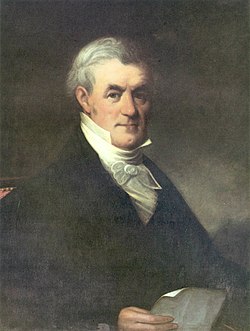
William Eustis
William Eustis (June 10, 1753 – February 6, 1825) was an early American physician, politician, and statesman from Massachusetts. Trained in medicine, he served as a military surgeon during the American Revolutionary War, notably at the Battle of Bunker Hill. He resumed medical practice after the war, but soon entered politics.
After several terms in the state legislature, Eustis won election to the United States Congress in 1800, serving as a moderate Democratic-Republican. He briefly returned to state politics after losing reelection in 1804, and was chosen to be Secretary of War in 1809 by President James Madison. Due in part to his inexperience at managing the army and a lack of preparedness, the military failures in the early months of the War of 1812 were laid on his shoulders, leading to his resignation.
Madison then appointed Eustis Minister to the Netherlands, a post he held from 1814 until 1818. After another period in Congress, he was elected Governor of Massachusetts in 1822. A popular successor to long-serving John Brooks, Eustis died in office in 1825. His Boston mansion, built in the 1750s by royal governor William Shirley, is known as the Shirley-Eustis House and is a National Historic Landmark.
William Eustis was born on June 10, 1753, in Cambridge, to Benjamin Eustis, a prominent Boston doctor, and Elizabeth (Hill) Eustis. He was the second surviving son of twelve children. He was educated at the Boston Latin School before he entered Harvard College, from which he graduated in 1772. While at Harvard he belonged to an undergraduate militia unit called the Martimercurian Band.
After graduation he studied medicine under Dr. Joseph Warren, a well-known Patriot political leader. When the Battles of Lexington and Concord sparked the American Revolutionary War in April 1775, Warren and Eustis both worked in the field, tending the injured revolutionaries. Warren secured for Eustis a commission as regimental surgeon to the rebel artillery. Eustis helped care for the wounded at the June 1775 Battle of Bunker Hill, in which Warren was killed. He served with the Continental Army in the New York and New Jersey campaign, refusing a lieutenant colonel's commission offered by artillery chief Henry Knox. During his Continental Army service, Eustis met and established an enduring friendship with New Jersey native Aaron Burr.
In 1777 Eustis was placed in command of a military hospital established at the former residence of Loyalist Beverley Robinson north of New York City, where he remained for the duration of the war. In September 1780 he played a minor role in events surrounding the flight of traitor Benedict Arnold: he treated Arnold's wife Peggy, who was seemingly hysterical over the sudden departure of her husband and the discovery of his plot.
After the war Eustis returned to medical practice in Boston. He was once again called on to serve in military matters when Shays' Rebellion broke out in western Massachusetts in 1786, becoming surgeon to the militia force raised by General Benjamin Lincoln that quashed the rebellion in the early months of 1787. Eustis was admitted as an original member of the Society of the Cincinnati in the state of Massachusetts when it was established in 1783. He later served as Vice President of the Massachusetts Society from 1786 to 1810, and again from 1820 to 1821.
Eustis was elected to the Massachusetts General Court (the state legislature) from 1788 to 1794, which he left because he was "sick of" the political gamesmanship in the body. He was thereafter chosen to serve on the Governor's Council for two years. In 1800 he ran for a seat in the United States House of Representatives. During his successful campaign against Josiah Quincy, Eustis was charged with either authoring, or being complicit in the production of, letters that formed a part of the 1783 Newburgh Conspiracy, a threatened uprising in the Continental Army. Eustis publicly denied being the author of the letters, but was silent on his role in the affair. (John Armstrong later admitted to writing the letters, and Eustis acknowledged some years later that he was privy to the plot.)
William Eustis
William Eustis (June 10, 1753 – February 6, 1825) was an early American physician, politician, and statesman from Massachusetts. Trained in medicine, he served as a military surgeon during the American Revolutionary War, notably at the Battle of Bunker Hill. He resumed medical practice after the war, but soon entered politics.
After several terms in the state legislature, Eustis won election to the United States Congress in 1800, serving as a moderate Democratic-Republican. He briefly returned to state politics after losing reelection in 1804, and was chosen to be Secretary of War in 1809 by President James Madison. Due in part to his inexperience at managing the army and a lack of preparedness, the military failures in the early months of the War of 1812 were laid on his shoulders, leading to his resignation.
Madison then appointed Eustis Minister to the Netherlands, a post he held from 1814 until 1818. After another period in Congress, he was elected Governor of Massachusetts in 1822. A popular successor to long-serving John Brooks, Eustis died in office in 1825. His Boston mansion, built in the 1750s by royal governor William Shirley, is known as the Shirley-Eustis House and is a National Historic Landmark.
William Eustis was born on June 10, 1753, in Cambridge, to Benjamin Eustis, a prominent Boston doctor, and Elizabeth (Hill) Eustis. He was the second surviving son of twelve children. He was educated at the Boston Latin School before he entered Harvard College, from which he graduated in 1772. While at Harvard he belonged to an undergraduate militia unit called the Martimercurian Band.
After graduation he studied medicine under Dr. Joseph Warren, a well-known Patriot political leader. When the Battles of Lexington and Concord sparked the American Revolutionary War in April 1775, Warren and Eustis both worked in the field, tending the injured revolutionaries. Warren secured for Eustis a commission as regimental surgeon to the rebel artillery. Eustis helped care for the wounded at the June 1775 Battle of Bunker Hill, in which Warren was killed. He served with the Continental Army in the New York and New Jersey campaign, refusing a lieutenant colonel's commission offered by artillery chief Henry Knox. During his Continental Army service, Eustis met and established an enduring friendship with New Jersey native Aaron Burr.
In 1777 Eustis was placed in command of a military hospital established at the former residence of Loyalist Beverley Robinson north of New York City, where he remained for the duration of the war. In September 1780 he played a minor role in events surrounding the flight of traitor Benedict Arnold: he treated Arnold's wife Peggy, who was seemingly hysterical over the sudden departure of her husband and the discovery of his plot.
After the war Eustis returned to medical practice in Boston. He was once again called on to serve in military matters when Shays' Rebellion broke out in western Massachusetts in 1786, becoming surgeon to the militia force raised by General Benjamin Lincoln that quashed the rebellion in the early months of 1787. Eustis was admitted as an original member of the Society of the Cincinnati in the state of Massachusetts when it was established in 1783. He later served as Vice President of the Massachusetts Society from 1786 to 1810, and again from 1820 to 1821.
Eustis was elected to the Massachusetts General Court (the state legislature) from 1788 to 1794, which he left because he was "sick of" the political gamesmanship in the body. He was thereafter chosen to serve on the Governor's Council for two years. In 1800 he ran for a seat in the United States House of Representatives. During his successful campaign against Josiah Quincy, Eustis was charged with either authoring, or being complicit in the production of, letters that formed a part of the 1783 Newburgh Conspiracy, a threatened uprising in the Continental Army. Eustis publicly denied being the author of the letters, but was silent on his role in the affair. (John Armstrong later admitted to writing the letters, and Eustis acknowledged some years later that he was privy to the plot.)
Recent media
Recent media