Hubbry Logo
Bill IdelsonBill IdelsonMain
Open search
Bill Idelson
Community hub
Bill Idelson
logo
8 pages, 0 posts
0 subscribers
Be the first to start a discussion here.
Bill Idelson
Bill Idelson
from Wikipedia

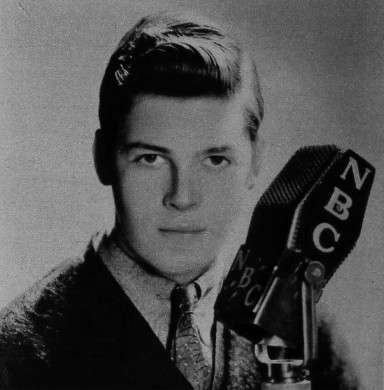
Bill Idelson (August 21, 1919 – December 31, 2007) was an American actor, writer, director and producer widely known for his teenage role as Rush Gook on the radio comedy Vic and Sade and his recurring television role as Herman Glimscher on The Dick Van Dyke Show in the 1960s.

Key Information

Background

[edit]

Idelson was born in Forest Park, Illinois, his parents were Russian immigrants. He joined the U.S. Navy in World War II and was awarded a Distinguished Flying Cross and four Air Medals as a night fighter pilot. He later married actress Seemah Wilder with whom he had three sons, Paul, Howie and Jonathan[1] as well as a daughter, TV writer and actress Ellen Idelson, who died in 2003.[1]

Idelson died in 2007 from complications due to a hip injury.[1] On his death, writer-director Norman Corwin told the Los Angeles Times Idelson was "a luminary, he stood out among the radio comedians."[1] Creator of The Dick Van Dyke Show, Carl Reiner, said Idelson was "a very subtle actor. He made no big movements, and every time you cut to him you could get a laugh."[1]

Career

[edit]

Radio

[edit]

Idelson's acting career began in 1931 on Chicago's WGN radio, when he played Skeezix on Uncle Walt and Skeezix, a radio drama based on the Gasoline Alley comic strip.[2] One year later he landed the role of Rush on the long-running Vic and Sade, playing the role until he joined the U.S. Navy.[citation needed] He also had the title role on Cousin Willie[3] and portrayed Bill Clark on Secret City,[3]: 299-300  Hugo on The Trouble with the Truitts,[3]: 339-340  and Chuck on That Brewster Boy.[3]: 329 

After the war, his acting credits included radio and television versions of the daytime drama series One Man's Family.[4]

Television

[edit]

In The Dick Van Dyke Show Idelson played Herman Glimscher, the milquetoast boyfriend of Sally Rogers (Rose Marie). "Herman could never marry because his mother wouldn't sign off on it yet, and when he had a date with Sally Rogers he brought his mother a couple of times," show creator and co-star Carl Reiner told the Los Angeles Times. He re-created the role in the first decade of the 21st century for a reunion show of The Dick Van Dyke Show, with Herman finally married to Sally as she joins her former colleague Rob Petrie (Dick Van Dyke) to write a new special for their megalomaniacal former boss, Alan Brady (Reiner).

Idelson guest starred on episodes of Dragnet, The Twilight Zone, My Favorite Martian, The Odd Couple, Happy Days, Perry Mason and Will & Grace, in which he appeared along with his wife and daughter.

He wrote the Long Distance Call episode of The Twilight Zone (1960) for CBS then several episodes of The Dick Van Dyke Show, leading him to further writing work on Gomer Pyle, U.S.M.C., The Andy Griffith Show, Get Smart, The Odd Couple, M*A*S*H and Happy Days. He received two Writers Guild Awards for best episodic comedy, one for an episode of Get Smart and the other for an episode of The Andy Griffith Show.

His producing credits included The McLean Stevenson Show, The Bob Newhart Show, Anna and the King and Love, American Style.

Film

[edit]

Idelson appeared as the head of a band organization in the film Pete Kelly's Blues.[5]

Writing

[edit]

He was the author of three books, The Story of Vic and Sade, Gibby (an autobiographical novel about a fighter pilot) and Bill Idelson's Writing Class.

References

[edit]
[edit]
Revisions and contributorsEdit on WikipediaRead on Wikipedia
from Grokipedia
Bill Idelson (August 21, 1919 – December 31, 2007) was an American actor, writer, and producer renowned for his early radio work and extensive contributions to television comedy. Best known for his teenage role as the wisecracking son Rush Gook on the enduring radio serial Vic and Sade, which aired from 1932 to 1944, Idelson's performance helped define the show's quirky domestic humor. After serving in the U.S. Navy during World War II, during which he earned the Distinguished Flying Cross and four Air Medals, he transitioned to Hollywood, where he acted in guest roles on series such as Dragnet, Perry Mason, The Twilight Zone, and The Dick Van Dyke Show—including the recurring character of the hapless Herman Glimcher—and wrote scripts for acclaimed sitcoms like The Andy Griffith Show, Get Smart, and MASH*, earning two Writers Guild of America Awards for episodic comedy. He also produced episodes of The Bob Newhart Show and received an Emmy nomination in 1971 for his work on Love, American Style. Born in , near , Idelson began his entertainment career at age 12, voicing the character Skeezix on the Chicago Uncle Walt and Skeezix in 1931 before joining Vic and Sade the following year, a role he held until enlisting in the Navy. The experience on Vic and Sade, created by Paul Rhymer, profoundly influenced his later writing, as the show's subtle, character-driven wit became a hallmark of his television contributions. Postwar, Idelson's multifaceted career spanned acting in dozens of television episodes and writing numerous scripts for television series, often collaborating with his wife, actress Seemah Wilder, whom he married in 1951 and with whom he shared 56 years until his death. The couple had four children, including sons Paul, Howie, and Jonathan, and daughter , a television writer and actress who predeceased him in 2003; Idelson was also survived by three grandchildren. He passed away in from complications following a sustained in June 2007.

Early life and military service

Childhood and family background

William Idelson was born on August 21, 1919, in Forest Park, Illinois, to parents who were Russian immigrants. His family had immigrated to the United States during the wave of Russian migration in the late 19th and early 20th centuries, driven by economic hardship in the Russian Empire, settling in Forest Park—a working-class suburb of Chicago where many such immigrant families established communities amid the city's growing industrial economy. Idelson launched his acting career in 1931 at the age of 12, securing his first radio role as Skeezix in WGN's adaptation of the comic strip Gasoline Alley, titled Uncle Walt and Skeezix. This early exposure to the vibrant Chicago radio scene ignited his passion for entertainment, drawing him deeper into performing without an initial emphasis on writing.

World War II service

In 1942, following his departure from the radio series Vic and Sade, Billy Idelson enlisted in the U.S. Navy. He underwent training and qualified as a , serving actively in the Pacific Theater during . As a pilot, Idelson flew combat missions over , conducting perilous nighttime operations that demanded precision and courage in the face of enemy defenses. His service included numerous sorties aimed at disrupting Japanese air and naval capabilities, contributing to the Allied effort in the final stages of the war. For his valor and skill in these engagements, Idelson was awarded the Distinguished Flying Cross, recognizing extraordinary achievement in aerial flight, along with four Air Medals for meritorious conduct in sustained operational activities against the enemy. Idelson's military service effectively paused his burgeoning entertainment career, as he did not return to full-time acting until 1945, when he briefly rejoined Vic and Sade before its conclusion in 1946. This interruption led him to seek stability outside show business in the post-war years, resulting in a primary occupation in real estate during the 1950s, where he worked steadily while sporadically taking on radio roles.

Radio career

Early acting roles

Idelson entered the world of professional radio acting at the age of 12. His debut came in 1931 on Chicago's WGN station, where he portrayed the character Skeezix in Uncle Walt and Skeezix, a radio adaptation of the popular Gasoline Alley comic strip. Idelson later described this experience as traumatic. Throughout the , Idelson took on minor roles in various radio serials broadcast from , including other daytime dramas, gaining practical experience in the burgeoning medium amid the economic hardships of the . His father's ownership of a local tavern provided some financial stability during this era, but the young actor's early gigs highlighted the demands of performing as a in a competitive industry centered in the city's studios. These appearances helped Idelson hone his vocal delivery and adaptability, laying the groundwork for more prominent work.

Role in Vic and Sade

When approached for another audition in 1932—this time for a daytime at WMAQ's studio—Idelson was reluctant and threw a before agreeing, as his mother assured him it was only for four days. He was cast as Rush Gook, the energetic teenage son in the Gook family, on the radio series Vic and Sade starting in 1932 and continuing through 1942. The program, created and written by Paul Rhymer, was a pioneering domestic comedy that depicted the mundane yet humorous everyday lives of Vic and Sade Gook and their adopted son in a small Midwestern town, airing in a concise 15-minute daily format that emphasized subtle, character-driven dialogue over or plot-heavy narratives. Idelson's portrayal of the inquisitive and verbose added youthful vitality to the ensemble, contributing to the show's distinctive focus on familial interactions and neighborhood quirks, which helped it build a devoted audience during its decade-long run. During production, Idelson drew personal inspiration from observing Rhymer's meticulous , which motivated his eventual transition from to writing for radio and . Years later, Idelson authored The Story of Vic & Sade (BearManor Media, 2007), a detailed account drawing from preserved scripts at the University of that explores the series' creative evolution, cast dynamics, and lasting cultural resonance as a snapshot of American middle-class life. Idelson left the role in 1942 to enlist in the U.S. Navy for service.

Television career

Acting appearances

Following his radio career, Idelson leveraged his experience in character-driven performances to transition into television acting during the 1950s and 1960s. His early television work included guest appearances on procedural dramas such as Dragnet and , where he played supporting characters in various episodes. He also featured in science fiction and comedy series like . A notable guest spot came in 1960 when Idelson portrayed Kelly, a stagehand, in the Twilight Zone episode "A World of Difference," directed by Ted Post. This appearance highlighted his versatility in ensemble casts, though his deeper involvement with the series—as co-writer of the following year's episode "Long Distance Call"—signaled an emerging focus on writing that would eventually overshadow his on-screen work. Idelson's most recognized acting role was the recurring character Herman Glimscher on (1961–1966), where he depicted the timid, overbearing mama's boy and intermittent boyfriend of (played by ), appearing in multiple episodes including "Uncle George" (1963). Into the 1970s, he continued guest-starring on sitcoms, including a judge in an episode of The Odd Couple (1971–1975) and a doctor in Happy Days (1974–1984), such as the 1976 installment "A Mind of His Own." Idelson maintained a presence in television through the 1980s and beyond with cameo roles in various sitcoms, culminating in a 2001 appearance as Ben in the Will & Grace episode "Mad Dogs and Average Men." His on-screen film work remained minimal, confined to uncredited or minor parts outside his primary television focus.

Writing and production credits

Idelson transitioned to television writing in 1961 with the episode "Long Distance Call" for The Twilight Zone, co-written with Charles Beaumont after the initial script faced rejection. The story drew from a toy telephone his mother gave his son, conceived during Idelson's stint as a real estate agent in the 1950s, marking the end of a hiatus from entertainment following his radio and early acting career. Friends Richard Matheson and Charles Beaumont vouched for the script by submitting it to Cayuga Productions, while Rod Serling personally requested an on-set rewrite of a climactic speech, securing its production. His prior acting role in The Twilight Zone's "A World of Difference" (1960) helped build connections that facilitated this writing breakthrough. Over the 1960s to 1980s, Idelson amassed credits on numerous comedy series, often partnering with . For , he wrote 19 episodes, earning a 1965 Writers Guild of America Award for best episodic comedy for "The Shoplifters" (season 4, episode 21). He received another WGA Award for the "Viva Smart" episode (season 2, episode 30) of . Notable contributions include the episode "If They Never Met" (season 4, episode 20, 1968), exploring an alternate reality without Samantha and Darrin's marriage. Additional writing credits encompass , The Odd Couple, , Happy Days, and , blending humor with character-driven narratives across over 200 episodes total. In production, Idelson supervised series like and , the latter nominated for a 1971 Emmy for outstanding comedy series; he also produced and . He frequently collaborated with his wife, actress Seemah Wilder (known professionally as Seema Idelson), in various television projects, though specific co-authored scripts remain tied to his primary partnerships. Idelson documented his career in two books: Writing for Dough: Adventures of a T.V. Comedy Writer (1989), a memoir recounting challenges and triumphs in episodic comedy scripting, and Bill Idelson's Writing Class (2007), a instructional guide featuring sample scripts from Get Smart and The Andy Griffith Show to teach aspiring writers. His output tapered in the late 1980s, shifting focus to teaching.

Personal life and legacy

Marriage and family

Bill Idelson married actress Seemah Wilder in 1951, and their partnership endured for 56 years until his death in 2007. The couple shared a professional connection in the entertainment industry, occasionally appearing together in television roles, such as the episode "Mad Dogs and Average Men" of in 2001. They had four children: three sons, Paul, Howie, and Jonathan, and a daughter, Ellen, a TV writer and actress who died in 2003. The family made their home in , where Idelson and Wilder navigated the demands of their careers alongside raising their children and managing household life. In later years, Idelson reflected on their family joys, including three grandchildren.

Teaching career and influence

In the later stages of his career, Bill Idelson transitioned into education, teaching comedy writing at the University of Southern California's film school, where he served as a and imparted practical insights from his decades in television scripting. He also conducted a renowned script-writing workshop at his home in Pacific Palisades, gathering aspiring writers around his kitchen table for hands-on sessions focused on crafting situational comedy for television. These classes, which continued into his 80s, emphasized techniques like character-driven humor and efficient story structure, drawing from his experiences on shows such as and . Idelson's mentorship extended to numerous Hollywood professionals, with many of his students crediting his guidance for their success in episodic TV writing, including notable figures like Ken Levine, who co-wrote episodes for and . Idelson's teaching reinforced his legacy as a pivotal figure bridging radio's intimate domestic comedies, like Vic and Sade, to the visual demands of television sitcoms, influencing the foundational structure of character-based situational humor that became a staple of the genre. His workshops and book, Bill Idelson's Writing Class, codified these methods, helping to shape the practical craft of TV comedy writing for generations of creators. This influence persisted through his students' contributions to enduring series, underscoring his role in perpetuating efficient, relatable comedy formats from the radio era into modern television. Idelson died on December 31, 2007, at the age of 88 in , from complications following a hip injury sustained in a fall the previous June, which led to a prolonged hospitalization. A posthumous celebration of his life was held on February 21, 2008, at the Theater, where colleagues including actress Ann Guilbert shared tributes to his multifaceted career and mentorship. His enduring impact is evident in the ongoing success of protégés and family members in comedy, such as contributions to shows like , where his daughter Ellen Idelson served as a .

References

Add your contribution
Related Hubs
User Avatar
No comments yet.