Hubbry Logo
Long Distance CallLong Distance CallMain
Open search
Long Distance Call
Community hub
Long Distance Call
logo
8 pages, 0 posts
0 subscribers
Be the first to start a discussion here.
Long Distance Call
Long Distance Call
from Wikipedia

"Long Distance Call"
The Twilight Zone episode
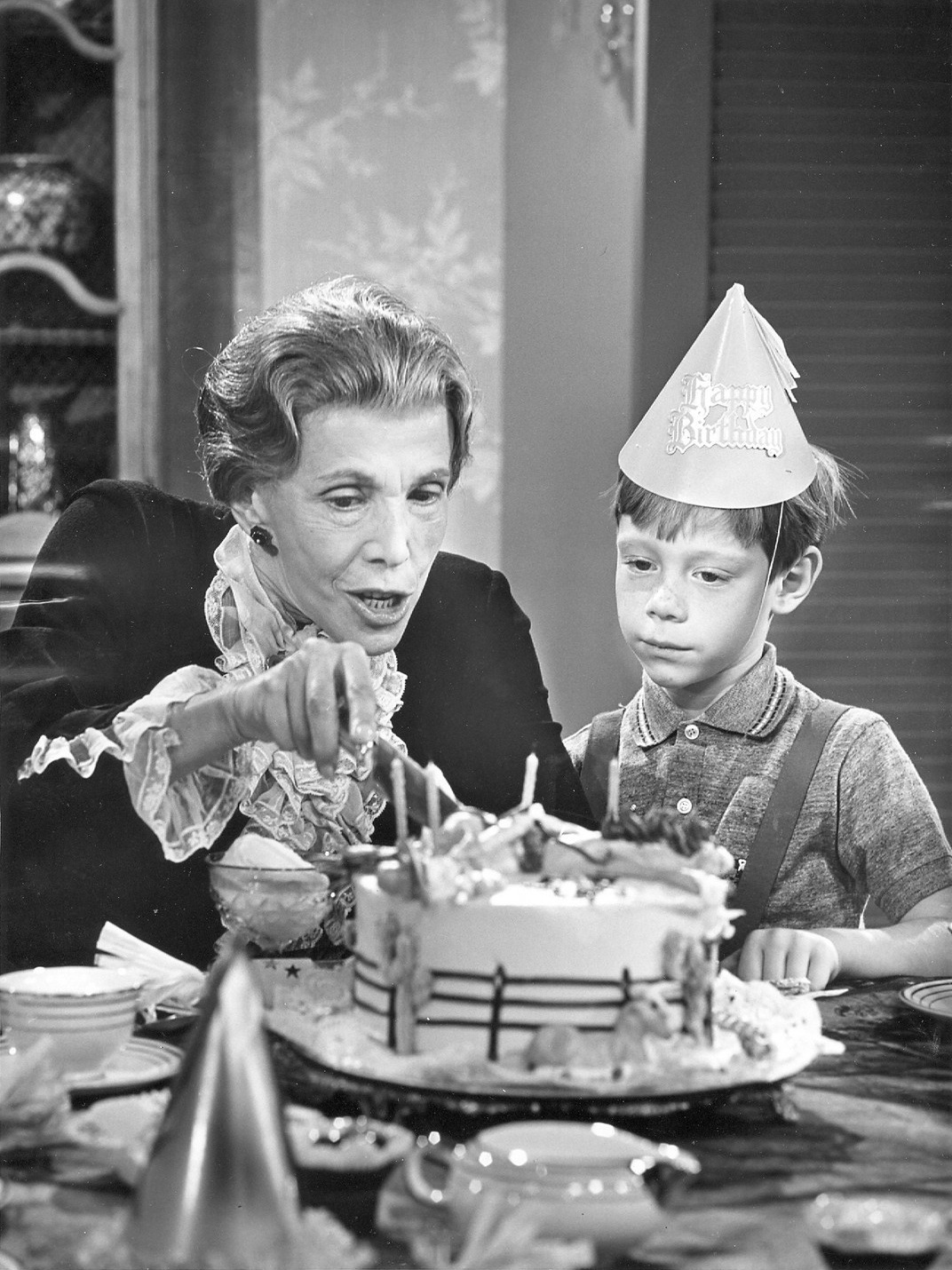
Lili Darvas as Grandma Bayles and Billy Mumy as Billy Bayles.
Episode no.Season 2
Episode 22
Directed byJames Sheldon
Written by
Featured musicuncredited
Production code173-3667
Original air dateMarch 31, 1961 (1961-03-31)
Guest appearances
Episode chronology
← Previous
"The Prime Mover"
Next →
"A Hundred Yards Over the Rim"
The Twilight Zone (1959 TV series, season 2)
List of episodes

"Long Distance Call" is episode 58 of the American television anthology series The Twilight Zone. It originally aired on March 31, 1961, on CBS. In the episode, a 5-year-old boy named Billy communicates with his dead grandmother using a toy telephone that she gave him on his birthday. It was one of the six episodes of the second season which was shot on videotape in a short-lived experiment aimed to cut costs.[1]

Opening narration

[edit]

The narration begins a few minutes into the episode:

As must be obvious, this is a house hovered over by Mr. Death, that omnipresent player to the third and final act of every life. And it's been said, and probably rightfully so, that what follows this life is one of the unfathomable mysteries, an area of darkness which we, the living, reserve for the dead—or so it is said. For in a moment, a child will try to cross that bridge which separates light and shadow. And, of course, he must take the only known route – that indistinct highway through the region we call the Twilight Zone.

Plot

[edit]

Billy's beloved grandmother visits for his fifth birthday party, despite being deathly frail. She gives the boy a toy telephone, telling him that he can always talk to her on it. She then becomes gravely weak and delusional, failing to recognize her son Chris and imagining that Billy is her son instead, before dying.

Billy's parents, especially his mother Sylvia, become concerned when he spends all his time on the toy telephone. He tells them he is talking to his grandmother, which they dismiss as his way of grieving. He says that she tells him she is lonely and misses him. While the parents are at her funeral, Billy runs out in front of a car. The driver, who barely manages to swerve out of the way, reports that Billy said someone told him to do it. When his father asks him why he did it, Billy says he does not know. Chris tries to explain that Grandma has died, and asks that he not use the toy phone in front of his mother. He discusses with Sylvia how his mother had two children before him, both of whom died, which is why she was so attached to him and especially Billy, who reminded her of Chris and helped her forget years of loss.

That night, Sylvia is awakened by the sound of Billy talking and laughing. Going to his room, she grabs the phone out of his hands, but is shocked when she hears Grandma on it and drops it; inadvertently breaking it in the process. Upset, Billy runs out of the room. Chris and Sylvia look for him, and are horrified to find him face down in their garden pool.

An ambulance attendant informs the parents that Billy's chances are not good. Chris goes upstairs to Billy's room, picks up the toy phone, and begs his mother to give Billy back and allow him to experience life. He pleads that if she really loves him, she will let him live. Downstairs, the attendants' efforts to revive Billy succeed, and when Chris joins them, he and Sylvia embrace, relieved.

Closing narration

[edit]

A toy telephone, an act of faith, a set of improbable circumstances, all combine to probe a mystery, to fathom a depth, to send a facet of light into a dark after-region, to be believed or disbelieved, depending on your frame of reference. A fact or a fantasy, a substance or a shadow—but all of it very much a part of The Twilight Zone.

Production

[edit]

As The Twilight Zone's second season began, the production was informed by CBS that at about $65,000 per episode, the show was exceeding its budget. By November 1960, 16 episodes, more than half of the projected 29, were already filmed, and five of those had been broadcast. It was decided that six consecutive episodes (production code #173-3662 through #173-3667) would be videotaped at CBS Television City in the manner of a live drama and then transferred to 16-millimeter film for future syndicated TV transmissions. Eventual savings amounted to only about $30,000 for all six entries, which was judged to be insufficient to offset the loss of depth of visual perspective that only film could offer. The shows wound up looking little better than set-bound soap operas and as a result the experiment was deemed a failure and never tried again.[1] "Long Distance Call" was the last of these six episodes to be aired.

The episode originated as a spec script by Maxwell Sanford entitled "Party Line" that was submitted to the producers via Sanford's friend, Richard Matheson (who in 1953 had written an unrelated short story titled "Long Distance Call," about a woman who receives mysterious telephone calls from a cemetery). Charles Beaumont offered to undertake revisions and ended up taking a joint credit on-screen with Bill Idelson instead. Sanford, (full name Maxwell Sanford Miller) was also an entertainment attorney and he successfully contested the credit through the Writers Guild. Thereafter the writing credit was changed on some prints in strip syndication to Maxwell Sanford. According to Martin Grams Jr in his book on the series, the episode was subject to at least two separate plagiarism claims regarding the authorship.

See also

[edit]

References

[edit]
[edit]
Revisions and contributorsEdit on WikipediaRead on Wikipedia
from Grokipedia
"Long Distance Call" is a song written and first recorded by American blues musician in 1951. Released as a single by (catalog number 1452) with "Too Young to Know" as the B-side, it showcased Waters' guitar playing alongside harmonica by and bass by Ernest "Big" Crawford. The track entered the Best Selling Retail Rhythm & Blues Records on April 14, 1951, and peaked at number 8, marking Waters' third R&B success. The song's lyrics revolve around a man pleading for his lover to call him long-distance, reflecting themes of longing and separation common in music. Recorded in , it exemplified the emerging sound that Waters helped pioneer, blending roots with urban amplification and ensemble arrangements. Waters himself regarded "Long Distance Call" as one of his favorite recordings, frequently performing it live throughout his career, including notable appearances at Auditorium in 1966. As a blues standard, "Long Distance Call" has influenced generations of musicians and been covered extensively, with over 35 recorded versions. Early covers include John Hammond's 1965 rendition, while later interpretations feature Hubert Sumlin with Eric Clapton in 2005 and John Mayall in 2015. More recently, in 2024, Little Feat collaborated with Bonnie Raitt on a version for their album Sam's Place. Its enduring legacy underscores Muddy Waters' pivotal role in shaping postwar blues and rock music.

Synopsis

Opening narration

The opening narration of "Long Distance Call," delivered by series creator and host , succinctly captures the episode's haunting premise: "As must be obvious, this is a house hovered over by Mr. Death, an omnipresent player to the third and final act of every life. And it's been said, and probably rightfully so, that what follows this life is one of the unfathomable mysteries, an area of darkness which we, the living, reserve for the dead - or so it is said. For in a moment, a child will try to cross that bridge which separates light and shadow, and, of course, he must take the only known route, that indistinct highway through the region we call ." This brief , spoken over shadowy visuals of domestic normalcy, immediately evokes an atmosphere of quiet dread, priming viewers for a story where the ordinary intersects with the . By framing the narrative around themes of death and the , the narration establishes the core theme of blurred boundaries between and the , portraying not as a shield but as a conduit for otherworldly forces. Serling's words suggest that profound loss can invite contact from beyond, inviting audiences to question the reliability of through the lens of youthful , where fantasy and truth converge without . Serling's delivery enhances this suspenseful tone through his signature gravelly voice and deliberate pauses, a style honed across The Twilight Zone's run to build tension and hint at impending twists without overt revelation. His measured intonation underscores the narration's foreshadowing of ethereal communication, drawing listeners into the episode's exploration of loss and the unknown while the toy telephone emerges as the pivotal symbol of that fragile link.

Plot

On Billy Bayles's fifth birthday, his devoted grandmother gifts him a red toy telephone, assuring the young boy that they can converse through it indefinitely. The celebration is interrupted when the grandmother collapses from a heart attack and dies, plunging Billy into sorrow. In the days following, Billy spends hours with the toy, insisting he is receiving calls from his grandmother's voice beyond the grave; these initial exchanges are joyful, with Billy relaying her affectionate messages to his family. As the calls persist, their content turns ominous: the grandmother's voice begins pleading for Billy to join her in death, suggesting he cross a busy street without looking or venture to the nearby pond. Alarmed by her son's fixation and his unwavering conviction in the connection, Billy's mother, Sylvia, eavesdrops on the toy phone and hears labored breathing, heightening her fears. A near-tragic incident occurs when Billy darts into traffic, claiming the voice instructed him to do so, narrowly escaping harm. The parents clash— the father initially rationalizing it as grief-induced play, and the mother sensing a genuine otherworldly . The situation culminates when Billy wanders to the pond and deliberately submerges himself, attempting to drown as urged by the voice. Pulled from the water unconscious and without a , he is given up for dead by . In desperation, the father seizes the toy phone and shouts into it, imploring the grandmother to release Billy and return him to the living, emphasizing the boy's youth and their family's need for him. The line suddenly goes dead, and moments later, Billy revives, gasping for air as his parents embrace him in relief.

Closing narration

Rod Serling delivers the closing narration of "Long Distance Call" as follows:
A toy telephone, an act of faith, a set of improbable circumstances, all combine to probe a mystery, to fathom a depth, to send a facet of light into a dark after-region, to be believed or disbelieved, depending on your . A fact or a fantasy, a substance or a shadow—but all of it very much a part of .
This epilogue reinforces the episode's twist resolution, where the father's desperate plea through the toy telephone revives the drowning boy by invoking the grandmother's spirit to release her hold, underscoring that profound emotional bonds can bridge the divide between life and the . Rather than lingering on horror, Serling shifts focus to a poignant affirmation of enduring familial love, presenting the not as purely malevolent but as a testament to faith's redemptive power. Serling's narration exemplifies his signature approach to the supernatural, transforming the seemingly innocuous toy phone into a profound symbol of unbreakable ties that persist beyond death, inviting viewers to question the boundaries of reality through a lens of wonder rather than fear.

Production

Development and writing

"Long Distance Call" originated from an idea conceived by William Idelson, a radio writer and performer, who drew inspiration from a personal family experience: his mother gifting a toy telephone to his young son. Idelson, then working as a real estate agent, developed the initial script based on this moment, marking his entry into television writing after submitting it through fellow writer Richard Matheson to Cayuga Productions, where it was initially rejected. The script evolved through collaboration when , a prolific contributor to known for infusing horror with emotional resonance, proposed revising it jointly with Idelson. Together, they adapted the story into the final teleplay, credited to both Beaumont and Idelson, emphasizing a blend of supernatural tension and familial bonds centered on a toy telephone motif that facilitates otherworldly contact. During revisions, Idelson improvised and rewrote a key final speech at Rod Serling's request to heighten the dramatic plea at the episode's climax. This development occurred amid Season 2's experimental pre-production phase, where rising budgets—approaching $65,000 per episode—prompted to explore cost-saving measures, including videotaping select installments to reduce expenses through multicamera setups and limited . "Long Distance Call," produced under code 173-3667, became one of six such episodes, reflecting the series' adaptive strategies while preserving its narrative innovation. The final version aired on March 31, 1961, as Season 2, Episode 22.

Casting

The principal cast of "Long Distance Call" featured as the young Billy Bayles, a six-year-old boy at the time of filming who receives a mysterious toy telephone on his birthday. portrayed Chris Bayles, Billy's protective grandfather, bringing a sense of paternal authority to the role. Patricia Smith played Sally Bayles, Billy's concerned mother, contributing to the episode's depiction of familial tension. provided the voice for Grandma Bayles, the deceased relative who communicates through the phone, her performance limited to audio but pivotal to the supernatural element. Mumy's casting marked an early breakout role for the , who was seven when the episode aired in March 1961, showcasing his ability to convey innocence and vulnerability in a lead capacity. Abbott, known for dramatic television roles, lent an authoritative presence that contrasted with the story's eerie tone, enhancing the grandfather's desperate efforts to safeguard his grandson. Darvas, a Hungarian-born actress who emigrated to the , infused the ghostly voice with an authentic Eastern European accent, adding layers of otherworldliness and emotional depth to the character's posthumous pleas. The episode employed a small ensemble for additional roles, including Frank S. Matsuda as the family doctor who examines Billy and uncredited performers like Rebecca Lynn as a party guest, which underscored the intimacy of the Bayles family unit and amplified the emotional stakes of their interactions. This focused casting choice heightened the episode's exploration of grief and supernatural intrusion within a domestic setting.

Filming techniques

"Long Distance Call" was one of six episodes from the second season of produced using a multi-camera format as a cost-saving measure by , which aimed to trim the standard per-episode budget of approximately $65,000 by about $5,000 each, resulting in total savings of $30,000 across the experiment. Directed by James Sheldon, the episode was recorded on a soundstage at in , marking the final videotaped installment to air on March 31, 1961. The process employed a multi-camera setup typical of broadcasts, enabling rapid rehearsals and in-studio editing by a who switched between feeds in real time, which expedited production but constrained creative flexibility compared to traditional shoots. This resulted in a distinctive visual style characterized by flat and an artificial, stage-bound appearance that lacked the depth and texture of 35mm , often described as having a "" quality due to the even illumination and limited inherent to early technology. The format's technical limitations also made it unsuitable for long-term archiving, as the original tapes were transferred to 16mm for broadcast and syndication, potentially degrading quality over time. Set design for the episode centered on a single domestic household interior to accommodate the soundstage constraints, fostering a sense of claustrophobic tension that amplified the story's intimate, focus. A key prop was the boy's toy , a simple black plastic model gifted by his grandmother, which served as the narrative conduit for otherworldly communication and was strategically placed in scenes to draw visual emphasis amid the confined space. In , the format presented editing challenges, as cuts were predetermined during taping through camera switching rather than flexible post-shoot assembly, leading to abrupt transitions and a rhythmic pacing that felt disjointed from the series' usual cinematic flow. These issues, compounded by the visual shortcomings, prompted producer to deem the experiment "disastrous," resulting in its abandonment after the second season with all subsequent episodes reverting to film.

Themes and analysis

Supernatural elements

In "Long Distance Call," the toy telephone serves as the central device, functioning as a conduit between the living world and the , through which a young boy receives communications from his deceased grandmother. This everyday child's toy transforms into an otherworldly portal, embodying the episode's exploration of unfiltered childlike in the impossible against the backdrop of adult that dismisses the calls as mere . The grandmother's voice emerges solely through auditory means, without any visual manifestation of a , which amplifies the horror by relying on disembodied sounds to evoke dread and uncertainty about the reality of the intrusion. This technique heightens ambiguity, forcing viewers to question whether the communications are genuine contact or , a hallmark of the episode's tense atmosphere. The episode's horror mechanics draw on The Twilight Zone's tradition of leveraging mundane objects to unleash the uncanny. This approach underscores a core Twilight Zone trope: the afterlife's intrusion into everyday life via innocuous vessels, symbolizing how the veil between worlds can thin unpredictably. The motif of a supernatural telephone has influenced modern horror, as seen in films like (2021) and its sequel (2025), where disconnected phones connect the living to the dead or victims. Unlike many Twilight Zone narratives that escalate supernatural threats toward irreversible confrontation, "Long Distance Call" subverts expectations with a resolution achieved through emotional intervention, as the boy's father pleads directly with the grandmother's spirit via the toy phone to release her hold. This twist prioritizes compassionate dialogue over horror's typical climax, resolving the ghostly pull without physical or destructive escalation, and affirming the power of familial bonds to negotiate with the beyond.

Family and grief

In "Long Distance Call," the theme of is central, manifesting through young Billy Bayles's profound longing for his deceased grandmother, whose voice on the toy telephone serves as a poignant symbol of his unresolved . This posthumous influence represents not just intervention but Billy's emotional need to maintain their close bond, highlighting how a child's can intensify the pain of loss by blurring the boundaries between reality and wish fulfillment. The episode portrays as a disruptive force that isolates Billy, leading to catatonic withdrawal and self-destructive impulses, such as attempts to join his grandmother in death, underscoring the psychological vulnerability of children facing bereavement. Family dynamics reveal tensions between rational denial and nostalgic acceptance, particularly in the contrast between Billy's mother, Sylvia, who adopts a protective, skeptical stance toward the telephone calls to safeguard her son, and the lingering, enabling influence of the grandmother, whose possessive attachment—rooted in her own losses of two children prior—strains the unit. Sylvia's rationality clashes with the grandmother's nostalgic pull, evident in her deathbed plea for Billy to "go with your Grandma," which excludes the parents and amplifies generational conflicts over child-rearing and emotional dependency. The father, , plays a pivotal role in resolution, confronting the spectral voice directly and appealing to familial love to sever the tie, thereby restoring balance and affirming the parents' . This dynamic illustrates the episode's exploration of parental helplessness in the face of a child's , where initial gives way to active intervention to prevent tragedy. The narrative delves into psychological depth by emphasizing how a child's innocence amplifies the terror of loss, with Billy's precocious yet naive trust in the calls transforming a simple toy into a conduit for existential dread. This contrasts with adult perspectives, offering a subtle nod to generational differences in processing : the elderly grandmother's childlike stubbornness and desire for eternal companionship versus the parents' adult realism. Such portrayals ground the in emotional authenticity, evoking the total of the child and the parents' utter helplessness, which deeply engages viewers.

Reception

Initial response

"Long Distance Call" premiered on CBS on March 31, 1961, occupying the network's 9:30-10:00 PM Eastern Time slot as the 22nd episode of The Twilight Zone's second season. The series' second season maintained strong viewership, with ratings in the 19-20 range, reflecting a significant share of television households tuned in during its airings. Contemporary critics lauded the episode for its poignant emotional storytelling, particularly the tender portrayal of intergenerational bonds and loss. Variety commended the narrative's heartfelt exploration of grief, describing it as a moving addition to the anthology's repertoire of human-centered tales. Similarly, highlighted the episode's effective blend of supernatural intrigue with familial warmth, noting its resonance in addressing themes accessible to a broad audience. However, some reviewers critiqued the production format—chosen as a budget-saving measure for six season 2 episodes—as imparting a "" aesthetic that occasionally undermined the atmospheric tension typical of the series' film-shot installments. CBS executives expressed a mixed response to the videotape approach for "Long Distance Call" and its counterparts, appreciating the cost efficiencies that reduced per-episode expenses from $65,000 but ultimately deeming the format less suitable for the show's stylistic ambitions, which prompted a return to 35mm film in subsequent seasons. The episode generated no significant controversies, earning recognition instead for its take on horror elements that balanced eerie supernaturalism with relatable domestic drama. Viewer feedback, as preserved in production archives, included anecdotal accounts of parents using the episode to facilitate discussions about and with their children, reflecting its role in sparking thoughtful conversations amid the era's limited media portrayals of such topics.

Modern assessments

In retrospective rankings of episodes, "Long Distance Call" consistently appears among the series' stronger entries, particularly for its blend of supernatural horror and emotional depth. On , it holds a user rating of 7.5 out of 10 based on over 3,300 votes, reflecting sustained viewer appreciation for its storytelling. placed it at #24 in its 2019 list of the 25 best episodes, commending its eerie exploration of a child's connection to the . Similarly, Paste Magazine's 2023 comprehensive ranking of all 156 episodes highlighted it as a "chilling yet emotionally potent " that tenderly examines human . ranked it #10 among the 20 creepiest episodes, noting its psychological tension in portraying otherworldly communication. Recent analyses from the 2020s have praised the episode's young lead, , for his nuanced performance as Billy Bayles, capturing the innocence and vulnerability of a grappling with loss. A 2023 retrospective emphasized Mumy's ability to convey escalating distress through subtle expressions, elevating the episode's intimate family drama. In a 2025 article, the performance was lauded for grounding the elements, with the toy telephone serving as a poignant symbol of unresolved that resonates in contemporary horror. These discussions often link the episode's themes of bereavement to broader awareness, underscoring how childhood manifests in isolation and denial, as explored in scholarly examinations of 's portrayal of adult-child dynamics. The episode's legacy endures through its influence on emotional supernatural narratives in later media, inspiring stories of spectral longing and familial bonds severed by death. A 2025 analysis drew parallels to modern films like Ethan Hawke's phone-based horror, crediting "Long Distance Call" with pioneering the trope of technology as a bridge to the deceased. During the 2020s streaming resurgence on platforms like Paramount+, the episode has gained renewed traction for its relevance to pandemic-era isolation, where themes of distant connection mirror experiences of loss without physical closure. Fan metrics, including steady viewership data and breakdowns, affirm its cultural staying power, with over 3,300 IMDb ratings indicating broad, ongoing engagement.

References

Add your contribution
Related Hubs
User Avatar
No comments yet.