Hubbry Logo
Worry stoneWorry stoneMain
Open search
Worry stone
Community hub
Worry stone
logo
8 pages, 0 posts
0 subscribers
Be the first to start a discussion here.
Worry stone
Worry stone
from Wikipedia
Worry stones

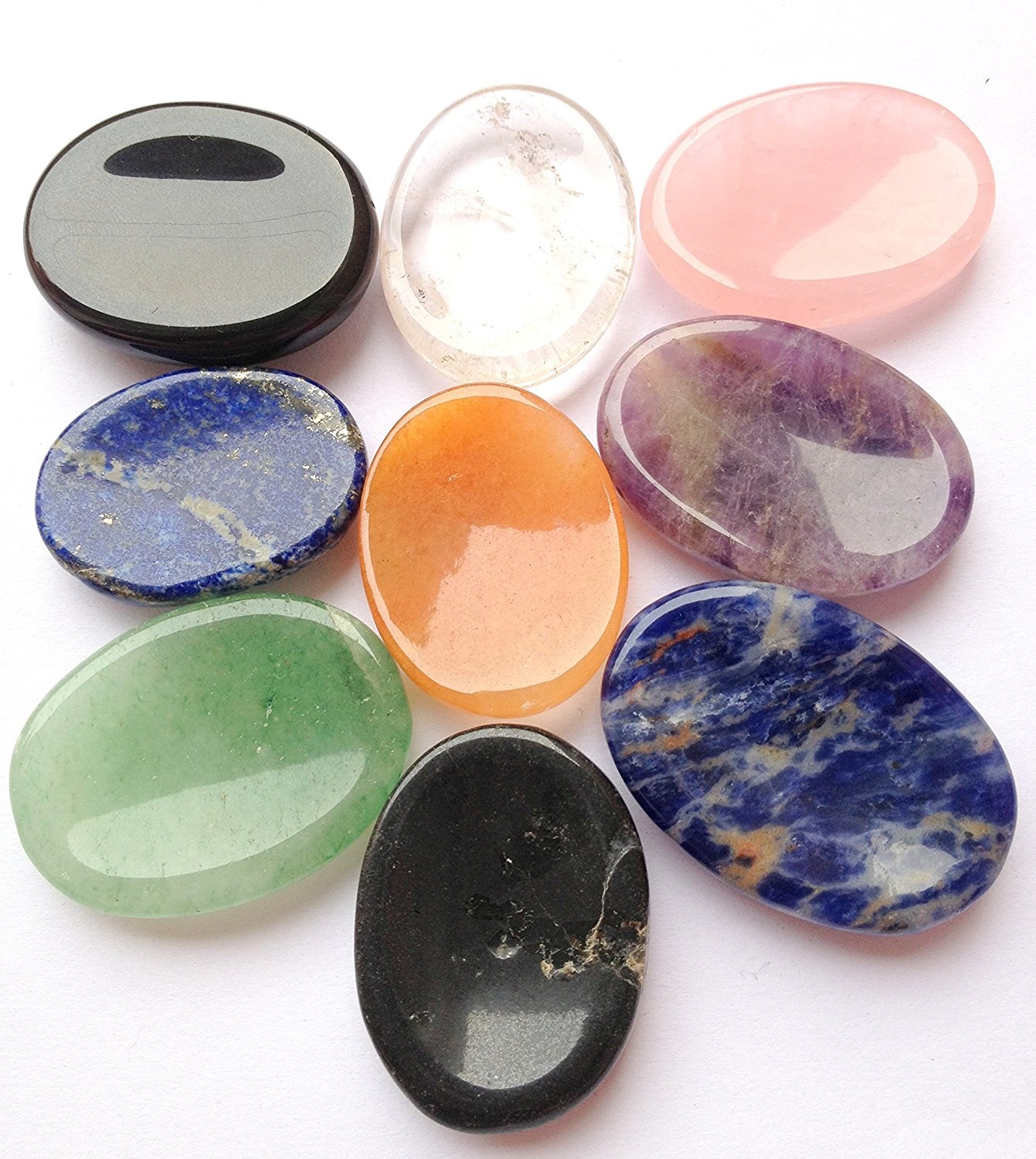
Worry stones are smooth, polished gemstones, usually in the shape of an oval with a thumb-sized indentation, used for relaxation or anxiety relief. Worry stones are typically around 3 centimetres (1 in) in size. They are used by holding the stone between the index finger and thumb and gently moving one's thumb back and forth across the stone. The action of moving one's thumb back and forth across the stone is thought to reduce stress, but there is no conclusive scientific evidence to support this.[1]

Worry stones may also be called palm stones, thumb stones, fidget stones, soothing stones, or sensory stones.[citation needed]

History

[edit]

As a folk practice implement, worry stones have many origins. Variations on the concept originate in ancient Greece, Tibet, Ireland, and multiple Native American tribes.[citation needed] The concept of a worry stone began by the simple action of picking a smooth stone and fiddling with the stone.[citation needed] Worry stones made by sea water were generally used by Ancient Greeks.[2][unreliable source?] The smoothness of the stone was most often created naturally by running water.[1]

Usage

[edit]
How to hold a worry stone

From the perspective of cognitive behavior therapy, the use of worry stones is one of many folk practices that can function as psychologically healthy self-soothing exercises. Such techniques are imparted at an early stage of treatment, displacing any familiar but destructive coping methods (nail-biting, scratching, lip-biting, etc.) that the patient may have developed. This helps ready the patient to safely confront anxiety or trauma.[1] Worry stones are simple and intuitive enough to be useful in therapeutic contexts where complexity and unfamiliarity are paramount concerns, such as when offering short-term treatment to refugees.[1] After a patient has mastered a more sophisticated relaxation script for anxiety management, the worry stone itself can serve as a physical 'relaxation script reminder'; the patient may notice an impulse to use the object, and thereby become aware of their own anxiety. [citation needed]

See also

[edit]

References

[edit]
Revisions and contributorsEdit on WikipediaRead on Wikipedia
from Grokipedia
A worry stone is a small, smooth, polished stone, often oval-shaped with a thumb-sized indentation, used for stress by rubbing it between the thumb and forefinger. Worry stones are popularly traced to ancient civilizations such as the , who sourced smooth pebbles from the for calming purposes, as well as Tibetan, Irish, and Native American traditions where they served similar roles in emotional regulation and ritual practices. Naturally formed through geological processes such as glacial transport and water erosion over millennia, worry stones are commonly composed of materials like or various gemstones, including and rose quartz, which are selected for their tactile qualities or purported healing properties. In contemporary use, worry stones function as tactile tools in , , and cognitive-behavioral , where the repetitive rubbing motion is thought to provide a calming tactile sensation, potentially reducing anxiety and enhancing focus through mechanisms similar to . They offer a discreet, portable alternative to other fidget aids, helping individuals manage compulsive behaviors, sensory needs, and daily stressors without pharmacological intervention.

Overview and Description

Definition and Purpose

A worry stone is a small, smooth, polished stone or similar object, typically oval-shaped and featuring a thumb-sized indentation for rubbing. The primary purpose of a worry stone is to provide a tactile tool for relaxation, anxiety reduction, and , helping to redirect mental focus from worries through soothing, repetitive motion. Worry stones have roots in ancient practices, including those from , where they were employed as simple aids for emotional regulation. They are distinguished from similar items like or fidget toys by their emphasis on passive, repetitive thumb motion over a natural, textured surface to promote calming, rather than active counting or mechanical manipulation.

Design and Materials

Worry stones are typically pocket-sized for easy portability, measuring about 1 to 2 inches (2.5 to 5 cm) in length and less than 1 inch (2.5 cm) in width, with a thickness of around 0.5 to 1 inch (1 to 2.5 cm) to fit comfortably between the thumb and forefinger. A defining feature is the thumb-sized indentation or groove on one side, which allows for smooth, repetitive rubbing without slippage and enhances the tactile experience during use. This ergonomic element is often created through careful shaping and polishing to ensure the surface remains flat and unobtrusive on the opposite side. Common materials for worry stones include natural stones and semi-precious gemstones such as jade, amethyst, rose quartz, clear quartz, jasper, and hematite, selected for their durability and aesthetic appeal. These materials achieve their characteristic smoothness through polishing, tumbling, or natural erosion processes, resulting in a glossy, frictionless surface that promotes comfortable handling over extended periods. Modern alternatives encompass ceramic, wood, marble, glass, and even synthetic options like polymer clay or silicone, which can mimic the tactile qualities of stone while offering variety in texture and weight. Shape variations among worry stones primarily include oval, circular, and irregular forms, each influencing grip and overall comfort based on the user's hand size and preference. shapes, the most prevalent, provide a balanced, ergonomic hold that aligns naturally with finger movement, while circular designs offer a more rounded, versatile grip suitable for rotational rubbing. Irregular shapes, often derived from naturally formed pebbles, can enhance comfort for those preferring an organic feel, though they may require additional polishing to prevent uneven edges from affecting usability.

Historical Development

Ancient and Prehistoric Origins

The practice of using worry stones is often attributed to , where smooth pebbles from bodies of water were used for calming purposes.

Cultural Evolution and Spread

The concept of worry stones appears in various cultural traditions, including those of , , and Native American tribes, where smooth stones were used for emotional regulation or . In , some Native American cultures incorporated stones for soothing qualities. In Ireland, folk traditions involved similar stones sourced locally. , the practice may relate to meditative routines in . By the , through global migration and cultural exchange, worry stones gained wider popularity, particularly in the 1970s via and retail channels.

Methods of Use

Basic Techniques

The core technique for using a worry stone centers on tactile to promote immediate calm. Hold the stone in the palm of your hand, positioning your over the smooth indentation or groove designed for . Gently rub the surface with your in circular or back-and-forth motions, allowing the repetitive action to engage your focus. This method can be performed discreetly with one hand, such as while seated or with the stone in a , making it suitable for everyday situations without drawing attention. For a more intentional practice, hold the stone between both hands, cupping it comfortably to allow for sustained rubbing and greater concentration. To enhance the effect, integrate simple deep breathing: inhale slowly through the nose for a count of four while beginning the rubbing motion, then exhale through the mouth for a count of four, continuing the thumb movement throughout. Sessions typically last 1 to 5 minutes, or until a of relaxation emerges. For beginners, select a stone with a texture that feels comforting in the hand, as smoother materials may facilitate easier motion. Start with brief sessions of 1-2 minutes several times a day to establish the habit without overwhelm, gradually increasing as comfort grows. Carry the stone in a or for convenient access during moments of tension.

Variations and Adaptations

Worry stones are available in a range of sizes to suit different usage contexts, with pocket-sized thumb stones typically measuring 2-3 cm in length and designed to fit discreetly between the forefinger and for on-the-go stress . Larger palm stones, often spanning the full width of an adult hand, provide a more substantial grip and are commonly used in home settings for extended meditation or display purposes. Adaptations for accessibility include textured surfaces on worry stones, which offer varied tactile feedback to assist individuals with motor challenges, needs, or conditions like autism by facilitating easier manipulation and providing calming sensory input without requiring fine motor precision. Keychain attachments enhance portability, allowing users to secure the stone to keys or bags for quick access during daily activities, particularly beneficial for those with limited hand mobility. Personalization through engraving allows users to inscribe motivational words, names, or symbols on the stone's surface, creating a customized tool for emotional support that can be carried daily. Specialized types feature thematic designs, such as heart-shaped stones for or , which symbolize and during loss, while animal-shaped variants, like those depicting totems or pets, promote focus and connection for users seeking specific emotional or spiritual resonance.

Psychological and Health Benefits

Mechanisms of Relief

The primary mechanism through which worry stones alleviate discomfort involves tactile stimulation from the repetitive rubbing motion, which activates cutaneous sensory nerves and engages the to promote relaxation. This sensory input can reduce , the body's primary stress hormone. In addition to physiological effects, the action with a worry stone produces a effect by anchoring attention to the immediate physical sensation, thereby interrupting repetitive cycles of rumination that characterize anxiety disorders. This diversion from intrusive thoughts helps restore cognitive balance without requiring formal practices. As a grounding technique, the tangible feel of the stone fosters present-moment awareness, akin to sensory-focused methods such as , by shifting focus from abstract worries to concrete bodily input. This process enhances emotional regulation by emphasizing sensory details in the here and now. Neuroscientifically, this tactile engagement stimulates the somatosensory cortex, which processes sensory information and plays a key role in modulating emotional responses, thereby diverting activity away from stress-activated brain regions like the to attenuate the overall stress response.

Evidence and Research

Research on worry stones, as a form of tactile fidget tool, primarily draws from broader studies on haptic and sensory stimulation for anxiety management, with direct investigations emerging in the 2010s and accelerating post-2020. A 2018 study on fidget spinners demonstrated short-term improvements in fine motor control, suggesting potential benefits for stress-related fidgeting behaviors. Similarly, a 2022 trial using a haptic cushion simulating breathing patterns reported a significant reduction in state anxiety among undergraduates, with State-Trait Anxiety Inventory (STAI) scores decreasing by approximately 16% (from 39.1 to 32.8, Cohen's d = 0.65), comparable to guided meditation effects. In clinical settings, worry stones and similar fidget devices have shown promise for conditions like ADHD, autism, and PTSD. A 2022 single-case study on fidget spinners in second-grade students with ADHD found on-task behavior increasing by 30-52 percentage points (e.g., from 27% to 79% in one participant), supporting their use in classroom therapy to enhance focus amid anxiety. Evidence for autism and PTSD remains preliminary, with few controlled trials; tactile tools show potential in sensory regulation and integration into therapies, though efficacy data is sparse. Despite these insights, limitations persist in the evidence base. Most studies rely on small samples or single-case designs, lacking large-scale randomized controlled trials (RCTs); for instance, post-2020 wellness research often features anecdotal reports from cohorts under 50 participants. A 2024 of 85 touch intervention studies confirmed small-to-medium anxiety reductions (Hedges' g = 0.27), but noted variability due to non-standardized tools and short-term follow-ups, with human-object touch slightly less effective than interpersonal contact. Direct research on worry stones specifically is limited, with benefits largely extrapolated from broader fidget and tactile studies; further RCTs are needed to quantify long-term impacts. Compared to other grounding techniques like deep breathing or apps, worry stones exhibit similar effects but excel in discreet, non-intrusive application, allowing continuous use without drawing attention in social or professional settings. This portability underscores their value in everyday , though further RCTs are needed to quantify long-term impacts.

Cultural and Modern Significance

Traditional Practices

In , worry stones originated as smooth, oval-shaped pebbles collected from bodies of water, employed as simple tools for alleviating anxiety through tactile manipulation. These stones served as personal talismans, reflecting broader Hellenistic practices where natural objects were imbued with protective qualities to soothe the mind during daily stresses. Worry stones have been attributed to Native American traditions, where smooth stones were used in various spiritual and healing practices. In Irish Celtic , worry stones crafted from —a natural stone from the region—functioned as charms to dispel misfortune and invite good fortune, with the act of rubbing believed to release worries and restore inner calm. This tradition, rooted in pre-Christian beliefs, positioned the stones as everyday amulets against life's uncertainties, often carried for their reputed ability to ward off ill luck. Tibetan practices integrated worry stones into meditative rituals, where practitioners rubbed the stones between thumb and forefinger while reciting , enhancing focus and aiding in the release of accumulated tensions through rhythmic . This method aligned with Buddhist principles of , using the tactile engagement to deepen mantra recitation and support spiritual purification.

Contemporary Applications

In the post-2010s era, worry stones experienced a notable resurgence in popularity, driven by the mainstream adoption of mindfulness practices through mobile apps and social media platforms. Meditation apps such as Headspace and Calm, where collectively the top meditation apps saw a 59% year-over-year increase in monthly active users by late 2020, popularized tactile aids like worry stones as complementary tools for stress management during guided sessions. This trend aligned with broader digital wellness movements, where worry stones were integrated into routines for enhancing focus and relaxation, particularly among younger demographics seeking accessible anxiety relief. Commercialization has expanded worry stones' availability, with widespread sales in wellness retailers and online marketplaces offering diverse options like polished gemstone sets in materials such as or . Customization has become common, allowing users to engrave inspirational words or select stones based on perceived healing properties, catering to personalized needs. Additionally, bulk engraved worry stones are increasingly incorporated into corporate stress-relief kits for employee wellness initiatives, promoting on-the-go calming techniques in professional settings. In therapeutic and educational contexts, worry stones serve as non-intrusive tools for addressing anxiety. Therapists often recommend them alongside (CBT) and exercises, where the repetitive rubbing motion provides a grounding focal point to redirect negative thoughts. In schools, sensory worry stones are used to help students manage anxiety and improve concentration; for instance, sets of textured stones are employed in classrooms to occupy tactile input, reducing stress without disrupting learning environments. Similar applications appear in office wellness programs, where they support employee by offering discreet relief during high-pressure workdays. Global market trends as of 2025 reflect sustained growth in the crystal products sector, valued at approximately USD 6.1 billion with a projected CAGR of 3.3% through 2034, fueled by heightened awareness. This expansion emphasizes eco-friendly and ethically sourced options, with consumers prioritizing stones from mines ensuring fair wages and sustainable practices, often verified through traceable supply chains. Such developments align with broader campaigns promoting alternative wellness tools amid rising global anxiety concerns.

References

Add your contribution
Related Hubs
User Avatar
No comments yet.