
Recent from talks
Xanthorrhoea
Knowledge base stats:
Talk channels stats:
Members stats:
Xanthorrhoea
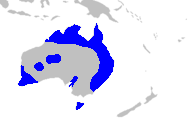
Xanthorrhoea (/zænθoʊˈriːə/) is a genus of about 30 species of succulent flowering plants in the family Asphodelaceae. They are endemic to Australia. Common names for the plants include grasstree, grass gum-tree (for resin-yielding species), kangaroo tail, balga (Western Australia), yakka (South Australia), yamina (Tasmania, from the palawa kani language), and black boy (or "blackboy"). The most common species is Xanthorrhoea australis, and some of these names are applied specifically to this species.
All species in the genus are perennials and have a secondary thickening meristem in the stem. Many, but not all, species develop an above ground stem. The stem may take up to twenty years to emerge. Plants begin as a crown of rigid grass-like leaves, the caudex slowly growing beneath. The main stem or branches continue to develop beneath the crown. This is rough-surfaced, built from accumulated leaf-bases around the secondarily thickened trunk. The trunk is sometimes unbranched, some species will branch if the growing point is damaged, and others naturally grow numerous branches.
Flowers are borne on a long spike above a bare section called a scape; the total length can be over three to four metres long in some species. Flowering occurs in a distinct period, which varies for each species, and often stimulated by bushfire. Fires will burn the leaves and blacken the trunk, but the plant survives as the dead leaves around the stem serve as insulation against the heat of a wildfire.[citation needed]
The rate of growth of Xanthorrhoea is slow. Some species grow slowly (0.8–6 centimetres or 0.31–2.36 inches in height per year), but increase their rate of growth in response to season and rainfall. After the initial establishment phase, the rate of growth varies widely from species to species. Thus, while a five-metre-tall (16 ft) member of the fastest-growing Xanthorrhoea may be 200 years old, a member of a more slowly growing species of equal height may have aged to 600 years. Many xanthorrhoeas only flower for the first time when they are 100 or more years old.
Xanthorrhoea is part of the family Asphodelaceae, containing related genera such as Aloe, Alstroemeria, Gasteria, Haworthia and Hemerocallis (to name a few), but is placed within its own monotypic subfamily, the Xanthorrhoeoideae. The Xanthorrhoeoideae are monocots, part of the greater order of Asparagales.
A reference to its yellow resin, Xanthorrhoea literally means "yellow-flow" in Ancient Greek. Smith named it, in 1798, from xanthos ('yellow, golden') and rhœa ('flowing, flow'). The invalid Acoroides ('Acorus-like') was a temporary designation in Solander's manuscript from his voyage with Cook, originally not meant for publication.
Kingia and Dasypogon are unrelated Australian plants with a similar growth habit to Xanthorrhoea. Both genera have, at times, been confused with xanthorrhoeas and misnamed as "grasstrees".[citation needed] Some plant classification systems, such as Cronquist, have included a wide range of other genera in the same family as Xanthorrhoea. However, future anatomical and phylogenetic research supported the views of Dahlgren, whom regarded Xanthorrhoea as the sole taxon of the family Xanthorrhoeaceae sensu stricto, which is now treated as a subfamily, Xanthorrhoeoideae.
Common names for Xanthorrhoea include grasstree, grass gum-tree (for its resin-yielding species), and kangaroo tail. The name grasstree is applied to many other plants. They are also known as balga grass plants, which derives from the word balga in the Noongar language of south-west of Western Australia, particularly for X. preissii. Its meaning is "black boy" or "blackboy", a name which was applied to the plant for many years. Some thought that Aboriginal peoples used the name balga because the trunk blackened after a bushfire resembles a child-like black figure. The name is now seen as racist, and Xanthorrhoea are more commonly known as grass tree. However a 2015 report written by Aboriginal Tasmanian authors, who refer to the plant as yamina, says "yamina forest on lungtalanana is important to the community. yamina are also commonly known as black boys. They are called this because the plant has a thick black trunk".
Hub AI
Xanthorrhoea AI simulator
(@Xanthorrhoea_simulator)
Xanthorrhoea
Xanthorrhoea (/zænθoʊˈriːə/) is a genus of about 30 species of succulent flowering plants in the family Asphodelaceae. They are endemic to Australia. Common names for the plants include grasstree, grass gum-tree (for resin-yielding species), kangaroo tail, balga (Western Australia), yakka (South Australia), yamina (Tasmania, from the palawa kani language), and black boy (or "blackboy"). The most common species is Xanthorrhoea australis, and some of these names are applied specifically to this species.
All species in the genus are perennials and have a secondary thickening meristem in the stem. Many, but not all, species develop an above ground stem. The stem may take up to twenty years to emerge. Plants begin as a crown of rigid grass-like leaves, the caudex slowly growing beneath. The main stem or branches continue to develop beneath the crown. This is rough-surfaced, built from accumulated leaf-bases around the secondarily thickened trunk. The trunk is sometimes unbranched, some species will branch if the growing point is damaged, and others naturally grow numerous branches.
Flowers are borne on a long spike above a bare section called a scape; the total length can be over three to four metres long in some species. Flowering occurs in a distinct period, which varies for each species, and often stimulated by bushfire. Fires will burn the leaves and blacken the trunk, but the plant survives as the dead leaves around the stem serve as insulation against the heat of a wildfire.[citation needed]
The rate of growth of Xanthorrhoea is slow. Some species grow slowly (0.8–6 centimetres or 0.31–2.36 inches in height per year), but increase their rate of growth in response to season and rainfall. After the initial establishment phase, the rate of growth varies widely from species to species. Thus, while a five-metre-tall (16 ft) member of the fastest-growing Xanthorrhoea may be 200 years old, a member of a more slowly growing species of equal height may have aged to 600 years. Many xanthorrhoeas only flower for the first time when they are 100 or more years old.
Xanthorrhoea is part of the family Asphodelaceae, containing related genera such as Aloe, Alstroemeria, Gasteria, Haworthia and Hemerocallis (to name a few), but is placed within its own monotypic subfamily, the Xanthorrhoeoideae. The Xanthorrhoeoideae are monocots, part of the greater order of Asparagales.
A reference to its yellow resin, Xanthorrhoea literally means "yellow-flow" in Ancient Greek. Smith named it, in 1798, from xanthos ('yellow, golden') and rhœa ('flowing, flow'). The invalid Acoroides ('Acorus-like') was a temporary designation in Solander's manuscript from his voyage with Cook, originally not meant for publication.
Kingia and Dasypogon are unrelated Australian plants with a similar growth habit to Xanthorrhoea. Both genera have, at times, been confused with xanthorrhoeas and misnamed as "grasstrees".[citation needed] Some plant classification systems, such as Cronquist, have included a wide range of other genera in the same family as Xanthorrhoea. However, future anatomical and phylogenetic research supported the views of Dahlgren, whom regarded Xanthorrhoea as the sole taxon of the family Xanthorrhoeaceae sensu stricto, which is now treated as a subfamily, Xanthorrhoeoideae.
Common names for Xanthorrhoea include grasstree, grass gum-tree (for its resin-yielding species), and kangaroo tail. The name grasstree is applied to many other plants. They are also known as balga grass plants, which derives from the word balga in the Noongar language of south-west of Western Australia, particularly for X. preissii. Its meaning is "black boy" or "blackboy", a name which was applied to the plant for many years. Some thought that Aboriginal peoples used the name balga because the trunk blackened after a bushfire resembles a child-like black figure. The name is now seen as racist, and Xanthorrhoea are more commonly known as grass tree. However a 2015 report written by Aboriginal Tasmanian authors, who refer to the plant as yamina, says "yamina forest on lungtalanana is important to the community. yamina are also commonly known as black boys. They are called this because the plant has a thick black trunk".
Recent media